

Illustration: The Touch & Go
TezJet grounded after Boeing MD-83 landing gear collapse at Bishkek Manas Airport
Kyrgyz authorities suspend TezJet operations following a landing gear failure incident involving a Boeing MD-83 at Manas Airport, with no injuries reported.
The gist
TezJet operations halted after an MD-83’s landing gear collapsed during taxi at Bishkek, triggering a safety probe and temporary airport closure.
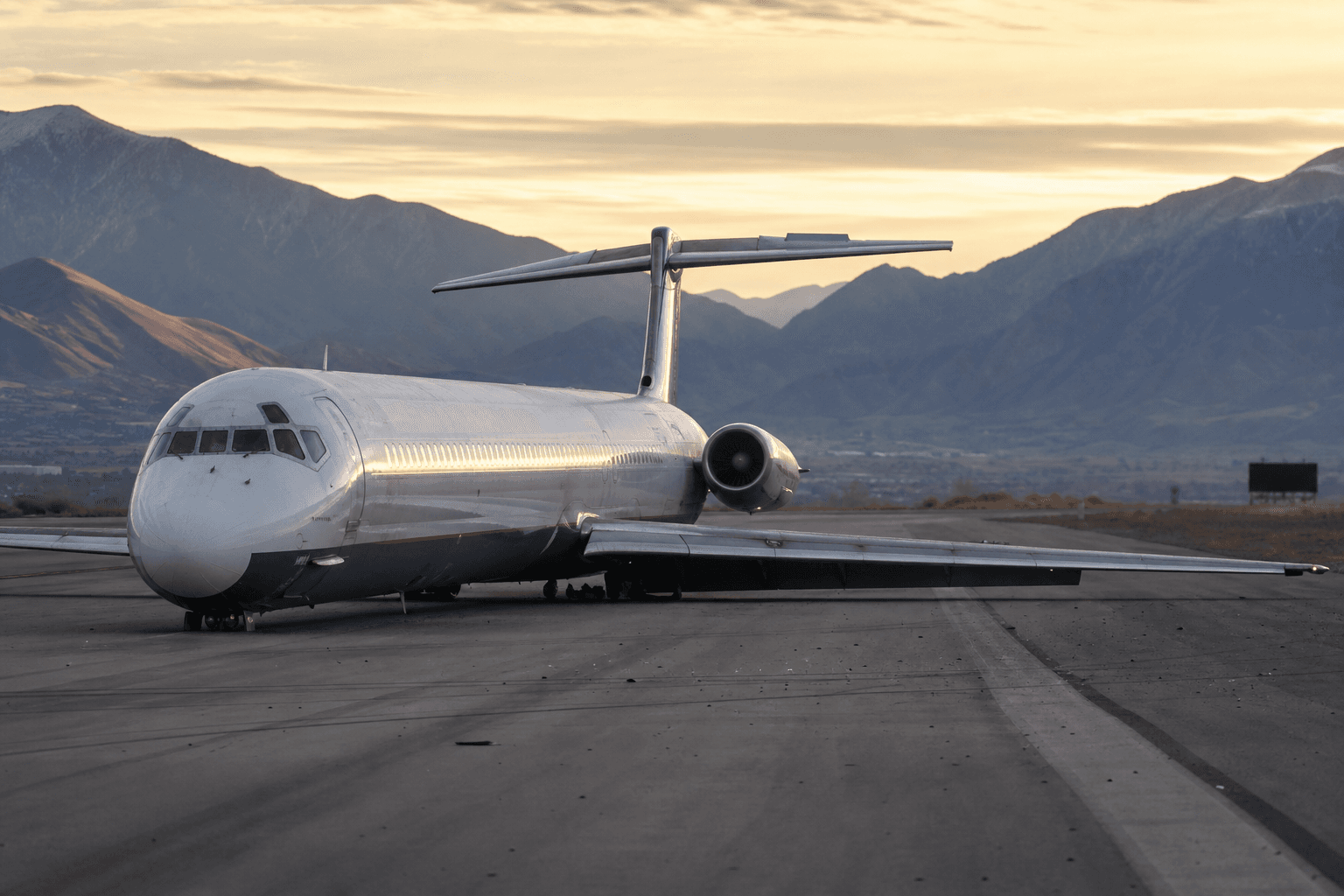
Kyrgyz aviation authorities have imposed a temporary suspension on TezJet’s operations after one of the airline’s Boeing MD-83 aircraft suffered a left main landing gear collapse while taxiing for departure at Bishkek’s Manas Airport on 7 July. The incident occurred during pre-flight procedures as the aircraft prepared to depart for Osh. The airport reported that the aircraft, after reaching the takeoff position, listed to the left, causing the left wing to contact the runway before coming to a stop. Fortunately, no injuries were sustained by the passengers or crew aboard the aircraft.
The affected aircraft involved in the incident is a 1996-built Boeing MD-83 with registration EX-80003, originally delivered to Korean Air. Photographs from the scene indicate that the aircraft’s tail cone, which serves as an evacuation exit, was forcibly detached during the collapse event. The airport’s runway, a single-strip designated 08/26, was blocked by the grounded jet, requiring immediate removal efforts to restore operations. This complex recovery underlines the challenges of managing airfield incidents in locations with limited runway infrastructure.
This accident comes shortly after Kyrgyzstan was removed from the European Commission’s list of banned carriers and countries in early June, ending a two-decade-long blanket blacklisting. The delisting was granted after evidence presented showed significant improvements in the country’s civil aviation safety oversight. The timing of this gear failure incident is particularly noteworthy given the recent positive developments in Kyrgyz aviation safety reputation, casting some uncertainty over the sustained reliability of operators under its jurisdiction.
Following the gear collapse, the Kyrgyz state civil aviation agency launched an investigation to determine the root causes of the failure. Amid ongoing verification processes, authorities have emphasized precautionary principles by temporarily barring TezJet aircraft operations to uphold the highest flight safety standards. The airport’s operator stressed this suspension is strictly preventive, designed to avoid potential further incidents while the technical and operational factors are examined thoroughly.
Prior to the incident, the MD-83 had arrived at Manas Airport from Osh earlier on the same day. The aircraft was performing domestic air traffic, connecting key cities within Kyrgyzstan. This intra-national route is important for regional connectivity and economic activity, and the interruption caused by the incident is likely to impact passenger travel plans and freight movements temporarily.
Manas Airport remained closed until approximately 06:00 local time on 8 July to facilitate the aircraft removal and airport recovery efforts. The closure disrupted scheduled flights and imposed logistical challenges for airlines and passengers reliant on this central aviation hub. The airport authority underlined that flight safety remains the paramount priority, even at the cost of operational disruptions. This stance reflects the heightened sensitivity to aviation safety within the Kyrgyz regulatory environment following recent international scrutiny.
The incident raises questions regarding the maintenance and structural integrity of aging aircraft operated within Kyrgyzstan's fleet. The MD-83 involved was built in 1996, indicating the aircraft is over 30 years old and exemplifies the reliance on older regional jets for domestic service. The investigation’s findings may influence future decisions on aircraft suitability, maintenance protocols, and fleet modernization initiatives for TezJet and potentially other local operators.
Given the single-runway configuration at Manas Airport, any aircraft incident can severely impact airport capacity and safety. The prolonged closure illustrates the vulnerability of such constrained infrastructure to operational disruptions. This event could prompt a reassessment of emergency response capabilities and infrastructure resilience to accommodate unscheduled incidents, especially as Kyrgyzstan continues efforts to elevate its civil aviation safety standards to global benchmarks.
Read more
All Aviation Safety →
US Navy Helicopter Squadron Leader Killed After MH-60S Crash in Arabian Sea
The officer had been missing since the 1 July incident in which the Seahawk utility helicopter made an emergency water landing. The commander of a US Navy helicopter squadron has been declared killed in action in the Middle East. Commander Gabriel Edwards was a rotary-wing pilot and the commanding officer of Helicopter Sea Combat Squadron (HSC) 5, embarked with the aircraft carrier USS George HW Bush . Edwards had been missing since 1 July, when his Sikorsky MH-60S Sea Hawk made an emergency landing in the Arabian Sea. Three other US Navy personnel aboard the helicopter were rescued shortly after the ditching. The effort to locate and recover Edwards was called off after more than four days of searching, the navy now says. The cause of the emergency is not yet known and remains under investigation. Edwards had accumulated more than 2,000 flight hours over his naval aviation career, according to the navy. HSC 5 is part of the navy’s Carrier Air Wing 7, which is currently operating from the Bush in the Arabian Sea. The carrier departed its homeport of Norfolk, Virginia, in March for the regularly scheduled deployment. The MH-60S is a utility and fleet support helicopter that is distinct from Sikorsky’s MH-60R variant, which is equipped for anti-submarine warfare.

K2 Airways Boeing 737 freighter lost over Arabian Sea after sudden altitude drops near Karachi
A K2 Airways Boeing 737 freighter is missing over the Arabian Sea after preliminary flight-tracking data showed a sudden loss of altitude southwest of Karachi, Pakistan. The aircraft, registered AP-BOI, was operating as K2 Airways Cargo Flight KTA1732 from Sharjah, United Arab Emirates, to Karachi, Pakistan, on July 7, 2026, according to Flightradar24. Authorities launched a search effort after the aircraft did not arrive in Karachi as scheduled. Preliminary ADS-B data showed the aircraft lost altitude, climbed, and then suffered a second sudden and dramatic loss of altitude. The final ADS-B point received by Flightradar24 was recorded at 16:21 UTC, placing the aircraft at 1,100 feet above mean sea level with a reported vertical rate of -22,400 feet per minute. Pakistan's Civil Aviation Authority said the aircraft reported a navigation system problem at 21:18 local time before radar data showed it rapidly descending and making a sharp heading change at about 21:21. Radar and radio contact were then lost about 155 nautical miles west of Karachi, according to the AP, citing Pakistan's Civil Aviation Authority. The AP reported that five crew members were aboard the aircraft. AP-BOI is a Boeing 737-4M0(BDSF) that began service with K2 Airways in 2024. The aircraft originally entered service as a passenger aircraft with Aeroflot in 1999, later flew with Garuda Indonesia, and was converted to a freighter in 2012. K2 Airways is a privately owned Pakistani carrier based in Karachi. The airline was launched to serve regional passenger and cargo markets and received its air operator certificate in 2024. AP-BOI is listed as the carrier's sole aircraft. The aircraft and other traffic in the region experienced GNSS interference shortly after takeoff from Sharjah, which degraded data near Sharjah before the aircraft transitioned to multilateration tracking. Flightradar24 said ADS-B data was received again after the aircraft left the interference area. The aircraft remained missing late on July 7 as search efforts continued.
Crew oversight led to Boeing 737 Max 8 slow, shallow take-off at Luton after intersection departure change
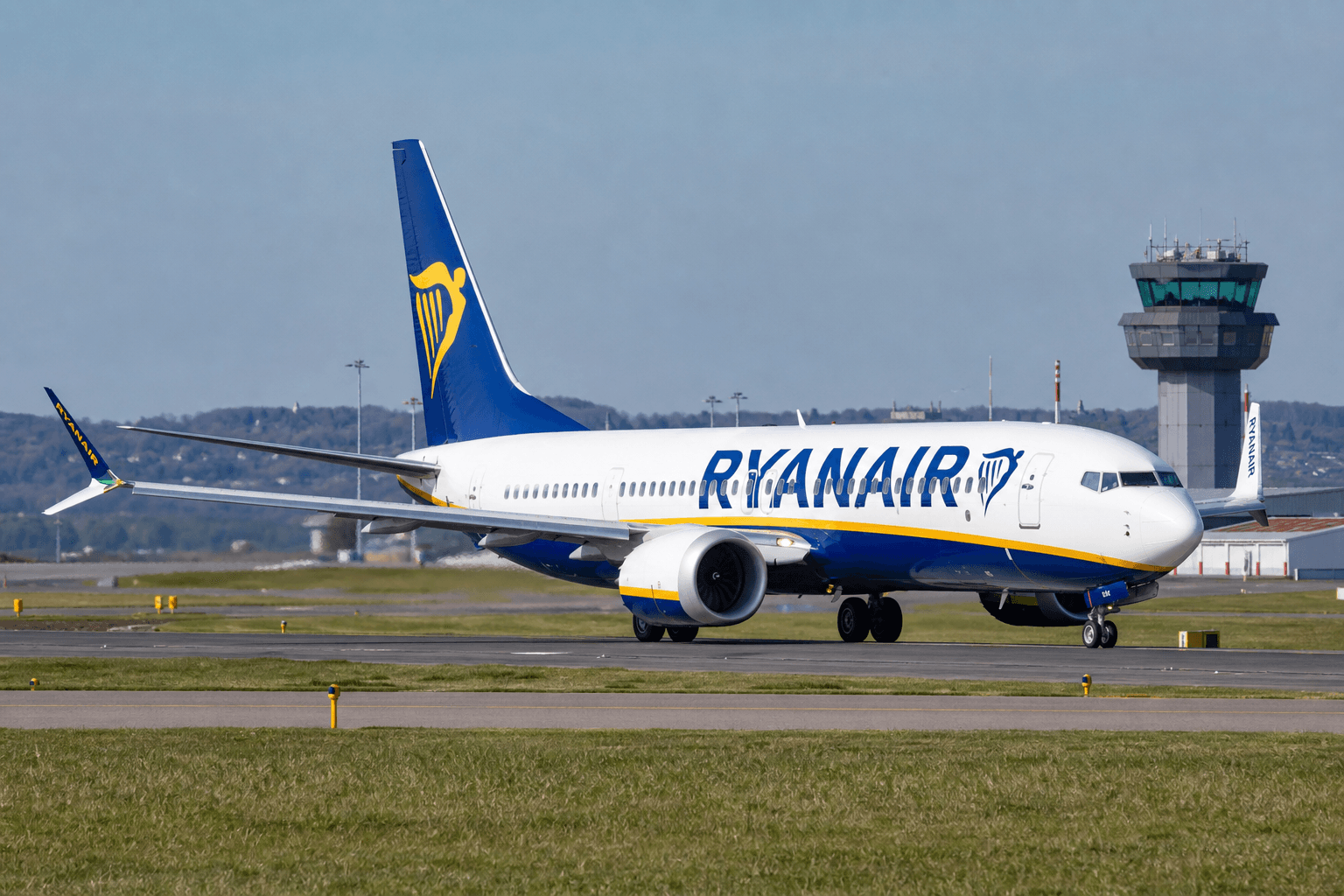
Pilots accepted intersection departure for Max 8 but did not update flight-management computer. UK investigators have determined that the crew of a Boeing 737 Max 8 did not update performance data after switching from a planned full-length runway take-off to an intersection departure. The crew of the Ascend Airways jet (G-CRUX) had informed London Luton air traffic control that they could accept a departure from intersection A of runway 25. But the pilots, who had originally intended a full-length take-off, failed to verify that the revised V-speed data had been correctly entered into flight-management computer. This resulted in a lower thrust setting than required. Flight-data analysis revealed that the maximum thrust during the take-off roll was 82.1% rather than the 85.2% needed. Available runway distance from intersection A was 1,771m — some 345m less than the full length. Owing to the low thrust, the take-off roll was "long", says the Air Accidents Investigation Branch, and the aircraft lifted off just 162m from the runway end — crossing it at a height of just 13ft. According to the inquiry the subsequent climb was "slow" and "very shallow". Air traffic control information stated that the aircraft appeared on radar to be climbing through 900ft about 0.8nm from the airport. "Under normal circumstances the aircraft would appear much closer to the airfield at that height," the inquiry says. It points out that an engine failure or loss of thrust during the take-off roll could potentially have resulted in an overrun. None of the 162 passengers and six crew members was injured during the occurrence on 22 April last year. Ascend Airways' UK division ceased operations in April this year.

Flight Attendant Numbers Determined by Safety Standards, Not Passenger Service
The number of flight attendants for each flight is carefully planned by the airline's operations department, and there are a number of deciding factors. Passengers would be hard-pressed to know exactly how many flight attendants would be needed for large aircraft types like the Boeing 777 or the Airbus A380. However, it's more obvious on smaller types like the Airbus A320 or Boeing 737, as all crew members are visible in the cabin.
The Daily Touch & Go
The day's best aviation news in your inbox. Free, no spam.