

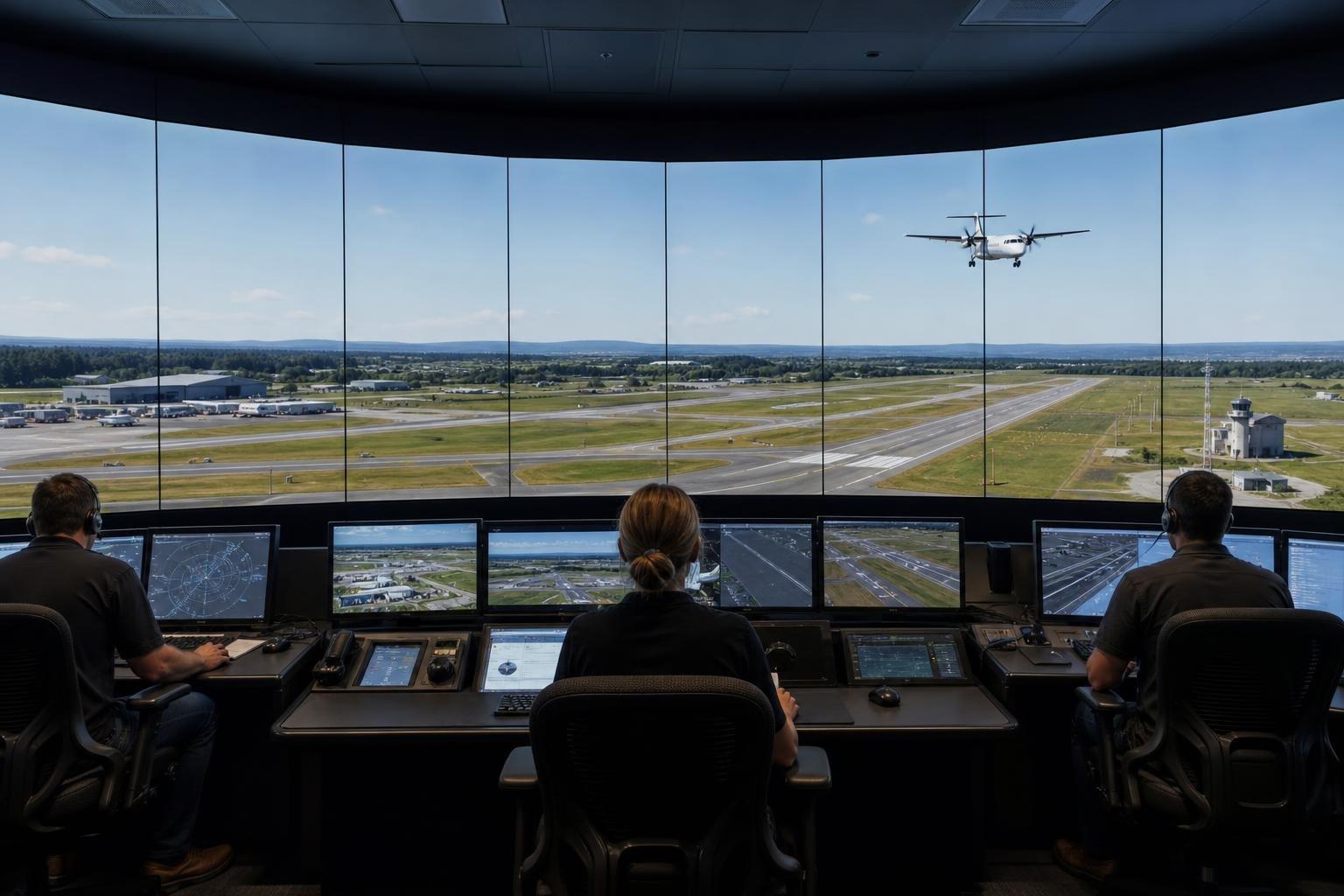
AI-generated illustration
FAA Grants First U.S. Digital Tower System Design Approval to Frequentis
The Federal Aviation Administration has approved the design of the Frequentis Digital Tower system, setting the first FAA baseline for remote, camera-based tower operations in the National Airspace System.
The gist
Frequentis says its Digital Tower is the first to win FAA System Design Approval, giving U.S. airports an approved baseline for camera-based tower operations.
Continuing coverage
All Faa →- FAA Collects Reports After Piper Seminole Rolls 60 Degrees in Wings-Level Stall
- FAA Makes Permanent Ban on Visual Separation for Helicopters Crossing Busy Terminal Traffic
- Router Swap at Arkansas Radio Site Suspected in Nationwide US Air Traffic Ground Stop
- American Airlines San Diego to Chicago Flight Diverts to Phoenix After Passenger Tries to Manipulate Door
- FAA Orders Pre-Flight Inspections of Boeing 757 Fuselage Repairs After Crack Reports
The Federal Aviation Administration has granted System Design Approval to the Frequentis Digital Tower system, making it the first Digital Tower system cleared for use in the U.S. National Airspace System, Frequentis announced. The company said the approval establishes an FAA-approved design baseline that future Digital Tower deployments in the United States can build on. The FAA also issued its own release on the decision.
Frequentis said it worked with RTX Corporation as a partner during the System Design Approval process and coordinated closely with the FAA to deliver a system ready for operational use. According to the company, the approval confirms that the system met all applicable FAA requirements covering safety, human factors, visual performance and system performance. That set of requirements now forms the reference point for airports considering the technology.
A Digital Tower replaces the view from a conventional tower cab with a picture built from cameras, sensors and high-resolution displays. Controllers see the airport and its traffic on screens rather than through tower windows, and they do not need to work from a traditional tower structure. Frequentis said the setup improves visibility and situational awareness, adds operational resilience and gives more flexibility in how air traffic services are delivered, including when conventional facilities are disrupted.
The company is pitching the approval chiefly at smaller and regional airports. Frequentis said many such airports support business aviation, flight training, emergency and medical flights, tourism, logistics, workforce development and access to national markets. The cost and complexity of building and maintaining a conventional control tower, it said, can put tower services out of reach at some of these fields.
Dieter Eier, President of Frequentis USA, called the approval a transformational moment that gives U.S. airports and their communities another way to plan for the future. He said building a conventional tower demands considerable time and capital at many smaller and regional airports, and that Digital Tower technology can make modern air traffic services achievable in places that may not have had them before. Eier said airports now have an FAA-approved design baseline and a clearer route from concept to implementation.
Frequentis noted that Digital Tower technology is already widely operational outside the United States. Until now, U.S. airports weighing the option faced uncertainty over how a system design would be validated and whether regulators would accept it. The company said the System Design Approval gives airport sponsors a validated design framework and more predictability as they assess future investments.
For regional airports, Frequentis said, modern air traffic services can help them safely handle increasingly demanding operations, attract aviation-related activity, support local employers and workforce programs, and prepare for growth. The company described the FAA decision as the foundation for putting the technology into service at U.S. airports.
The approval covers the system design itself. Frequentis said the baseline is intended to support future Digital Tower deployments across the National Airspace System, with individual airports now able to evaluate the technology against a design the FAA has already reviewed for safety, human factors and performance.
Originally reported by Airport Industry-News
Read more
All Regulatory →
Aviation Coalition Asks Congress for $30 Billion in ATC Funding, Short of White House $50 Billion Ask
More than 60 aviation groups urged lawmakers to approve at least $30 billion for air traffic control modernization, even as the Trump administration now seeks about $50 billion after this month's national ground stop.

Modern Skies Coalition Launches ACT NOW Ad Campaign Pressing Congress for ATC Modernization Money
A coalition of more than 50 aviation groups began a national ad push a week after a nearly five-hour nationwide ground stop, as DOT seeks another $50.1 billion for infrastructure.

Senator Moran Presses Duffy to Justify Jump to $50 Billion Air Traffic Control Request
The Kansas Republican who chairs the Senate aviation subcommittee says Transportation Secretary Sean Duffy must explain why his ATC modernisation ask rose from $30 billion to $50 billion after the 13 November ground stop.

Everett-Built 737 MAX Jets Added to Boeing Production Certificate as North Line Nears Deliveries
Boeing's new 737 line in Everett, Washington, has reportedly cleared a regulatory step toward handing over jets, with the planemaker working through the final stages of an FAA audit.
The Daily Touch & Go
Launching soon: the day's best aviation news in your inbox. Join the list, free.