Illustration: The Touch & Go
FAA Restores Boeing's Authority to Self-Certify 737 MAX and 787 Aircraft
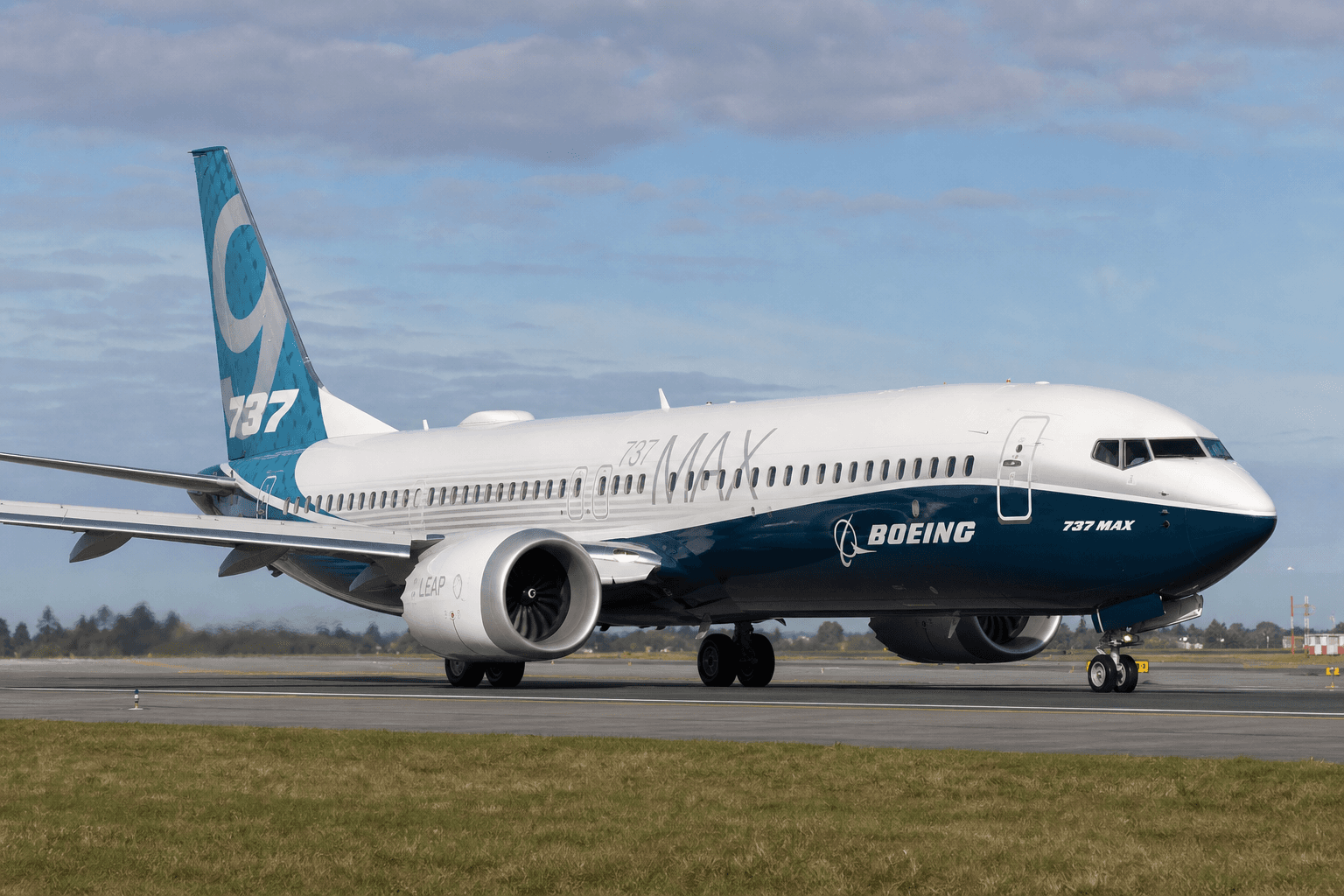
After rigorous review, the FAA now permits Boeing to issue airworthiness certificates for 737 MAX and 787 models, reversing restrictions imposed due to past safety issues.
The gist
The FAA has reinstated Boeing's ability to self-certify 737 MAX and 787 airworthiness, signaling improved confidence in the manufacturer's production quality.
Continuing coverage
All Boeing →- FAA Restores Boeing's Authority to Certify 737 MAX and 787 Deliveries
- FAA Restores Boeing's Authority to Self-Issue Airworthiness Certificates for 737MAX and 787
- FAA Restores Boeing's Authority to Certify New 737 MAX and 787 Jets
- Boeing advances 737 Max and 777-9 programs with key system redesigns and production ramp-up
- Boeing launches $1 billion 737 North Line in Everett to boost MAX output
The Federal Aviation Administration (FAA) has reinstated Boeing's authority to self-certify the airworthiness of its 737 MAX and 787 aircraft. This restoration comes several years after the privilege was revoked amid safety concerns linked to fatal crashes and quality control challenges. The move, effective immediately, allows Boeing to issue airworthiness certificates directly, a step intended to streamline production and delivery processes.
Boeing initially lost its certification privileges in 2019 following two tragic crashes involving the 737 MAX, and again in 2022 concerning the 787. The FAA imposed stringent oversight measures to verify aircraft safety, requiring Boeing to demonstrate compliance before aircraft could be certified for flight. This regulatory approach reflected heightened scrutiny on Boeing's production practices and the overall safety culture within the company at that time.
The FAA's self-certification framework operates under the Organization Designation Authorization (ODA) program. This program authorizes certain organizations, including Boeing, to perform certification functions on behalf of the FAA, such as issuing airworthiness and production certificates. This delegation aims to leverage the manufacturer's expertise while maintaining regulatory standards through ongoing FAA oversight.
Before fully restoring Boeing’s self-certification rights, the FAA adopted a cautious, phased approach. Beginning in late September 2025, Boeing was permitted to certify aircraft in alternating weeks while the FAA conducted comparative assessments of production quality between planes certified by Boeing and those certified by FAA officials. The FAA concluded there were no discernible differences in quality, supporting the decision to expand Boeing's certification authority.
The FAA emphasized that safety remains its paramount concern and outlined enhanced monitoring strategies accompanying the reinstatement. FAA inspectors will focus on critical aspects of Boeing's assembly lines and quality control processes, including ensuring compliance with engineering standards and evaluating the airline manufacturer’s Safety Management System. These surveillance efforts include facilitating an environment where Boeing personnel can report safety issues without fear of retaliation.
FAA Administrator Bryan Bedford stated that the FAA’s confidence in Boeing’s ability to maintain safety standards facilitated this development. He highlighted that FAA inspectors would direct more resources towards identifying and mitigating risks earlier in manufacturing, focusing on areas that yield the greatest impact on quality and safety. This oversight strategy aims to balance efficient certification with rigorous safety assurance.
This policy shift reflects a significant milestone in Boeing's ongoing efforts to rebuild trust and improve its manufacturing and safety culture. The decision to delegate certification responsibility back to Boeing could accelerate the delivery of new aircraft, addressing operational bottlenecks that affected the company in recent years. However, the move is likely to generate varied opinions regarding regulatory rigor and industry safety.
Boeing’s role in self-certification under the ODA program tests the manufacturer’s commitment to quality and its capacity to prioritize long-term safety over short-term business interests. The FAA’s reinstatement signals an institutional belief that Boeing has made sufficient progress in enhancing its safety protocols and production integrity to justify this level of delegated authority.
As Boeing resumes full self-certification responsibilities, stakeholders across the aviation industry will monitor the impact on aircraft safety, delivery timelines, and regulatory oversight dynamics. This development marks a pivotal chapter in Boeing’s post-737 MAX recovery and the FAA's strategic approach to balancing manufacturer autonomy with public safety obligations.
Frequently asked questions
- Why did the FAA revoke Boeing's ability to self-certify aircraft in the past?
- The FAA revoked Boeing's self-certification privileges in 2019 for the 737 MAX and 2022 for the 787 due to fatal crashes and quality control issues revealing safety risks.
- What conditions did the FAA impose before fully restoring Boeing's self-certification rights?
- The FAA allowed Boeing to self-certify on alternating weeks from late 2025 to monitor production quality, finding no difference compared to FAA-certified planes, which led to full restoration.
- How will the FAA oversee Boeing now that self-certification is restored?
- FAA inspectors will increase surveillance during critical assembly steps, ensure compliance with engineering requirements, and monitor Boeing's safety culture to maintain rigorous oversight.
Read more
All Aviation Safety →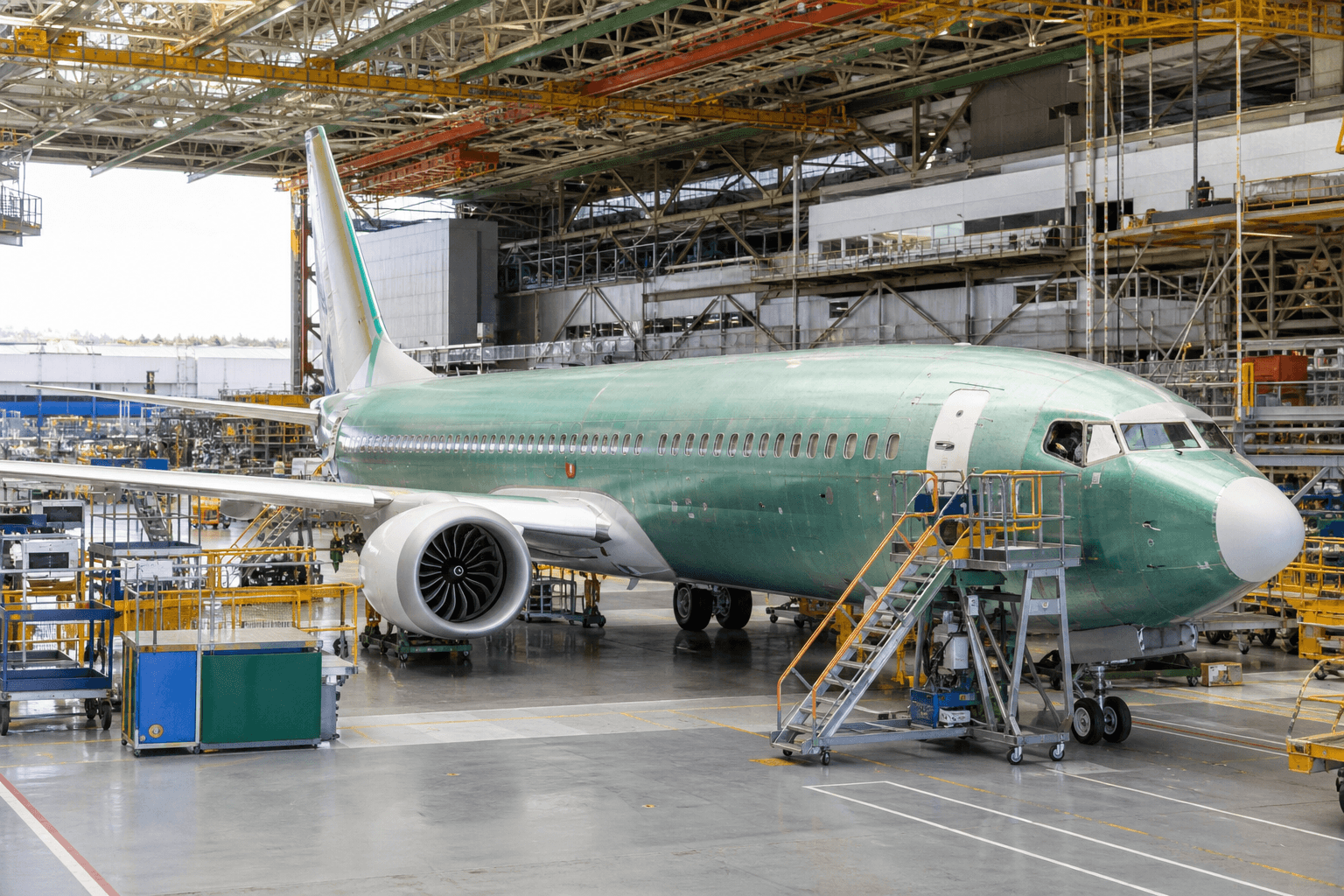
Boeing advances 737 Max and 777-9 programs with key system redesigns and production ramp-up
Executives detail redesigns of the 737 Max’s engine anti-ice and angle-of-attack systems, alongside flight-test headway with new widebody-twin. Ahead of this year’s signature aviation event in Farnborough, Boeing has more wind at its back than at any time in recent memory. The company has hiked production to rates not seen in years, finalised two 737 Max system updates and is close to securing the Max 7’s long-delayed certification, with approval for the Max 10 to follow. Boeing also just opened a new 737 production line in Everett and is ticking off regulatory boxes for certification of its delayed 777-9. Executives have disclosed more about those programmes in recent days, while insisting the airframer has made progress addressing quality and cultural issues. Boeing has said it expects the Federal Aviation Administration will certificate the Max 7 this summer, although on 9 July The Wall Street Journal reported that the approval could come as early as this month. Boeing vice-president of 737 development Chris Payne says the company has now completed all Max 7 certification flight tests and 95% of “certification deliverables” due to the Federal Aviation Administration (FAA). Anti-Ice Redesign He also detailed the redesign of the 737 Max’s engine anti-ice system, a change required because the existing system in certain circumstances can cause engine inlet inner barrels to overheat. The changes notably involve installing “turbulators” on the forward fan case that sits ahead of the Max’s twin CFM International Leap-1B engine. The turbulators are “literally a washer and fastener that go through the inlet in a circumferential row around the engine”, says Payne. Their purpose is to make air entering the engine swirl, which draws in colder air and reduces the temperature “at the critical point” by 93°C (200°F). “It does a fantastic job of really taking care of the temperature conditions,” Payne says. “It’s a highly integrated solution for the aircraft and the engine.” The redesign also includes replacing the forward fan case, which has “acoustic perforations” intended to reduce noise, with a perforation-free “hard-walled” case. Contrary to expectations, those perforations did not reduce noise; the hard-walled case is actually quieter and the change ensures sufficient “fan-flutter margin”, says Boeing senior vice-president of development programmes Mike Sinnett. The anti-ice redesign also includes a new “flow restrictor”, limiting how much hot air strikes critical components, insulation blankets around inlet ducts, circuit breakers, wiring, a “fault redundancy” pressure switch and an integrated air systems controller for the engine anti-ice valve. “We have done all of the [anti-ice] certification testing. We’ve done all the analysis, all the flying, all the lab testing,” Payne says. “We’ve submitted almost all of the deliverables for it. We’re just in the last throes of getting certified.” With the 737 Max 10 Boeing will introduce its “enhanced AoA” system. Source: AirTeamImages Payne says Boeing has meanwhile completed 98% of the Max 10’s flight-test programme. It has two planned flight tests remaining and should complete those this quarter, putting the company on track to achieve certification for the variant before year-end. Payne also says that last quarter Boeing completed level 3 of the Max 10’s “development assurance” work – the regulatory framework used to demonstrate adherence to processes. It has also finished 60% of Development Assurance Level 4 (the final level), and expects to be done this quarter. Additionally, Boeing has submitted 30% of required documents for the Max 10’s system safety analysis, Payne adds. With the Max 10, Boeing is introducing another change, to the angle of attack (AoA) system. It undertook that project because two Max 8 crashes, in 2018 and 2019, revealed that failure of one of the Max’s two external AoA sensors can trigger the Maneuvering Characteristics Augmentation System (MCAS), which trims the aircraft nose-down and is supposed only to activate to counteract excessive nose-up pitch. That sequence preceded both Max crashes, putting those jets into dives from which the pilots did not recover. In addition to MCAS issues, investigators cited pilot workload as contributing to the accidents. That is because AoA failures can activate the stall-warning stick shaker even if the aircraft is not stalling and prompt “five different” cockpit warnings, including false alarms, says Boeing 737 deputy chief test pilot Bill Quashnock. For that reason, Boeing developed its “enhanced AoA” for the 10. The redesign simplifies “flight deck effects” by identifying AoA faults, inhibiting stick shake and displaying a simple message to pilots: “AoA Fault”. “Our engineers have run all the simulations, showing that for pretty much every conceivable error that we know, the monitors will catch it,” Quashnock says. As a backup, Boeing’s enhanced AoA system includes a cockpit switch for pilots to deactivate the stick shaker. Following Max 10 certification, Boeing will deliver other Max models with the improved system, and within two years retrofit in-service jets. Boeing has for two years been delivering Max with “provisions” enabling technicians to complete the updates in as little as 2h. Some 1,200 jets, about half of the in-service fleet, have those provisions. Updates to other aircraft will take several days, Boeing says. Boeing’s North Line became operational on 6 July when workers started assembling a 737 Max 10 for WestJet. Source: Jennifer Buchanan/Seattle Times/Pool Perhaps the most visible sign of Boeing’s upswing lies within Everett hangar space that until several years ago housed 787 assembly (a jet now built entirely in South Carolina). On 6 July, Boeing began operating a 737 Max assembly line in that space, adding to three lines in Renton. The company says the extra space will allow it to ramp 737 output from 47 to 52 jets monthly, with additional rate hikes to follow. "Long term, we really want to use the space to support the [Max] 10,” says Boeing Commercial Airplanes chief executive Stephanie Pope. Though the 777-9’s approval is seven years behind Boeing’s original schedule, executives insist the project is progressing, noting the company has completed half planned 777-9 certification flight tests. It aims to start delivering 777-9s next year. Boeing 777-9 vice-president Terry Beezhold notes many certification flight tests require the aircraft be in its final configuration. Boeing has made several updates to the jet in recent years, contributing to delays. “We’ve had a number of lay-ups throughout our test programme, updating the aircraft from its original build,” he says. “We are in the final phases of completing those lay-ups.” Two 777-9 test aircraft (WH001 and WH002) are now in the “final certification configuration”. WH001 is ready to begin certification flight tests and WH002 will come online in “a couple of weeks”, Beezhold says. Boeing is now working through the final step, stage 5, of the 777-9’s Type Inspection Authorization (TIA) – the document confirming an aircraft meets certification requirements and approving certification flight tests. Historically the FAA approves TIAs in their entirety but has been approving the 777-9’s authorisation in stages. When all primary 777-9 certification work is complete, Boeing will turn its focus to securing 180min ETOPS (extended twin-engined operations) approval for the type. It may later work with airlines to receive longer-duration approvals, Beezhold says

FAA Administrator Bryan Bedford Drives Rapid Modernization with Trump-Era Urgency
Bryan Bedford took over leadership of the FAA in July 2025 after a long career in commercial aviation, including senior roles at Republic Airways and Frontier Airlines. He is an instrument-rated pilot, an aircraft owner, and one of the few recent agency leaders to arrive in Washington, D.C., with direct experience in both a general aviation cockpit and the airline C-suite. Some in aviation may also remember him from an appearance on reality TV's Undercover Boss , a fitting footnote for an executive whose management style has long emphasized seeing operations up close rather than from a distance. So close, in fact, that Bedford can be seen in the show servicing lavatories on a Frontier Airbus jet. That operating background now intersects with a White House that has pushed the FAA to move faster. In FLYING’s conversation with Bedford, he repeatedly pointed to President Donald Trump's role in setting the tone and timetable for the agency's agenda—from air traffic control (ATC) modernization to drone policy, supersonic flight, and broader aviation innovation. Bedford said the president has been unusually clear about what he wants delivered, and he described the FAA and Department of Transportation as "moving at the speed of Trump" on initiatives tied to those priorities. This Article First Appeared in FLYING Magazine If you're not already a subscriber, what are you waiting for? Subscribe today to get the issue as soon as it is released in either Print or Digital formats. Subscribe Now Nine months into the job, Bedford framed the FAA less as an agency building toward distant benchmarks than one being pressed to show measurable progress on a shorter clock. He discussed the administration's push for a "brand-new" ATC system, the role AI and machine learning could play in future traffic management, what MOSAIC could mean for general aviation, and why the fight over landing fees and ADS-B has become a safety issue in his eyes. FLYING interviewed Bedford at the agency's headquarters in Washington in April. What follows is an edited Q&A for length and clarity: Setting the Pace FLYING Magazine (FM) : Your first year on the job is coming up this summer. As you look at the agency today, what do you think has changed the most? Bryan Bedford (BB): Well, so much has changed. I want to be careful, but I think the biggest thing is our focus. We've got Flight Plan 2026, and the purpose of that is to drive agency focus from the top of the executive branch all the way down to the front line that's delivering the services, whether you're a technician, a controller, or a regional manager. We just wanted to make sure everybody was aligned on the same priorities. Generally, the FAA, when it would put out a plan, it would be no less than five years and generally a 10-year-long plan. So there was never really that excitement that we can see things being accomplished. So we set goals and we actually finish goals. That ability to connect to the fact that we're doing things and we're doing it at speed, I think, is creating a sense of energy and accomplishment. READ MORE: FAA Aims to Block State, Local Crew Break Requirements READ MORE: FAA Says Happy Fourth of July With $1.776B in Airport Grants Of course, we redesigned the organizational structure, just trying to flatten it out a bit, make it more accountable, and make it easier to manage from an executive sense. And this is my perspective, not necessarily the agency's perspective, but I think most people who come into this role tend to want to fly it at about 30,000 feet. I really want to get below the surface, so to speak, and see if we're being effective. What are the issues that our frontline employees are feeling on a day-to-day basis? And are we giving them the solutions? FM: You came from the private sector, and the airline business moves fast. What was the biggest transition coming into government? BB: As I testified, I'm not political. I don't profess to understand it. It's a contact sport I've never played before. So I have a hard time really adapting to the political nature of some of the decisions that we make. That's created a learning curve for me to understand that I'm not the CEO of a business. I am one cog in a really big machine. Understanding what the big boss wants to deliver and making sure that our resources are aligned with delivering on the executive orders—that's something where frankly the president's been really, really clear about what his priorities are, and that's given the agency a lot of direction that we can actually turn into action, like eVTOLs, supersonic, and space. There's a lot of innovation that this administration is feverishly trying to unlock, and to the extent it touches the FAA or the DOT, we're certainly moving at the speed of Trump to try to make those executive orders turn into rulemaking and then turn into actual innovation that customers feel. FM: That is a striking phrase—"moving at the speed of Trump." Does that urgency change the way the FAA operates? Bryan Bedford (left) is in lockstep with President Donald Trump and DOT Secretary Sean Duffy on the direction of the FAA. [Credit: FAA] BB: It does, because it gives us clarity. The president's been really clear about what his priorities are. That allows us to align resources around delivering on those priorities instead of drifting into long-term discussions without real action. We're trying to do things and do them at speed. Modernizing ATC FM: Let's talk about the new air traffic control system. For pilots, especially in general aviation, what does that actually mean? BB: In the most practical terms, you've seen a step-function change in how aeromedical works. We went from having over 4,900 medical certificates outstanding for more than 18 months to less than 142 outstanding for more than six months. So again, this idea that there's a sense of urgency, and we want to actually fix things that are pain points for our stakeholders. And, certainly, GA is a huge stakeholder for us. But on the modernization side, I think the easiest way to explain it is this: Next-gen, for all of the good things it did, brought us a lot of great technologies, but the adoption cycle is measured in decades, not years. And the president gave me and the secretary very clear instructions that he wants this brand-new air traffic control system built before he leaves office, which gives us a really hard date in 2028. So we've created a waterfall implementation that completes in Q4 of 2028. And we're either on track or ahead of that deployment. The long poles in the tent were on the supply-chain side—buy 612 radars, make sure you got a great price, and they can be delivered and operational in three years. Same thing with voice switches. Same thing with the analog-to-digital conversion. FM: And that is only the first step? BB: Right. [This] is very equipment focused. Modernization, which is what the president really wants to get at, requires a second level of funding, and that is to actually bring advanced automation, AI, machine learning, all of those things that are going to be needed to manage traffic in the 21st century. That stuff has to ride on a cloud-native architecture that has unlimited compute power to do all the things those advanced algorithms need to do. We don't have that in the current data architecture for the FAA. So there is a second step, which we're busily working on, to transform how data is managed and acted upon. FM: You mentioned AI and machine learning. What specifically are you looking at? BB: I won't get too deep into the weeds, but we've got three labs in here competing right now for what we would think of as a transformational use of technology or use of advanced machine learning and AI—pre-flying, if you will, to develop four-dimensional flight trajectories that are strategically deconflicted before planes leave the ground. Versus today, how we manage it is you file a flight plan, we accept your flight plan, you
FAA Approves Certification Standards for Next-Gen Light-Sport Aircraft Under MOSAIC
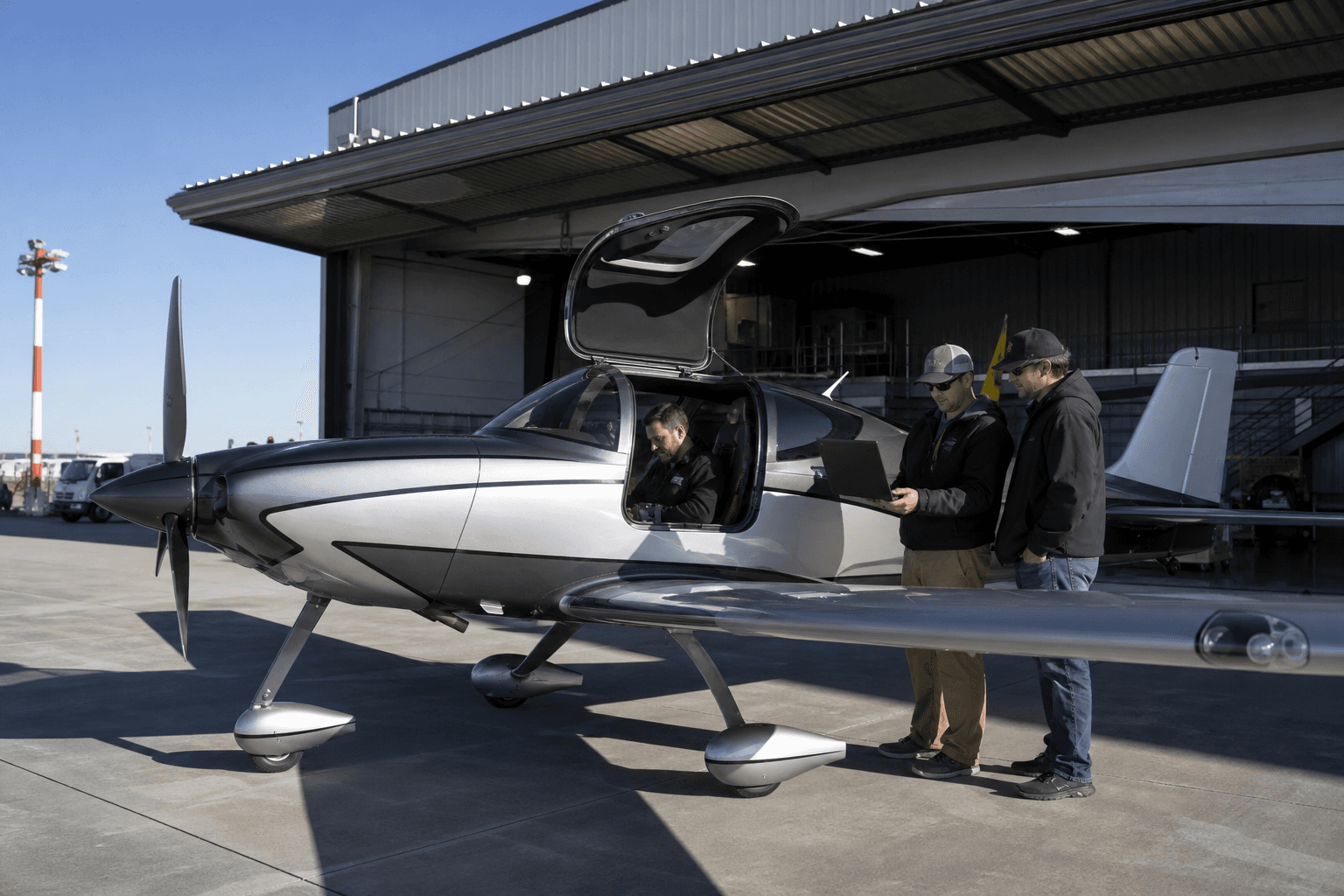
The Federal Aviation Administration (FAA) has accepted a new set of industry standards that will allow manufacturers to begin certifying larger and more capable light-sport aircraft under the agency's MOSAIC rules. The decision gives aircraft makers an FAA-approved way to show that new airplanes, gliders, powered-lift aircraft and gyroplanes meet the design and production requirements that take effect on July 24, 2026. Without those standards, manufacturers had the new regulations but lacked the detailed compliance framework needed to certify aircraft under them. The FAA accepted four ASTM International integration standards as a means of compliance with the new Part 22 airworthiness rules, which took effect on July 16. ASTM's F37 committee organized each integration standard around a package of more detailed requirements covering areas such as aircraft structures, flight characteristics, landing gear, engines, propellers, fuel and electrical systems, installed equipment and occupant protection. The packages also include requirements for production testing, quality assurance, maintenance programs and continued operational safety. Some aircraft may need to meet additional standards for night flight, instrument operations, water operations or certain aerial-work missions. The move removes one of the final obstacles to the aircraft-certification portion of MOSAIC, short for Modernization of Special Airworthiness Certification. The FAA finalized the rule in July 2025. Changes affecting sport pilots and light-sport repairmen took effect in October 2025. MOSAIC replaces several rigid limits from the original light-sport rules with performance-based requirements. The rule opens the category to aircraft with as many as four seats and allows designs with retractable landing gear, constant-speed propellers and a wider range of propulsion systems. The FAA also removed the 1,320-pound maximum takeoff weight for landplanes. Aircraft must instead meet limits based largely on stall speed, maximum level-flight speed and other performance characteristics. The change gives manufacturers room to develop light-sport aircraft with greater payload, range and utility than most aircraft built under the original rules. The FAA's acceptance does not approve any individual aircraft. Each manufacturer must still design and test its aircraft, follow the applicable standards, maintain a production-quality system and submit a statement of compliance before the FAA issues an airworthiness certificate. The agency also accepted only the specific versions of the standards listed in its notice. ASTM revisions will require separate FAA acceptance before manufacturers can use them as an approved means of compliance. The notice does not cover every aircraft category that MOSAIC could eventually accommodate. The FAA, for instance, has not yet accepted an integration standard for light-sport helicopters. ASTM continues to develop that standard through its F37 committee. ASTM F3840-26 includes provisions for multicopters, but the FAA accepted it only for powered-lift aircraft. The agency also said it has not accepted a standard that would allow manufacturers to classify aircraft in the four covered categories as having simplified flight controls. The new standards will apply to light-sport category aircraft certificated on or after July 24 and to eligible experimental light-sport kits whose manufacturers sign their compliance statements after that date. Previously accepted standards will continue to govern repairs and alterations to aircraft certificated under the old light-sport system. They will also continue to apply to certain kit-built aircraft supported by compliance statements signed before the July 24 date. The change does not automatically increase the approved weight or operating limits of aircraft already in service. Existing aircraft will continue to operate under the certification basis and limitations that manufacturers used when they produced them.
FAA Activates 2026 Oshkosh Flight Procedures for EAA AirVenture Operations
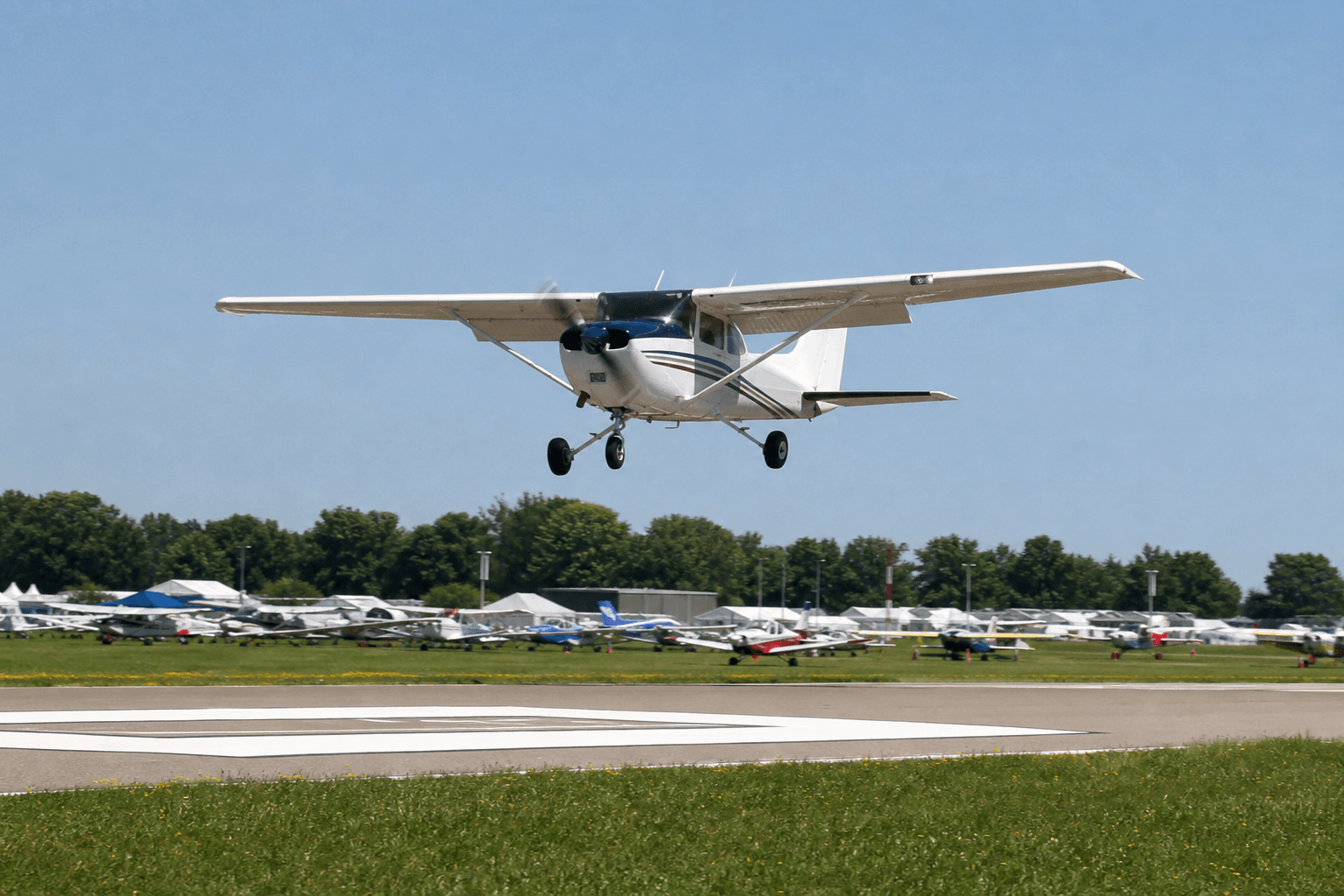
The FAA's special flight procedures for EAA AirVenture Oshkosh 2026 are now in effect. The 32-page notice applies through noon CDT July 27 and covers operations at Wittman Regional Airport and several surrounding airports. Take a look, below. 2026 OSH NOTICE FINAL2_Reviewed Download A few points below serve only as a quick, high level refresher and are by no means comprehensive, nor are they an official guide. It should go without saying that anyone flying the Oshkosh flight procedures should read and rely on the complete FAA notice , carry it in the aircraft and check current NOTAMs, TFRs and ATIS information. Arrival Basics Most VFR traffic will use the Fisk arrival, beginning at a transition point assigned by ATC. Traffic will then proceed toward Ripon and follow the railroad tracks to Fisk. Pilots should obtain the Arrival ATIS on 125.9 no later than 60 miles from Oshkosh. They should then monitor Fisk Approach on 120.7. The standard arrival profile is 90 knots at 1,800 feet MSL, while faster aircraft may use 135 knots at 2,300 feet when needed for safety. Aircraft should remain at least one-half mile behind similar traffic and avoid overtaking, side-by-side flight or S-turns. At Fisk, controllers assign the runway, route to the airport and tower frequency. Pilots may be asked to fly a short approach or land on a designated runway dot, and the notice repeatedly reminds crews to maintain a safe airspeed and go around when an approach does not look right. Closures And Planning Wittman Regional is closed to arrivals each night from 8 p.m. until 7 a.m. and to departures from 8 p.m. until 6 a.m. The airport also closes during airshows, TFRs and certain special activities. Nonscheduled IFR arrivals and some IFR departures require reservations during designated periods, while separate procedures apply to turbine and warbird aircraft, seaplanes, helicopters, ultralights, rotorcraft and approved no-radio vintage aircraft. Fond du Lac, Appleton and Green Bay are among the recommended alternates when Oshkosh closes, parking fills or the arrival becomes unavailable. Pilots should arrive with enough fuel for holding, a possible go-around and a diversion. The full FAA Oshkosh flight procedures notice remains the controlling reference for the applicable routes, frequencies, altitudes and contingencies. Have fun, and fly safe!
The Daily Touch & Go
The day's best aviation news in your inbox. Free, no spam.