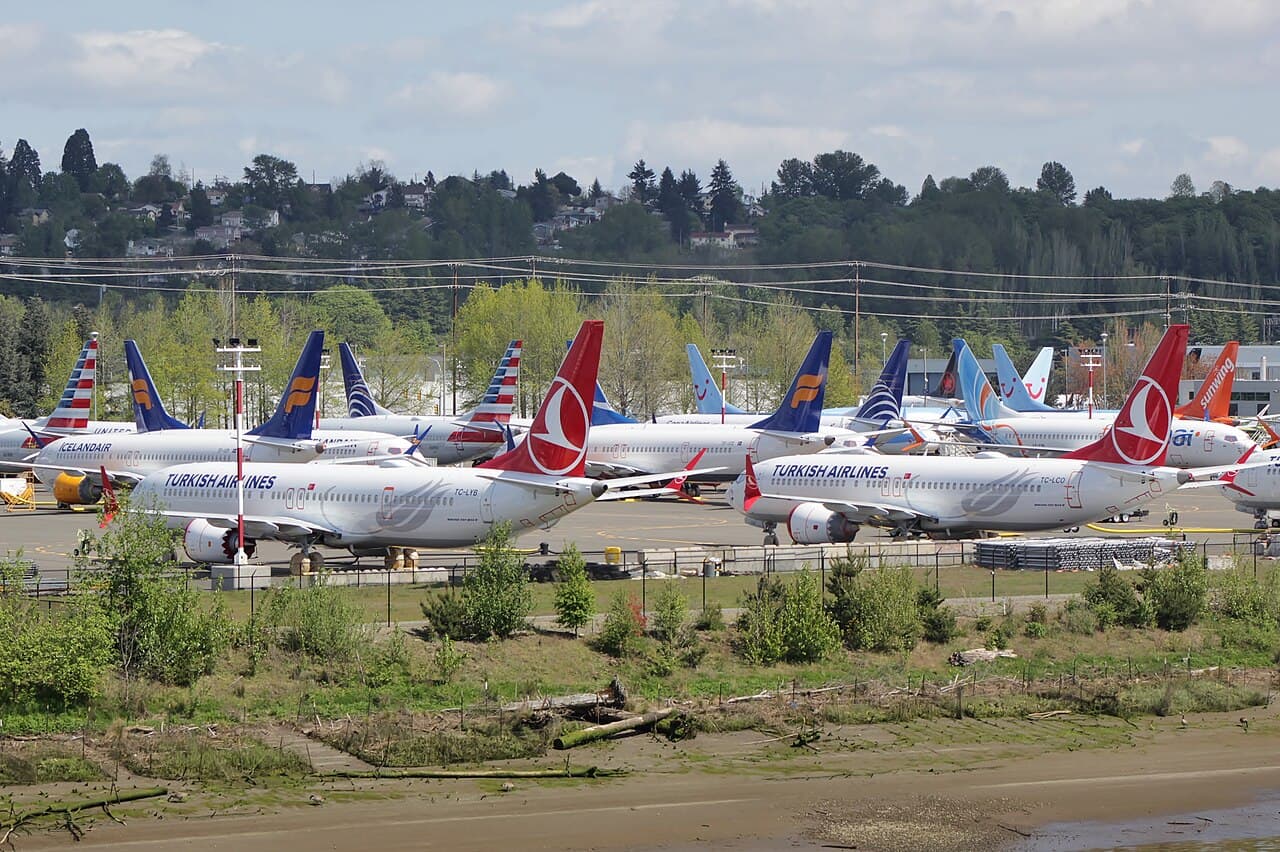
Image: SounderBruce · CC BY-SA 4.0 · via Wikimedia Commons
FAA Restores Boeing's Authority to Certify 737 MAX and 787 Deliveries
After years of oversight following two fatal MAX crashes and quality concerns on the 787, the FAA has returned self-certification rights to Boeing for selected aircraft.
The gist
Boeing regains FAA approval to self-certify 737 MAX and 787s, marking a key step in production and delivery processes.
Continuing coverage
All Boeing →- FAA Restores Boeing's Authority to Self-Certify 737 MAX and 787 Aircraft
- FAA Restores Boeing's Authority to Self-Issue Airworthiness Certificates for 737MAX and 787
- FAA Restores Boeing's Authority to Certify New 737 MAX and 787 Jets
- Boeing advances 737 Max and 777-9 programs with key system redesigns and production ramp-up
- Boeing launches $1 billion 737 North Line in Everett to boost MAX output
The Federal Aviation Administration has formally returned to Boeing the authority to issue airworthiness certificates for the Boeing 737 MAX and 787 Dreamliner aircraft types. This decision comes more than seven years after the FAA revoked Boeing's self-certification rights in the wake of two fatal 737 MAX crashes. Under the restored authority, Boeing can now independently certify completed aircraft for delivery starting July 20, resuming control over a critical step in the aircraft delivery process.
Since September of last year, Boeing and the FAA had been collaborating on an alternating weekly basis for these aircraft types. During this cooperative period, Boeing issued airworthiness certificates while the FAA conducted oversight and quality assessments to verify that the certifications met regulatory standards. The FAA’s recent findings revealed consistency between Boeing’s production quality and their own stringent requirements, prompting the agency to restore certification privileges to the manufacturer.
The grounding of the 737 MAX worldwide began after the two catastrophic crashes: Lion Air Flight 610 off Indonesia in October 2018, and Ethiopian Airlines Flight 302 near Addis Ababa in March 2019. Both accidents involved failures in the Maneuvering Characteristics Augmentation System (MCAS), which repeatedly pushed the aircraft’s nose down. These tragedies resulted in the loss of 346 lives and triggered extensive redesigns and regulatory scrutiny of Boeing’s certification processes before the MAX could return to service.
In addition to the MAX setbacks, the FAA had revoked Boeing’s authority to self-certify the 787 Dreamliner in 2022. This followed multiple recurring manufacturing issues related to the aircraft’s tail fin and horizontal stabilizer. The agency took a direct role in certifying these aircraft to ensure compliance with safety standards prior to customer delivery. The decision to restore certification authority reflects an improved production quality and manufacturing oversight within Boeing’s operations for the 787.
Despite the recent FAA endorsement, the MAX 7 and MAX 10 variants remain excluded from the reinstatement as they have yet to achieve full certification. Boeing expects these variants to receive approval within the year. Meanwhile, Boeing continues to operate under a government-imposed production cap limiting deliveries to 47 MAX aircraft per month, a measure that remains in place to maintain quality control as production ramps up.
Regaining certification authority allows Boeing to reduce delivery bottlenecks by expediting the signoff process for new aircraft. This is particularly significant given the large order backlog Boeing faces and the ongoing competition within the commercial aviation sector. The move signals regulatory confidence in Boeing’s improved internal oversight and production standards for these prominent aircraft families.
The FAA’s confidence stems from an eight-month evaluation period comparing Boeing’s internal findings with the agency’s quality and safety criteria. Results showed that Boeing’s quality assurance systems have reached levels consistent with FAA expectations, providing tangible assurance that airworthiness certificates issued by Boeing can be trusted. The restored responsibility also alleviates some of the regulatory burden previously slowing aircraft delivery timelines.
This restoration of certification rights is a hard-earned milestone for Boeing, reflecting overcoming a turbulent period that severely challenged the manufacturer’s reputation and operations. While the 737 MAX crashes precipitated one of the most significant aviation crises in recent history, subsequent reforms and oversight have led to tangible improvements in certification practices. The FAA’s decision is a pivotal step enabling Boeing to streamline its production pipeline for these flagship commercial jets.
Frequently asked questions
- Why did the FAA revoke Boeing's self-certification authority in 2019?
- The FAA revoked Boeing's authority following two fatal 737 MAX crashes caused by issues in the aircraft's automated flight-control system, prompting intense regulatory scrutiny.
- What conditions led to the FAA restoring Boeing's certification authority?
- The FAA saw comparable production quality and airworthiness findings in Boeing's self-issued certificates over an eight-month period, indicating Boeing meets regulatory standards again.
- Will Boeing now self-certify all its 737 MAX variants?
- No, the FAA's restoration of certification rights currently excludes the MAX 7 and MAX 10 variants, which are still undergoing final certification processes.
Read more
All Regulatory →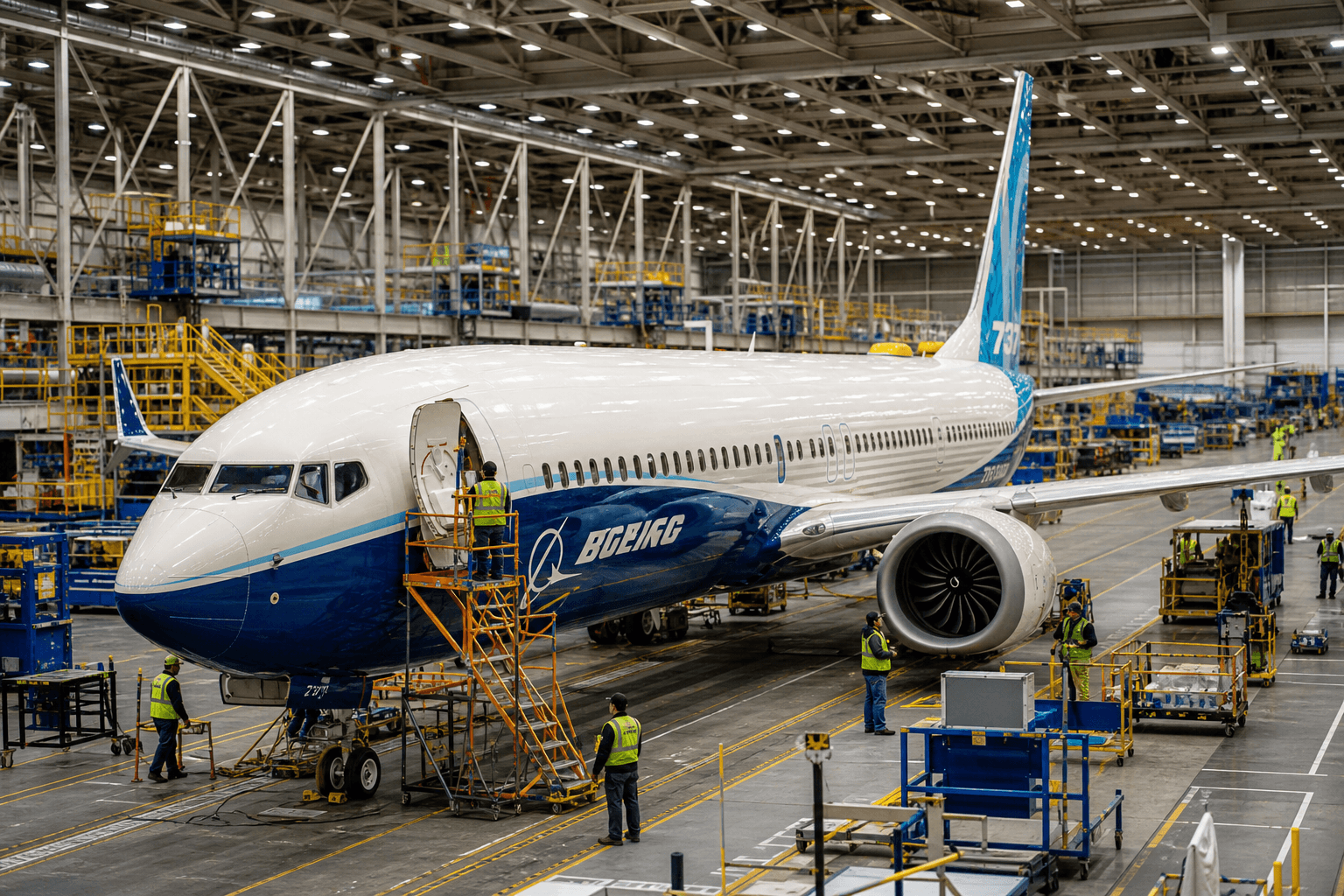
Boeing launches fourth 737 MAX final assembly line at Everett facility
Boeing has opened a fourth 737 MAX final assembly line at its factory in Everett, Washington, marking the first time in more than 50 years that the 737 has been built outside Renton. Production began on the first aircraft on July 6, 2026, with Boeing formally marking the opening of the new North Line four days later. The line occupies space in the Everett factory that was originally built for widebody aircraft, including the 747. The first 737 moving through the line is a 737 MAX 10. Boeing did not publicly identified the customer for that airplane. The new line is designed around the same production process used at Boeing's three existing 737 lines in Renton, about 40 miles south of Everett. Boeing said that should allow teams at both sites to share procedures and production improvements. The North Line will not immediately result in a sharp increase in monthly output. Boeing plans to use the first aircraft for low-rate initial production, giving workers time to test the line, complete regulatory and compliance work and make changes before output increases. The company is currently raising 737 production from 42 to 47 aircraft a month. Once the Renton lines stabilize at that level, the Everett line is expected to provide the additional capacity needed to reach 52 aircraft a month and potentially higher rates later. Boeing has more than 4,000 737 MAX aircraft in its backlog, enough to keep the program busy into the 2030s at current production rates. The added line gives the manufacturer more room to work through those orders while reducing its dependence on three assembly lines at a single site. The Everett line will also handle aircraft that require more time than Boeing's standard production flow. Boeing said that could include jets with more complex interiors or additional work that would otherwise slow one of the Renton lines. Boeing first announced the Everett expansion in January 2023. The factory had available space after the end of 747 production and the consolidation of 787 final assembly in South Carolina. Everett continues to build the 767 and 777 families. The opening comes as Boeing works to rebuild 737 output following years of production interruptions and increased regulatory scrutiny. The Federal Aviation Administration (FAA) imposed limits on 737 production after a door plug separated from an Alaska Airlines 737 MAX 9 shortly after takeoff in January 2024. Boeing has since been increasing output in stages while working with the FAA and suppliers. Boeing said it will not move to higher production rates until the manufacturing system is stable and meeting its quality targets. The company built the first 737 near Seattle before moving the program to Renton in 1970.
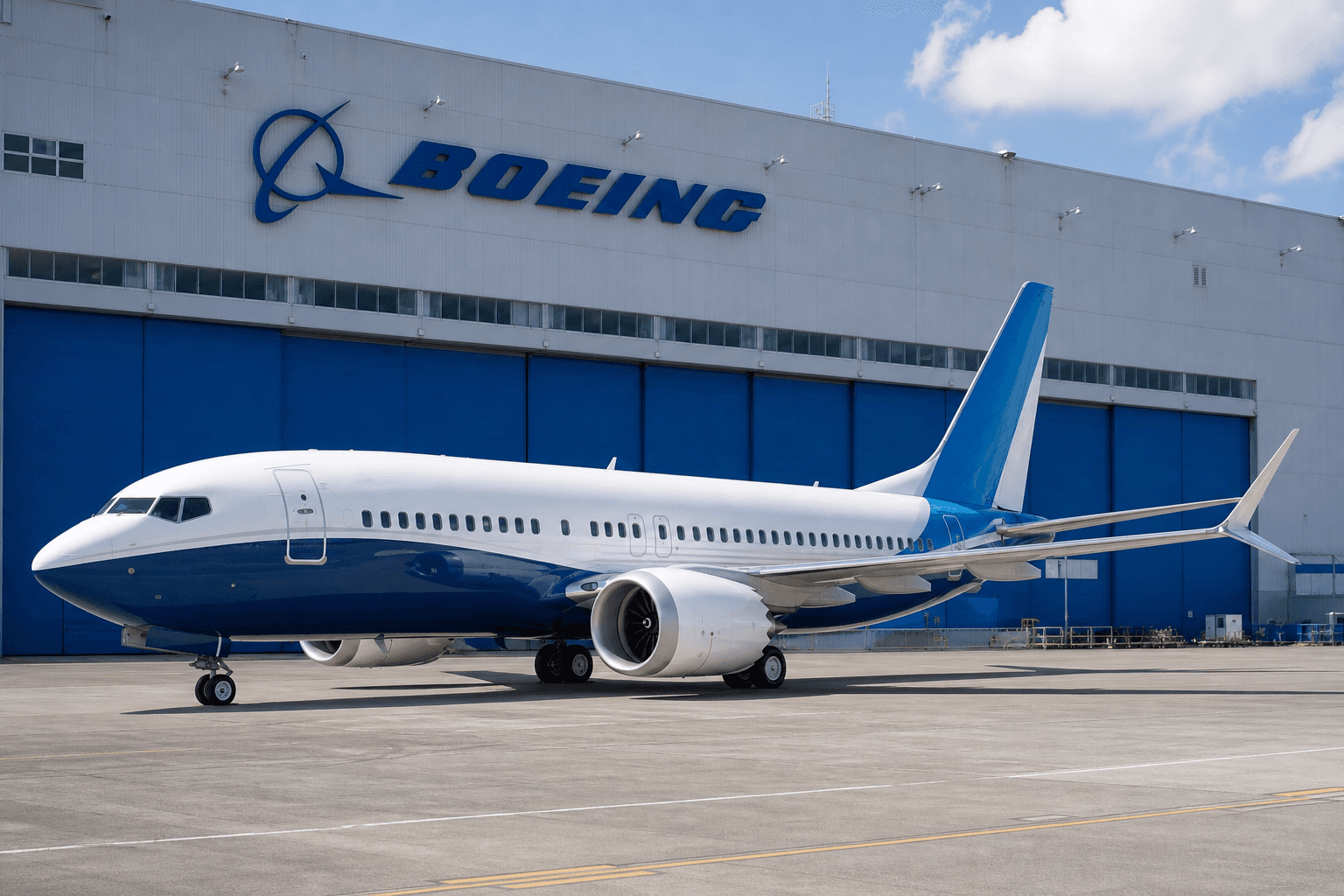
Boeing 737 MAX Surpasses 7,200 Orders, Becoming Company's Best-Selling Aircraft
As the Boeing 737 MAX series nears the final stages of certification for its highly anticipated MAX 10 and MAX 7 variants, the order book has filled up to epic proportions. With the backlog that accumulated after the first quarter of 2026, Boeing is slated to deliver 7,206 airframes of all variants, which makes it the best-selling aircraft in the historic plane maker's history.
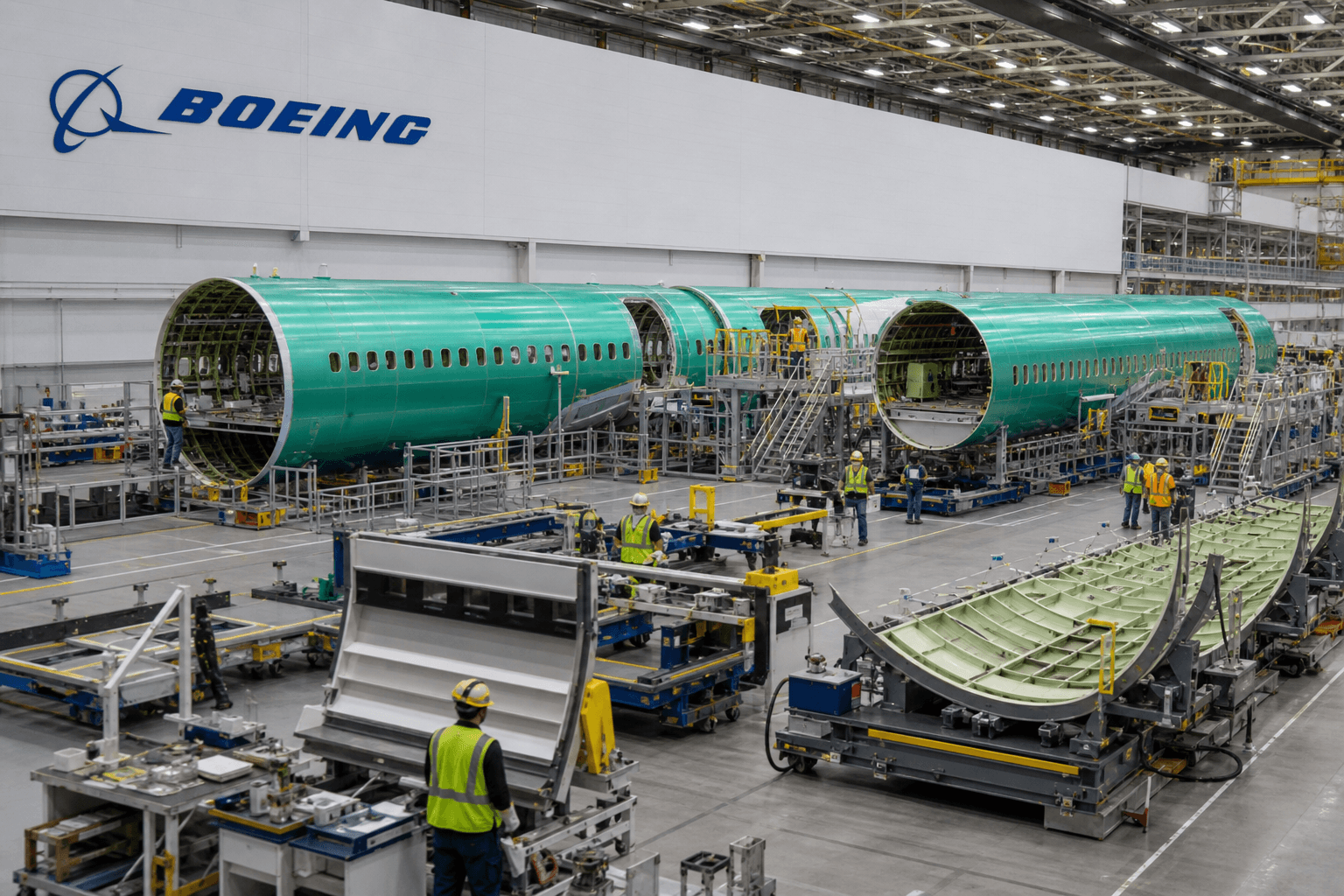
Boeing launches 737 Max assembly at new Everett North Line to boost production
The company intends for the new line to help it achieve a production rate of 52 737s monthly. Boeing has started assembling the first 737 Max on its new line in Everett, marking the start of production at a site the company says will enable it to further accelerate 737 output. The airframer disclosed the milestone in an internal company message on 6 July, saying it began producing the jet on that day and that it will hold a ribbon-cutting ceremony there on 10 July. Boeing has for decades only produced 737s at its Renton facility south of Seattle but several years ago began planning to assemble them also on the new “North Line” at its Everett site north of Seattle. Boeing has said the additional capacity will enable it to ramp production without sacrificing quality. “Boeing teammates began assembling a 737 Max airplane on the new North Line on Monday, marking the start of 737 production at the Everett site. The team worked on the fuselage in the systems installation tool, replicating the build process used on the three 737 production lines about an hour south in the Renton factory,” a message posted to Boeing’s news site reads. The company freed up space in Everett in recent years after ending 747 production entirely and moving all 787 production to its site in North Charleston, South Carolina. The North Line is in the space where Boeing formerly produced 787s. Throughout the last decade, Boeing had assembled 53 737s monthly in Renton. But output slowed following the 737 Max grounding and subsequent Covid-19 pandemic. The company has struggled recently to ramp up production amid persistent quality problems that prompted the Federal Aviation Administration to cap output. Supply chain shortages were also a factor. The supplier issues have since eased, and the FAA has lifted its caps. As a result, Boeing’s production cadence has accelerated, with the company now moving from a rate of 42 to 47 737s monthly. Boeing aims to boost production to 52 jets monthly with assistance from the North Line. Additional rate hikes are also planned. “The build process in Everett will largely be the same as in Renton, apart from the production of the wings. Wings will continue to be built by teammates in Renton and then the 737 Wing Transport Tool will ferry them to Everett for final assembly,” Boeing’s internal message says. The exact composition of the new wing transport system has not immediately been made clear. While the North Line has been designed to accommodate production of all four 737 Max variants, Boeing has said it will initially produce only Max 8s, 9s and 10s – but not Max 7s – in Everett. The Max 7 and Max 10 are not yet certificated but Boeing says it expects to achieve those approvals this year. Workers at the North Line include new employees and those transferred from Renton and another Boeing site in Moses Lake, Washington. Boeing plans first to operate the North Line at "low rate initial production" — a reduced pace that will enable it to closely monitor the production system and demonstrate to the FAA that processes there conform to those in Renton — a requisite for Boeing to receive FAA approval to operate the North Line under its existing 737 production certificate. Boeing previously aimed for the North Line to be running in the second half of 2024 but delayed the plan after the FAA capped 737 output .
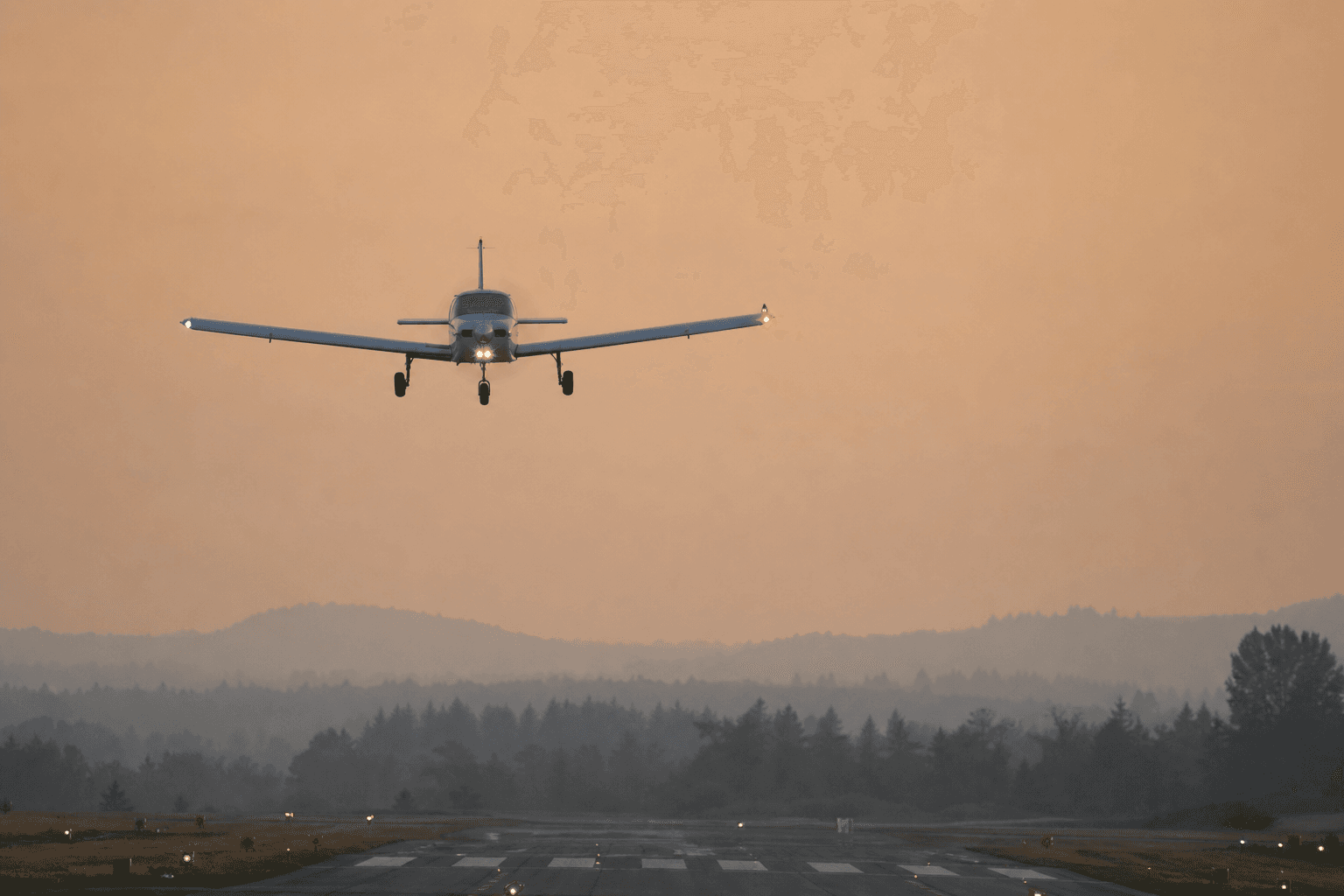
Wildfire smoke reduces visibility near Oshkosh ahead of AirVenture arrivals
Canadian wildfire smoke has sharply reduced visibility in parts of Wisconsin, raising concerns for pilots preparing to fly into EAA AirVenture Oshkosh ahead of the show's opening on Monday. The National Weather Service said wildfire smoke would continue to affect visibility and air quality across northeast Wisconsin through Friday, July 17, 2026, just as the first major wave of aircraft begins arriving at Wittman Regional Airport. At times on July 16, visibility at Oshkosh dropped to around one mile in haze and smoke before improving later in the day. ATC cautioned that changing conditions underscore how quickly an otherwise visual arrival could become difficult or potentially unsafe, particularly for pilots flying into the congested Oshkosh area. The National Weather Service office in Green Bay said smoke could reduce visibility to less than one mile in parts of the region. A statewide air-quality advisory has also been extended until at least 12:00 local time on Friday, with monitoring stations in Wisconsin recording Air Quality Index readings in the hazardous category. Air traffic controllers involved in preparations for AirVenture urged pilots to remain conservative when making weather decisions. Controllers also cautioned pilots not to attempt to thread their aircraft between thunderstorms forecast south of Oshkosh on July 17. They warned that a pilot encountering smoke while flying VFR should not assume that a pop-up IFR clearance will be available into the pilot's preferred airport due to the heavy influx of traffic expected in the region. IFR arrivals at Oshkosh and several surrounding airports require reservations during AirVenture because of the extraordinary amount of traffic in the region. A pilot who encounters deteriorating visibility could therefore be directed to an alternate airport. The FAA's special AirVenture flight procedures took effect at 12:00 local time on Thursday, July 16, and remain in place until 12:00 on July 27. The FAA advises pilots planning to land at Oshkosh to prepare for a possible diversion to Fond du Lac, Appleton or Green Bay. Pilots are also urged to obtain a complete weather briefing, review applicable notices to airmen (Notams) and become familiar with the special procedures before departure. There were no announced changes Thursday to the Fisk VFR arrival, the FAA's published AirVenture procedures or the mass-arrival schedule. The first scheduled mass arrivals are due at Oshkosh on Saturday, July 18. Up to 70 Mooneys are scheduled to arrive at 10:00 local time followed by as many as 130 Bonanzas at 13:00 and 90 Cessnas at 17:00. Sunday's schedule calls for up to 50 Cirrus aircraft to arrive at 10:00 and as many as 70 Cherokees at 12:00. EAA notes that all mass-arrival times remain subject to change because of weather or other factors. Under the special procedures, most VFR aircraft arriving at Oshkosh follow a route through Ripon and Fisk before receiving runway instructions from controllers. The procedure relies heavily on pilots maintaining visual contact with landmarks and other aircraft and rocking their wings to communicate with controllers, making reduced visibility a significant concern. Oshkosh is closed to arriving aircraft each night from 20:00 until 07:00 local time during the special-procedure period. The FAA also warns that some categories of aircraft may be temporarily turned away because of parking saturation, ground conditions, temporary flight restrictions, air shows or other activities. Much of the smoke is coming from hundreds of wildfires burning across Canada, with some of the largest concentrations in Ontario, Manitoba and Saskatchewan. Fires in northern Minnesota are also contributing to the haze over the Upper Midwest. Smoke from the fires has spread across the Great Lakes and into the Northeast US, producing unhealthy or hazardous air quality and reducing visibility in parts of Wisconsin, Minnesota, Michigan and Illinois. Conditions around Oshkosh are expected to improve as winds shift heading into the weekend, and the current National Weather Service forecast does not specifically call for widespread smoke after Friday. Longer-range smoke forecasts remain uncertain, however, and another change in wind direction could bring smoke back during AirVenture next week while the fires continue to burn. EAA AirVenture Oshkosh runs from July 20 through July 26, 2026. Thousands of aircraft are expected to fly into Wittman Regional Airport and surrounding airports before and during the event.
The Daily Touch & Go
The day's best aviation news in your inbox. Free, no spam.