


FAA Awards $875M Contract to Air Space Intelligence for Air Traffic Software Upgrade
Air Space Intelligence will deliver the FAA new software systems over 12 years to enhance traffic flow management and reduce congestion across the National Airspace System.
The gist
The FAA awarded Air Space Intelligence $875 million to modernize air traffic software, aiming to cut delays and improve scheduling nationwide.
The Federal Aviation Administration has awarded a 12-year contract worth $875 million to Air Space Intelligence (ASI) to develop and deploy advanced air traffic management software. This initiative is aimed at modernizing how the FAA schedules and manages flights across the National Airspace System, involving replacement and enhancement of existing traffic flow management tools. The main components under this contract include the Flow Management Data and Services (FMDS) system and the Strategic Management of Airspace, Routes, and Trajectories (SMART) capability, which will function within FMDS.
The FMDS is set to become the technological backbone supporting traffic flow management within the FAA’s Air Traffic Control System Command Center. This system will analyze vast amounts of data including filed flight plans, airline schedules, and real-time aircraft positional updates to estimate traffic demand and gauge capacity limits. This centralized, data-driven approach is designed to optimize the FAA’s ability to manage increasingly complex traffic scenarios, potentially improving the efficiency of routing and airspace utilization.
SMART will complement FMDS by leveraging predictive analytics based on airline schedules, weather forecasts, airport capacities, airspace conditions, and operational restrictions. Its key function is to identify air traffic congestion before flights even depart, allowing controllers and airlines to make proactive scheduling adjustments and reduce bottlenecks. Initial implementation of SMART capabilities is planned for this fall, marking a significant step toward smarter, preemptive traffic management.
FAA Administrator Bryan Bedford highlighted the daily operational challenges faced by air traffic professionals, who manage thousands of scheduling conflicts that often translate into costly delays for passengers. With FMDS and SMART, the FAA seeks to reduce these delays by improving predeparture airspace management, easing controller workload, and directly mitigating congestion across the national airspace network. Bedford emphasized the transformative potential these systems bring to the agency’s traffic management operations.
ASI brings significant operational experience to the contract, having deployed its Flyways AI platform with multiple major U.S. airlines including Alaska Airlines, Delta Air Lines, and United Airlines, as well as with the U.S. Air Force. The company has invested nearly $100 million in developing this platform, demonstrating a strong commitment to advancing air traffic management technologies. This background suggests that the FAA’s new system will be built on proven technology designed for demanding aviation environments.
Bernard Asare, ASI’s president of civil aviation, said that the company has spent years refining its technology in some of the most challenging operational contexts in American aviation. ASI’s ability to deliver a sophisticated yet operationally reliable platform underpins the FAA’s confidence in awarding this significant contract. The company’s previous partnerships with military and commercial entities indicate a broad experience base and capability to scale solutions for the FAA’s comprehensive national needs.
This modernization effort is part of the FAA’s broader plan to replace aging radar, software, hardware, and telecommunications infrastructure by the end of 2028. The current Traffic Flow Management System, which FMDS will replace, has been a critical but old-fashioned tool in handling increasingly complex air traffic patterns and volumes. Transitioning to FMDS integrated with SMART represents a strategic step toward a more automated, data-centric traffic management ecosystem designed to sustain the growing demands of U.S. aviation.
The FAA’s focus on upgrading these core management systems addresses the increasing pressures on the National Airspace System as commercial and military operations grow in volume and complexity. Enhanced traffic flow management technologies are expected to deliver significant benefits including fewer weather and congestion-related delays, improved fuel efficiency, and a better overall passenger experience. By investing in these cutting-edge solutions, the FAA aims to maintain safety and efficiency standards in one of the world’s busiest and most complex airspace systems.
In summary, the FAA’s $875 million contract with Air Space Intelligence marks a milestone in air traffic control modernization. The deployment of FMDS and SMART promises a new era of predictive, integrated, and efficient airspace management. It is a critical move to ensure the U.S. aviation system can meet future challenges by leveraging advanced technology for real-time decision-making and strategic planning across the national network.
Read more
All Regulatory →
FAA Broadens Eligibility for Swift Fuels 100R Unleaded Avgas to Over 1,600 Aircraft Models
On Tuesday, Swift Fuels announced that the Federal Aviation Administration (FAA) has significantly expanded the list of piston aircraft eligible to operate on its 100R unleaded aviation gasoline, adding more than 1,200 engine models and 1,600 airframe models through updates to the fuel’s Supplemental Type Certificate (STC). According to the company, the expanded Approved Model List (AML) includes engines from more than 80 manufacturers, including approximately 395 Lycoming models, 195 Continental models, 95 Curtiss-Wright models, and 95 Pratt & Whitney models. The airframe expansion covers more than 1,600 aircraft models, including approximately 118 Cessna aircraft, 101 Beechcraft models, 98 Piper aircraft, along with aircraft from Mooney, Grumman, Stinson, WACO, Fairchild and others. The expanded approvals represent another step in the FAA’s effort to support the industry’s transition away from leaded 100LL avgas by the end of the decade. Swift said the newly approved aircraft represent about 56% of current U.S. 100LL consumption and mark the first phase of its broader certification plan. The company expects additional approvals for higher-performance engine and airframe combinations during Phase II and Phase III of the program through 2028. The company noted that 100R is currently the only commercially available 100-octane unleaded avgas that both operates under FAA-approved STCs for eligible aircraft and complies with ASTM International’s D8603 production specification. Pilots must obtain a Swift Fuels STC before using 100R in eligible aircraft. Owners who previously purchased the company’s UL94 STC will automatically receive a 100R STC through Swift’s “Forever STC” program at no additional cost. Swift said 100R has been sold commercially for nearly two years at five U.S. and five European airports and that distribution is now expanding. The company expects the initial transition from UL94 to 100R at participating airports to begin this summer, with locations in 29 states, including California, Colorado, Arizona, Florida, Minnesota, Utah and Wisconsin. International availability has also expanded to airports in Canada, Australia, Germany, France, Austria, the United Kingdom and the Netherlands. The company said work continues with the FAA and engine manufacturers to certify the remaining high-performance piston fleet, with additional approvals expected through 2027 and early 2028. The FAA first approved Swift’s original 100R STC in September 2024. Press_Release_-_FAA_AML_Expansion_-_Final-1 Download
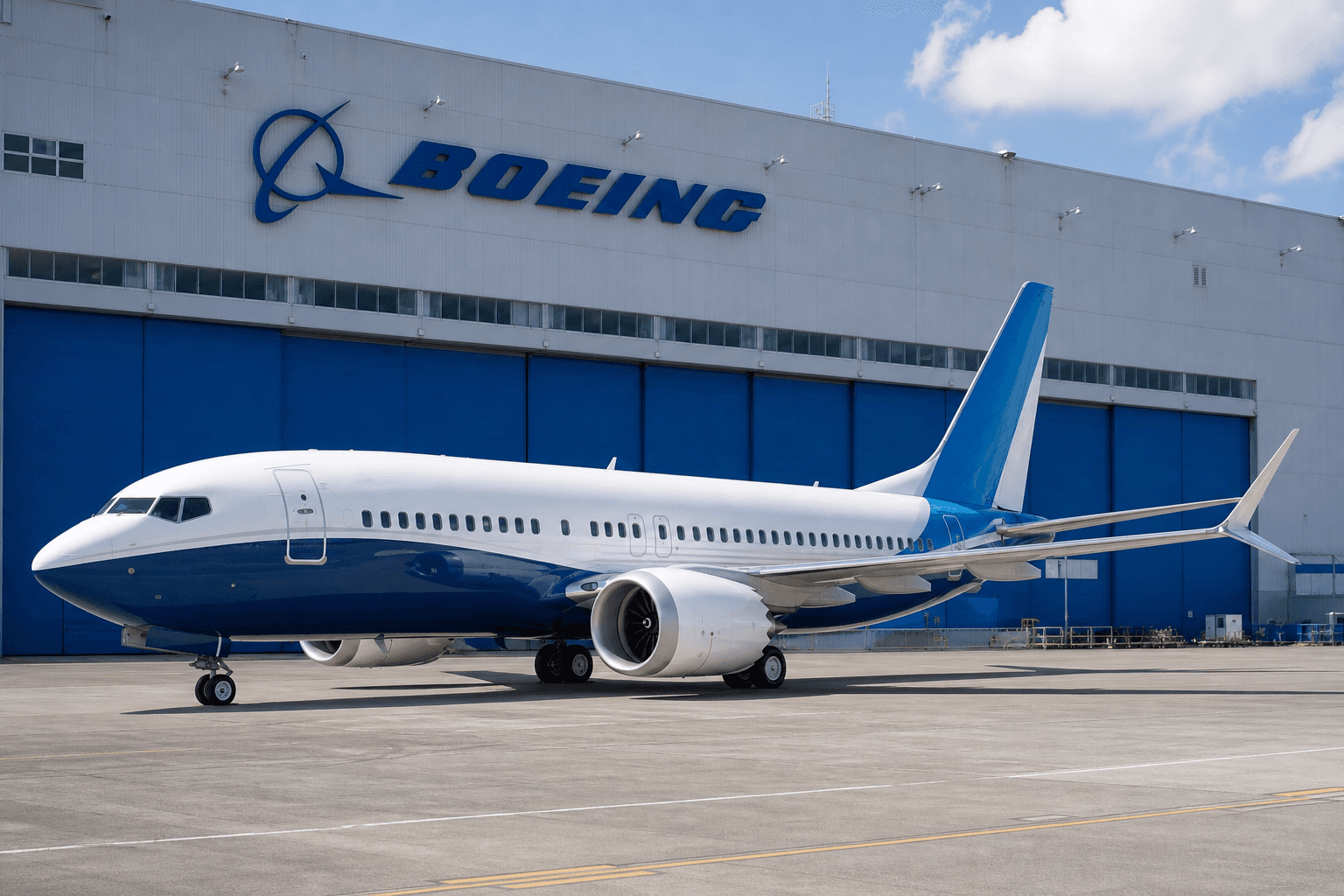
Boeing 737 MAX Surpasses 7,200 Orders, Becoming Company's Best-Selling Aircraft
As the Boeing 737 MAX series nears the final stages of certification for its highly anticipated MAX 10 and MAX 7 variants, the order book has filled up to epic proportions. With the backlog that accumulated after the first quarter of 2026, Boeing is slated to deliver 7,206 airframes of all variants, which makes it the best-selling aircraft in the historic plane maker's history.
FAA Seeks Members for Aircraft Noise Advisory Committee Over Six Months Late
The FAA published a notice July 10 seeking members for an aircraft noise committee more than six months after the panel's recommendations were due under a congressional timetable. Nominations for the Aircraft Noise Advisory Committee must be submitted by Aug. 10. Committee Created By Congress Congress directed the FAA to establish the committee within 180 days of the FAA Reauthorization Act's May 16, 2024 , enactment. The FAA chartered the panel Jan. 14, 2025. The law required the committee to recommend changes to federal aviation noise policy within one year of establishment, placing that deadline on Jan. 14, 2026, based on the FAA's stated establishment date. The delay also affects the FAA's broader review of aircraft noise policy. The agency said it will wait for the committee's recommendations before completing its Noise Policy Review or updating Part 150 airport-noise regulations. The FAA began the review in 2023 and received 4,857 public comments. Noise Standard Under Review The committee will evaluate the FAA's 65-decibel Day-Night Average Sound Level threshold, alternative noise metrics and existing mitigation strategies. The threshold originated in federal policy adopted in 1976 and was incorporated into Part 150 land-use guidelines in 1981. It helps determine residential land-use compatibility, eligibility for federally funded sound insulation and whether noise effects are considered significant during environmental reviews. Membership will include representatives from engine and aircraft manufacturers, airlines, airports, advanced air mobility companies, higher education and airport-adjacent communities. Those categories were established by Congress and do not include a dedicated seat for general aviation pilots, aircraft owners or GA organizations. Members will serve two-year terms and are expected to meet at least twice annually.
FAA Unveils Proposal to Revamp Mechanics' Inspection Authorization Renewals
The proposal would replace the current inspection authorization renewal process.
The Daily Touch & Go
The day's best aviation news in your inbox. Free, no spam.