


Illustration: The Touch & Go
Embraer's Praetor 500E Earns Triple Certification in U.S., Europe, and Brazil
Embraer secures regulatory approvals for the midsize Praetor 500E jet across three major markets, reinforcing its global presence.
The gist
Embraer's Praetor 500E midsize jet gains triple certification, enabling operations in the U.S., Europe, and Brazil.
Continuing coverage
All Business Jets →- Owning a Bombardier Challenger 300 Beats Chartering Beyond 300 Flight Hours Annually
- Bombardier delivers 200th Challenger 3500 jet to Ferrari heir Piero Ferrari
- Embraer Unveils Phenom 300EV With Garmin Emergency Autoland and Enhanced Safety Features
- Emerging Two-Hangar Trend Sees Pilots Balancing Business Jets with Personal Backcountry Aircraft
- Textron Aviation unveils Cessna CJ3 Gen2 and King Air 360 Crimson at Oshkosh 2026
Embraer has achieved triple certification for its Praetor 500E midsize business jet, obtaining approvals from aviation authorities in the United States, Europe, and Brazil. This regulatory milestone allows the aircraft to be introduced commercially across these key global markets. The triple certification signifies compliance with stringent safety and operational standards in diverse regulatory environments, enabling Embraer to expand the jet’s operational footprint.
The Praetor 500E is a midsize business jet designed to deliver long-range performance coupled with advanced technology and comfort. Its certification in these three markets allows operators unprecedented flexibility and assurance when deploying the aircraft in North America, Europe, and South America. Embraer now positions the Praetor 500E as a competitive offering within the midsize segment, targeting customers seeking efficiency, range, and modern cabin amenities.
The certification process involved rigorous testing and validation to meet the Federal Aviation Administration (FAA), European Union Aviation Safety Agency (EASA), and the National Civil Aviation Agency of Brazil (ANAC) standards. Receiving approvals from these three regulatory entities underscores Embraer’s commitment to maintaining high safety and quality benchmarks, and it streamlines delivery and operation of the Praetor 500E on multiple continents.
This development builds upon Embraer’s sustained momentum in the business aviation sector, expanding its portfolio with aircraft that cater to a sophisticated clientele. The triple certification ensures the Praetor 500E can support international travel and business operations seamlessly, meeting diverse customer needs in the growing midsize jet market.
Looking ahead, Embraer’s accomplishment with the Praetor 500E sets a strong foundation for its global sales strategy and supports ongoing innovation in the company’s business aviation lineup. Industry watchers will be attentive to customer uptake and how the jet’s certified capabilities translate into operational advantages across the Americas and Europe. This update enhances Embraer’s competitive position as regulatory barriers are overcome.
Read more
All Regulatory →
FAA Signals Imminent Certification for Boeing 737 MAX 7, MAX 10, and 777X Jets
Reuters spoke with the Deputy Administrator of the Federal Aviation Administration, Chris Rocheleau, on the opening day of the Farnborough Airshow, about the expected certification of Boeing's single-aisle 737 MAX 7, MAX 10, and widebody 777X . He commented that the agency expects all three to be certified in the near future.
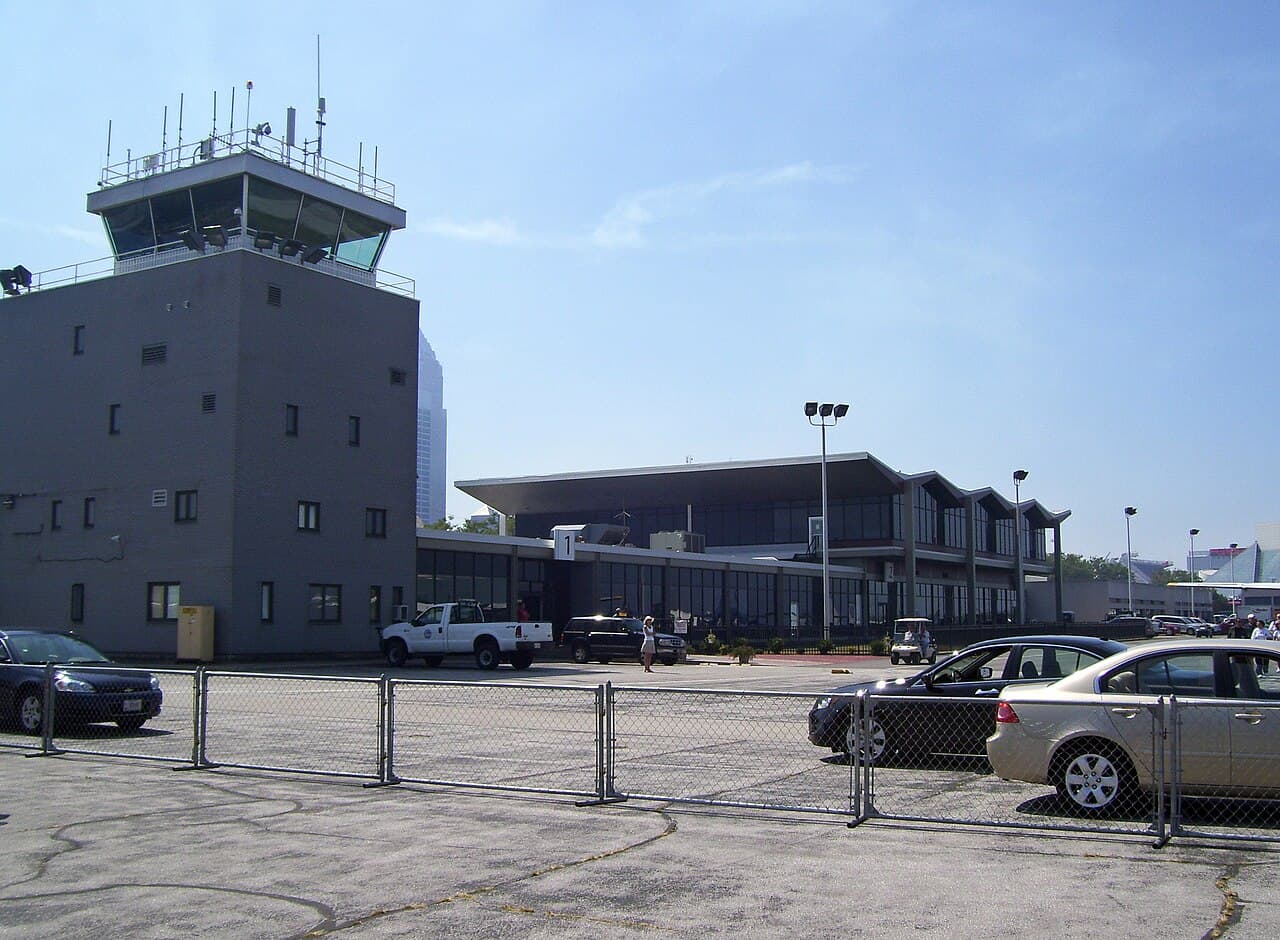
FAA and Ohio Senators Firmly Oppose Closure of Burke Lakefront Airport
Contact: Dan Hubbard, 202-431-5970, dhubbard@nbaa.org Washington, DC, Aug. 15, 2026 –  The National Business Aviation Association (NBAA) applauds the Federal Aviation Administration (FAA) and Ohio's U.S. senators for … Continued

FAA Rules Texas Airport Violated Federal Rules by Selling Land for Nearby Housing Development
The FAA has found the sponsor of Pearland Regional Airport —a privately owned, public-use airport near Houston—in violation of four federal grant assurances after it sold airport property to a developer that is building hundreds of homes immediately adjacent to the airport.

New Radar at Newark Debuts as DOT Seeks $10B More for Air Traffic Control Upgrades
U.S. Transportation Secretary Sean Duffy and FAA Administrator Bryan Bedford on Monday inaugurated a new surface movement radar (SMR) at Newark Liberty International Airport (KEWR). But the officials are seeking at least $10 billion more for further air traffic control (ATC) upgrades. Duffy has previously requested $19 billion in addition to the $12.5 billion allocated by Congress to the effort in 2025. In July, the Modern Skies Coalition, a group of aviation stakeholders led by the Aircraft Owners and Pilots Association (AOPA), called on Congress to allocate another $20 billion. On Monday, though, Duffy said the Transportation Department (DOT) "would love $20 [billion], but we'll take $10 [billion]." "Hopefully, by the end of this year we'll get it," he told a crowd of reporters at the airport's remote control tower. Duffy and Bedford reiterated that the multibillion-dollar ATC modernization effort should be complete by the end of 2028. The former said that the effort is "actually saving money" that has allowed DOT to begin developing Strategic Management of Airspace, Routes, and Trajectories (SMART)—an AI-powered software that could predict airspace conditions months in advance. The DOT plans to begin testing a "portion" of SMART in September and fully deploy the system by the spring, Duffy said. The goal is for it to come online with infrastructure upgrades such as the new surface movement radar at Newark Airport. Duffy said the $10 billion that he requested Monday will cover the software's development. But he said a "second $10 billion" would be required for building the "actual bricks and mortar" for new ATC towers and facilities, such as terminal radar approach control (TRACON) sites. "[President Donald Trump] has leaned in and has been a great advocate for getting us the money," Duffy said. "He wants updates on how we're doing and how quickly we can go." Bedford was also adamant about securing additional funding. In tandem with infrastructure upgrades and controller hiring, he said SMART will be indispensable in meeting future demand on the National Airspace System (NAS). He said the FAA projects the annual number of passengers flying through the NAS will double from 1 to 2 billion over the next two decades. "We have to have a modern, cloud-based, cybersecure, infinite data capacity system, with modern software," Bedford said. However, it is unclear if $10 billion will be enough to cover that. In July, the Modern Skies Coalition estimated that a new common automation platform (CAP)—designed to combine en route and terminal data—would alone cost $10 billion. ATC Modernization Continues Apace Duffy said the new SMR at Newark Airport replaces a system that is about 30 years old. Bedford said replacement parts are no longer made for the old system. The SMR tracks vehicles on airport runways, taxiways, and ramps and is designed to give controllers better visibility of the ground and aircraft on final approach. "If they can't see out of the tower and see what's happening on the tarmac, they can actually use this radar to actually see on the screens where everything is," Duffy said. Added Kathryn Garcia, executive director of the Port Authority of New York and New Jersey, "this technology will help the controllers who operate this airspace manage their work more efficiently." Bedford said the SMR, built by Saab in upstate New York, was the fifth of 53 planned deployments to the nation's 44 busiest airports. Four more, he said, are deployed at three other sites. Garcia said new SMRs will also be installed at LaGuardia Airport (KLGA) and John F. Kennedy International Airport (KJFK) in 2027 or '28. Duffy said radar outages at Newark last year were influential in Congress' decision to allocate the initial $12.5 billion for ATC upgrades. Two 90-second outages left controllers without radar and communications, prompting several to take mental health leave. The DOT replaced copper wiring that carried telecommunications data from a facility on Long Island, New York, to the Philadelphia TRACON—where ATCs oversee Newark airspace—to help prevent future outages. Bedford on Monday said the airport has seen a "great recovery of reliable operations" since last year but that there is "more to do for sure." That work continues apace. For example, Duffy said that about 60 percent of copper telecommunications wiring has been upgraded to newer systems. That figure was about 50 percent in April. Out of 220 planned surface awareness initiative (SAI) installations, Duffy said that 96 are complete versus 54 in April. Of more than 1,500 radio site conversions, 363 are complete compared to about 250 in April. In addition, Duffy said the agency has installed 151 out of 450 new voice switches and converted from paper to electronic flight strips at 19 of 89 planned towers. He said the effort spans all 50 states and is "one of the largest projects in America right now." At the same time, Bedford said the FAA has hired 4,000 new controllers since the ATC modernization push began. About 1,000 of them are "close to being certified," about 1,500 are training at facilities, and another 600 are at the FAA Academy in Oklahoma City. "It's no secret that the FAA is understaffed at its critical terminal facilities and towers," Bedford said. "So we are moving with urgency to clog the staffing gaps." Getting SMARTer Duffy and Bedford praised the speed of the modernization effort thus far. But Bedford said the program will "not be successful" unless SMART is rolled out in tandem. Duffy said the DOT will "slow-roll different aspects" of SMART rather than introduce the whole system at once. He said the agency has demonstrated it to Congress and plans to do so for Trump. "If there's paths through the weather that we can safely take, we can deploy those for our airlines and increase the through capacity," Duffy said. The secretary said the idea of SMART is not to "outsource" airspace management to AI but rather to give controllers another tool in their toolkit. "We can't control the weather, but we can control the decisions that we make to keep airspace open, or only close airspace when we absolutely have to," said Bedford. "The primary mission of the air traffic organization is to keep things separated. None of that's changing…It's going to create more safe capacity to stop the traffic jams on the airports and get flights moving." FLYING readers can track progress on ATC modernization using the FAA's Modern Skies portal .
The Daily Touch & Go
The day's best aviation news in your inbox. Free, no spam.