

Illustration: The Touch & Go
US Air Force Fighter Pilots Earn Base Salary Plus Bonuses Amid Pilot Shortage
US Air Force pilots earn base pay from about $50,000 to $150,000 depending on rank, with bonuses and allowances pushing total compensation upwards amid a critical pilot shortage.
The gist
US Air Force fighter pilots earn $50K to $150K base salary plus bonuses and benefits as the service faces a persistent pilot shortage and high training costs.
The United States Air Force employs around 13,000 pilots, including fighter, transport, and other mission roles, all of whom are commissioned officers paid under a standardized military pay scale. Entry-level pilots, ranked as Second Lieutenants, receive a base salary starting at about $49,800 annually, while senior pilots and commanders earn substantially more, with base pay exceeding $150,000 for Lieutenant Colonels and above. Total yearly compensation increases significantly when factoring in allowances, bonuses, and benefits tied to military service.
Pilot pay varies by rank and years of service. After two years, pilots typically promote to First Lieutenant, with base salaries rising to a range between $57,000 and $64,000 annually and total compensation potentially reaching up to $100,000. Captains with four to ten years of experience may earn base pay between roughly $66,600 and $88,600 and total yearly compensation that can reach $130,000. Majors and Lieutenant Commanders with a decade or more of service can see base pay between $95,000 and $113,000, with total compensation climbing to $160,000 or higher.
The pay scale includes numerous additional entitlements beyond basic salary. Aviation Incentive Pay offers monthly bonuses between $150 and $1,000, designed to reward the demanding responsibilities borne by pilots. Other significant contributions come from tax-free Basic Allowances for Housing and Subsistence, which can total $20,000 to $40,000 annually. Retention bonuses for critical roles like fighter pilots may add as much as $50,000 yearly. These incentives are crucial for maintaining an experienced pilot cadre amid the challenging pilot shortage.
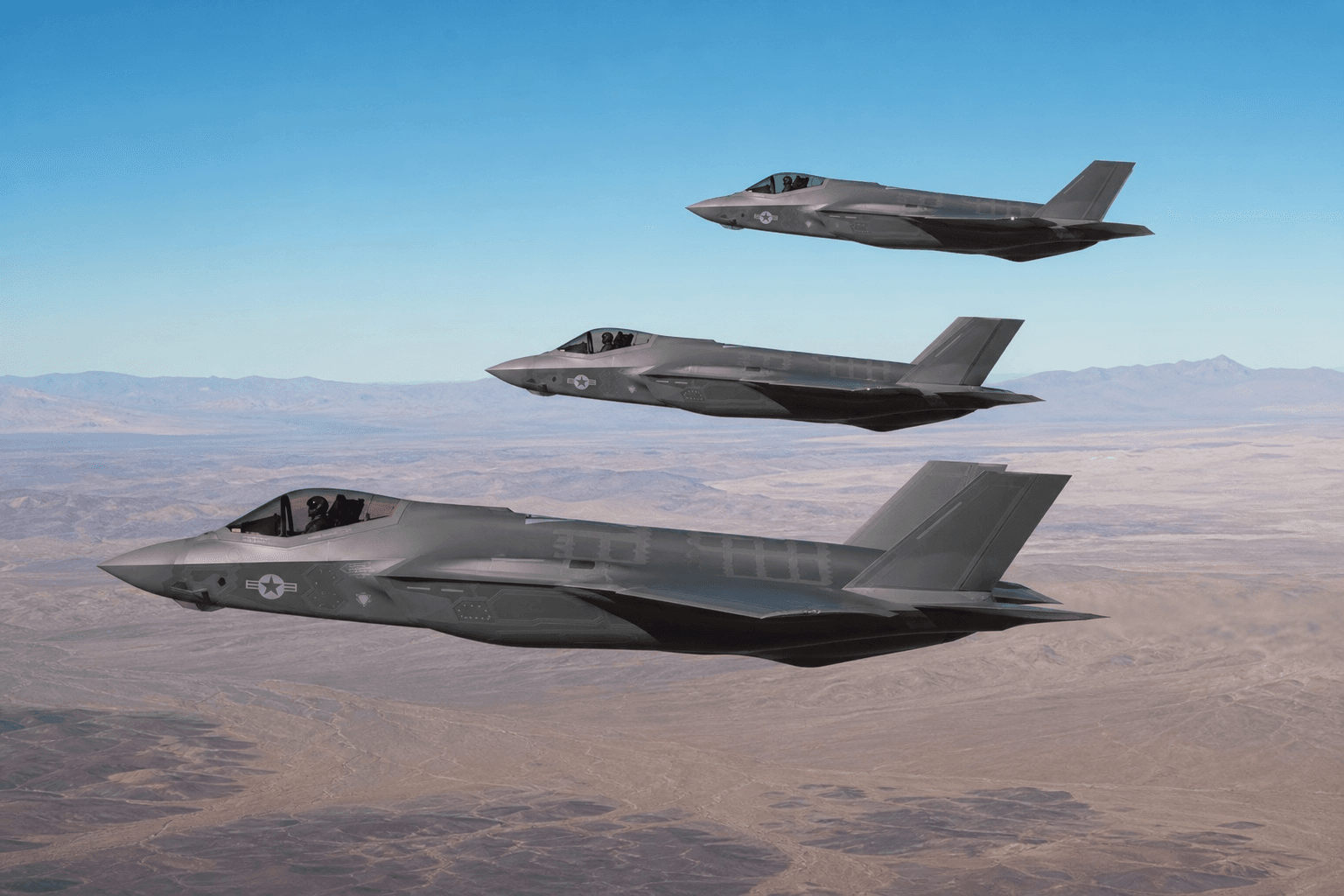
Training costs for Air Force pilots are notoriously high, substantially exceeding their annual salaries. According to 2018 estimates, training to fly advanced fighters ranges from about $5.6 million for F-16 pilots up to nearly $11 million for fifth-generation jets such as the F-35 and F-22. Adjusted for inflation, current training expenses likely exceed $13 million for these top-tier fighters. The enormous investment in pilot training underpins the urgency to retain highly skilled aviators through competitive compensation packages and career incentives.
The Air Force trains roughly 1,400 new pilots each year but struggles to meet its goal; in 2023, production fell short at around 1,350 new pilots against a target of 1,470. This shortfall contributes to a chronic pilot deficit estimated at nearly 2,000. The shortage underscores the critical strategic importance of pilot retention, intensified by the time, resources, and cost required to produce combat-ready aviators.
Aside from active duty Air Force pilots, several other US military branches operate aviation units, including the Navy, Marine Corps, Army, and Coast Guard. All follow the Department of Defense's uniform officer pay tables. However, pilot numbers vary widely, with about 6,300 Navy pilots and 7,300 Army active-duty pilots. The Coast Guard maintains roughly 800 pilots across fixed and rotary-wing aircraft, operating a sizable fleet given its mission scope.
Becoming a pilot in the US Air Force requires commissioning as an officer through one of several paths, including the Air Force Academy, ROTC programs, or Officer Training School, reflecting the high responsibility and leadership demands on pilots. Beyond salary and flight duties, Air Force pilots benefit from comprehensive healthcare, retirement pensions after 20 years of service, education assistance, and career stability.
With pilot training costs continuing to climb and the shortage persisting, the Air Force's compensation structure aims to retain its most valuable aviators amid fierce competition. The combination of base pay, bonuses, housing allowances, healthcare, and retirement benefits forms a comprehensive package designed to sustain the operational readiness and strategic depth of the US military's air power.
Despite the challenges, the Air Force remains committed to meeting pilot requirements and addressing shortages through expanded training programs and incentives. Tracking developments in pilot recruitment, production rates, and retention bonuses will provide insight into how the service manages this key personnel issue amid evolving defense priorities.
Frequently asked questions
- What is the starting base salary for a US Air Force pilot?
- US Air Force pilots starting as Second Lieutenants receive an annual base salary of approximately $49,800.
- What additional pay and benefits do US Air Force pilots receive beyond base salary?
- Pilots can earn Aviation Incentive Pay up to $1,000 monthly, tax-free allowances for housing and subsistence totaling up to $40,000 annually, retention bonuses up to $50,000, comprehensive medical coverage, pensions after 20 years, and tuition assistance.
- How much does it cost to train a US Air Force fighter pilot?
- Training costs vary by aircraft but generally range from around $5.6 million for F-16 pilots to over $13 million for fifth-generation fighters like the F-22 and F-35, adjusted for inflation from earlier estimates.
Read more
All Military/Defense →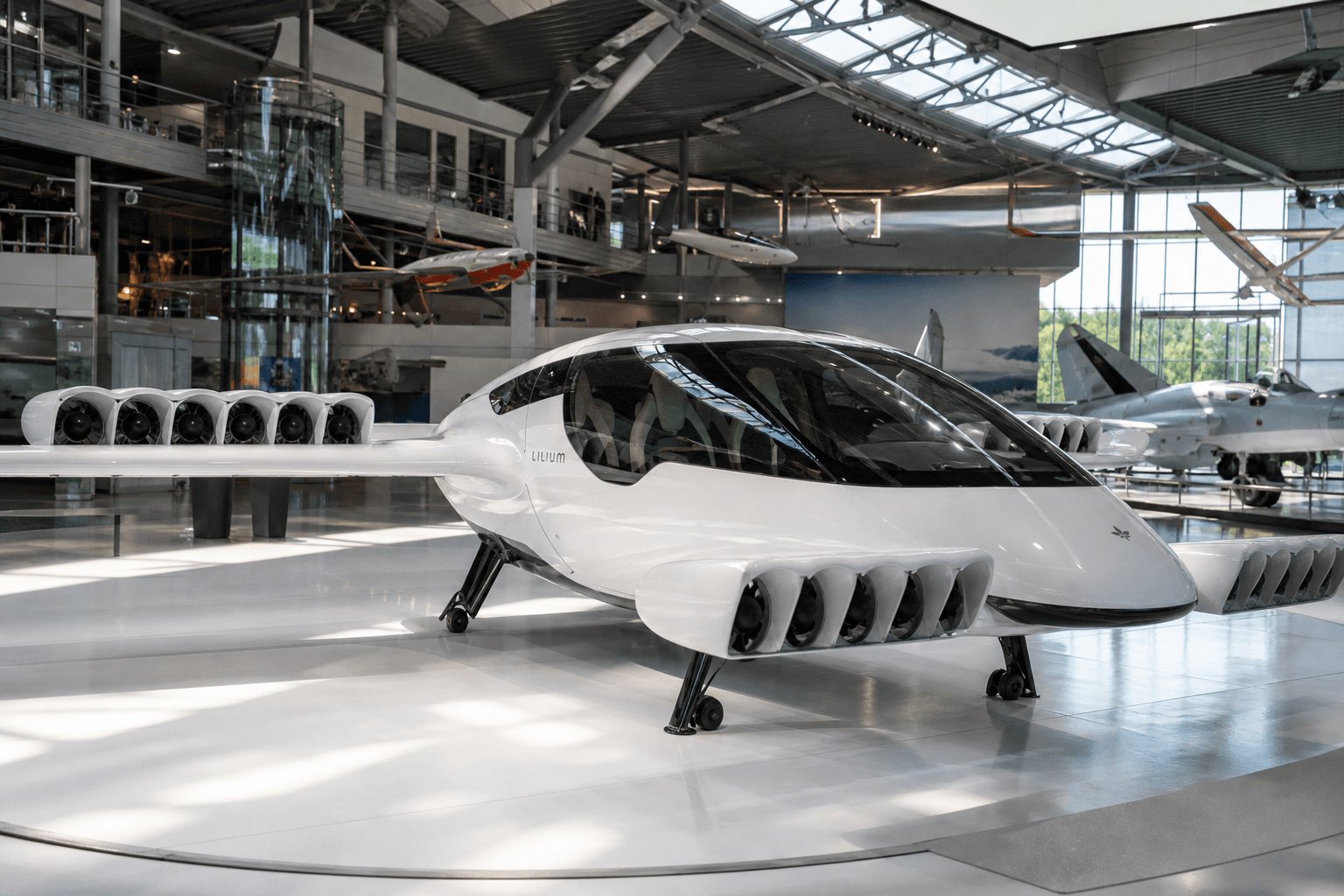
Historic Lilium Phoenix eVTOL prototypes preserved in German aviation museums
The lighter side of Flight International . Museum pieces With a growing list of advanced air mobility ventures giving up the ghost well before their experimental designs reach the market, history risks losing a physical record of their visions. However, thanks to the efforts of Robert Gardemin, the original test aircraft of one of the electric vertical take-off and landing (eVTOL) sector's pioneers have been saved. German developer Lilium filed for insolvency in October 2024. With no buyer found for the company's assets, Gardemin launched a successful crowdfunding campaign to raise €10,000 ($11,600) to rescue the so-called Phoenix scaled prototypes, which he describes as representing "years of dedicated work by over 1,000 people and one of the most ambitious electric aviation programmes ever developed in Germany". The uncrewed test aircraft had been heading for the scrapheap after completing early flight testing in Spain, with one – Phoenix 2 – notching almost 200 flight hours. According to an update from Gardemin on LinkedIn, the prototypes have been transferred to the Deutsches Technikmuseum in Berlin and Luftfahrtmuseum Wernigerode in Saxony Anhalt, where they will be reassembled for display, ensuring that "an important chapter in the emergence of eVTOL technology is not erased but made accessible to the public for generations to come". Joyce’s choices Alan Joyce was a working class lad from Dublin, the son of a cleaner and a factory worker, who through a love of numbers – mathematics, then management science – found himself working for and then running airlines, including, at the age of 42, Qantas. Now, almost three years after he quit as chief executive of the Australian flag-carrier, Joyce has penned a memoir, Riding the Jet Stream . He says he had two motivations – one professional, one personal. He needed to "set the record straight" about his 15-year stint at Qantas, including the grounding of the fleet in 2011, the industrial battles, and steering the business through the pandemic. Former Qantas CEO shares his experiences. Source: BillyPix "I wanted to tell it as it actually unfolded, in the room, under pressure, with every decision carrying enormous consequences for tens of thousands of people," he explains. The other was "more personal", he says. "I wanted to encourage young leaders to learn from my successes and failures, because I think that's where the real lessons sit." He also writes about what it was like to be "one of the few openly gay CEOs in corporate Australia" and how he used his platform for "something bigger than the bottom line, including the campaign for marriage equality". Riding the Jet Stream is available from Hardie Grant Books. Chipmunk at 80 Published to commemorate the 80th anniversary of the de Havilland Canada DHC-1’s first flight, Chipmunk at 80 includes “first-hand stories from pilots, engineers and custodians”, along with over 200 photographs, including rare archive shots. Written by Ben Griffiths and Ian Black, Volume 1 is a fitting tribute to an iconic type much loved by generations of military pilots, air cadets and total aviation people everywhere. Available to order now via chipmunkat80.carrd.co for £37.99. Bristol where-port A confused Doug Brown references a recent picture from The Sun newspaper, illustrating a story about Bristol airport's ambition to introduce long-haul flights. "I couldn't work out why Lulsgate had big X marks on the runway, and a massive displaced threshold I don't remember from landing my Hamble Cherokee there, until I spotted the Brabazon hangars to the right of the shot," he says. The picture was of a Bristol airport, but not the Bristol airport, BRS in Lulsgate Bottom. Instead, it was the former Filton airfield, famous birthplace of Concorde and now largely a housing estate, with the main Brabazon hangar repurposed to a music arena. Yuckspeak We can also coordinate any speaking moments with members of the leadership team = We can arrange an interview. Copa mechanism We are warned to avoid mangling metaphors, but surely there is an exception for Copa Airlines boss Pedro Heilbron's splendid summation of the Panamanian carrier's risk strategy: "We never roll the dice without a parachute." From yuckspeak to tales of yore, send your offcuts to murdo.morrison@flightglobal.com From the archive 1926 Gentleman’s way The Chairman, in thanking Mr. Upson for his talk, said that, having tested most of the methods of getting up into the air, he considered the airship the only gentleman’s way of travelling. His own experience in English airships was that one sat in comfort, there was no noise, one rang a bell for anything one wanted to eat or drink, one gazed quietly out on the scenery, and one could talk. Most of all, however, he would like to know from Mr. Upson when this airship was going to be finished. They had all talked about airships for such a long time, and what he wanted was to see the airship in the air. Mr. Upson said he was very sorry that the one question as to when the airship would be finished was the one that he was afraid he was unable to answer. 1951 ‘The Big Show’ Every evening, Pierre Clostermann recorded the story of his life with the R.A.F., and by the end of the war his jottings filled three large notebooks. They have now been published as "The Big Show", so that “Free Frenchmen might be reminded of their own hopes and loyalties” in those darker years and so that the tales of their sons’ deeds might give some consolation to the families of his fallen friends. Not one of these pages can be passed over lightly. The breathless concentration as the judder of a Spitfire’s cannon answers the anxious thumb at the gun-button, heart-beats quickening at the telephone’s urgent tinkle, the proud yet pitiful show of bravado as the lone pilot returns without his comrades – all those undying moments of a fighter pilot’s life are here. 1976 Amateur aerobatics There is no legislation to prevent an untutored pilot from attempting aerobatics, or to prevent an unqualified tutor from doing aerobatic coaching. This is a curious anomaly. A pilot may not take a passenger at night without being suitably trained and tested, yet he can legally roll his unsuspecting victim upside-down with no formal training at all. It is questionable as to which is more hazardous. Aviation legislation can be meticulous on seemingly petty points – it is only recently that the CAA has proposed making shoulder harnesses mandatory for the front seats of light aircraft – but appears sometimes to turn a blind eye to others. So there is little to prevent a pilot from picking up a few tips from an aerobatic pundit and then going up to try some manoeuvre himself. 2001 After the attacks With the backlog of passengers stranded by the events of 11 September now cleared, the slump in passenger confidence will leave the airlines having to fly, in some cases, near-empty aircraft. With little hope of securing finance from investors, the only solution is a direct injection of Federal cash. Assuming there are no more terrorist attacks, passengers may return, slowly. But airlines will have to cope with the cost of implementing new security measures. Israeli airline El Al is arguably the safest to fly on, but the cost of implementing El Al-style security measures, from pressurised, double armoured doors to the flightdeck, to individually interviewing each passenger, would be crippling. That is why the USA must step in and fund new security measures directly.
![Pentagon Releases Its Clearest UFO Video Yet—A Massive Structure Captured By Military Sensors [Roundup]](/_next/image?url=https%3A%2F%2Favoibnodqwjxlpbhunuu.supabase.co%2Fstorage%2Fv1%2Fobject%2Fpublic%2Fstory-images%2Fai%2Fpentagon-releases-its-clearest-ufo-video-yet-a-massive-structure-captured-by-mil-160d06a6.png&w=3840&q=75)
Pentagon Releases Sharply Detailed Military Infrared Footage of Large UFO Structure
The Pentagon has released a fourth batch of declassified UFO files, including unusually clear military-sensor footage of a massive two-tiered object. Plus Uber fights competition, Citi cuts JetBlue transfers, a Marriott booking trick, and more.
Ukraine Pursues European Drone Deals Amid Kamikaze Strikes on Russian Lines
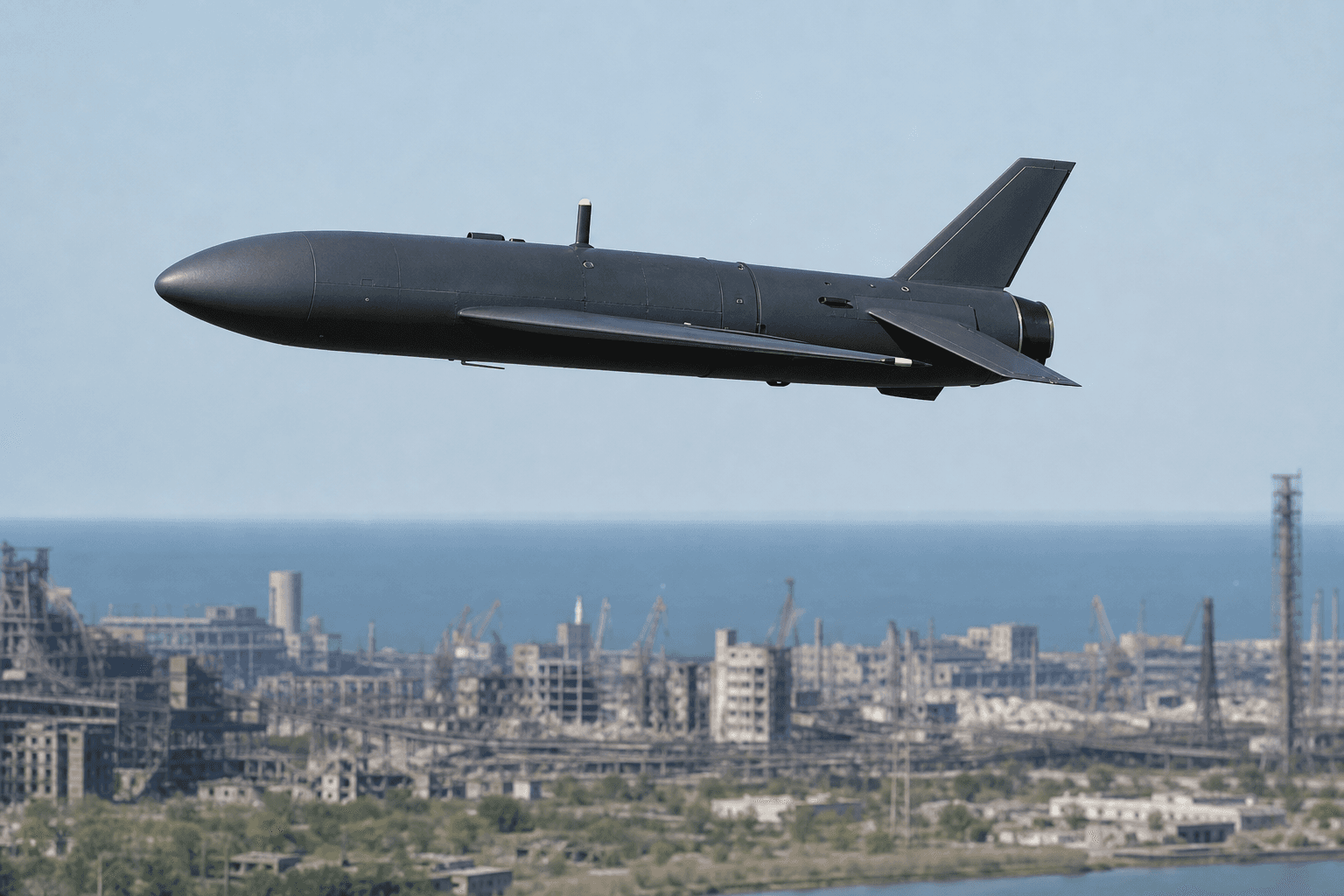
Pictured is a photo of a May 8 posting by the Ukrainian National Guard’s First Azov Corps of a Hornet kamikaze drone near the Donetsk region’s port city of Mariupol on the Sea of Azov above the Black Sea. Russia captured the city in May, 2022, but Ukraine is trying to retake it. Ukrainian President Volodymyr Zelenskyy is pursuing drone deals with European nations, even as the U.S. has so far delayed such a deal and as Ukraine uses increasingly long range, kamikaze "one way attack" drones to strike Russian infrastructure. "Today every country needs the modern means to at least monitor and protect its own airspace and sea borders," Zelenskyy told the Council of the European Union in Dublin on Tuesday. "Without Ukraine, without Ukraine's experience and security expertise–tested in modern war, it is impossible to guarantee security today, especially when it comes to air defense and maritime security." A bipartisan group of six House legislators have introduced the Strategic Unmanned Systems Partnership Act –a bill to improve drone collaboration between the U.S. and Ukraine. Rep. Michael McCaul (R-Texas), the second ranking Republican on the House Foreign Affairs Committee, and Rep. Marcy Kaptur (D-Ohio), the second ranking Democrat on the House Appropriations Committee's defense panel, sponsored the legislation. Kaptur is also a co-founder and co-chair of the Congressional Ukraine Caucus. On June 9, Sens. Mike Rounds (R-S.D.) and Jacky Rosen (D-Nev.), members of the Senate Armed Services Committee, introduced companion legislation, S. 4711, in the Senate. Zelenskyy told Face the Nation on May 31 that Ukraine had "wanted to conclude the first drone deal with the United States." "The U.S. wanted to test all types of our drones," he said. "We agreed to the way they wanted to test, train with, and use our systems in the air, on land, and at sea, but we still don't have a bilateral drone deal–a big framework document…American companies have advanced AI technologies we don't have. In turn, we have many things they don't have, due to our extensive experience on the battlefield." "We need to negotiate, not just talk about it," Zelenskyy said. "Take the necessary steps and do it as quickly as possible. For this, we need President Trump to say yes." This month, Ukraine and Latvia signed a drone deal, and Ukraine is negotiating drone deals with the EU and other EU members, including Finland, Denmark, Ireland, and Bulgaria. Beside Latvia, Ukraine has drone deals with Norway, the Netherlands, and Germany. While the United States begins its Drone Dominance Program (DDP) to field drones with a unit cost below $10,000, U.S. drones with Pentagon-heralded battle experience outside of Ukraine have been non-disposable, higher-end ones. One Ukrainian company, Ukrainian Defense Drones, has been selected by the DDP to manufacture attritable small drones. On May 20, U.S. Air Force Chief of Staff Gen. Kenneth Wilsbach told the House Armed Services Committee that the number of air-to-ground strikes in Iran by U.S. Air Force MQ-9A Reapers by General Atomics has far outstripped the number by any other aircraft. "For Epic Fury, perhaps the most valuable player was unmanned–the MQ-9," Wilsbach said. "We've made many, many strikes. I don't want to say how many because the number's classified, but no other platform's even close to the MQ-9. We get a lot of utility out of them." The Pentagon said at the time that it had made more than 13,000 strikes on Iran since Feb. 28. The Air Force has lost at least 24 MQ-9A Reapers in the Iran strikes, and the service is looking at a follow-on to the Reaper that would significantly reduce the drone's unit cost, which ranges between $30 million and $50 million. U.S.-Ukrainian drone co-production so far has included the $15,000 Multi-spectral Extended Range Optical Sight (MEROPS) interceptor drone by Perennial Autonomy, formerly Swift Beat LLC–an American company established by Eric Schmidt, the former head of Alphabet Inc.'s Google. Another Perennial Autonomy drone that has seen use in Ukraine is the Hornet, a $5,000, Group 2 kamikaze drone able to fly silently in the terminal phase to evade electronic jamming and use SpaceX's Starlink communications terminals to strike Russian supply lines, including truck convoys, more than 150 miles away. A version of this story originally appeared in sister publication Defense Daily .
Pentagon's Drone Dominance Program Narrows Field to 19 Vendors for $300M Gauntlet II Challenge
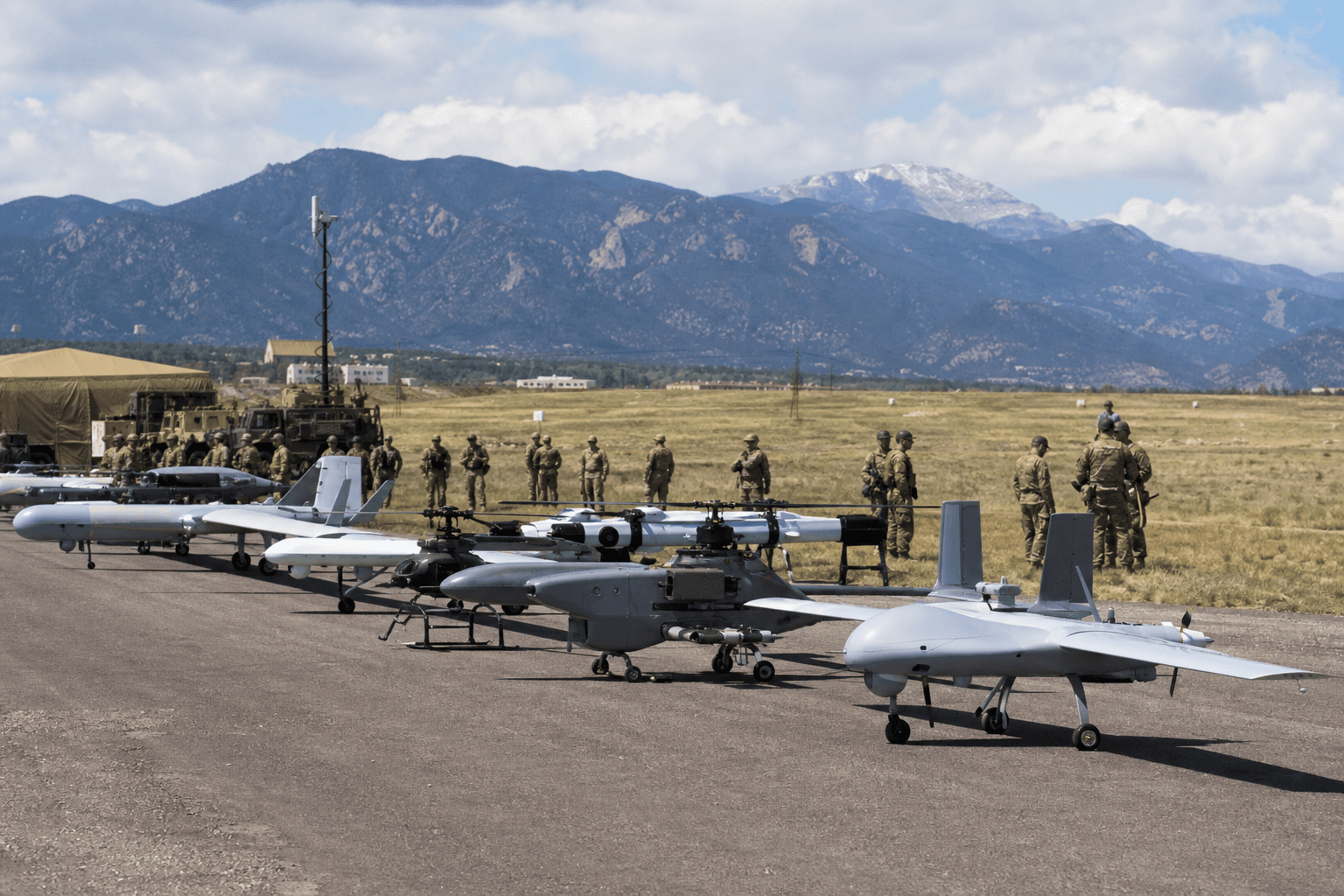
First person view combat drone developed by Ukraine’s Grim Tech. (Photo: Grim Tech) The Pentagon's Drone Dominance Program (DDP) on July 1 said it invited 19 companies to compete in the final stage of its second challenge round in August with a chance to win production orders worth a combined $300 million. The companies invited to compete at Fort Carson, Colo., are Ascent Aerosystems, Auterion Government Solutions, Griffon Aerospace, Grim Tech, Hyperscale, ModalAI, a team of Mountain Horse Solutions and AG3 Labs, Neros Technologies, ORQA US LLC, Perennial Autonomy, Renegade UxS, Skycutter, Stellarion, Swarm Defense, Teal Drones, Ukrainian Defense Drones (UDD), Vector, Wilcox Cherry Defense and XTEND Reality. Each company has about five weeks to deliver 120 drones with lethality payloads for the Gauntlett II final challenge. The drone vendors are paired with at least one of five previously selected lethality providers, which are Bravo Ordnance, Kela Defense US Inc., Kraken Kinetics, Mountain Horse LLC and Northrop Grumman [NOC] SUkrystems Corp. The 19 finalists were whittled down from 49 companies that competed in June at a qualifier at Camp Grayling, Mich. For that event, the companies provided about 79 unique drone systems to compete in one or two mission areas, long range strike and tactical assault in close quarters. At Fort Carson, the drones will be put through operational testing in the mission relevant scenarios that occur in contested electromagnetic environments. A Request for Solutions for Gauntlet II in April said the top performer in each mission area will receive an order for 8,000 prototype drones, second place 7,000, third place 6,000, fourth place 5,000 and fifth place 4,000. In March, the DDP selected 11 top performers from Gauntlet I at Fort Benning, Ga. Among those winners, Skycutter, ModalAI, Auterion, UDD, Ascent Aerosystems and Griffon Aerospace are in the hunt for Gauntlet II orders. Neros, which finished second in Gauntlet I, has completed deliveries and acceptance of its 2,400 drones contracted by DDP, according to the DDP's website. As of June 18, the DDP has accepted 80 of Ascent's drones against a production order for 1,600, DDP says. Most of the other companies selected for Gauntlet 1 prototype orders have either begun to ship their drones or are ramping production. Only Skycutter, which won Gauntlet I, and Napatree, the third place finisher, are listed as neither ramping nor shipping their drones yet, DDP says. The aim of the DDP is help create a domestic industrial base for small, relatively inexpensive and attritable drones produced in massive numbers that the Defense Department can draw on. Some of the competitors are not based in the U.S., such as Britain's Skycutter and Ukraine's Grim. UDD represents Ukraine's F-Drones and is establishing a manufacturing facility in Northwest Ohio. A version of this story originally appeared in sister publication Defense Daily .
The Daily Touch & Go
The day's best aviation news in your inbox. Free, no spam.