


Illustration: The Touch & Go
Pentagon's Drone Dominance Program Narrows Field to 19 Vendors for $300M Gauntlet II Challenge
Nineteen companies have been selected to compete at Fort Carson for contracts to produce thousands of lethal drones under the Pentagon's second Drone Dominance Program challenge.
The gist
The Pentagon's Drone Dominance Program invites 19 finalists to vie for $300 million in production contracts during the Gauntlet II challenge in August.
Continuing coverage
All Unmanned Systems →The Pentagon’s Drone Dominance Program (DDP) has advanced 19 companies to the final stage of its second challenge round, scheduled for August at Fort Carson, Colorado. The competition offers production contracts totaling $300 million to manufacturers of small, attritable drones equipped with lethality payloads. This move follows an initial qualifier phase where 49 companies participated with nearly 80 distinct drone systems.
The finalists include U.S.-based firms such as Ascent Aerosystems, Griffon Aerospace, and Neros Technologies, as well as international participants including Ukraine's Grim Tech and Ukrainian Defense Drones, which is setting up manufacturing in Northwest Ohio. Each company is tasked with delivering 120 drones over about five weeks to compete in operational testing focused on contested electromagnetic environments.
These 19 vendors will pair their drone platforms with lethality providers selected earlier by the DDP. The lethality suppliers engaged are Bravo Ordnance, Kela Defense US Inc., Kraken Kinetics, Mountain Horse LLC, and Northrop Grumman SUkrystems Corp. This collaboration is designed to evaluate the drones in mission-relevant scenarios and enhance combat effectiveness.
The DDP’s Request for Solutions details that the top five performers in each mission category, which include long range strike and tactical close-quarters assault, will receive substantial prototype drone orders. The first-place winner could be awarded an order for 8,000 drones, followed by descending quantities down to 4,000 units for the fifth place.
The program’s predecessor, Gauntlet I, was held at Fort Benning, Georgia, and concluded with 11 companies recognized as top performers. Notably, Skycutter, ModalAI, Auterion, Ukrainian Defense Drones, Ascent Aerosystems, and Griffon Aerospace are returning competitors for Gauntlet II. Neros Technologies, which previously earned second place, has already delivered 2,400 drones under its existing DDP contract.
The focus of the Drone Dominance Program remains developing a robust domestic industrial base capable of mass-producing small, cost-effective drones for the Department of Defense. These systems are intended to be attritable assets, allowing deployment in large numbers to overwhelm adversaries or perform discrete tactical missions reliably and affordably.
While most vendors have begun or are scaling up production, certain Gauntlet I winners like Skycutter and Napatree have not yet commenced shipping. Ongoing acceptance of drone deliveries reflects the DDP’s operational pace, with Ascent Aerosystems recently receiving acceptance for 80 drones out of a planned 1,600-unit contract.
The inclusion of international participants points to the global scope of drone technology development, despite the DDP's emphasis on bolstering U.S. manufacturing. Ukrainian Defense Drones’ initiative to establish a facility in Ohio exemplifies this industrial collaboration, enhancing the United States’ access to allied innovation and manufacturing capabilities.
Frequently asked questions
- How many companies are competing in the Drone Dominance Program's Gauntlet II challenge?
- Nineteen companies have been invited to compete in the final stage of the Drone Dominance Program's Gauntlet II challenge at Fort Carson.
- What is the total value of the production orders available in the Gauntlet II challenge?
- The production orders available in the Gauntlet II challenge are worth a combined total of $300 million.
- Which companies supply lethality payloads for the drone vendors in this program?
- Lethality providers involved include Bravo Ordnance, Kela Defense US Inc., Kraken Kinetics, Mountain Horse LLC, and Northrop Grumman SUkrystems Corp.
Read more
All Military/Defense →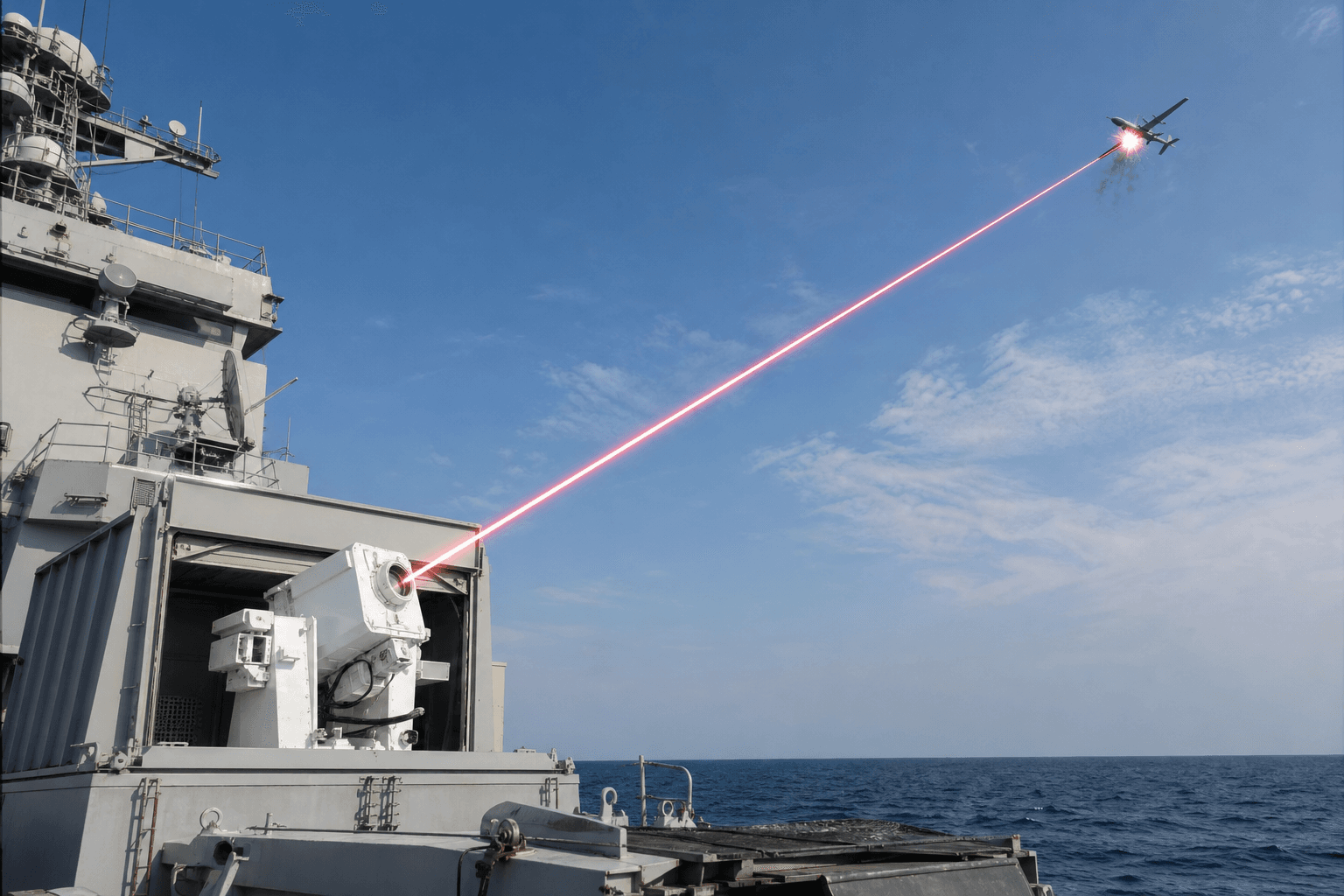
Pentagon awards $847M deals to develop scalable laser weapons against drones and cruise missiles
The US Department of War announced on July 9, 2026, that two Joint Laser Weapon System (JLWS) agreements had been awarded to nLIGHT Defense and Lockheed Martin Aculight, aimed at turning high-energy laser prototypes into field-ready systems against drones and cruise missiles. The Other Transaction Authority (OTA) agreements carry an initial value of $86 million and a total program ceiling of $847 million. They were executed by the Scaled Directed Energy (SCADE) Critical Technology Area, which operates under the Office of the Under Secretary of War for Research and Engineering. According to the department, the program seeks to transition directed energy capabilities from demonstration prototypes into production-oriented platforms. This is intended to give combatant commanders scalable intercept options against both asymmetric and high-tier threats. Scaling from 150 kW to cruise missile defense Initial JLWS prototypes will be rated at approximately 150 kW, a power level suited to countering unmanned aerial systems. Subsequent iterations will be scaled to the 300-500 kW range considered necessary for robust cruise missile defense. A 500 kW integrated system, built around a laser source developed under the High Energy Laser Scaling Initiative (HELSI), will also be developed in parallel. The systems will use containerized form factors designed for modular integration on both ground and naval platforms, allowing rapid fielding across geographic combatant commands. "We must actively defend the homeland against emerging threats," said Emil Michael, Under Secretary of War for Research and Engineering, adding that the department was partnering with industry to deliver deep magazine directed energy capabilities across multiple domains. Rebalancing the cost of air defense These awards come amid a wider push to rebalance the cost equation of air defense, after the wars in Ukraine and Iran saw interceptors worth millions of dollars expended against drones costing a few thousand each . Lasers promise speed-of-light engagement, deep magazines and a cost-per-shot measured in dollars of electricity, attributes seen as essential against high-volume drone swarms , though weather and beam stability remain limiting factors. The announcement follows a series of directed energy milestones in the United States, including the first Golden Dome test, which reportedly used directed energy to defeat drones and cruise missiles . The Pentagon is also deliberating over deploying laser-based counter-drone systems at sensitive US locations after repeated incursions near military installations. The push is not limited to the United States. On the same day, July 9, 2026, Germany's procurement agency BAAINBw signed a contract with MBDA Deutschland and Rheinmetall to develop a containerized high-energy laser weapon system for the German Navy, building on a demonstrator tested aboard the frigate Sachsen. The contract targets an operational system by 2029.
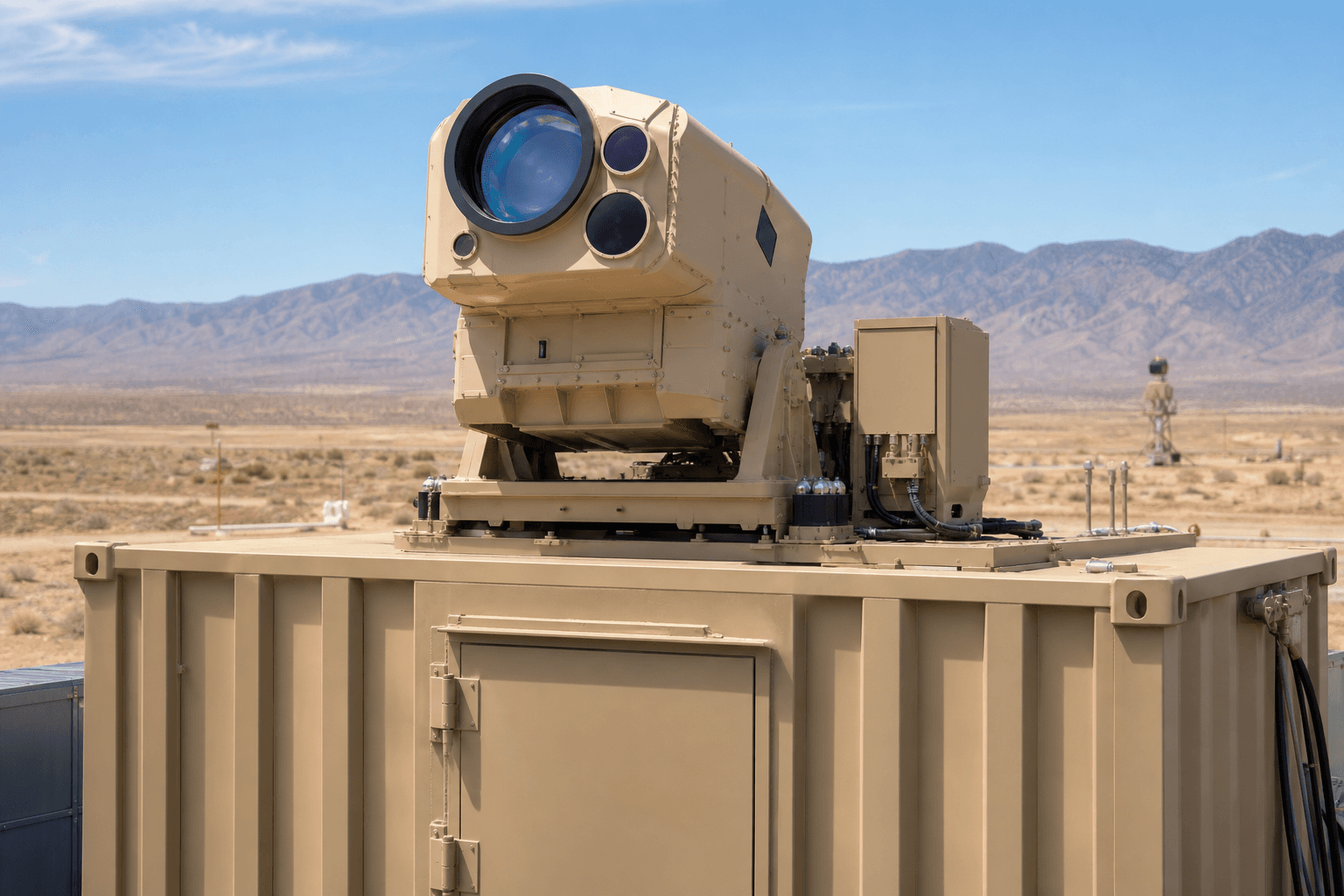
Pentagon Accelerates Fielding of High-Power Laser Weapons to Counter Drone and Missile Threats
For decades, military laser weapons promised revolutionary capability but rarely moved beyond laboratory testing and field demonstrations. That is beginning to change. The Pentagon's decision to award nLIGHT Defense and Lockheed Martin Aculight agreements worth an initial $86 million, with a combined program ceiling of $847 million, reflects an effort to turn high-energy laser prototypes into deployable weapons against drones and cruise missiles. The immediate goal is to field containerized systems beginning at about 150 kilowatts of power, then scale them into the 300- to 500-kilowatt range needed to tackle harder and faster targets. The sudden interest in laser weapons has less to do with realizing a science fiction dream than with the brutal economics of modern air defense. Militaries increasingly face inexpensive drones that can overwhelm defenses through sheer numbers. Shooting down a relatively cheap unmanned aircraft with a missile costing hundreds of thousands or millions of dollars may work tactically, but it becomes difficult to sustain during a prolonged attack. A laser changes that equation. Once the military has paid for the weapon, its power supply and cooling system, each engagement mainly consumes electricity. That gives laser weapons what defense officials call a "deep magazine": they can continue firing as long as the system can generate enough power and shed enough heat. Traditional air-defense systems cannot do that. Every missile launch removes one expensive interceptor from a finite supply that must be manufactured, transported, stored and reloaded. The comparison is not quite as simple as "a few dollars of electricity versus a multimillion-dollar missile." Laser systems remain expensive and require substantial support equipment. Still, their marginal cost per shot could make them valuable against the high-volume drone and missile attacks now shaping military planning. What does 150 kilowatts actually mean? Laser power ratings can sound abstract, but they are reasonably straightforward. A 150-kilowatt-class weapon is powerful enough to engage unmanned aircraft and other relatively vulnerable aerial targets when the system can maintain a focused beam on them. The next step, between 300 and 500 kilowatts, would give the weapon more energy to damage tougher targets in less time. The Pentagon sees that class as more suitable for cruise missile defense. Power alone does not determine whether a laser will actually work, however. The system must detect the target, track it precisely and hold the beam on one vulnerable point long enough to cause structural damage, ignite fuel, disable controls or destroy a critical component. The farther away the target is, the harder it is to shoot down. The beam must also remain tightly focused as it travels through the atmosphere. Air turbulence can distort it, while clouds, fog, smoke, dust and heavy moisture can absorb or scatter its energy. That means lasers will not replace missiles. They will add another layer to air defenses, giving commanders a cheaper option when conditions and target geometry allow it while preserving missiles for threats that lasers cannot reliably engage. The race for more power The Pentagon is not stopping at 500 kilowatts. Under the High Energy Laser Scaling Initiative, or HELSI, nLIGHT is working toward a one-megawatt-class laser. The company demonstrated a 300-kilowatt-class system during an earlier phase and later received additional contract options that increased its Phase 2 award from $86 million to $171 million. The three-year effort aims to produce a one-megawatt-class prototype. How powerful is a megawatt laser? One megawatt equals one million watts. Concentrating that energy into a controlled beam creates the potential to attack much more demanding targets. A quick physics refresher helps put that number in perspective. A watt measures how quickly energy is delivered, and one watt equals one joule per second. A joule, as many elementary physics students will know, is roughly the energy required to lift a medium-sized apple one meter off the ground. A one-megawatt laser delivers about one million joules every second, concentrated into a beam. If engineers can keep that beam tight and hold it on the target, surfaces heat, coatings burn, metals soften and structures fail quickly. At that power level, the question is no longer whether the laser is powerful. It is whether engineers can aim it, hold it in place and keep the weapon from cooking itself. A one-megawatt weapon is not simply a 300-kilowatt laser with the power turned up. Higher power creates more heat, places greater demands on electrical generation and makes beam quality increasingly difficult to maintain. Engineers must package the laser, optics, tracking equipment, power supply and cooling hardware into something military forces can move and operate outside a laboratory. nLIGHT uses an approach called coherent beam combining. Rather than building one enormous laser, the system combines multiple laser sources so they behave like a more powerful single beam. The company says it is trying to preserve beam quality while shrinking the full weapon into a transportable package. Its directed-energy systems are intended to support layered land and naval defenses against drones, rockets, artillery, mortars and missiles. nLIGHT wants to fit a ruggedized system into a standard shipping container while leaving room for precision long-range tracking and adaptive optics. That engineering challenge has defeated earlier laser programs. The US military has pursued directed-energy weapons for decades, including the Boeing YAL-1 Airborne Laser, a modified 747-400F fitted with a chemical laser intended to destroy ballistic missiles during their boost phase. The aircraft demonstrated the concept but proved too costly and operationally cumbersome to become a practical weapon. I attended a Boeing briefing in California on the YAL-1 program in early 2010. A general in an olive-drab uniform, his chest covered with brightly colored service ribbons, described the concept to a roomful of reporters. Smiling, he offered a gruesome illustration of what this kind of weapon could do. A laser aboard a US military aircraft, he said, could "melt the head off Saddam Hussein from three miles away." Saddam Hussein had already been dead for years, but the comment painted a vivid picture. I raised my hand and asked whether he worried that US adversaries would eventually acquire the same technology and use it against us. The general's smile faded. He shrugged. "Weapons proliferate," was all he said. Modern solid-state and fiber lasers avoid some of the problems associated with large chemical systems, but they still need enormous amounts of electrical power, precise beam control and effective cooling. The difference now is that weapons and military technology can proliferate at something closer to commercial speed. Cheap drones, loitering munitions and increasingly autonomous systems are spreading rapidly, forcing militaries to find defenses that do not always involve firing another explosive projectile. Jamming, spoofing, blinding sensors and damaging electronics have become part of the defensive mix. So have lasers. An unlikely defense company nLIGHT finds itself in an unusual position. For years, it was a mostly anonymous company building high-power fiber lasers for industrial applications. Think sheet-metal cutting for commercial heating and ventilation systems that eventually end up on the roof of an office building. Very few people would have identified nLIGHT as an emerging defense contractor, much less a potentially important one. The company's founder and longtime CEO, Scott Keeney, began his career as director of manufacturing at Pacific Coast Feather, a bedding company that produces pillows and comforters. That background hardly screams "future player in the military-industrial complex." Then the threats changed, and the Pentagon su

Socata TB30 Epsilon pilots meet French Air Force jet team during US tour
A spur-of-the-moment idea morphed into a one-of-a-kind get together between general aviation pilots flying Socata TB30 Epsilon piston-engine military trainers and their jet counterparts flying the blue-white-and-red livery of the French Air and Space Force during a stopover at Martin State Airport near Baltimore July 3.
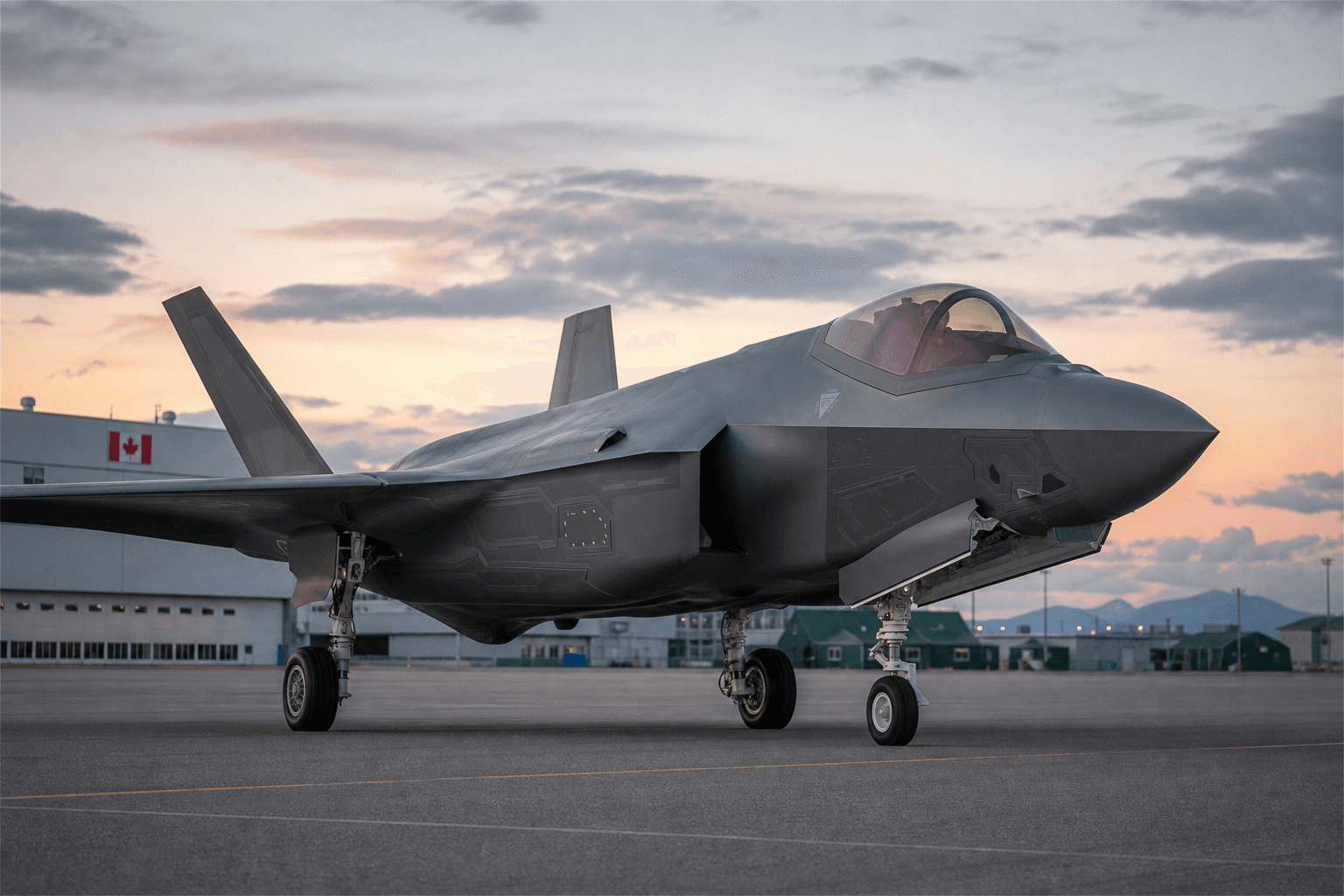
Canada Quietly Advances F-35 Fighter Jet Payments Amid Public Debate on Purchase
Canada's fighter jet debate has increasingly been framed as a dramatic political decision: should Ottawa proceed with its planned purchase of F-35 stealth fighters or pivot toward alternatives such as Saab's Gripen? Public discussions have focused on cost overruns, industrial benefits, trade tensions with Washington, and broader questions surrounding Canada's long-term defense dependence on the United States . To many observers, the issue still appears unresolved, with government leaders publicly emphasizing that reviews are ongoing and that options remain available.
The Daily Touch & Go
The day's best aviation news in your inbox. Free, no spam.