


Illustration: The Touch & Go
United Airlines Accelerates Retirement of Aging Boeing 777-200s Amid Europe's Carbon Policies
Europe's evolving carbon regulations and emissions costs are driving United Airlines to phase out its nearly 29-year-old 777-200 fleet in favor of newer, more efficient aircraft by 2030.
The gist
Europe’s carbon rules are hastening United Airlines’ retirement of its oldest Boeing 777-200s, pushing transition to Dreamliners and A350s.
Continuing coverage
All Sustainable Aviation Fuel →- Rolls-Royce Trent XWB and GE GEnx Engines Burn 100% SAF but Lack Certification
- Gulfstream and Rolls-Royce Complete First High-Altitude Flights Using 100% Sustainable Aviation Fuel
- Gulfstream and Rolls-Royce demonstrate contrail reduction using 100% sustainable aviation fuel
- Rolls-Royce Trent XWB-84 EP Engine Upgrade Slashes Fuel Costs for Airlines
- Aviation's 65% Sustainable Fuel Goal by 2050 Faces Serious Doubts Amid Supply and Policy Challenges
United Airlines is progressively withdrawing its Boeing 777-200s, some nearing 29 years old, from service, a move influenced significantly by the European Union's updated carbon reduction policies taking effect in 2026. The airline plans to replace these older widebodies with more fuel-efficient Boeing 787 Dreamliners and Airbus A350-900s by around 2030, aligning its fleet strategy with shifting environmental regulatory and economic realities.
Europe's Carbon Border Adjustment Mechanism (CBAM), although it does not impose a direct tax on aviation fuels, impacts airlines indirectly by increasing costs for carbon-intensive materials like aluminum and steel used extensively in aircraft manufacturing, maintenance, and airport infrastructure. This embedded carbon pricing raises overheads throughout the aviation supply chain, compelling carriers like United to consider the full lifecycle emissions-based cost implications in fleet renewal decisions.
More immediate are changes under the EU Emissions Trading System (EU ETS), which since 2026 requires airlines operating certain routes to surrender tradable emissions allowances without free allowances. This effectively puts a price on carbon emissions, making the cost of operating older, less fuel-efficient aircraft like the 777-200 higher. Airlines benefit financially from using aircraft with improved fuel burn and reduced emissions, as these reduce both fuel expenses and carbon compliance costs.
The Boeing 777-200, introduced in the 1990s, was once a benchmark for efficient long-haul operations, but advances in materials science and engine technology mean contemporary aircraft like the 787 and A350 substantially outperform it on emissions and fuel consumption. United's 777-200s, averaging 28.9 years old, are among the oldest widebodies in US airline fleets and are increasingly being retired and ferried to long-term storage locations such as Victorville, California.
United Airlines' fleet transition plan has been in place for several years, independent of a single regulatory trigger. However, 2026 marks a turning point where regulatory and financial factors converge to reinforce the economic case for phasing out aging aircraft. These include the full implementation of the EU ETS phaseout of free allowances, SAF blending mandates in Europe, and evolving carbon pricing signals.
Sustainable Aviation Fuel (SAF) requirements add another cost dimension for airlines operating European routes. SAF offers emission reductions but at a significantly higher cost than conventional jet fuel. The EU has introduced support mechanisms to bridge this cost gap, but the overall effect increases operational expenses for airlines using SAF blends. This further incentivizes United to modernize their fleet with aircraft able to maximize fuel efficiency even with SAF use.
United’s strategic focus on acquiring Boeing 787 variants and Airbus A350-900s aligns with industry trends valuing emissions performance amid tightening regulations. The newer aircraft utilize composite materials and advanced engines to deliver substantial improvements in fuel burn, fitting the operational profile demanded by increasingly carbon-conscious markets and regulators.
The retirement of 777-200s notwithstanding, the broader implications of Europe's carbon policies are reshaping airline economics globally. Airlines must weigh direct operating costs alongside embedded carbon costs in supply chains, SAF purchasing, and compliance with emissions trading schemes, which collectively redefine aircraft valuation and retirement timing. United’s proactive fleet renewal reflects this multi-faceted regulatory environment.
Frequently asked questions
- Why is United Airlines retiring its Boeing 777-200 fleet?
- United is retiring its 777-200s due to their age and increasing operating costs driven by evolving European carbon regulations that raise fuel and emissions-related expenses, making newer aircraft more economical.
- How do Europe’s carbon policies affect United Airlines’ fleet decisions?
- Europe’s carbon border adjustment and emissions trading systems raise costs on carbon-intensive materials and require emissions allowances for flights, incentivizing United to adopt newer, more fuel-efficient aircraft to reduce operational and compliance expenses.
- What aircraft are replacing United’s Boeing 777-200s?
- United plans to replace the 777-200s primarily with Boeing 787 Dreamliners and Airbus A350-900s, which offer lower fuel burn and reduced carbon emissions in compliance with environmental policies.
Read more
All Sustainability →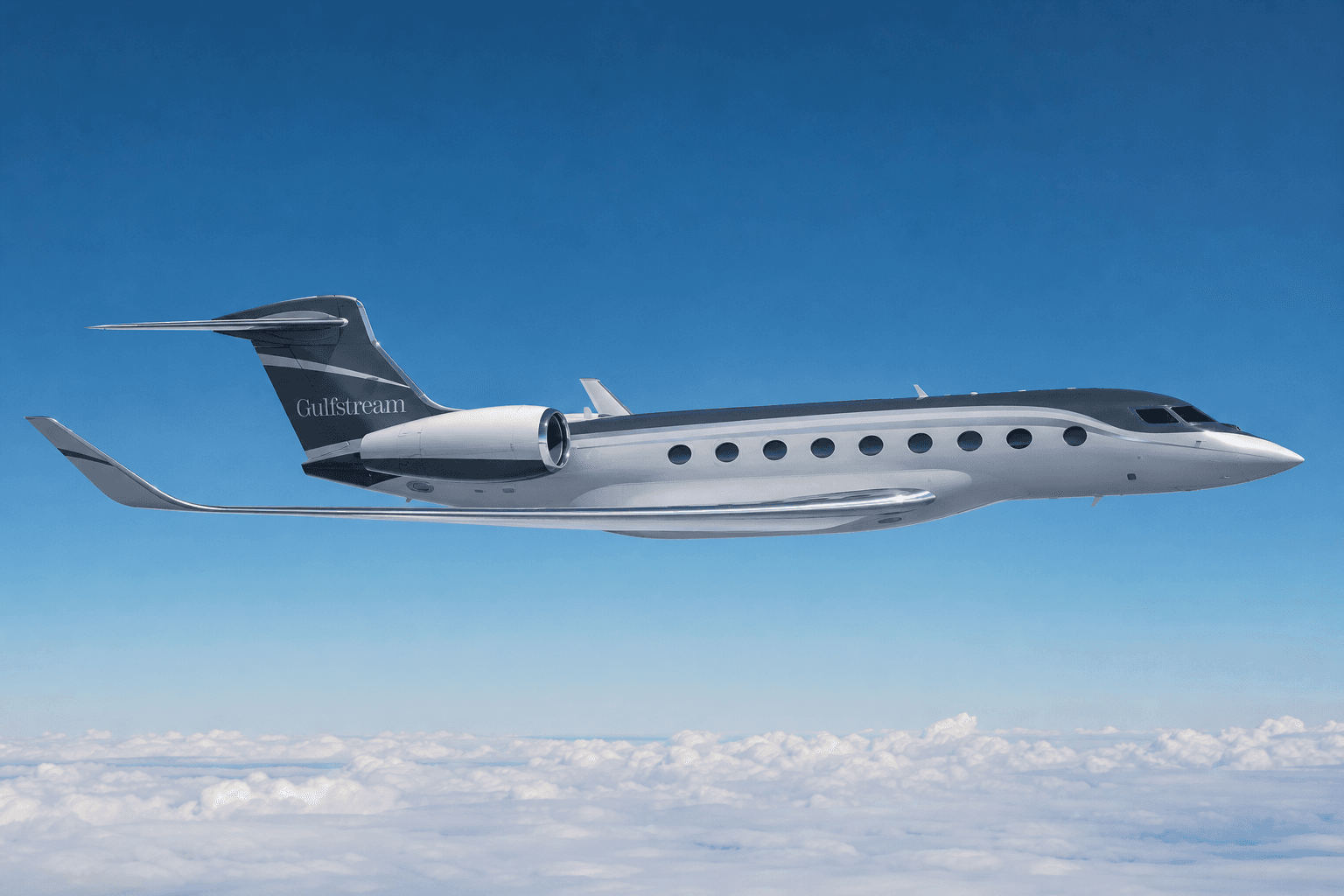
Gulfstream and Rolls-Royce Complete First High-Altitude Flights Using 100% Sustainable Aviation Fuel
Gulfstream Aerospace and Rolls-Royce said this week that they completed a high-altitude flight-test campaign examining the emissions produced by 100% sustainable aviation fuel at altitudes up to 50,000 feet. A Gulfstream G800 powered by Rolls-Royce Pearl 700 engines conducted the flights alongside a modified G700. The G700 served as an airborne laboratory and measured particulate emissions and atmospheric conditions while flying in close formation. The campaign also marked the first G800 flight using 100% SAF. [Credit: Gulfstream] Researchers compared conventional Jet-A, low-sulfur Jet-A and 100% hydroprocessed esters and fatty acids SAF . Rolls-Royce said preliminary results showed a measurable reduction in particles that contribute to contrail formation. The FAA, NASA, German Aerospace Center and Missouri University of Science and Technology participated in the project. Although the test used unblended SAF, current fuel standards generally limit its commercial use to blends of up to 50% with conventional jet fuel, depending on the production pathway. Rolls-Royce said the campaign data will help inform future fuel standards and that demonstrating its current engines can operate on 100% SAF lays groundwork for certification.

Gulfstream and Rolls-Royce demonstrate contrail reduction using 100% sustainable aviation fuel
Business jet manufacturer and engine provider Rolls-Royce carried out a series of test flights using different fuels. Gulfstream and propulsion partner Rolls-Royce have hailed the initial results from tests that have shown the potential of 100% sustainable aviation fuel (SAF) to reduce contrail formation during high-altitude flights. For the campaign, Gulfstream used a G800 prototype as the lead aircraft, followed by a specially modified G700 acting as a flying emissions measurement platform. Both jets are powered by twin Pearl 700 engines. Over a series of flights, the G800 ran on standard Jet-A, low-sulphur Jet-A, and 100% HEFA-produced SAF. Data captured by the G700 allowed a comparison between the performance of the different fuel types. Operating in close formation, the aircraft enabled researchers to capture precise, real-world measurements of particulate matter and contrail-forming atmospheric characteristics at the higher altitudes – up to 50,000ft – typically flown by certain business jets, Gulfstream says. "Preliminary results suggest a significant, measurable reduction in the particulate emissions that contribute to contrail formation when operating on neat SAF," the partners state. Gulfstream says months of preparation preceded the tests, including modifying the G700's cabin to host the necessary instrumentation and simulator-based training for flightcrew to practice the complex formation profiles to be flown. "As aviation continues its work in optimising environmental efficiencies, Gulfstream is focused on advancing solutions that deliver measurable impact today while shaping a more sustainable future for flight," says Mark Burns, president, Gulfstream. "Sustainable aviation fuels in combination with compatible, ultra-efficient aero engines will not only play a vital role in decarbonising aviation but have also been shown to reduce certain non-CO2 emissions," says Alan Newby, director of research and technology, Rolls-Royce. "The valuable insights we have gained from these latest tests at high altitudes… are driving real progress in understanding aviation's non-CO2 climate impacts and potential mitigation options." Also involved in the test programme were the Federal Aviation Administration, NASA, Germany's DLR aerospace centre, Missouri University of Science and Technology, Aerodyne Research, Montana Renewables and World Fuel Services. Although most modern jet engines are compatible with 100% SAF, current regulations limit their operation to a maximum of 50%.
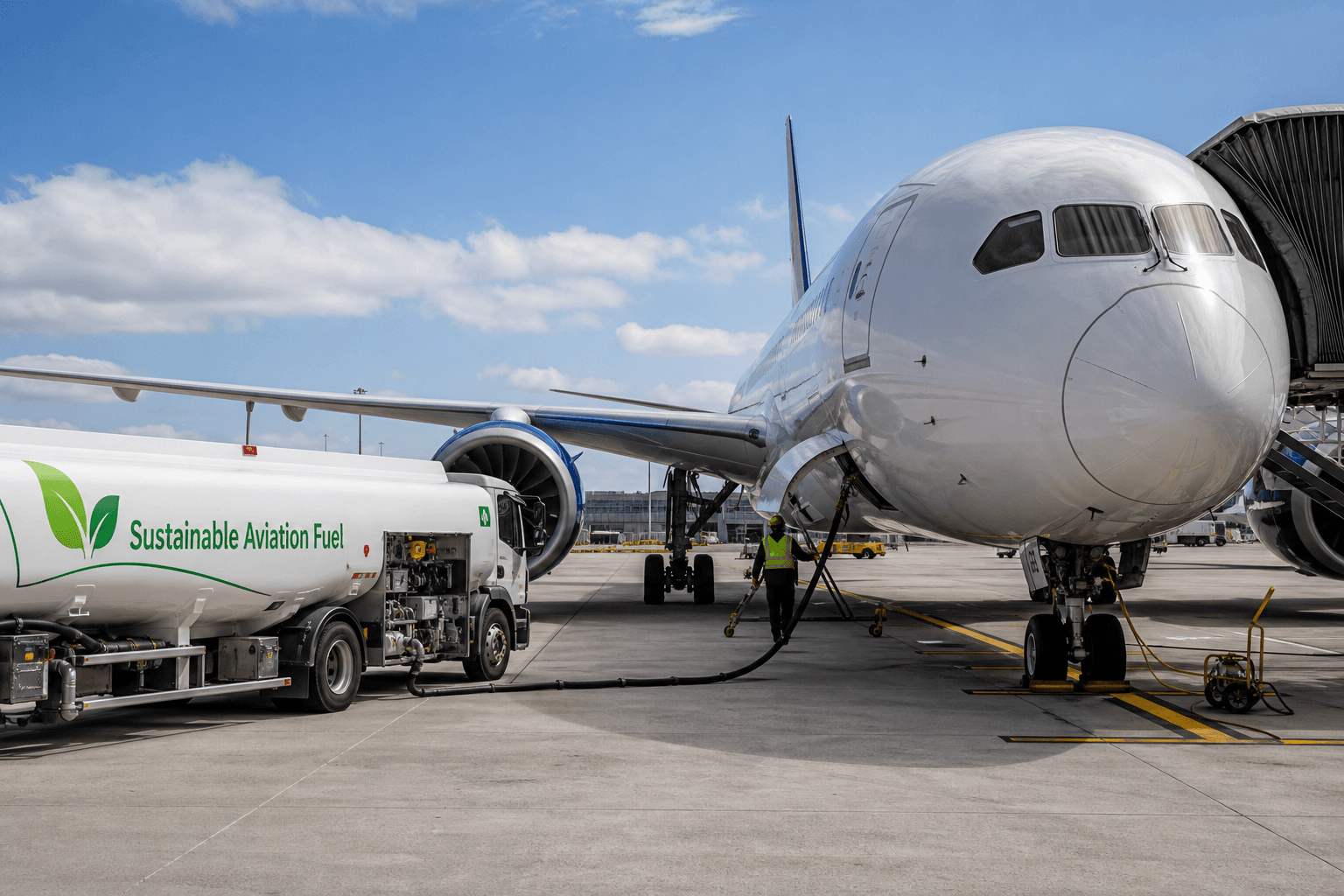
Aviation's 65% Sustainable Fuel Goal by 2050 Faces Serious Doubts Amid Supply and Policy Challenges
There are significant obstacles in the way for the airline industry to reach net-zero carbon emissions.

CubCrafters Launches Carbon Cub ULT with Innovative Turbine Powerplant
It's no secret here at Plane + Pilot that we aren't necessarily in the business of breaking aviation news. This magazine and its corresponding website is built around general aviation adventures—where to go, what to do, and who to see by way of your airplane. So if you're looking for every headline that hits the GA news cycle, you're probably in the wrong place. That said, when there's news that genuinely impacts the general aviation adventure community, you can bet I'm going to cover it. A few weeks ago, I got an insider tip that CubCrafters was preparing to unveil its latest project—the Carbon Cub ULT , powered by TurboTech's new TP-R90 regenerative turboprop. To say I was giddy when I first heard the news would be an understatement. But instead of simply rewriting the news release to chase clicks when the embargo lifted July 6, I decided I wanted to see the airplane with my own eyes before publishing the same story everyone else in aviation media was going to write. While I couldn't say for certain that I'd get the opportunity, I had a pretty good feeling I'd see the ULT during an exclusive CubCrafters content creator event near Bonanza, Oregon, this past weekend. So I decided to roll the dice. After arriving at the ranch in an orange FX-3 (with no one other than Luke Czepiela of Red Bull Air Race fame in the back seat), I immediately tracked down Jackie Burch to ask if we'd be getting a chance to see the new Cub in person. Burch couldn't confirm or deny anything, but there were a few people around who definitely knew the answer. Their reactions were enough for me to take my gamble as one that I would most certainly be winning. The following morning, I was standing near the hangar on a phone call when I suddenly heard an unmistakable whistle overhead. I knew experimental aircraft builders Mike and Mark Patey were expected at the event, so I assumed it was the sound of their Pilatus PC-12. But as I quickly repositioned myself for a better view of the runway, I quickly spotted the turbine powered ULT and a matching UL coming in for landing. CubCrafters vice president Brad Damm touched down the ULT in a perfect three-point attitude, giving everyone their first real look, and listen, to the airplane. Admittedly, when I first heard about the company's project a few weeks earlier, I wondered whether the proportions would work. I pictured an overly stretched nose and a cowling that looked forced simply to accommodate a turbine engine. But as Damm taxied in front of us, those concerns were put to rest. The airplane looked like it was seamlessly born for a turbine-powered backcountry mission. Despite the entirely new TurboTech powerplant, the airplane is unmistakably a CubCrafters product. The ULT shares the same airframe as the Carbon Cub UL, the manufacturer's Rotax 916 iS-powered light sport, which has only been in the marketplace since 2023. With an 860-pound empty weight, gross weight of 1,320, and useful load of around 460, the ULT fits well within the parameters for sport pilots under the FAA's new MOSAIC regulations. "We're doing everything so that it can be ASTM certified as a light sport," said Damm. Perhaps the icing on the cake? Despite being turbine powered, the TurboTech-equipped ULT requires neither a type rating nor a special endorsement. Pilots can simply climb in and enjoy its 120 mph cruise speed while burning just 9 gph. "All the money, time, and effort we invested to take weight out to make the UL transfers right over to this airplane," said Damm. "There's a few differences in the fuel system for the jet-A, but it has the same tanks in the wings. It has a really similar center of gravity, and I actually like the center of gravity a little bit better in [the ULT]. In the three years since the UL's debut, Damm and the CubCrafters team have been working diligently behind the scenes to dream up a platform that could offer turbine reliability, worldwide fuel alternatives, and a significant TBO (3,000 hours to be exact). But it all started with a little convincing from the TurboTech team at AERO Friedrichshafen three years ago. "I had flown turbine-powered Cubs years ago," said Damm. "But those were burning 30 to 40 gallons an hour down low, and you can't make an airplane out of that." After sitting down with the TurboTech team and drilling into the details, including questions about operating a turbine-powered, fabric-covered airplane from dry grass strips, Damm came away impressed. He took what he had learned back to the CubCrafters' engineering team, and got to work. Three years later, one week since its announcement, the ULT has received 12 deposits at a base price of $690,000. "To be honest my favorite part of this airplane is the cool factor. It's fun. It's exciting, and it's generated a lot of interest and a lot of controversy, but it's been a good opportunity for us to educate."
The Daily Touch & Go
The day's best aviation news in your inbox. Free, no spam.