

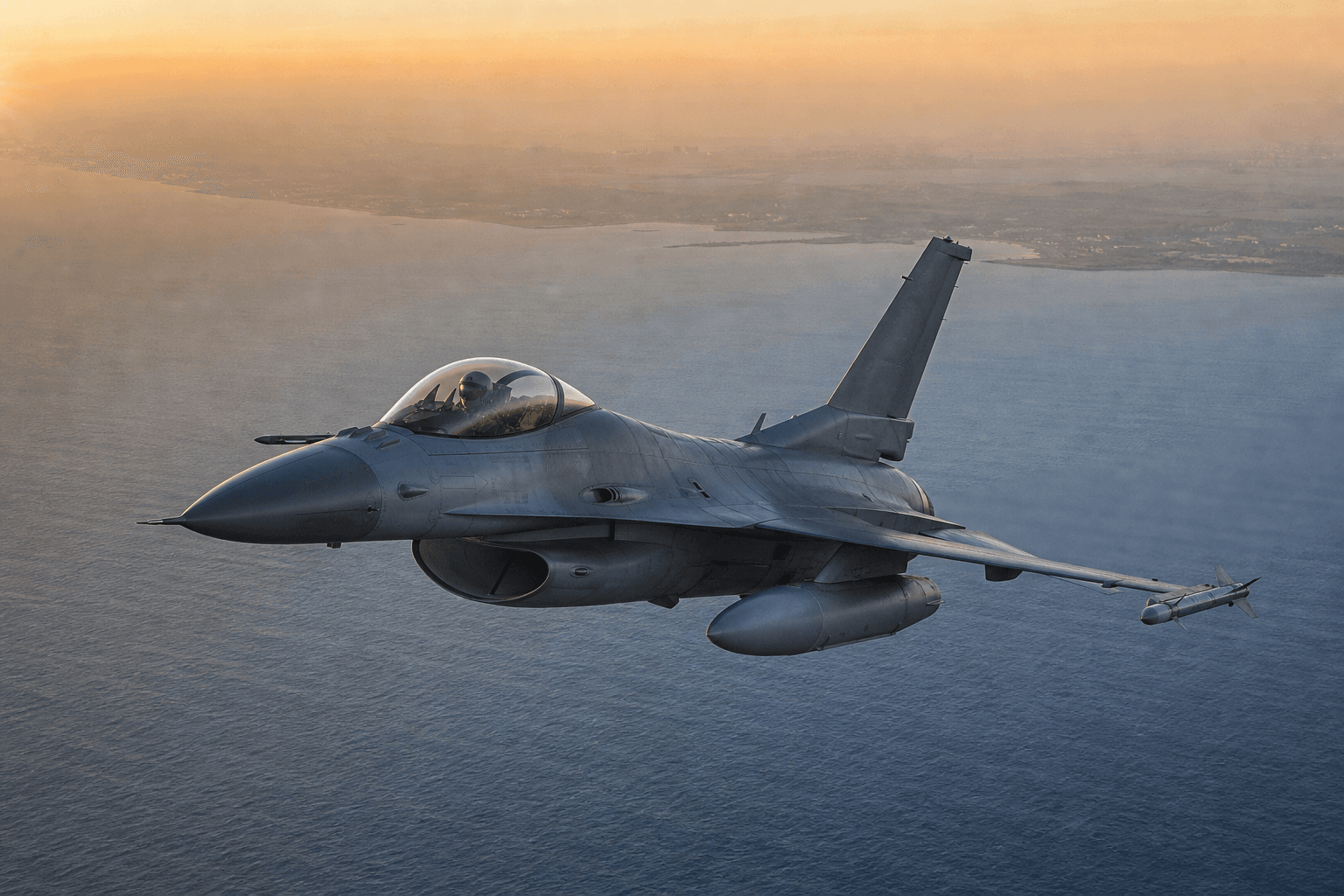
AI-generated illustration
CENTCOM Denies Iranian Claim That Missile Damaged U.S. F-16 Over Persian Gulf
Tehran says an air defense missile forced an American F-16 to make an emergency landing, but U.S. Central Command says no attack took place and all its fighters are accounted for.
The gist
Iran says it hit a U.S. F-16 over the Gulf; CENTCOM says the engagement never happened, as a CRS tally lists 81 U.S. aircraft lost or damaged since February.
Continuing coverage
All F-16 →U.S. Central Command on Saturday, November 21, rejected an Iranian claim that its air defenses had damaged an American F-16 Fighting Falcon over the Persian Gulf. Iran said a missile fired on Friday evening exploded near the fighter, damaged it and forced the pilot to abandon the mission and divert to a nearby airport. CENTCOM said Iran did not attack a U.S. F-16 at all on Friday. The command added that every U.S. military fighter operating in the Middle East was safe and accounted for.
The denial goes further than saying no aircraft was lost. CENTCOM disputed that any engagement occurred, which puts the two governments' accounts in direct conflict over the basic facts. Neither side has offered independently verified evidence of what happened to the aircraft Iran described.
The Iranian version came through state media, which said air defense units detected the fighter on Friday night and fired on it. The reports gave no tail number or unit, did not name the airport where the jet supposedly landed, and included no imagery or other material showing damage. Without those details, the claim could not be checked against flight records or base activity.
The exchange follows months of conflict that began on February 28, when the United States and Israel launched strikes against Iran. Iranian forces have claimed several times since then to have hit or shot down U.S. aircraft. Washington has rejected some of those claims, while other losses during the campaign have been confirmed and documented.
Those documented losses are large. An October 5 assessment by the Congressional Research Service counted 81 U.S. fixed-wing aircraft, helicopters and drones reported lost or damaged in operations against Iran since February 28. The total covers aircraft hit by Iranian weapons, aircraft lost in accidents or friendly-fire incidents, aircraft deliberately destroyed by U.S. personnel, and aircraft that were damaged and later returned to service. It is not a count of 81 shootdowns by Iran. The CRS drew on Pentagon and CENTCOM statements, inspector-general findings and news reports, and said the figure could be revised.
The MQ-9 Reaper made up the largest share, with at least 45 drones reported lost. The assessment also listed 12 F-15E Strike Eagles: three destroyed by friendly fire over Kuwait, one lost over Iran, and eight lightly damaged when Iran struck Muwaffaq Salti Air Base in Jordan, all of which returned to service. One F-35A was damaged by Iranian ground fire, two A-10 attack aircraft were lost or damaged, and seven KC-135 tankers were affected by incidents or strikes. An E-3 Sentry airborne early-warning aircraft was hit at Prince Sultan Air Base in Saudi Arabia.
Ground facilities have also taken hits. An Associated Press investigation published in late October used satellite imagery and interviews to document damage at U.S. military sites across the Middle East. It found that Iranian and Iran-backed attacks had struck aircraft, hangars, radar installations and other infrastructure, and that official disclosures covered only part of that damage.
That record shows Iranian forces have been able to reach U.S. aircraft and bases during the campaign. It does not confirm that any F-16 was damaged over the Persian Gulf on November 20, and CENTCOM's position remains that no such attack took place.
Originally reported by Air Data News
Read more
All Military/Defense →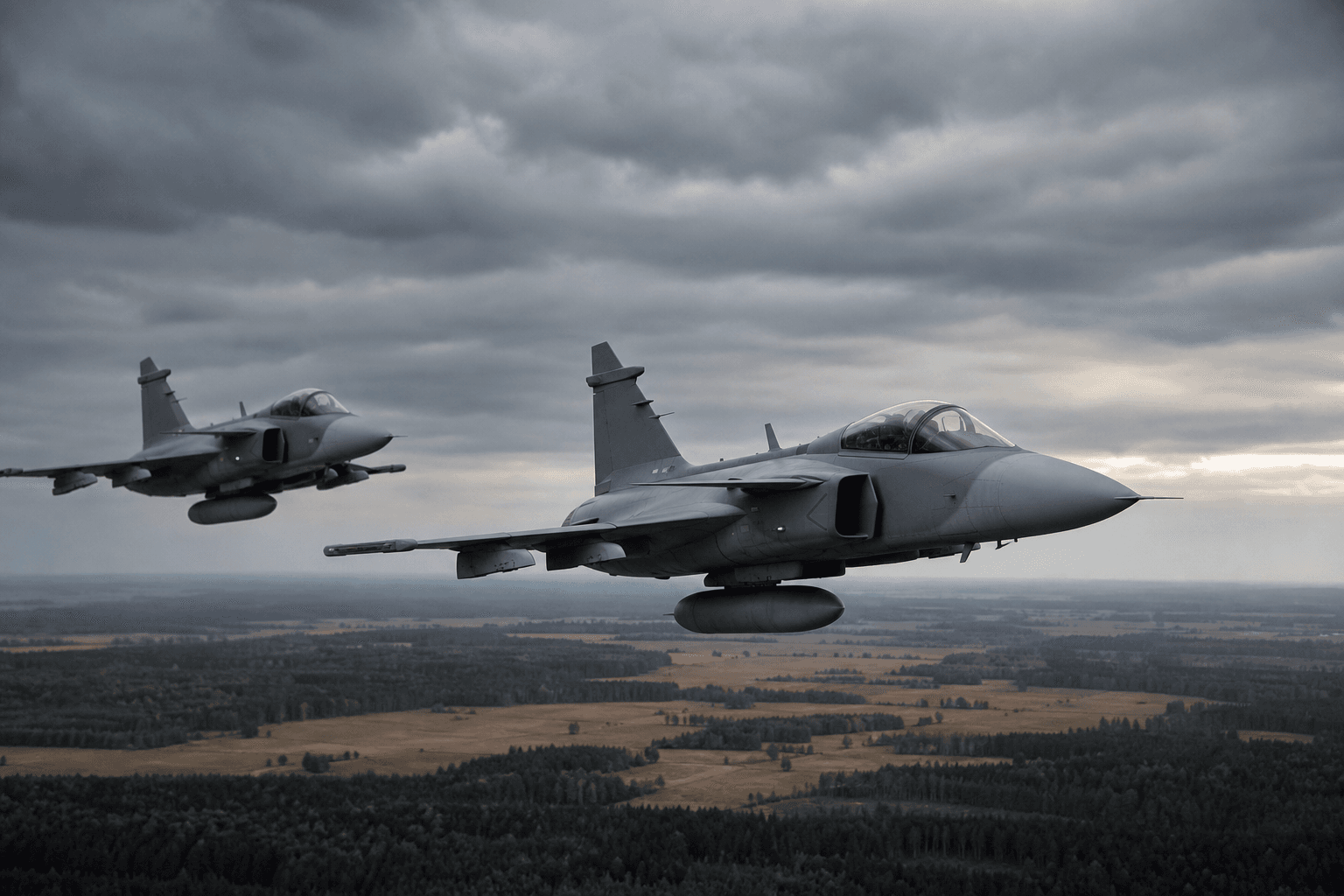
Russian Kh-101 Missile Crashes in Eastern Poland After Swedish Gripens Fail to Make Visual Contact
A Russian cruise missile spent about three minutes over Poland before crashing near Nowy Lipowiec, as Swedish and Polish fighters responded and Rzeszów and Lublin airports halted flights.
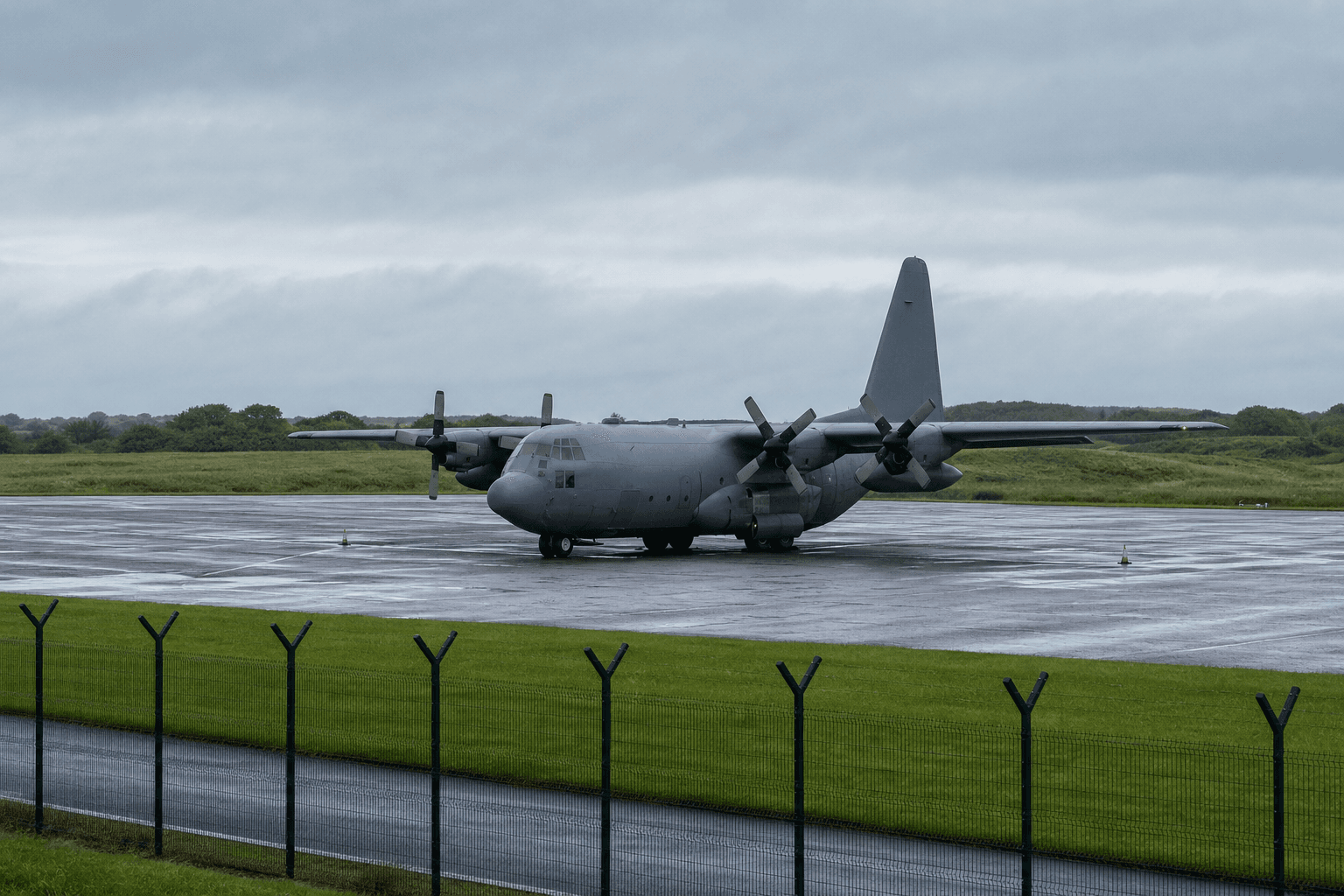
U.S. Indicts Irish Man Over Attack That Wrecked USAF C-130H Hercules at Shannon Airport
Federal prosecutors in New York charged Daithi O'Corrain, 48, with destroying a Missouri Air National Guard C-130H that was smashed, cut and axed while parked at Shannon in April.
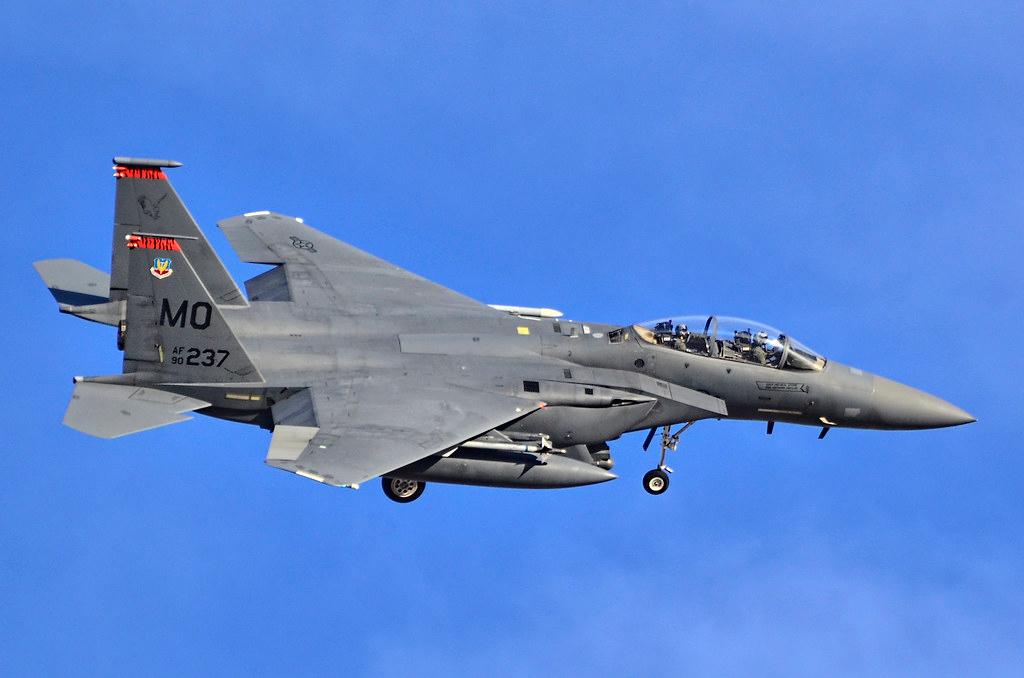
Iran Shoots Down US F-15E; A-10 and Two Black Hawks Hit During Rescue Mission
One F-15E crew member was rescued and the other remains missing after Iranian fire downed the jet, while an A-10 covering the search crashed in Kuwait and two Black Hawks returned to base with injured crew.

First Permanently Based Overseas F-15EX Eagle IIs Land at Kadena Air Base in Okinawa
Two F-15EX fighters from the 67th Fighter Squadron touched down at Kadena on November 15, 2026, starting the replacement of the base's retired F-15C/D Eagles with a planned fleet of 36 jets.
The Daily Touch & Go
The day's best aviation news in your inbox. Free, no spam.