

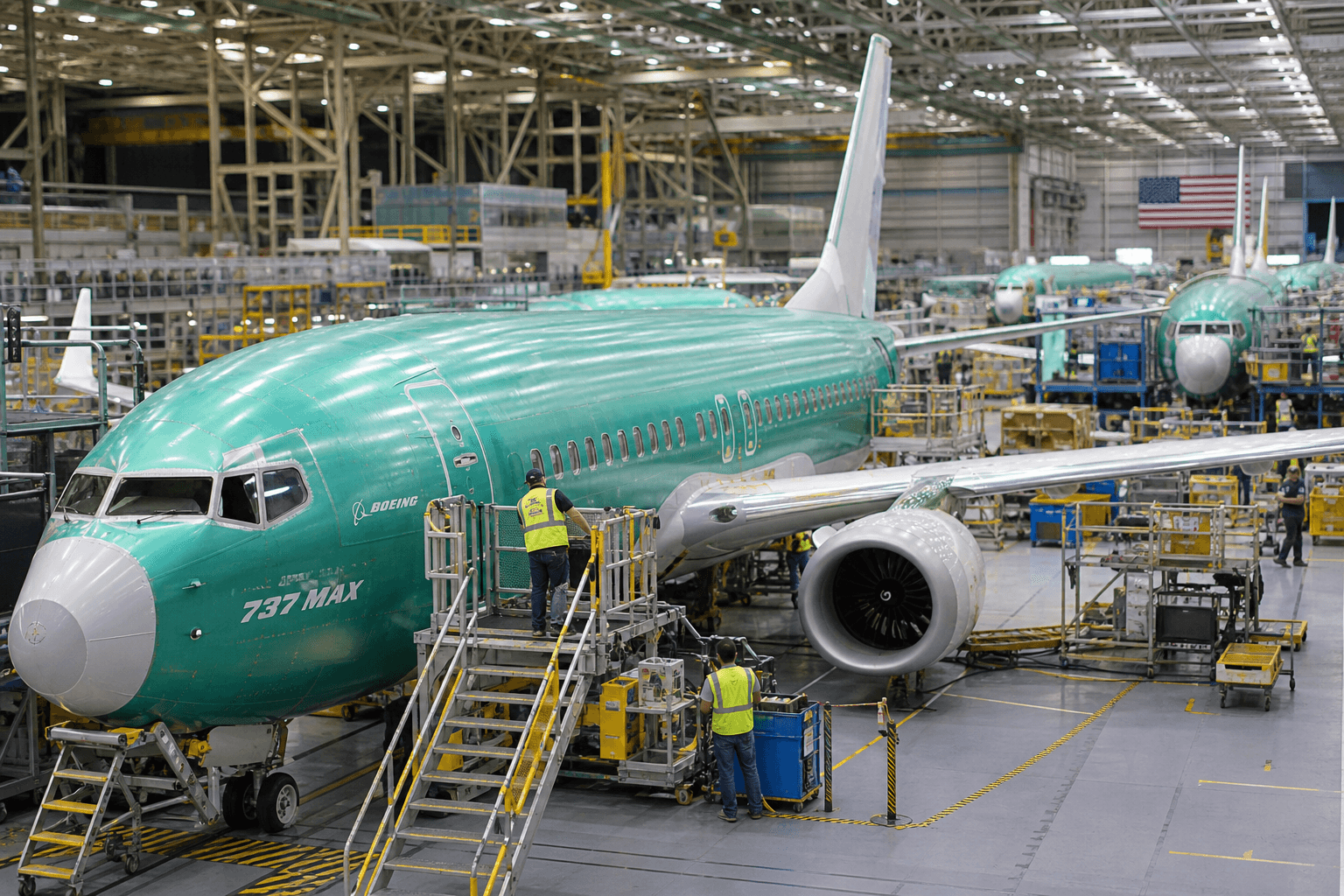
AI-generated illustration
DOT Inspector General Opens New Audit of FAA Manufacturing Oversight as Six Boeing Fixes Remain Open
The Transportation Department watchdog will examine how the FAA polices manufacturers and their US and foreign suppliers, while six of 16 recommendations from a 2024 Boeing audit are still unresolved.
The gist
A new DOT watchdog audit targets FAA oversight of aircraft makers and suppliers, with six Boeing-related recommendations from 2024 still open.
Continuing coverage
All Faa →- FAA Urges Pilots to Call Out Runway Number Before Crossing After 2023 JFK Near-Collision
- Modern Skies Coalition Launches ACT NOW Ad Campaign Pressing Congress for ATC Modernization Money
- FAA Opens Antidepressant Certification to Any AME and Cuts Post-Medication Wait to 60 Days
- GAO Warned FAA's Rushed Air Traffic Control Overhaul Risked Disruptions Before Nationwide Outage
- Senator Moran Presses Duffy to Justify Jump to $50 Billion Air Traffic Control Request
The US Department of Transportation's Office of Inspector General announced on November 20 that it will audit the Federal Aviation Administration's oversight of aircraft manufacturers and their suppliers. The review opens with six recommendations from an earlier examination of Boeing production oversight still unresolved, more than two years after auditors flagged weaknesses in the regulator's inspection procedures.
The new audit will look at how effectively the FAA monitors manufacturers' quality assurance systems, including how those companies control suppliers in the United States and overseas. The inspector general's office said it launched the work because of documented shortcomings in manufacturing oversight, recent changes to the FAA's risk assessment procedures and the introduction of a new system for tracking oversight activities. The watchdog has not set a completion date and has not named any manufacturers beyond Boeing that will receive particular attention.
Although Boeing's problems feature heavily in the announcement, the audit covers manufacturers broadly. The inspector general noted that its last review specifically addressing FAA oversight of manufacturers' suppliers was conducted in 2008. Aircraft makers depend on large supply networks for structures, systems and other equipment, so the FAA must judge not only finished aircraft but whether manufacturers have working procedures to ensure supplied parts meet approved specifications.
The scrutiny traces back to January 2024, when an Alaska Airlines 737 MAX 9 lost a mid-exit door plug in flight. The National Transportation Safety Board later found failures in Boeing's quality assurance procedures and ineffective FAA oversight of the manufacturer's instructions for removing aircraft parts. That incident set off a series of investigations into Boeing's production controls.
In October 2024, the inspector general concluded that the FAA's procedures for identifying and resolving production problems on the Boeing 737 and 787 were ineffective. The audit issued 16 recommendations covering inspection planning, supplier controls, compliance monitoring and the handling of reports of pressure placed on employees responsible for safety and quality. It also found the FAA had not adequately ensured that Boeing and its suppliers could consistently build components conforming to approved designs, and that inspectors were not required to review certain initial production inspections meant to confirm manufacturing processes could produce compliant parts.
According to the watchdog's recommendation records, ten of those 16 items have been closed. Two of the six still open deal with how the FAA evaluates Boeing's suppliers, including companies further down the supply chain. One asks inspectors to examine Boeing's own assessments of supplier risk and fold those findings into federal inspection plans. The other requires inspection guidance to account for the number of suppliers, the components they produce and the audits needed to determine whether Boeing is effectively controlling its supply network.
The remaining open recommendations concern the FAA's audit information system, its ability to track recurring compliance problems, procedures for handling findings from joint industry reviews and training for inspectors working with updated systems. An open status does not mean the FAA has taken no corrective action on those items; it means the inspector general has not yet formally closed them.
The FAA told Reuters it welcomed feedback and would cooperate fully with the audit. The agency has said its oversight of Boeing changed substantially after the door plug incident, when it tightened production supervision and imposed a prolonged cap on how many 737 MAX aircraft Boeing could build each month. In July 2026, citing improved production quality, the FAA allowed Boeing to issue airworthiness certificates for 737 MAX and 787 Dreamliner aircraft under federal supervision.
Originally reported by Air Data News
Read more
All Regulatory →
Modern Skies Coalition Launches ACT NOW Ad Campaign Pressing Congress for ATC Modernization Money
A coalition of more than 50 aviation groups began a national ad push a week after a nearly five-hour nationwide ground stop, as DOT seeks another $50.1 billion for infrastructure.

FAA Opens Antidepressant Certification to Any AME and Cuts Post-Medication Wait to 60 Days
Pilots on FAA-accepted antidepressants no longer need a HIMS-trained examiner, and the wait to reapply after stopping medication drops from 90 days to 60, changes NBAA welcomed on Nov. 20.

Senator Moran Presses Duffy to Justify Jump to $50 Billion Air Traffic Control Request
The Kansas Republican who chairs the Senate aviation subcommittee says Transportation Secretary Sean Duffy must explain why his ATC modernisation ask rose from $30 billion to $50 billion after the 13 November ground stop.
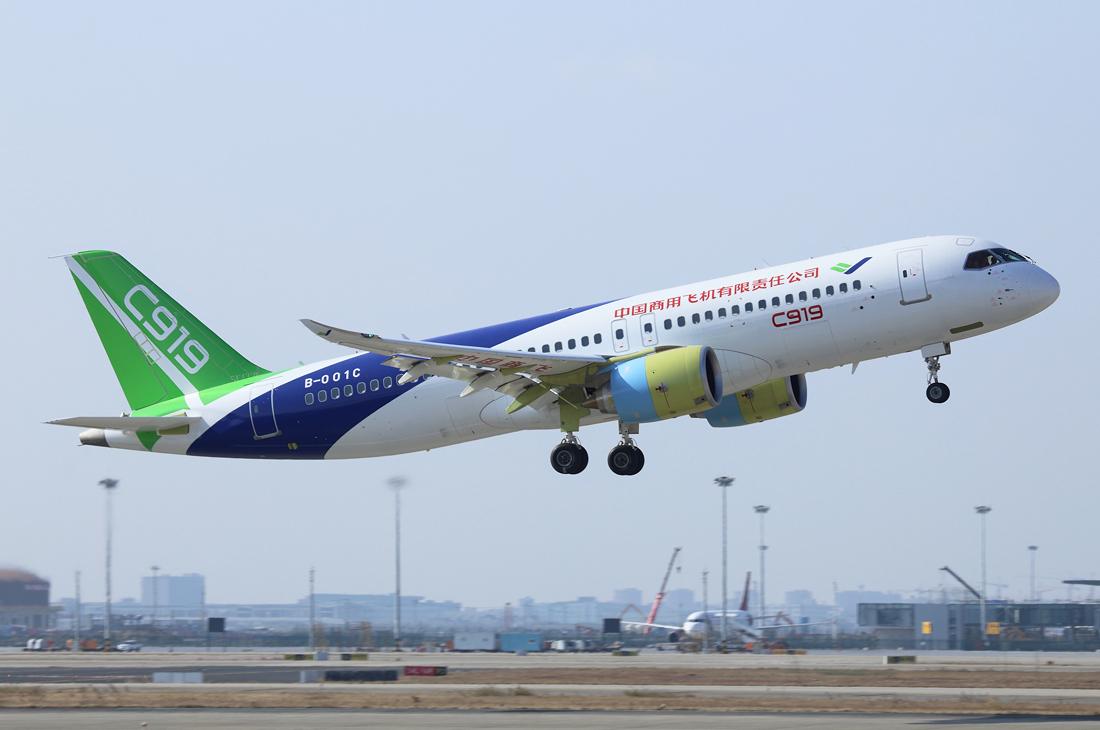
House China Panel Urges FAA to Withhold Certification From COMAC Jets and Curb US Aerospace Investment
A bipartisan House panel wants the FAA to refuse approval for Chinese-built airliners, Treasury to limit outbound investment, and Commerce to tighten export controls on parts sold to Chinese planemakers.
The Daily Touch & Go
The day's best aviation news in your inbox. Free, no spam.