

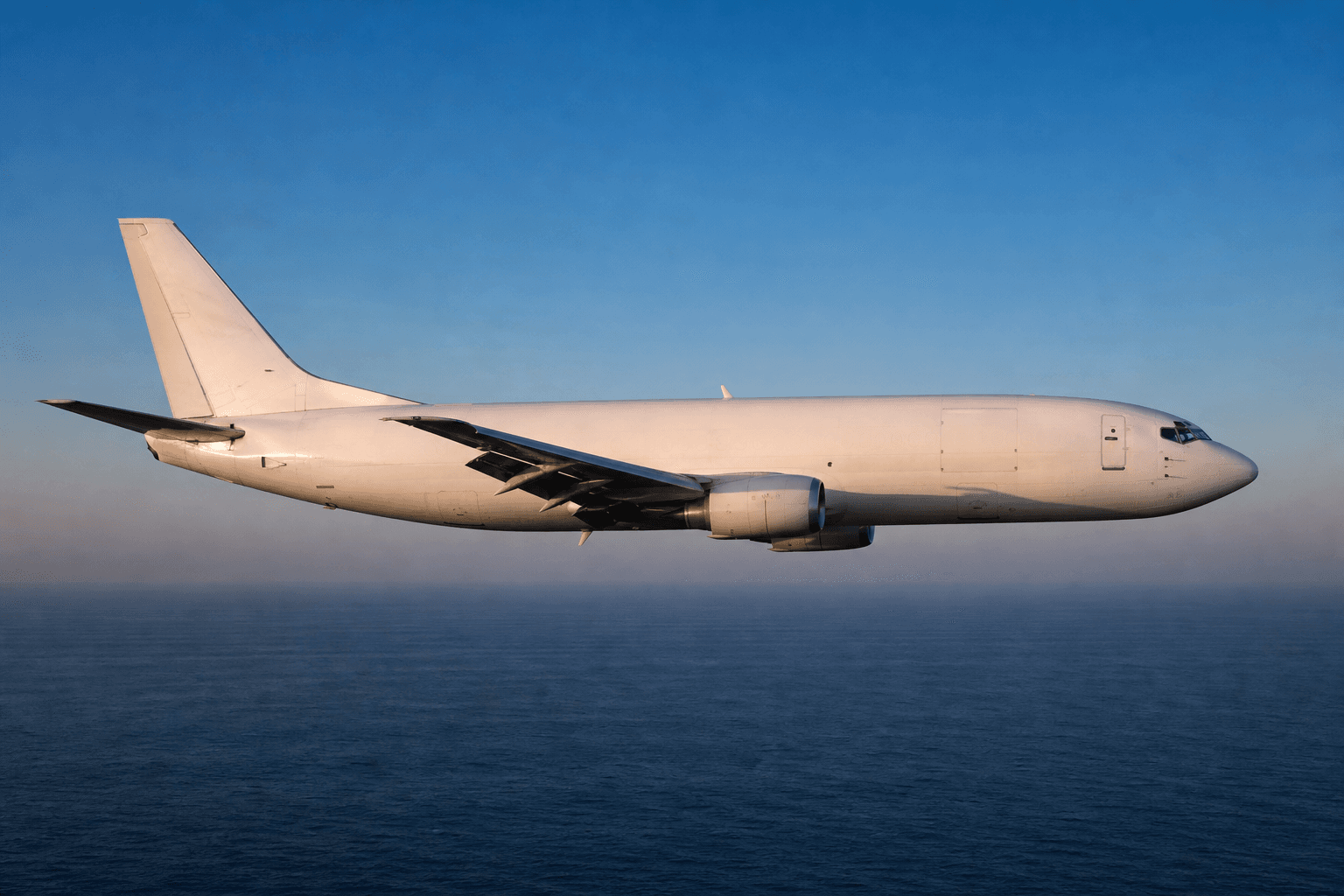
Illustration: The Touch & Go
K2 Airways cargo flight presumed crashed near Karachi after sudden altitude loss
K2 Airways flight KTA1732, operated by the carrier's lone Boeing 737-400 freighter, lost contact and is presumed crashed in the Arabian Sea following abrupt descent and navigation system issues.
The gist
K2 Airways lost its sole Boeing 737 cargo plane after sudden loss of control and presumed crash west of Karachi, with all five crew missing.
K2 Airways flight KTA1732, a scheduled overnight cargo flight from Sharjah to Karachi, disappeared on July 7, 2026, after reporting navigation troubles while en route over the Arabian Sea. The flight was operated by K2 Airways' only aircraft, a 27-year-old Boeing 737-400 converted freighter, registered AP-BOI. Shortly after takeoff, the aircraft encountered GNSS interference impacting its ADS-B signals, a problem reported to also affect other regional flights at the time. Once the plane moved beyond the interference zone, ADS-B tracking resumed normally as it crossed toward Pakistan.
During the flight's cruise phase toward Karachi, the on-board telemetry started showing erratic altitude changes. Initial data indicated a sudden descent followed by a brief climb, before the freighter suffered a catastrophic drop. The last ADS-B signal captured at 16:21 UTC placed the aircraft about 1,100 feet above sea level descending sharply at an extreme vertical rate of approximately 22,400 feet per minute, along with a reduced speed near 114 knots. This rapid descent and airspeed loss suggest a stall event resulting in loss of control.
Pakistani air traffic control confirmed the crew had communicated a navigation system malfunction at 21:18 local time (PST) to Karachi ACC. Controllers engaged in assisting the flight, but radar returns shortly afterward showed abrupt heading shifts and a steep dive. Contact with flight KTA1732 was lost entirely by 21:21 PST, roughly 155 nautical miles west of Karachi. A search and rescue mission involving multiple maritime agencies was immediately deployed but initially found no trace of wreckage or survivors.
AP-BOI was no stranger to extended service life and multiple operators. Originally delivered as a passenger 737-400 to Aeroflot in 1999, the aircraft later served Garuda Indonesia, TNT Airways, ASL Airlines Belgium, and FedEx Express. AerCap, a leasing company, acquired the aircraft before leasing it to K2 Airways in October 2024. The freighter underwent conversion from passenger to cargo configuration in 2012 and was equipped with two CFM56-3C1 engines. It had been the core asset supporting K2 Airways' cargo operations ever since.
The presumed crash of flight KTA1732 represents a significant loss for K2 Airways, depriving the airline of its sole operational freighter. Without AP-BOI, the carrier faces the challenge of suspending its dedicated cargo services between Sharjah and Karachi, critical to its business model. Pakistani authorities remain engaged in search efforts, though no debris has been recovered to confirm the exact crash location or cause.
The episodes of GNSS interference observed early in the flight may indicate wider regional issues affecting navigational systems that day, but whether this was a contributing factor in the aircraft's loss remains under investigation. The erratic telemetry leading to a probable stall highlights the risk of sudden control difficulties possibly linked to system failures.
With no emergency transmission beyond the initial navigation issue reported by the crew, the circumstances of the accident suggest a rapid onset event with little time for crew response. The aircraft's age and long operational history, including multiple conversions and operators, also raise potential considerations for mechanical integrity and maintenance review.
K2 Airways and regulatory bodies are expected to collaborate closely in the coming period to piece together data from radar, telemetry, and search assets. The outcome will be critical to improving safety insight for aging freighters and understanding vulnerabilities posed by electronic navigation disturbances.
This tragic incident underscores the operational risks faced by small airlines relying on single aircraft fleet types for cargo duties across geopolitically complex airspace. K2 Airways' immediate challenges will include maintaining service continuity, managing operational disruptions, and addressing the impact of losing its foundational freighter asset.
Read more
All Aviation Safety →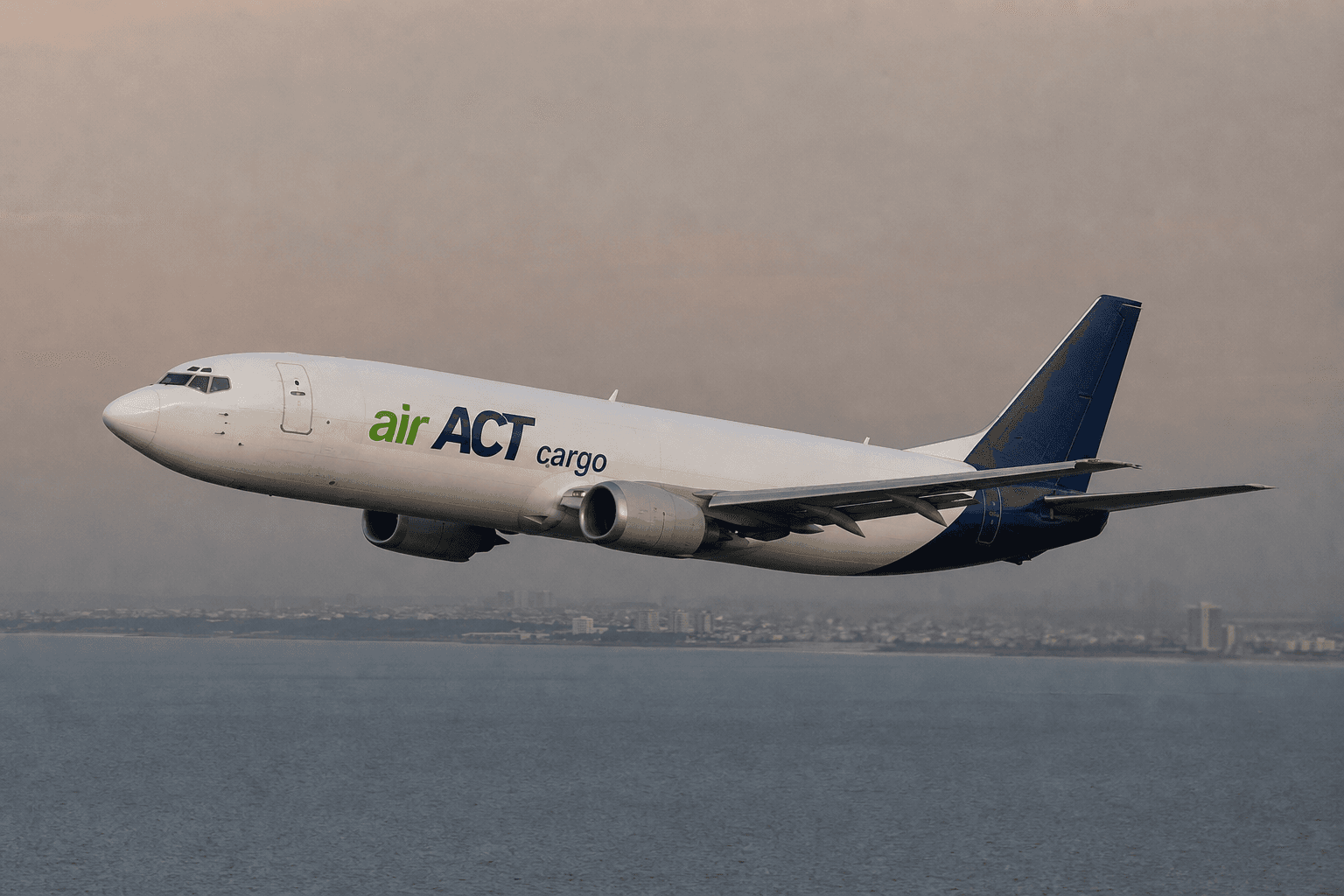
K2 Airways Boeing 737 freighter lost over Arabian Sea after sudden altitude drops near Karachi
A K2 Airways Boeing 737 freighter is missing over the Arabian Sea after preliminary flight-tracking data showed a sudden loss of altitude southwest of Karachi, Pakistan. The aircraft, registered AP-BOI, was operating as K2 Airways Cargo Flight KTA1732 from Sharjah, United Arab Emirates, to Karachi, Pakistan, on July 7, 2026, according to Flightradar24. Authorities launched a search effort after the aircraft did not arrive in Karachi as scheduled. Preliminary ADS-B data showed the aircraft lost altitude, climbed, and then suffered a second sudden and dramatic loss of altitude. The final ADS-B point received by Flightradar24 was recorded at 16:21 UTC, placing the aircraft at 1,100 feet above mean sea level with a reported vertical rate of -22,400 feet per minute. Pakistan's Civil Aviation Authority said the aircraft reported a navigation system problem at 21:18 local time before radar data showed it rapidly descending and making a sharp heading change at about 21:21. Radar and radio contact were then lost about 155 nautical miles west of Karachi, according to the AP, citing Pakistan's Civil Aviation Authority. The AP reported that five crew members were aboard the aircraft. AP-BOI is a Boeing 737-4M0(BDSF) that began service with K2 Airways in 2024. The aircraft originally entered service as a passenger aircraft with Aeroflot in 1999, later flew with Garuda Indonesia, and was converted to a freighter in 2012. K2 Airways is a privately owned Pakistani carrier based in Karachi. The airline was launched to serve regional passenger and cargo markets and received its air operator certificate in 2024. AP-BOI is listed as the carrier's sole aircraft. The aircraft and other traffic in the region experienced GNSS interference shortly after takeoff from Sharjah, which degraded data near Sharjah before the aircraft transitioned to multilateration tracking. Flightradar24 said ADS-B data was received again after the aircraft left the interference area. The aircraft remained missing late on July 7 as search efforts continued.
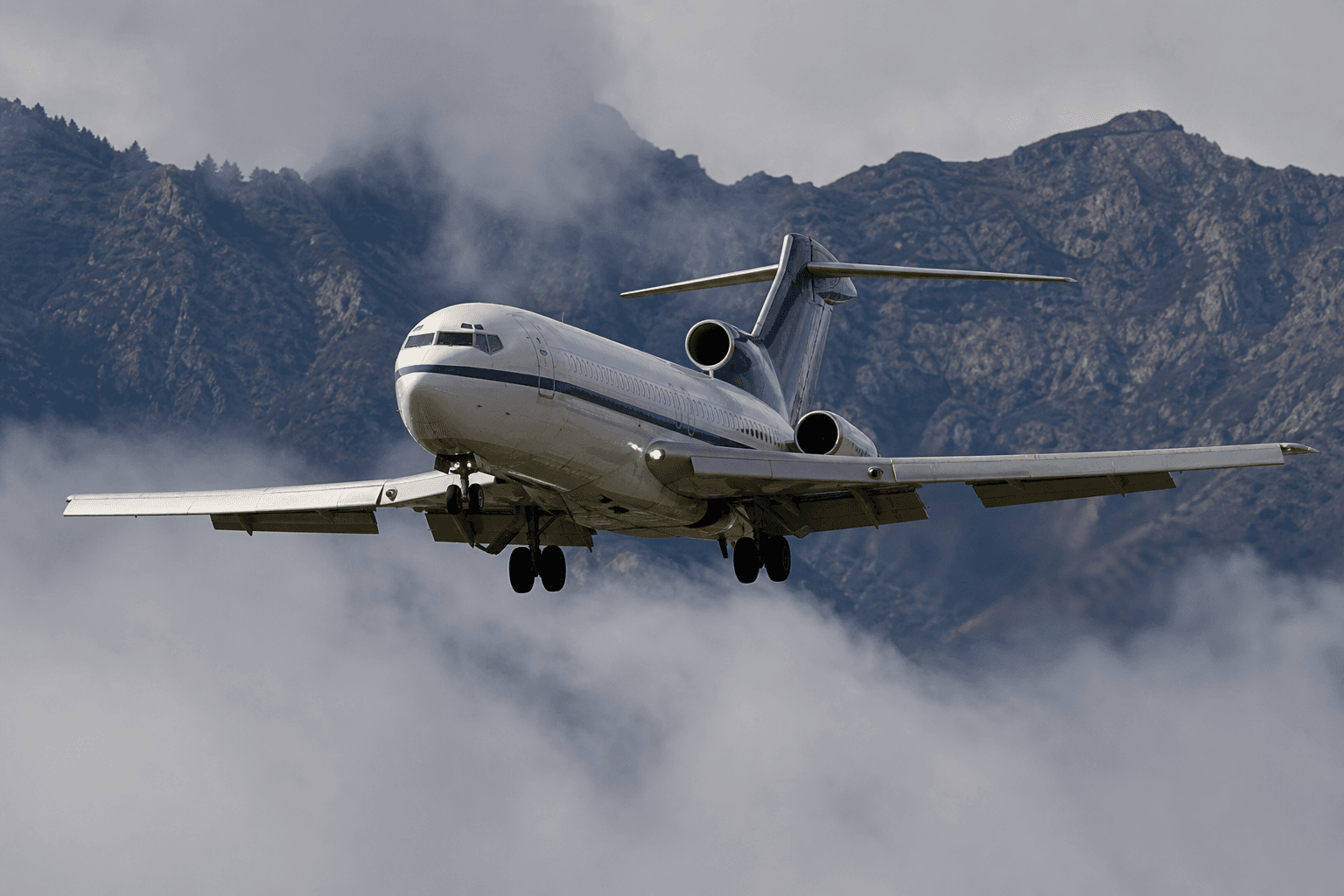
Dan-Air Flight 1008 Crashes Into Tenerife Mountain Killing All 146 Onboard
On 25 April 1980, tragedy struck one of Britain’s best-known independent airlines when a Dan-Air London Boeing 727 crashed into a mountainside while approaching Tenerife in the Canary Islands. The loss of Flight 1008 claimed the lives of all 146 passengers and crew on board, making it the deadliest accident in Dan-Air’s history and one of the worst aviation disasters involving a British airline at the time. A Holiday Flight to Tenerife The accident aircraft. Photo: Rob Hodgkins Dan-Air Flight 1008 was a charter service from Manchester to Tenerife North Airport (then known as Los Rodeos), carrying 138 holidaymakers and eight crew aboard a Boeing 727-46 registered G-BDAN. Built in 1966, the trijet had joined Dan-Air’s fleet in 1974 after earlier service in the United States. By 1980 it had accumulated more than 30,000 flying hours and was one of several Boeing 727s that had joined the airline. The flight across the Bay of Biscay and into the Canary Islands was routine. Weather around Tenerife, however, was less forgiving. Low cloud obscured the mountainous interior of the island, requiring aircraft to rely entirely on instrument procedures during their approach. Confusion During the Approach As Flight 1008 neared Tenerife North, it was sequenced behind a slower Iberia aircraft. Air traffic control instructed the Dan-Air crew to enter a holding pattern near the airport before commencing their approach. The problem was that this was not one of the published holding procedures available on the crew’s approach charts. Although the instructions were acknowledged, ambiguity over exactly how the hold should be flown soon led to a fatal navigational error. Instead of remaining clear of the island’s mountainous terrain, the Boeing 727 drifted towards high ground while descending. Unaware of the developing danger, the aircraft continued descending after being cleared to 5,000 feet—an altitude that was safe for the intended procedure, but not for the path the aircraft had actually taken. A Desperate Final Attempt Moments later, the Ground Proximity Warning System (GPWS) sounded, warning the crew that terrain lay directly ahead. The pilots immediately applied full power and attempted to climb away from danger. However, believing they were in a different position to where they actually were, the captain initiated a steep right turn. At 13:21 local time, the Boeing 727 struck the forested slopes of Mount La Esperanza while still in cloud. The aircraft broke apart on impact and was destroyed. There were no survivors. What Caused the Crash? The official Spanish investigation concluded that the accident was a classic example of Controlled Flight Into Terrain (CFIT), where an aircraft under full control is inadvertently flown into the ground. Investigators determined that the flight crew had incorrectly interpreted the unpublished holding procedure and descended into an area where the minimum safe altitude was far higher than the altitude they had been cleared to fly. However, the subsequent British conclusion to the investigation painted a more complex picture. It found that the instructions issued by air traffic control had been ambiguous and that the unpublished holding pattern itself was unsuitable for a Boeing 727 to fly accurately. The report also concluded that the aircraft should never have been cleared below 7,000 feet while operating in that area, noting that the assigned altitude of 5,000 feet left no safe terrain clearance. Rather than blaming a single error, the investigation highlighted how misunderstandings, unclear procedures and inadequate terrain protection combined to produce a catastrophe. Dan-Air’s Darkest Day The accident was a devastating blow for Dan-Air London. Founded in 1953, the airline had built an excellent reputation operating inclusive-tour charters, scheduled services and ad hoc flights across Europe. Its fleet of Comets, HS.748s, One-Elevens, 727s and later 737s became a familiar sight at British regional airports throughout the 1970s and 1980s. Although the airline continued to grow following the accident, Flight 1008 remained its worst-ever disaster involving fare-paying passengers. Dan-Air would eventually be acquired by British Airways in 1992, bringing one of Britain’s best-loved independent airlines to an end. Remembering Flight 1008 Dan Air 1008 Memorial in Manchester. Plucas58, CC BY-SA 4.0 <https://creativecommons.org/licenses/by-sa/4.0>, via Wikimedia Commons Today, more than four decades later, Flight 1008 is sometimes overshadowed by the far more widely known Tenerife Airport Disaster of 1977, which also occurred at Tenerife North Airport. Yet the accident remains a significant event in British aviation history. It reinforced the importance of clearly published instrument procedures, unambiguous air traffic control phraseology and maintaining safe terrain clearance at all times during instrument approaches. For those who remember seeing Dan-Air’s Boeing 727s arriving at airports around Britain, Flight 1008 also serves as a poignant reminder of an airline that played an important role in UK aviation—and of the 146 people whose holiday ended in tragedy on the slopes of Tenerife. Boeing 727 Special For more content on the classic Boeing 727 trijet airliner, Airport Spotting Premium members have access to the special edition July 2026 magazine packed full of articles and info. For this, and all the other content that comes with a Premium membership, you can sign up here . Title image: clipperarctic, CC BY-SA 2.0 <https://creativecommons.org/licenses/by-sa/2.0>, via Wikimedia Commons

Student Pilot Safely Lands Cessna 150 After Instructor's Mid-Air Jump in Argentina
A trainee pilot was left on his own to land an aircraft after his pilot instructor , Leandro Andrés Bertazzo , decided to jump out of a moving plane high in the air in the skies of Argentina on Saturday, July 4. This forced the student, known as Rosario, to safely land the aircraft on his own. Bertazzo, who was the age of 42, was later found dead following the incident.
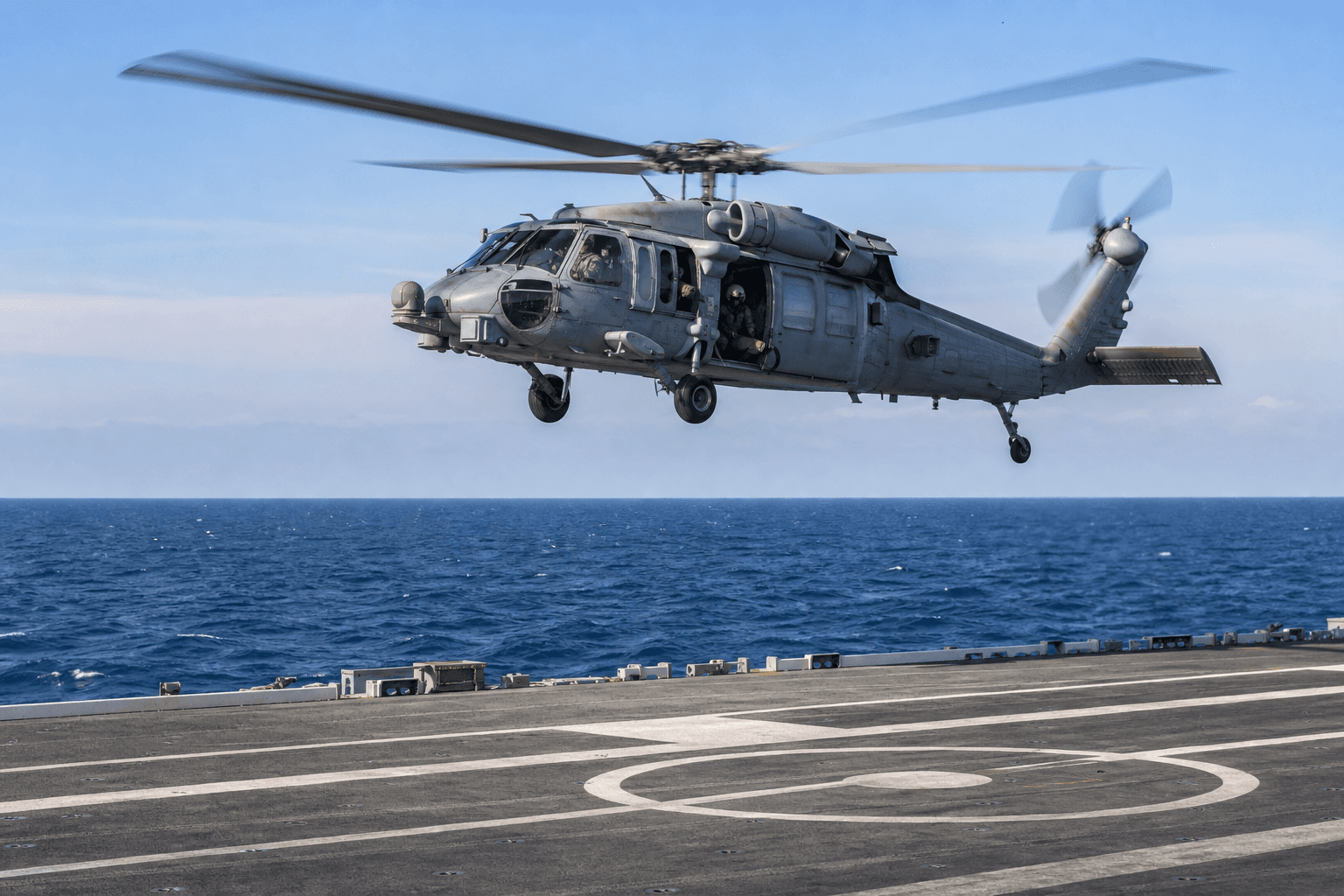
US Navy Helicopter Squadron Leader Killed After MH-60S Crash in Arabian Sea
The officer had been missing since the 1 July incident in which the Seahawk utility helicopter made an emergency water landing. The commander of a US Navy helicopter squadron has been declared killed in action in the Middle East. Commander Gabriel Edwards was a rotary-wing pilot and the commanding officer of Helicopter Sea Combat Squadron (HSC) 5, embarked with the aircraft carrier USS George HW Bush . Edwards had been missing since 1 July, when his Sikorsky MH-60S Sea Hawk made an emergency landing in the Arabian Sea. Three other US Navy personnel aboard the helicopter were rescued shortly after the ditching. The effort to locate and recover Edwards was called off after more than four days of searching, the navy now says. The cause of the emergency is not yet known and remains under investigation. Edwards had accumulated more than 2,000 flight hours over his naval aviation career, according to the navy. HSC 5 is part of the navy’s Carrier Air Wing 7, which is currently operating from the Bush in the Arabian Sea. The carrier departed its homeport of Norfolk, Virginia, in March for the regularly scheduled deployment. The MH-60S is a utility and fleet support helicopter that is distinct from Sikorsky’s MH-60R variant, which is equipped for anti-submarine warfare.
The Daily Touch & Go
The day's best aviation news in your inbox. Free, no spam.