


Illustration: The Touch & Go
Student Pilot Safely Lands Cessna 150 After Instructor's Mid-Air Jump in Argentina
A flight instructor jumped from a moving Cessna 150 during a training flight over Córdoba, leaving the student pilot to land the aircraft alone without incident.
The gist
A 22-year-old student pilot landed a Cessna 150 alone after his instructor jumped from the plane mid-flight in Argentina.
Continuing coverage
All Flight Training →- Rising Costs and Predatory Loans Challenge Aspiring Pro Pilots Financing Training
- EAA AirVenture Oshkosh 2026 to Showcase Cutting-Edge Aviation Technology and Historic Warbirds
- From Build Nights to Solo Flight: Cadet Carter Froehlich's Aviation Journey
- Pilots urged to secure renters insurance amid limited owner policy coverage
- How the Law of Primacy Shapes Pilot Training Habits and Safety
A training flight over central Argentina turned harrowing on July 4 when a flight instructor unexpectedly jumped from the moving aircraft, leaving his student pilot to manage the plane alone. The incident occurred in a Cessna 150 flying over the city of Toledo in Córdoba province. The instructor, identified as 42-year-old Leandro Andrés Bertazzo, exited the aircraft mid-air, forcing the 22-year-old trainee, known as Rosario, to safely land the plane by himself.
According to accounts from Rosario, the instructor made a brief remark before leaving his seat and the cockpit. Bertazzo reportedly told the student pilot, You know what you have to do, carry on, then removed his headset, opened the aircraft door, and jumped from the plane. Despite the shock and stress of the situation, Rosario successfully landed the Cessna 150 without damage to the aircraft or injury to himself.
The act of opening a Cessna 150 door in flight and jumping out is extremely dangerous. The plane travels at approximately 124 miles (200 kilometers) per hour, making such a move comparable to opening a car door at speed. Eduardo Alvarez, director of Flying Parrot Cordoba Flying School, which operates the training program, emphasized the complexity of the human mind in making such a tragic decision mid-flight with another person onboard.
Alvarez described Bertazzo as a beautiful person with a great smile and noted that he was certified with FAA Multiengine ATP-CTP and International Civil Aviation Organization (ICAO) level 5 qualifications. Bertazzo had been employed full-time at Flying Parrot and had been a trained pilot since November 2018, with previous experience working in Chile, according to his LinkedIn profile.
The Cessna 150 involved is a two-seat, tricycle-gear aircraft widely used for flight training, touring, and hobby flights. Produced between 1958 and 1977, it is one of the most popular training aircraft historically, with nearly 24,000 built. The versatility of the model and its prevalence in training environments underscores the rarity and severity of an incident involving an instructor suddenly departing the aircraft mid-flight.
Following the event, Argentine prosecutors have launched an investigation into the circumstances surrounding Bertazzo's final actions and state of mind. The Flying Parrot school reported no signs of mental health issues prior to the incident, but the investigation aims to determine any influencing factors leading to the instructor's tragic decision.
The event unfolds in the context of flight training at Colonel Olmedo Airport (ICAO code SACD), located near Coronel Olmedo in Córdoba, Argentina, where Flying Parrot operates. The abrupt loss of an instructor mid-flight is unprecedented for the school and has deeply affected the local aviation community.
Rosario's composure and ability to complete the landing highlight the seriousness and potential peril of training flights when unforeseen emergencies arise. The safe conclusion of this event avoided potential aircraft damage or further tragedy despite the dramatic circumstances.
This incident raises awareness on the importance of mental health monitoring within aviation personnel, especially flight instructors entrusted with the safety and training of novice pilots. It also stresses the capability and preparedness required of student pilots to respond effectively in unexpected emergencies while in control of the aircraft.
Frequently asked questions
- What happened during the flight training incident in Argentina?
- During a training flight over Córdoba, Argentina, the flight instructor jumped out of a moving Cessna 150, leaving the student pilot to land the aircraft alone safely.
- Who was the flight instructor and what was his background?
- The instructor was 42-year-old Leandro Andrés Bertazzo, a certified flight instructor with FAA Multiengine ATP-CTP and ICAO 5 qualifications, experienced since 2018 and previously working in Chile.
- How did the student pilot manage the situation after the instructor jumped?
- The 22-year-old student pilot, Rosario, was left alone to control the plane, and despite the shock, he successfully landed the Cessna 150 without damage or injury.
Read more
All Aviation Safety →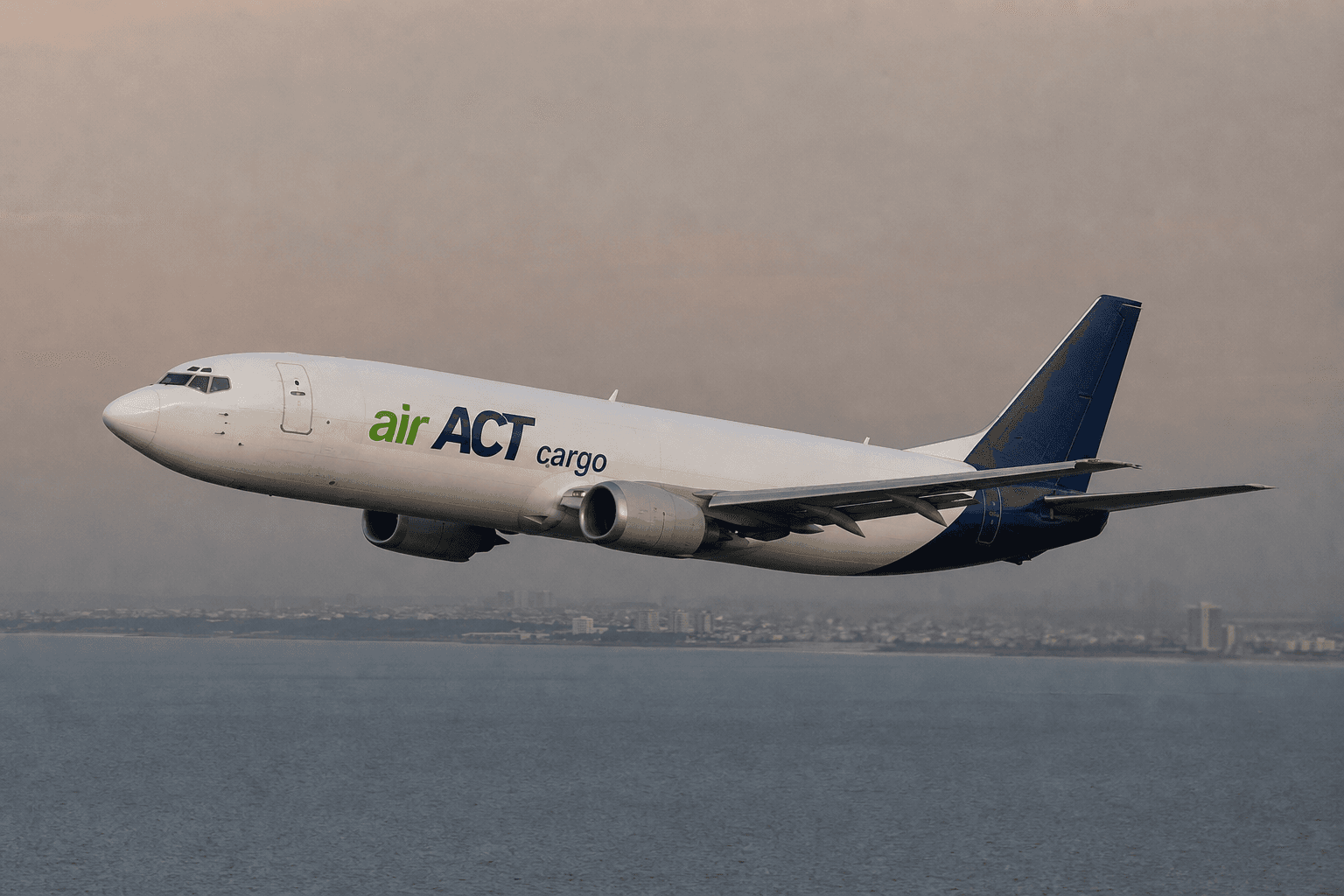
K2 Airways Boeing 737 freighter lost over Arabian Sea after sudden altitude drops near Karachi
A K2 Airways Boeing 737 freighter is missing over the Arabian Sea after preliminary flight-tracking data showed a sudden loss of altitude southwest of Karachi, Pakistan. The aircraft, registered AP-BOI, was operating as K2 Airways Cargo Flight KTA1732 from Sharjah, United Arab Emirates, to Karachi, Pakistan, on July 7, 2026, according to Flightradar24. Authorities launched a search effort after the aircraft did not arrive in Karachi as scheduled. Preliminary ADS-B data showed the aircraft lost altitude, climbed, and then suffered a second sudden and dramatic loss of altitude. The final ADS-B point received by Flightradar24 was recorded at 16:21 UTC, placing the aircraft at 1,100 feet above mean sea level with a reported vertical rate of -22,400 feet per minute. Pakistan's Civil Aviation Authority said the aircraft reported a navigation system problem at 21:18 local time before radar data showed it rapidly descending and making a sharp heading change at about 21:21. Radar and radio contact were then lost about 155 nautical miles west of Karachi, according to the AP, citing Pakistan's Civil Aviation Authority. The AP reported that five crew members were aboard the aircraft. AP-BOI is a Boeing 737-4M0(BDSF) that began service with K2 Airways in 2024. The aircraft originally entered service as a passenger aircraft with Aeroflot in 1999, later flew with Garuda Indonesia, and was converted to a freighter in 2012. K2 Airways is a privately owned Pakistani carrier based in Karachi. The airline was launched to serve regional passenger and cargo markets and received its air operator certificate in 2024. AP-BOI is listed as the carrier's sole aircraft. The aircraft and other traffic in the region experienced GNSS interference shortly after takeoff from Sharjah, which degraded data near Sharjah before the aircraft transitioned to multilateration tracking. Flightradar24 said ADS-B data was received again after the aircraft left the interference area. The aircraft remained missing late on July 7 as search efforts continued.
Crew oversight led to Boeing 737 Max 8 slow, shallow take-off at Luton after intersection departure change
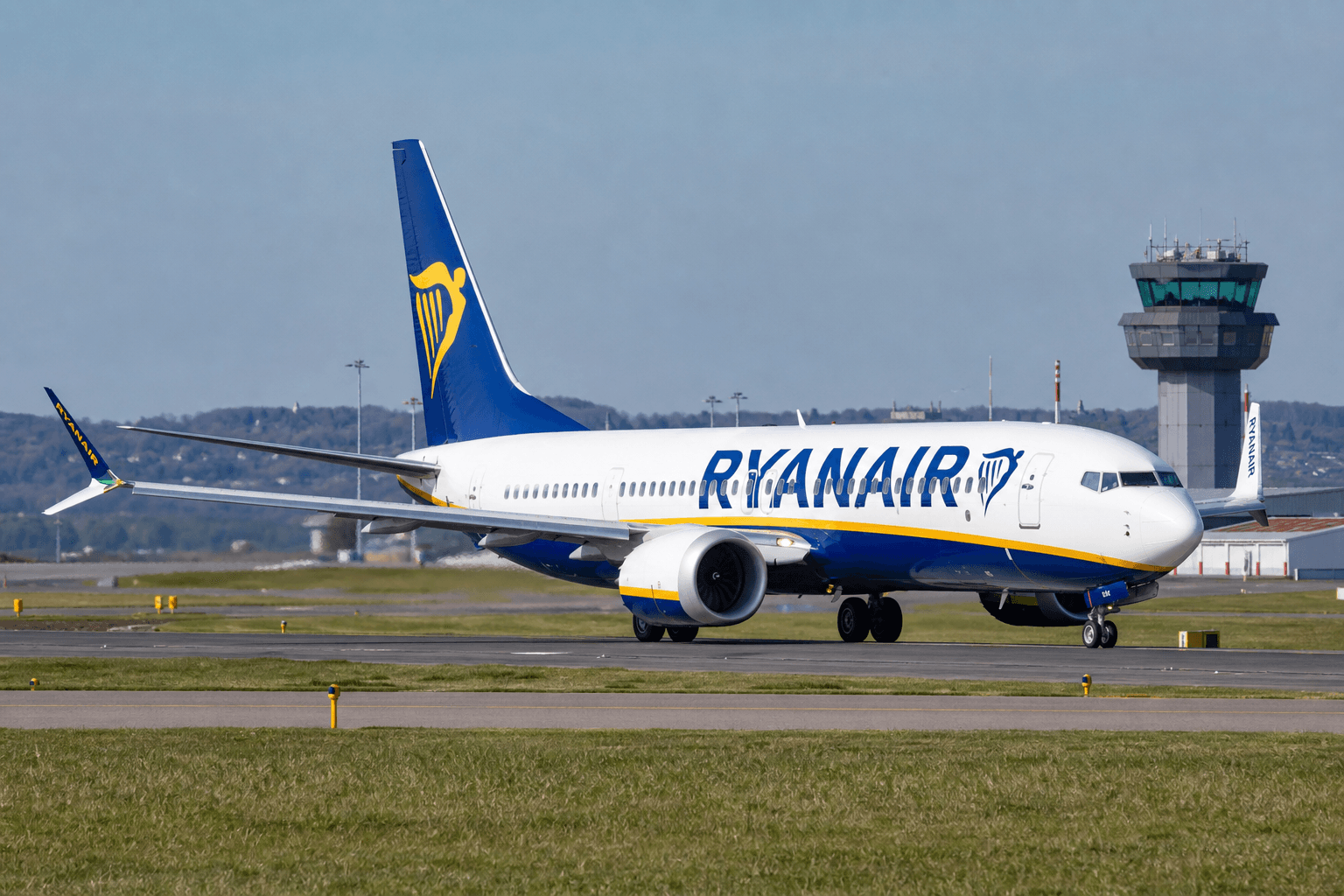
Pilots accepted intersection departure for Max 8 but did not update flight-management computer. UK investigators have determined that the crew of a Boeing 737 Max 8 did not update performance data after switching from a planned full-length runway take-off to an intersection departure. The crew of the Ascend Airways jet (G-CRUX) had informed London Luton air traffic control that they could accept a departure from intersection A of runway 25. But the pilots, who had originally intended a full-length take-off, failed to verify that the revised V-speed data had been correctly entered into flight-management computer. This resulted in a lower thrust setting than required. Flight-data analysis revealed that the maximum thrust during the take-off roll was 82.1% rather than the 85.2% needed. Available runway distance from intersection A was 1,771m — some 345m less than the full length. Owing to the low thrust, the take-off roll was "long", says the Air Accidents Investigation Branch, and the aircraft lifted off just 162m from the runway end — crossing it at a height of just 13ft. According to the inquiry the subsequent climb was "slow" and "very shallow". Air traffic control information stated that the aircraft appeared on radar to be climbing through 900ft about 0.8nm from the airport. "Under normal circumstances the aircraft would appear much closer to the airfield at that height," the inquiry says. It points out that an engine failure or loss of thrust during the take-off roll could potentially have resulted in an overrun. None of the 162 passengers and six crew members was injured during the occurrence on 22 April last year. Ascend Airways' UK division ceased operations in April this year.

Flight Attendant Numbers Determined by Safety Standards, Not Passenger Service
The number of flight attendants for each flight is carefully planned by the airline's operations department, and there are a number of deciding factors. Passengers would be hard-pressed to know exactly how many flight attendants would be needed for large aircraft types like the Boeing 777 or the Airbus A380. However, it's more obvious on smaller types like the Airbus A320 or Boeing 737, as all crew members are visible in the cabin.
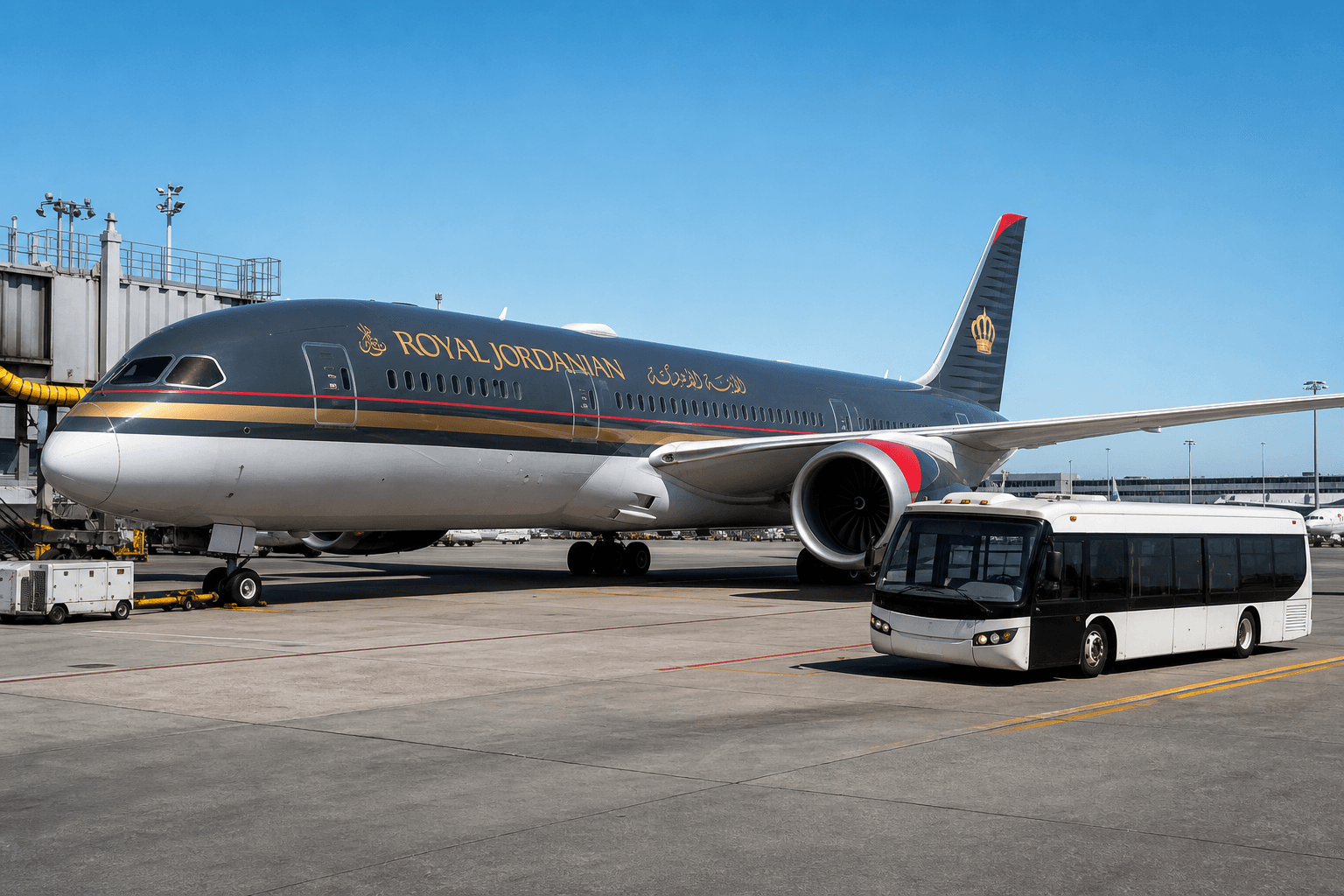
Royal Jordanian Crew Member and Bus Driver Killed in Queens Crash After JFK Arrival
The chartered bus was carrying crew from a flight that had arrived at JFK from Amman.
The Daily Touch & Go
The day's best aviation news in your inbox. Free, no spam.