

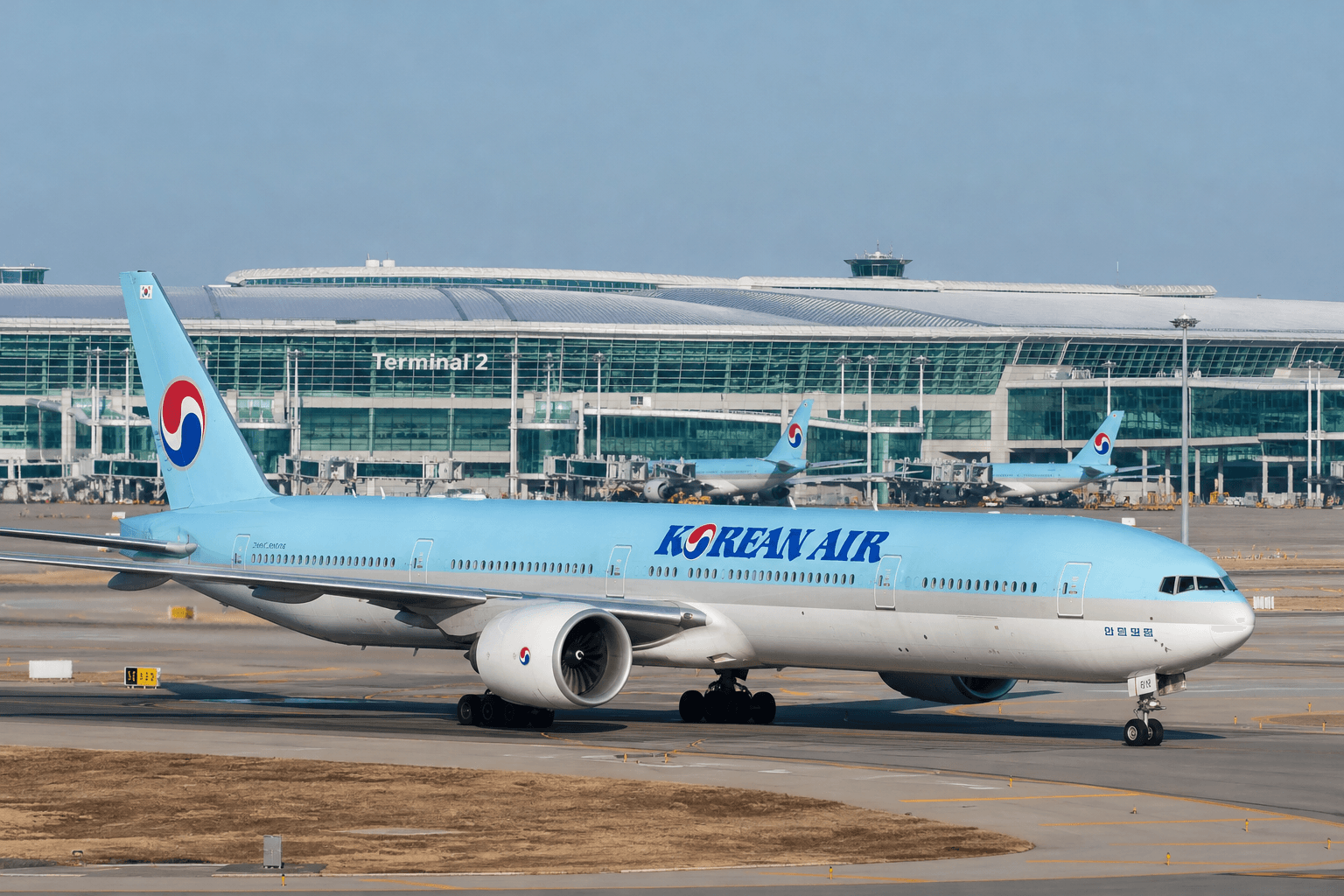
AI-generated illustration
Combined Korean Air to Fly Four Daily Incheon-New York Flights, Targets KRW 300 Billion in Added Revenue
With the Asiana integration three weeks from launch, Korean Air plans more frequencies, retimed departures, 11 inherited routes and a belly-to-freighter cargo model it expects to add at least KRW 300 billion a year.
The gist
Merged Korean Air will boost Incheon-JFK to four daily flights, add Asiana's 11 solo routes and expects at least KRW 300 billion in extra annual revenue.
Continuing coverage
All Merger →Korean Air expects its integration with Asiana Airlines to lift annual revenue by at least KRW 300 billion, as the combined carrier prepares to launch in three weeks with a reworked schedule that adds frequencies on several of its busiest long-haul routes. The airline attributes the gain to greater efficiency across both passenger and cargo operations once the two networks run as one.
Aviation industry sources said on November 23 that bringing the two airlines under a single operation will let the carrier spread out departure times, eliminate overlapping schedules and redeploy aircraft. The result, they said, is more choice for passengers rather than less, with total frequencies on some routes exceeding what the two airlines offered separately.
The Incheon International Airport to New York JFK route is the clearest case. Korean Air currently flies it twice a day and Asiana once a day. After the merger, the combined airline plans to reshuffle aircraft and routings to operate four daily flights, with departures split evenly between morning and afternoon.
Schedules to Sydney and Jakarta will also change. Both airlines now serve those cities mostly with evening departures. Under the combined timetable, Sydney flights will leave Incheon at 8 a.m. and 8 p.m., while Jakarta flights will depart at 9 a.m. and 3 p.m. Other long-haul markets will receive at least one daily flight. Los Angeles will be served four times a day, and San Francisco, Seattle and Honolulu twice a day. In Europe, Paris rises to 11 weekly flights and London to 14 weekly, while Frankfurt, Prague, Rome, Milan and Istanbul will each see daily service.
The network will also grow. Eleven international routes that Asiana operated on its own, including Barcelona and Clark in the Philippines, will transfer to the combined airline. Korean Air also plans new service to Melbourne and Hiroshima, along with more short-haul flights to Tokyo, Osaka, Fukuoka and Kobe.
The expanded schedule is expected to drive a sharp rise in transfer traffic at Incheon. Passengers will have access to around 260 flights to 13 cities in the Americas, a figure that includes codeshare flights with Delta Air Lines, plus 65 cities in Asia, including destinations in China, and 14 in Europe. Transfers between the United States and China are increasing, and travelers from the Americas and Europe heading to Asian destinations are expected to connect through Incheon in larger numbers. Korean Air has already consolidated its operations in Incheon's Terminal 2 to capture that flow, and low-cost carriers are expected to benefit if more connecting passengers pass through the airport. Hanjin Group Chairman Walter Cho told the CAPA Asia Aviation Leaders Summit last October that the merger would allow the airline to diversify schedules to better match customers' itineraries.
On the cargo side, the combined airline will put Asiana's passenger-aircraft belly capacity to work as a feeder for Korean Air's large dedicated freighters. Freight will move in belly holds on medium- and long-haul routes within Asia, then be transferred at Incheon to freighters for long-haul legs. Korean Air said it will look for additional demand in each region, load belly holds more fully than before and grow cargo revenue by increasing transfers at Incheon.
In anticipation of higher volumes, Korean Air completed a renovation of its Incheon cargo terminal last month, replacing aging facilities and installing automated equipment. An aviation industry official said the merger's economies of scale would raise the global competitiveness of Korean Air and other South Korean carriers and give the country an opportunity to become a major aviation hub in Northeast Asia.
Originally reported by 파이낸셜뉴스
Read more
All Airlines →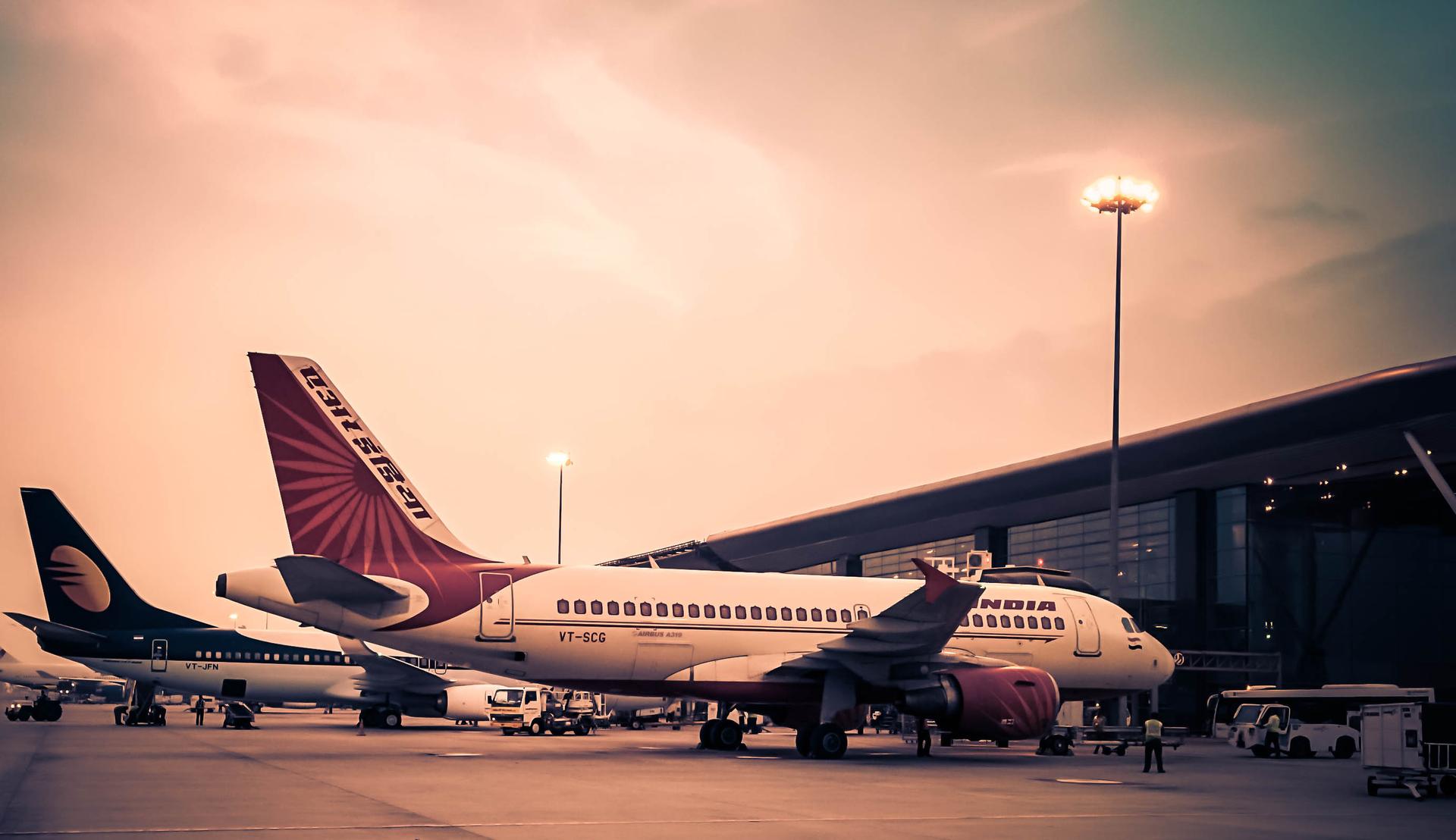
Indian Carriers Schedule 7,154 Fewer Domestic Flights for November and December Peak
Domestic schedules for the festive and wedding season are down 3.5% from 2025, the first year-on-year drop for the period since 2022, though seat capacity is almost flat.
TUI fly Belgium Shuts Casablanca and Marrakech Bases, Ending 11 Morocco Routes to France and Italy
The carrier closed both Moroccan bases on 9 November 2026 and pulled out of five French and Italian airports, citing a viability review amid increasing competition.
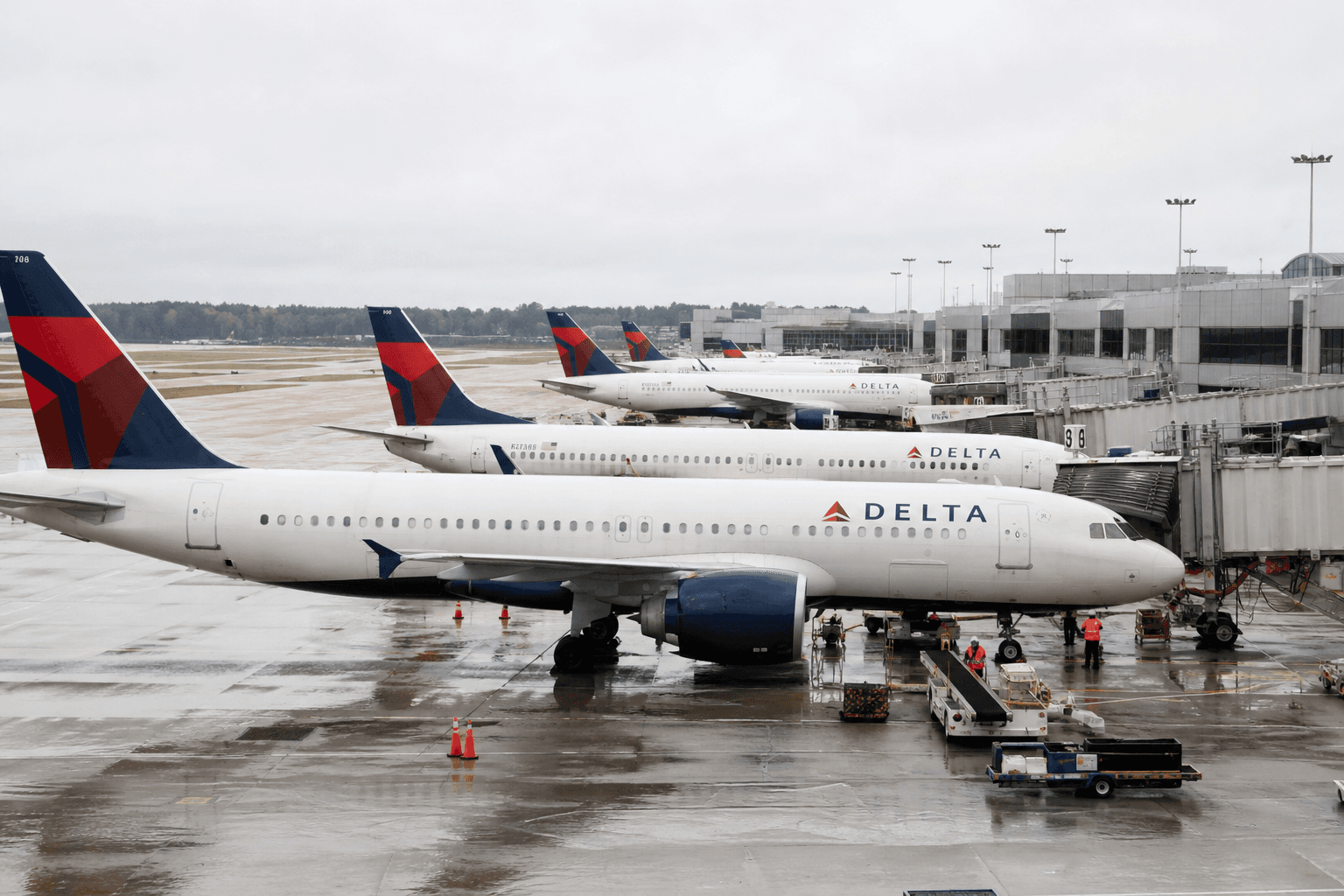
Delta Ground Stop at Atlanta Eases to Ground Delay as Airline Restores Weight and Balance Automation
The FAA downgraded a Delta-requested ground stop at Hartsfield-Jackson to a ground delay Sunday morning, with an advisory projecting more than 3,500 delayed flights.
New Carrier JOY Airline Starts Scheduled Flights From Jujuy to Buenos Aires and Córdoba
Argentine startup JOY Airline has launched scheduled domestic service from a base in Jujuy, flying 12 weekly frequencies to Aeroparque and a daily nonstop to Córdoba.
The Daily Touch & Go
The day's best aviation news in your inbox. Free, no spam.