

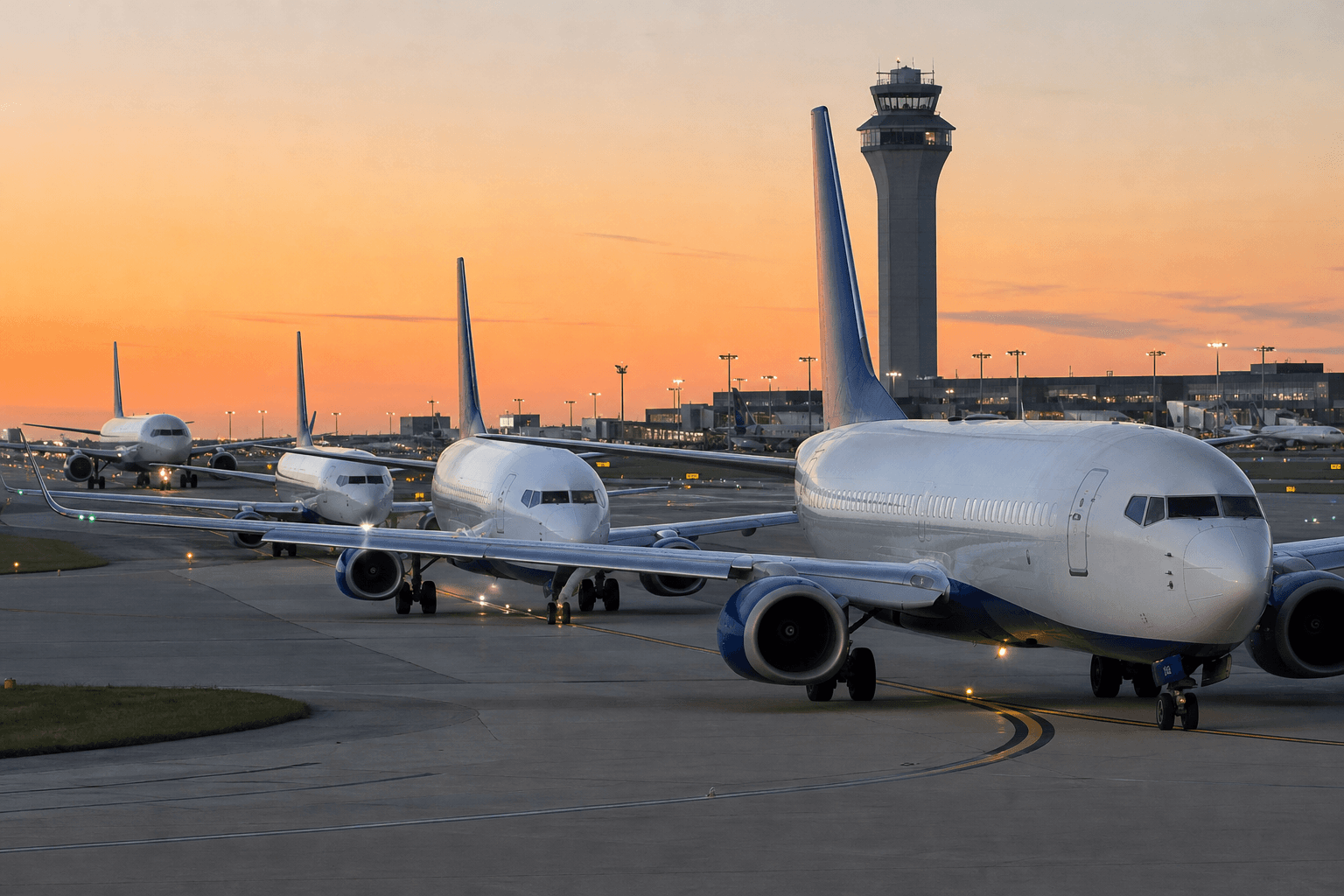
AI-generated illustration
Minneapolis Air Traffic Control Outage Grounds and Diverts Flights Across 10 Midwest States
A radar and air traffic control system failure at a Minneapolis facility covering 330,000 square miles forced ground holds and diversions Thursday, and the FAA is investigating the cause.
The gist
A Minneapolis ATC facility outage held and diverted flights in 10 Midwest states, leaving 90-minute average delays at MSP after systems returned.
Continuing coverage
All Faa →- Delta Ground Stop at Atlanta Eases to Ground Delay as Airline Restores Weight and Balance Automation
- DOT Inspector General Opens New Audit of FAA Manufacturing Oversight as Six Boeing Fixes Remain Open
- FAA Urges Pilots to Call Out Runway Number Before Crossing After 2023 JFK Near-Collision
- Modern Skies Coalition Launches ACT NOW Ad Campaign Pressing Congress for ATC Modernization Money
- FAA Opens Antidepressant Certification to Any AME and Cuts Post-Medication Wait to 60 Days
Flights bound for and departing from Minnesota and nine other Midwest states were held on the ground or diverted Thursday after a system outage at an air traffic control facility in Minneapolis, the Federal Aviation Administration said. The affected systems included radar and air traffic control functions. The FAA said those systems later came back online. Delays continued at several airports into the evening even after service was restored. The agency said it is investigating what caused the failure.
The outage did not originate at Minneapolis-Saint Paul International Airport. It struck a separate facility that manages air traffic across roughly 330,000 square miles of the region. That scope explains why the effects spread well beyond the Twin Cities. When a facility of that size loses radar and control systems, controllers cannot safely accept the normal flow of aircraft into the airspace it covers. Ground holds and diversions are the standard tools for keeping traffic out of that airspace until service returns.
Minneapolis-Saint Paul International felt the disruption directly. Delays there averaged 90 minutes Thursday evening, the FAA said. A hold of that length at a large hub affects departing flights and the aircraft and crews scheduled to fly later rotations. Arriving flights that were diverted elsewhere also had to return to their original destinations once the airspace reopened. The FAA did not give a count of affected flights.
The ripple effects extended across the Midwest. The FAA said delays at airports in Michigan, Kansas, Missouri, North Dakota, South Dakota, Nebraska and Wisconsin were expected to last through the evening. Those states, along with Minnesota, account for most of the 10 states the agency said were affected. Travelers at airports in those states faced holds on departures toward the affected airspace. Flights already airborne and headed into the region were the ones subject to diversion.
Recovery from an event like this does not end when the systems return. Aircraft held at gates and on taxiways have to be released in sequence, and controllers rebuild the traffic flow gradually rather than all at once. That process is why the FAA said disruptions persisted at several airports after radar and control systems were back online. Airlines must also reposition aircraft that landed at alternate airports. Each of those steps adds time before schedules return to normal.
The FAA has not said whether the outage stemmed from equipment, software, power or another cause. The agency described the matter as under investigation and did not offer a timeline for findings. It also did not say how long the systems were offline before coming back. The FAA confirmed the outage, the restoration of radar and control systems, and the lingering delays across the region. Delays at MSP stood at an average of 90 minutes Thursday evening.
Originally reported by ABC News - Breaking News, Latest News and Videos
Read more
All Aviation Safety →
Burbank Tower Goes ATC Zero Twice in One Evening, Leaving Airline Crews to Self-Announce on CTAF
Southwest and Alaska Airlines pilots at Hollywood Burbank Airport coordinated their own movements on a common frequency during roughly 30-minute gaps with no controller in the tower.

FAA Issues Second Ever Nationwide Ground Stop After ARTCC Communication Failure
FAA halts departures at all U.S. airports due to communication issues affecting Air Route Traffic Control Centers, with technicians investigating the cause.
Safety Gaps Persist at Reagan National Nearly Two Years After Midair Collision, Academies Find
A congressionally requested National Academies report says the FAA and Army still fall short on spotting and managing collision risk at KDCA and urges a safety review before any more flights are added.
American Airlines 737 Carrying Senator Ashley Moody Shuts Down Engine, Diverts to Orlando
The crew of Flight AA496 from Tampa to Washington National declared a Mayday after left engine indications and chose Orlando's longer runways and in-house maintenance over a return to Tampa.
The Daily Touch & Go
The day's best aviation news in your inbox. Free, no spam.