

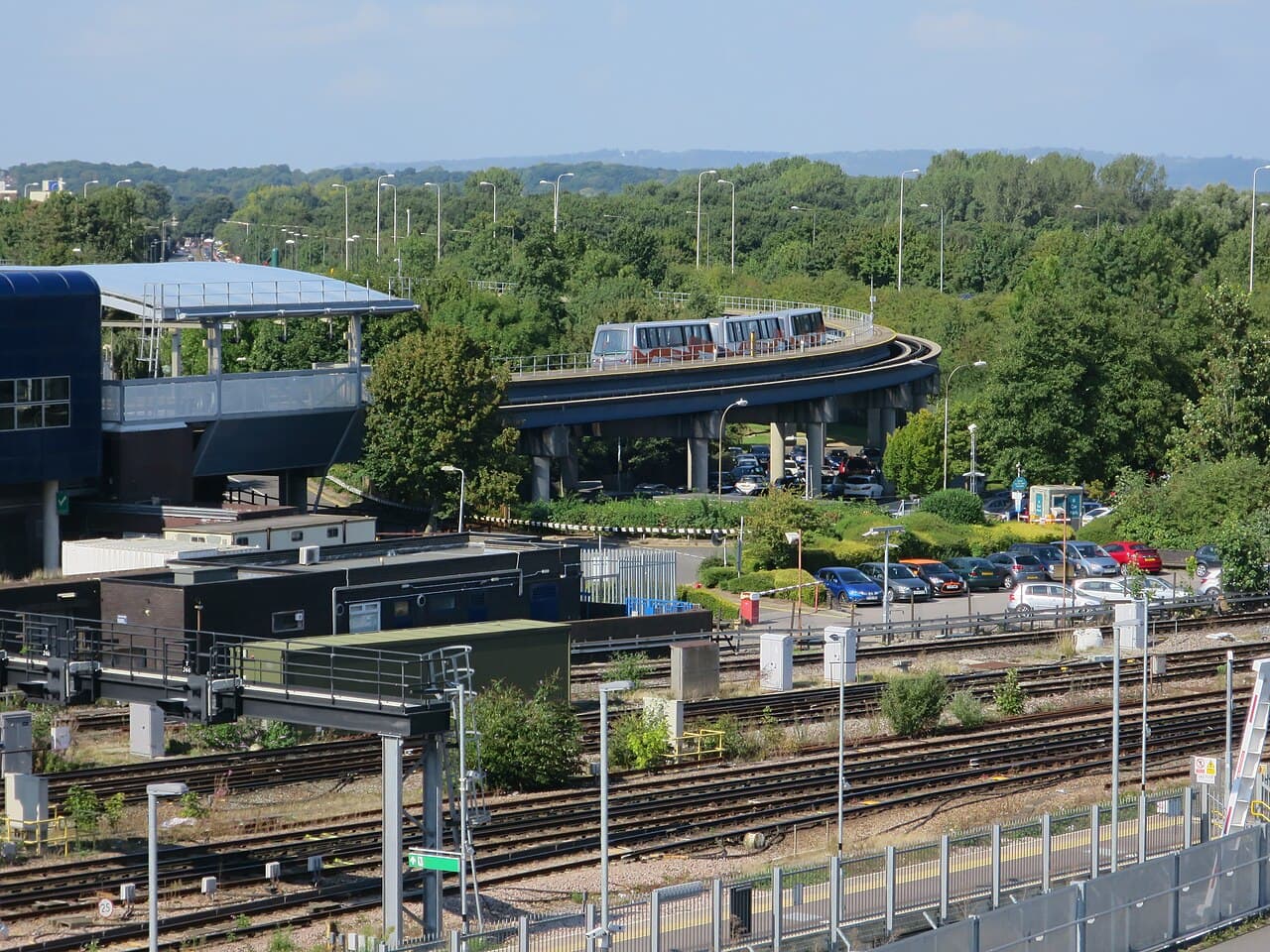
Image: Oast House Archive · CC BY-SA 2.0 · via Wikimedia Commons
London Gatwick's second runway expansion gets green light after legal challenge fails
Plans to develop Gatwick's northern runway and enable dual-runway operations will proceed following dismissal of appeal attempts by local campaigners.
The gist
Legal efforts to block Gatwick Airport's second runway project have failed, clearing the way for capacity expansion.
London Gatwick Airport’s proposal to expand capacity by developing a second runway has advanced after the UK Royal Courts of Justice rejected challenges seeking to halt the project. The decision on August 4 confirmed the dismissal of appeal applications from groups including Communities Against Gatwick Noise Emissions, who contested the approval of a development consent order (DCO) granted in September last year by the UK transport secretary. This order authorizes the upgrade of Gatwick’s northern runway and removal of operational restrictions allowing simultaneous use of both northern and southern runways as a dual-runway system.
The legal contention began with a request for judicial review of the transport secretary’s decision to permit the runway enhancement. Permission to pursue this review was denied in June following a hearing in January, leading the appellants to seek permission to appeal the refusal at a further hearing held on July 27-28. The recent ruling disallowed these appeals, concluding that none of the arguments presented by the opponents demonstrated any credible chance of success or provided compelling cause for reconsideration.
The court elaborated that the grounds of appeal were unarguable and lacked any real prospect for prevailing in legal proceedings. Accordingly, the project’s authorization stands intact without further judicial impediments, paving the way for Gatwick Airport to move forward with its expansion plans. The ruling reaffirms the legality and propriety of the consent order established last year.
Gatwick Airport’s chief executive, Pierre-Hugues Schmit, welcomed the outcome, characterizing the court’s decision as a comprehensive rejection of the challenges. He emphasized that the approval for the dual-runway project had undergone proper and lawful scrutiny, enabling the airport to advance confidently to the next phases of design and construction.
The planned development involves improving Gatwick’s northern runway infrastructure to facilitate concurrent operation alongside the existing southern runway. This marks a significant evolution for Gatwick, one of the United Kingdom’s key international hubs, which has historically operated primarily with a single runway configuration limiting capacity and flexibility.
This expansion aims to address capacity constraints and operational efficiency, supporting growth in passenger volumes and flight operations. By enabling a dual-runway system, Gatwick will enhance its competitiveness among London airports and improve its ability to accommodate future aviation demand more sustainably and effectively.
Opposition to the project had focused on concerns about increased noise impact and environmental consequences due to expanded flight operations. However, the judicial decisions affirm that the environmental and regulatory assessments conducted met statutory requirements. The dismissal of the appeal signifies robust legal standing for the project amid recurring challenges from local community groups.
With the path cleared, Gatwick can now embark on the detailed delivery stages required to realize the runway enhancements. This involves comprehensive design work, procurement, and construction activities anticipated to unfold over the coming years, ultimately reshaping the airport’s operational capacity and infrastructure.
The final court ruling represents a pivotal moment ensuring that Gatwick’s long-planned development can proceed without further judicial delays. The resolution of this legal hurdle allows the airport to focus on implementation and future-proofing its facilities to meet aviation demand in a growing and evolving market.
Frequently asked questions
- What was the legal outcome regarding Gatwick Airport's second runway project?
- The UK Royal Courts of Justice dismissed appeals against the project, confirming that the legal challenges to the development consent order authorizing the second runway had no realistic chance of success.
- What does the second runway project at Gatwick Airport involve?
- The project includes improving Gatwick’s northern runway and lifting restrictions to allow simultaneous use of both the northern and southern runways, enabling a dual-runway operation system for increased capacity.
- Why were local campaign groups opposing Gatwick's runway expansion?
- They were concerned about noise emissions and environmental impact associated with increased flight operations due to the dual-runway expansion.
Read more
All Sustainability →
Federal Judge Allows Class Action Suit Over Delta's False Carbon Neutral Claims to Proceed
A federal judge kept the Delta carbon-neutral claim for damages alive as the case moves toward a class fight over exposure, reliance and ticket prices.
Boeing's Chevrons Quiet Engines but Cost Fuel on 787, 747-8, and 737 MAX
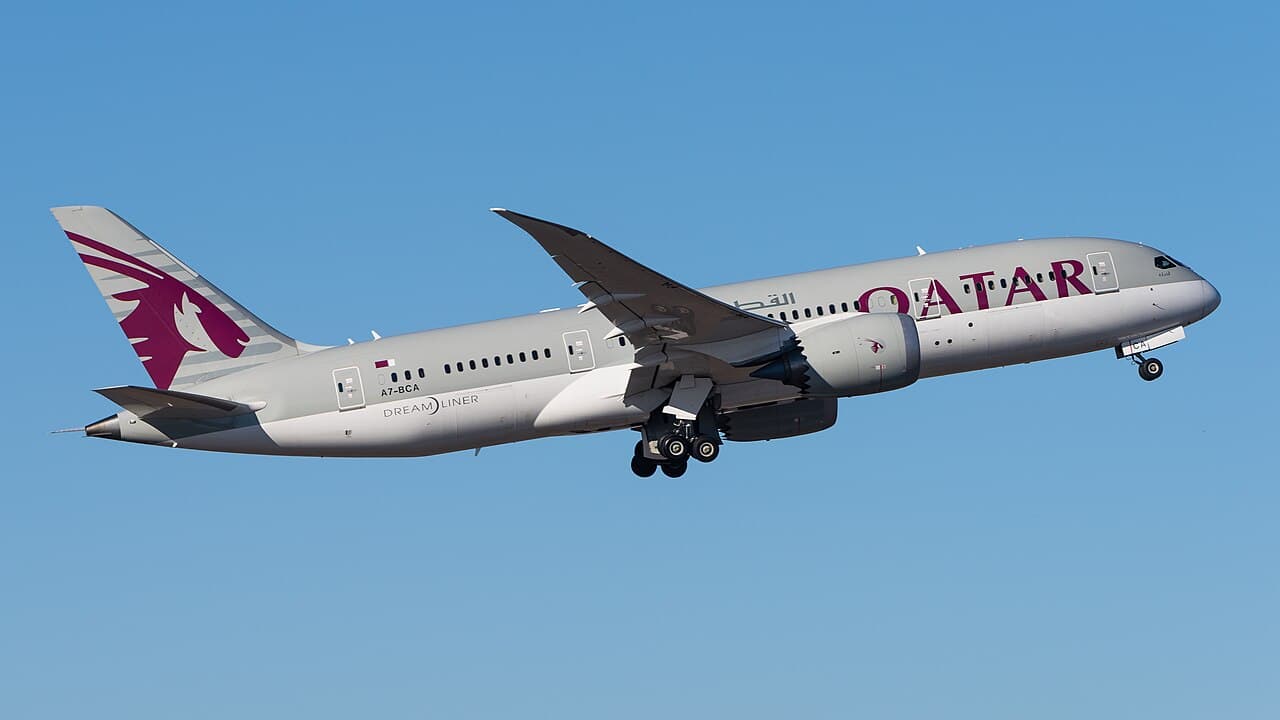
Aircraft design is a constant exercise in balancing various technologies. Engineers rarely have the luxury of maximizing every performance metric simultaneously; instead, they make carefully calculated compromises between fuel efficiency, weight, operating costs, emissions, passenger comfort, and regulatory compliance. One of the clearest examples of this balancing act can be found on three modern Boeing aircraft families: the 787 Dreamliner, 747-8, and 737 MAX.
WestJet Flight Attendants Issue Strike Notice Over Unpaid Ground Work Dispute
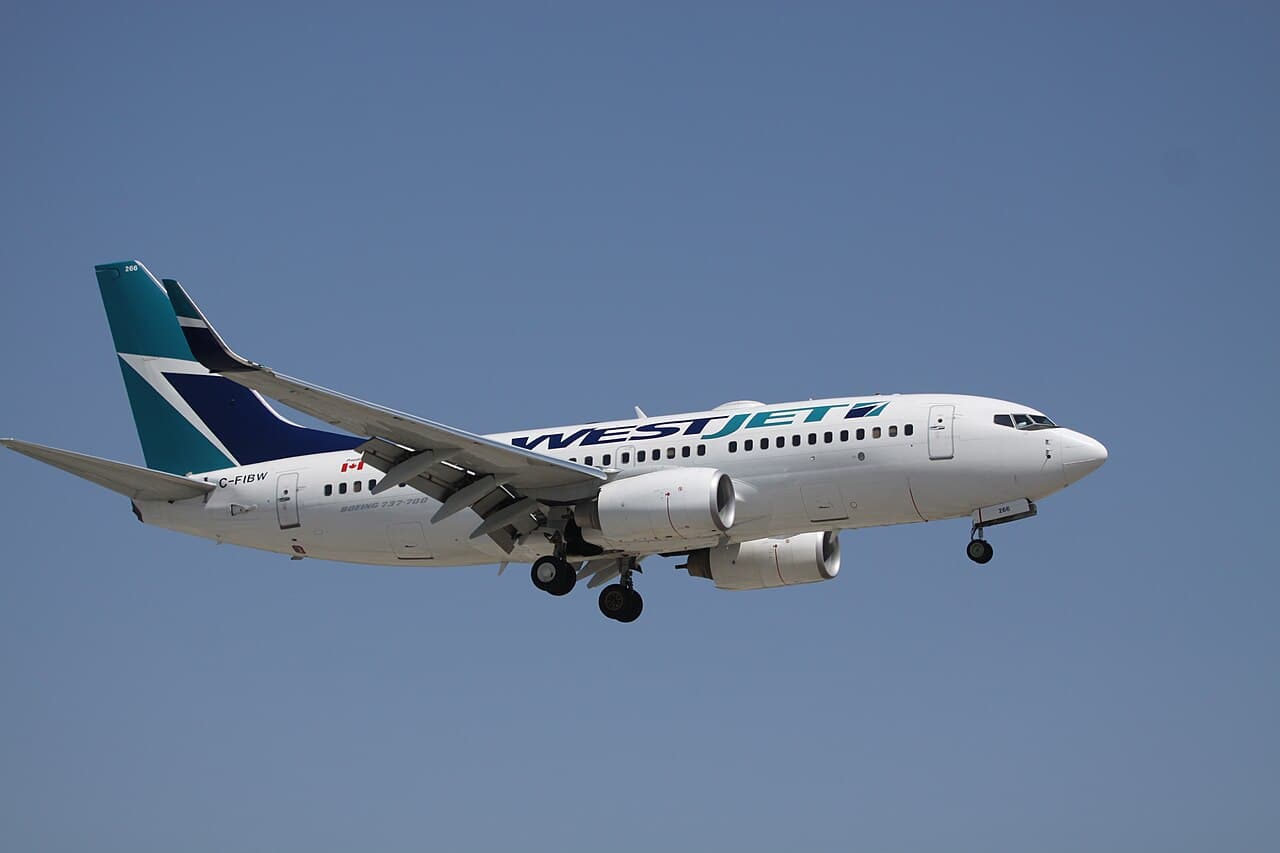
Flight attendants at Canada’s second-largest airline, WestJet, have issued the Calgary-based carrier a 72-hour strike notice over a raging dispute over crew members being forced to work ‘for free’ after months of contract negotiations ended in an impasse between the airline and the Canadian Union of Public Employees (CUPE). Earlier this month, more than 4,000 WestJet flight attendants overwhelmingly backed strike action if the airline refused to pay them for the time that they are at work but not actually flying. Over 99.4% of flight attendants voted to support a walkout on a turnout of 97.3% of CUPE members. Under Canadian law, the union then had to enter into a 21-day cooling-off period, meaning that the earliest date that crew members can stage a crippling strike is August 2. At the heart of the dispute is the fact that traditionally, flight attendants in Canada have only been paid during the time that the plane is in motion, from the point that the aircraft pushes back from the gate to when it arrives at its destination. That means that flight attendants are effectively ‘working for free’ during boarding, which is often seen as one of the busiest and most stressful parts of the job. If a flight is delayed on the ground, flight attendants have to continue working without pay. The so-called ‘block hours’ approach to paying flight attendants was, until only recently, the dominant pay structure for flight attendants across North America. That, however, began to change in 2022, when Delta Air Lines became the first major carrier to offer ‘boarding pay’ at 50% of the usual flying pay rate. In the last few years, a slew of other carriers have followed suit, including American Airlines, United Airlines, Alaska Airlines, and several smaller regional carriers. Last Summer, flight attendants at Air Canada also secured boarding pay for the first time after a messy walkout, which flight attendants continued even after the government attempted to order crew members back to work. The CUPE union has warned the Carney government not to intervene and “respect the collective bargaining process between WestJet and its flight attendants.” In a statement issued on Thursday, Alia Hussain, President of the local CUPE 8125 union, which represents WestJet flight attendants, said: “We have been clear about what needs to change, and we have worked hard to reach a fair deal.” “The strike notice does not mean flight attendants want to go on strike. CUPE 8125 has been clear throughout negotiations that its goal is to reach a fair agreement without disrupting passengers or the travelling public,” the statement continued. “There's still time to avoid a strike,” Hussain added. “We want a fair contract for our members that recognizes the value of flight attendants' work and recognizes our position as employees of the second-largest carrier in Canada.” Hussain is calling on WestJet to re-enter into negotiations and reach a deal. If one cannot be reached, however, passengers should expect widespread disruption. In response to the strike notice, WestJet has issued its own 72-hour lockout notice. What that means is that flight attendants will be prevented from attending to work, even if they want to, cutting them off from pay. The other consequence of a lockout notice is that WestJet will not be able to operate. No flight attendants will be able to work, and the airline will have no other option but to ground its entire fleet, leaving tens of thousands of passengers stranded. “The decision to issue a lockout notice, in response to the actions taken by the union, was not one that was made lightly. We sincerely regret the inconvenience and uncertainty this continues to cause for our guests," commented WestJet chief executive Alexis von Hoensbroech. “Our commitment remains at the bargaining table, where we will continue to work around the clock to come to an agreement that provides value and meaningful improvements for our Cabin Crew and is sustainable for our company,” von Hoensbroech added. The amount of time that WestJet has to reach a deal is, in reality, less than 72 hours. If a deal can’t be reached in the next day or so, the airline will have to start activating plans to bring planes back to their respective bases before the strike starts. Without a deal, the only way that mass disruption can be avoided is if the government intervenes and orders flight attendants to turn up to work. However, as we saw last summer, Air Canada flight attendants and their union leaders were willing to disregard that order, risking jail time. Air Canada flight attendants secured boarding pay at an initial 50% of the normal pay rate, rising to 60% in 2026, 65% in 2027, and then topping out at 70% in 2028.
Airbus Posts Strong H1 2026 with 351 Aircraft Deliveries and Record Order Backlog
Airbus has reported robust performance in its commercial aircraft business for the first half of 2026, with higher deliveries, record orders, and solid revenue growth. ezstandalone.cmd.push(function () { ezstandalone.showAds(119); }); The results demonstrate the company’s ability to meet surging global demand while navigating supply chain and production challenges. In the first six months of 2026, Airbus delivered 351 commercial aircraft, up from 306 in H1 2025. This represents a significant step forward in the company’s ramp-up strategy. The deliveries comprised 44 A220s, 271 A320 Family aircraft, 10 A330s, and 26 A350s. ezstandalone.cmd.push(function () { ezstandalone.showAds(127); }); Strong Order Intake and Record Backlog Demand for Airbus aircraft remains exceptionally high. Gross orders reached 886 aircraft in H1 2026, compared to 494 in the same period last year. After cancellations, net orders stood at 821 aircraft — more than double the 402 net orders recorded in H1 2025. The company’s order backlog grew to 9,222 commercial aircraft at the end of June 2026. This massive backlog provides visibility for years of production and underscores Airbus’s leading position in the global commercial aviation market. ezstandalone.cmd.push(function () { ezstandalone.showAds(128); }); Revenue and Profitability Growth Revenues from Airbus’s commercial aircraft activities increased 15% year-on-year to €23.9 billion. This growth was primarily driven by higher delivery volumes and increased services business, though partially offset by a weaker US dollar. EBIT Adjusted for the commercial aircraft segment rose to €1,987 million, up from €1,714 million in H1 2025. The improvement reflects strong operational execution, despite headwinds from currency hedging rates. ezstandalone.cmd.push(function () { ezstandalone.showAds(129); }); Production Ramp-Up on Track Airbus continues to make steady progress on its ambitious production targets: A220 programme: Ramp-up ongoing, with a target of 13 aircraft per month by 2028. A320 Family: On track to reach 70-75 aircraft per month by end-2027, stabilising at rate 75 thereafter. A330 programme: Targeting rate 5 by 2029. A350 programme: Aiming for rate 12 by 2028. These rate increases are critical as airlines worldwide seek to modernise fleets with more fuel-efficient aircraft amid growing passenger traffic and sustainability pressures. ezstandalone.cmd.push(function () { ezstandalone.showAds(130); }); Photo Credit: Airbus Full-Year 2026 Guidance Unchanged Airbus reaffirmed its 2026 targets, assuming no major additional disruptions to global trade, air traffic, or supply chains. The company expects to deliver around 870 commercial aircraft for the full year. Overall group guidance remains intact, with targeted EBIT Adjusted of around €7.5 billion and Free Cash Flow before Customer Financing of around €4.5 billion. Chief Executive Officer Guillaume Faury noted that strong Q2 deliveries demonstrate effective execution in a complex environment. “We are ramping up across all businesses to meet the growing demand for our civil… solutions,” he said. ezstandalone.cmd.push(function () { ezstandalone.showAds(131); }); Photo Credit: Airbus Positive Outlook Despite Challenges While the first-half cash flow was negative due to planned inventory build-up for future ramp-up, Airbus maintains a healthy net cash position of €8.4 billion. The company continues investing in research and development (€1.464 billion group-wide in H1) to drive innovation in areas such as sustainable aviation fuels and next-generation technologies. The strong commercial performance highlights Airbus’s competitive strength in a recovering aviation market. With a healthy mix of narrowbody and widebody deliveries and a record backlog, the European manufacturer is well-positioned to capitalise on long-term industry growth. ezstandalone.cmd.push(function () { ezstandalone.showAds(132); }); As Airbus accelerates production rates and focuses on operational excellence, stakeholders will watch closely to see whether the company can sustain this momentum through the second half of 2026 and beyond. The results signal confidence in the future of commercial aviation and Airbus’ central role in it.
The Daily Touch & Go
The day's best aviation news in your inbox. Free, no spam.