

Image: San Diego Air & Space Museum · Public domain · via Wikimedia Commons
Chicago O'Hare Tops North America in Flight Movements, Atlanta Leads in Seat Capacity
Chicago O'Hare International Airport records the most daily flights, while Atlanta Hartsfield-Jackson International offers the highest seat capacity in North America in 2025.
The gist
Chicago O'Hare leads North America with 1,045 daily flights; Atlanta offers 63.1 million seats in 2025, highlighting differing airport operational profiles.
Continuing coverage
All Delta Air Lines →- Federal Judge Allows Class Action Suit Over Delta's False Carbon Neutral Claims to Proceed
- United Airlines CEO Explored Mergers With Delta and American Airlines, Both Declined
- Delta Air Lines Elevates Passenger Experience with Delta Sync Inflight Technology
- United CEO Proposed Merger With Delta Creating 35% U.S. Market Share
- Frontier Airlines to Launch Starlink Wifi Fleetwide, Surpassing Delta's Connectivity Offering
Chicago O'Hare International Airport (ORD) emerges as North America's busiest airport by number of daily flights, handling 1,045 flights each day in 2025 excluding freight and charters. This positions ORD as a critical aviation hub with a staggering volume of aircraft movements, underscoring its operational significance for both domestic and international travel within the region. The airport’s extensive flight activity places it among the world’s top busiest airports in terms of seat capacity and flight operations.
ORD's substantial daily operations are supported by an expansive infrastructure including eight runways and multiple terminals. Such facilities enable precise coordination of flights, ensuring efficient handling of the dense traffic. The airport functions as a major hub for United Airlines, which accounts for over half of the flights through ORD, reinforcing the airport's role as a nexus for United’s domestic and international networks.
United Airlines utilizes ORD to operate a diversified fleet serving a range of routes, including long-haul destinations across Europe and Asia, and regional connections throughout North America. This long-haul connectivity includes unique destinations such as Delhi, Hong Kong, and Addis Ababa serviced by United and Star Alliance partners like Air India, Cathay Pacific, and Ethiopian Airlines. ORD’s positioning facilitates a broad passenger reach with significant global connectivity.
Contrasting with ORD's flight movement dominance, Atlanta Hartsfield-Jackson International Airport (ATL) leads North America in terms of seat capacity offered. In 2025, ATL provided 63.1 million seats, which is substantially higher than ORD's 50.6 million seats despite having fewer flights. This difference indicates ATL’s utilization of larger aircraft on average, maximizing passenger volume per flight.
ATL's route network shares similarities with ORD in extensive domestic flights, especially servicing the eastern US, Central and South America, and Canada. However, ATL exhibits less connectivity in certain long-haul markets, particularly Asia and the Middle East, with only two East Asia destinations and limited Middle Eastern routes. Its connectivity surpasses ORD in terms of destinations served within Africa and South America, reflecting a distinctive international footprint.
The operational capacity at ATL is supported by five runways and the airport serves as the primary hub for Delta Air Lines, which dominates flight and seat capacity volumes. The partnership between ATL and Delta has fostered significant growth over decades, creating one of the world’s busiest air travel centers. Secondary carriers like Southwest and Frontier operate at ATL but with notably lower capacity.
ATL distinguishes itself through its participation in the TSA's One Stop Security program, facilitating smoother passenger movements by eliminating additional security checks for connecting flights within the airport. This operational advantage supports ATL’s capability to handle large passenger volumes efficiently, augmenting its seat capacity leadership.
The operational differences between ORD and ATL underscore varying strategic focuses: ORD's high frequency of flights supports an extensive network with frequent point-to-point service and broad alliance integration via United Airlines and Star Alliance members. Conversely, ATL’s higher seat capacity reflects a hub-and-spoke model optimizing larger aircraft usage predominantly through Delta’s network.
In summary, Chicago O'Hare and Atlanta Hartsfield-Jackson airports exemplify contrasting approaches to airline hub operations and passenger capacity management. ORD’s dominance in flight movements capitalizes on a wide-reaching route structure with a diverse mix of airlines, whereas ATL focuses on maximum seat volume per flight, reinforcing its position as a major transcontinental hub.
Frequently asked questions
- Which airport in North America has the most daily flights in 2025?
- Chicago O'Hare International Airport leads with 1,045 daily flights excluding freight and charter services in 2025.
- Which airport offers the highest seating capacity in North America?
- Atlanta Hartsfield-Jackson International Airport offers the most seat capacity, providing 63.1 million seats during 2025.
- What major airlines dominate Chicago O'Hare and Atlanta airports?
- United Airlines dominates Chicago O'Hare, accounting for over half the flights, while Delta Air Lines is the major carrier at Atlanta Hartsfield-Jackson, leading in seat capacity and connectivity.
Read more
All Airports →
Airbus A320 Pilots Routinely Shut Down One Engine During Taxi to Cut Fuel Use
Passengers looking out of a terminal window or the cabin window of a modern Airbus A320 might occasionally notice a quiet, unexpected sight as the aircraft maneuvers toward the terminal or pushes back from the gate. A completely stationary fan blade can often be seen, while the opposite engine hums with operational power. This guide explores the engineering, operational logic, and hidden systems behind single-engine taxi procedures on the A320 family and why this even happens in the first place.
United Airlines Retracts Free Rebooking Policy for Flights Avoiding Donald J. Trump Airport
United Airlines has backtracked on an apparent policy that allowed passengers who no longer wanted to fly to Donald J. Trump International Airport in West Palm Beach to rebook for free on a flight to an alternative nearby airport. A couple of days ago, a leaked internal memo sent to United’s reservation agents suggested that the airline was aware that some passengers were uncomfortable with flying to the newly renamed airport, which was previously known as Palm Beach International Airport (PBI). If passengers contacted United’s reservation line because they no longer wanted to fly to Donald J. Trump Airport due to the name change, agents were instructed to say: “I understand that you'd rather not fly to this airport anymore. We can look at nearby airports like Fort Lauderdale or Miami instead. Is that an acceptable alternative?" The memo added that agents could use their “empowerment to offer acceptable alternatives” without needing to get approval from a manager. Flight changes could be made for free, which, in itself, was an unusual move. After the story was broken by Live and Let’s Fly , it quickly went viral, and it didn’t take long for United to start reviewing the memo. Now, the airline says the “message was poorly worded and not accurate.” That’s right, United isn’t denying the memo was shared with agents, or that anyone who read the message would think that passengers could rebook onto flights to alternative airports to deliberately avoid the DJT airport. Instead, United is simply saying that the meaning of the memo was different than what you or I believed it to mean. United Airlines is, however, making its position very clear: “United customers are able to make changes to a ticket without a fee for many reasons. However, our policy doesn't allow for changes because of an airport's name or three-letter code." The name change from Palm Beach International Airport to Donald J. Trump Airport officially took effect on July 9, just a few months after Florida Governor Ron DeSantis signed a new law that allows the state to name major commercial airports. Before the airport could be renamed, however, Palm Beach County had to enter into a licensing agreement with the President because he had trademarked his name. The board of commissioners approved the licensing agreement 4-3 in a highly contested vote. Public backlash to the renaming has been fierce, and many people have openly vowed to boycott the airport. United's online booking tool still doesn't accurately reflect the name and airport code change. At the time of publication, a dummy booking allowed us to search for flights from PBI, which is now officially known by the airport code DJT. When you click on any given flight for additional information, the flight is shown as operating from West Palm Beach, FL, US (PBI) and not from Donald J. Trump Airport (DJT). For those in the know, customers can search for flights to and from DJT via United's website, with the online booking tool correctly recognizing the airport code, but it then directs users to a results page that shows PBI.
![17-Hour Flights: Cathay Pacific's 11 New Ultra-Long Airbus A350 Routes Revealed [Map]](/_next/image?url=https%3A%2F%2Favoibnodqwjxlpbhunuu.supabase.co%2Fstorage%2Fv1%2Fobject%2Fpublic%2Fstory-images%2Fwikimedia%2F17-hour-flights-cathay-pacific-s-11-new-ultra-long-airbus-a350-routes-revealed-m-e30bad67.jpg&w=3840&q=75)
Cathay Pacific to Operate 11 Ultra-Long Airbus A350 Routes of 14+ Hours in 2026
Hong Kong flag carrier Cathay Pacific operates the world's third-largest Airbus A350 fleet, with 48 A350s in its fleet split between 30 A350-900s and 18 of the larger A350-1000 model. The widebody twinjet is a crucial part of the carrier's ultra-long-haul network out of Hong Kong International Airport (HKG).
United Airlines Passenger Occupies Entire Boeing 737 Alone After British Airways Incident
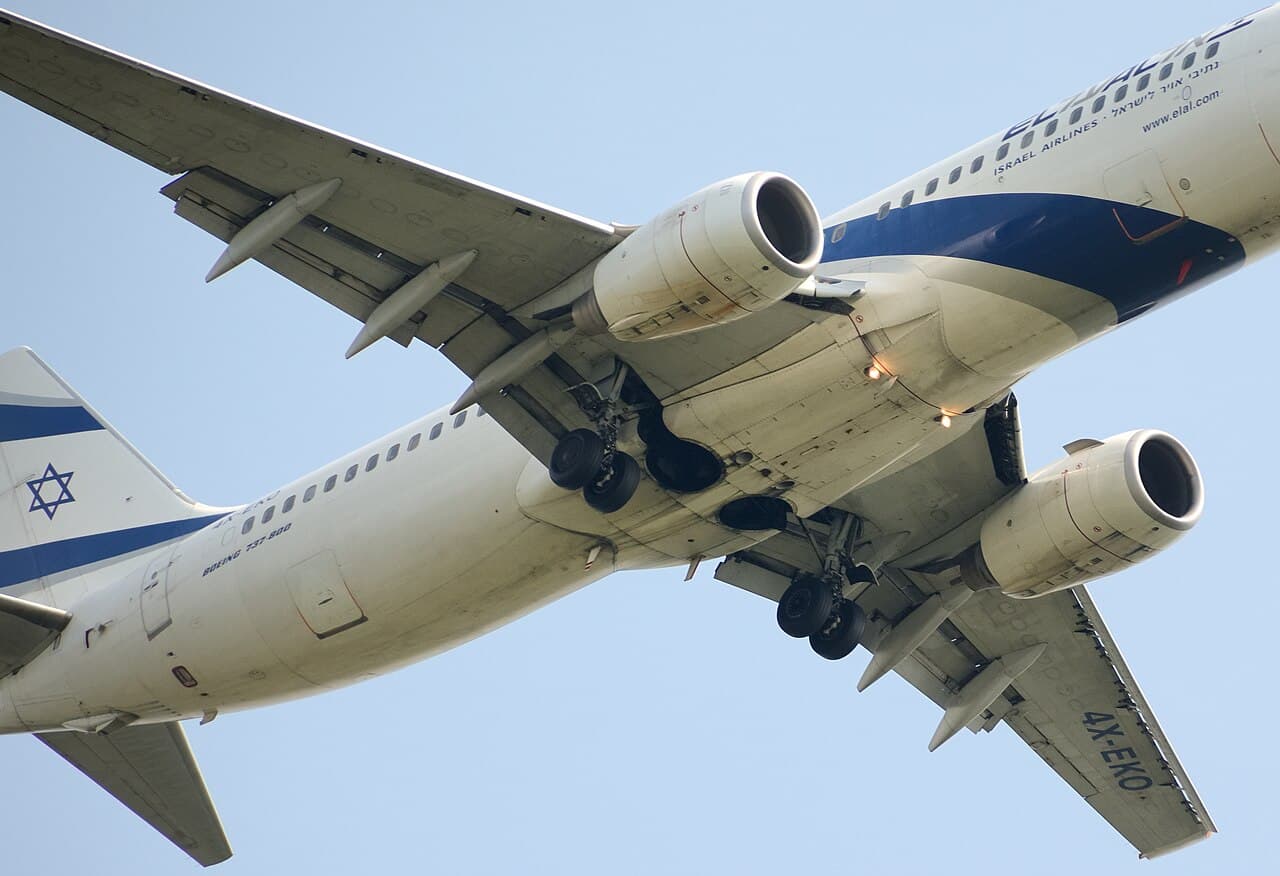
A United Airlines passenger ended up as the sole occupant on board a Boeing 737 after he was reportedly abandoned by British Airways at Cincinnati Northern Kentucky Airport on the 4th of July.
The Daily Touch & Go
The day's best aviation news in your inbox. Free, no spam.