

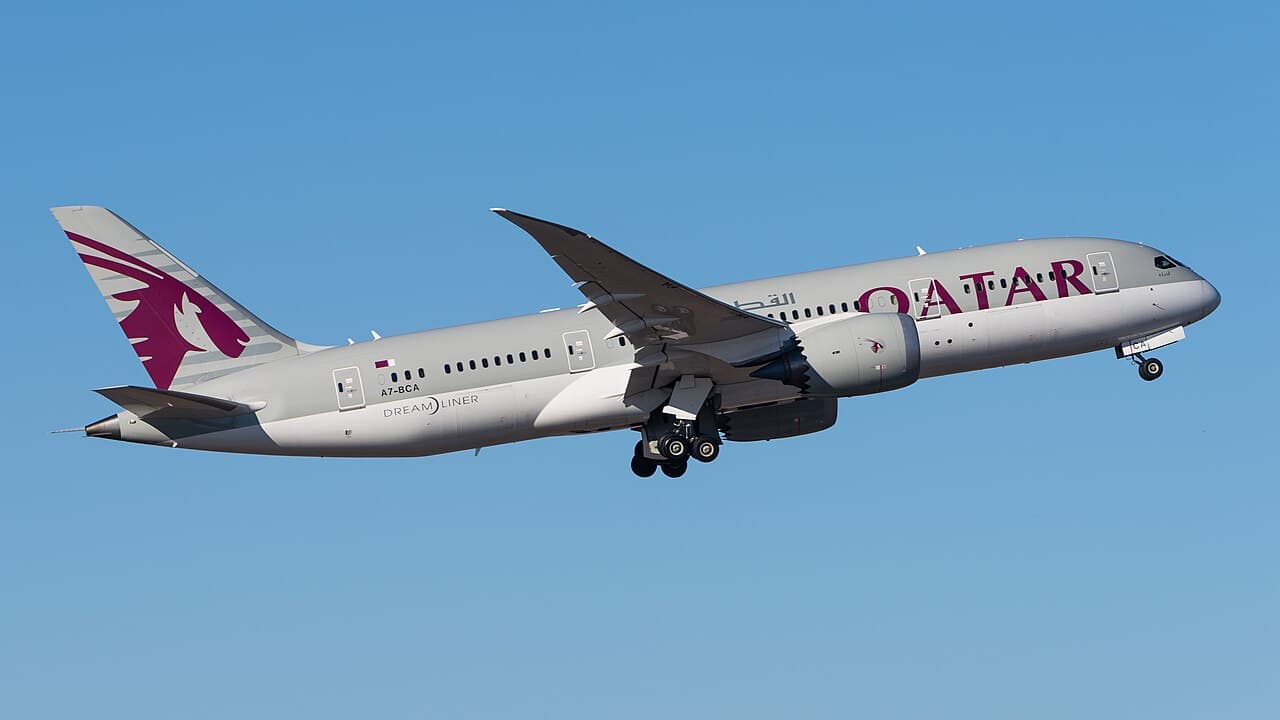
Image: Julian Herzog ( Website ) · CC BY 4.0 · via Wikimedia Commons
National Airlines Executes Record-Setting 19.5-Hour Nonstop 777F Flight from Scotland to Australia
A Boeing 777 freighter operated by National Airlines flew nearly 10,000 nautical miles nonstop to deliver critical engine parts from GE's Prestwick facility to Melbourne amid urgent maintenance needs.
The gist
National Airlines flew a 19.5-hour nonstop 777F mission from Scotland to Australia, delivering vital Boeing 787 engine parts and setting a new longest 777F flight record.
National Airlines has established a new aviation record by operating what is believed to be the longest nonstop Boeing 777 freighter flight ever. On August 4, 2026, their Boeing 777F cargo aircraft departed Prestwick Airport in Scotland and flew 9,849 nautical miles directly to Melbourne, Australia. The nonstop journey lasted approximately 19 and a half hours and was undertaken to expedite delivery of a critical engine component urgently needed to return a Boeing 787-8 Dreamliner to service.
This mission was prompted by a Boeing 787-8 operated by Jetstar that had been grounded in Melbourne since July 25 due to a lack of available thrust reversers for its GEnx engines. The required parts were only stocked at GE Aviation’s maintenance and overhaul facility located in Prestwick. To avoid prolonged downtime, Jetstar, through a third-party charter company, secured the 777F flight operated by National Airlines to deliver these specialized components swiftly.
The Boeing 777 freighter involved in the flight, registered N792CA, had been recently delivered to National Airlines in early June, fresh from Boeing's assembly line in Everett, Washington. Since joining National's fleet, the aircraft has made multiple trips to Prestwick, underscoring the carrier's expertise in transporting engine parts for GEnx-powered aircraft. This recent flight marks a significant operational milestone for the airline and the 777F platform.
The flight path chosen on August 4 carefully navigated geopolitical hazards by routing south across Europe and then threading through Azerbaijan, Turkmenistan, Tajikistan, northern Afghanistan, and Pakistan to avoid conflict zones in the Middle East. From there, the aircraft continued over India, the Bay of Bengal, Malaysia, Indonesia, before reaching Melbourne. The nonstop nature of the journey eliminated the need for intermediate stops, ensuring the part's rapid delivery.
Operationally, such a prolonged nonstop cargo flight requires well-coordinated crew management. At least four pilots would have alternated shifts, with two pilots actively flying while the other two rested in specialized onboard bunks. This rotation ensured continuous alertness and safety over the nearly 20-hour mission, demonstrating the demanding nature of ultra-long-haul freight operations.
This mission’s successful completion showcases the Boeing 777F’s robust capabilities in terms of range and payload for strategic cargo missions. While this flight holds the record for the longest Boeing 777F commercial flight, it is noteworthy that even longer nonstop flights have been achieved by other aircraft types. For instance, Airbus recently conducted a 24-hour-plus test flight from Melbourne to Toulouse with its A350-1000ULR model, designed for ultra-long-range operations.
The necessity for very long-range non-stop cargo flights underscores the complex logistics challenges in global aviation maintenance. Jetstar’s grounded 787-8 Dreamliner required specialized parts that were only available halfway across the globe. National Airlines’ rapid-response charter flight highlights how freight airlines provide vital services beyond routine cargo, directly supporting airline operational reliability and reducing aircraft downtime.
The industry rarely sees calls for such extreme-range cargo charters on short notice, conferring an important strategic role to carriers equipped with aircraft like the 777F. Their capability to connect distant maintenance hubs with frontline airline operations efficiently can be a key factor in airline asset utilization and overall operational resilience.
This milestone flight further solidifies National Airlines’ role in specialized, time-critical logistics. It also highlights the interconnectedness of global aerospace supply chains and the unique operational demands that arise when high-value aircraft components need expedited delivery to isolated locations. The 777F’s performance on this mission confirms its suitability for such challenging and critical missions worldwide.
Frequently asked questions
- Why did National Airlines operate such a long nonstop flight from Scotland to Australia?
- National Airlines flew a 777F nonstop from Prestwick to Melbourne to deliver critical GEnx engine thrust reversers needed urgently to return a Jetstar Boeing 787-8 to service.
- What was special about the Boeing 777 freighter used on this flight?
- The Boeing 777F used had been recently delivered to National Airlines in June and is capable of ultra-long-range nonstop cargo flights, demonstrated by this record 9,849 nautical mile journey.
- How did the flight route avoid geopolitical risks?
- The route avoided Middle East conflict zones by flying south across Europe, then through Central Asia including Azerbaijan, Turkmenistan, Tajikistan, northern Afghanistan, and Pakistan before heading east toward Australia.
Read more
All Cargo →
MSC Air Cargo Confirms Order for Five Boeing 777-8F Freighters, Boosting Backlog Over 80 Jets
MSC Air Cargo ordered five Boeing 777-8F Freighters at the 2026 Farnborough International Airshow 2026 , becoming the previously unidentified customer in Boeing's order book and making its first commitment to the Boeing 777X family. The order makes MSC the third European operator of the type and increases Boeing's firm 777-8F backlog to more than 80 aircraft, despite the aircraft not yet entering service. The 777-8F is positioned as a replacement for aging Boeing 747-400Fs and current 777Fs, whose production will end ahead of 2028 international emissions standards.
IAG Q2 profits fall as Aer Lingus loss and fuel costs weigh; Vueling to get first 737 Max jets
Airline group will keep capacity flat in 2026 but sees strong premium demand and cost-savings for Vueling as it transitions to 737 Max fleet. IAG's operating and net profits fell by a quarter and one-third, respectively, in the April-June period, as a loss-making Aer Lingus and higher fuel costs took a toll. But the group is confident it can deliver a full-year operating margin within its 12-15% target, pointing to the benefits of its transformation programme, "robust" demand, strong balance sheet and recovery of 60% of its additional fuel costs through revenue growth and cost initiatives. IAG's second-quarter operating profit dropped to €1.26 billion ($1.45 billion) from €1.68 billion in the same period last year, while net profit fell to €732 million from €1.13 billion. Revenue stayed relatively flat at €8.88 billion, as fuel costs and emissions charges soared almost 23%. Revenue at IAG Cargo declined 9.4% in the first half, reflecting “reduced capacity resulting from disruption in the Middle East”, says the group. British Airways turned in the strongest performance in the first six months of 2026, with operating profit before exceptional items coming in €61 million higher than the same period last year, reaching €885 million. However, Aer Lingus stood out as the only carrier in the group to report a first-half operating loss. IAG attributes this to "the combination of additional fuel costs and lower passenger revenues linked to competition on North Atlantic routes". Aer Lingus cuts Aer Lingus said earlier this month it would reduce capacity by 6% later this year , axe three US routes and cut jobs amid increased transatlantic competition. Speaking on IAG's first-half earnings call on 31 July, Aer Lingus chief executive Lynne Embleton said she was confident the carrier could eventually reach the group's 12-15% margin goal and attract investment for new aircraft, but it would take time. "As part of this group, if we want investment we need to be at 12-15% as well," says Embleton. "We do believe we can get to the 12% operating margin – some steps are quicker than others. We believe we can take cost action quickly but we believe the impact from things like premium economy and the business investment will take a little longer to come through. "If we can demonstrate that we're getting our house in order and we can get very close to that investable margin then I'd hope that new-generation aircraft would lift us over the hurdle, because there are certainly efficiencies from having new-generation aircraft." She adds: "We do believe we can get there – we don't think it's an immediate solution but there's certainly a pathway that we believe we can give confidence to the group." Vueling prepares to take first 737 Max jets IAG will take delivery of 13 aircraft in the second half of this year – including the first three Boeing 737 Max 8-200 jets that will begin low-cost unit Vueling's transition to an all-Boeing narrowbody fleet . "We are looking forward to the first of 60 737 deliveries to Vueling at the end of the year," said IAG chief executive Luis Gallego during the earnings call. Transitioning to the 737 Max will deliver a "significant" reduction in cost at Vueling, adds Gallego, noting that it will be "the first low-cost carrier in Europe" to offer SpaceX's Starlink in-flight wi-fi service, which will be installed on the new jets. The other aircraft deliveries planned for this year include six Airbus A320neos, six A321neos and two Boeing 787-10s. IAG received three aircraft in the first half of the year – one A320neo and two A321XLRs. It is due to receive the last A321XLR from its firm orderbook "soon", says Gallego, but it holds options on more of the type, and is "considering if we want to have more aircraft and where". Full-year capacity across IAG is expected to be flat, after coming in 0.1% lower year-on-year in the first half as a result of being forced to suspend Middle East routes. "Growth was lower than the original plan of approximately 2.5%, linked to cancellations due to the conflict in the Middle East, together with aircraft availability linked to engines," says IAG. The airline group is seeing some "softness" in the intra-European market, but points to strong premium demand – particularly on transatlantic routes – which is helping it recapture 60% of its additional fuel costs. IAG is 70% hedged for the remainder of this year and 40% hedged in 2027. The group says demand remains "robust" and 57% of its second-half revenue is booked, which Gallego says is "in line with last year".
American Airlines Posts Record $16.7B Revenue in Q2 2026 Amid Premium Growth
American Airlines Group Inc. (NASDAQ: AAL) delivered its highest quarterly revenue in company history during the second quarter of 2026. ezstandalone.cmd.push(function () { ezstandalone.showAds(119); }); The airline reported total revenue of $16.7 billion, marking a strong 16.3% increase from the same period last year. This impressive performance highlights the success of its commercial strategy amid rising fuel costs. CEO Robert Isom praised the results. “American delivered year-over-year revenue growth of more than 16% in the second quarter, exceeding our initial expectations,” he said. ezstandalone.cmd.push(function () { ezstandalone.showAds(127); }); The growth came from robust demand and solid execution across the airline’s four key commercial pillars: elevating the customer experience, growing the global network, driving premium revenue, and leading in loyalty. Strong Revenue Growth Across All Segments Revenue momentum was broad-based. Premium cabins outperformed with passenger unit revenue up 13.4%, while Main Cabin unit revenue rose 8.8%. ezstandalone.cmd.push(function () { ezstandalone.showAds(128); }); Domestic passenger unit revenue grew 10.6%, showing a nice rebound. International routes also performed well: Pacific entity unit revenue jumped 15.1%, Atlantic rose 8.9%, and Latin America increased 6.6%. Managed corporate revenue surged 26% year over year. This marks the fifth consecutive quarter of double-digit growth in this important segment. ezstandalone.cmd.push(function () { ezstandalone.showAds(129); }); Overall passenger revenue reached $15.2 billion, up 15.9%. Cargo revenue grew 29.7%, and other revenue increased 17.9%. Capacity grew 5.4% year over year, yet the airline maintained operational resilience. On-time arrival performance improved by 2.8 points, and system misconnections dropped nearly 25% after successful rebanking at its Dallas-Fort Worth (DFW) hub. Unit revenue at DFW outperformed the system average by 4 points. Photo Credit: American Airlines Progress on Four Commercial Pillars Customer Experience American continues to invest in customer experience. Its Net Promoter Score (NPS) improved by 5 points year over year. ezstandalone.cmd.push(function () { ezstandalone.showAds(130); }); The airline plans to install Starlink high-speed Wi-Fi across its fleet starting in 2027. It is also expanding Admirals Club and premium lounges in key hubs like New York (JFK), DFW, Charlotte (CLT), and Miami (MIA). Network Growth Network growth remains a priority. New nonstop routes launched to Budapest and Prague from Philadelphia, and to Athens from DFW. American also resumed service to Caracas from Miami, becoming the first U.S. carrier to return to Venezuela. These moves strengthen its position in premium trans-Atlantic and Latin American markets. ezstandalone.cmd.push(function () { ezstandalone.showAds(131); }); Premium Market Premium seat expansion is underway with new aircraft deliveries and retrofits. This summer, American will offer more premium seats than any other U.S. airline. Updates to bag fees and Basic Economy options helped boost upsell rates from Basic Economy to Main Cabin by 5 points. Loyalty Program The AAdvantage loyalty program showed impressive growth. Enrollments rose more than 30% year over year. Co-branded credit card spend with Citi increased 8% in the quarter. These efforts reinforce customer engagement and premium demand. Photo Credit: American Airlines Fuel Headwinds and Financial Results Higher fuel prices presented a major challenge. Fuel expense surged over $2.2 billion (83%) year over year. Strong revenue performance offset nearly 50% of this increase. ezstandalone.cmd.push(function () { ezstandalone.showAds(132); }); GAAP net income was $71 million ($0.11 per diluted share), while adjusted net income reached $99 million ($0.15 per diluted share). The airline ended the quarter with $11.3 billion in total available liquidity. It completed financings to strengthen its balance sheet and address future maturities. Outlook for the Rest of 2026 American expects revenue momentum to continue. For Q3 2026, it forecasts total revenue growth of 16.0% to 19.0% year over year. ezstandalone.cmd.push(function () { ezstandalone.showAds(133); });  Capacity should grow 3.0% to 5.0%. However, due to elevated fuel prices, the company updated its full-year adjusted earnings per diluted share guidance to a range of ($0.65) to $0.65. CFO Devon May noted ongoing efficiency initiatives. These efforts, combined with revenue strength, position American to expand margins over time despite cost pressures. American Airlines is navigating a complex environment with confidence. Its focus on product improvement, network optimization, premium growth, and loyalty continues to deliver results. ezstandalone.cmd.push(function () { ezstandalone.showAds(134); }); As the airline celebrates its centennial in 2026, these record revenues signal a strong foundation for future success.
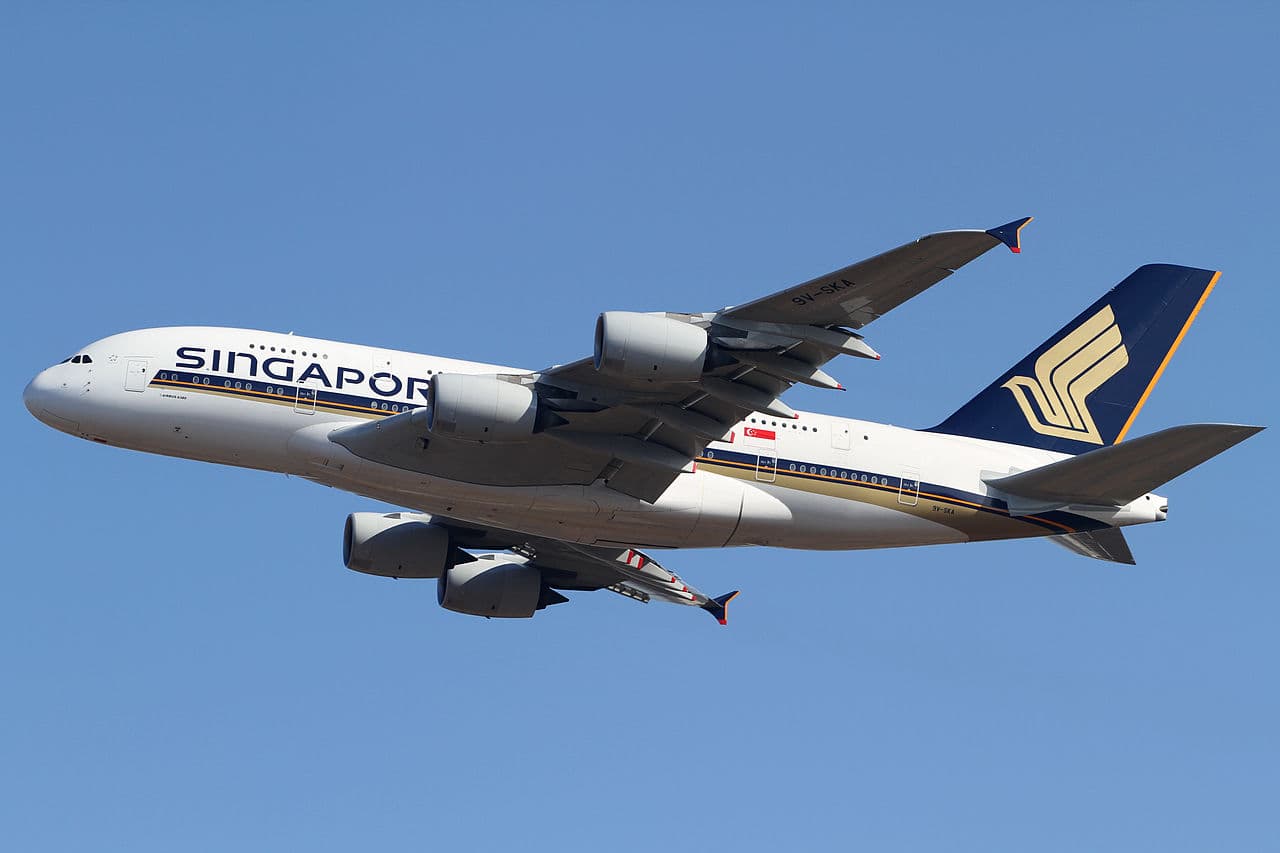
Singapore Airlines Group posts S$76 million net loss despite record revenue on fuel cost surge
Singapore Airlines' parent company posted a rare loss for the quarter ended June 30, 2026, even as the group brought in more revenue than ever before. The SIA Group reported a net loss of S$76 million (US$59 million) for its first fiscal quarter, a sharp reversal from the S$186 million (US$143 million) profit it posted a year earlier, driven almost entirely by a spike in fuel costs tied to the conflict in the Middle East. Record revenue, but fuel costs ate into it Revenue for the quarter reached S$5.71 billion (US$4.40 billion), up 19.3% year-on-year and a new high for the group. Passenger revenue climbed 18.6% to S$4.58 billion (US$3.53 billion), helped by SIA and budget carrier Scoot carrying a combined 10.9 million passengers, up 6.3% from the previous year, along with a 12% rise in passenger yields. Cargo revenue also grew, up 33.5% to S$708 million (US$545 million), supported by stronger cargo rates and slightly fuller planes. However, none of that growth was enough to offset what happened on the cost side. Total group expenditure jumped 27.9% to S$5.61 billion (US$4.32 billion), almost entirely because of a S$991 million (US$763 million), or 78.5%, increase in net fuel costs. That spike traces directly back to the Middle East conflict that began on February 28, 2026. Because jet fuel prices typically adjust with a delay, SIA said the group felt the impact of the conflict hit especially hard this quarter, with fuel costs before hedging more than doubling. SIA did benefit from its fuel hedging, contracts that lock in fuel prices in advance, which turned a loss in 2025 into a gain this year. But even that wasn't enough to offset how much more expensive fuel had become overall. As a result, operating profit fell to S$106 million (US$82 million), down 73.8% from S$405 million (US$312 million) a year earlier. After accounting for a larger share of losses from Air India, in which SIA holds a 25.1% stake, and a smaller tax bill, the group ended the quarter S$76 million (US$59 million) in the red. A strong balance sheet cushions the blow Despite the loss, SIA's finances remain solid. The group closed the quarter with S$9.10 billion (US$7.01 billion) in cash and bank balances, up S$1.17 billion (US$901 million) from the previous quarter, along with another S$1.38 billion (US$1.06 billion) in longer-term fixed deposits and S$3.24 billion (US$2.50 billion) in undrawn credit lines. Shareholders' equity stood at S$16.59 billion (US$12.78 billion), down slightly from three months earlier, while the group's debt-to-equity ratio ticked up to 0.65 from 0.62, partly due to a new five-year bond issued in Chinese yuan. Growth continued despite the turbulence Even with fuel prices working against it, SIA kept expanding its network during the quarter. Scoot launched new direct routes from Singapore to Belitung and Pontianak in Indonesia, while SIA began daily service to Hangzhou in mainland China. By the end of June, the group's combined network covered 137 destinations across 36 countries and territories. In Europe, SIA boosted frequencies to London Gatwick and Manchester over the summer travel season and announced a new five-times-weekly route to Madrid starting in October, its 15th destination in Europe. In Australia, the airline plans to add flights to Adelaide and launch daily service to the new Western Sydney International Airport later this year. The Middle East conflict didn't just raise fuel costs, it also disrupted parts of SIA's own network. Scoot resumed flights to Jeddah in Saudi Arabia in June, only to suspend them again in mid-July as the conflict escalated. SIA's services to Dubai remain suspended, and the planned launch of flights to Riyadh has been pushed back to December. Navigating uncertainty ahead SIA said demand for air travel remains strong heading into the rest of the year, and cargo demand is holding up as well, supported in part by semiconductor and data center-related shipments. Still, the airline was clear-eyed about the risks ahead, noting that a prolonged Middle East conflict could keep fuel prices elevated and potentially disrupt broader supply chains and trade. To manage that uncertainty, SIA said it plans to lean on its dual-brand structure, using Singapore Airlines and Scoot together to adjust capacity as demand shifts, while continuing to invest in new aircraft, airport lounges, and an updated in-flight experience set to roll out later this year. RELATED Singapore Airlines appoints veteran lawyer Adrian Chan Pengee to its board
The Daily Touch & Go
The day's best aviation news in your inbox. Free, no spam.