

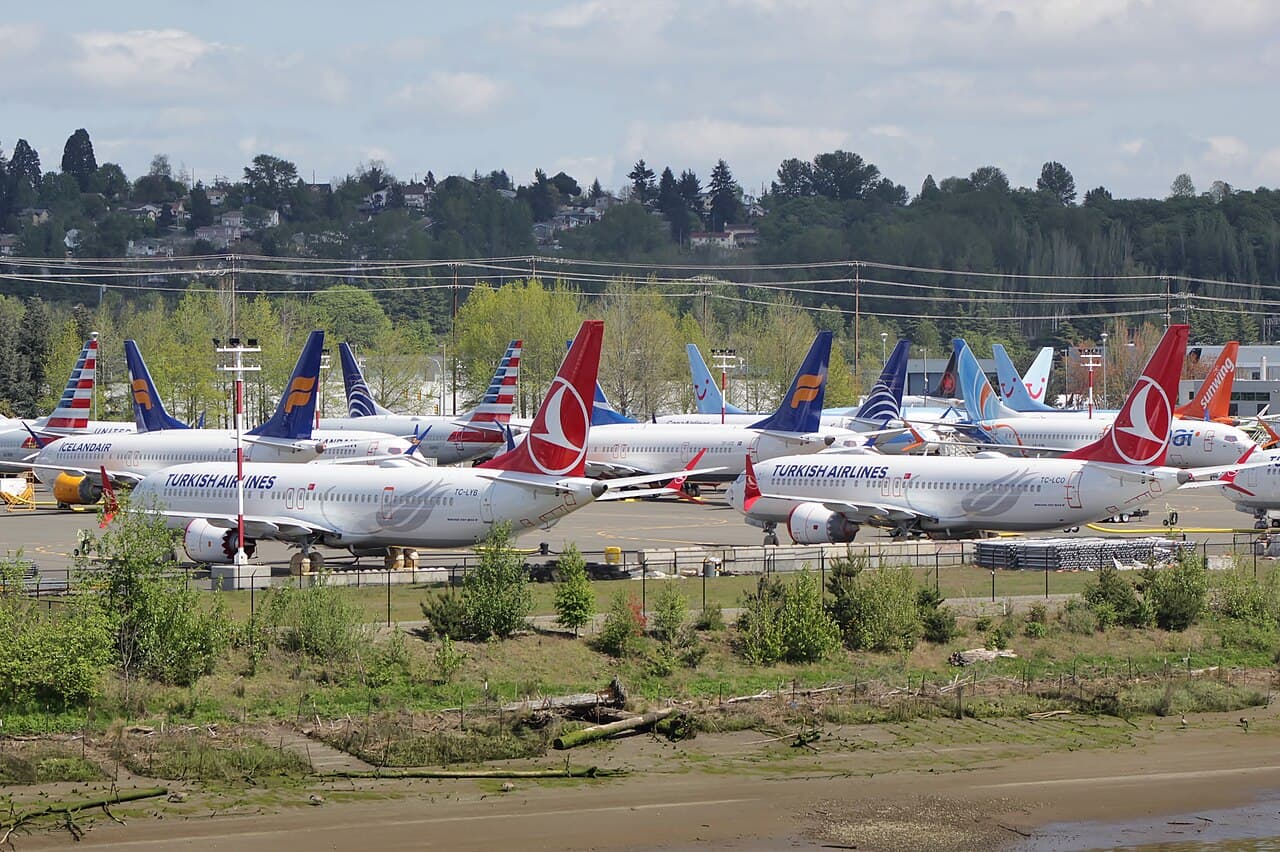
Image: SounderBruce · CC BY-SA 4.0 · via Wikimedia Commons
Airbus A321XLR Gains Ground as Boeing 737 MAX 10 Faces Certification Delays
Boeing's 737 MAX 10 suffers delivery setbacks due to certification issues, while Airbus's A321XLR attracts airlines with superior range and fleet commonality benefits.
The gist
Boeing's 737 MAX 10 still awaits certification amid backlog, letting Airbus's A321XLR dominate with longer range and operator appeal.
Continuing coverage
All Airbus A321xlr →- United Airlines Debuts Extra-Spacious Economy Plus Seats on Airbus A321XLR
- Aer Lingus offers lie-flat business class on short European routes with A321LR/XLR jets
- AirAsia X ends widebody expansion, pivots to Airbus A321XLR single-aisle strategy
- Air Canada Plans Expanded Airbus A321XLR Routes for Winter 2026/27
- Air Canada to launch Airbus A321XLR on key US routes from Montreal and Toronto
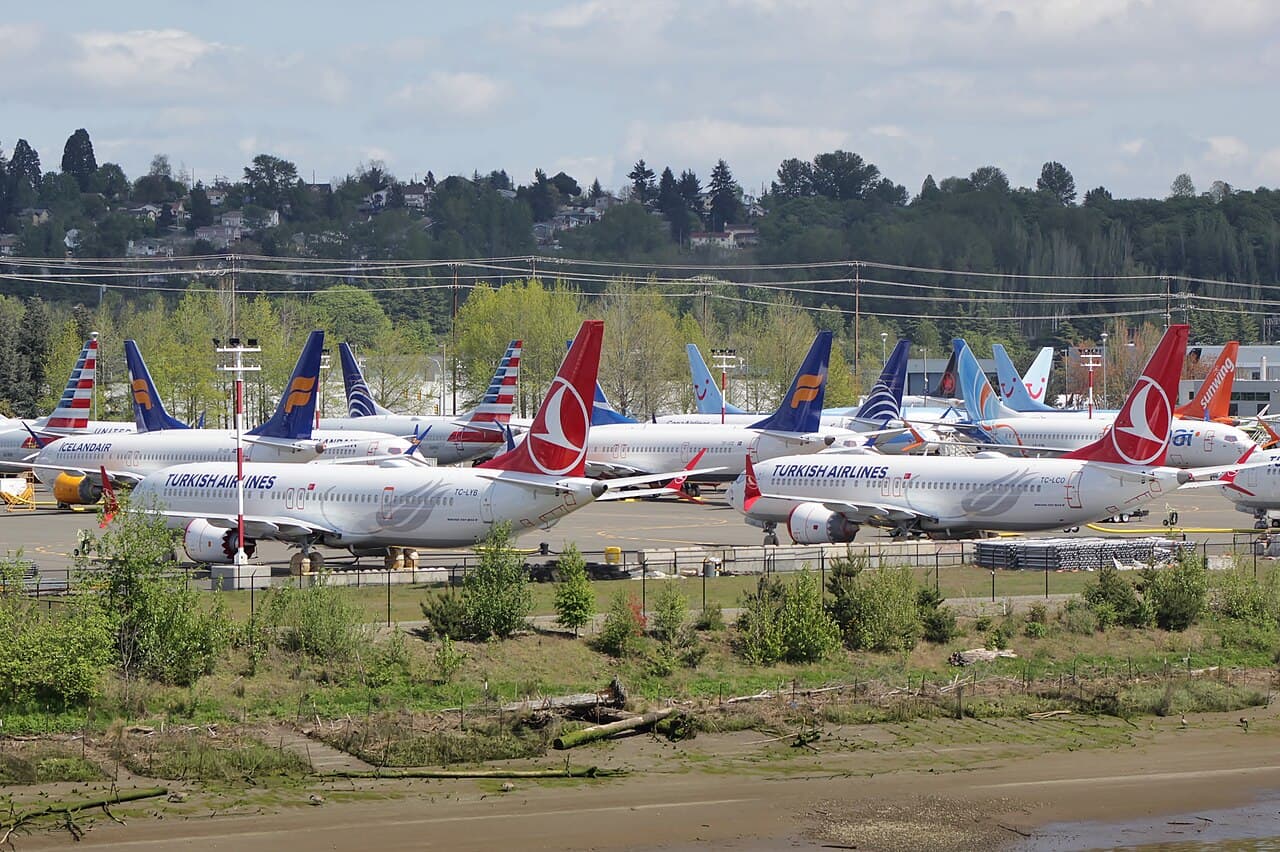
The Boeing 737 MAX 10, despite a robust order book from major airlines such as United, Ryanair, American, and Delta, has encountered prolonged certification delays that have prevented any deliveries since its debut. These setbacks contrast sharply with the Airbus A321XLR, which entered service in late 2024 and has rapidly gained traction among carriers due to its extended range and operational efficiency.
Certification holdups center on rigorous Federal Aviation Administration (FAA) system safety assessments. These assessments demand comprehensive theoretical tests to ensure safe operation even in highly unlikely failure scenarios. Boeing engineer Nathan Bement highlighted the meticulous nature of these analyses, emphasizing that every conceivable safety risk must be accounted for, regardless of whether it has been observed in service.
As a result of these delays, the 737 MAX 10's backlog has expanded to over 1,000 orders with no deliveries to date. Although Boeing anticipates certification and delivery commencement in 2027, the sheer number of outstanding orders and concurrent production challenges suggest customers will experience a multi-year wait before receiving their aircraft. The table of current 737 MAX 10 orders includes significant commitments from carriers worldwide, underscoring the scale of this operational pause.
In comparison, the Airbus A321XLR offers a remarkable range of 4,700 nautical miles, substantially exceeding the 3,100 nautical miles range of the MAX 10. This capability opens up new route possibilities for narrowbody jets, connecting distant city pairs such as New York to Rome or London to Delhi. The A321XLR achieves this extended range through additional fuel tanks, including a permanent Rear Center Tank holding 3,400 gallons, without compromising cargo space.
Airlines operating the wider Airbus A321neo family benefit from fleet commonality when integrating the A321XLR. Common training, maintenance, and operational procedures help minimize costs and complexity. IndiGo, India's largest carrier, exemplifies this strategy with its extensive Airbus narrowbody fleet and substantial A321XLR orders, positioning itself for efficient expansion into longer routes.
Other carriers also mirror this trend. Wizz Air has incorporated the A321XLR to extend its network reach, Air India converted some A321neo orders to XLRs, and Qantas has placed further orders. As a result, Airbus surpassed 500 A321XLR orders by March 2026, signaling growing industry confidence in the type, even as Boeing's MAX 10 order backlog stagnates without deliveries.
Unlike the MAX 10, which seats up to 230 in high-density layouts, the A321XLR can accommodate up to 244 passengers and surpass the MAX 10's range substantially. It effectively fills a niche akin to the Boeing 757, long valued for serving longer, thinner routes. Boeing has yet to produce a modern replacement for the 757, with no current plans for re-engining or restarting its production line, leaving the A321XLR as the de facto successor for many operators.
This performance and capacity blend makes the A321XLR the preferred choice for airlines seeking efficient operations on routes beyond the reach of traditional narrowbodies. The aircraft’s ability to reduce fuel consumption while extending range also provides environmental and operational cost advantages, further reinforcing its appeal amid the continued delays impacting Boeing’s offering.
Frequently asked questions
- What is causing the Boeing 737 MAX 10 delivery delays?
- The Boeing 737 MAX 10 delivery delays are primarily due to pending FAA system safety assessments, requiring extensive theoretical testing to ensure aircraft safety under various failure scenarios.
- How does the Airbus A321XLR's range compare to the Boeing 737 MAX 10?
- The Airbus A321XLR has a range of 4,700 nautical miles, which is 1,600 nautical miles greater than the Boeing 737 MAX 10's 3,100 nautical miles, enabling it to operate longer routes.
- Why is fleet commonality important for airlines choosing the A321XLR?
- Fleet commonality reduces training and maintenance costs by allowing airlines already operating Airbus A320neo family aircraft to integrate the A321XLR with minimal additional investment and operational complexity.
Read more
All Regulatory →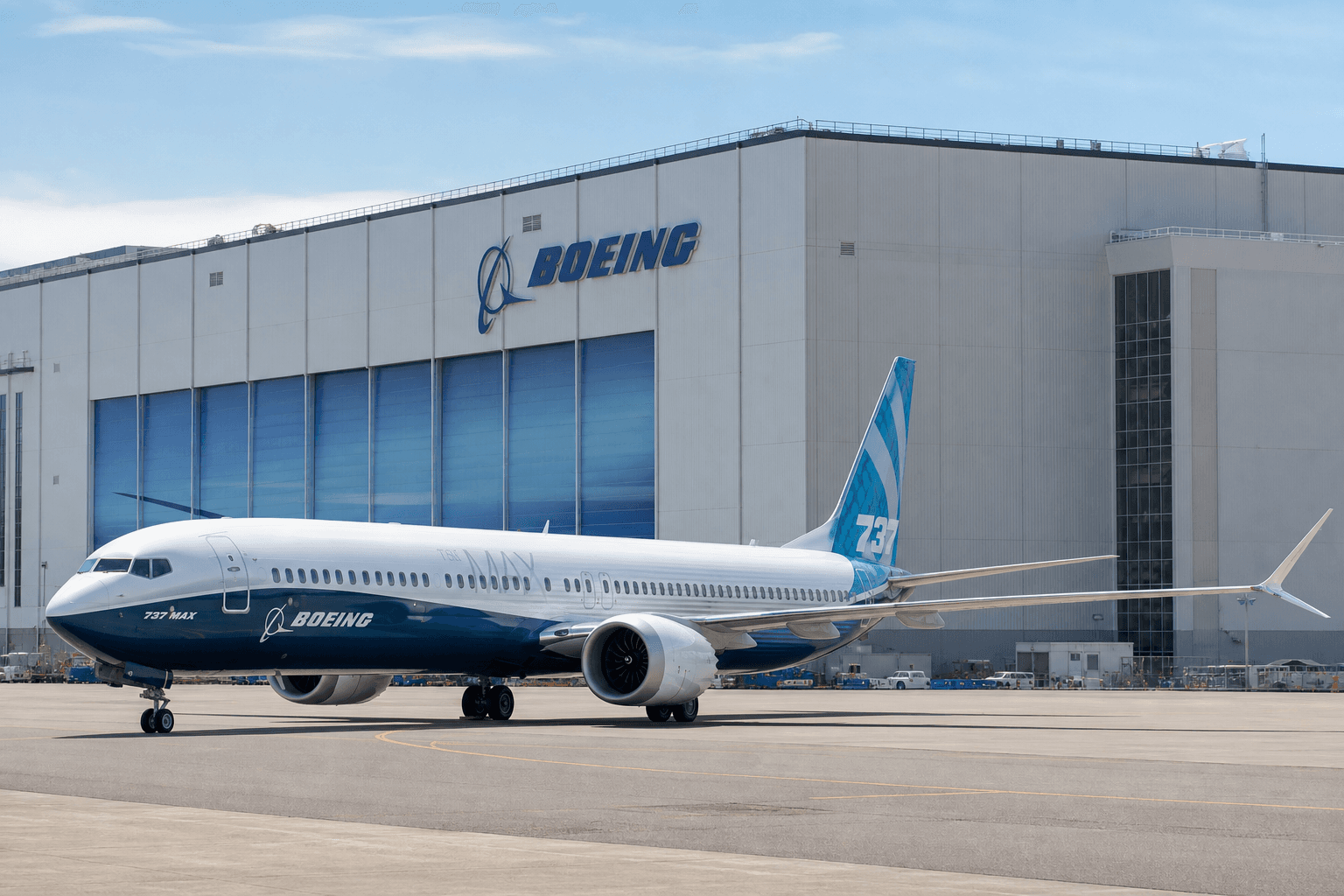
Boeing Plans New Clean-Sheet Jet After Completing 737 MAX and 777X Certification
Boeing Chief Executive Officer Kelly Ortberg told the Financial Times that his company will be ready to fund its first 'clean sheet' plane program in two decades by 2030. He expressed confidence that the final certification of the remaining 737 MAX variants and 777X widebody will bring the financial stability to launch its next all-new airliner design program.
United Airlines to Retire 80 Older Aircraft in 2027 as Boeing 737 Max 10 Joins Fleet
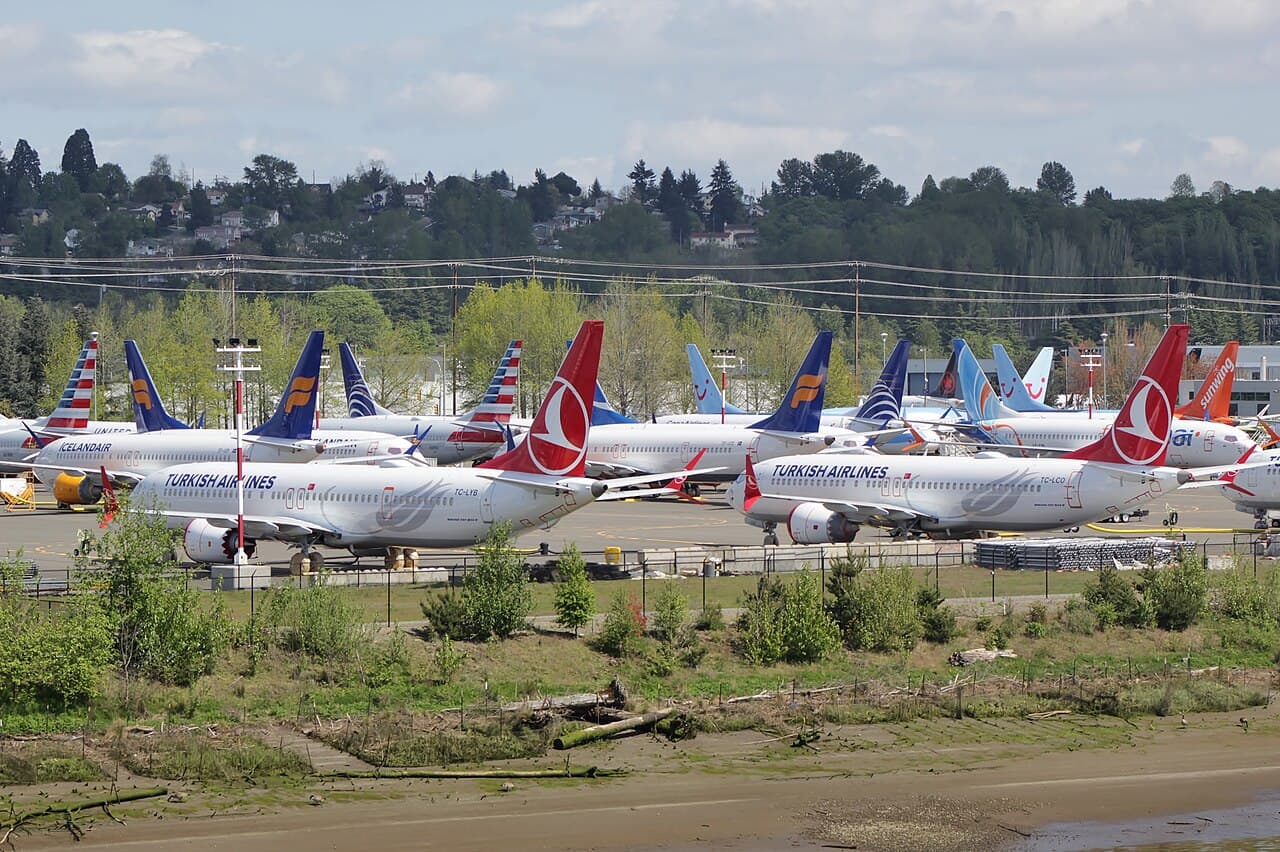
Number of retirements a "step up" from previous years, says the US carrier. United Airlines plans to retire 80 older, less fuel-efficient aircraft in 2027 amid a fleetwide cabin refresh that should help cut costs and improve margins. The new number of retirements is a "step up" from previous years, United chief financial officer Mike Leskinen said during the carrier's second-quarter earnings call on 16 July. This should help balance capacity with demand and help ensure the airline's entire fleet is retrofitted with upgraded interiors more quickly. As new aircraft enter the fleet, they will bolster United's "barbell approach", which matches newer, fuel-efficient aircraft to high-demand, profitable routes. Older aircraft with more dated cabins and higher costs can be "sat down" and only used when necessary in peak times. "It maximises not only profits, but it maximises return on invested capital to have a larger amount of these younger, more fuel-efficient aircraft," says Leskinen. United expects to take delivery of its first Boeing 737 Max 10 aircraft in 2027, with up to 20 expected next year and another 147 on order.. The more fuel-efficient new model will feature plenty of premium seats and will operate United's most important routes. "The Max 10 will be superior in every way," says the carrier's chief commercial officer, Andrew Nocella. Earlier in July, Boeing said it had started producing Max 10s on a new factory line in Seattle as it works toward securing US Federal Aviation Administration (FAA) certification for the narrowbody. Cabin upgrades across the fleet United reaffirmed its previous plan to add SpaceX's Starlink satellite Wi-Fi to 1,000 aircraft by the end of the year. "As fast as Starlink can produce the antennas for us, we're going to get them on the airplane," says chief executive Scott Kirby. "For premium customers that really want to be able to make sure they're connected with high speed, it is going to lead to big share gains for us." Other cabin refresh work – including increased premium seat capacity, upgraded seatback entertainment screens and larger overhead bins – is also under way, United says, which should help increase margins. Getting those margins to where United wants them, in the "mid-teens" will require "more structural changes in the industry", Kirby says, noting some competitors will lose money this year thanks to sharply higher fuel costs. "They have an awful lot of flying that loses money on an individual route basis. One way or another, that gets resolved over time," he adds.
Boeing 737 MAX 7 Receives FAA Type Certification After Eight Years
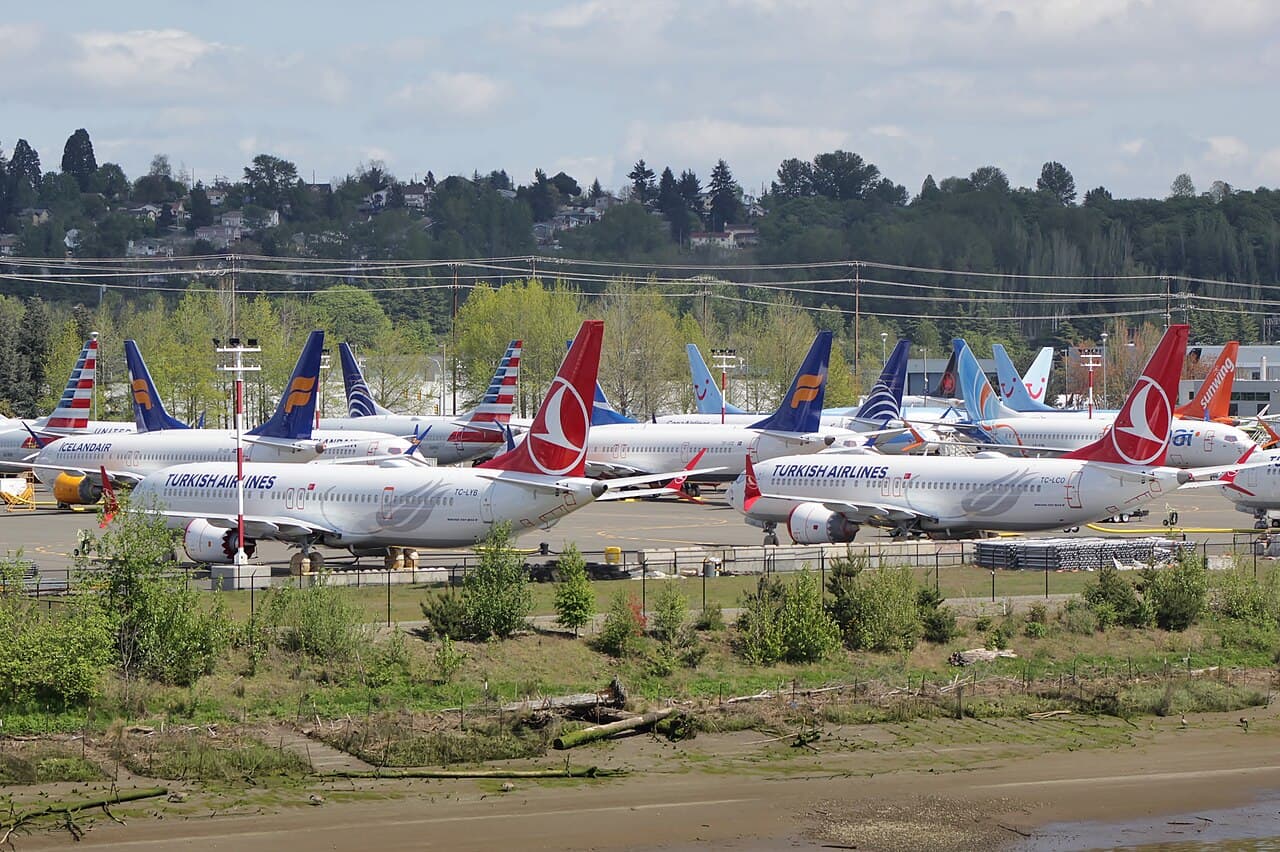
The Boeing 737 MAX 7 has finally been cleared for commercial service, more than eight years after the smallest member of the 737 MAX family first took to the skies. The Federal Aviation Administration (FAA) granted Boeing an amended type certificate for the aircraft on Monday, bringing one of the manufacturer's longest-running certification programs to an end. The regulator has also added the 737-7 to Boeing's production certificate , allowing the company to manufacture the aircraft under its approved production system.
FAA prioritizes certifying Boeing 737 MAX 7 and MAX 10 before 777-9 amid extensive delays
Boeing currently has three aircraft models that have been stuck in certification hell for years: the 737 MAX 7, the MAX 10, and the 777-9. All three of these were supposed to be certified between 2019 and 2020 when initially launched, but over six years later, Boeing has not delivered a single example to an airline. Certification and entry-into-service for all three have been continuously delayed, but earlier in 2026, Boeing provided a more concise timeline. The 737 MAX 7 and MAX 10 will be certified by the end of the 2026 summer season, while the 777-9 will come in 2027.
The Daily Touch & Go
The day's best aviation news in your inbox. Free, no spam.