

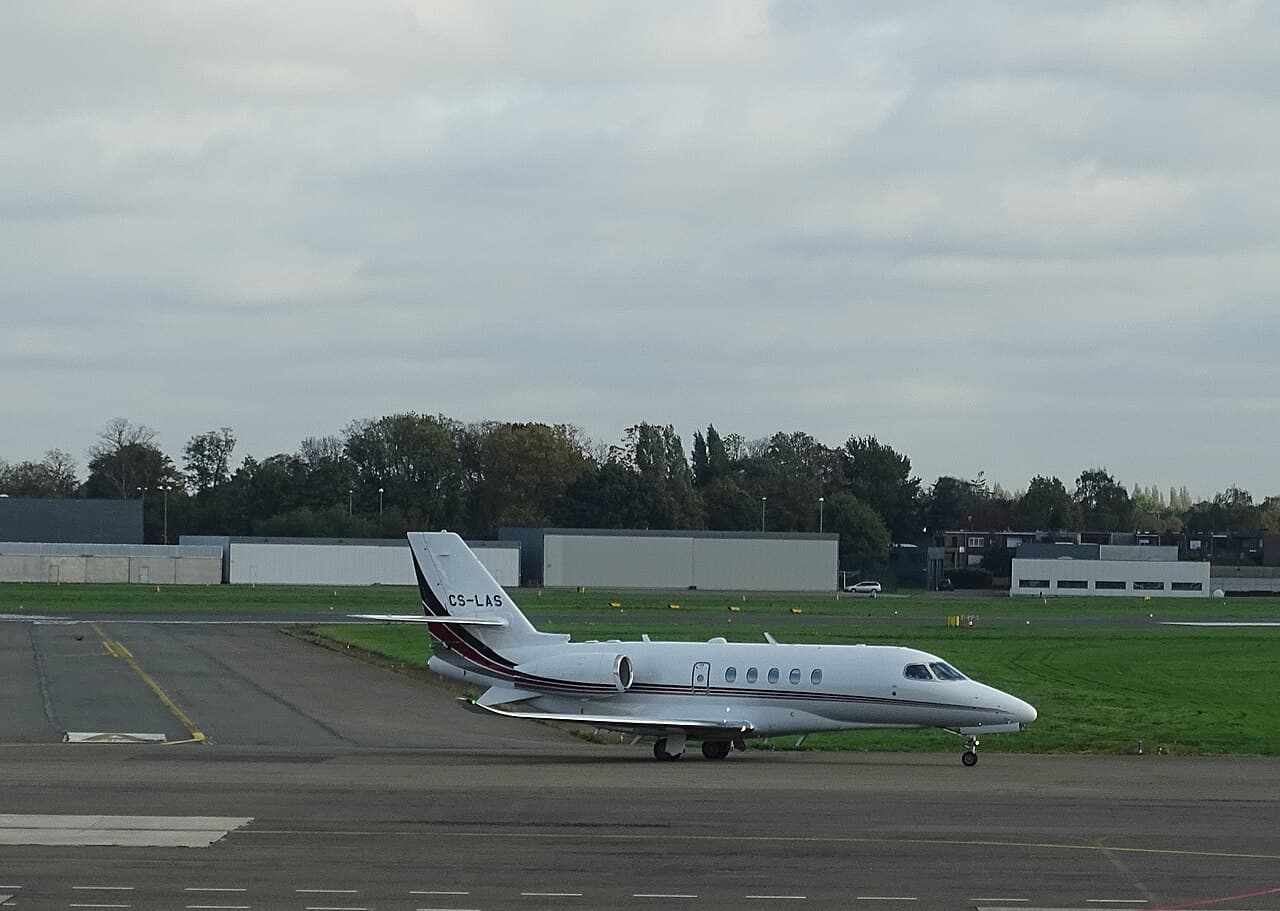
Image: Ad Meskens You are free to use this picture for any purpose as long as you credi · CC BY-SA 4.0 · via Wikimedia Commons
NTSB probes right engine starter generator failure in fatal Laredo NetJets Citation crash
A Cessna Citation Latitude operated by NetJets experienced unusual vibrations and multiple system failures before crashing near Laredo, Texas, killing one and injuring five, the NTSB reveals.
The gist
NTSB report highlights right engine starter generator faults linked to fatal Citation crash in Laredo, Texas.
A fatal crash involving a NetJets-owned Cessna Citation Latitude near Laredo, Texas, in June has drawn scrutiny from the National Transportation Safety Board (NTSB) focusing on the right engine’s starter generator. The aircraft departed Los Cabos, Mexico, bound for Austin, Texas, when the flight crew reported a low-frequency vibration accompanied by a humming noise shortly after takeoff. Pilots noted the vibration was steady during climb but diminished upon reaching cruise altitude, describing it as resembling a fan operating in the instrument panel area.
The flight crew promptly communicated the problem to NetJets flight operations duty manager and maintenance control as they worked to diagnose the anomaly. A Crew Alerting System (CAS) message related to the Air Data Computer (ADC), specifically 'BOTH ON ADC 1,' appeared during flight, supporting the theory that the vibration stemmed from an avionics cooling fan. The crew ran the quick reference handbook checklist and successfully cleared the alert, deeming it safe to continue toward their planned destination while intending to report the issue post-flight.
Approximately four hours into the flight, as the aircraft neared the U.S.-Mexico border, additional system alerts began appearing, starting with multiple CAS messages indicating issues with the right fuel system such as 'FUEL BST PUMP ON R' and 'FUEL PRESS LOW R.' Shortly after, warnings like 'ELEC TRU FAIL R' and 'WSHLD HEAT INOP R' signaled electrical and windshield heater malfunctions on the right side, followed by a 'FUEL LEVEL LOW R' alert just eleven minutes later. The crew declared an emergency and coordinated with Monterrey Area Control Center and later Houston Air Route Traffic Control Center (ARTCC) for diversion assistance.
Houston ARTCC cleared the flight crew to divert to Laredo International Airport, providing radar vectors for a visual approach to Runway 36L. However, while on final approach, both engines flamed out sequentially—the right engine first, followed closely by the left. With limited options, the crew queried air traffic control for suitable landing areas to their right but were informed only of a highway below. The airplane ultimately crash-landed on the northbound lanes of Texas State Highway Loop 20 about one mile southeast of the airport, severely damaging light poles and striking a vehicle before resting near an overpass, laying on its right side amid post-crash fire.
Emergency responders and bystanders rushed to the burning wreckage to rescue the five occupants onboard. They managed to open the main cabin door, extricating the survivors who suffered primarily minor injuries, though one occupant sustained serious trauma. Tragically, Joshua Baer, the co-founder and CEO of Capital Factory, a prominent Austin-based entrepreneurial incubator, was killed in the accident. The incident also resulted in minor injuries to a passing motorist and aiding police officers.
The NTSB moved the wreckage to a hangar for detailed investigation. During an engine teardown, investigators discovered that the right engine’s starter generator had several screws missing from its outer housing and exhibited mechanical damage including a bent shaft and fractured cooling fan. The unit had recently undergone overhaul in April 2025 and had approximately 57 hours remaining before its next scheduled overhaul. Numerous cooling fan blades and ball bearings were found inside, with circumferential scoring on the fan shroud suggesting internal failure.
Components such as the fuel tube assembly and starter generator were forwarded to the NTSB Materials Laboratory in Washington, D.C., for advanced forensic analysis. While the preliminary report highlights these findings, the NTSB emphasized that this investigation remains ongoing and that a comprehensive final report is anticipated in the coming months. This incident underscores the critical importance of mechanical integrity in engine starter generators and related systems for business jet safety.
Frequently asked questions
- What caused the unusual vibration reported by the pilots during the flight?
- The pilots reported a low-frequency vibration and humming noise likely caused by an avionics cooling fan in the forward instrument panel, supported by a Crew Alerting System message referring to the Air Data Computer.
- What mechanical issues did the NTSB find during the investigation into the crash?
- The NTSB found that the right engine starter generator had missing screws, a bent shaft, and a fractured cooling fan, along with loose cooling fan blades and ball bearings, indicating mechanical failure contributed to the accident.
- What was the outcome of the crash regarding casualties and survivors?
- The crash resulted in one fatality—Joshua Baer, co-founder and CEO of Capital Factory—and five other occupants sustained injuries ranging from minor to serious but survived the accident. A motorist and police officers assisting with rescues were also slightly injured.
Read more
All Aviation Safety →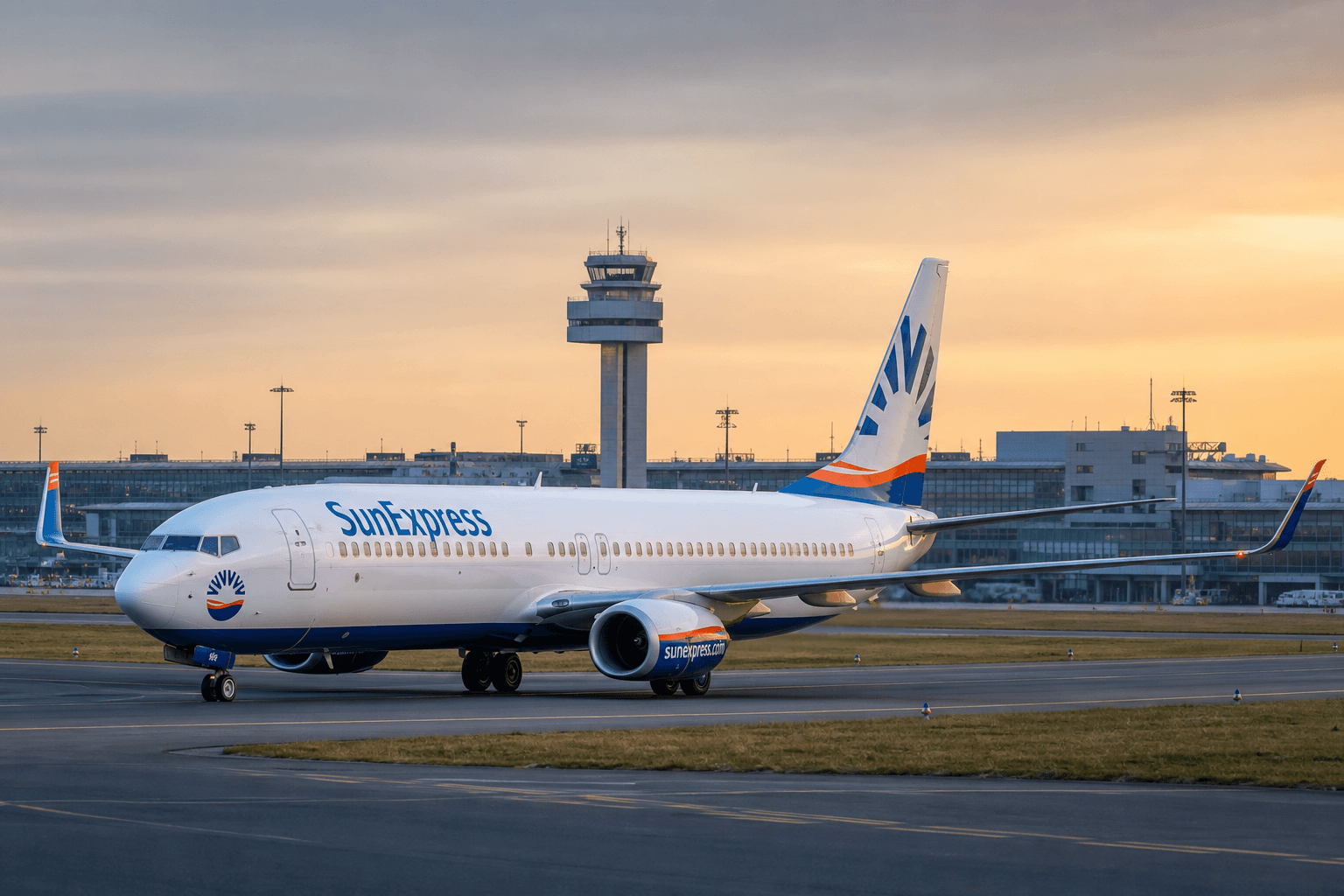
Passenger refuses to sit beside woman citing Sharia law, assaults flight attendant on Turkey-Germany flight
A German resident of Turkish descent was arrested upon landing on a flight from Turkey to Germany, after he refused to sit next to a female seat mate, only to then punch the flight attendant when she tried to help with the situation. The guy then proceeded to insult police officers in Turkish, leading to even more charges… talk about awful behavior. Passenger causes commotion on Turkey to Germany flight German media is reporting on an incident that happened on June 1, 2026, on a flight from Samsun, Turkey (SZF), to Dusseldorf, Germany (DUS). This happened on a SunExpress flight, with that being a leisure airline that's a joint venture between Lufthansa and Turkish Airlines. According to reports, the 29-year-old man ended up in a situation where he was sitting next to a female, which he wasn't comfortable with, claiming it was in violation of Sharia law. When the flight attendant confronted him, he reportedly punched her in the face. German Federal Police were called to the airport in Dusseldorf shortly before 7AM, to take a report of the assault. A criminal complaint was subsequently filed. The passenger confessed to the crime, though the conversation didn't go smoothly. The man reportedly insulted the police officers in Turkish, thinking they wouldn't understand. However, since one of the officers spoke Turkish, the man received an additional charge of insult, beyond his charge of assault. One detail that's not known is the context in which he ended up sitting next to a woman. Like, how did this incident only happen while the plane was in the air, and not on the ground in Turkey, before departure, since presumably he would've been offloaded at that point? This incident happened on a SunExpress flight This situation is obviously terrible on all levels Even as someone who isn't really religious, I think people are entitled to there sincerely held religious beliefs. However, if your religious beliefs impact the ability of others to go about their day, I think it's on the person with the religious beliefs to make accommodations, rather than putting that burden on others. On the topic of Sharia law, as you'd expect, different people have different interpretations. The idea is that direct contact and interaction with the opposite gender (if not related by blood, marriage, etc.) is only allowed for necessity. I guess the idea here is that if you're sitting next to someone on a plane you could accidentally touch, and that was presumably an issue for him. Now, let me point out that not all people with that general belief system interpret things that way, and many will view it as being fine to sit next to someone of the opposite gender on a plane. If this is really how the guy felt, he should've purchased an extra seat (which SunExpress allows) to prevent any potential touch. Of course the irony here is that he was so concerned about inadvertently making contact with a female, only to then… slap a female, which I'm pretty sure would qualify as direct contact. Then the icing on the cake here is that he insulted the police officers, which is a criminal offense in Germany, and it can even lead to imprisonment. Ouch all around… This guy should've purchased an extra seat, if it was so important Bottom line A passenger on a SunExpress flight had quite the meltdown, when he first refused to sit next to a woman, only to then punch the flight attendant when she tried to intervene. When the flight was met by police in Germany, he then insulted the officers, which is also a crime in Germany. While I respect sincerely held religious beliefs, this guy was 100% in the wrong on all counts here, and I imagine he'll be held accountable for his behavior. What do you make of this flight seating incident?

Oregon launches comprehensive public drone pilot training and testing framework
The Oregon Department of Aviation released a training and testing template July 10 for public agencies that operate drones. This new template provides additional model standards that public agencies may adopt and customize for pilot qualifications, recurrent training and public-safety missions. Training Beyond Part 107 The FAA requires Part 107 certificate holders to complete online recurrent training every 24 calendar months, in an effort to maintain aeronautical knowledge recency. Oregon's document goes further by adding written test questions, practical flight evaluations, emergency drills, airspace-deconfliction exercises, privacy and public-records training, maintenance requirements and launch-decision checklists. "This is the next step in building safe and accountable public agency drone programs in Oregon," Oregon Department of Aviation Director Kenji Sugahara said. "A policy tells an agency what the rules are. Training and testing show whether people can actually apply those rules in the field. That matters when drones are being used near roads, bridges, neighborhoods, emergency scenes, firefighters, patients, helicopters, or disaster areas." Public-Agency Requirements Oregon law already requires public bodies to register public-use drones with the state aviation department and submit annual reports. Those reports must summarize how frequently the aircraft were used, explain the primary purposes of the flights and direct the public to the agency's drone policies. Educational institutions register as drone users rather than registering each aircraft. The template is designed for cities, counties, state agencies, fire departments, emergency managers, transportation departments and other public bodies. Optional sections address Drone as First Responder programs, fire and EMS support, search and rescue, emergency management, mutual aid, remote operations and FAA-authorized flights beyond visual line of sight. The department said the document does not create new flight authority, authorize law enforcement activity or permit operations beyond FAA limits.
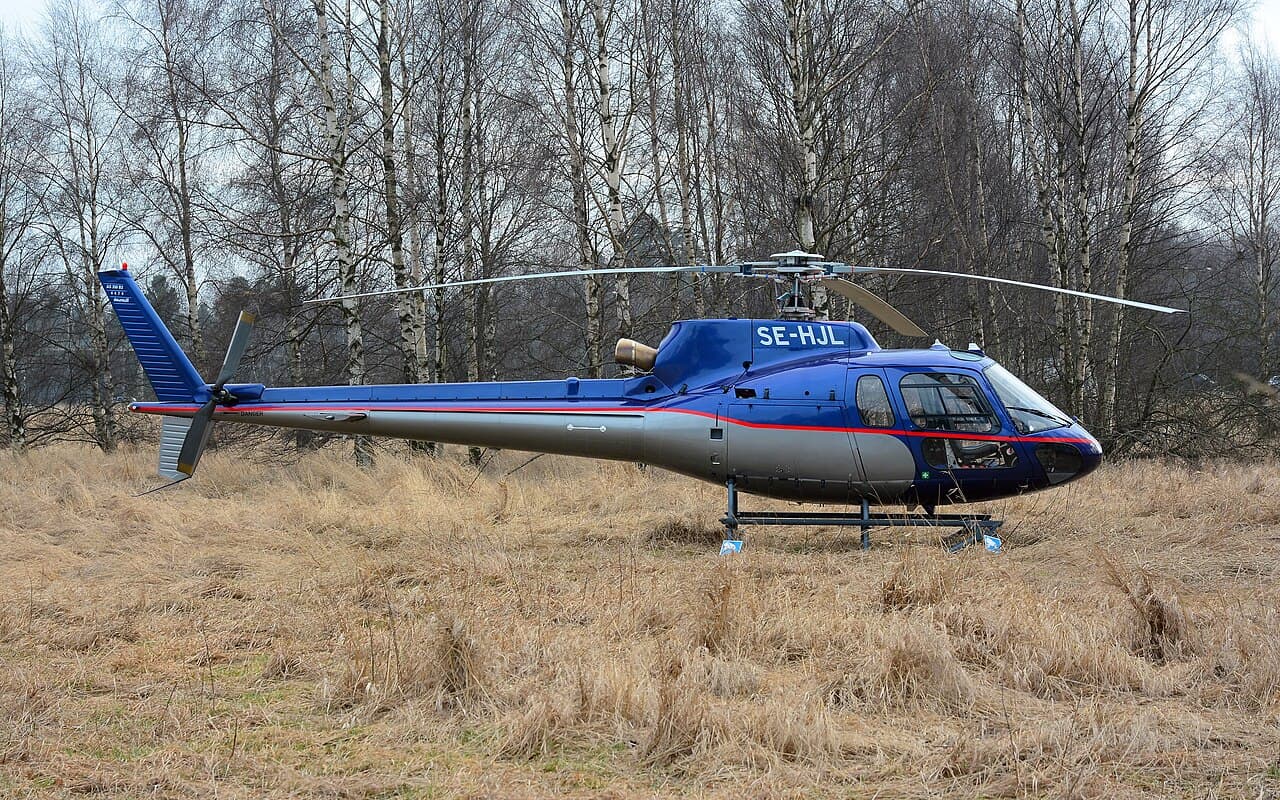
Large drone collides with LAPD helicopter over San Fernando Valley, forcing emergency landing
A large drone struck a Los Angeles Police Department helicopter during a patrol over the San Fernando Valley, damaging the aircraft's windshield and forcing the crew to make a precautionary landing. The Airbus AS350 was flying near the 101 Freeway and Reseda Boulevard in Tarzana shortly before 15:00 local time on July 7, 2026, when it collided with the drone, according to the LAPD and a preliminary Federal Aviation Administration (FAA) report. The pilot landed safely at nearby Van Nuys Airport (VNY). Neither of the two officers aboard the helicopter was injured. Authorities described the drone as measuring approximately three feet by three feet, considerably larger than most hobbyist drones. Investigators have not identified its make or model or the person operating it. The collision happened as firefighters battled a brush fire near the Encino Reservoir. An LAPD official said the drone operator may have been attempting to record the fire, although authorities have not determined whether the aircraft was deliberately flown near the helicopter. The FBI and FAA have opened investigations. Los Angeles Mayor Karen Bass called the incident "completely unacceptable" and warned drone operators against interfering with police and firefighting aircraft. "This is a warning to anybody who's flying a drone that interferes with Fire or Police: We will find you, you will be arrested, and you will be prosecuted," Bass said. Drones operating near wildfires can put a halt to aerial firefighting operations as crews cannot safely share the airspace with an unidentified aircraft. The FAA generally limits drones to 400 feet above the ground, with additional restrictions around airports and emergency operations. Authorities have not released photographs of the damaged helicopter or video showing the collision. The drone operator remained unidentified as of July 13. The incident is the latest collision involving a drone and a crewed aircraft in US airspace. The FAA receives thousands of reports each year involving drones operating near airplanes and helicopters, although confirmed midair collisions remain relatively rare.
Jeppesen ForeFlight Launches AI-Powered ClearNOTAMs to Simplify Flight Planning
One of the most challenging parts of being a pilot is gathering "all available information before a flight" as required by regulation. This is especially true when it comes to sifting through information dispersed in the form of Notices to Airmen (NOTAMs). Jeppesen ForeFlight is trying to make obtaining and understanding the information easier with ClearNOTAMs, an app that takes the raw NOTAMs, delivered in all capital letters and abbreviations, and decodes them to allow a pilot to sort them by relevance to the flight. According to Cole Crawford, director of product at Jeppesen ForeFlight, ClearNOTAMs provides pilots with an English translation of every NOTAM, while also conveying each one's real operational impact, so the pilot knows what to expect without altering the underlying meaning or fully replacing the original. READ MORE: Tecnam Forms Alliance With Jeppesen ForeFlight READ MORE: Jeppesen ForeFlight Introduces Emergency Glide Mode "ClearNOTAMs helps pilots spend less time deciphering information and more time understanding it," said Crawford in a news release. "By transforming complex NOTAM language into clear, concise summaries, we're making one of the most important parts of flight planning more accessible and actionable." AI Enabled ClearNOTAMs has been in development for a little over a year, according to Crawford, and part of that time was spent making sure the artificial intelligence-powered NOTAM intelligence was up to the task of correctly interpreting and summarizing NOTAM terminology. This includes building extensive automated cross-checks into the system for accuracy to maximize the quality of every translation. The outcome is a plain English summary that becomes the primary text for each NOTAM. In addition, the original coded version may be viewed alongside the translation with just a tap, making it easy for pilots to verify any translation's accuracy and view the original at any time. ClearNOTAMs is available through ForeFlight. The program has customizable filters so the pilot can separate categories such as airport, airspace, runway, etc., or by the NOTAM issuing body such as local or regional. The user can sort the NOTAMs by most recent update and effective time and "pin" specific NOTAMs to the top of the list with a tap, or collapse them with a double tap as they see fit. Three-Month Trial Individual ForeFlight users are invited to test-fly ClearNOTAMs through subscription plans following EAA AirVenture Oshkosh (July 20-26) for a complimentary three-month trial. Following the trial period, the feature will be available only with ForeFlight's Premium plan for individuals, Business Performance for flight departments, and MFB Performance and MFB One for military and government customers. The other user interface enhancements to NOTAMs, such as filtering, sorting, pinning, and collapsing, will be available with all ForeFlight subscription plans.
The Daily Touch & Go
The day's best aviation news in your inbox. Free, no spam.