

Image: Fayuyang · CC BY-SA 4.0 · via Wikimedia Commons
Montreal Metropolitan Airport Opens with Domestic Flights Only Amid Regulatory Limits
Montreal's new Metropolitan Airport begins service with Porter Airlines launching multiple domestic routes, but international flights remain barred by regulatory exclusivity clauses.
The gist
Montreal Metropolitan Airport opens with 11 domestic routes from Porter Airlines but cannot serve international flights due to exclusivity rules.
Continuing coverage
All Porter Airlines →Montreal Metropolitan Airport, formerly known as Montreal Saint-Hubert Airport, inaugurated its new passenger terminal on June 15, 2026, marking a significant addition to the region's aviation infrastructure. Canadian carrier Porter Airlines commenced operations from the facility immediately, launching a host of domestic routes to destinations across Canada. This new terminal is expected to stimulate regional connectivity but is limited solely to domestic flights due to regulatory restrictions.
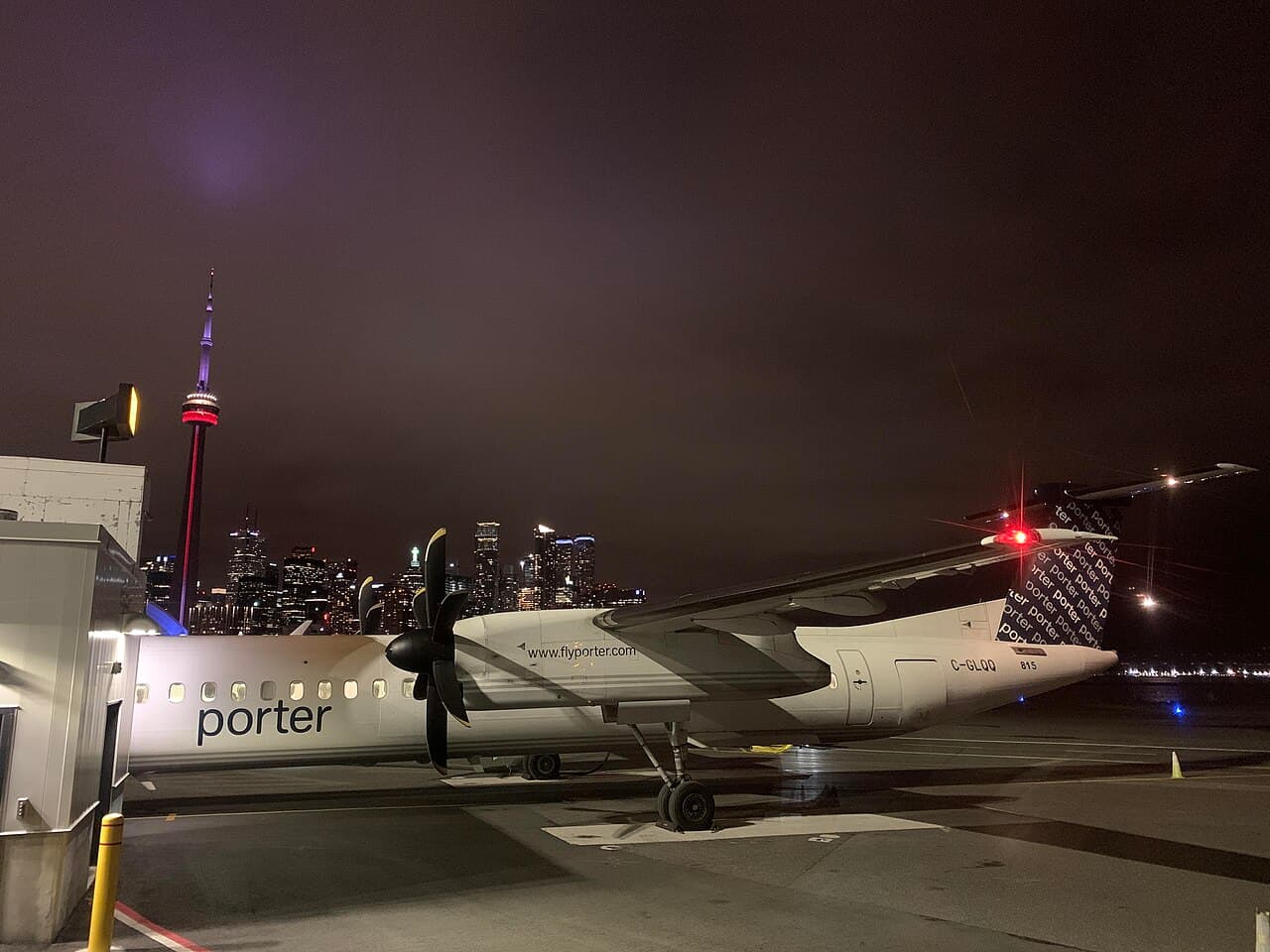
Porter Airlines introduced services to key Canadian cities including Toronto Billy Bishop, Vancouver International, and St. John's International airports on opening day. Within days, the airline expanded its network, adding routes to Edmonton, Toronto Pearson, Halifax, Calgary, Winnipeg, Charlottetown, Moncton, and Hamilton, totaling 11 domestic routes accessible from Montreal Metropolitan Airport within its first week. These services are primarily operated with Porter’s fleet of Embraer E195-E2 jets, supplemented by smaller de Havilland Dash 8-400 turboprops for select routes.
Despite the flurry of domestic activity, international flights are notably absent from Montreal Metropolitan Airport’s offerings. This limitation springs from an 'international flight exclusivity clause' embedded in the lease agreements of Montréal–Trudeau International Airport (YUL). The clause forbids secondary airports near YUL from handling international flights, effectively preserving YUL’s monopoly over Montreal’s international air services and restricting competitor airports' operational scope.
The exclusivity clause has stirred some controversy, with the Canadian Competition Bureau recommending the removal of such restrictions to foster competition and provide passengers with more flight options. Nonetheless, the current regulatory environment confines the new airport’s operations to domestic routes only. Consequently, even regional services from the United States cannot be handled at the Montreal Metropolitan facility.
Looking at the airport’s capacity and projected growth, the new terminal is estimated to manage approximately one million passengers in its first year, with potential expansion up to four million passengers annually upon full project completion. The airport’s proximity to downtown Montreal offers a strategic advantage for domestic travelers seeking to avoid the busier YUL airport and its associated delays and congestion.
In terms of Porter Airlines' broader expansion, the carrier plans to operate around 138 weekly flights from Montreal Metropolitan Airport once all current and planned routes launch, aiming to significantly increase its presence in the Greater Montreal area. This growth is largely attributed to Porter’s expanding Embraer E195-E2 fleet, enabling higher frequency and capacity tailored to domestic demand.
Montreal Metropolitan Airport’s lower operating fees compared to YUL allow carriers like Porter to offer more competitive fares, an important factor amid rising fuel costs and higher airfares industry-wide. This cost efficiency is expected to attract cost-sensitive domestic travelers, reinforcing the airport’s role as a convenient alternative for intra-Canada air travel.
While the airport’s current focus is on building strong domestic connectivity, the ongoing limitations on international service mean that YUL remains the sole gateway for Montreal’s international flights for now. The exclusivity clause effectively hinders direct competition from the new facility on international routes, shaping the competitive dynamics within Montreal’s airport landscape.
Montreal Metropolitan Airport’s opening ushers in a new phase for regional aviation connectivity, emphasizing domestic convenience and competitive pricing. However, the regulatory environment’s impact on international service options represents a significant operational boundary that maintains YUL’s dominant position as Montreal’s international hub for the foreseeable future.
Read more
All Airports →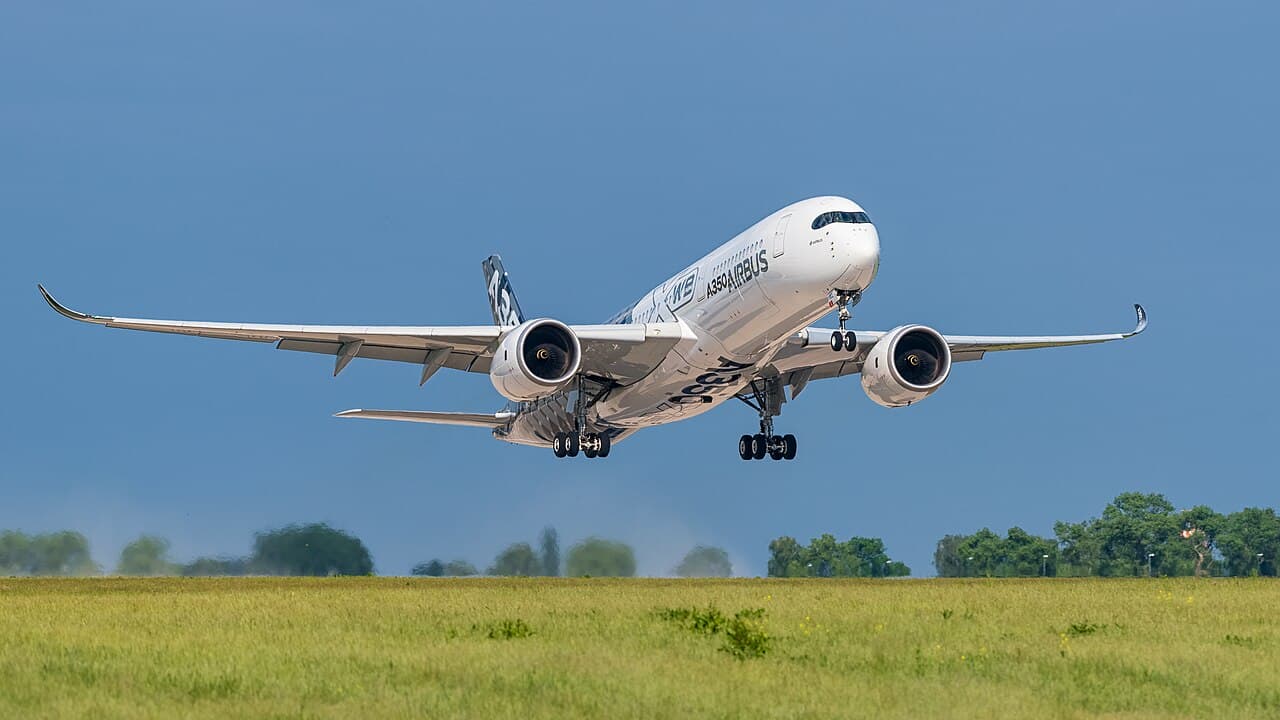
Delta Confirms Seattle-Singapore A350 Flights Marking Asia Expansion
We know that Delta has huge growth aspirations across the Pacific, particularly to Asia. It's an area where Delta has increasingly fallen behind United in recent years, but Delta now hopes to not only catch up, but even beat United. We'll see what comes of that, and in particular, find out just how costly that growth is . While this shouldn't come as much of a surprise, Delta executives are now publicly confirming plans to return to Singapore, a destination that hasn't been served by the airline since 2019, when that was an intra-Asia tag flight from Japan. We're also learning out of which airport that service will likely operate… Delta is eyeing Singapore for further Asia expansion As Delta executives view it, the airline is pretty maxed out in terms of its European potential, and in the long run, they see the most long haul growth potential in Asia, the Middle East, and Africa. So, what kind of expansion should we expect? So far, Delta has launched flights to Hong Kong (HKG) , and has announced plans to fly to Manila (MNL) and Tokyo Narita (NRT) ; Riyadh (RUH) flights are also launching soon ( we'll see how that goes ), and that's technically Asia, but not a Pacific flight Delta also wants to connect its Los Angeles (LAX) and New York (JFK) hubs to Seoul Incheon (ICN), which is the hub of joint venture partner Korean Air, as Delta loves routing Asia traffic through there We've also known that Delta plans to once again fly to Singapore (SIN), and we're learning more about what that will look like Delta is planning flights from Seattle to Singapore Sean Cudahy reports that Delta Chief Commercial Officer Joe Esposito has just explicitly confirmed that the airline is returning to Singapore. That's not really a surprise, since we've known that was in the cards. But what's perhaps most interesting is the hub out of which the service will operate — Esposito ruled out that the service could operate out of Los Angeles, so it's pretty clear that the airline will operate this service out of Seattle (SEA). That also matches previous reporting from JonNYC . https://t.co/1g4M2p9AfD https://t.co/py2VGgPQz9 — JonNYC (@xJonNYC) June 7, 2026 Now, we'll see with what timeline this service actually launches. My guess is that we're looking at a fall 2027 service start, at best. At 8,070 miles, this will be Delta's third longest flight, after its routes to South Africa, which are from Atlanta (ATL) to Cape Town (CPT) and Johannesburg (JNB). One certainly wonders if this Singapore route could be operated by Delta's new Airbus A350-1000s , which will feature an all-new passenger experience . While the plane has great range and per seat economics, the only thing I'd say is that it's "a lot of plane" for a new market, in terms of the overall capacity (even with the very premium layout). In the Seattle to Singapore market, Delta would only be competing head-to-head against Singapore Airlines. Meanwhile in the Los Angeles to Singapore market, Delta would've had competition from both Singapore Airlines and United Airlines. Delta is hugely growing its presence in Asia My take on Delta's Asia expansion plans It's fantastic to see Delta looking to grow its presence in Asia. Point-to-point flying to Asia is a market that United has basically had cornered in recent years, and competition is good for consumers. It's amazing to think for how many years Delta basically squandered its Asia advantage. Keep in mind that back in the day, Northwest had a robust Asia network, and after the merger with Delta, we saw that network decreased slowly but steadily, as Delta instead focused on routing everything through Seoul Incheon, and into the Korean Air network. So I'm happy to see a reversal of that strategy. I also have to say that given Delta's hubris, it's kind of fun to see the airline having to increasingly play "catch up," rather than coming in as the dominant carrier. And I think that very much sums up what's going on in Asia. The most basic structural disadvantage that Delta has is that United has a fortress hub in San Francisco (SFO), which is where a large part of its Asia network flies from. That's fantastic for connectivity, not to mention San Francisco is a very strong market for Asia traffic. Delta, meanwhile, is taking a split hub approach, flying out of both Los Angeles and Seattle. Obviously Delta is trying to make the best of its situation, but there's no denying that this is an uphill battle: Both Delta's Los Angeles and Seattle hubs are roughly half the size of United's San Francisco hub, so the connectivity and local loyalty just aren't there in the same way Delta is in second place in Seattle, which isn't great from a loyalty revenue perspective, given that Alaska continues to be the dominant carrier for the local community Los Angeles is a market that's really hard to win, and if Delta can actually turn it into a profitable hub where it has a significant market share advantage, it'll be the first airline to succeed at that in the long run Compared to United, Delta just doesn't have the breadth or depth of network that United has; for example, one flight a day to Hong Kong is great, but United's four flights per day are better It also has to be emphasized that in terms of actually transporting passengers profitably (or at less of a loss), United does a better job at that than Delta, despite its lower overall profitability. Comparing passenger revenue per air seat mile to cost per air seat mile, United is at 16.18 cents vs. 16.46 cents, while Delta is at 17.37 cents vs. 19.31 cents. Delta is trying to less reliant on Seoul Incheon & Korean Air Bottom line Delta is growing quite a bit in Asia at the moment. The airline has already launched flights to Hong Kong, with flights now on sale to Manila and Tokyo Narita. On top of that, Delta has officially confirmed it plans to fly to Singapore in the near future, with the service likely to be out of Seattle rather than Los Angeles. It's great for passengers to see more competition across the Pacific, as Delta sure is making up for a lack of effort for years. However, the airline will also have quite the disadvantage compared to United for a long time… What do you make of Delta's plans to fly to Singapore?

American Airlines Bans Bare Feet Onboard As Stated in Contract of Carriage
American Airlines' Contract of Carriage already bars passengers from flying barefoot or wearing offensive clothing, but some travelers still need the reminder. Also JetBlue's first class seat moving toward installation, why airport food costs so much, Houston Intercontinental's renovated Executive Club, and American's latest "premium" service gaps.

Air Canada Faces Backlash Over Losing Passenger's Husband's Ashes and $200 Voucher Offer
An Air Canada passenger has accused the Canadian flag carrier and Star Alliance founding member of an 'offensive' compensation offer after the airline lost her checked bag that was transporting, among other things, her late husband's ashes. Twyla Shannahan was flying with the national airline from Edmonton International Airport (YEG) in Alberta to St. John's International (YYT) in Newfoundland.

US Citizen Detained by ICE at Delta Gate Due to Mistaken Identity
A U.S. citizen boarding a Delta flight from Atlanta to Las Vegas says ICE agents handcuffed him at the aircraft door after mistaking him for a British man with the same name and birthdate. Delta says it does not control law enforcement decisions, while ICE says the encounter was targeted and private. Airport data sharing can now turn domestic passengers into easy targets before officers verify they have the right person.
The Daily Touch & Go
The day's best aviation news in your inbox. Free, no spam.