

Image: Peter Haas · CC BY-SA 3.0 · via Wikimedia Commons
Engine debris caused cabin decompression on Ryanair 737-800, NTSB reveals
Broken parts from the aircraft's right engine shattered a window, leading to rapid decompression and serious injuries on a Ryanair flight from Greece to Germany.
The gist
Engine fragments broke a cabin window on a Ryanair 737-800, causing decompression and injuring a passenger on July 10 flight.
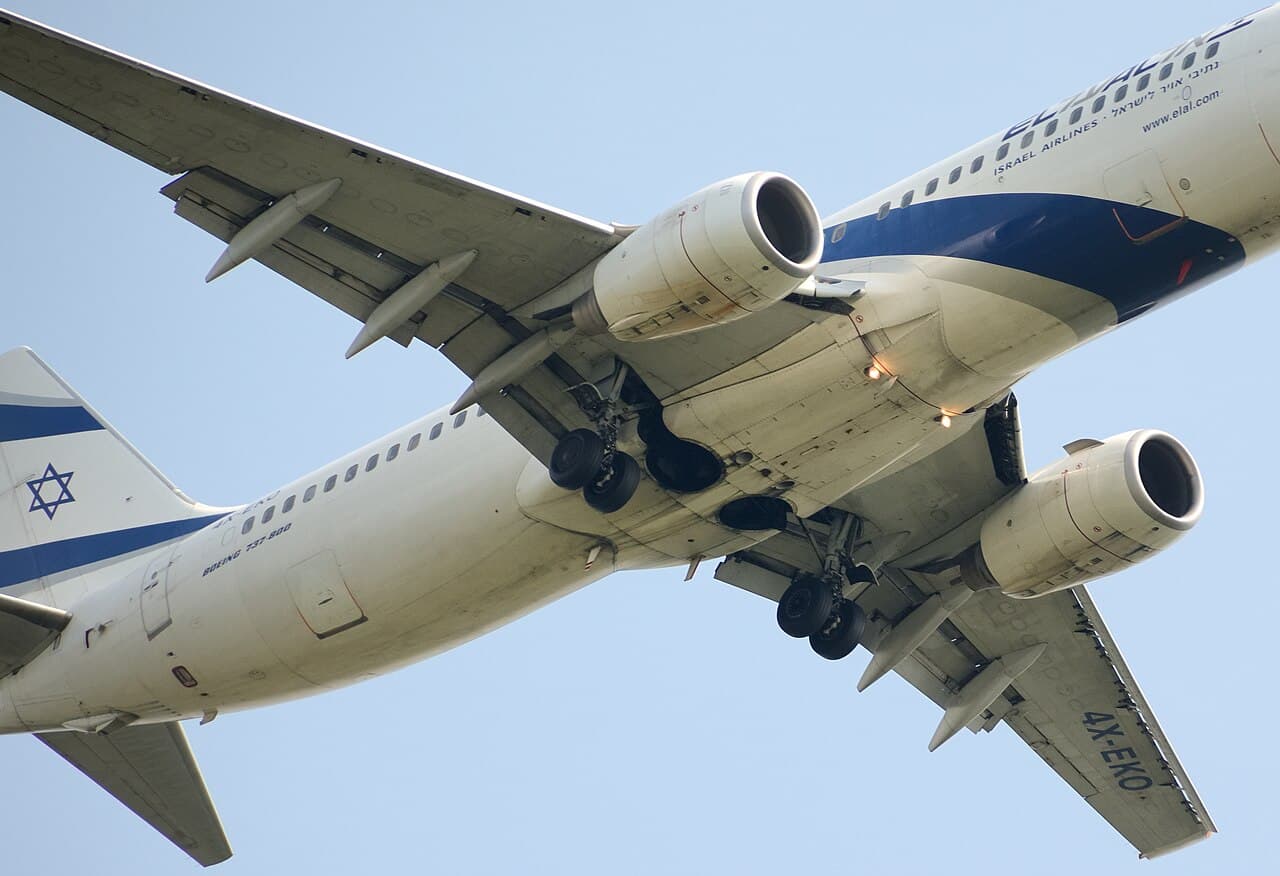
A Ryanair Boeing 737-800 experienced a dangerous cabin decompression after engine fragments broke a window, the U.S. National Transportation Safety Board (NTSB) confirmed. The July 10 incident occurred during a short flight from Thessaloniki, Greece, to Memmingen, Germany, when parts of the aircraft’s right engine burst through a passenger window. The sudden decompression led to a passenger being partially ejected through the shattered window, with his head and shoulders extending outside the fuselage before fellow travelers intervened to pull him back inside.
Eyewitnesses on the flight reported hearing a loud bang immediately followed by the chaotic scene of the passenger being sucked partially out. His seatbelt prevented a full ejection, though he sustained serious injuries from the event. The NTSB statement emphasized the gravity of the injuries while confirming the direct link between the engine failure and the compromised window panel.
Greek investigators initially found remains of birds inside the right engine, indicating a possible bird strike precipitated the malfunction. However, the full technical cause and sequence of the engine failure remain under active review as additional evidence is analyzed. The Greek authorities have officially transferred responsibility for the investigation to the NTSB, reflecting international cooperation in aviation accident inquiry.
Prior to the NTSB’s findings, Greek media speculated about engine trouble but lacked formal confirmation from authorities. The U.S. agency's involvement reflects a standard procedure when the aircraft manufacturer or critical components are U.S.-based. Boeing 737-800s are widely used across European carriers, and incidents involving sudden decompression remain critical safety concerns for aircraft operators and regulators.
This event highlights the ongoing risks posed by engine malfunctions and bird ingestion, which can lead to catastrophic effects on aircraft structural integrity. The breach of a passenger window during flight is rare but extremely hazardous, underscoring design vulnerabilities when high-energy debris impacts fuselage components. Safety investigators will assess how the aircraft’s design and maintenance practices factored into the incident outcome.
Passenger safety protocols proved vital, as the rapid intervention of fellow travelers and crew prevented a fatality. The case will likely fuel further discussion about window strength standards and emergency response training aboard aircraft. Additionally, the investigation’s findings could inform updated aircraft engine bird ingestion testing and certification procedures to reduce recurrence of such failures.
This Ryanair incident is an acute reminder of the complex interplay between engine reliability, environmental hazards like bird strikes, and cabin structural resilience. Airlines operating the Boeing 737-800 model will be closely monitoring the investigation outcomes to ensure fleet safety measures are adequate. The outcome also holds implications for regulatory authorities overseeing engine design and operational risk mitigation on commercial jets.
Frequently asked questions
- What caused the cabin decompression on the Ryanair flight?
- Broken components from the right engine of the Boeing 737-800 burst the window next to a passenger, causing the sudden decompression.
- What injuries did the passenger suffer during the incident?
- The passenger was partially sucked through the broken window and sustained serious injuries but was prevented from full ejection by his seatbelt and assistance from other passengers.
- Were there any indications of what led to the engine failure?
- Investigators found bird remains inside the right engine, suggesting a bird strike may have caused the engine failure, though the exact cause is still under review.
Read more
All Aviation Safety →
Alaska Airlines Flight Returns to Gate After Passenger Threats in Miami
Alaska Airlines flight 305 returned to the gate in Miami after flight attendants reported passenger threats, including one customer allegedly threatening to take over the aircraft. The pilots stopped departure, placed the cockpit under lockdown protocol, requested law enforcement, and returned to gate E6 while the incident continued to develop.
Researchers Reveal Rapid 60-Second Hardware Hack on Boeing 737 Avionics Systems
Researchers from UC San Diego and Oberlin College on Thursday presented a proof-of-concept hardware attack that could interfere with communications between critical avionics systems on Boeing 737 Next Generation and MAX aircraft. The device can be installed during roughly 60 seconds of physical access on the ground, according to the research presented at the USENIX Security Symposium. The team demonstrated the attack on a testbed built from authentic 737 components and software rather than an operating aircraft. Device Targets Maintenance Connection The researchers identified an unused maintenance connector inside the 737 Electronics and Equipment bay. The bay sits below the aircraft’s nose and can be accessed from the ground. Their paper estimates an attacker could open the access hatch in 15 seconds, install the device in about 30 seconds and close the hatch in another 15 seconds. The implant targets ARINC 429 data buses between the flight management computer and the multipurpose control display unit. Researchers demonstrated that the device could alter flight-plan information and values used for weight, balance and takeoff calculations while suppressing indications of some changes on the pilot’s display. "This is something the aviation industry will want to plan to defend against," UC San Diego professor Stefan Savage told WIRED. "I would not sleep on this one." The researchers said the attack would require advance planning, technical knowledge and physical access to the aircraft. Their paper says the findings apply to 737 NG and MAX models, which account for more than 95% of the active 737 fleet. Boeing Reviewed Findings The research team first disclosed the vulnerability to Boeing in 2020 and later demonstrated the attack in a Boeing laboratory. Boeing told WIRED that it reviewed the relevant component designs, installations and interfaces after receiving the researchers’ findings. The company said existing protections in the aircraft and its operating environment substantially reduce the feasibility and risk of a real-world attack. "Our technical experts are confident that the layers of protection in place on the airplane, including within the system design and the operating environment, provide sufficient mitigation to significantly limit the feasibility and risk of real-world attacks," Boeing told WIRED . Pilots could override changes to the autopilot by taking manual control, the researchers noted, and some correct information would remain available through other cockpit displays. The team proposed several possible defenses. Those include removing or permanently blocking the unused connector, adding software capable of detecting the attack, increasing electrical isolation between systems and eventually adding authentication to avionics data communications.

IndiGo Passenger's Violent Outburst at Bhubaneswar Airport Raises Concerns Over Passenger Conduct
In general, I'm not a fan of posting videos of people having meltdowns at airports — "haha, look at this person having a really tough time, how funny." Yeah, to me it's not really funny. However, there's some video footage going viral over an airline passenger's behavior in India, and I think it makes for an interesting bigger picture discussion around how policies and norms differ globally when it comes to acceptable behavior at airports. Woman goes on rampage after IndiGo flight cancelation There's video footage going viral of an incident that happened at around 5:45PM on Thursday, August 13, 2026, at an IndiGo check-in counter at Bhubaneswar Airport (BBI), in India. According to reports, the woman pictured in the video was scheduled to travel on IndiGo flight 6E 7352 to Kolkata (CCU). It had been delayed by roughly three hours, before ultimately being canceled due to a technical fault. That's of course super frustrating. According to what was said in the video, her son was sick (it's not clear to what extent), and she was frustrated by the lack of timely information that she was given about the cancelation. Flight cancelations can of course be frustrating, but her response was beyond hostile — she started screaming, got up in the airport employee's face, slammed computer equipment, and more. It does look like after some significant backlash, a complaint has been filed against the passenger with the airport police station. The woman damaged a computer monitor, a keyboard, and a passport swiping machine, with damage being estimated to be around 49,000 INR (513 USD). IndiGo should seriously consider putting her on a no fly list. If this is how she reacts to something on the ground, imagine her reaction to an actual mid air emergency. She could become a danger to the crew & fellow passengers. Completely deranged! pic.twitter.com/v1y6smIUPG — Shilpa Godbole (@godbole_shilpa) August 14, 2026 It's interesting how airport behavior norms differ around the world It's not exactly insightful to point out that norms around behavior while traveling differ greatly depending on where in the world you are. If you compare airport behavior in Japan vs. the United States, you'd think you're on two different planets. There's no denying that as the aviation industry in India has grown massively, we've also seen more and more reports of poor passenger behavior. Honestly, we've seen a similar pattern in the United States over time. My point isn't to criticize one culture in comparison to another, but I think it's fascinating to watch this clip as an American, and in particular, the response. If a passenger behavior like this in the United States, they'd probably be tackled and tased by police. Like, this wouldn't be tolerated for a split second, and handcuffs would've been on the passenger in no time. Meanwhile here we see the passenger completely cross the line, and no one really seems to do anything. That then escalates when she goes from being verbally abusive to being physically abusive, throwing the computer equipment. Eventually some sort of police seem to get involved, but they just sort of seem to push her to the side. I don't want to be heartless, but I think this woman should've been restrained earlier. She could've just as easily become violent toward the airport employee she was towering over. For that matter, I think she should be placed on a no fly list. I mean, imagine if she engaged in this kind of behavior on an aircraft, without law enforcement, and without the ability for others to easily get away from her. What I also find noteworthy is looking at some of the social media responses to this. There are a surprising number of people coming out in her defense, saying things like "when a person is helpless what do you expect that person to do?" There are acceptable ways to express displeasure or anger. She is acting like an unhinged individual. — Shilpa Godbole (@godbole_shilpa) August 14, 2026 It's never acceptable to act this aggressively toward others, in my opinion. But in particular, it's not fair to blame a frontline customer service employee who has no control over the situation. These people didn't sign up to be abused by the public, and they don't deserve it. I understand every culture is different, but I really feel like regulators in India could do a bit more to establish what isn't acceptable behavior, and create punishments that hopefully deter people from working this way. We saw regulators in the United States increasingly fine passengers for poor behavior coming out of the pandemic, and I think that was fair and reasonable. Bottom line An IndiGo passenger became super aggressive after her flight was canceled. She climbed up on the baggage belt, yelled at the airport employee, and slammed computer equipment. It's totally understandable to be frustrated when things go wrong while traveling, though acting this way is never okay, in my opinion. What amazes me most is how everyone around her seems to tolerate this, and not actually take any action. Fortunately a complaint has now been filed against her, so hopefully she faces some punishment. If you ask me, this should land someone on the no fly list… What do you make of this IndiGo passenger abuse? PS: Let me remind everyone of OMAAT commenting guidelines . You're welcome to chime in here, but please be respectful, and don't rudely generalize cultures. If you see comments you take issue with, please hit the "Report" button.
Air India A320neo Flight Control Systems Briefly Failed Before 300-Foot Plunge Injuring 24
The flight control systems of an Air India Airbus A320neo narrowbody plane which suddenly plunged 300 feet while at cruising altitude, leaving 24 passengers and crew injured, went dark for several seconds, an internal report from the aircraft manufacturer has revealed. Air India flight AI-2379 from Phuket, Thailand to Delhi on August 4 was flying at a cruising altitude of around 34,000 feet when it unexpectedly dropped. Anyone and anything that wasn't strapped down was thrown into the air. Multiple passengers and crew were injured after they were slammed into the ceiling of the seven-year-old aircraft Around 20 passengers and four cabin crew members were injured in the incident, many of whom had to be transported to the hospital with head, neck, and spinal injuries. In a new internal report from Airbus which had been viewed by Reuters but not independently verified, it is claimed that the flight control system that controls the plane's elevators and ailerons suddenly became unavailable for around four seconds. During this brief period, the plane pitched up. The First Officer responded by pointing the nose of the plane down but there was no immediate correction due to the alleged loss of hydraulic systems. The document does not establish the cause of the incident and the events are still under investigation by India's Aircraft Accident Investigation Branch (AAIB) with support from the French Bureau d'Enquetes et d'Analyses (BEA). Late last year, Airbus issued an urgent safety alert for its range of best-selling A320 family single-aisle aircraft following an investigation into an incident aboard a JetBlue aircraft when the plane suddenly pitched down mid-flight without any input from the pilots. Engineers were able to establish that the unexpected pitch-down input came from a malfunctioning ELAC computer unit. The ELAC stands for Elevator & Aileron Computer, and it is designed to interpret the inputs the pilots are putting into the controls and then smoothly and correctly control the elevators and ailerons. Airbus believes that the ELAC was corrupted by intense solar radiation, although the issue only affected a software update known as L104. To fix the issue, airlines were ordered to restore all aircraft with the L104 software to the last version before this. In most cases, this required engineers to plug a Portable Data Loader with the older L103 software into the cockpit computer of affected planes and reinstall the tested software. Although there are around 11,500 Airbus A320 series aircraft in active commercial service around the world, only 6,000 of these had the L104 software installed. Earlier this week, it was revealed that the Captain of flight 2379 had failed a second drug test. As is standard practice following a serious aviation occurrence, all of the crew are subject to drug testing. The Captain's initial rapid test came back as 'non negative' so a more detailed test was ordered. Investigators are yet to confirm the results of this test, but sources claim it tes tested positive for cannabis. There is currently no suggestion that illegal banned had anything to do with the events that unfolded on flight 2379.
The Daily Touch & Go
The day's best aviation news in your inbox. Free, no spam.