

Image: Solomon203 · CC BY-SA 3.0 · via Wikimedia Commons
Flight School Reveals Risks of Multiple Airports in One City Through Real-World Training
A private pilot applicant's mock check ride exposes how multiple airports with similar names near one metropolitan area can cause dangerous confusion during flight planning and approach.
The gist
Training reveals pilots can confuse close airports in the same city, highlighting the need for detailed planning and situational awareness.
A private pilot applicant undergoing a mock check ride at a flight school encountered a critical learning experience when asked to plan a VFR cross-country flight from Crest Airpark south of Seattle to Spokane, Washington. The applicant’s instructor had him create a detailed navlog, focusing on precise timing and route details, aiming to instill commercial-level performance standards from the outset of training. The applicant chose Spokane International Airport (KGEG), based on personal experience, but the examiner requested Felts Field (KSFF), highlighting a common confusion when multiple airports serve a single metropolitan area.
Spokane, Washington, hosts three major airports: Fairchild Air Force Base, Spokane International Airport, and Felts Field. This triad creates scenario complexities for pilots, especially when planning flights without clear airport designation communication. The applicant’s mix-up between KGEG and KSFF offered an excellent lesson on the importance of clarifying destination airports, especially in regions with multiple viable airfields.
This issue is not isolated to Spokane. The Seattle region is home to numerous airports identified by city name, causing potential for misunderstanding. For instance, AirNav.com returns 14 airports when searching 'Seattle,' including three primary airplane airports: King County International-Boeing Field (KBFI), Seattle-Tacoma International (KSEA), and Paine Field (KPAE). The close proximity—just over five nautical miles—between Boeing Field and Sea-Tac can leave pilots with little time to recover from misidentification during approaches.
To mitigate confusion, the FAA develops differentiation strategies such as splitting the automatic terminal information service (ATIS) identifiers alphabetically: Sea-Tac's ATIS uses letters Alpha to Mike, whereas Boeing Field uses November to Zulu. This alphabet split aids pilots in receiving accurate, location-specific weather and operational information, which is critical when airports are close enough to appear as one from the air.
Runway alignment adds another layer of difficulty in distinguishing airports. Airports typically orient runways based on prevailing winds, and similar alignments have led to mix-ups like those seen in Wisconsin, where pilots confused Oshkosh’s Wittman Regional Airport (KOSH) with Fond du Lac County Airport (KFLD), just 13 miles apart, as both share runway orientations of 18/36 and 09/27. Even experienced pilots can mistake nearby airports with similar runway layouts for each other.
An incident near the Seattle area in 2004 highlighted this risk with a corporate pilot lining up for Runway 31 at Boeing Field but inadvertently aligned with Runway 34 at Renton Municipal Airport (KRNT), only four nautical miles away. The approach confusion was compounded by geography, proximity, and flat lighting conditions, even though both pilots were in communication with the tower. The situation was resolved when the controller clarified the intended destination, guiding the jet correctly.
Pilots are advised to double-check airport codes rather than relying solely on city names when filing flight plans or conducting navigation briefs. Consulting the FAA Chart Supplement provides essential information on runway lengths, lighting, communication frequencies, and other critical details that can prevent navigational errors. This is especially vital at night or in unfamiliar regions where visual cues may mislead.
Moreover, pilots should include the full airport name and identifier when communicating at nontowered fields to prevent radio miscommunications. Adding specific phrases such as 'Seattle Boeing Field' or 'Spokane Felts Field' helps air traffic services and other pilots maintain situational awareness and reduce potential misrouting.
The flight school’s experience with their student pilot underscores the complex realities of real-world flying where multiple airports in a single city demand acute attention to detail, communication, and thorough planning. Such training scenarios prepare pilots to handle operational ambiguities and minimize risk as they progress in their aviation careers.
Frequently asked questions
- Why did the private pilot applicant confuse which airport to plan for in Spokane?
- The applicant planned for Spokane International Airport based on prior experience, but the examiner requested Felts Field, showing that multiple airports with overlapping city names can confuse flight planning without explicit clarification.
- How does the FAA help pilots distinguish between closely located airports in busy metropolitan areas like Seattle?
- The FAA differentiates automatic terminal information service (ATIS) identifiers alphabetically to separate airports; for example, Sea-Tac uses Alpha to Mike, while Boeing Field uses November to Zulu to prevent confusion during flight operations.
- What advice is given to pilots to avoid airport confusion when planning flights?
- Pilots are advised to confirm airport identifiers instead of relying solely on city names, consult FAA Chart Supplement details on runways and frequencies, and include full airport names in communications, especially at nontowered airports, to reduce misidentification risks.
Read more
All Military/Defense →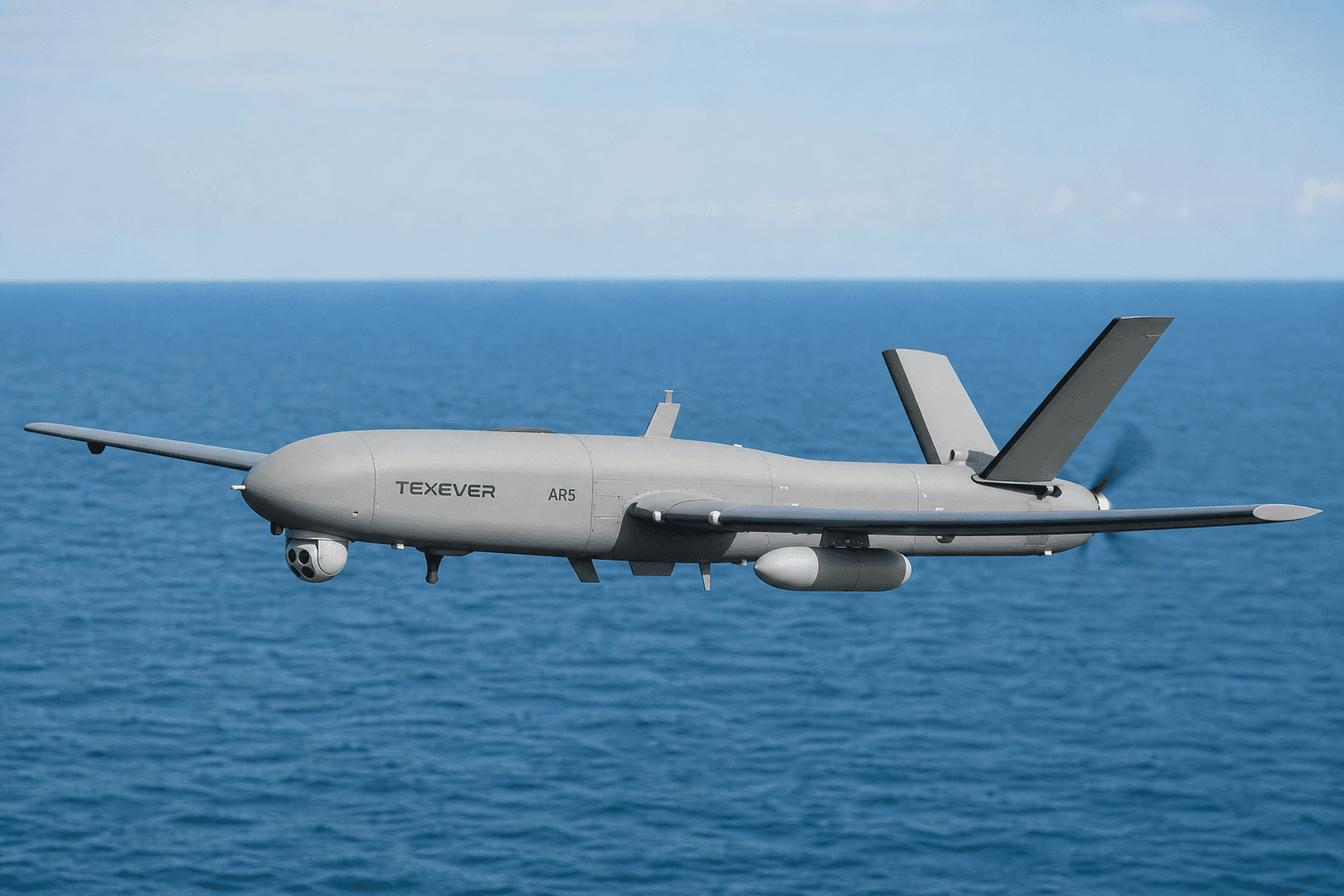
Portuguese Air Force to Launch Operations with Tekever AR5 MALE Drones in September
The long-endurance platform can remain airborne for up to 20h with a 50kg sensor payload. The Portuguese air force will begin operations with Tekever AR5 medium-altitude, long-endurance (MALE) uncrewed aerial systems (UAS) from next month, under a contract announced on 11 August. "Delivery of the systems and the achievement of initial operational capability [is] scheduled for this coming September," the company says. That will coincide with the completion of its delivery of an initial package of personnel training, it adds. The number of UAS covered by the deal has not been disclosed, but Tekever says it also includes the delivery of ground control station equipment and its Atlas mission system. The twin-engined AR5 can carry a mission and sensor payload weighing up to 50kg (110lb). "A second phase of training will take place in October, consolidating full operational readiness and the development of new skills among the operational teams," the Portuguese company says. Tekever cites expected operational tasks for the up-to-20h-endurance platform as including "maritime surveillance, security and defence missions", along with coastal and exclusive economic zone monitoring, and "public interest missions", such as providing support for firefighting and environmental protection operations. "This contract puts an autonomous capability developed and produced in Portugal to work in protecting our airspace and maritime capability," says Tekever director of strategic development Pedro Petiz. The Portuguese customer, meanwhile, notes that the new capability will "contribute to an air force that is better prepared to respond to present and future challenges". Lisbon's selection of the AR5 comes just weeks after the UK Ministry of Defence also picked the model to replace the Watchkeeper UAS operated by the British Army. Aircraft to be operated by the UK service will be produced at a Tekever factory in Swindon, Wiltshire, with the company expecting to make first deliveries before year-end.
Joby Aviation to acquire Resonant Sciences for $500M to boost defense capabilities
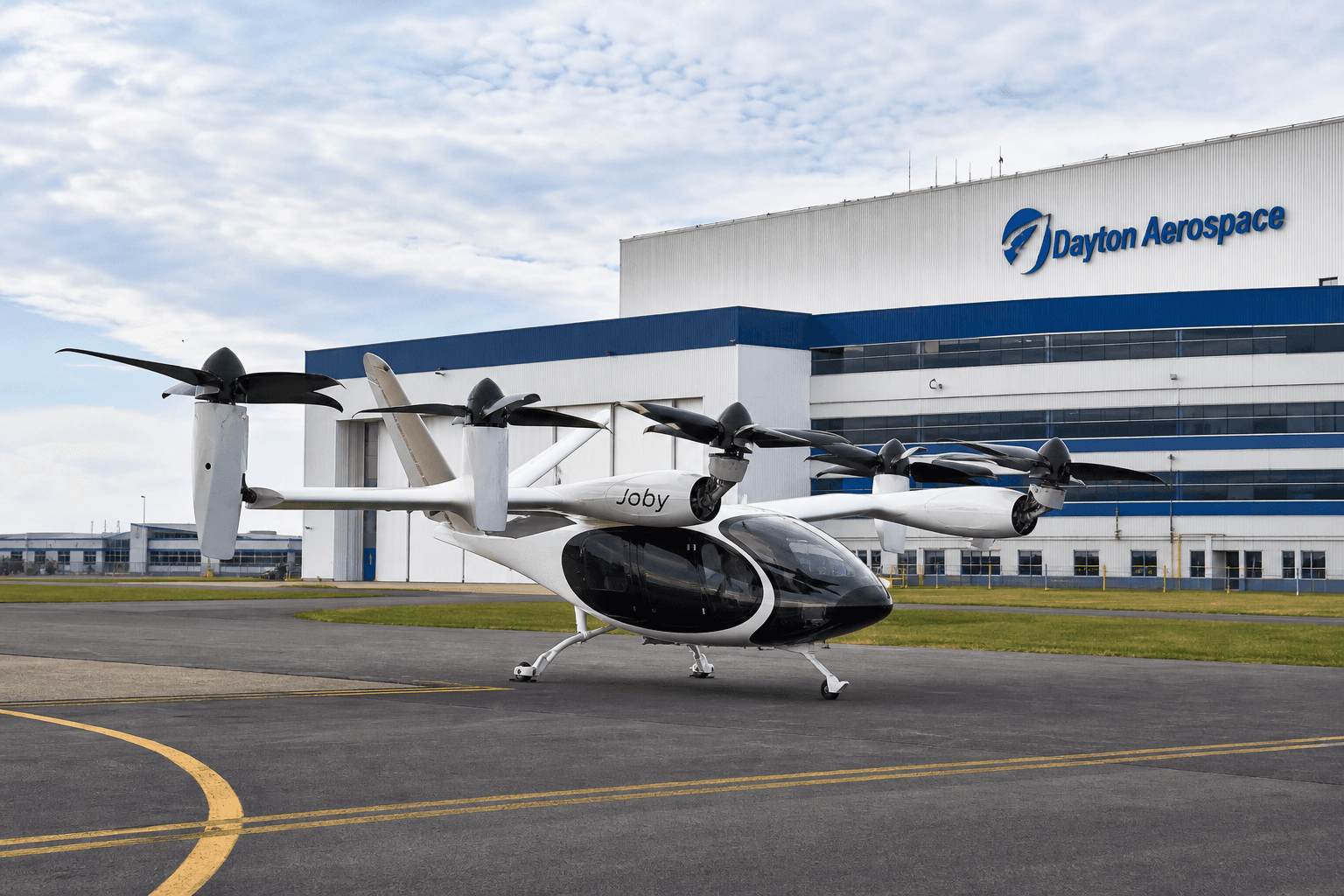
Joby Aviation announced on August 11, 2026, that it has entered into a definitive agreement to acquire Resonant Sciences, a Dayton, Ohio-based defense technology company, for approximately $500 million. The deal gives the California eVTOL developer immediate scale in the defense sector through an already profitable business supporting active US national security programs. Founded in 2015, Resonant designs, manufactures and delivers radio frequency (RF) and mission systems for US national security customers and is a global leader in low-observability technologies, structures and subsystems. The roughly 250-person company also works in advanced sensing, electronic countermeasures, communications and autonomous systems. A profitable defense business Resonant generated more than $100 million in trailing-12-month revenue, up approximately 40% year over year, with adjusted EBITDA margins in the high teens. Bookings in the first half of 2026 were more than three times higher than in the same period of 2025, and backlog more than doubled year over year. Upon closing, Resonant will become Joby's dedicated defense business, continuing to operate under its own name and led by co-founder and CEO J. Micah North. Joby's existing defense initiatives, including the dual-use turbine-electric hybrid aircraft it has been developing with L3Harris since 2025, and its dual-use autonomy stack, will be folded into the new unit, while Joby's commercial organization keeps its focus on certifying and manufacturing its electric air taxi. Joby expands its Ohio footprint Resonant operates approximately 105,000 square feet across seven buildings in the Dayton area, with a further 125,000 square feet under construction, alongside facilities in Virginia, West Virginia, Michigan, Colorado and North Carolina. Combined with Joby's own manufacturing footprint in Ohio , the acquisition will give the companies close to one million square feet of manufacturing, integration and testing space in the Dayton region. JoeBen Bevirt, founder and CEO of Joby Aviation, described the deal as pairing "Resonant's established capabilities with Joby's globally leading aircraft propulsion technologies." North said joining Joby gives his team "additional engineering depth, aircraft platforms, autonomy technology and production expertise." Joby plans to fund the acquisition with approximately $450 million in cash and $50 million in Joby common stock, with certain Resonant employee stockholders retaining an ongoing equity stake. The transaction is expected to close in the first half of 2027, subject to regulatory approval. Joby and Archer go defense shopping The announcement comes a day after Joby's closest rival made an almost identical move. Archer Aviation agreed to acquire Boeing's Wisk Aero, Insitu and SkyGrid subsidiaries on August 10, 2026, a deal built around Insitu, the profitable ScanEagle and Integrator drone maker that generates more than $200 million in annual revenue. Within 24 hours, both leading eVTOL developers had moved to buy their way into established, revenue-generating defense businesses rather than wait for their own military programs to mature.
Rocket Lab debuts GHOST containerized launch system with Alaska pads planned for 2027
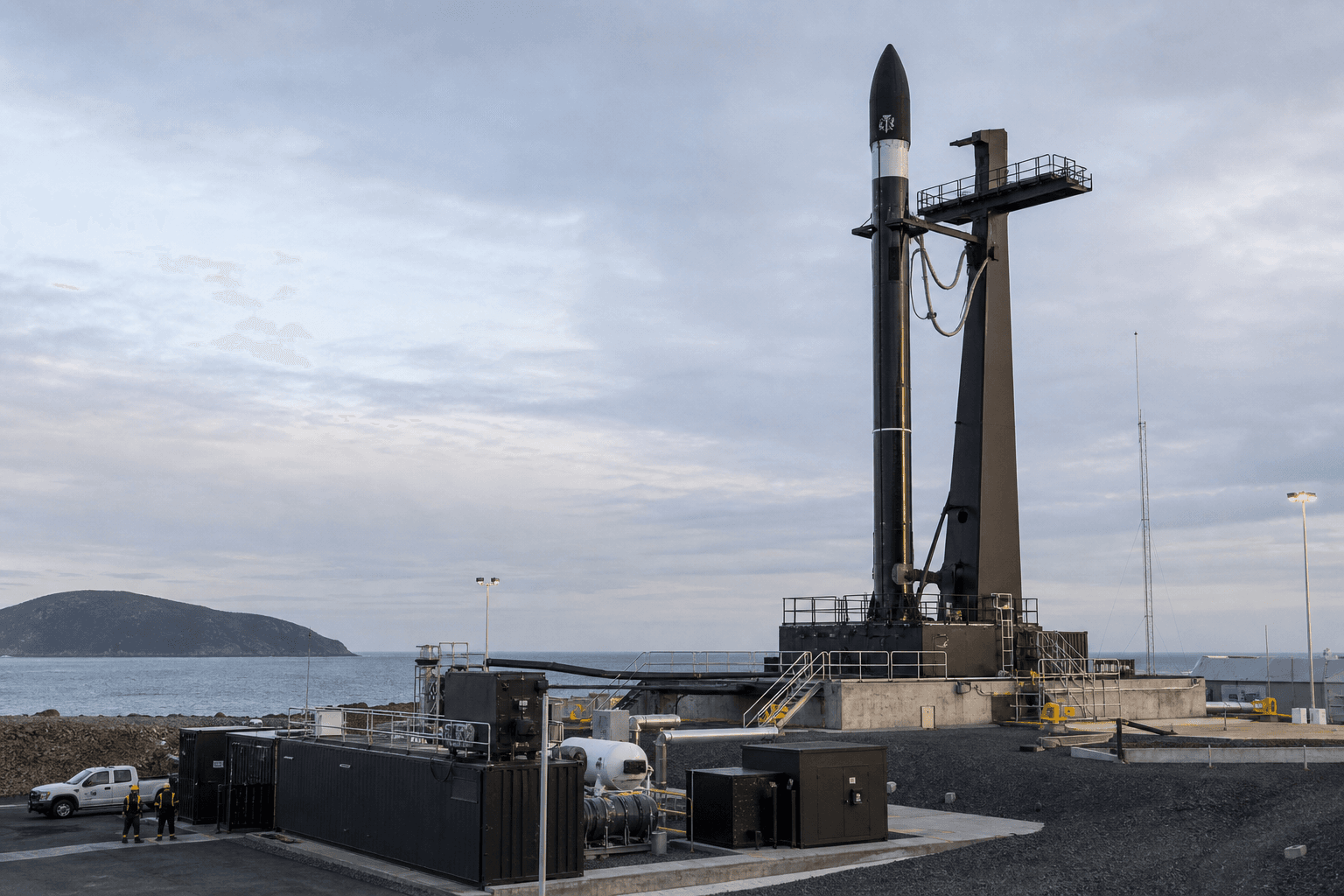
Rocket Lab has unveiled a containerized launch system designed to fly its Electron and HASTE rockets from new locations, starting with a two-pad complex in Alaska in 2027. Announced on August 10, 2026 , GHOST (short for Global Hypersonic & Orbital Spaceport Technology) packages rockets, launch infrastructure, ground support equipment, and range control systems inside standard shipping containers. Rocket Lab said the modular system could be shipped worldwide to establish orbital or suborbital launch capacity for multi-launch campaigns and time-sensitive national security missions, a market it has already targeted with record-setting responsive launches for the US Space Force. Introducing GHOST. We've mastered the art of building launch sites. Now we're making them deployable worldwide. GHOST = Global Hypersonic & Orbital Spaceport Technology. A containerized, deployable launch site system that enables Electron and HASTE launches anywhere,… pic.twitter.com/6Za05Ov2Nn — Rocket Lab (@RocketLab) August 10, 2026 Two new pads planned at Kodiak The first GHOST installation will form Rocket Lab Launch Complex 4 at the Pacific Spaceport Complex-Alaska on Kodiak Island, where the company plans two pads for simultaneous or closely spaced launch operations. Rocket Lab expects the system's operational debut to be a suborbital launch from Alaska in 2027. The two Kodiak pads would expand Rocket Lab's network to six across two hemispheres. It operates Electron pads at Launch Complex 1 in New Zealand and Launch Complex 2 in Virginia, while Launch Complex 3 at the same Virginia spaceport is being prepared for the Neutron rocket. "We've been leading the field in small launch for missile defense and national security for years," founder and CEO Peter Beck said, presenting GHOST as a way to open new trajectories and give allied countries their own launch capacity without building a permanent spaceport. The company did not say how long activating GHOST at a new site takes or how much fixed infrastructure it requires. One system, two rockets GHOST supports both Electron, Rocket Lab's small orbital launch vehicle, and HASTE, its suborbital derivative built for hypersonic and missile defense testing. Because the two share much of their design and ground infrastructure, one installation could host satellite launches and test flights alike. HASTE uses Electron's carbon composite structure and Rutherford engines but swaps the orbital kick stage for one tailored to suborbital payload release. It can carry up to 700 kilograms (1,540 pounds) and deploy them at velocities of more than 7.5 kilometers per second, in configurations for air-breathing, boost-glide, and ballistic reentry payloads. The rocket first flew from Virginia in June 2023 and has since lofted payloads including Australia's DART AE scramjet demonstrator . Alaska buildout follows $266 million US Space Force award Rocket Lab did not identify the customer for GHOST's first mission, but the Alaska development follows a $266 million US Space Force contract awarded in July 2026. The agreement covers 12 suborbital launches, with options for six more, primarily from Kodiak. Rocket Lab called it the largest launch contract in its history and said the missions would support US missile defense development, a segment where it is also working with Raytheon on a space-based interceptor for Golden Dome. Rocket Lab is also establishing Rocket Lab Germany GmbH in Munich to support European satellite manufacturing and Electron and Neutron launch services, building on its acquisition of laser communications firm Mynaric.
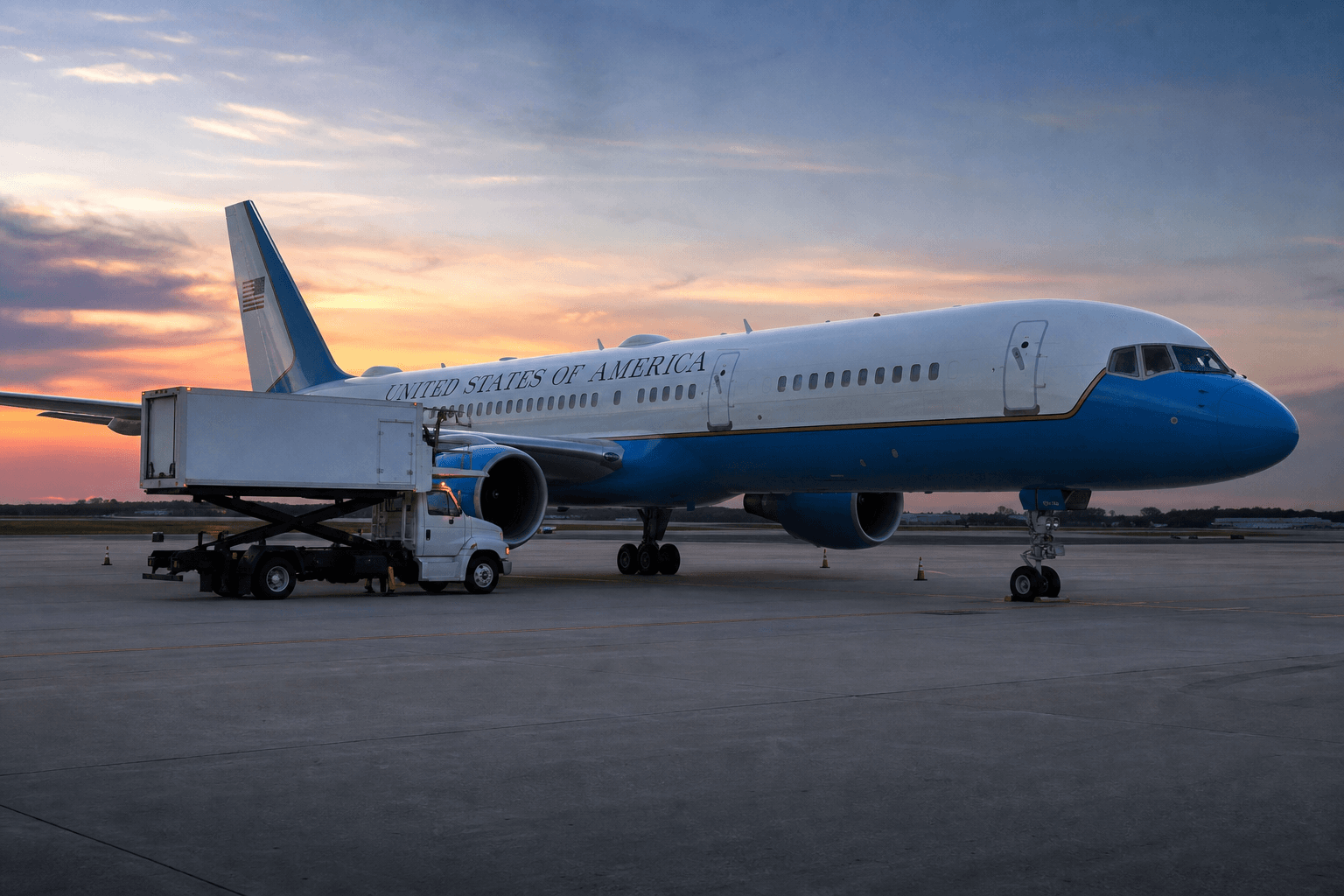
Trump Secretly Shifted from Air Force One to Boeing 757 Amid Iranian Threat in Turkey
President Trump publicly boarded the legacy Air Force One in Ankara, then secretly crossed the tarmac inside a catering truck to a C-32A while reporters and White House staff flew the 747 as a decoy. The operation exposes both why presidential airlift needs redundancy—and why the rushed Qatari "bridge" aircraft is not a true replacement.
The Daily Touch & Go
The day's best aviation news in your inbox. Free, no spam.