

Illustration: The Touch & Go
Trump Secretly Shifted from Air Force One to Boeing 757 Amid Iranian Threat in Turkey
In response to an Iranian assassination plot, President Trump covertly transferred from Air Force One to a C-32A Boeing 757 during a NATO visit to Turkey while reporters flew on the decoy aircraft.
The gist
A secret switch of planes protected President Trump from an Iranian missile threat in Turkey, with decoy tactics fooling press and staff aboard the presidential 747.
Continuing coverage
All Security →- Ex-Flight Attendant Pleads Guilty to Using Fake Pilot ID to Fly Free on Three Major Airlines
- Trump switches from new VC-25B Air Force One mid-trip amid security concerns
- Airport Lounges Face Persistent Theft Despite High Security and Surveillance
- Over 300 Drones Confiscated Near World Cup Venues Amid Strict FAA Restrictions
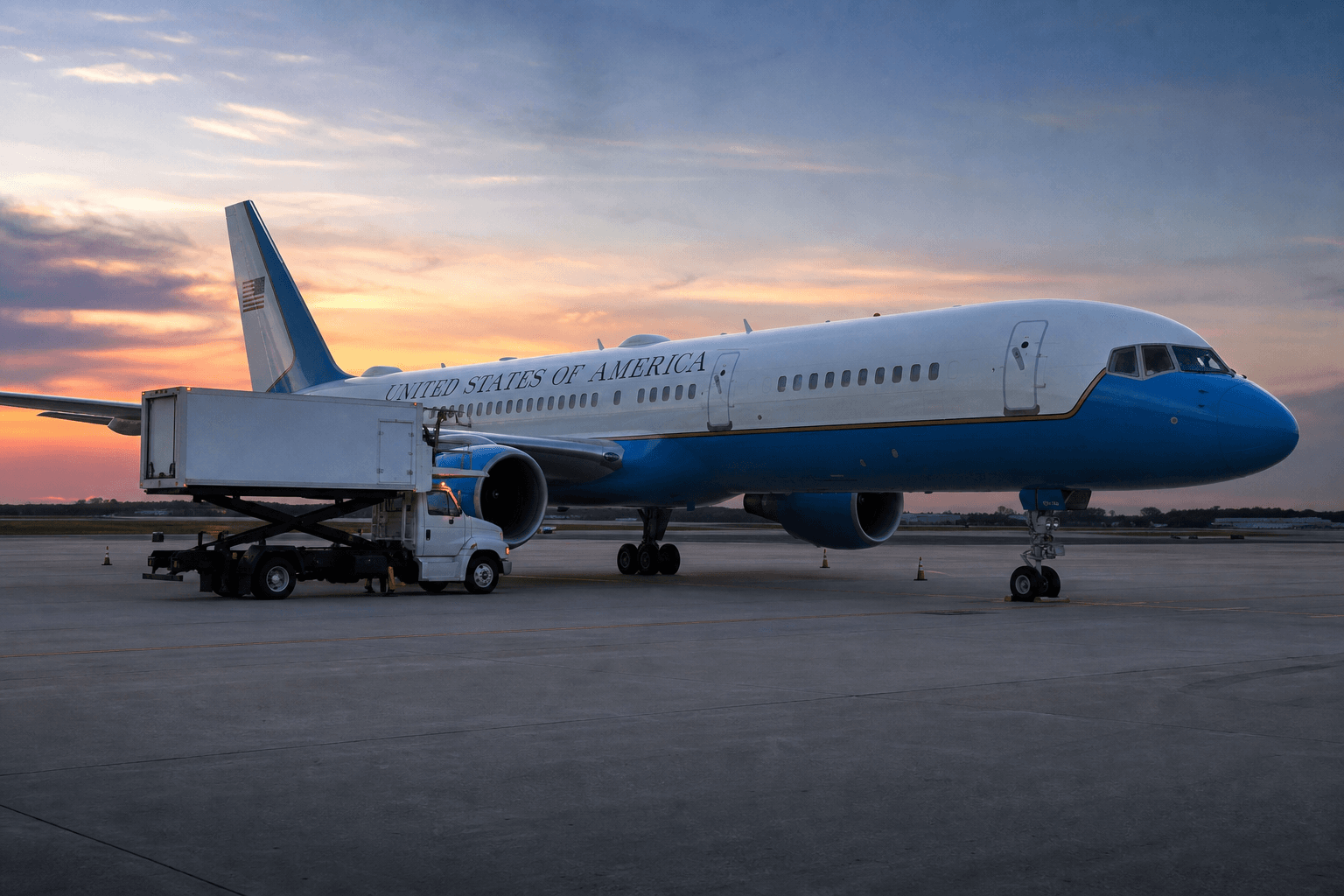
President Donald Trump executed a covert relocation from the publicly visible Air Force One to a Boeing C-32A 757 during a July 2026 trip to Turkey amid credible intelligence of an Iranian assassination attempt. The transfer took place at Ankara’s airport, where Trump first publicly boarded the familiar blue-and-white Boeing 747-8, donated by Qatar and used as Air Force One, only to slip away quietly inside the raised box of a catering truck. This tactical move was intended to thwart a reported Iranian plan to target Air Force One with a missile strike.
The incident unfolded shortly after Trump’s arrival in Turkey for the NATO summit, where he formally boarded the legacy VC-25A 747, but only as a diversion. While reporters and White House officials accompanied the 747, believing it to be the presidential aircraft, Trump, aides, and select personnel were secretly loaded onto a military Boeing 757, designated a C-32A. The catering truck with an elevated compartment transported Trump directly between the two jets on the tarmac, maintaining operational secrecy.
The Boeing 757, under the call sign RCH18 during the mission, departed Ankara for RAF Mildenhall in the United Kingdom, arriving approximately nine minutes ahead of the 747 carrying the press and staff. Upon arrival, Trump was transferred back to the 747, which then continued the journey to the United States. This layered deception was designed to protect the president from the Iranian threat while preserving public appearances and security protocols.
The use of a catering truck to transfer the president between aircraft is highly unusual and underscores the extraordinary nature of the threat. While the legacy VC-25A 747 aircraft possesses extensive defensive systems, the new Qatar-donated Boeing 747-8, recently converted into a flying presidential palace, lacks the full suite of self-defense capabilities and mission systems. This gap reportedly influenced the decision to rely on the older 757 with better protection during the threat period.
The incident highlights the complexity and dangers of presidential travel in hostile environments and raises questions about the adequacy of the newer Air Force One replacement. Unlike the two VC-25As, which have identical backups and full defensive suites, the one-of-a-kind 747-8 conversion remains incomplete in terms of defensive countermeasures. Intelligence assessments warranting such a covert extraction suggest that acceptable risk thresholds were exceeded with the newer plane’s deployment in a high-threat scenario.
This episode also reveals operational sensitivities around the role of Turkish authorities. Coordinating the movements of three U.S. military aircraft, presidential motorcade elements, and the unusual use of a catering truck required significant local compliance despite geopolitical tensions. Turkey’s position as a contentious ally, alongside concerns about Iranian proxy activity inside the country, adds a further layer of complexity to the mission’s success and secrecy.
Historically, somewhat similar aircraft deception tactics have been utilized, such as when President Bill Clinton used a decoy transport and unmarked Gulfstream during a 2000 visit to Pakistan to evade security risks. However, the 2026 operation went a step further by involving the unsuspecting press and staff aboard the publicized Air Force One aircraft, essentially making them unwitting decoys in the broader security maneuver.
While the public faced closed window shades with vague warnings of a dangerous flight, Trump did not accompany them, quietly traveling on the more secure 757. This raises ethical questions about exposing non-target personnel to elevated risks unknowingly during covert presidential security measures. The incident also affirms the persistent modernization challenges for presidential transport and the evolving requirements for defensive readiness in volatile regions.
Frequently asked questions
- Why did President Trump switch from Air Force One to a Boeing 757 in Turkey?
- Due to an Iranian assassination threat involving a plan to fire a missile at Air Force One, Trump was secretly transferred from the 747-8 to a Boeing C-32A 757 with better defensive capabilities during his visit to Turkey.
- How was the presidential transfer between aircraft conducted without the public or press noticing?
- Trump and aides used the raised box of a catering truck to move discreetly from the 747-8 aircraft to the 757 on the tarmac, while reporters and White House staff board and flew on the 747, which served as a decoy.
- What concerns does this incident raise about the newly converted Qatar-donated Air Force One 747-8?
- The 747-8 lacks the full self-defense and mission systems of the legacy VC-25A planes, making it less suitable for high-threat environments such as the one encountered in Turkey, prompting use of the older 757 for security.
Read more
All Military/Defense →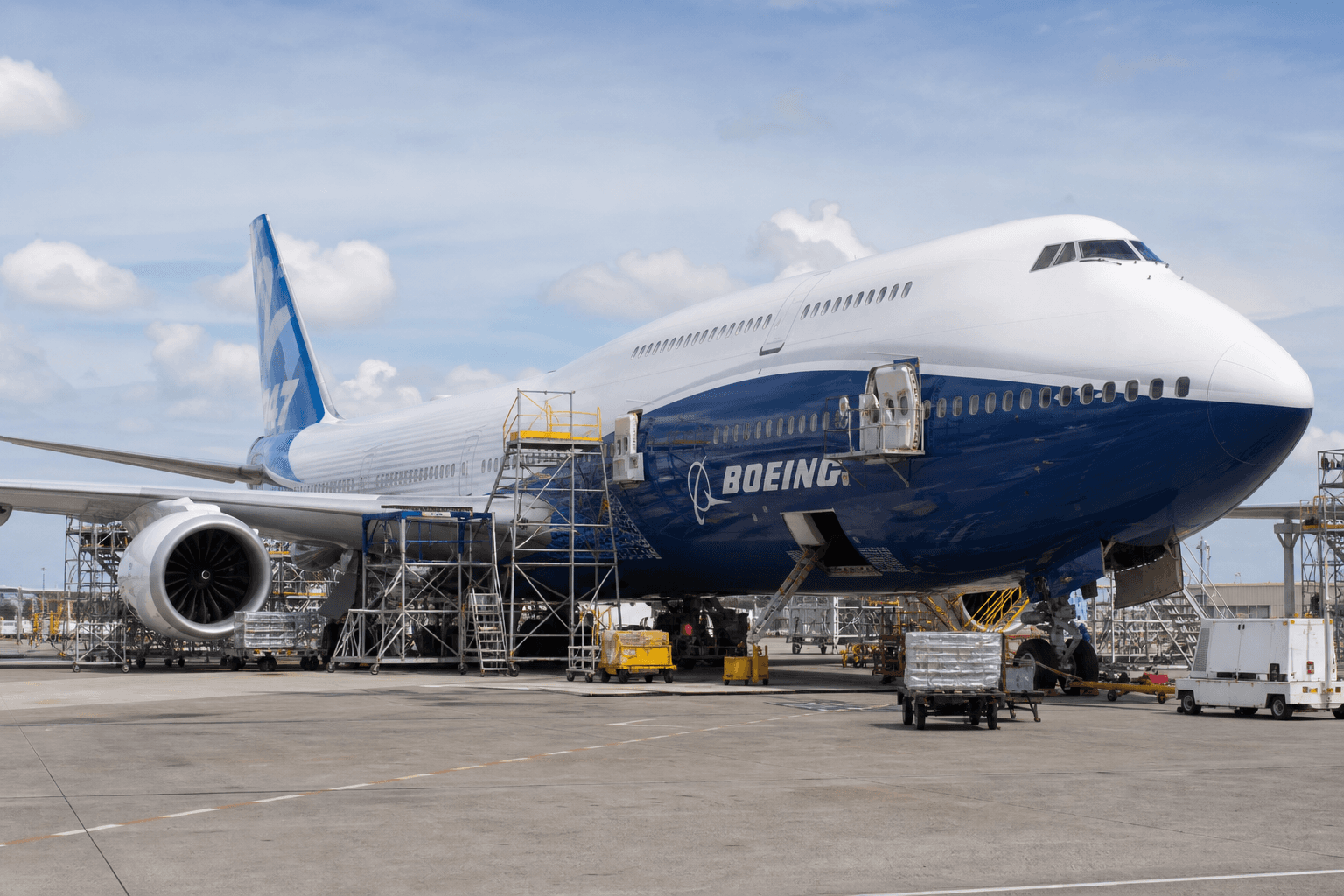
Boeing's VC-25B Air Force One Replacements Delayed to 2028-29 Completion
The Boeing 747 may have ended its commercial production run, but two of the most consequential examples ever built remain deep inside a modification program that has stretched years beyond its original timetable. Boeing 's two purpose-built VC-25B presidential aircraft, which are the long-awaited replacements for the US Air Force's aging VC-25As, were originally expected to be delivered by the end of 2024. Instead, the first aircraft is now scheduled for roughly mid-2028, while the second is expected around mid-2029, according to the latest program reporting summarized by Yahoo Finance .
Turkish Aerospace to Restart T-70 Helicopter Production After US Sanctions Lifted
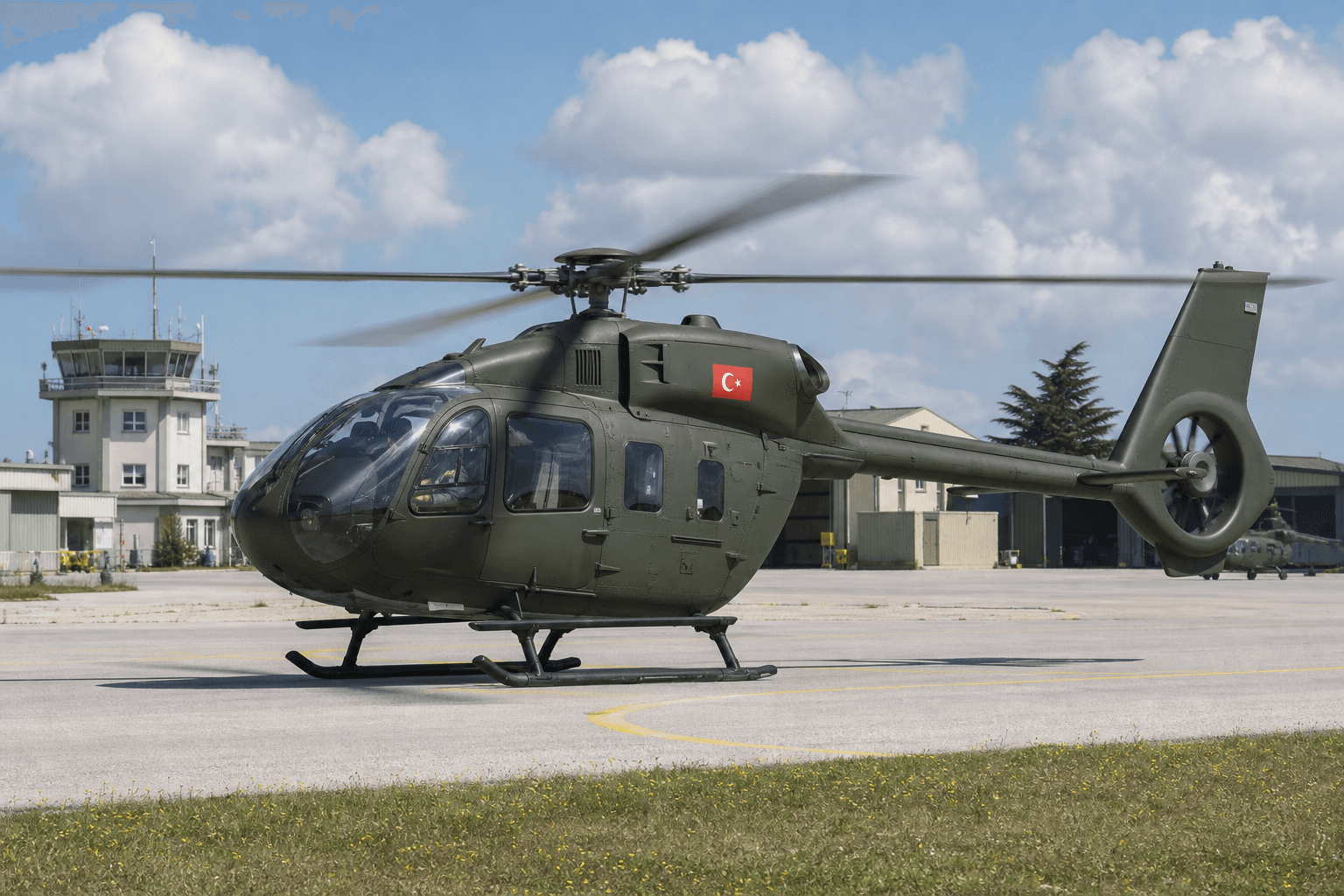
Improved ties between Ankara, Washington lift T-70 programme. Turkish Aerospace (TAI) will resume production of the T-70 utility helicopter – a local variant of the Sikorsky S-70 – following sanctions relief from the US government. "The [T-70] programme has already started again," says TAI chief executive Mehmet Demiroglu, speaking at the recent Farnborough air show. "As of the beginning of this year, we reached an agreement with Sikorsky for another 39 units, and we received export licenses for that programme, so we don't see any problem." The sanctions originally stemmed from Ankara's decision to obtain Russia's S-400 surface-to-air missile system, a move that upset Washington. The administration of US President Donald Trump, however, has aimed to improve ties with Turkish President Recep Tayyip Erdogan. This includes sanctions relief, including the possibility of bringing Turkey back into the Lockheed Martin F-35 programme . Despite the warming ties, Demiroglu indicates that sanctions "inevitably" caused delays to the programme. He indicates that 38 T-70s were completed before the impact of sanctions were felt. The type is operated by the Turkey's air force and army, as well as parapublic agencies. Original plans had called for 109 T-70s to be produced by TAI. Demiroglu indicates that after the upcoming 39-unit batch an additional 32 could be produced, which would bring deliveries to the 109 figure. He hints that the full allotment of T-70s may be needed given that over 200 in-service Turkish military helicopters will be retired by 2040. "So, within that ten-year period the Turkish armed forces will need more than 200 platforms." Based on the S-70, the T-70 features a range of indigenous structures, avionics, and locally produced Tusas Engineering Industries T700 engines. He adds that work continues with the 11t T925 helicopter, which will serve in both civilian and military roles. In addition to supporting Turkish military replacement needs in the 2030s, he expects strong export demand for the type. He estimates overall demand for the platform, which is due to fly in 2027, could see TAI produce 400-500 examples.
Yemen's government strikes Sana'a airport runway to block Iranian Mahan Air flight
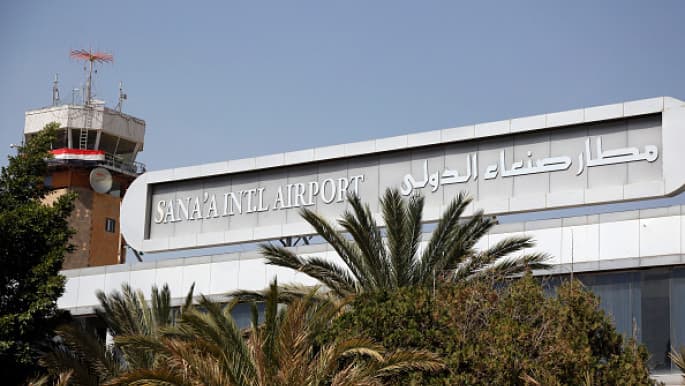
Yemen's Saudi-backed government said it struck the runway at Sana'a International Airport on July 13, 2026, to stop a Mahan Air flight from Iran from landing in the Houthi-controlled capital. Sana'a International Airport is the main airport serving Yemen's capital and the country's Houthi-controlled north. Mahan Air is an Iranian airline that had sought permission to fly a Houthi delegation home from Tehran. The Mahan Air Airbus A340-300 diverted to Hodeidah Airport on Yemen's Red Sea coast and landed there instead, according to officials from both sides of the conflict. Yemen's internationally recognized government said Iran had requested approval for the Mahan Air flight from Tehran to Sana'a. The government rejected the request and accused the Houthis of trying to bring the aircraft into the country without permission from Yemen. Yemen's Defense Minister Taher al-Aqili said government forces struck the airport runway after diplomatic efforts failed to stop the flight. The government operates from the southern city of Aden, while the Iran-backed Houthis control Sana'a. The Houthis said Saudi Arabia carried out the attack and warned that it would retaliate. Saudi officials did not immediately comment on their country's involvement. Footage broadcast by the Houthi-controlled Al-Masirah television network appeared to show bombs striking the airport compound and causing explosions. The flight was carrying Houthi officials who had traveled to Iran for the funeral of the country's late Supreme Leader Ayatollah Ali Khamenei. An Iranian aircraft landed at Sana'a on July 3, and later carried the delegation to Tehran. The Houthis said more than 200 patients and other passengers were aboard the inbound flight. They also accused Saudi warplanes of trying to prevent the aircraft from landing, an allegation Saudi Arabia did not confirm. The July 13 flight was intended to return the delegation to Yemen. Rashad al-Alimi, who leads Yemen's Presidential Leadership Council, said the government offered to bring the officials back aboard a Yemenia flight, but the Houthis insisted on using the Iranian aircraft. Yemen temporarily closed all of its airports after the strike before reopening them several hours later. The attack marked one of the sharpest escalations in years between the Houthis and Yemen's Saudi-backed government. A truce reached in 2022 sharply reduced fighting after years of war, although the agreement did not produce a permanent settlement. Houthi military spokesman Yahya Saree said the airport strike ended the period of de-escalation and "will not go unanswered." UN Special Envoy for Yemen Hans Grundberg said he was concerned that the dispute could lead to a wider confrontation and urged both sides to preserve the relative calm in place since 2022. The Yemeni government said it would use "all available means" against aircraft that enter the country without authorization. It also held Iran responsible for what it described as repeated violations of Yemeni airspace. Neither side released the Mahan Air aircraft's registration or type. Authorities also did not identify the aircraft or weapon used to strike the Sana'a runway.
Flight School Reveals Risks of Multiple Airports in One City Through Real-World Training
The rule at the flight school was that the applicants would have at least two mock check rides in house before they paid $500 or more to a DPE for the real thing. I was designated the check airman for a particular private pilot applicant. His CFI asked me to put the applicant through his paces, showing no mercy, to find the soft spots in his training. I accepted the assignment. The applicant was instructed to create a cross-country VFR flight plan for the mock ride using the weather that was available that morning. He had been told the plan had to be detailed. I wanted to see a door-to-door navlog, complete with time to climb and individual legs, estimated time en route, etc., because you are going to be flying with people you care about, and perhaps someday you will be the person administering the instruction. READ MORE: Teaching Someone to Fly by Osmosis Doesn't Work READ MORE: Restoring Right Stuff Can Build Student Pilot Confidence I am a big believer in encouraging commercial-level performance from day one of training because it's easier to aim high than to have to clean a client up later. The applicant ate this up. His CFI instructed him to create a VFR navlog for a flight from Crest Airpark (S36) south of Seattle to Spokane, Washington. It would have been straightforward, except that there are three major airports in Spokane—Fairchild Air Force Base (KSKA), Spokane International (KGEG), and Felts Field (KSFF). The applicant planned for KGEG because he had flown there on a family vacation. Unfortunately, the DPE asked the applicants to plan for KSFF. What we had here was either a failure to communicate or expectation bias. The learner’s confusion presented a teachable moment. Airports are often named for the largest city within the region, and when there is more than one large airport in the vicinity, it can be confusing. Visit a website like AirNav.com and drop "Seattle" into the search box, and you will get no fewer than 14 responses. Two of them are seaplane bases, nine are heliports, and three are used by airplanes—King County International-Boeing Field (KBFI), Seattle-Tacoma International (KSEA), and Seattle Paine Field International (KPAE). Telling a student pilot—or anyone else unfamiliar with the Seattle area—to "plan a flight to Seattle" will likely result in confusion, especially if they intend to fly into Boeing Field or Sea-Tac. The airports are 5 nm apart, which doesn't give a pilot a lot of time to correct a mistake during approach. The FAA (or its precursor, the Civil Aeronautics Administration) figured this out decades ago and decided to split the alphabet when it came to identifying the automatic terminal information system at these airports. The designation Alpha to Mike belongs to Sea-Tac. November to Zulu belongs to KBFI. The pilots accessing the ATIS for "Seattle" have a better chance of getting the correct information when they know the alphabet split. Runway Alignment Adding to the confusion of airport identification is that runways are usually aligned into the prevailing winds. To some extent all airports can look alike from the air, especially for a low-time or unfamiliar pilot. According to instructors I know from Wisconsin, before GPS and the magenta line became ubiquitous in the aircraft, it was not terribly uncommon for student pilots to get confused when they attempted to fly to either Wittman Regional Airport (KOSH) in Oshkosh or Fond du Lac County Airport (KFLD), which is 13 miles to the south. Both airports have runways aligned 18/36 and 09/27. I was skeptical when I heard this as KOSH is towered, and KFLD is not, and the runways are smaller—18/26 (5,941 by 100 feet) and 09/27 (3,604 by 75). However it's been a long time since I was a student pilot. Instructors who take their learners to the airports—sometimes on the same day—point out the differences such as the crosswind runways at KOSH—05/23 (3,424 by 75) and 13/31 (3,061 by 75)—which, so say the CFIs, are sometimes mistaken for taxiways. Aviation professionals can get confused as well. In 2004 a corporate pilot who thought he was ostensibly lined up for Runway 31 at KBFI in VFR conditions was, in reality, lined up for Runway 34 at Renton Municipal Airport (KRNT). The airports are 4 nm apart, basically side by side with a greenbelt and a freeway between them. Approaching from the south, as this pilot was, you see KBFI first and a moment or two later KRNT—unless you are slightly to the east, in which case you notice the lake off the north end of the runway at Renton and fixate on that until the runway comes into view. Since it was afternoon, the flat light made it challenging to see details on the ground. The pilot was talking to Boeing tower. So was I, as I was at the end of an IFR approach operating in VFR conditions, preparing to configure the aircraft for landing. I was ahead of him in my mighty Cessna 172, and keeping my speed up as requested. The controller must have noticed the corporate jet was slightly off course, because the controller asked him to verify which airport he wanted to go to. When the jet pilot replied he was lined up on Boeing, the controller replied he wasn't, then asked if he saw the red-and-white Cessna ahead of him and slightly to his left in the 11 o'clock position. At this point my copilot started to frantically look over her shoulder to make sure we weren't about to get run over—we weren't. Boeing tower then asked me to rock my wings, which I did, with the enthusiasm of a pilot over FISK inbound to Oshkosh. The jet replied he had us in sight, and was instructed to follow us in. We were assigned the little runway. We were down and clear when the jet landed on the big runway. The jet parked at the FBO next door to the flight school. Shortly after landing, the pilot came over and thanked us for the help—he explained he got confused because he knew Boeing had a facility in Renton. "Here too," I replied, pointing across the runway at the ginormous buildings with "BOEING" on them. Tips for Avoiding Airport Confusion When planning a flight, always double-check the airport identifier. Don't rely on the name of the city because this can be misleading. Mexico Memorial Airport (KMYJ), for example, is in Missouri. Look up the details of the airport in the FAA Chart Supplement for the most pertinent information including runway length, alignment, and lighting systems. This is particularly critical at night when ground clutter can make it difficult to discern an empty parking lot with light stands from runway approach lights. Check reliable online airport information pages, as they often have details about nuances of the airport—for example, "do not mistake automobile track west of the airport for the runway." Pay special attention to communication frequencies, and when making radio calls to nontowered airports, begin and end each transmission with the name of the facility you are talking to.
The Daily Touch & Go
The day's best aviation news in your inbox. Free, no spam.