

Illustration: The Touch & Go
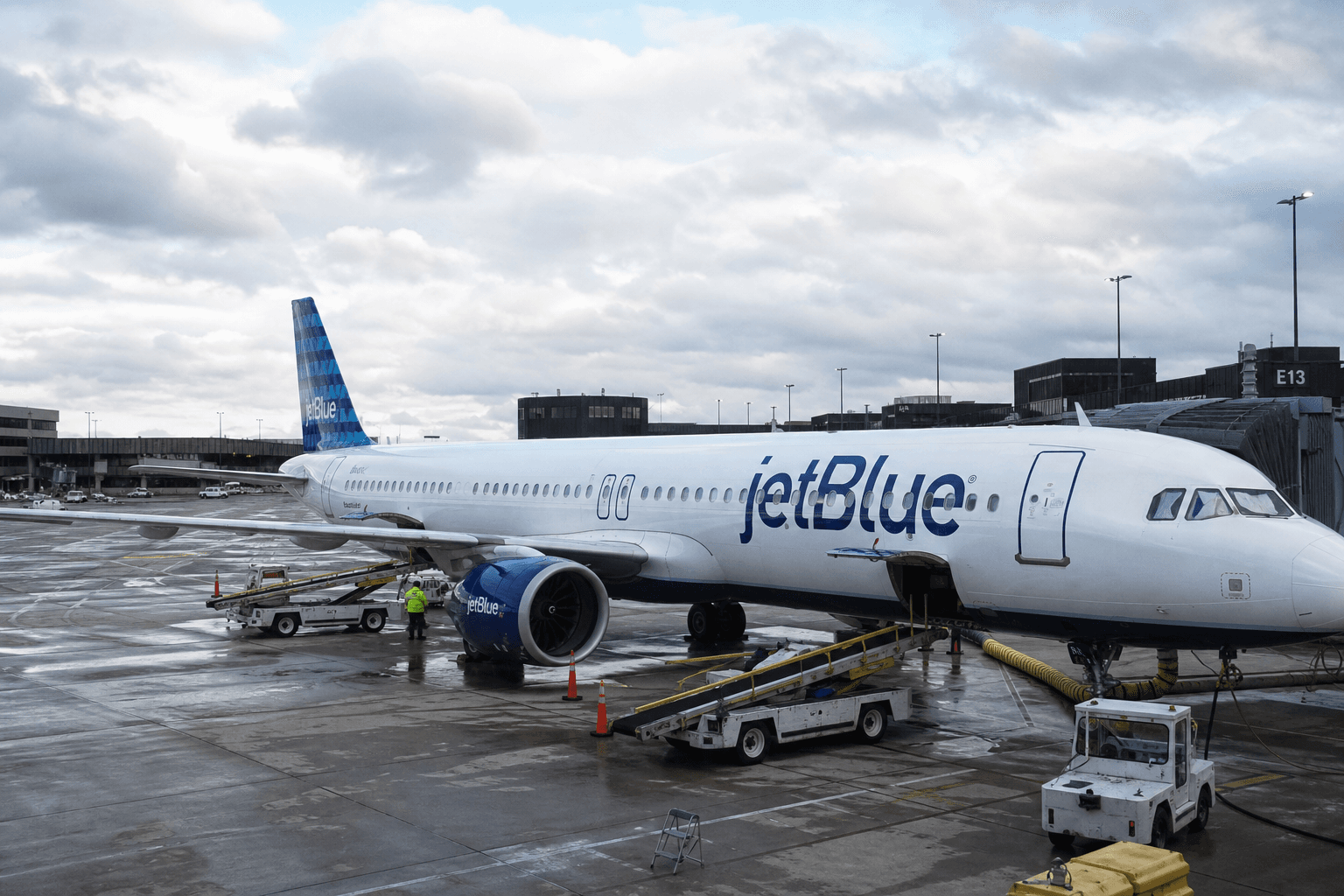
JetBlue Cancels Boston-Barcelona Flights as Pilot Delays Hit Transatlantic Routes
JetBlue canceled multiple Boston-to-Barcelona flights after pilots were delayed on domestic flights deadheading to Boston, revealing ongoing operational challenges for the airline.
The gist
Pilot delays force JetBlue to cancel key transatlantic flights from Boston amid persistent operational issues.
Continuing coverage
All Jetblue →- JetBlue Posts 14.5% Revenue Growth in Q2 2026, Reinstates Full-Year Outlook
- JetBlue Offers $5,000 Bonuses to Flight Attendants Amid Severe Staffing Crisis
- JetBlue's Mint Studio Emerges As Premier Transcon Business Class Amidst Competitive Pricing
- JetBlue Secures 22 Former Spirit Slots at LaGuardia for $58.5M, Plans Expansion
- JetBlue shifts Boston-Amsterdam route to seasonal schedule starting late 2026
JetBlue has recently canceled two Boston-to-Barcelona flights due to unforeseen pilot availability issues stemming from delays on connecting domestic flights. The pilots assigned to these transatlantic flights were scheduled to deadhead from New York JFK to Boston Logan to operate the service, but significant air traffic control restrictions delayed their inbound domestic flights, preventing them from arriving on time to legally operate the cross-Atlantic journeys. This situation forced JetBlue to cancel flights on August 6 and again on August 8, highlighting operational vulnerabilities in the airline's scheduling and crew deployment.
Securing replacement pilots for these long-haul transatlantic flights at short notice is a complex challenge. Pilots must hold an ‘Atlantic European’ qualification involving specialized training for flying over oceanic routes without radar coverage and adhering to differing air traffic control procedures across the Atlantic. This qualification is not widespread among JetBlue's Boston-based pilots, resulting in a limited reserve pool ready to step in for these international flights, especially on short notice or during disruptions.
In addition to the canceled Barcelona flights, JetBlue’s Boston-to-Paris Charles de Gaulle service experienced a significant delay exceeding four hours on August 10. The flight ultimately departed after 1 a.m., with sources indicating that multiple crew members called out citing fatigue as the reason for their absence. This fatigue-related crew shortage suggests ongoing strain on JetBlue’s operational manpower, compounded by pressure to maintain schedules amidst recent disruptions.
JetBlue has been contending with a so-called Level 2 operational alert for several weeks, indicating sustained operational pressures. The airline attributes some of these difficulties to persistent adverse summer weather patterns, particularly thunderstorms affecting Northeast hubs such as New York JFK and Boston Logan. These weather events have caused a string of ground delays and disrupted the airline’s ability to recover and stabilize its schedule effectively.
To address crew availability shortages, JetBlue instituted bonus schemes for flight attendants to incentivize covering additional flying hours on their days off. The airline offers flight attendants bonuses up to $4,000—awarded as Crewbucks, which can be redeemed for confirmed flights or converted to cash—to encourage increased participation in covering schedule gaps. However, insiders report that the threshold of additional work required to earn the maximum bonus is exceptionally high and may be unattainable for many crew members.
Despite these bonus incentives, fatigue-related crew absences remain elevated, especially amid extended duty days caused by delays related to weather and air traffic control restrictions. The high incidence of fatigue callouts signals ongoing workforce stress which JetBlue must manage carefully to maintain operational safety and regulatory compliance with crew duty hour limitations.
The root causes combine operational complexity with environmental factors. Deadheading flights count toward a crew member’s maximum permitted working hours, constraining JetBlue’s flexibility in reassigning pilots once delays occur. Coupled with a scarcity of Atlantic-qualified pilots based in Boston, the airline is compelled to operate on a thin margin, vulnerable to cascading delays and flight cancellations when disruptions occur upstream in the network.
This series of cancellations and delays on critical transatlantic routes reflects the structural challenges JetBlue faces as it manages international long-haul services alongside its domestic operations. The airline’s difficulties in crew positioning, compounded by persistent weather obstacles, have revealed fragile points in its operational resilience currently impacting customer reliability and schedule integrity.
JetBlue’s operational alert status and their ongoing struggles to maintain staffing levels amidst fatigue and complex scheduling constraints indicate that the airline’s transatlantic expansion faces significant hurdles. Finding and training more Atlantic-qualified pilots and implementing more robust recovery plans will be vital as JetBlue strives to improve reliability on these key international corridors.
Frequently asked questions
- Why did JetBlue cancel its Boston-to-Barcelona flights recently?
- JetBlue canceled the flights because the pilots assigned to operate them were delayed on connecting domestic flights deadheading from New York to Boston, causing them to miss the legal duty window to operate the transatlantic flights.
- Why is replacing pilots for transatlantic flights at Boston difficult for JetBlue?
- Replacing pilots is difficult because transatlantic routes require pilots to have special ‘Atlantic European’ qualifications, which are limited among Boston-based crews, reducing the available reserve for short-notice substitutions.
- What measures is JetBlue taking to address crew shortages and flight disruptions?
- JetBlue has offered bonuses of up to $4,000 in Crewbucks to flight attendants for picking up extra flying shifts and is attempting to stabilize its operation despite elevated crew fatigue and persistent operational pressures.
Read more
All Airports →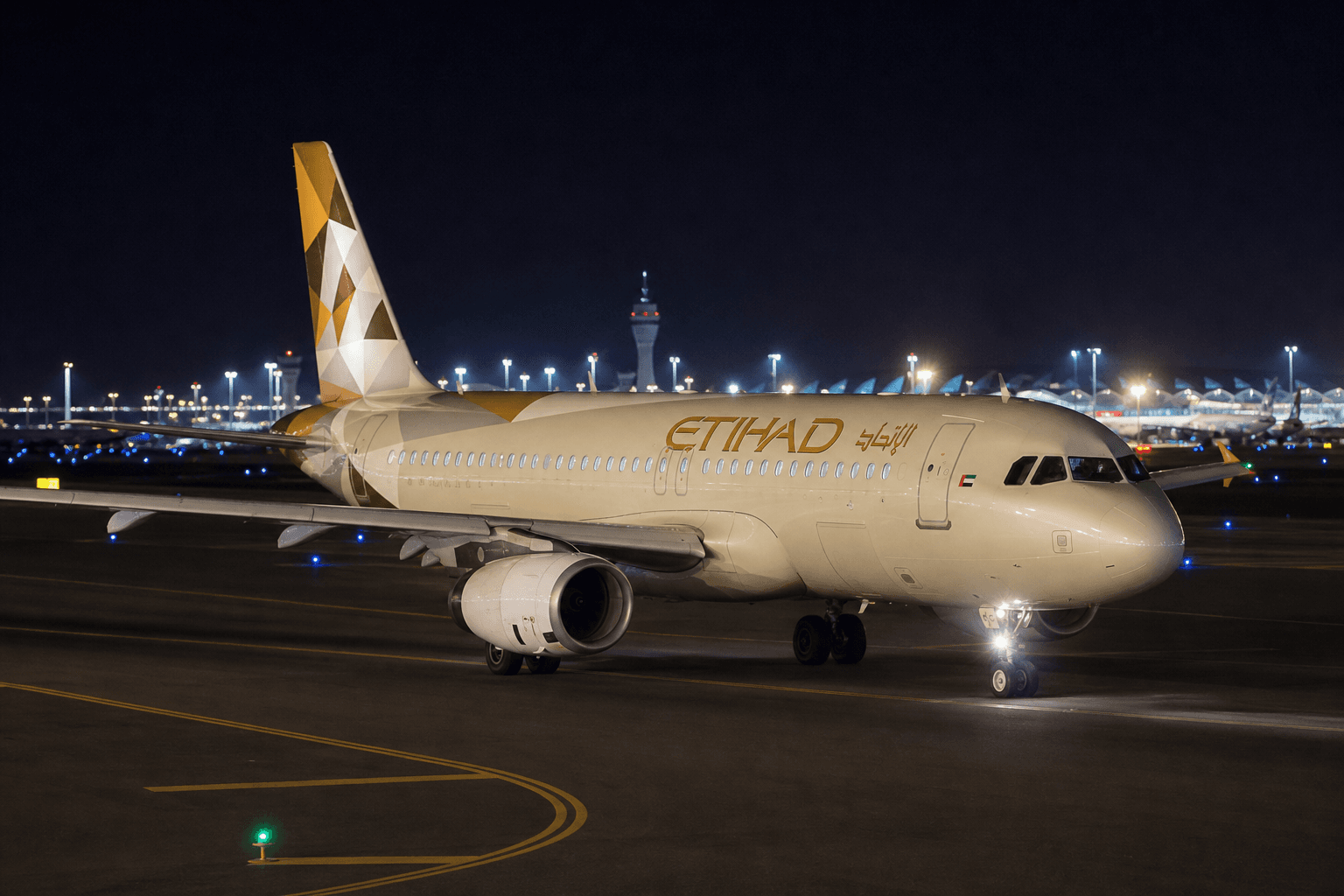
Etihad Airways inaugurates daily nonstop Abu Dhabi-Tashkent A320 service with full bookings
Etihad Airways has launched its first-ever route to Uzbekistan, with the airline celebrating a sold-out inaugural flight to Tashkent that opens a new gateway between Abu Dhabi and Central Asia. The UAE's national carrier is now operating a daily nonstop service between Zayed International Airport (AUH) in Abu Dhabi and Tashkent International Airport (TAS), connecting Uzbekistan directly to Etihad's broader global network. Flight schedule From August 9 to September 1, 2026, flight EY830 departs Abu Dhabi at 20:35 local time and arrives in Tashkent at 02:05 local time the following day, while the return flight, EY831, departing Tashkent at 03:25 local time and arriving in Abu Dhabi at 06:55 local time. Both flights operate daily using an Airbus A320. Starting September 1, 2026, the schedule will shift slightly: EY830 will depart Abu Dhabi at 21:20 local time and arrive in Tashkent at 01:50 local time the next day, while EY831 will depart Tashkent at 03:35 local time and arrive in Abu Dhabi at 06:25 local time, continuing on a daily basis with the same aircraft type. Strengthening ties between the UAE and Uzbekistan Etihad said the new route reinforces Abu Dhabi's role as a global gateway, giving travelers from Uzbekistan seamless access to major hubs across several regions through a single connection point. Tashkent, we've arrived Etihad has launched its new daily non-stop service between Abu Dhabi and Tashkent, marking our first route to Uzbekistan and opening a new gateway to Central Asia. Through our codeshare with Uzbekistan Airways, guests can also connect beyond… — Etihad Airways (@etihad) August 10, 2026 The launch also builds on the airline's recently introduced codeshare agreement with Uzbekistan Airways, which extends connectivity beyond Tashkent to eight additional cities in the country: Andijan, Bukhara, Fergana, Namangan, Nukus, Samarkand, Termez, and Urgench, along with select international destinations on the Uzbekistan Airways network. For travelers heading into Abu Dhabi, the route offers access to attractions such as the Sheikh Zayed Grand Mosque, Saadiyat Island's cultural offerings, and the entertainment options on Yas Island. In the other direction, the new service opens the door to Uzbekistan's own gems, including the historic architecture of Samarkand and Bukhara and the growing modern development of Tashkent. Etihad highlights growth potential in Central Asia Speaking at the launch event, Frank Meyer, Chief Digital Officer of Etihad Airways, called the inaugural flight a proud milestone for the airline's continued network expansion. He described Uzbekistan as one of Central Asia's most dynamic and fastest-growing markets, citing its cultural heritage, tourism appeal, and rising economic significance. Meyer said the new daily nonstop service effectively opens a new gateway linking Central Asia with the rest of the world, giving travelers smooth connections through Abu Dhabi to Etihad's expanding network, backed by the airline's premium service standards. Etihad said the route is intended to meet growing demand for travel between Uzbekistan, the UAE, and other international markets, supporting stronger tourism flows and business connectivity in both directions. The airline noted that the Tashkent launch is part of its broader strategy to connect high-potential markets to Abu Dhabi, reinforcing the emirate's position as a link between East and West. RELATED Etihad Airways and Air Peace sign interline agreement to expand connectivity
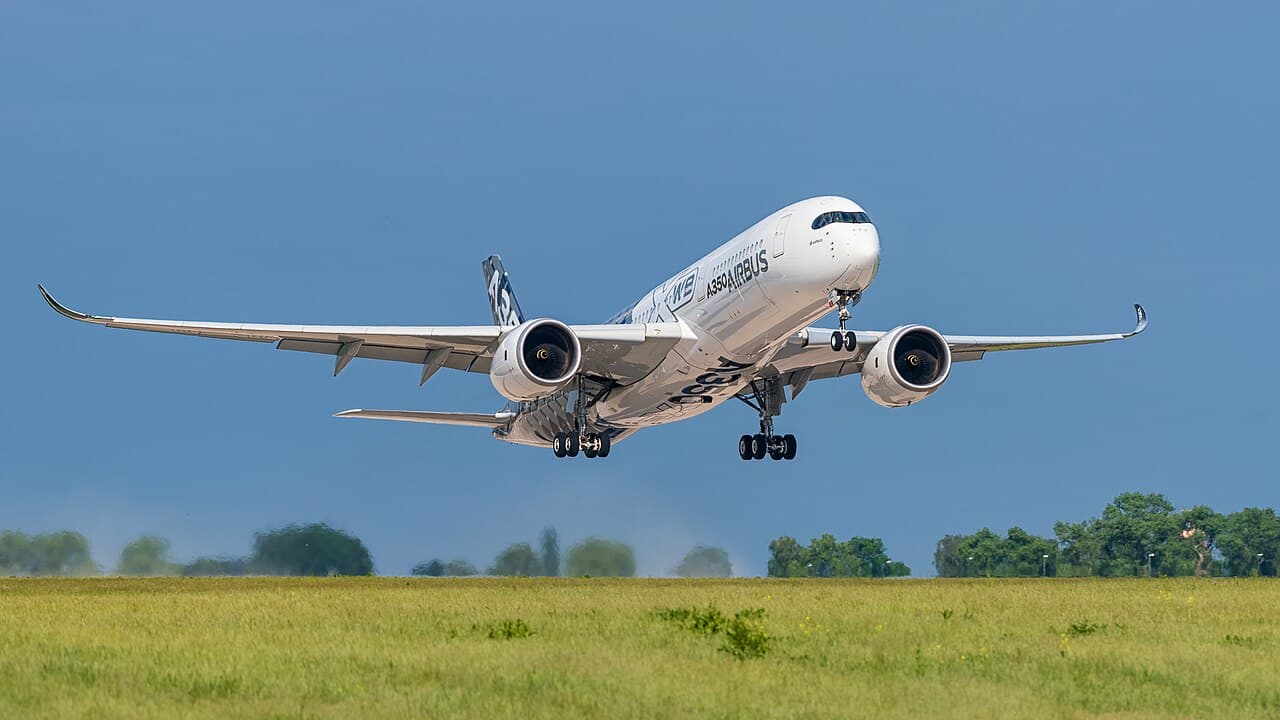
Qatar Airways Deploys Airbus A350 on Shortest Commercial Flight from Doha to Bahrain
Qatar Airways was the launch customer of both the Airbus A350-900 and the Airbus A350-1000. The airline is used to flying its array of widebody aircraft (including its A350s) on particularly short flights. They help to provide capacity to feed its Doha Hamad International Airport (DOH) hub.
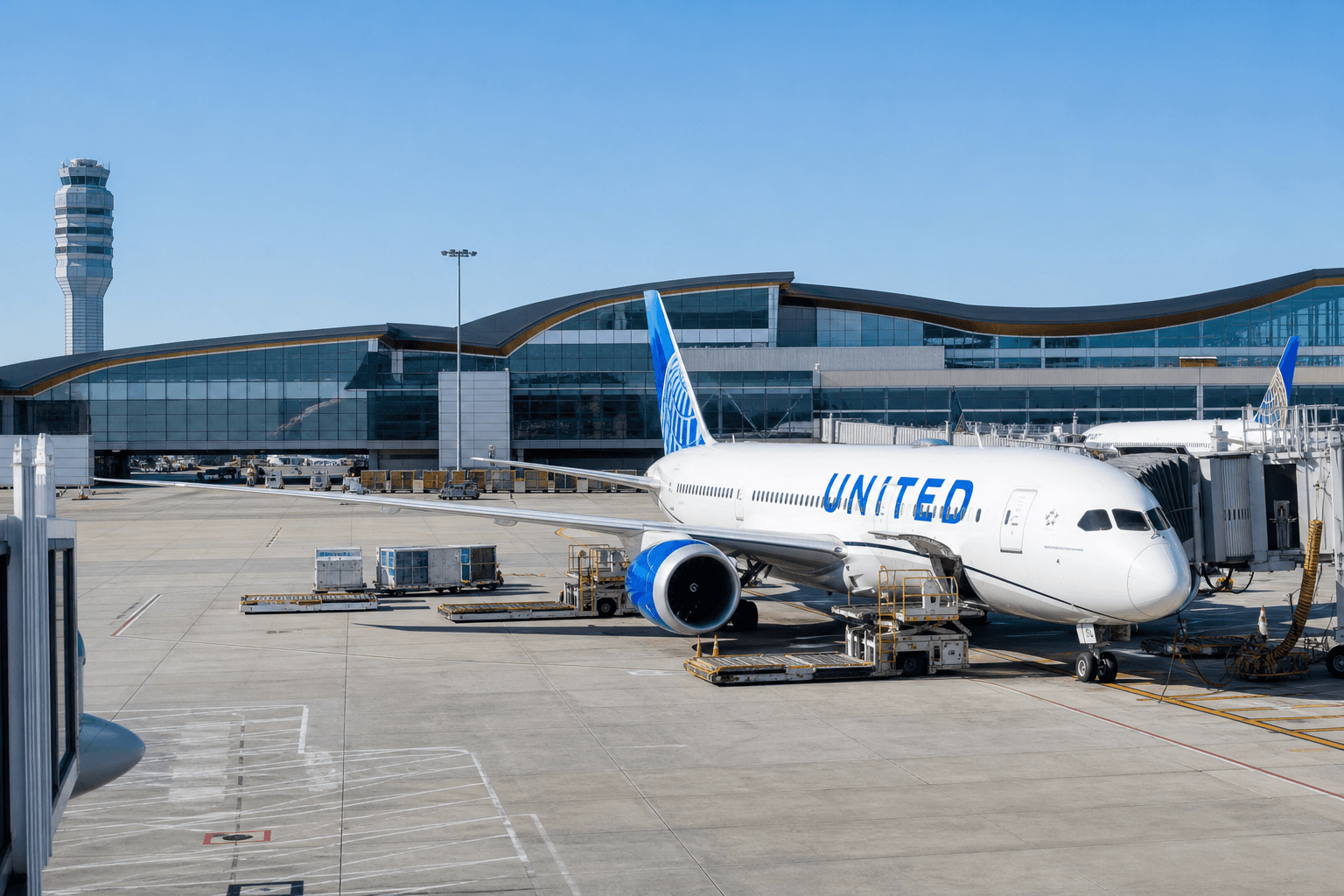
United Airlines Partners to Transform Washington Dulles into Modernized Hub with $22.5B Overhaul
President Donald Trump used a laser pointer and architectural renderings in the Oval Office to deliver a blunt verdict on Washington Dulles International Airport (IAD): the capital's primary international gateway is "the worst airport." His proposed $22.5 billion answer includes more than 5 million sq feet (0.4 million sq meters) of new or renovated space, replacement concourses, expanded rail and walking connections, a vast close-in parking garage, and the eventual retirement of Dulles' distinctive mobile lounges.
Iberia to Launch Exclusive Madrid Lounge for Oneworld Emerald Travelers in September
Iberia is planning on opening a new lounge at Madrid-Barajas Airport (MAD), and it'll be the carrier's most exclusive lounge to date (thanks to Alexfly for flagging this). It's always nice to see airlines introducing new premium facilities, so kudos to Iberia! Exclusive new Iberia lounge coming to Madrid Currently, Iberia has two primary lounges at its Madrid hub, broken up by Schengen and non-Schengen flights . Iberia's lounge portfolio is solid, and both lounges are quite good in their respective sets , with many particularly liking the non-Schengen lounge. These are both standard oneworld lounges in terms of access requirements, and are open to all oneworld business class passengers, as well as oneworld Sapphire members and above. Soon we're going to see the opening of an additional lounge, as Iberia will be opening a lounge exclusively for oneworld Emerald members , which is the highest tier in the alliance. The lounge is located in the Schengen area, next to the existing Dali Lounge, so it's intended primarily for regional flights. The lounge is expected to be fully operational somewhere around September 7-10, 2026 (I've heard people "definitively" say the 7th, 8th, 9th, and 10th, so make of that what you will). Interestingly, though, the lounge is already partly operational, in a soft opening phase. What's happening is that select top tier elites with Iberia are already being invited to the new lounge, either via an email before their trip, or they're being directed to the new lounge after arriving at the Dali Lounge. Right now this seems to just be for select Iberia Club members with oneworld Emerald status, and not for oneworld equivalents. You can find some first pictures of the lounge shared by FlyerTalk members here and here . The idea is that the lounge has a new design, and elevated food and drinks, including some sort of a table service offering. Iberia is opening a new lounge for oneworld Emeralds This is a nice passenger experience investment The general concept of oneworld Emerald lounge access is that these elite members get access to first class-style lounges . The catch is that some oneworld first class lounges, like the British Airways Concorde Room and Qatar Airways Al Safwa Lounge , exclude oneworld Emerald members. In those cases there are typically alternative lounges available, but they're not the same quality. What I find especially nice is when oneworld airlines without first class lounges put in the effort to open a dedicated facility for oneworld Emerald members. The Finnair Platinum Wing Helsinki is probably the best example of this, as it's a truly lovely and very high quality lounge that I always enjoy visiting. So it's great to see Iberia now joining that "club," and offering a premium lounge that doesn't even reflect a class of service being offered. Finnair has a special lounge for oneworld Emerald members Bottom line Around September 10, 2026, Iberia will be formally opening a new lounge at Madrid Airport, intended exclusively for oneworld Emerald members. This is located in the Schengen area, right next to the existing Dali Lounge. The space is already in a soft opening phase, with select Iberia Club elites being invited there, and it seems to offer much improved food and drinks, plus a more modern design. Well done, Iberia, and I look forward to checking this space out! What do you make of Iberia's new lounge plans for Madrid?
The Daily Touch & Go
The day's best aviation news in your inbox. Free, no spam.