


Polish Navy to Deploy Shield AI's V-Bat VTOL for Enhanced Maritime Surveillance
Poland's navy is set to integrate Shield AI's V-Bat autonomous VTOL aircraft to boost maritime intelligence and domain awareness from naval vessels.
The gist
Poland orders Shield AI's V-Bat VTOL UAS to enhance naval maritime surveillance and intelligence capabilities.
The Polish navy is upgrading its maritime surveillance capabilities by acquiring the V-Bat unmanned aircraft system (UAS) from Shield AI, a US-based aerospace company. Announced on June 23, this procurement contract with Poland's Armament Agency signals a strategic move to improve maritime domain awareness and intelligence, surveillance, and reconnaissance (ISR) capacity. The V-Bat is a tail-sitting vertical take-off and landing (VTOL) drone designed for shipboard deployment, enhancing operational flexibility for the Polish naval forces.
Shield AI did not disclose the exact number of V-Bat units ordered by Poland but emphasized the aircraft's role in maritime operations. The V-Bat distinguishes itself with its autonomy and VTOL capability, operating from surface vessels without the need for traditional runway infrastructure. This feature positions it well for operations in the Baltic Sea, where environmental and logistical challenges demand versatile air platforms capable of enduring harsh weather and sea states.
The company has previously supplied the V-Bat to several other nations with naval applications, including Greece, Japan, the Netherlands, and the US Navy. This growing adoption underscores the V-Bat's operational reliability and effectiveness in varied maritime contexts. Shield AI's president, Ryan Tseng, highlighted the drone's proven performance in complex environments, such as Ukraine, where signal denial and communication disruptions present significant challenges to unmanned systems.
Key to the V-Bat's attractiveness for naval missions is its endurance, with the aircraft capable of flying for more than 12 hours on a single mission. This extended operational time allows for persistent ISR coverage over maritime zones and critical infrastructure. Additionally, the V-Bat can perform autonomous launch and recovery from ship decks without requiring additional crew or complex support equipment, enhancing its deployability and reducing manning requirements aboard vessels.
Polish operational planners have identified increasing security risks against essential energy and communications infrastructure in the Baltic region. The V-Bat's reliable sensor suite and autonomous capabilities aim to provide commanders with enhanced visibility of maritime activities and potential threats. The UAS's ability to operate in all weather conditions further ensures continuous surveillance capabilities, contributing to national and regional maritime security interests.
The V-Bat is part of Shield AI's growing portfolio of unmanned air systems, distinct from its larger X-Bat platform that is designed as a jet-powered tactical fighter with vertical launch and recovery from rails. While the X-Bat is still in the prototype and flight test phase, the V-Bat has transitioned into operational service with multiple navies. Poland's selection of the V-Bat reflects an emphasis on proven, cost-effective solutions for maritime ISR over experimental combat UAVs.
This acquisition aligns with broader trends in naval modernization, where unmanned systems are increasingly integrated into surface fleet operations to extend sensing reach and reduce risk to personnel. Using platforms like the V-Bat, navies can monitor vast maritime areas, detect hostile activity, and protect critical infrastructure with greater agility. The deal with Poland is one among several international contracts that illustrate Shield AI's expanding footprint in naval unmanned aviation.
By introducing the V-Bat into its forces, the Polish navy stands to benefit from advanced autonomous capabilities that improve situational awareness and operational tempo. This capability could prove vital in maintaining security in the Baltic Sea, a theatre growing in strategic significance amid shifting geopolitical dynamics and evolving threats to maritime infrastructure.
Read more
All Military/Defense →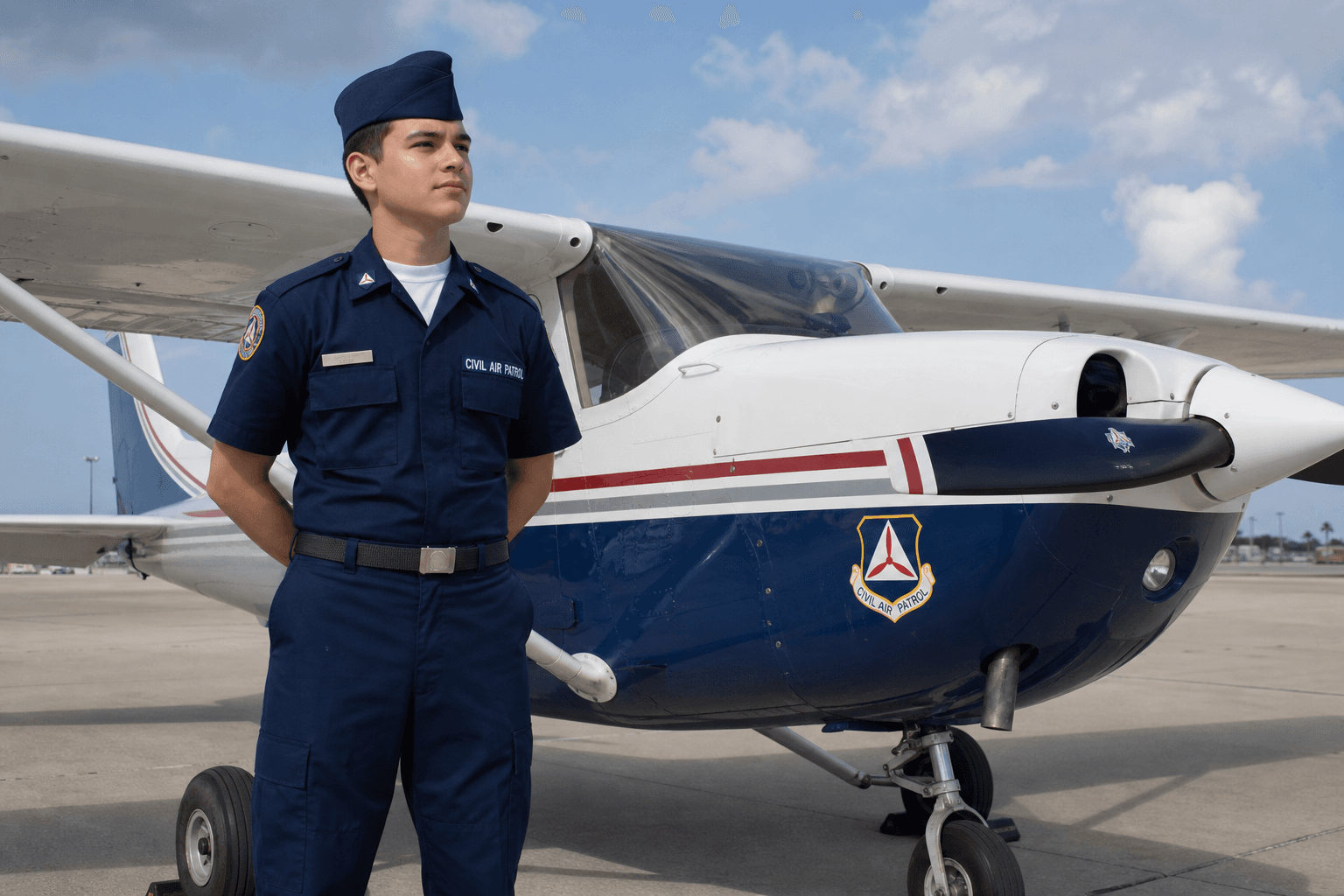
Texas Cadet Sebastian Vargas Becomes 200th Private Pilot Funded by Ray Foundation Through CAP
Civil Air Patrol Cadet Capt. Sebastian Vargas became the 200th CAP student pilot supported by the Ray Foundation to earn a private pilot certificate. Vargas completed his FAA check ride June 24 through McCreery Aviation at McAllen Miller International Airport in Texas, according to a recent CAP release . Scholarship Milestone Vargas belongs to the Texas Wing's Wild Horse Desert Composite Squadron in Edinburg. His training was funded through a James C. Ray Flight Training Scholarship under CAP's Cadet Wings program. The merit-based program began in 2019 through funding from the U.S. Air Force. The Ray Foundation has contributed $3.26 million to the program during the past four years. "The Ray Foundation funding helped take the burden off of my parents financially, and we are forever grateful for that," Vargas told CAP. He said the scholarship allowed him to concentrate on training instead of the financial and logistical requirements involved in completing a private pilot certificate. Training And Future Plans Vargas joined CAP in 2021 and took his first orientation flight the following year. He attended a powered flight academy in Wisconsin in June 2025 before entering Cadet Wings. He spent nearly six months in the scholarship program and approximately 16 months preparing, studying and completing flight training. His squadron commander, 1st Lt. Eric Madore, served as his Cadet Wings mentor and followed his progress through his solo, cross-country and check-ride milestones. Vargas plans to continue flying through CAP and build flight time while applying to the U.S. Air Force Academy. His longer-term goals include flying the C-17 for the Air Force and later pursuing an airline career. CAP said Cadet Wings has produced more than 500 new pilots through Cadet Wings since the program began. The program has taken on added importance as CAP shifts resources toward powered-flight opportunities following its decision to end the national glider program , which the organization attributed to an aging fleet, limited participation, instructor shortages and rising replacement and maintenance costs.
South Korea selects Bombardier Global 6500 jets for new electronic warfare fleet
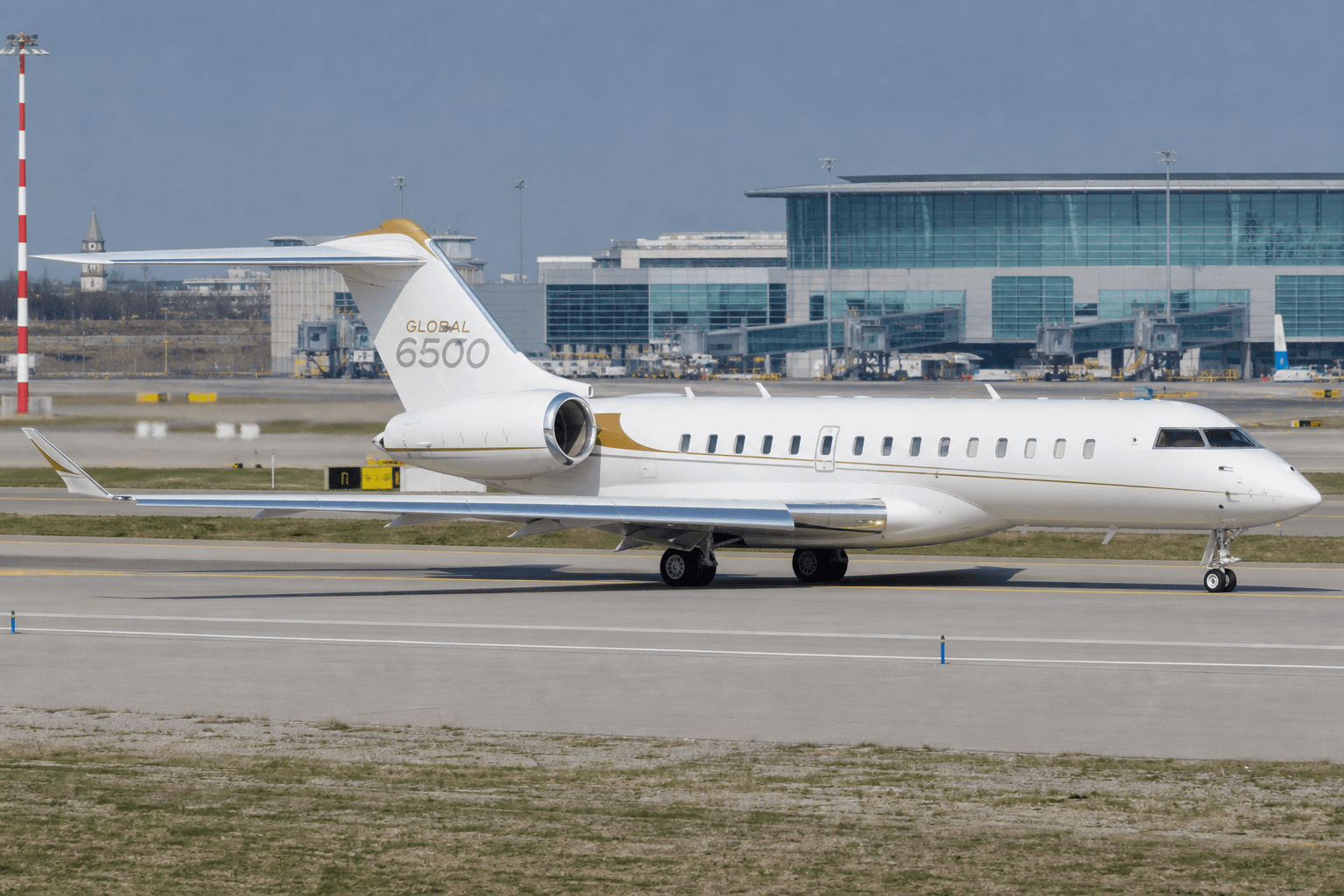
South Korea has selected the Bombardier Global 6500 as the platform for a new pair of electronic warfare aircraft. Korean Air will purchase two Global 6500 business jets from Bombardier for conversion under South Korea's stand-off electronic warfare program, the Canadian manufacturer announced on July 14, 2026. The aircraft will be equipped to disrupt enemy radar, communications and other electronic signals while operating beyond the immediate reach of air and ground threats. Bombardier worked with Korean Air and South Korean defense company LIG Nex1 on the winning proposal. The companies marked the agreement during a signing ceremony in Seoul. Bombardier did not disclose the contract value, delivery schedule or details of the electronic warfare equipment that will be installed aboard the aircraft. "The Global 6500 aircraft is in demand around the world because of its performance and versatility," said Michael Anckner, Vice President of Worldwide Sales at Bombardier Defense. South Korea has now selected the Global 6500 for two separate special-mission aircraft programs. The country previously chose four Global 6500s for an airborne early warning and control fleet led by L3Harris. Those aircraft will carry sensors and mission systems used to monitor the airspace and direct military operations. The latest pair of aircraft will perform electronic attack missions, giving South Korea a planned fleet of six Global 6500-based military aircraft across the two programs. The Global 6500 is powered by two Rolls-Royce Pearl 15 engines. Its range, high-altitude performance and large cabin allow military customers to install sensors, operator consoles and communications equipment without developing a new aircraft from scratch. The business jet has attracted growing interest for surveillance, command-and-control and electronic warfare missions. The US Army also selected the Global 6500 for its High Accuracy Detection and Exploitation System, or HADES, intelligence and surveillance program. Bombardier delivered the first aircraft for that effort in 2024.

Boeing posts strongest first-half aircraft deliveries since 2018 with 314 jets
Boeing delivered 314 commercial aircraft during the first half of 2026, its highest total for the period since 2018 as production of the 737 MAX continues to recover. The manufacturer handed over 171 aircraft during the second quarter, including 129 737s, 25 787 Dreamliners, 10 767s and seven 777s, Boeing said on July 14, 2026. Its first-half deliveries included 243 737s, 40 787s, 16 767s and 15 777s. Boeing delivered 64 commercial aircraft in June alone, up from 60 in May and 60 during the same month last year, according to company delivery data. The June total included 42 737 MAX aircraft and 13 787s. The stronger pace comes as Boeing raises output of the 737 MAX, its best-selling commercial aircraft. The company is moving monthly production from 42 aircraft toward 47, although deliveries can vary from month to month depending on inspections, customer schedules and work needed on aircraft already built. Boeing's 314 first-half deliveries were 12% higher than the 280 aircraft it handed over during the same period in 2025. Last year's first-half total had already marked a significant improvement after production disruptions and tighter regulatory oversight slowed deliveries earlier in the decade. Airbus remained ahead, delivering 351 aircraft during the first six months of 2026, including 89 in June. That was a 15% increase from the European manufacturer's first-half total a year earlier. Boeing's June 787 deliveries included five aircraft for Riyadh Air that had been delayed by issues involving seat certification. The Saudi carrier began revenue operations in June after receiving its first Dreamliners. The manufacturer also delivered three 777 freighters and five 767s during June. Three of the 767s will be converted into KC-46 aerial refueling tankers by Boeing's defense business. Boeing reported 121 gross commercial aircraft orders and eight cancellations during June, leaving 113 net orders for the month. Its first-half order total stood at 408 after cancellations and accounting adjustments. The company has now recorded 7,206 orders for the 737 MAX family, surpassing the 7,159 orders received for the previous-generation 737NG. Boeing separately reported 35 defense aircraft and satellite deliveries during the second quarter and 65 during the first half. The six-month total included 32 new or remanufactured AH-64 Apache helicopters, eight KC-46 tankers, eight CH-47 Chinooks and five F/A-18-family aircraft. Boeing cautioned that its delivery figures remain preliminary until it publishes its second-quarter financial results on July 28.
South Korea orders two Global 6500 jets for electronic warfare missions
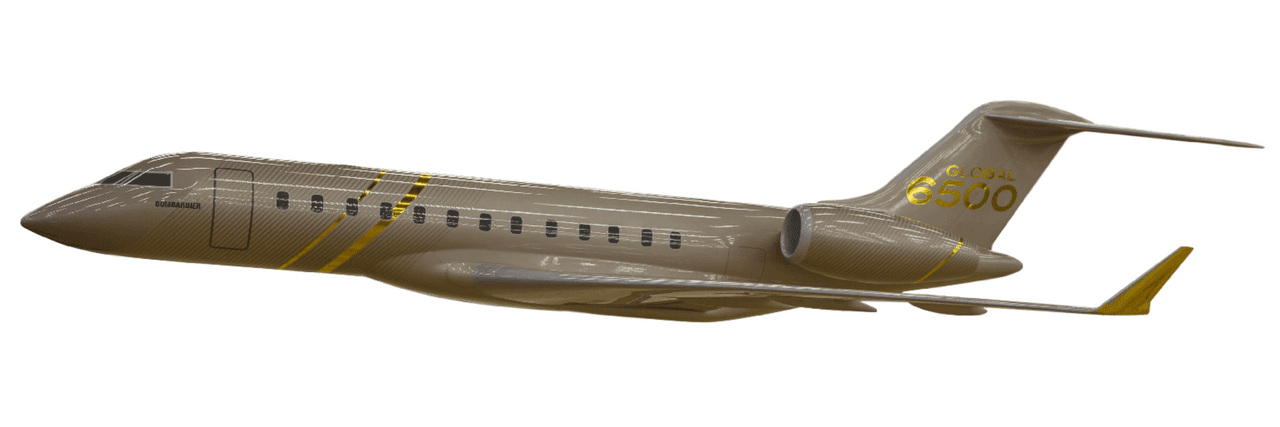
Seoul will purchase two of the long-range Bombardier jets, in addition to the four examples already on order as airborne early warning and control assets. South Korea has formalised an agreement with Canadian airframer Bombardier to purchase two Global 6500 business jets, which will be converted into military electronic warfare (EW) aircraft. Bombardier confirmed the deal on 14 July, saying an agreement was formally signed in Seoul. The Canadian manufacturer partnered with Korean Air and Korean defence contractor LIG Defense & Aerospace on the proposal, beating out a rival bid from Korea Aerospace Industries and Hanwha Systems. Prime contractor LIG secured the competitive win from Seoul’s Defense Acquisition Program Administration in December, with the deal valued at more than $1.1 billion. The two EW-roled Global 6500s are separate from another South Korean military programme that will see American defence contractor L3Harris convert four of the same Bombardier business jets into airborne early warning and control (AEW&C) platforms. Powered by twin Rolls-Royce Pearl 15 engines, the Global 6500 has emerged as a popular choice for militaries around the world seeking to field special mission aircraft without taking on the high cost of developing and certifying an entirely new design. The US Army’s contractor-owned ATHENA-R/S long-range surveillance assets are also based on the Global 6500 platform. Source: US Army The US had fielded a number of long-range surveillance aircraft based on the Global 6500, while AEW&C offerings from both L3Harris and Swedish manufacturer Saab are derived from the Bombardier business jet. "The Global 6500 aircraft is in demand around the world because of its performance and versatility," says Michael Anckner, vice-president for worldwide sales at Bombardier Defense. "This aircraft is trusted because of its proven military track record, yet it remains highly adaptable as defence needs evolve.” South Korea will use the two EW-configured aircraft to fill the Stand-Off Jammer (SOJ) mission, which enables the disruption of enemy electromagnetic signals while remaining safely removed from air and ground threats. Korean Air will purchase the two Global 6500s from Bombardier, with LIG handling mission systems integration and delivery. The two EW aircraft are expected to enter service by 2034. LIG also provides the integrated EW suite for South Korea’s indigenously developed KAI KF-21 fighter.
The Daily Touch & Go
The day's best aviation news in your inbox. Free, no spam.