

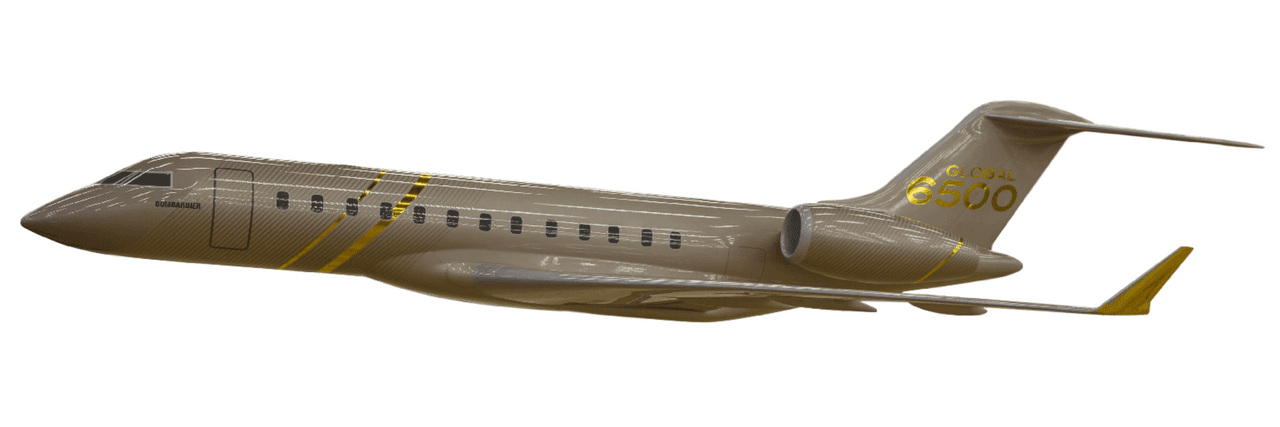
Image: Matti Blume · CC BY-SA 4.0 · via Wikimedia Commons
South Korea orders two Global 6500 jets for electronic warfare missions
Seoul signs a deal to acquire two Bombardier Global 6500 jets modified for stand-off electronic warfare, complementing existing AEW&C fleet with specialized EW capabilities.
The gist
South Korea purchases two Global 6500 jets to serve as stand-off electronic warfare aircraft, adding new capabilities by 2034.
Continuing coverage
All L3harris →- Trump switches from new VC-25B Air Force One mid-trip amid security concerns
- FAA Contracts L3Harris to Modernize ADS-B Ground Network Through 2045
- Trump takes first presidential flight on Qatar-donated VC-25B Air Force One
- L3Harris delivers new Air Force One from Qatar 747-8I in just 10 months
- L3Harris delivers first converted 747-8I as interim VC-25B presidential jet
South Korea has announced a new military procurement deal involving two Bombardier Global 6500 business jets configured for electronic warfare (EW) roles. The contract, confirmed by Bombardier on 14 July, was formalized in Seoul and includes the conversion of these jets into specialized stand-off jammer platforms. These aircraft will augment South Korea's expanding fleet of advanced airborne military assets and bolster its electronic warfare capabilities.
These two EW-configured Globals are distinct from another ongoing program in South Korea to acquire four Global 6500 jets equipped for airborne early warning and control (AEW&C) missions. The AEW&C jets are being converted by American defense contractor L3Harris. Powered by twin Rolls-Royce Pearl 15 engines, the Global 6500 platform has become a favored base for military special mission conversions worldwide for its performance and range without incurring the expense of a new airframe development.
The procurement followed a competitive bid overseen by the Defense Acquisition Program Administration (DAPA), with the prime contractor LIG Defense & Aerospace securing the award last December. LIG partnered with Korean Air and Bombardier to deliver the EW aircraft package. This win came in competition against a consortium that included Korea Aerospace Industries and Hanwha Systems. The deal's contract value exceeds $1.1 billion, covering the jets and integrated mission systems.
Korean Air is responsible for purchasing the aircraft directly from Bombardier, while LIG Defense & Aerospace leads the mission systems integration and final delivery. The two EW Global 6500s are expected to enter service by 2034, providing South Korea with stand-off jammer capabilities. This involves disrupting enemy electromagnetic signals at safe distances, enhancing defensive and offensive electronic warfare measures without exposing the jets to direct combat threats.
South Korea's investment in Global 6500 technology aligns with global military trends where this platform serves as the basis for a variety of special mission aircraft. Notable examples include the US Army's ATHENA-R/S long-range surveillance aircraft and AEW&C aircraft developed by L3Harris and Saab, both derived from the same Bombardier business jet model. This commonality underscores the Global 6500's versatility and proven military operational record.
Michael Anckner, Bombardier Defense's vice president for worldwide sales, emphasized the jet's adaptability and proven track record. He highlighted the aircraft's global demand for military applications due to its blend of performance, versatility, and the ability to evolve with changing defense requirements. South Korea's adoption of the Global 6500 for both AEW&C and EW missions reflects this trust and strategic value.
LIG Defense & Aerospace also supports South Korea's indigenous military aviation through providing the integrated EW suites for the KF-21 fighter jet. This connection shows a broader commitment to advancing Korea's electronic warfare technology across multiple platforms.
The stand-off jammer role these new Global 6500 EW aircraft will fulfill is vital to modern aerial warfare, allowing the disruption and degradation of adversary communications and radar from a distance. By fielding this capability, South Korea upgrades its electronic warfare toolkit alongside traditional air defense and surveillance assets, reinforcing its deterrence posture in the region.
Frequently asked questions
- What aircraft type has South Korea purchased for the electronic warfare role?
- South Korea purchased two Bombardier Global 6500 business jets that will be converted into electronic warfare aircraft.
- Who are the main contractors involved in South Korea's electronic warfare Global 6500 program?
- Korean Air is purchasing the jets from Bombardier, and LIG Defense & Aerospace is responsible for mission systems integration and delivery.
- When are the new electronic warfare-configured Global 6500 aircraft expected to enter service in South Korea?
- The two electronic warfare Global 6500 jets are expected to enter service by 2034.
Read more
All Military/Defense →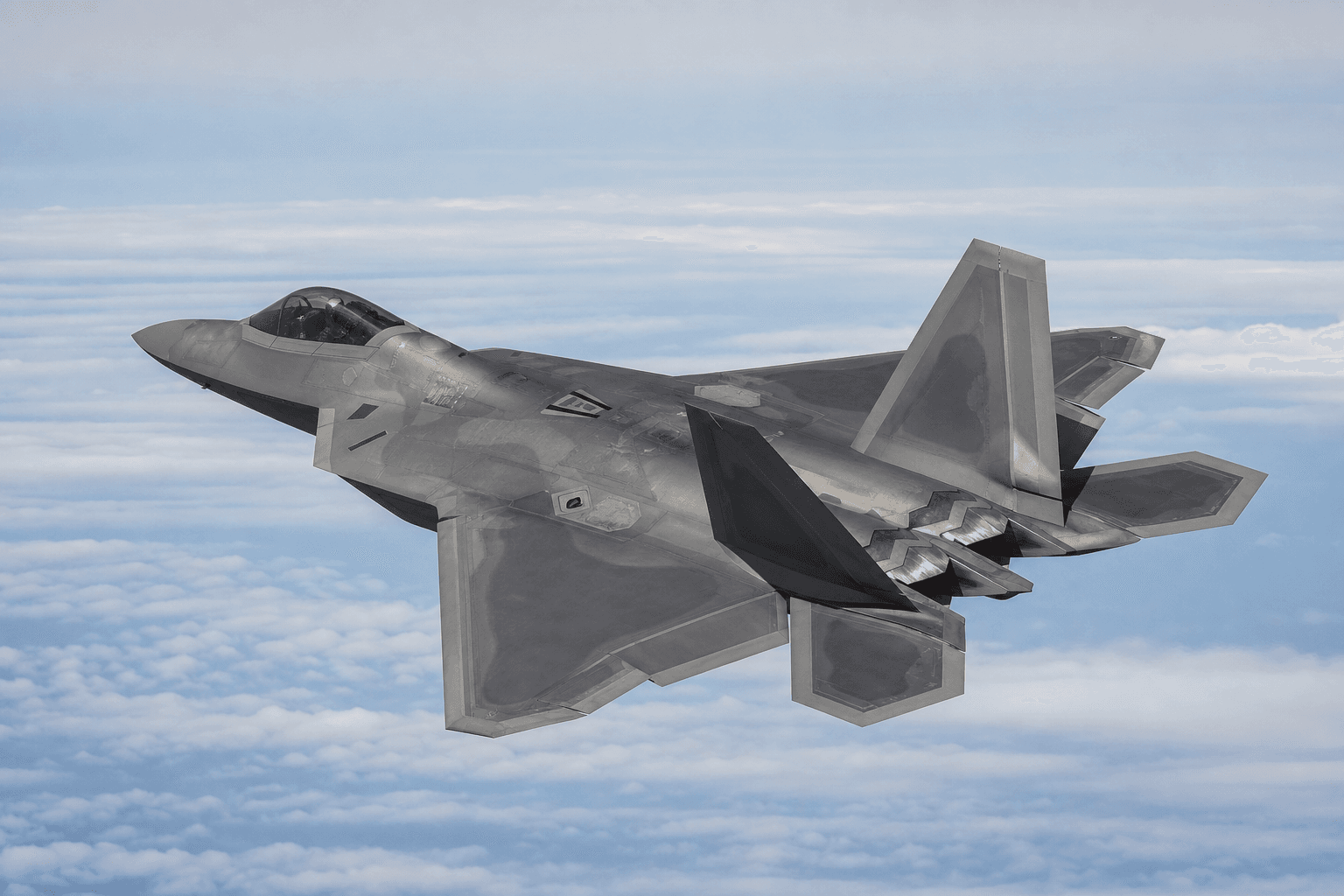
How the F-22's F119 Engine Overcame Long-Standing Fighter Jet Engine Trade-Offs
The Lockheed Martin F-22 Raptor was built as a generational leap over the existing F-15 Eagle. The F-15 Eagle was designed as an air superiority fighter , but by the 1980s, the Air Force felt it might not have the "unfair" advantage that they wanted, as the Soviet Union developed the Su-27 and MiG-29. The F-22 was initially designed as a late Cold War effort to overmatch any fighter jets the Soviets could field.

Embraer Highlights Record Growth and Diverse Portfolio at Farnborough 2026
Embraer, the Brazilian aerospace leader, is highlighting its robust expansion and market leadership at the Farnborough International Airshow 2026. The manufacturer arrives at one of the world’s premier aviation events with record-breaking financial metrics. ezstandalone.cmd.push(function () { ezstandalone.showAds(119); }); This year sees a surging order backlog, and a diverse portfolio that spans commercial jets, executive aircraft, defence solutions, and sustainable aviation innovations. Recent performance underscores Embraer’s upward trajectory. In the first quarter of 2026, the company delivered 44 aircraft. This represented a notable 47% increase year-over-year. ezstandalone.cmd.push(function () { ezstandalone.showAds(127); }); Its firm order backlog reached a new all-time high of US$32.1 billion. This marks the sixth consecutive record and reflecting broad-based demand across segments. Photo Credits: Embraer Driving Commercial Success with E-Jet Family Commercial Aviation, in particular, has seen significant growth, with the backlog climbing 50% year-on-year to around US$15 billion, fuelled by major wins such as Finnair’s order for up to 46 E195-E2 aircraft. ezstandalone.cmd.push(function () { ezstandalone.showAds(128); }); Embraer’s E-Jets family continues to dominate the regional jet market. The E195-E2 and E175 models offer exceptional efficiency. They boast lower operating costs, and superior passenger comfort, making them ideal for airlines seeking to optimise regional routes. Recent certifications and orders from operators worldwide demonstrate strong customer confidence. ezstandalone.cmd.push(function () { ezstandalone.showAds(129); }); At the Farnborough Airshow, visitors can explore how these aircraft deliver best-in-class performance while supporting airlines’ sustainability goals through reduced fuel consumption and emissions. Embraer’s focus on right-sized aircraft helps carriers fill gaps between larger narrowbodies and smaller turboprops, enhancing network flexibility and profitability. Executive Jets: Luxury Meets Innovation Embraer’s Executive Aviation division maintains its market leadership. This has been evident with the Phenom 300 series, which has topped global light jet deliveries for 14 consecutive years. Newer models like the Praetor 500E and Praetor 600E recently achieved triple certification from ANAC, FAA, and EASA, reinforcing their position in the midsize and super-midsize segments. ezstandalone.cmd.push(function () { ezstandalone.showAds(130); }); These jets combine cutting edge technology, spacious cabins, and impressive range capabilities. Attendees at Farnborough will experience how Embraer is redefining private aviation with enhanced connectivity, superior performance, and a commitment to luxury without compromise. Defence and Security: Versatile Solutions Embraer’s Defence & Security portfolio, anchored by the KC-390 Millennium multi-mission transport and the A-29 Super Tucano light attack aircraft, attracts strong international interest. The KC-390 has proven its versatility in recent global demonstration tours and cold-weather campaigns, while ongoing partnerships expand maintenance, repair, and overhaul (MRO) capabilities worldwide. ezstandalone.cmd.push(function () { ezstandalone.showAds(131); }); These platforms offer cost-effective, high-performance solutions for air forces seeking modern capabilities in transport, refuelling, and intelligence missions. Embraer continues to build industrial cooperation agreements that support local economies and technology transfer. eVTOL Development Beyond traditional aircraft, Embraer continues to invest heavily in advanced air mobility. This is acheived through its Eve subsidiary, advancing eVTOL development for urban air mobility. The company also expands services and support networks to maximize fleet availability and customer satisfaction. ezstandalone.cmd.push(function () { ezstandalone.showAds(132); }); Looking Ahead Embraer projects 240-255 total aircraft deliveries in 2026, with 80-85 in Commercial Aviation and 160-170 in Executive Aviation. This guidance, paired with a healthy backlog, positions the company for sustained profitable growth amid a recovering global aviation market. At Farnborough International Airshow, Embraer not only showcases its current strengths but also its vision for the future of aerospace—efficient, sustainable, and customer-focused. ezstandalone.cmd.push(function () { ezstandalone.showAds(133); }); As demand for versatile, fuel-efficient aircraft rises, Embraer stands ready to meet it with proven products and innovative solutions. The airshow provides a perfect platform for Embraer to engage with airlines, operators, governments, and industry partners. With strong financials, record orders, and a clear strategic direction, the company demonstrates why it remains a key player in global aviation. ezstandalone.cmd.push(function () { ezstandalone.showAds(134); });
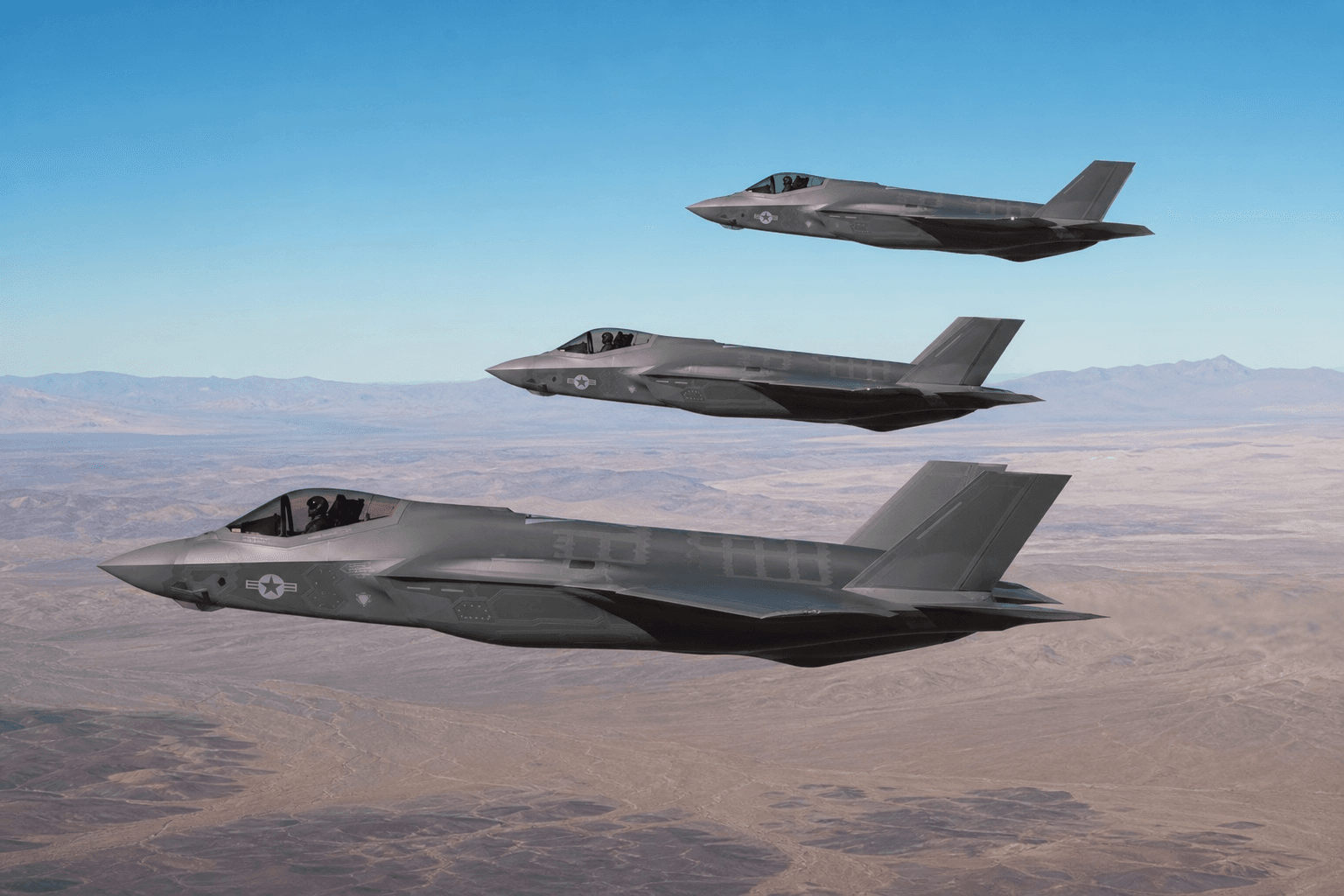
US Air Force Fighter Pilots Earn Base Salary Plus Bonuses Amid Pilot Shortage
All US military pilots are commissioned officers, and their basic salary follows the same pay scale regardless of whether they are fighter jet pilots or transportation aircraft pilots. It also doesn't matter if they serve the US Air Force, the US Navy, the US Coast Guard, or the US Army. Compared with commercial pilots, US military pilot salaries are quite low, but they are only the beginning , with bonuses, allowances, and various other benefits and incentives significantly increasing the pay.
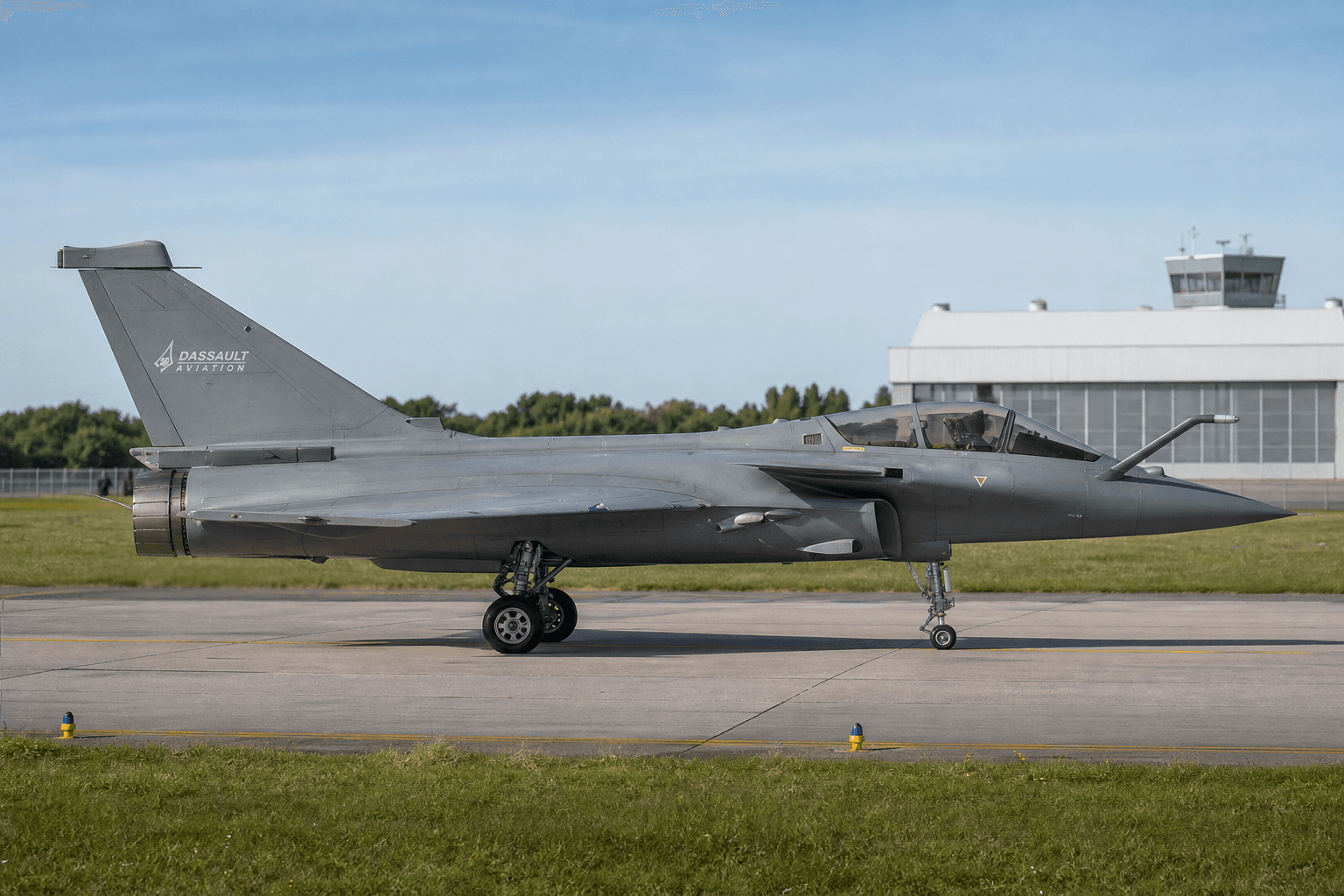
Europe's FCAS fighter program collapses amid industrial disputes and divergent military goals
Where next for Europe’s future combat aircraft plans? Perhaps the most surprising thing about the collapse of the European Future Combat Air System (FCAS) programme was that it took so long to fall apart. Even from the outset you did not need to be an expert in business dynamics or industrial politics to see that the relationship between lead protagonists Airbus and Dassault Aviation was likely to be strained at best. French airframer Dassault is, like it or not, a fiercely independent entity with a chief executive in Eric Trappier for whom the adjective 'pugnacious' is tailor-made. Dassault thought it was to be fully in charge, the architect as the company phrased it, of the New Generation Fighter (NGF), the manned platform at the heart of FCAS. But faced with what it felt was the steady encroachment of Airbus onto its turf, tensions inevitably ratcheted up. Indeed, it was always going to be a challenge to yoke Dassault to a wider pan-European construct, particularly when it lacks the collaborative spirit that, thanks to its origins, is part of the Airbus DNA. There also seemed to be an inherent issue with what the three countries funding FCAS wanted to achieve with the NGF – France sought a replacement for the Rafale, including the naval version, while Germany and Spain targeted an air dominance fighter as a Eurofighter successor. Remember too that France and Dassault have history here: originally part of the Future European Fighter Aircraft programme – the precursor to the Eurofighter – the pair left, to develop the Rafale independently, due to disagreements over design authority and operational requirements. Sound familiar? But with the dust now settling on the inherently fissiparous FCAS project, the question becomes: what next? Can France and Dassault proceed once more in splendid isolation? At a technological level, almost certainly, after all, whatever criticism can be laid at the airframer's door, it does not lack for design and manufacturing nous. However, the stumbling block may be the eye-watering sums needed to bring a sixth-generation fighter into service. German industry, with some Spanish contribution, has already announced the ' Team Gen 6 ' grouping that it says is willing to work with any interested party to advance the interests of European sovereignty. Mind you, it is unclear who else is available. At this stage, ushering Germany and Spain into the Global Combat Air Programme being progressed by Italy, Japan and the UK – seemingly harmoniously so far – seems challenging, if not outright impossible. That leaves Sweden, which is still mulling options for a successor to its current Saab Gripen E. Mind you, with relations between Paris and Stockholm ever-closer – notably, France is acquiring at least two Saab GlobalEye surveillance jets – perhaps a different marriage of convenience could be contemplated? Equally, perhaps the real lesson from the debacle is that agility is key: many of the capabilities envisioned for the broader FCAS project – the system of systems concept – are already being tested or deployed by adversaries. Whichever direction Europe's new divorcees take – remarriage or remaining single – the watchword for a future fighter, now more than ever, is the need for speed.
The Daily Touch & Go
The day's best aviation news in your inbox. Free, no spam.