


Illustration: The Touch & Go
Airport Safety Hindered by Limited Sharing of Near-Miss Data in SMS Programs
Airports struggle to access comprehensive near-miss and hazard data due to public records concerns, impacting safety management effectiveness.
The gist
Airports face safety gaps as near-miss data sharing is restricted by fears over public disclosure under open-record laws.
A recent Senate aviation subcommittee hearing highlighted the ongoing challenge runway safety experts and airport operators face regarding the sharing of near-miss and hazard data within the U.S. National Airspace System. The hearing, instigated by a close-call event involving Delta and American Airlines flights at Boston Logan, revealed that airports often do not receive complete safety reports due to fears surrounding public records requests and legal liability. This gap complicates airports' ability to manage safety risks on their surfaces through Safety Management Systems (SMS).
During discussions, Senators and aviation stakeholders reiterated common themes such as the use of technologies like ADS-B In, runway status lights, and air traffic control modernization to improve safety. However, West Virginia Senator Shelley Moore Capito probed deeper into whether the formally reported data fully captures the scope of near misses, suggesting that many incidents likely go unreported in public channels. This pointed inquiry underscored a disconnect between industry-held data and what is accessible for public and airport review.
Chris Sununu, Airlines for America's president and CEO, confirmed that while comprehensive data on near misses exists within the system, only a fraction reaches the public domain. He emphasized the daily occurrence of hundreds of near misses that are documented internally but not widely shared, underscoring the high frequency yet low public visibility of these safety events.
At the airport level, this restricted information flow poses a significant challenge for effective SMS implementation. Airports rely on a wide range of stakeholders—including controllers, pilots, ground operators, and vendors—to identify hazards and manage risks involving pavement layout, signage, markings, lighting, and local procedures. However, according to Todd Hauptli, president and CEO of the American Association of Airport Executives, airports often lack full access to incident details due to concerns over transparency laws and potential exposure to open-record requests.
AAAE's concerns stem from the legal environment wherein public airport authorities operate. Open records laws, including FOIA, create a reluctance among carriers, vendors, and controllers to share detailed safety information with airports owing to fears it may become publicly accessible, potentially impacting legal liability and reputations. This atmosphere discourages candid reporting and data sharing, adversely affecting airports’ proactive safety efforts.
The AAAE advocates for legislative protections limiting disclosure of safety data collected within SMS programs to only FAA-certificated operators, aiming to foster a culture that encourages reporting without fear of public exposure. They argue that effective risk mitigation requires confidential, collaborative sharing of safety observations among all parties involved in airport operations, which current public records frameworks impede.
However, this raises complex questions balancing transparency and accountability with the need for candid safety communication. Public entities such as airports warrant oversight and must ensure safe use of public resources, yet broad public access to raw safety data may discourage reporting and hinder root cause analysis. These issues have been topics of debate during FAA rulemaking and remain unresolved challenges across the fragmented ecosystem involving FAA, airport operators, tenants, and contractors.
Near misses typically gain attention because they represent discrete, dramatic events, but SMS aims to identify latent hazards and systemic issues before incidents arise. The Senate hearing illuminated how airports, although responsible for many surface safety factors, may remain partially blind to underlying risk patterns due to incomplete information sharing. This gap underscores the pressing need to refine data sharing and legal frameworks to enhance airport surface safety management.
The resolution of these tensions between confidentiality and transparency will require careful policy decisions by Congress, regulators, and industry stakeholders. Developing protections that preserve safety data privacy within SMS while maintaining public trust and enabling effective regulatory oversight is critical. Until such frameworks are established, airports may continue to face constrained abilities to fully identify and mitigate surface safety risks.
Read more
All Aviation Safety →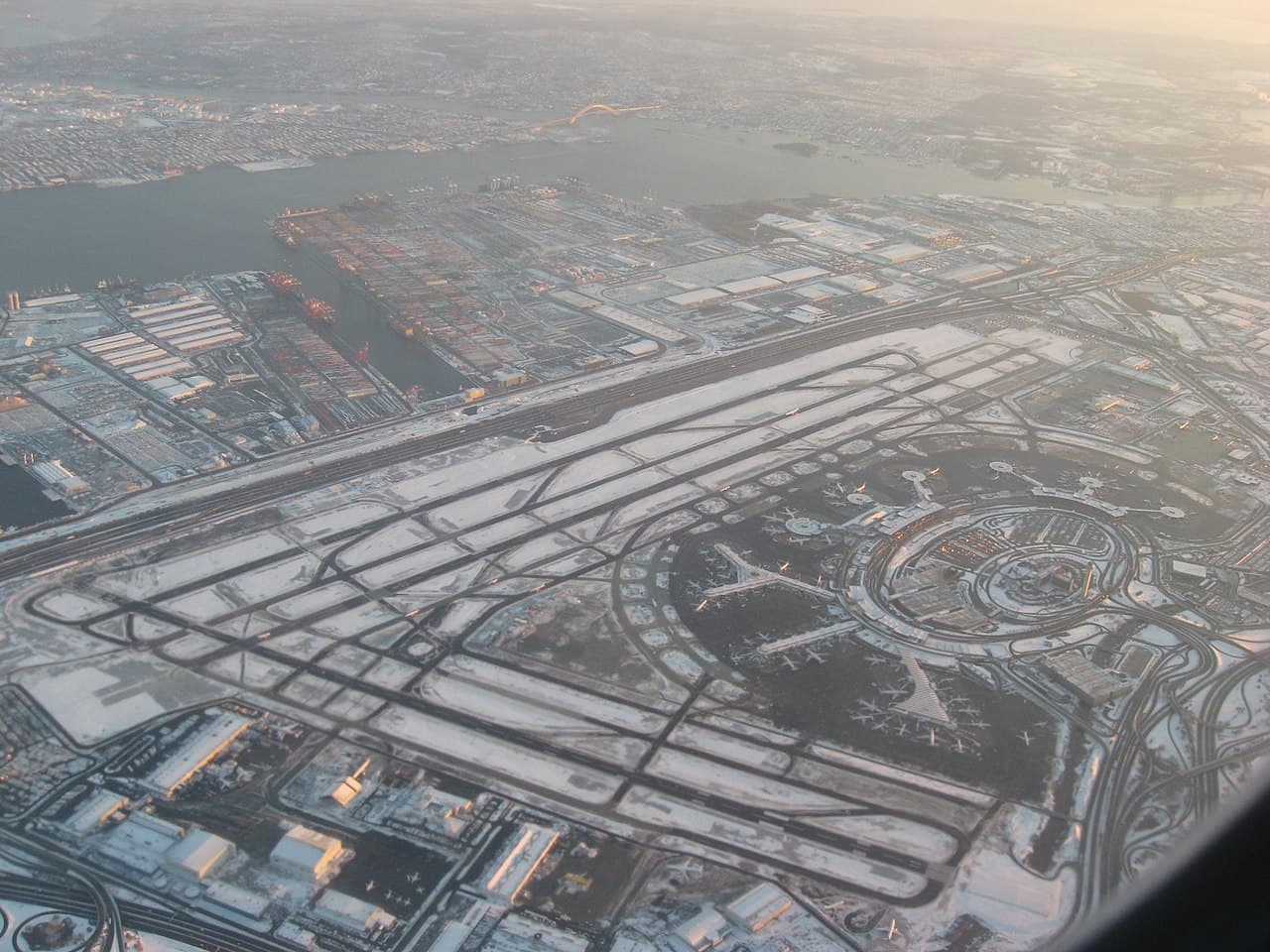
FAA Unveils Advanced Surface Movement Radar at Newark to Boost Airport Safety
The Federal Aviation Administration installed a new surface movement radar at Newark Liberty International Airport, as part of its effort to modernize the nation's aging air traffic control infrastructure. Transportation Secretary Sean Duffy and FAA Administrator Bryan Bedford unveiled the new Surface Movement Radar Model 4 (SMR-4) on Tuesday, saying the system will give controllers a clearer picture of aircraft and vehicle movements on the airport surface, particularly during darkness or low-visibility conditions. The radar replaces equipment that had been in service for roughly three decades. According to the FAA, Newark is the fifth airport to receive the new technology as part of a broader deployment that will place 53 surface movement radar systems at 44 of the nation's busiest airports. The rollout is expected to be completed by 2028. Unlike conventional airport surveillance systems, the SMR-4 is designed to provide controllers with improved situational awareness during poor weather, when visual observation from the control tower may be limited. Officials said the upgraded radar offers greater reliability while helping reduce the risk of runway incursions and ground collisions. "Newark sees well-over a thousand flights per day, and the new Surface Movement Radar will help controllers keep those flights safe at this major U.S. hub," said FAA Administrator Bryan Bedford . "This is just the latest step in the FAA's work to modernize our skies for the Golden Age of Travel." The announcement comes as the FAA continues facing scrutiny over infrastructure reliability following several high-profile equipment outages and recent runway safety incidents. Officials say modernizing surveillance and communications systems is intended to improve both operational efficiency and safety as air traffic demand continues to grow. Meanwhile, the agency reported a decline in runway incursions during the current fiscal year, a trend officials say reflects a combination of new technology, operational improvements, and ongoing safety initiatives.

FAA mandates inspections on 737 Max door straps and proposes 787 Trent 1000 engine fix
The agency targets a 737 structural concern and an issue that could cause a dual Trent 1000 failure. The Federal Aviation Administration (FAA) is taking action to address risks involving Boeing 737 Max door-related structural components and concerns about uncontained failures of 787 Rolls-Royce Trent 1000 turbofans. The agency this week issued two regulatory documents, including an airworthiness directive (AD) responding to the potential for some 737 Max structural fasteners called “bear straps” to develop stress cracks. Affected straps are on the upper corners of 737 Max right-side forward doorframes, the FAA says. While no 737 Max have been found with cracked straps, the problem has for more than a decade been known to affect earlier-generation 737s. The FAA in 2014 required operators to inspect bear straps on 737 Classics for cracking, and Boeing tells FlightGlobal that in 2019 it notified 737NG operators about the issue and provided them with inspection instructions, which the FAA mandated in 2021. Boeing then in December 2024 issued 737 Max operators an Alert Requirements Bulletin, calling on them to inspect fuselage skins and bear straps. The FAA’s latest AD mandates those inspections, saying 737 Max are likely “susceptible to the same crack conditions” due to the variants’ similarities. The cracks can result from “high operating stresses in the fuselage skin and bear strap due to stress concentration at the corner of the door cutout”, it adds. Cracks “may lead to the inability of the principal structural element to sustain limit loads”. “Inspections provide multiple opportunities to identify and correct possible cracking before cracks exceed critical length,” Boeing says, adding that it “conducted engineering analysis to identify root cause and is working through engineering changes that would prevent such cracking.” Separately, the FAA this week issued a proposed rule addressing risks associated with the 787’s Trent 1000 engines. “The FAA has received a report from the manufacturer indicating that the protection system on the left fan cowl of the right engine does not sufficiently cover the components and systems,” the proposed AD states. The risk arises if a 787’s left-side Trent suffers an uncontained failure, in which case debris ejected from that powerplant’s intermediate pressure turbine rotor could strike the right-side Trent, damaging its oil lines or air-pressure sensor, the FAA says. The result could be dual engine failure, it adds. Boeing addressed the risk in January with a Special Attention Requirements Bulletin sent to operators. That document calls on them to inspect Trents and replace fan cowls on right-side engines. The FAA’s proposal would mandate those actions. It applies to only 22 US-registered 787s – a small number because US airlines primarily operate 787s powered by GE Aerospace GEnx turbofans.

FAA Probes Separation Breach After Marine One and Envoy Air Jet Departured One Minute Apart at DCA
The Federal Aviation Administration ( FAA ) is investigating an incident at Ronald Reagan Washington National Airport (DCA) on Tuesday afternoon, after the presidential helicopter Marine One and a departing regional jet appeared to have lost separation. The helicopter, carrying President Donald Trump, lifted off near the White House at around 2:33 PM local time, just a minute before an Envoy Air Embraer E170 departed from DCA.
US Air Force's KC-46 Pegasus tackles aging KC-135 refueler challenges amidst technical hurdles
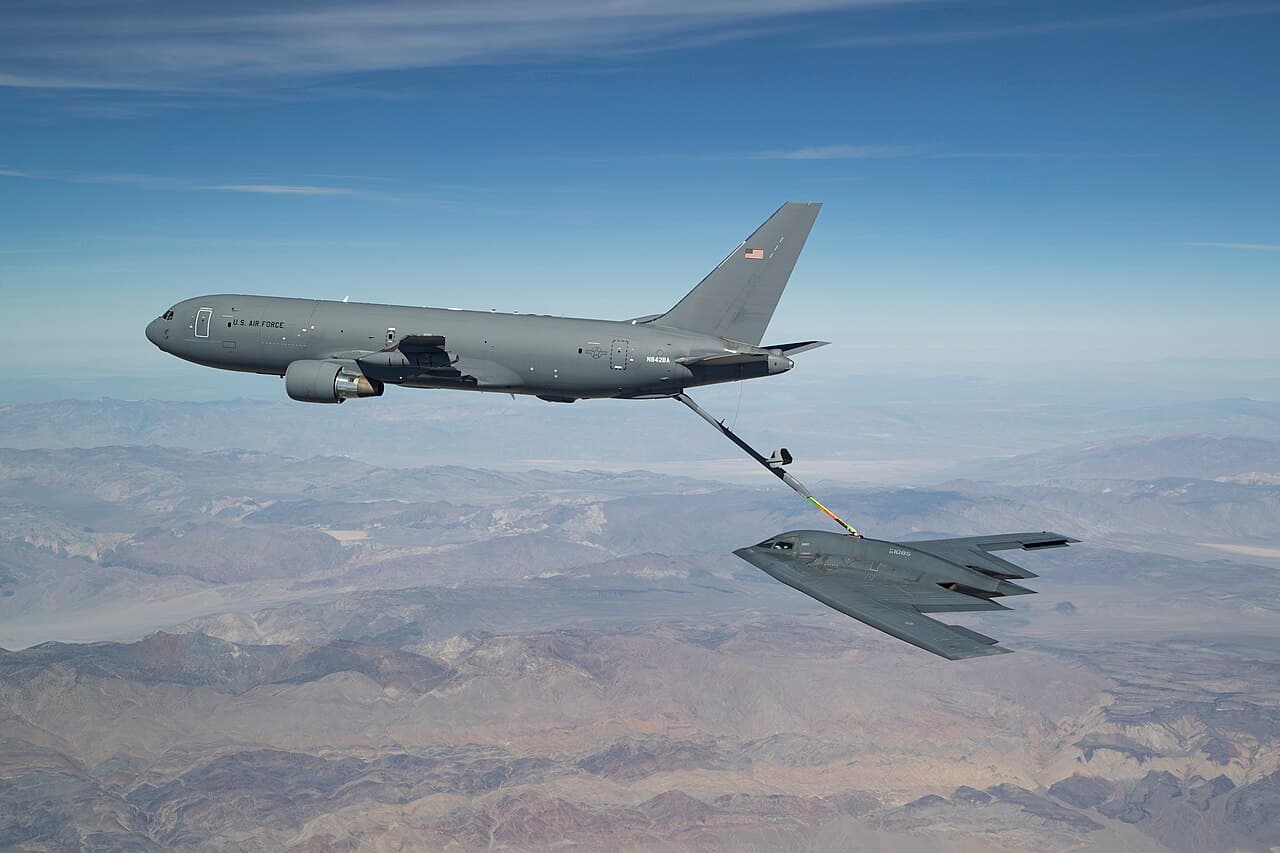
Many of the US Air Force's refueling wings are still flying the KC-135 Stratotanker, which was made in the Eisenhower era and is rapidly approaching an average age of 70. Recent midair mishaps and structural wear have made the KC-135 increasingly dangerous to operate. Yet its replacement, the Boeing KC-46 Pegasus, is highly controversial because it has suffered from severe design flaws, multi-billion-dollar cost overruns, and critical safety hazards.
The Daily Touch & Go
The day's best aviation news in your inbox. Free, no spam.