


Pilots reminded of essential procedures when radios fail during flight
Communication failure demands quick troubleshooting and specific actions whether flying VFR or IFR, including squawking 7600 and following FAA guidance.
The gist
When radios fail in flight, pilots must squawk 7600 and follow FAA procedures to safely land and maintain situational awareness.
Continuing coverage
All Faa Regulations →Clear communication is the backbone of safe flight operations, assisting pilots in making position and intention announcements at nontowered airports, obtaining clearances, and maintaining traffic awareness en route. However, radio communication equipment can fail unexpectedly, leaving pilots unable to transmit or receive voice messages. Knowing what to do in such a scenario is crucial for safety.
The first step following suspected radio failure is thorough troubleshooting. Pilots should verify correct radio selection between Com 1 and Com 2, ensure their radio is tuned to the proper frequency, and confirm the volume level is adequate. If these checks do not restore communication, the pilot must declare a radio failure by setting transponder code 7600.
Pilots flying under visual flight rules (VFR), or those on an instrument flight rules (IFR) plan but in visual conditions, are directed by the FAA Aeronautical Information Manual to land as soon as practicable. They should identify a nearby suitable airport, overfly it at 1,000 feet above pattern altitude to observe traffic flow, and then enter the traffic pattern and land normally. This visual reconnaissance helps confirm traffic patterns and landing direction in the absence of radio instruction.
For aircraft operating IFR in instrument meteorological conditions, FAR 91.185 dictates specific procedures. These include following the last assigned route or the route filed in the flight plan, flying the highest of the last assigned altitude, altitude expected in further clearance, or the minimum safe altitude. The steps vary depending on whether the pilot was being vectored at the time of loss of communication and other situational factors. Timing for leaving clearance limits and when to begin approach procedures are also carefully defined by FAA regulations.
In towered airport environments where radio communication has failed, air traffic control uses standardized light gun signals as a communication alternative. While these signals are taught during flight training, they are rarely encountered in actual flight. Pilots are advised to keep a reference placard in their flight kit to recall these signals if needed, allowing them to understand clearance, hold, or other critical instructions during radio outages.
Beyond regulatory procedures, pilots can equip their aircraft with backup communication devices such as portable transceivers, which provide an additional means to communicate if the main radio fails. Ensuring these devices are operational and batteries fully charged before flight is an important safety measure. Additionally, the ubiquitous presence of cellphones in the cockpit presents an alternative for pilots to reach flight service stations or obtain weather updates via phone-based services.
The Federal Aviation Administration provides extensive guidance on communication failure procedures in the Aeronautical Information Manual (Section 6-4-1) and the FAA Safety Team's online resources addressing aircraft radio malfunctions. Aviation organizations like the AOPA Air Safety Institute also offer educational materials to reinforce knowledge and readiness for handling radio failures.
Understanding and regularly reviewing communication failure protocols ensures pilots remain prepared for one of aviation's critical emergency scenarios. Proper action following radio failure not only preserves safety but also maintains orderly traffic flow and coordination with air traffic control despite the loss of voice communication.
Read more
All Aviation Safety →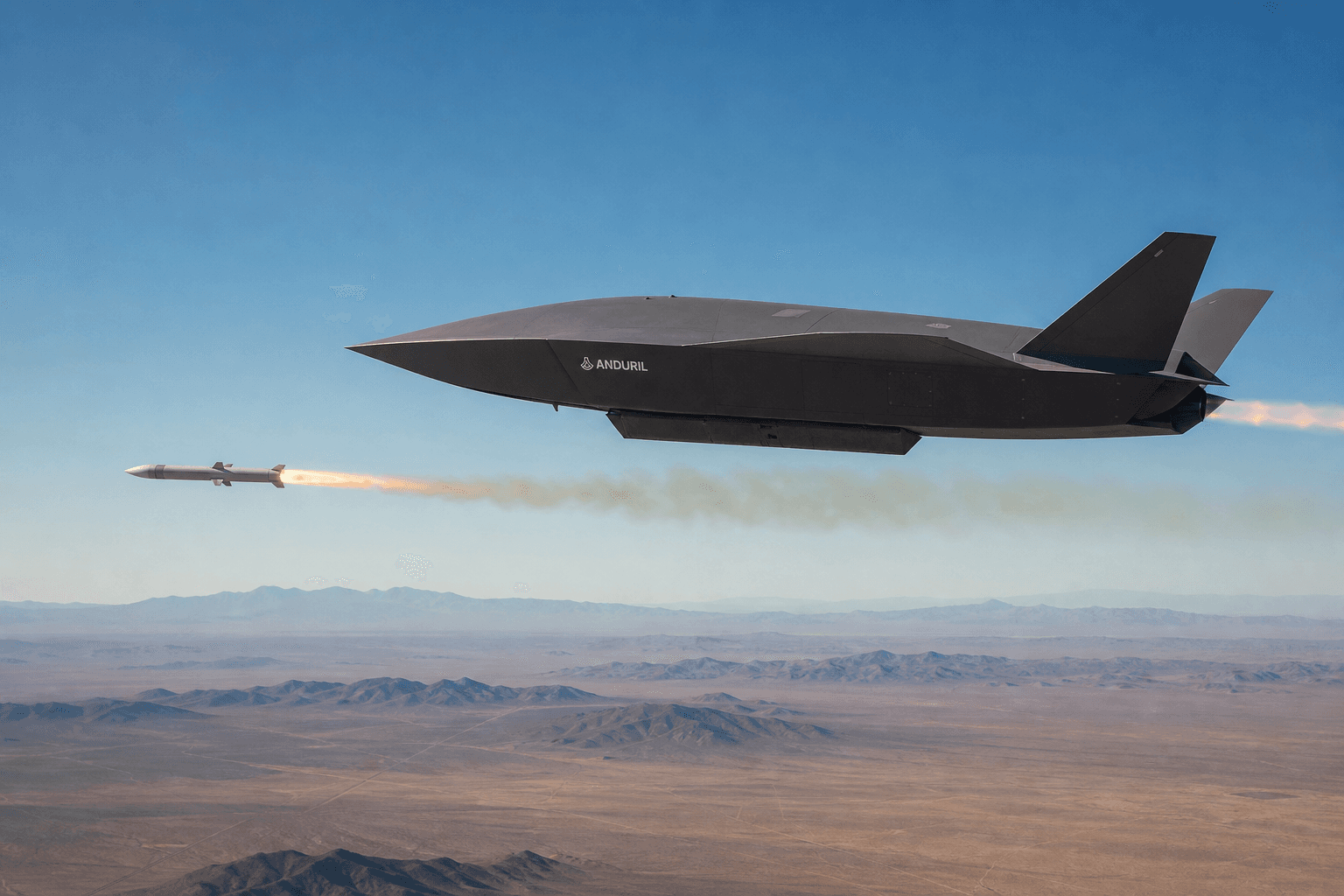
Anduril YFQ-44 unmanned fighter fires AIM-120 missile in Mojave Desert test
The test event over the Mojave Desert involved an externally carried Raytheon AIM-120 AMRAAM radar-guided missile. Anduril Industries has successfully fired an air-launched missile from the developmental YFQ-44 prototype. The test shot took place on 10 July over California’s Mojave Desert and was confirmed by both the US Air Force (USAF) and Anduril on 15 July. A single Raytheon AIM-120 AMRAAM (Advanced Medium Range Air-to-Air Missile) was fired from an underwing pylon on the YFQ-44’s port side. Anduril describes the scenario as an “end-to-end, beyond-line-of-sight strike against a simulated target”. The missile shot was carried out in conjunction with the US Air Force’s 412th Test Wing at Edwards AFB The YFQ-44 is one of two prototype uncrewed fighter jets selected by the USAF to become a frontline Collaborative Combat Aircraft. Both the Anduril jet and the General Atomics Aeronautical Systems YFQ-42 were awarded production contracts to transition from prototype development and testing into the delivery of operationally configured CCAs. “The test… represents an important step in turning CCA into an operational capability,” the 412th Test Wing says. The YFQ-44 missile shot was conducted from Edwards AFB in California’s Mojave Desert. Source: US Air Force The YFQ-44, which will be designated the FQ-44 for combat service, is now the first American CCA design to have successfully launched a guided missile and the latest uncrewed fighter design to do so overall. Boeing and the Royal Australian Air Force destroyed a drone with an AMRAAM fired from the Australian-built MQ-28 Ghost Bat in December 2025. The MQ-28 shot closely followed a successful air-to-air missile shot by the Turkish-made Baykar Kizilelma unmanned combat aircraft. The Block 1 test model of the MQ-28, like the YFQ-44, used an externally carried munition for its test shot. The future MQ-28 Block 3 combat variant will feature internal weapons bays for carrying stores. The FQ-44 is not expected to include internal bays, while the General Atomics FQ-42 will. The YFQ-42 has not yet attempted any live-fire weapons tests. General Atomics had paused flight testing on its CCA for roughly six weeks after a crash in early April led to the total loss of one aircraft. FQ-42 flights resumed in late May. No one was injured in the incident, which was attributed to an autopilot miscalculation for the aircraft’s weight and centre of gravity. The issue was resolved via a software fix, according to General Atomics. Governments around the world are racing to field operational CCAs, which are viewed as an affordable option for increasing the number of available combat aircraft and enhancing the capabilities of conventionally piloted fighters.
Family Sues UPS, Boeing Over 2025 Louisville Cargo Plane Crash Fatality
The accident killed 15 and resulted in the temporary grounding of the McDonnell Douglas MD-11.
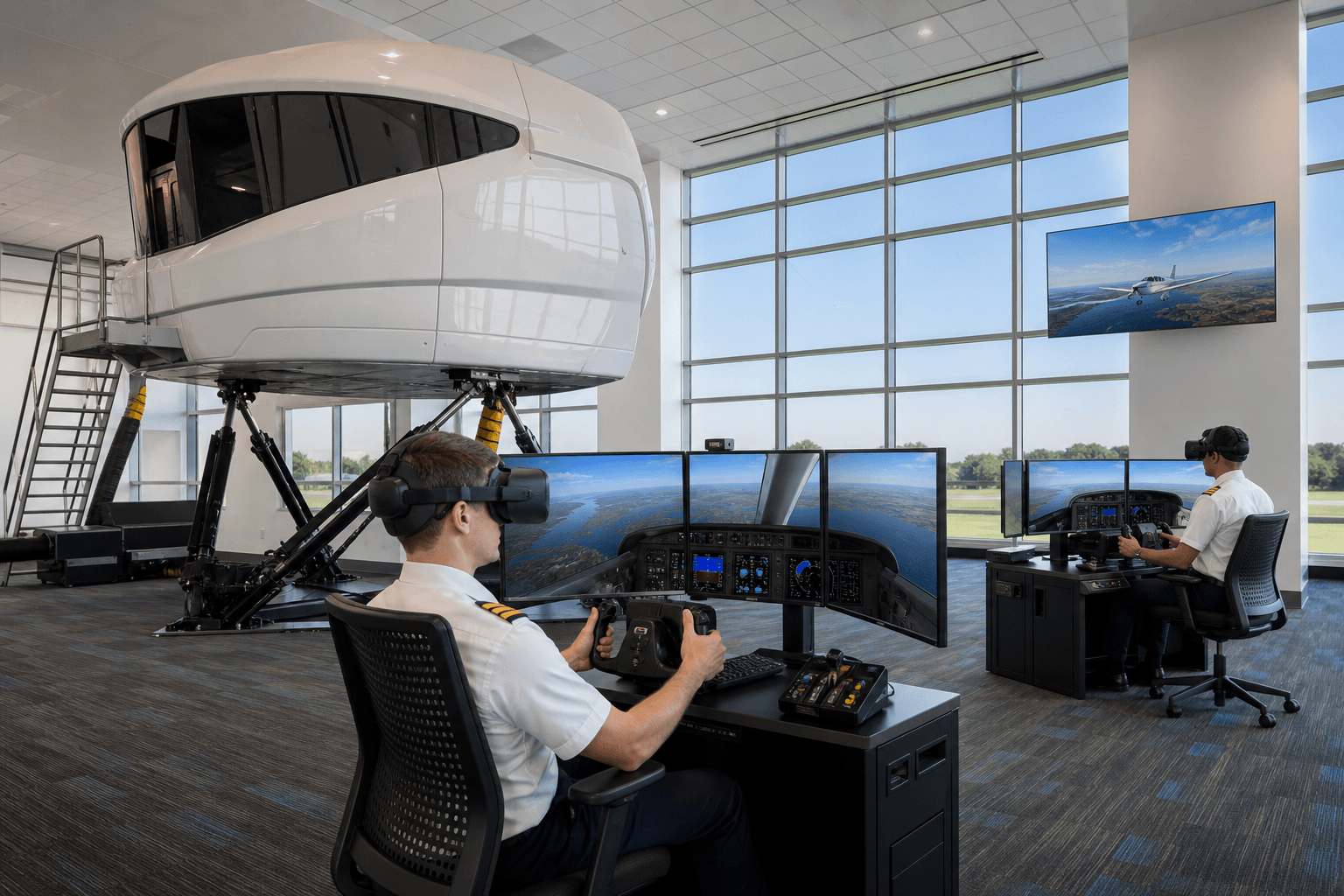
EASA revamps flight training simulator rules with new capability-based system
More flexible qualification framework lessens dependence on full-flight simulators. Europe's safety regulator has embarked on an implementation programme after overhauling the qualification framework for flight-simulation training devices. The change shifts away from the previous regulatory structure – founded on fixed device types and levels – to a more flexible capability-based approach, providing more freedom to use systems other than full-flight simulators. This enables training devices to be assessed for "what [they] can actually do", says European Union Aviation Safety Agency (EASA) flight standards director Francesco Gaetani. EASA had previously highlighted the need for a rule change in order to overcome "discrepancies and barriers" that restricted the possibility of obtaining training credits when using different types of training device. It had pointed out that flight-training devices would remain relegated to a limited role, while full-flight simulators dominated the sector, unless the situation was addressed. EASA drew up proposals based on a "capability signature" – essentially a standardised 'fingerprint' of the training device's fidelity levels and features. The new framework has also adapted to account for advances in technology including virtual reality and touchscreen interfaces. "It supports innovation, enables new technologies to be integrated into training and helps ensure that pilots continue to receive effective, high-quality training in an evolving aviation environment," says Gaetani. Approved training organisations will have more freedom to choose simulation devices which are most suited to achieving the necessary training objectives, through an optional 'task-to-tool' methodology. EASA has initiated an implementation support programme, including stakeholder workshops set to begin at its Cologne headquarters in December this year.
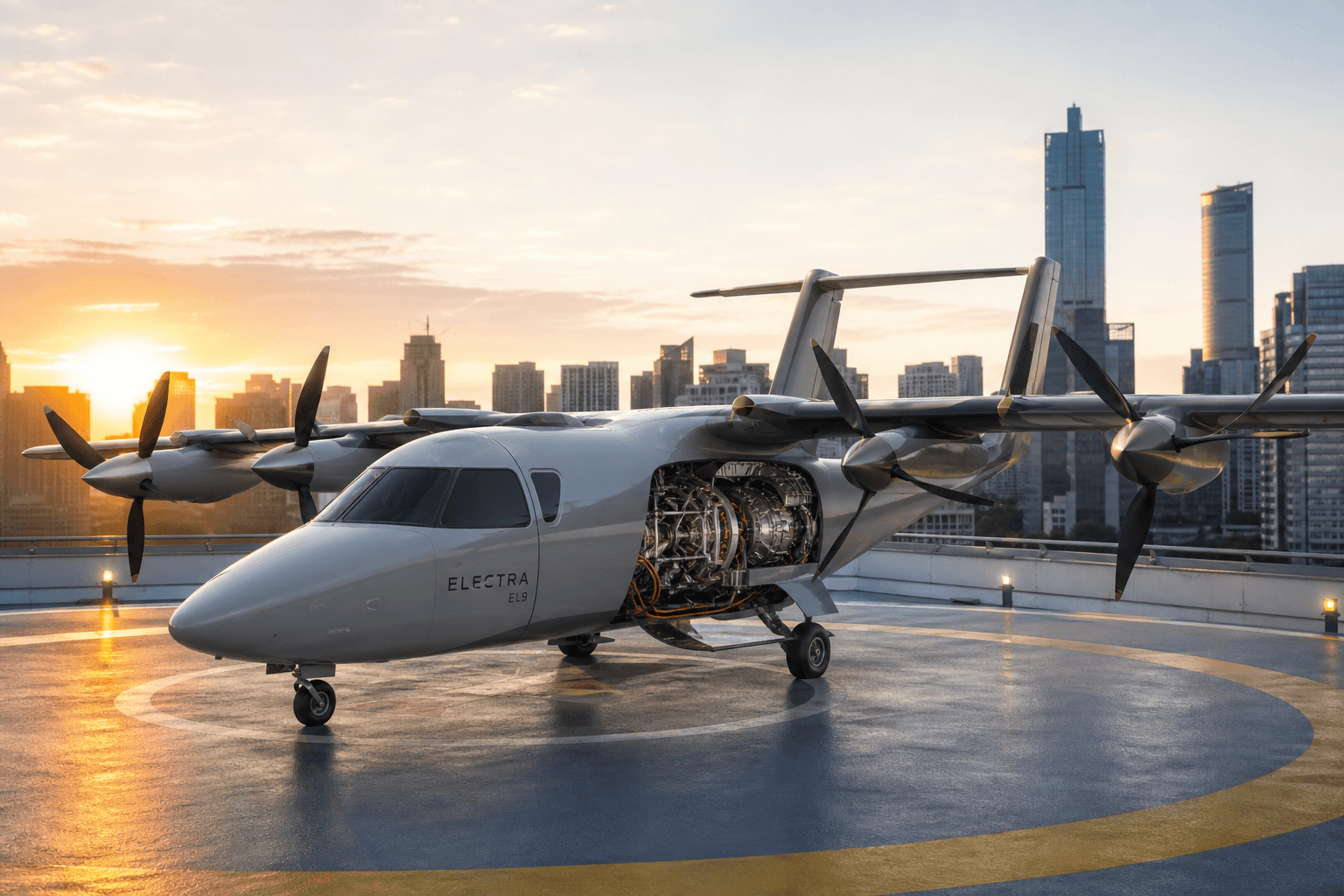
Safran's TG600 Turbogenerator Powering Electra EL9 Hybrid-Electric Aircraft
Hybrid-electric aircraft developer Electra on Wednesday announced a "life-of-program" agreement covering the production of turbogenerators for its flagship EL9 Ultra Short. The EL9, designed for operations with only a 150-foot ground roll, will be powered by Safran Helicopter Engines' TG600, which is built around the latter's Arrano gas turboshaft engine. Electra said it placed an initial order for 250 turbogenerators. The companies previously signed a deal for Safran, which is also an investor, to develop the 600-kilowatt electric turbogenerator propulsion system for EL9 prototype aircraft. Now, the TG600 is set to power the real deal. "We've closely evaluated the advanced air mobility market, and we believe the Electra eSTOL [electric short takeoff and landing] aircraft offers groundbreaking capability in a practical design that meets market needs of both today and tomorrow," said Florent Chauvancy, the former executive vice president of OEM sales for Safran Helicopter Engines, in a 2023 news release . On Wednesday, Electra CEO Marc Allen in a statement called the new deal a "defining step forward for Electra and for the future of advanced air mobility." The nine-passenger EL9 is expected to make its debut flight in 2027 or '28, with certification and entry into service by '30. Electra claims to have about 2,200 provisional orders from more than 60 operators. This is not Safran's first foray into electrification. The manufacturer in February 2025 achieved the first type certification for an electric motor for civil aircraft, after the European Union Aviation Safety Agency (EASA) declared its ENGINeUS 100 system airworthy. The engine is designed to provide 100 percent electric power for two-to-four-seat aircraft—such as Diamond Aircraft's eDA40, an early candidate—or hybrid propulsion for 19-seat regional models. Other ENGINeUS 100 customers include Swiss propulsion specialist H55, French manufacturer Aura Aero, and Aura's recently acquired VoltAero subsidiary. BRM Aero and Bye Aerospace intend to install the engine on their respective electric trainers, the Bristell B23 Energic and eFlyer family. At the 2025 Paris Air Show, Safran joined forces with Collins Aerospace and French firms Daher and Ascendance to research hybrid-electric propulsion for six-to-ten-seat aircraft. The consortium is targeting a platform "in the category" of Daher's Kodiak family of single-engine turboprops. The Integration Electra said the TG600 will be the "heart" of the EL9's hybrid-electric propulsion system, which also comprises eight electric engines from supplier Evolito. The Arrano engine around which it is built burns 18 percent less fuel versus "other in-service engines," the company said. The turboshaft will be complemented by two GENeUS electric generators provided by Safran Electrical & Power. In March, AviationWeek reported that Safran Helicopter Engines began assembling the first TG600 unit for Electra's prototype aircraft. Cédric Goubet, the company's president, said in a late 2025 LinkedIn post that it is "ready to launch development and gear up for flight testing." Goubet in a statement Wednesday said the new contract "signifies the official launch of our turbogenerator activities, a promising new chapter that complements our leadership in turboshaft technology." "We believe we have the most advanced and efficient hybrid-electric product in its class, a perfect fit for the EL9 to achieve revolutionary capabilities in new air mobility," he said. According to Electra, the EL9 is designed to move air travel away from airports. Instead, the aircraft will use ultra-short "access points" located on rooftops, parking lots, fields, barges, malls, casinos, or even ski resorts, cutting out unnecessary connections and ground transfers. The manufacturer believes it could save travelers hours on more than 2,600 routes spanning 50 to 265 miles that are suboptimal for driving, but lack routine commercial air service. It estimates 12,000 to 16,000 aircraft will be required to meet demand within the first decade of operation. EL9 access points will require just 150 feet of space for takeoff and landing, an unlock from the aircraft's blown-lift propulsion system. By redirecting airflows toward the ground, the EL9 is designed to take off at a leisurely 35 knots. Electra has already proven the capability on the EL2 Goldfinch, a demonstrator. But Safran's TG600 will be key to validating it with EL9 prototypes and, eventually, the real deal. Like many young aerospace startups, Electra is largely tight-lipped on suppliers, but it has said that Honeywell will provide the EL9's flight control computers and electromechanical actuation systems. Lockheed Martin's Skunk Works is helping design and commercialize the model. Many of the EL9's components and systems, however, are built in house. Electra has obtained several patents for novel portions of the blown-lift propulsion system.
The Daily Touch & Go
The day's best aviation news in your inbox. Free, no spam.