

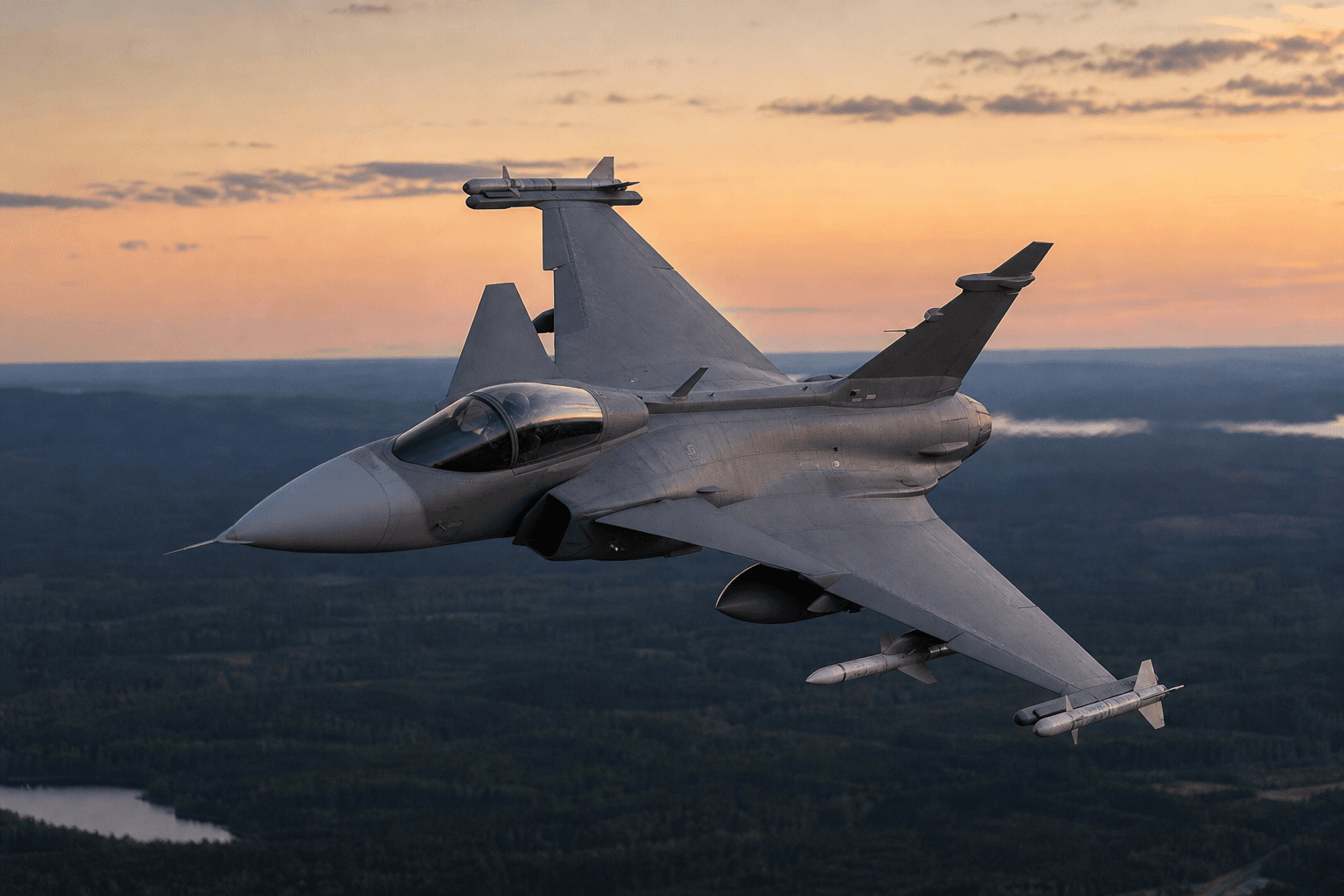
AI-generated illustration
Ukraine Urges Sweden to Speed Gripen Transfers and Arm Them with Meteor Missiles
Defence Minister Evgeniy Khmara pressed Sweden's top military commander to accelerate Gripen deliveries and ensure the fighters arrive with long-range Meteor missiles and cannon ammunition.
The gist
Ukraine wants its Swedish Gripens sooner and armed with Meteor missiles to push Russian glide-bomb carriers farther from its airspace.
Continuing coverage
All F-16 →Ukraine's Minister of Defence Evgeniy Khmara has asked Sweden to move faster on handing over Saab Gripen fighters and to make sure the jets come with the weapons Ukraine needs to fight, with Meteor long-range air-to-air missiles at the top of the list. Khmara made the case to General Michael Claesson, Supreme Commander of the Swedish Armed Forces, according to a readout Ukraine's Ministry of Defence published on November 22, 2026. The two discussed the next steps in the transfer, how the aircraft will be armed, and ways to shorten the delivery timeline.
Khmara said Ukraine is relying on the Gripen to strengthen its air defenses, in particular against jet-powered drones and Russian aircraft that carry glide bombs. He said weapons must arrive together with the fighters and named Meteor as a priority for countering Russian aviation. The missile has a range of more than 200 kilometers (124 miles) and is powered by a ramjet that keeps producing thrust for the whole flight. That reach could force Russian glide-bomb carriers to release their weapons from farther outside Ukrainian airspace. Ukraine also raised its need for aircraft cannon ammunition, and the two sides discussed whether Sweden could supply it.
The meeting followed by five days a letter of intent signed in Brussels on November 17, 2026, by Khmara, Swedish Minister for Defense Pål Jonson and UK Defence Secretary Wes Streeting, on the sidelines of the 37th Ukraine Defence Contact Group meeting. The Swedish government said the three countries intend to coordinate weapons packages with Gripen deliveries and keep supplies flowing over the longer term. Their cooperation spans procurement, training, deliveries and weapons integration. The agreement set no missile quantities, delivery dates or costs, and Meteor has not yet been confirmed as part of the weapons packages despite Ukraine naming it a priority.
Sweden plans to supply Ukraine with 32 Gripen fighters through two separate arrangements, and the first aircraft could enter service in 2027. On May 28, 2026, Sweden announced it would donate up to 16 Gripen C/D fighters from its existing fleet, on the condition that Ukraine signed an agreement to buy new Gripen aircraft. The proposed donation included advanced weapons, potentially IRIS-T, AMRAAM and Meteor air-to-air missiles. The Swedish government said the first donated jets could begin defending Ukrainian airspace as early as 2027.
The second arrangement covers new aircraft. On June 30, 2026, Saab signed a contract with the Swedish Defence Materiel Administration (FMV) for 16 new-build Gripen E fighters intended for Ukraine, valued at about SEK 24.6 billion ($2.5 billion). Saab is scheduled to deliver those aircraft to FMV in 2029 and 2030. The UK followed on July 16, 2026, committing €300 million ($345 million) to support the program, covering pilot and engineer training, simulators, spare parts and the equipment needed to operate the jets.
The Gripen push comes as other allies prepare to add to Ukraine's existing fighter fleet. Belgium has pledged 10 F-16s and France two Mirage 2000-5F jets, both for delivery by the end of 2026. President Volodymyr Zelenskyy has also requested 40 additional F-16s, citing maintenance demands that limit how many of Ukraine's current aircraft are available.
Beyond fighters, Khmara set out Ukraine's wider military needs for Claesson. Drones for front-line, medium-range and deep-strike operations came first, with Khmara saying drone strikes account for more than 90% of the enemy's losses and urging allies to direct assistance toward unmanned systems. Air defense ranked second, including missiles for ground-based systems, man-portable air defense systems (MANPADS) and air-to-air missiles. The two officials also discussed security in the Baltic Sea and industrial cooperation, and Ukraine offered to share combat experience and feedback on weapons performance to help Sweden improve its military equipment.
Originally reported by AeroTime
Read more
All Military/Defense →
Texas Air National Guard F-16 Crashes in Michigan Training Mission, Pilot Ejects Safely
A Texas Air National Guard F-16 went down in Green Lake Township, Michigan, forcing a one-mile evacuation over a hazardous chemical spill before the order was lifted that night.
Russian Kh-101 Missile Crashes in Eastern Poland After Swedish Gripens Fail to Make Visual Contact
A Russian cruise missile spent about three minutes over Poland before crashing near Nowy Lipowiec, as Swedish and Polish fighters responded and Rzeszów and Lublin airports halted flights.
Russian Helicopter Suspected of Breaching Finnish Airspace Off Loviisa After Drone Strike on Cargo Ship
Finland says a Russian helicopter flew up to 4.1 kilometers into its airspace near Loviisa, possibly tied to rescue efforts for the burning cargo ship Sparta II.
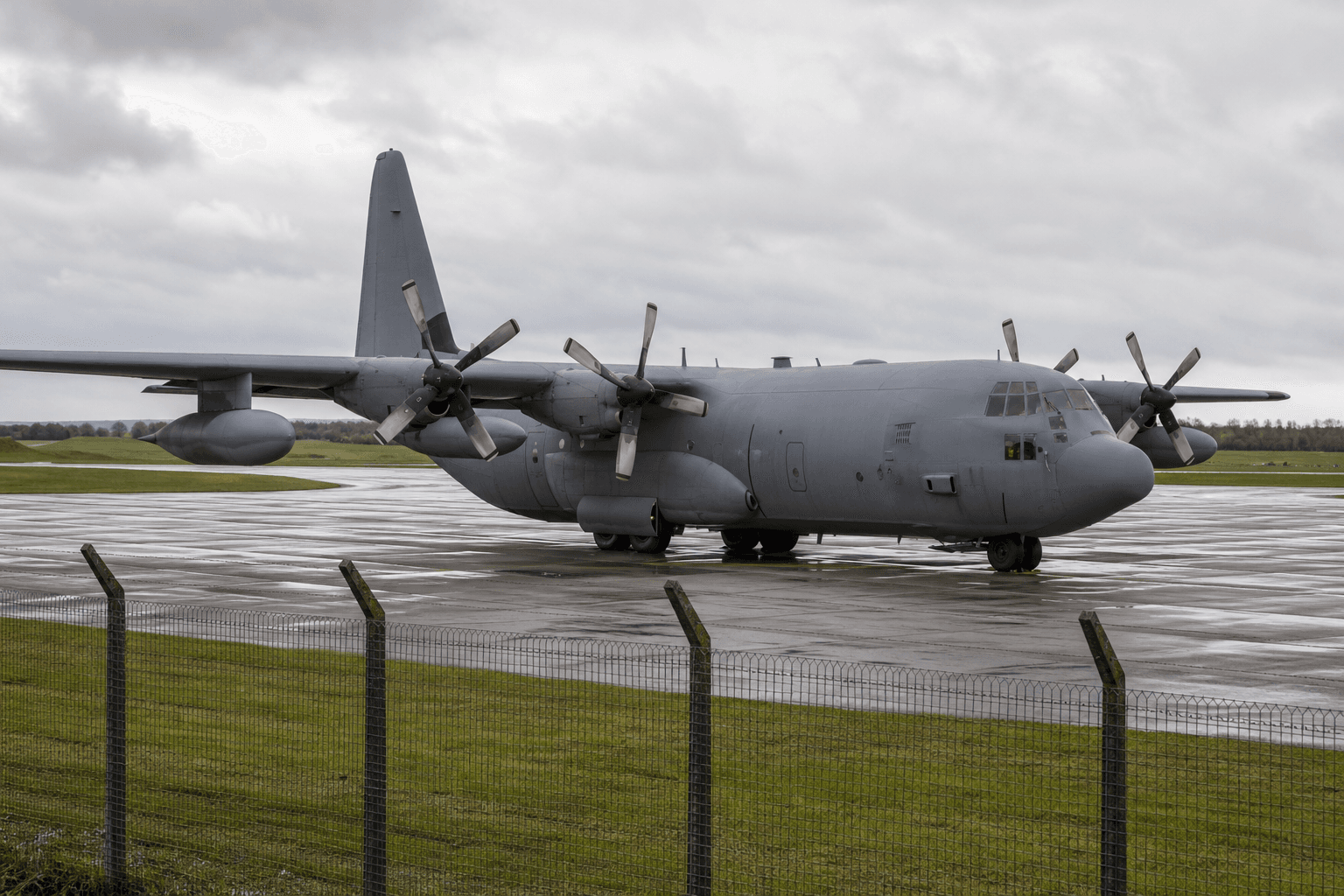
US Prosecutors Charge Irish Activist with Destroying Air National Guard C-130 at Shannon Airport
A Manhattan federal indictment alleges Daithi O'Corrain broke into a refueling C-130 Hercules at Shannon in April and wrecked the $60 million aircraft beyond repair.
The Daily Touch & Go
The day's best aviation news in your inbox. Free, no spam.