

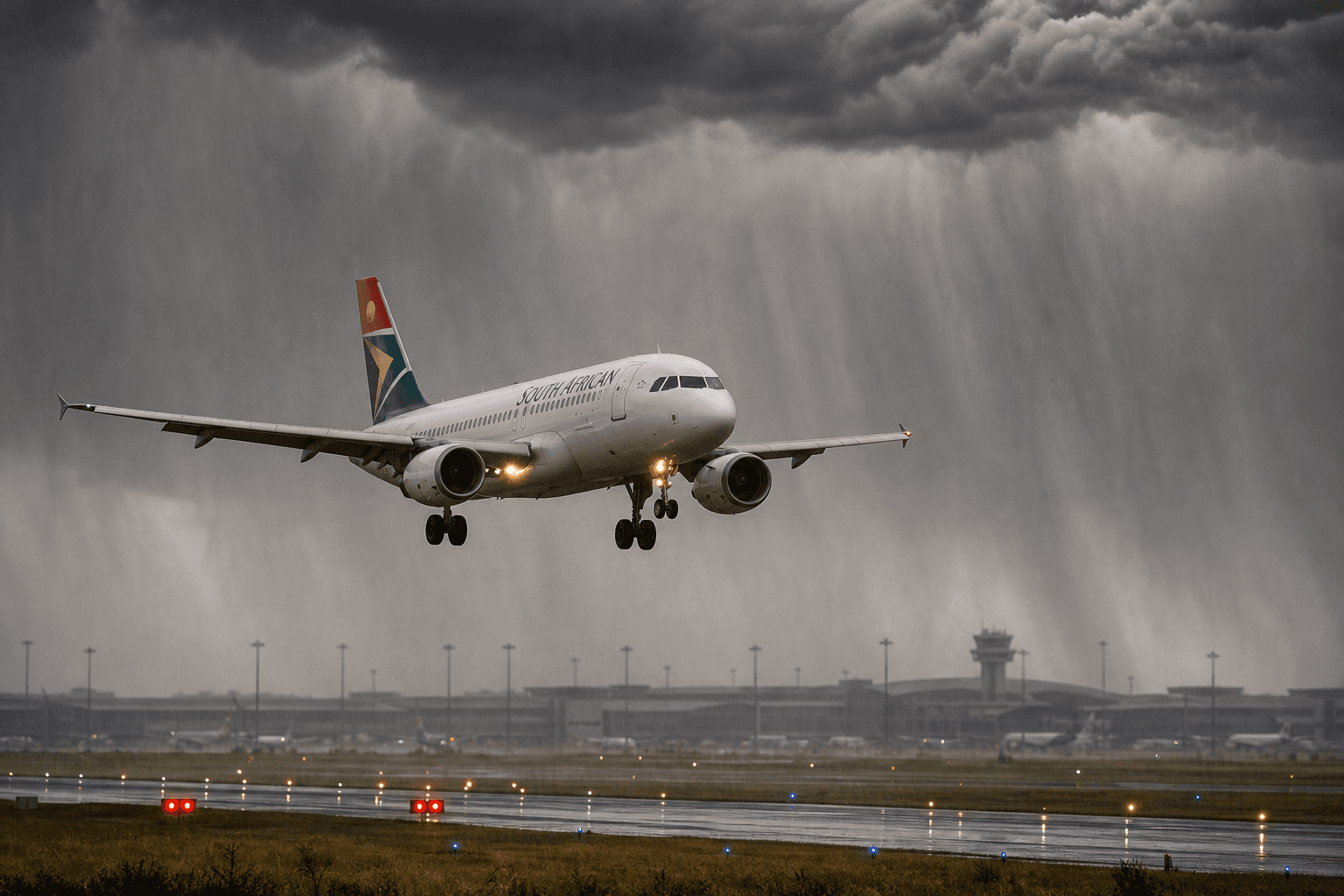
AI-generated illustration
SAA A320 Triggers Stall Protection After 30kt Windshear Hit on Johannesburg Approach
South African investigators are probing a 8 November incident in which an A320 lost airspeed in windshear near Johannesburg, then overspeeded its flaps during the recovery before landing safely.
The gist
An SAA A320 dropped to about 120kt in windshear near Johannesburg, activating stall protection, then hit flap overspeed while climbing out.
Continuing coverage
All Airbus A320 →- TUI fly Belgium Shuts Casablanca and Marrakech Bases, Ending 11 Morocco Routes to France and Italy
- Lufthansa Plans 1,000 Job Cuts at Mainline Airline and Shrinks A320 Fleet in Favor of A220s
- Five Hurt as JetBlue A320 From Ponce Hits Severe Turbulence Before Fort Lauderdale Landing
- Flyyo Drops Santiago Charter Flights for Fly2Galicia, Citing Unpaid Bills
South African investigators have opened an inquiry into a windshear encounter at Johannesburg in which a South African Airways Airbus A320 lost airspeed on approach and its stall-protection system activated. The incident took place on 8 November as the twinjet arrived from Cape Town. The aircraft, registered ZS-SZO, later landed safely after a second approach, and none of those on board was injured.
The crew had flown an ILS approach to runway 03R and had received landing clearance. Thunderstorms and rain were severely affecting the area at the time. Details of what followed come from preliminary information from the South African inquiry, which has been cited by its French counterpart, the BEA.
According to that information, the A320 was descending through 1,600ft when it encountered windshear of negative 30kt. The encounter set off a speed alert, the warning that indicates an aircraft is entering a low-energy state. Both pilots recognised the windshear condition, the BEA said, and they called for take-off thrust.
The recovery did not stop the loss of speed straight away. During the manoeuvre, the aircraft's speed fell below the lowest selectable speed for the autopilot and autothrust. That threshold is normally fixed at a factor of the stall speed for the aircraft's configuration at the time.
The BEA said the A320's speed dropped to around 120kt and stayed there for about five seconds before it began to recover. For roughly two to three seconds within that period, the aircraft's stall protection was active. The jet then cleared the area of windshear and entered a climb.
A second problem emerged once the aircraft was out of the windshear. The thrust remained locked at take-off/go-around power, and as the A320 climbed it gained speed quickly. One of the pilots realised the jet was accelerating to the point of exceeding its flap speed limit. The flap overspeed lasted about 10 seconds, according to the BEA.
Taken together, the preliminary account describes a sequence of three distinct events in under a minute of flight: a speed alert as the windshear struck at 1,600ft, a period of about five seconds near 120kt with stall protection briefly engaged, and around 10 seconds of flap overspeed during the climb under locked take-off/go-around thrust. The South African inquiry has not yet published conclusions on the event.
The BEA said the aircraft subsequently recovered from the overspeed and the crew carried out another approach. Rather than returning to runway 03R, the A320 landed on runway 21L at Johannesburg, completing the flight from Cape Town without injury to anyone on board.
Originally reported by FlightGlobal
Read more
All Aviation Safety →
White House Forms Tiger Team to Head Off Air Traffic Control Outages Before Thanksgiving
A multi-agency group drawn from the FAA, Transportation, Defense and the intelligence community has met daily since a five-hour nationwide ground stop halted US flights.
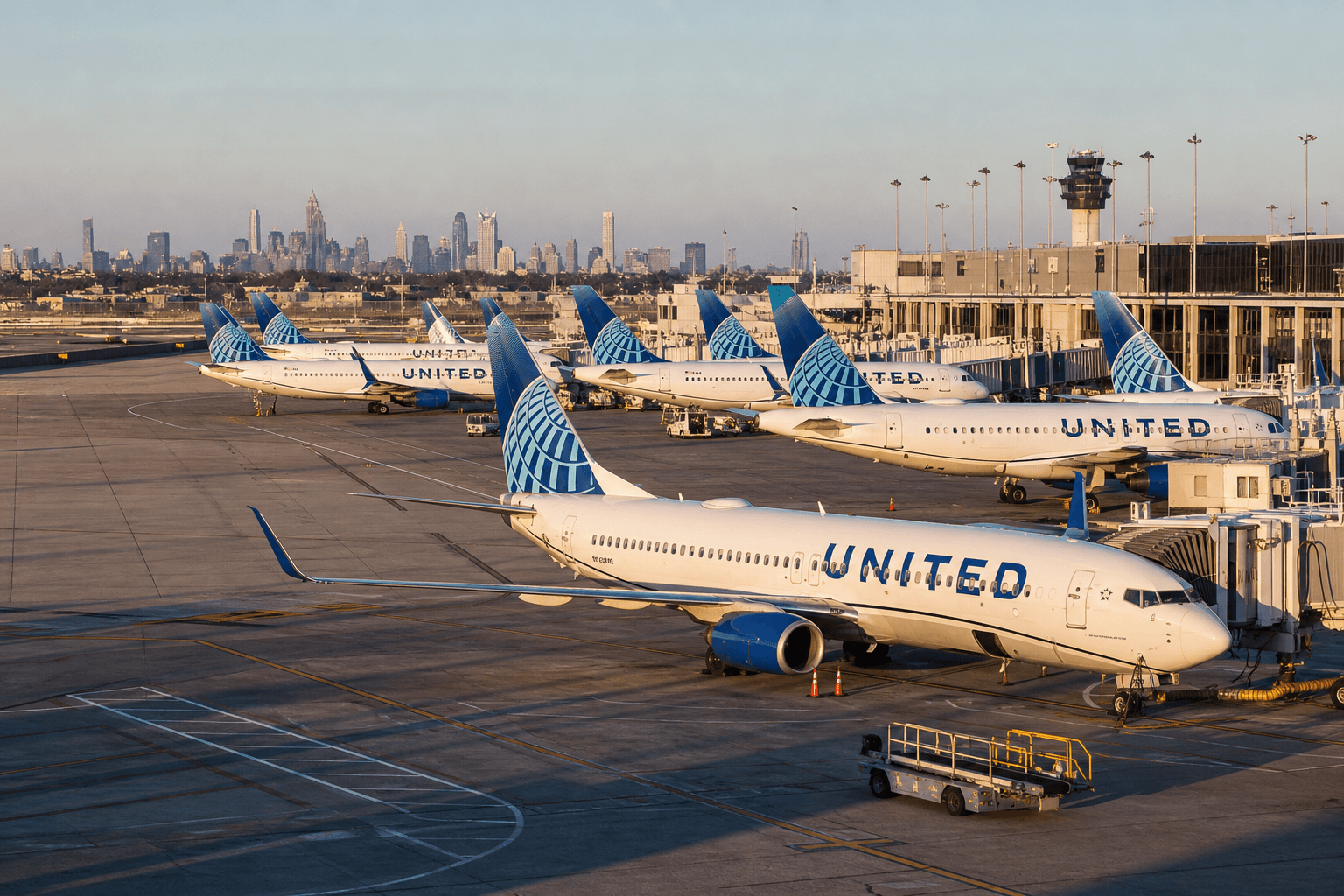
FAA Nationwide Ground Stop Sends NBA, NHL and College Teams Scrambling for Weekend Travel
A ground stop of more than four hours Friday, tied to communications problems at regional air traffic control centers, forced teams onto buses, back to campus and into rescheduled kickoffs.

Air France A350 and American A321 Pass Within 400 Feet After Wrong Turn Departing LAX
Two departing jets, an Air France Airbus A350 and an American Airlines Airbus A321, came within 400 feet of vertical separation after leaving Los Angeles International on November 7.
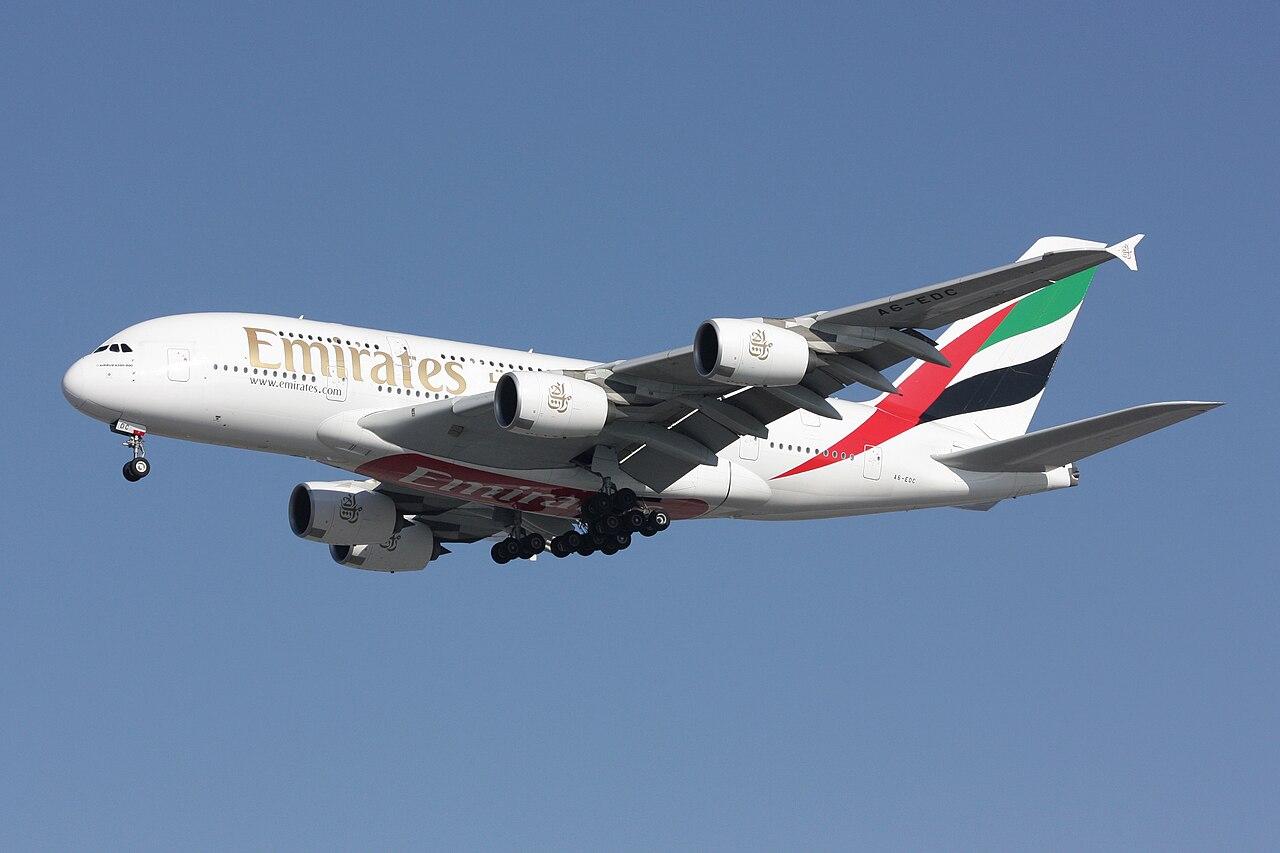
EASA Expands Urgent A380 Wing Spar Crack Checks to 24 Jets, Adding Eight More
A new airworthiness directive brings eight more Airbus A380s into accelerated mid spar inspections, with 22 of the 24 affected jets flown by Emirates.
The Daily Touch & Go
The day's best aviation news in your inbox. Free, no spam.