
Image: PJSC "UAC" · CC BY-SA 4.0 · via Wikimedia Commons
United Airlines Anticipates Full Fuel Cost Recovery by Q4 Amid Rising Expenses
United Airlines posted a $1.1 billion operating profit in Q2 2026 despite an 84% surge in fuel costs, aiming to offset these through fare increases by year-end.
The gist
United Airlines expects to fully offset soaring fuel expenses with higher fares by Q4 2026 after reporting lower Q2 profits.
United Airlines reported an operating profit of nearly $1.1 billion for the second quarter of 2026, marking a 17% decrease compared to the $1.3 billion recorded in the same period of 2025. The net profit also dropped to $805 million from $973 million year-over-year. This result was achieved against the backdrop of a sharp 84% rise in fuel costs, amounting to an additional $2.3 billion for the quarter ending in June. Despite these headwinds, the airline managed to recover roughly half of the increased fuel expenses during this period by adjusting ticket prices.
Revenue gains played a crucial role in mitigating the financial impact of higher fuel prices, with total income rising 16% to nearly $17.7 billion. Contributing to this growth was a 12% increase in yields, reflecting United's ability to charge more per available seat mile. These figures underscore a strategic response that balanced customer demand with pricing power, allowing the airline to maintain profitability despite inflationary pressures on operating inputs.
United’s Chief Executive Scott Kirby emphasized the airline’s resilience and adaptability in a volatile environment. He highlighted the company’s swift operational adjustments made following a spike in oil prices in March, including schedule changes that optimized resource utilization. Kirby also noted a simultaneous investment in customer experience, suggesting United's approach involves both cost management and service enhancements to sustain competitive positioning.
Fuel expense projections remain a significant concern, with the carrier estimating a nearly $6 billion increase in fuel costs for the full year 2026 compared to 2025. This outlook reflects current oil price trends and forms the basis for United’s anticipated fare recovery strategy. The airline expects to recoup about 80% to 90% of the additional fuel costs in the third quarter and aims to achieve complete recovery by the fourth quarter, indicating a phased pricing response aligned with market conditions.
The company’s plan to fully recover fuel cost increases through ticket pricing indicates strong confidence in demand fundamentals and market acceptance of fare adjustments. This strategy suggests that United views these cost headwinds as manageable within its broader revenue management framework. The gradual recovery of costs across quarters also points to a calibrated approach to balancing revenue growth with sustaining customer volumes.
United Airlines’ ability to navigate an 84% surge in fuel costs while retaining profitability distinguishes it among U.S. carriers experiencing inflationary pressures. Its performance reflects operational flexibility and pricing discipline. By leveraging scale as a Star Alliance member and tuning schedules in response to fuel price volatility, United demonstrates a model of financial agility in a challenging macroeconomic context.
This quarter’s financial performance also highlights the broader industry impact of fuel prices on airline economics. Fuel is a significant element of cost structure for airlines and sudden spikes typically squeeze margins. United’s execution of strategic fare increases and schedule adjustments provides a case study for how airlines can respond effectively without drastic capacity cuts or extensive cost-cutting measures.
Going forward, tracking United’s progress in achieving full cost recovery by the fourth quarter will provide insights into pricing dynamics and demand elasticity in a high fuel price environment. The carrier’s outlook and execution on this front will influence investor confidence and operational planning as the industry continues to grapple with energy cost volatility.
Frequently asked questions
- How much did United Airlines' fuel costs increase in the second quarter of 2026?
- United Airlines' fuel costs increased by 84%, or $2.3 billion, in the second quarter of 2026 compared to the same period in 2025.
- What proportion of the increased fuel costs did United recover through fares in Q2 2026?
- United estimated it recovered about half of the additional fuel costs during the second quarter of 2026 through higher fares.
- When does United Airlines expect to fully recover the additional fuel costs for 2026?
- United Airlines expects to recover 80% to 90% of the increased fuel costs in the third quarter of 2026 and 100% by the fourth quarter, based on current oil prices.
Read more
All Airlines →
United Airlines surpasses Q2 earnings forecasts despite $6 billion fuel cost surge
United Airlines' second quarter financial results beat Wall Street projections despite the US carrier projecting a $6 billion fuel hit this year. On July 15, 2026, United Airlines CEO Scott Kirby lauded the airline's ability to "thrive in every environment" even when oil prices spiked in March 2026. "We quickly and decisively acted to adjust our schedules, while simultaneously doubling down on our customer investments," Kirby added. United confirmed that full-year adjusted diluted earnings per share guidance is raised to $9 to $11. The airline posted adjusted earnings of $1.99 per share, above the $1.85 predictions. Based on oil prices as of July 14, 2026, United expects nearly $6 billion in added fuel expense for full-year 2026 compared to the expectation at the start of the year. United Airlines In the second quarter alone fuel expenses were up $2.3 billion, although the company said it was able to recover around half of this increase. Its successes included premium revenue being up 16% compared to the second quarter of 2025, while revenue from economy class was up 11%. United's revenue for the second quarter rose 16% to $17.67 billion. During the same period last year, the figure was $15.2 billion. The company's operating income was down 17% from $1.3 billion during the second quarter in 2025 to $1 billion over the same period in 2026. Net income also dropped 17% to $805 million from $973 million last year. Highlights included United announcing that 450 aircraft now have Starlink stalled with nearly 1,000 expected by year end. United said it remains on track to bring Starlink to the whole fleet by the end of 2027. You can view the full results on the United Airlines website . RELATED Rolls-Royce, Boeing and Lufthansa line up new 787-9 ecoDemonstrator venture
United Airlines Cracks Down on Reserve Flight Attendants Absent from Base During Duty Period
United Airlines is targeting new-hire flight attendants who have allegedly gone AWOL while on reserve duty, doling out disciplinary action, including termination, to crew members who have been accused of what the Chicago-based carrier describes as ‘being out of position.’ Junior flight attendants at United Airlines generally spend their first two to three years on reserve duty, which means they don’t have fixed flights in their roster but are on reserve for last-minute callouts for flights that don’t have enough assigned crew members due to sickness or unexpected changes. Reserve flight attendants normally have several to get to their assigned base if they are called from home reserve, but many new-hire crew members don’t live in their base city because United’s hub airports are located in some of the most expensive metro areas in the United States, with a very high cost of living. It appears that some flight attendants are taking a risk by not being physically present at their assigned base at the exact time their reserve period is due to begin. Instead, they are on a commuting flight to their assigned base at this time, knowing that even if they were called for a duty, they would still arrive within the callout window. In other cases, though, some flight attendants are believed to be taking a calculated risk and not even bothering to travel to the same city as their assigned base. In these cases, the flight attendants can see where their name appears on the reserve callout list and figure that the chance of them getting called out isn’t worth their effort to commute to their base. Since February, however, United has been clamping down on this behavior, with the airline taking the position that reserve flight attendants must be physically present at their assigned base or within a three-hour travel time from the moment the reserve period starts. While the airline isn’t tracking flight attendants using company-issued smartphones, the airline is able to scour flight bookings to determine whether a crew member is ‘out of position’ at the time their reserve duty starts. For example, if a crew member has booked a standby flight from the city in which they live to their base, and it’s not set to depart until after their reserve duty starts, then this is a good indication that the flight is ‘out of position.’ Likewise, if a flight attendant has traveled on a flight from their base to the city in which they live but hasn’t booked a flight to return to base on the day their next reserve duty starts, then this also indicates that the crew member was hoping they just wouldn’t be called out. It’s United’s stated position that reserve flight attendants must be in their base city by 11 pm the night before their reserve duty starts. The reserve duty then starts at one minute past midnight, and the first time they are expected to start is at 4 am. The Association of Flight Attendants (AFA-CWA) is challenging United’s clampdown, saying that their contract explicitly states that reserve crew members are only required to be available to accept an assignment and then timely report for that assignment as given at the stated times. In other words, as long as the flight attendant accepts the assignment and turns up at base at the required time, it shouldn’t matter where they were before that point. The union has filed a grievance in an attempt to get United to ease off, but while the grievance works its way through the legal process, AFA has warned its members that the airline could continue to discipline flight attendants that is has deemed as being ‘out of position.’ In 2022, American Airlines terminated more than 50 flight attendants in just six months over similar allegations. The airline started terminating crew members after it became so frustrated with reserve flight attendants failing to turn up for flights they had been assigned. Reserve life for new-hire flight attendants is not for the faint-hearted and is frequently cited as one of the most stressful aspects of the job for junior crew members. With few days off and little holiday time, it’s probably no surprise that some flight attendants are trying to maximize the amount of time they get to spend at home.
![United Fires Flight Attendants Who Don’t Show Up—Union Says It Violates Their Contract [Roundup]](/_next/image?url=https%3A%2F%2Favoibnodqwjxlpbhunuu.supabase.co%2Fstorage%2Fv1%2Fobject%2Fpublic%2Fstory-images%2Fwikimedia%2Funited-fires-flight-attendants-who-don-t-show-up-union-says-it-violates-their-co-9387fb0a.png&w=3840&q=75)
United Airlines Enforces Presence Rule for Reserve Flight Attendants Amid Union Dispute
United is firing flight attendants who aren't at their assigned base while on reserve, while their union argues the airline is exceeding its contractual authority. Plus: Delta doubles down on Los Angeles, a humanoid robot walks through an airport, and United passengers confront carry-on and cabin-cleanliness failures.
United Airlines Expands Airbus A321neo Orders Amid Boeing 737 MAX 10 Delays
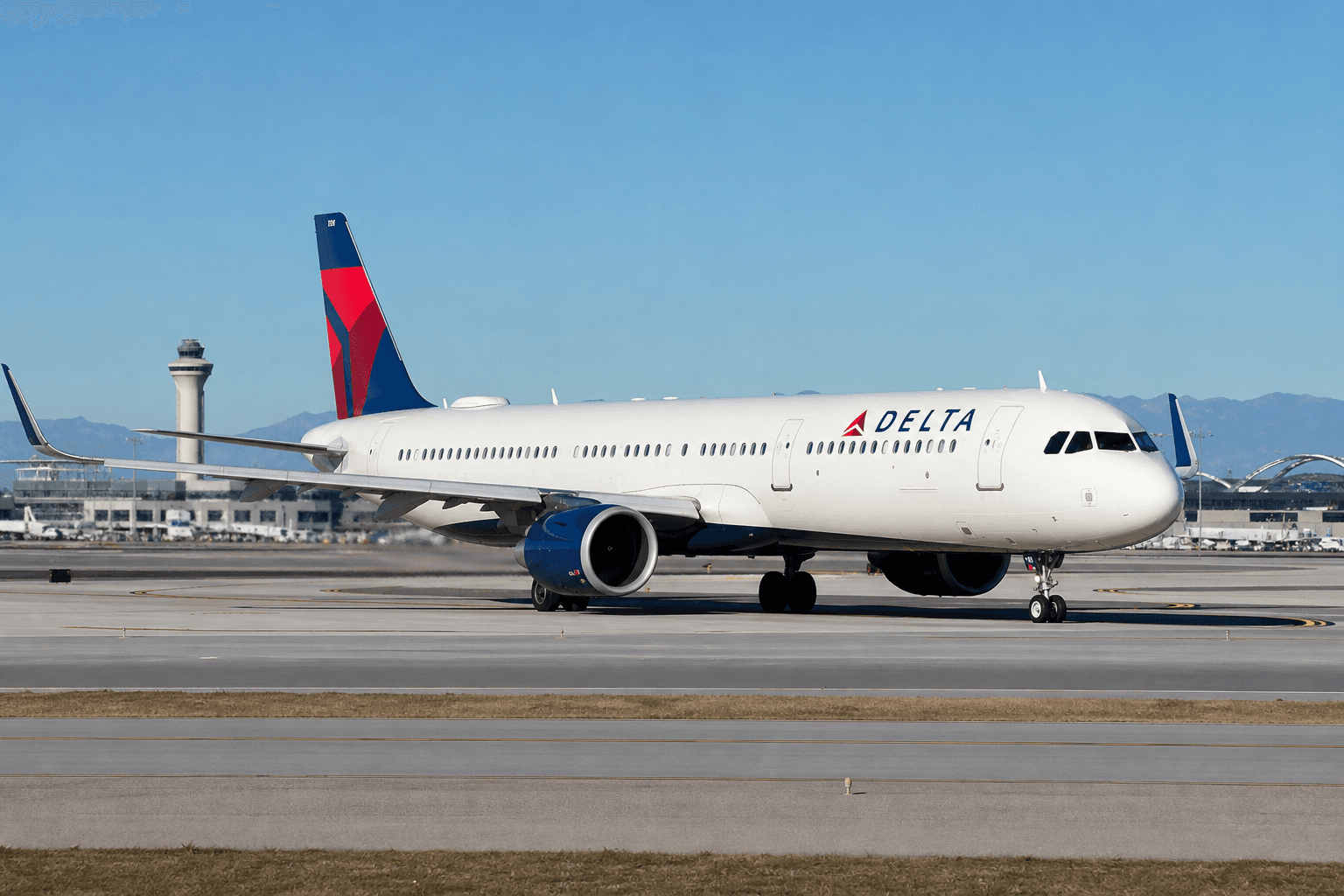
Within the US, Airbus has made significant inroads with airlines of all sizes. It has sold hundreds of Airbus A321s to Delta Air Lines, while American Airlines is the world's largest operator of the A320 family. In the process, however, United Airlines got left behind, and its 2010 merger with Continental Airlines gave it a massive Boeing 737 fleet, a type that it's continued to order in large quantities over the past 16 years.
The Daily Touch & Go
The day's best aviation news in your inbox. Free, no spam.