


Illustration: The Touch & Go
Tail Strikes Ground 787 and A350 Composite Jets for Weeks While 777 Returns to Service Quicker
Composite materials on modern widebodies like the Boeing 787 and Airbus A350 complicate tail strike repairs, leading to longer downtime than metal fuselage aircraft such as the Boeing 777.
The gist
Tail strikes on composite 787s and A350s cause extensive inspections and repairs, grounding them for weeks versus days for metal 777s.
Modern widebody aircraft such as the Boeing 787 and Airbus A350 incorporate roughly 50% carbon-fiber composite materials by weight, a design choice that significantly reduces aircraft weight compared to older metal airframes. While this yields benefits like lower fuel consumption and enhanced corrosion resistance, the composite construction also introduces complexity when repairing impact damage such as tail strikes. In contrast, the Boeing 777, which uses predominantly traditional aluminum fuselage construction, can sometimes resume flying within days after a minor tail strike, given the damage is confined to external components like the tail skid.
A tail strike occurs when the rear fuselage contacts the runway during takeoff, landing, or go-around maneuvers—often due to excessive pitch angles, hard landings, or performance calculation errors. Damage can range from superficial dents and scrapes to structural harm affecting the pressurized rear fuselage. Damage to critical structures jeopardizing cabin pressurization must be meticulously assessed, since unrepaired impairments may worsen with repeated pressurization cycles, potentially compromising safety.
The primary challenge with composite structures stems from their damage characteristics. Unlike metal, where dents, cracks, or deformations are often visible indicators of structural compromise, composite materials can conceal internal damage such as fiber fractures, microcracks, or delamination beneath seemingly minor surface abrasions. Consequently, engineers cannot rely solely on a visual inspection and must employ advanced non-destructive testing methods like ultrasonic inspections, thermography, and radiography to accurately map the extent of damage.
These diagnostic processes are time-consuming and may involve coordination with aircraft manufacturers to interpret damage relative to structural repair manuals. Repairing a composite fuselage requires more involved techniques beyond patching metal panels: damaged composite layers are excised, replaced with carefully oriented new plies, and cured under controlled environmental conditions. The quality of repair hinges on strict adherence to procedures regarding humidity, temperature, material handling, and technician skill.
The upkeep of composite repair materials also adds logistical complexity as they often have limited shelf lives and require dedicated storage. This can necessitate transferring the aircraft to specialized maintenance facilities and prolonging downtime. In comparison, metal repairs—though still requiring expertise—can be faster, involving physical removal of damaged sections, metal patch installation, or panel replacement with mechanical fasteners.
Real-world incidents highlight these contrasts. After LATAM Airlines’ Boeing 777-300ER suffered a severe tail strike during takeoff at Milan Malpensa in July 2024, investigators noted that an incorrect weight input led to a low rotation speed and protracted tail contact. Despite the seriousness, the aircraft required significant but comparatively swift repairs due to the metal fuselage. Meanwhile, an Air France Airbus A350 sustained a tail strike during a go-around at Toronto Pearson in January 2024 and was grounded for nearly ten months due to the prolonged and complex repair process demanded by its composite structure.
Boeing incorporates physical tail skid systems on some 777 variants like the 777-300ER to mitigate tail strike impact severity, though modern software-based protections have reduced such events. Still, a tail strike is never trivial: if damage extends to primary pressure bulkheads or systems, even a metal aircraft can be out of service for extended periods. The difference lies in composite aircraft’s difficulty with damage assessment and repair, owing to hidden internal flaws and demanding repair protocols.
In sum, composite aircraft like the 787 and A350 embody advances to improve operational efficiency but trade off with increased maintenance complexity when structural damage occurs. Tail strikes, while relatively uncommon, expose how materials technology influences inspection and maintenance timelines. Airlines operating these aircraft must anticipate longer groundings and intricate repairs after rear fuselage impacts compared to older widebodies with metallic fuselages.
Read more
All MRO/Maintenance →
American Airlines Legend Azriel Blackman Dies at 100 After 80-Year Mechanic Career
The aviation industry is mourning the loss of one of its most remarkable figures after American Airlines mechanic Azriel "Al" Blackman passed away at the age of 100. His life defined aviation maintenance for the whole airline. According to announcements shared by American Airlines and members of the aircraft maintenance community on social media , Blackman died on the evening of Friday, July 24, bringing to a close an extraordinary career that spanned more than 80 years.
Emirates Invests $5 Billion to Revamp Business Class on Twin-Engine Fleet
Few airlines have been successful in maintaining an uncompromised premium customer experience quite like Emirates , but even the greats make mistakes. Emirates is currently delivering a massive, multibillion-dollar fleet modernization strategy designed to comprehensively overhaul its long-haul passenger experience. This guide looks deep into this massive investment program, outlining how the Gulf carrier is re-engineering its fleet to preserve its competitive edge in the global premium travel sector, in the face of growing opposition from all directions.
Emirates completes 100th aircraft retrofit in unprecedented $5 billion overhaul program
Emirates shared that it has officially refurbished its 100th aircraft as part of what it calls the largest retrofit program ever undertaken by a carrier. The milestone comes just under four years after the project began in November 2022, with work carried out entirely in-house at the airline's Engineering hangars in Dubai. So far, the effort has touched 47 Airbus A380s and 53 Boeing 777s, giving each one a full nose-to-tail overhaul. That's roughly 28 aircraft refreshed every year since the program launched — a pace Emirates says has required rewriting much of the playbook on how retrofits of this scale are done. We've just hit a major milestone. Emirates has retrofitted its 100th aircraft. With a collective 4.4 million man hours invested, we continue to deliver an elevated customer experience across our network. https://t.co/BIFI4bKs8Q pic.twitter.com/DyY4Lh7LvJ — Emirates (@emirates) July 14, 2026 About 20 more aircraft are expected to be finished by the end of this year, pushing the airline well past the halfway point on a 219-aircraft plan backed by $5 billion in investment. The scope of the labor behind those numbers is considerable. Emirates says more than 400 engineers and technicians have logged a combined 4.4 million man hours over 44 months to get the job done. Sir Tim Clark, President of Emirates Airline, called it a significant achievement, noting that a project of this size and complexity, which was handled entirely in-house, demanded a level of planning, precision, and craftsmanship the airline hadn't had to apply at this scale before. A cabin-by-cabin rebuild #image_title Every retrofit involves the aircraft's interior being taken apart down to the studs and rebuilt piece by piece. Depending on the aircraft, that means engineers are working with more than 4,000 individual parts for an A380 and over 2,500 for a 777, all removed, refreshed or replaced and reinstalled with precision. Each retrofitted aircraft has also come out of the hangar with a new Premium Economy cabin, part of a broader push to bring the product to more routes across the network. In total, Emirates has installed more than 3,800 new Premium Economy seats through the program so far. To manage a job of this scale, the Emirates Engineering team came up with some unconventional solutions of its own. Modified catering trucks are used to ferry large components between the retrofit workshop and the aircraft inside the hangars, while the team developed zonal tracking systems and specialized storage procedures to keep parts moving efficiently. Engineers also designed and built custom equipment to access hard-to-reach areas of each aircraft's interior. More than 100 suppliers have been involved in supporting the effort. How the program came together Emirates first announced the retrofit initiative in November 2021, initially covering 105 aircraft. The first plane to go through the process, an A380, entered the Dubai hangars in November 2022. As customer demand grew, the airline expanded its scope twice in 2024 — first to 191 aircraft in May, then to 219 by the end of that year. The first retrofitted Boeing 777 returned to commercial service that August. The work has grown more ambitious over time, as well. In May 2026, engineers completed a two-to-three-class retrofit on an A380 that included structural changes to the aircraft, marking the first time a Premium Economy cabin has been added to the upper deck. Emirates says thousands of kilograms of leather, fabric, and other materials removed from the aircraft are being upcycled into limited-edition items, including luggage sold under its "Aircrafted by Emirates" collection. The airline has also turned repurposed Economy Class seat fabric into more than 4,000 backpacks, which have been distributed to children in 11 countries. RELATED Emirates unveils more cities for retrofitted A380s, B777s, new long-range A350s
Air New Zealand to Retrofit Boeing 777 Fleet with New Business Class Seats in 2027
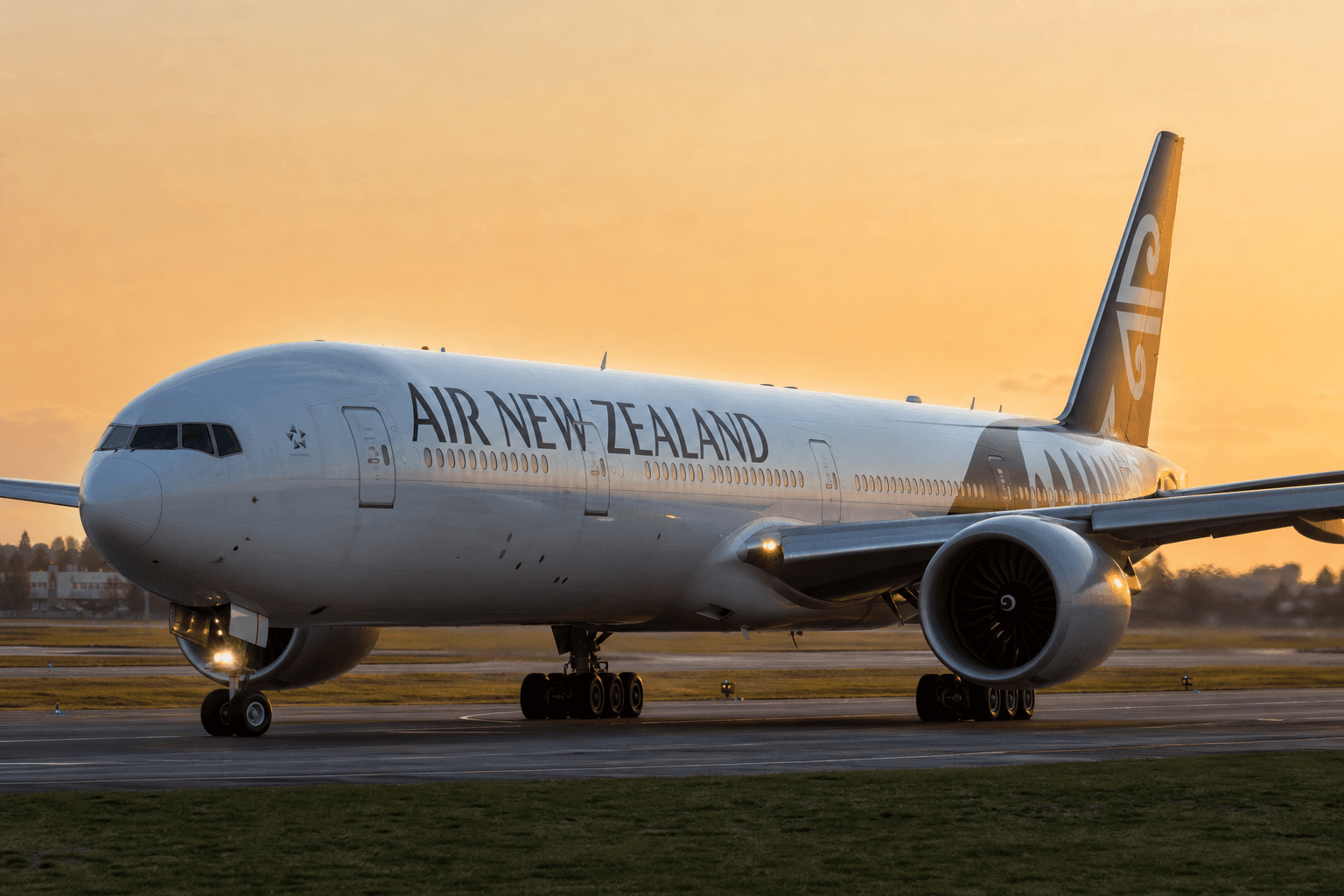
Air New Zealand has just unveiled plans to retrofit its entire Boeing 777 with new business class seats starting in 2027. However, these won't be the same new business class seats that are currently being installed on the Boeing 787 fleet… and that's probably a good thing? Air New Zealand plans reverse herringbone seats for 777s Air New Zealand intends to introduce a new business class product on its entire fleet of seven Boeing 777-300ERs (that excludes the ex-Cathay Pacific frames). Specifically, the airline will be installing reverse herringbone seats with doors on these aircraft, based on the Collins Aerospace Elevation platform. The cabin will feature 44 seats (just as it does now), with seats having 43″ of pitch. All seats will have direct aisle access and privacy doors, and center seats will have sliding privacy dividers between them. Seat back entertainment will consist of 18″ monitors with bluetooth audio. The seats will also have USB-A and USB-C charging, but no wireless charging. Air New Zealand's plan is to reconfigure the first aircraft with these interiors as of March 2027, with hopes of having the plane in service by May 2027. Of course when we're talking about aircraft interiors, it's especially important to emphasize that delays are common, and even likely. As before, the planes will feature 342 seats, with the same number of business class seats. However, we're going to see two premium economy seats removed and two economy seats added, as obviously a little more space was needed to make room for these seats. New Air New Zealand 777 business class cabin New Air New Zealand 777 business class cabin Here's what's Air New Zealand Chief Customer & Digital Officer, Jeremy O'Brien, had to say about this project: "Our current Business Premier and Economy cabins have served us exceptionally well since we welcomed the first 777-300ER into our fleet in late 2010, however the time is right to raise the bar once again. Alongside our retrofitted 787-9 Dreamliners, these upgrades will deliver a more consistent experience across Air New Zealand's international fleet, with a design and production standard that matches the world-class Kiwi service we're proud to provide onboard. Our Boeing 777-300ER aircraft continue to play a key role in our international network, and upgrading the interiors means we can keep these aircraft flying for longer, while reducing the maintenance demands that come with an older cabin product." New Air New Zealand 777 business class seat This looks great, even if the inconsistency is odd Air New Zealand's new 777 business class is long overdue, and customers should be very happy about this. There's nothing cutting edge about it, but it puts the product in the category of being very competitive. That's a massive contrast to the current herringbone seats you have on these planes, which I'd argue are among the worst business class seats (at least purpose-built long haul ones) flying nowadays. Now, from a consistency standpoint, I do find it strange how Air New Zealand is currently installing two different new business class seats on two different fleet types. In some cases that's necessary due to cabin width, but clearly that's not the case here, since the 777 cabin is actually wider than the 787 cabin. Ironically, I think Air New Zealand's new off the shelf business class on the 777 is a superior product to the custom product on the 787 , which doesn't even have doors. New Air New Zealand 787 business class cabin New Air New Zealand 787 business class seat Bottom line Air New Zealand will be installing a new business class product on its Boeing 777 fleet, which is long overdue. The airline will be installing a familiar reverse herringbone product with doors, which represents a major upgrade over the carrier's current herringbone seats on these planes. The only thing I can't make sense of is why the airline is installing a different product than on the Boeing 787 fleet. Admittedly I actually think this product is better than the new 787 product. Regardless, it's nice to see Air New Zealand's entire long haul fleet get a refresh. What do you make of Air New Zealand's new 777 business class?
The Daily Touch & Go
The day's best aviation news in your inbox. Free, no spam.