

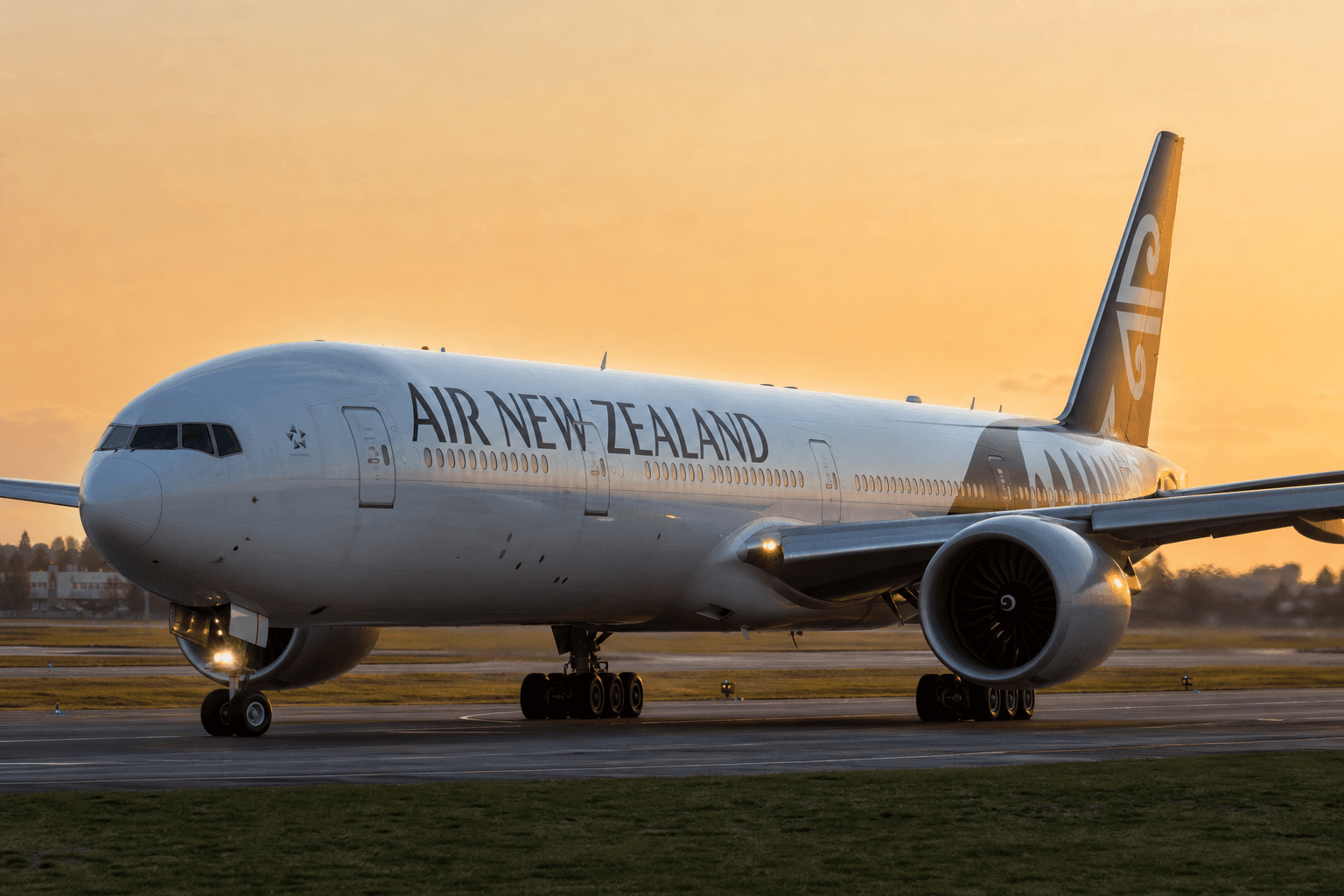
Illustration: The Touch & Go
Air New Zealand to Retrofit Boeing 777 Fleet with New Business Class Seats in 2027
Air New Zealand announced plans to upgrade its Boeing 777-300ERs with a new business class featuring reverse herringbone seats with doors starting March 2027.
The gist
Air New Zealand will update its Boeing 777 fleet with private reverse herringbone business class seats, enhancing comfort and consistency across its long-haul planes.
Continuing coverage
All Boeing 777 →- Emirates Completes 100th Cabin Retrofit in Record 44 Months
- AerCap leases three Boeing 777-300ERSF freighters to China Southern Airlines Cargo
- Majority of Boeing 777 Pilots Land Despite Unstable Approaches, Data Shows
- China Southern Air Logistics to Add Three Boeing 777-300ER Converted Freighters
- Saudia Group denies supplying Boeing 777-200ERs transferred to Iran
Air New Zealand is set to completely refurbish the business class cabins on its Boeing 777-300ER fleet beginning in 2027, marking a significant upgrade over the current seating arrangement. The retrofit will introduce business class seats built on the Collins Aerospace Elevation platform, featuring a reverse herringbone layout with doors for added privacy. This overhaul will apply to all seven Boeing 777-300ER aircraft currently in the airline’s fleet, excluding the ex-Cathay Pacific aircraft that are not part of this program.
The planned new cabin configuration will retain the current total of 44 business class seats but will improve key comfort metrics, providing 43 inches of seat pitch. The design ensures all seats have direct aisle access and include sliding privacy dividers for center seats. Each seat will incorporate an 18-inch personal entertainment screen with Bluetooth audio capabilities, along with USB-A and USB-C charging ports; however, wireless charging will not be available. These changes reflect a focus on passenger comfort and modern in-flight entertainment standards.
This business class update will also slightly reconfigure the economy and premium economy sections. The airline plans to remove two premium economy seats and add two economy seats, resulting in a total of 342 seats on the aircraft, the same as the current arrangement. This minor adjustment creates additional space required to accommodate the larger, more private business class seats without sacrificing overall passenger capacity.
Air New Zealand intends to start the interior retrofitting process with the first Boeing 777-300ER aircraft in March 2027, with a target to have the revamped plane back in commercial service by May of the same year. It is important to note that delays in cabin refurbishments can be common, so these timeline estimates could shift depending on manufacturing and installation complexities.
Jeremy O’Brien, Air New Zealand Chief Customer & Digital Officer, emphasized the importance of this upgrade, noting that the existing Business Premier seats have served the airline well since the 777’s introduction in 2010. He highlighted that the new interiors will help maintain the 777 as a vital asset in the international network while reducing the maintenance burden associated with aging cabin products. O’Brien also stressed the goal of delivering a consistent, world-class onboard experience aligned with the carrier’s reputation for premium service.
While the new business class seats for the 777s are not identical to the recently introduced seats installed on the airline’s Boeing 787 Dreamliners, the decision highlights a tailored approach to differing cabin dimensions and operational requirements. Interestingly, the reverse herringbone seats planned for the 777 are considered superior by some aviation enthusiasts compared to the custom, doorless seats on the 787, despite the latter’s newer design. The 777 cabin is wider than the 787’s, allowing for larger seats with doors and more privacy.
This cabin refresh addresses longstanding customer feedback regarding the current 777 business class seats, which critics describe as some of the less competitive offerings in long-haul business class markets. Updating this cabin positions Air New Zealand to remain competitive in the premium transpacific and international travel segments, improving the passenger experience with enhanced privacy, comfort, and technology.
This overhaul aligns with Air New Zealand’s broader strategy to modernize its long-haul fleet progressively. As the airline plans to operate its current 777-300ER aircraft well into the future, investing in a cabin upgrade ensures these aircraft remain appealing and functional in a market where premium cabin amenities significantly influence traveler choice. This also supports fleet lifecycle extension and operational efficiency through reduced cabin maintenance.
The new business class retrofit is a tangible demonstration of Air New Zealand’s commitment to maintaining high service standards across its fleet. By equipping the 777 fleet with modern, comfortable seats and enhanced privacy features, the airline strengthens its position in premium travel markets and provides a consistent experience alongside its newer aircraft.
Frequently asked questions
- What business class seating will Air New Zealand install on its Boeing 777 fleet?
- Air New Zealand plans to install reverse herringbone business class seats with doors based on the Collins Aerospace Elevation platform on its Boeing 777-300ERs.
- When will Air New Zealand start retrofitting the new business class seats on its 777 aircraft?
- Installation of the new business class seats is scheduled to begin in March 2027, with hopes to have the first aircraft returned to service by May 2027.
- How does the new 777 business class product compare to the 787 business class seats?
- The 777 business class seats will differ from the 787’s new business class seats, featuring privacy doors and a reverse herringbone layout, which some view as a superior product despite being different from the 787 configuration.
Read more
All MRO/Maintenance →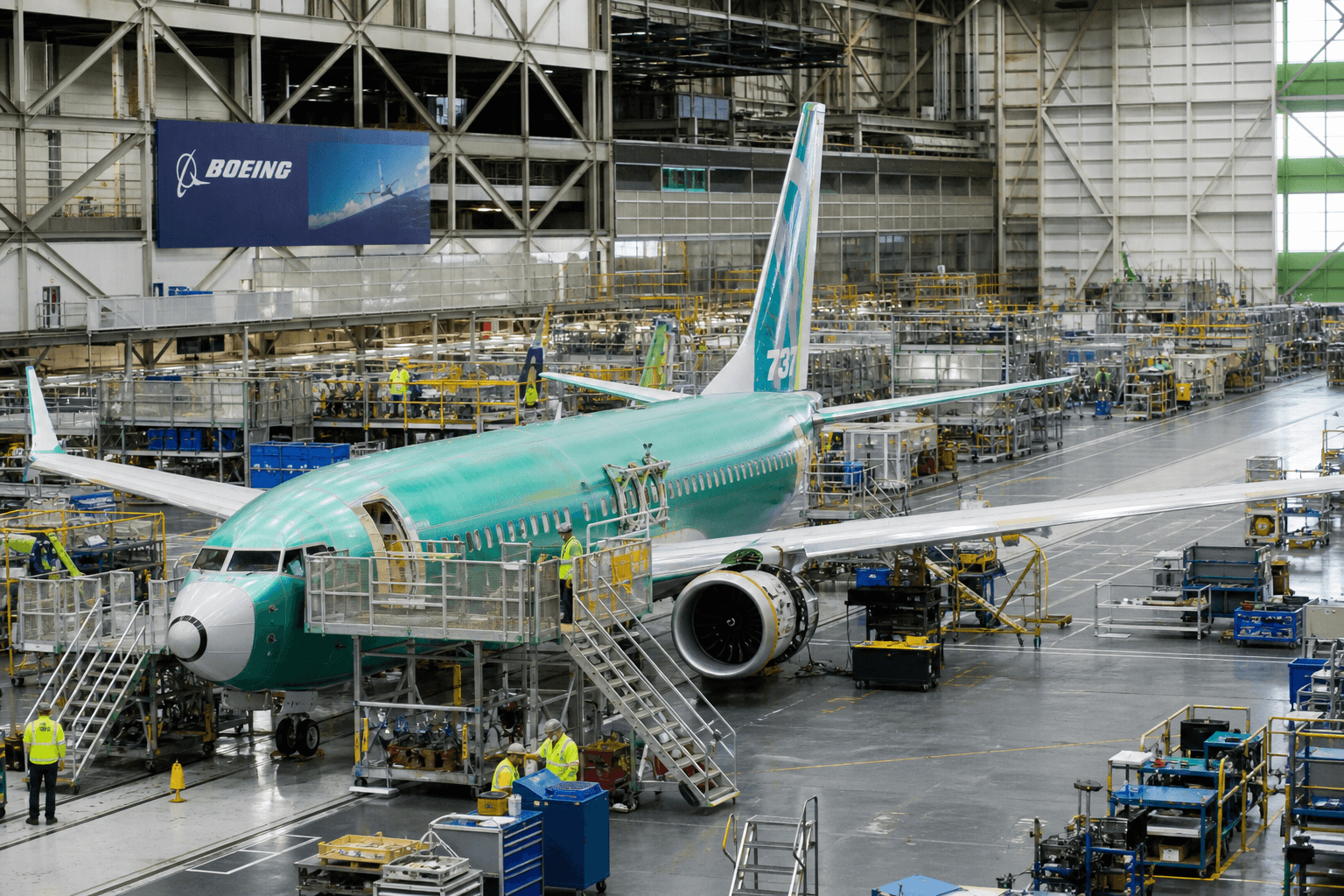
Boeing invests $10 billion to overhaul 737 Max production in historic Everett plant
EVERETT — Time and again, the future Boeing planned for and the one that resulted have been radically different. Nineteen years after Boeing rolled back the doors of its Everett, Washington factory to reveal the first 787 Dreamliner to the world, that same setting is once again poised to play a key role — bankrolling the company's future as an airplane developer. Boeing is plowing around $10 billion into putting the 737 back […]
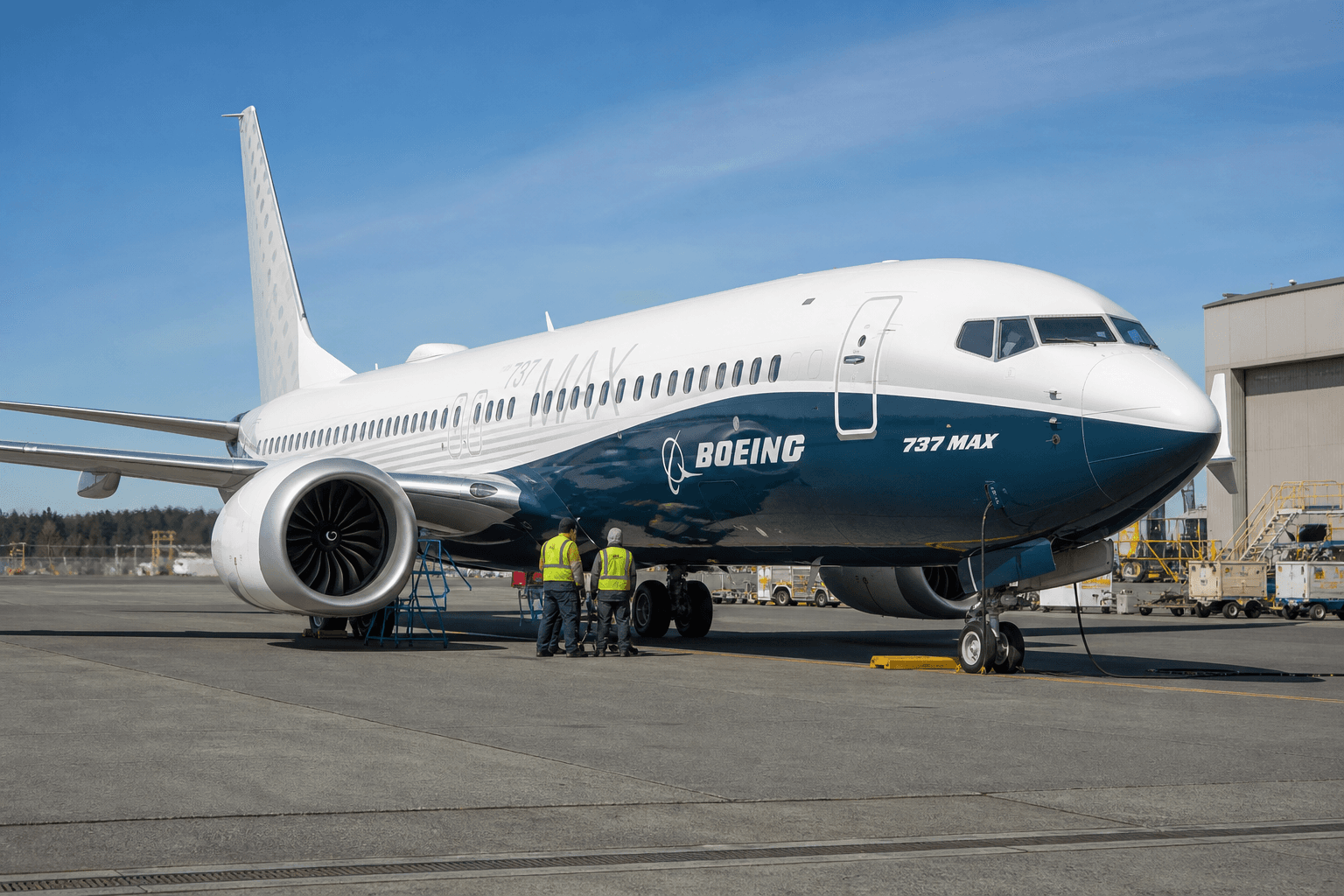
China's ICBC seeks DGCA deregistration of four SpiceJet Boeing 737 MAX 8s over engine issues
Industrial and Commercial Bank of China (ICBC) has turned to India's Directorate General of Civil Aviation (DGCA) to deregister four Boeing 737 MAX 8 jets leased to SpiceJet. Dated on July 9, 2026, the four IDERA (Irrevocable De-Registration and Export Request Authorization) Deregistration Request documents were submitted by SKY HIGH LXXVIII and SKY HIGH LXXX Both lessors, owned by Industrial and Commercial Bank of China, are based in Dubin, Republic of Ireland. If the DGCA proceed with the deregulation then the four SpiceJet Boeing 737 MAX 8 jets will be removed from India's civil aircraft register. Industrial and Commercial Bank of China would then look to take possession of the aircraft and remove them from India. SpiceJet says aircraft not part of current operational fleet In response to the deregulation request, SpiceJet said that the four aircraft had been on the ground for some time due to high-pressure turbine issues in their engines. According to Planespotters.net, the four aircraft (registered VT-MXA, VT-MXB, VT-MXC and VT-MAX) were all placed in storage in either 2024 or 2025. The 737-8s are all just under eight years old. "The deregistration of these aircraft will eliminate lease rental costs on assets that have remained non-operational for a prolonged period. There is no impact on the airline's operations, as these aircraft have been out of service for a considerable time," a SpiceJet spokesperson said. In February 2026, Ajay Singh, Chairman and Managing Director of SpiceJet, said that "while legacy costs and external factors continue to weigh on expenses, the core business is clearly strengthening". "This quarter reflects the progress we have been working steadily towards. Higher revenues, improving yields and a sharp reduction in losses demonstrate that our operational strategy is delivering results," Singh said. He added: "With more aircraft in service, a sharper network focus and continued balance sheet repair, we are building a more resilient airline, step by step." Executives as the airline have mandated a calibrated ramp-up of fleet size to 55-60 aircraft effective in the winter schedule, through a mix of wet and damp leases as well as the return to service of existing grounded aircraft. RELATED Riyadh Air weighs firm order for 25-30 more Boeing 787s

Liverpool Pilot Skywrites 'I'm Bored' During Two-Hour Piper Tomahawk Test Flight
A pilot decided to skywrite the words "I'm Bored" in the skies above Liverpool , United Kingdom, during a two-hour test flight. The aircraft, which had departed from Liverpool John Lennon Airport (LPL), had been in the air for two hours after engine maintenance required mandatory flight testing, which can typically last several hours.
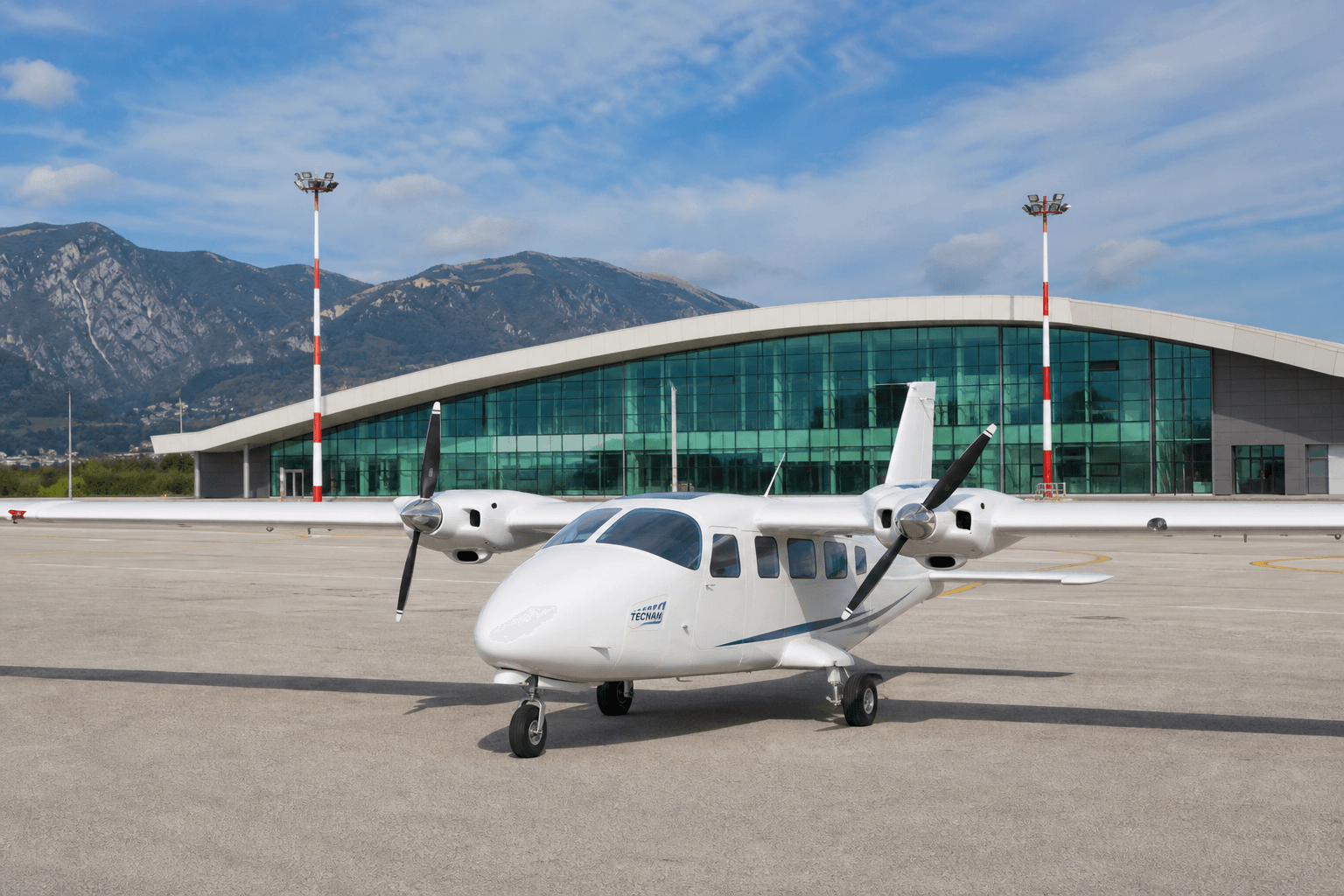
Tecnam to create regional airline using P2012 piston twins for Italian connectivity
Airframer proposes new carrier flying P2012 commuter-configured piston-twin through Altair subsidiary. Italian airframer Tecnam has proposed the creation of a new regional airline under its ownership to foster regional air mobility (RAM) services within the southern European country. Tecnam detailed the company's plans at an event to mark the inauguration of a new terminal at Rome Urbe airport – a small facility founded as the city's first airport in 1928 – on 8 July. The RAM initiative is being spearheaded by Italy's civil aviation regulator ENAC and its infrastructure unit ENAC Servizi with the goal of creating "a flexible, widespread national network that improves regional connectivity and expands access to mobility", it says. Commercial RAM services will begin from Rome Urbe later this year, connecting to airports including Rome Fiumicino, Pescara, Fano, Elba and Tortoli-Arbatax using aircraft with 9-19 seats. ENAC says three companies have so far expressed interest in operating these routes, including SkyAlps, AvioItaliana and Altair – the latter a Tecnam subsidiary that has previously specialised in maintenance services. But, speaking at the event, Tecnam chief executive Paulo Pascale said it was now looking to branch out: "Among its future objectives is the launch of a regional airline. It currently operates a helicopter and, regulations permitting, will soon operate with our P2012 Traveller aircraft." The P2012 is a piston-twin that can accommodate nine passengers in a commuter configuration. ENAC Servizi is also in the process of renovating Tecnam's home base at Capua airport near Naples, adding a new runway and terminal; it will later become part of the RAM network, serving the Campania region. "ENAC Servizi is contributing to this vision through the enhancement of a network of territorial airports designed to become effective platforms for regional connectivity, innovation and technological development," says director Marco Trombetti. "In this framework, Capua airport plays a key role as one of the infrastructures enabling this new mobility model."
The Daily Touch & Go
The day's best aviation news in your inbox. Free, no spam.