

Image: Aero Icarus from Zürich, Switzerland · CC BY-SA 2.0 · via Wikimedia Commons
Emirates Invests $5 Billion to Revamp Business Class on Twin-Engine Fleet
Facing competitive pressure and delivery delays, Emirates undertakes an extensive retrofit to replace its dense 2-3-2 business class seating with a modern 1-2-1 configuration offering direct aisle access on all seats.
The gist
Emirates spends $5 billion to eliminate middle seats and upgrade twin-engine business class cabins, maintaining premium appeal amid fierce competition and fleet delays.
Continuing coverage
All Boeing 777 →- British Airways Relocates Hyderabad Crew Hotel After Multiple Pilot Food Poisoning Cases
- Emirates completes 100th aircraft retrofit in unprecedented $5 billion overhaul program
- Mammoth Freighters Launches Boeing 777 Conversion Line in Qingdao to Meet Asia-Pacific Cargo Demand
- American Airlines Adds Nine New Summer Routes From Dallas/Fort Worth Hub
- Air New Zealand to Retrofit Boeing 777 Fleet with New Business Class Seats in 2027
Emirates is implementing a comprehensive $5 billion retrofit program aimed at correcting a longstanding business class configuration issue on its twin-engine widebody aircraft. The upgrade replaces the outdated seven-abreast 2-3-2 layout with a modern staggered four-abreast 1-2-1 seating arrangement. This move is designed to restore Emirates' competitive edge in global premium air travel after years of criticism over cramped seating that lacked direct aisle access for all passengers.
The legacy layout, maintained on the Boeing 777-300ER fleet, forced many business class travelers to occupy middle seats or climb over neighbors to reach the aisle. This discomfort eroded Emirates' premium market share, especially against regional rivals like Qatar Airways, whose innovative Qsuite set new standards for privacy and direct aisle access. Corporate clients and affluent travelers increasingly demanded these features as a baseline for premium fares, making Emirates' configuration a costly disadvantage.
Delays in delivering the next-generation Boeing 777-9 forced Emirates to abandon initial plans for a new factory-installed cabin design on that aircraft. Instead, the airline embarked on an extensive in-house refurbishment of its existing twin-engine fleet to maintain operational capacity and avoid revenue losses. This strategy involved repurposing maintenance facilities in Dubai into an assembly-line style operation, enabling the refurbishment of two aircraft per month.
The engineering effort is notable for its speed and scale. Emirates has completed the rebuild of 100 aircraft, spanning both its Airbus A380 superjumbos and Boeing 777 models. Each Boeing 777 refurbishment takes approximately 18 days, and each A380 update 22 days. This methodical approach allows Emirates to systematically modernize its fleet's passenger experience before the anticipated arrival of the 777-9, currently delayed until at least 2027.
Central to the retrofit is the adoption of a customized version of Safran's S Lounge business seat platform, which employs a staggered 1-2-1 configuration providing direct aisle access and enhanced privacy. This design traces its heritage to the upper deck seats introduced on Emirates' A380 fleet in 2008 but has been significantly updated with luxury finishes, upgraded materials, and advanced comfort features, including in-seat minibars and improved storage.
Despite the improvements, Emirates is reserving its most advanced business class product—the Safran Unity suite with sliding privacy doors—for installation on new 777-9 aircraft. The retrofitted seats thus serve as an intermediate yet substantial upgrade that aligns the twin-engine fleet's premium cabins more closely with the flagship A380 and incoming Airbus A350 aircraft standards. Passengers benefit from enhanced ergonomics, lie-flat beds extended from 72 to 78 inches, and 4K ultra-high-definition inflight entertainment screens.
Switching from a seven-abreast to a four-abreast layout inevitably reduces seat density, posing a challenge to Emirates' network planners. The new layout consumes significantly more floor space per seat, impacting overall capacity on modified aircraft. However, Emirates prioritizes passenger comfort and brand consistency over seat count, viewing this trade-off as necessary to reclaim premium traveler loyalty and defend its market position against intensified regional competition.
This retrofit reflects Emirates' measured response to both evolving customer expectations and operational realities. By investing heavily in upgrading the existing fleet rather than awaiting delayed new aircraft, the airline safeguards its premium service reputation and revenue stream. The continuous refurbishment program in Dubai highlights Emirates' commitment to maintaining leading-edge cabin experiences while managing fleet lifecycle constraints.
Ultimately, Emirates' $5 billion business class modernization is a strategic investment reversing a costly mistake from over a decade ago. It provides a platform to compete actively in the lucrative premium market segment against rivals with more passenger-friendly interiors. This retrofit program ensures that Emirates can offer a competitive product well into the next decade, reinforcing the airline's stature in global premium aviation.
Frequently asked questions
- What is the main change Emirates is making to its business class cabins?
- Emirates is replacing the seven-abreast 2-3-2 business class layout on its twin-engine aircraft with a four-abreast 1-2-1 seating configuration, ensuring direct aisle access for all passengers.
- Why did Emirates decide to retrofit existing aircraft instead of waiting for new planes?
- Due to significant delivery delays in the Boeing 777-9, Emirates chose to retrofit its current twin-engine fleet to maintain capacity and competitiveness rather than wait for new aircraft.
- What seat platform does Emirates use in the retrofit and how does it compare to its flagship product?
- The retrofit uses a customized Safran S Lounge platform that improves comfort and privacy but is a transitional product; Emirates reserves its finest Safran Unity suite with sliding doors for new 777-9 aircraft.
Read more
All MRO/Maintenance →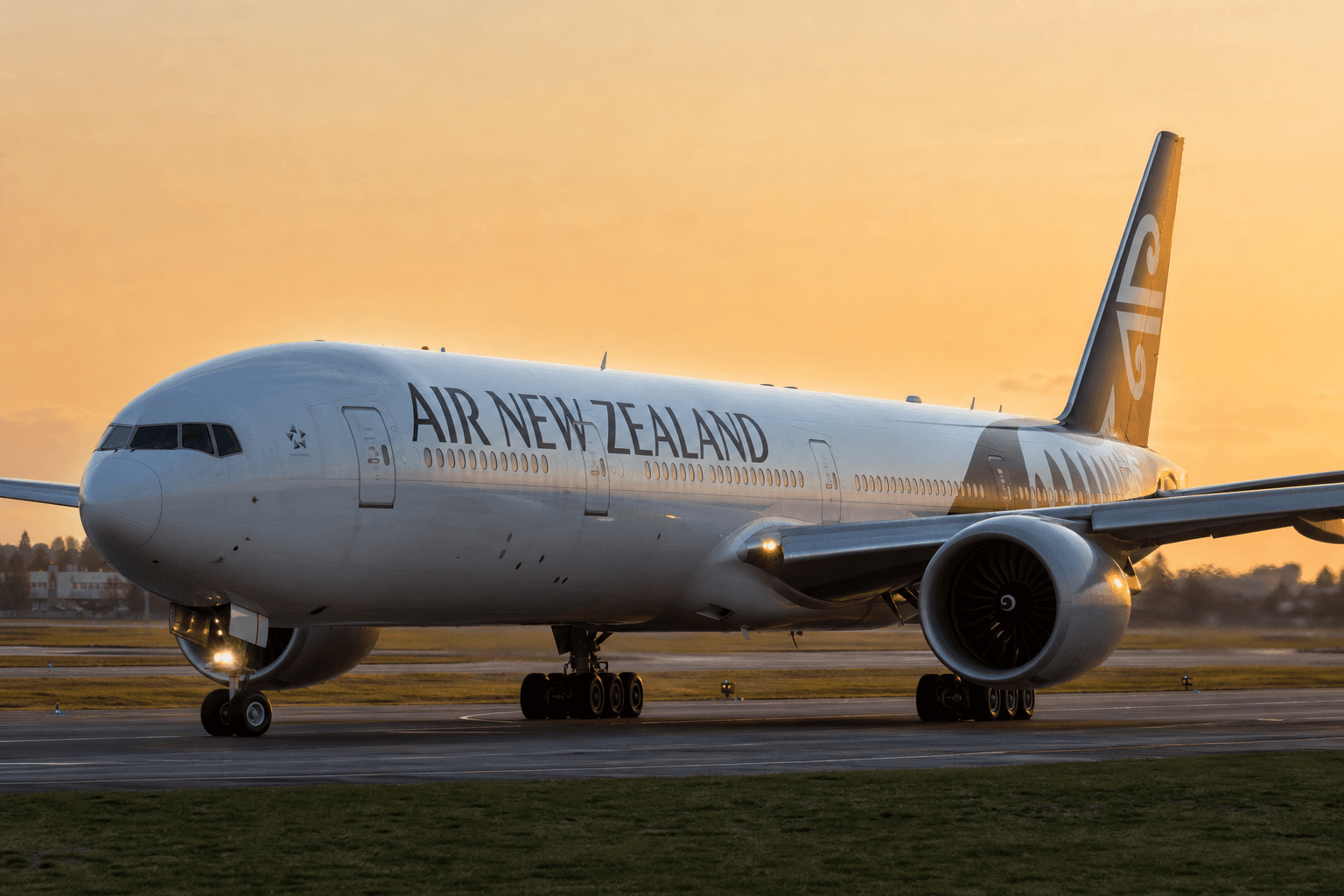
Air New Zealand to Retrofit Boeing 777 Fleet with New Business Class Seats in 2027
Air New Zealand has just unveiled plans to retrofit its entire Boeing 777 with new business class seats starting in 2027. However, these won't be the same new business class seats that are currently being installed on the Boeing 787 fleet… and that's probably a good thing? Air New Zealand plans reverse herringbone seats for 777s Air New Zealand intends to introduce a new business class product on its entire fleet of seven Boeing 777-300ERs (that excludes the ex-Cathay Pacific frames). Specifically, the airline will be installing reverse herringbone seats with doors on these aircraft, based on the Collins Aerospace Elevation platform. The cabin will feature 44 seats (just as it does now), with seats having 43″ of pitch. All seats will have direct aisle access and privacy doors, and center seats will have sliding privacy dividers between them. Seat back entertainment will consist of 18″ monitors with bluetooth audio. The seats will also have USB-A and USB-C charging, but no wireless charging. Air New Zealand's plan is to reconfigure the first aircraft with these interiors as of March 2027, with hopes of having the plane in service by May 2027. Of course when we're talking about aircraft interiors, it's especially important to emphasize that delays are common, and even likely. As before, the planes will feature 342 seats, with the same number of business class seats. However, we're going to see two premium economy seats removed and two economy seats added, as obviously a little more space was needed to make room for these seats. New Air New Zealand 777 business class cabin New Air New Zealand 777 business class cabin Here's what's Air New Zealand Chief Customer & Digital Officer, Jeremy O'Brien, had to say about this project: "Our current Business Premier and Economy cabins have served us exceptionally well since we welcomed the first 777-300ER into our fleet in late 2010, however the time is right to raise the bar once again. Alongside our retrofitted 787-9 Dreamliners, these upgrades will deliver a more consistent experience across Air New Zealand's international fleet, with a design and production standard that matches the world-class Kiwi service we're proud to provide onboard. Our Boeing 777-300ER aircraft continue to play a key role in our international network, and upgrading the interiors means we can keep these aircraft flying for longer, while reducing the maintenance demands that come with an older cabin product." New Air New Zealand 777 business class seat This looks great, even if the inconsistency is odd Air New Zealand's new 777 business class is long overdue, and customers should be very happy about this. There's nothing cutting edge about it, but it puts the product in the category of being very competitive. That's a massive contrast to the current herringbone seats you have on these planes, which I'd argue are among the worst business class seats (at least purpose-built long haul ones) flying nowadays. Now, from a consistency standpoint, I do find it strange how Air New Zealand is currently installing two different new business class seats on two different fleet types. In some cases that's necessary due to cabin width, but clearly that's not the case here, since the 777 cabin is actually wider than the 787 cabin. Ironically, I think Air New Zealand's new off the shelf business class on the 777 is a superior product to the custom product on the 787 , which doesn't even have doors. New Air New Zealand 787 business class cabin New Air New Zealand 787 business class seat Bottom line Air New Zealand will be installing a new business class product on its Boeing 777 fleet, which is long overdue. The airline will be installing a familiar reverse herringbone product with doors, which represents a major upgrade over the carrier's current herringbone seats on these planes. The only thing I can't make sense of is why the airline is installing a different product than on the Boeing 787 fleet. Admittedly I actually think this product is better than the new 787 product. Regardless, it's nice to see Air New Zealand's entire long haul fleet get a refresh. What do you make of Air New Zealand's new 777 business class?
LATAM Advances Premium Experience with New Cabins, Wi-Fi, and A321XLR Fleet Expansion
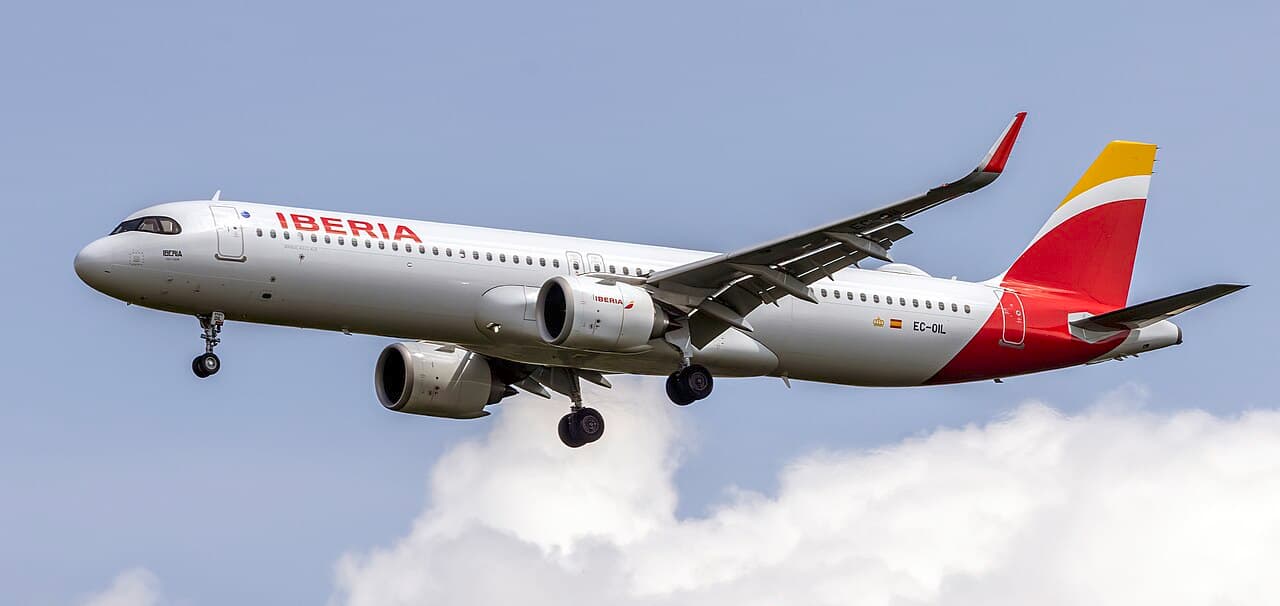
Not only is LATAM Airlines Group the largest airline group in South America, but it has also been making a number of investments aimed at positioning itself as a contender to become one of the world's best. The Latin American carrier has ordered new aircraft to cover the different market segments in which it operates, from A321XLRs to complement its existing widebody fleet to Embraer E195s aimed at boosting connectivity within the region. But the key to these ambitions is also a sweeping overhaul of the passenger experience. This spans from new premium cabins and the roll out of Wi-Fi connectivity across the long-haul fleet, and to an updated onboard catering and service concept, the launch of new amenity kits and a revamped network of LATAM lounges at all its main hubs. To learn more about what LATAM Airlines has in store, AeroTime sat down with the man who is overseeing this transformation, Paulo Miranda, Group Executive Vice President, Chief Experience Brand and Customer Officer at LATAM, on the sidelines of the 82nd IATA Annual General Meeting (AGM) in Rio de Janeiro, an event that was hosted by LATAM. "We are an airline based in South America, but we play at a global level, so we're making several investments to keep improving customer experience," he said. "For example, we're moving forward with all the changes to our Premium Business cabins. "We're modernizing the cabin with suites, where we have the 1-2-1 configuration and all passengers have aisle access," Miranda said, referring to the ongoing retrofit of the airline's long-haul business class cabin, a multi-year project that began in 2019/20. When it comes to cabin revamp, the next big project at LATAM is the launch of a new Premium Economy product, which will be called "Premium Comfort". "We're going to implement an intermediate cabin between business and economy, which comes with seats that also have more space, and a slightly different configuration," he said. "We also keep making regular renovations on our aircraft interiors. On top of this, we have the Wi-Fi investment. On single-aisle aircraft we already have about 95% installed, and we're now in the process of installing Wi-Fi on the third widebody aircraft." "The vision, obviously, is to cover the whole fleet," he added. "This is something that should be finished by the end of 2027." Many major airlines have opted for SpaceX's Starlink system, which is based entirely on a constellation of low Earth orbit (LEO) satellites. However, LATAM Airlines announced ViaSat as its partner for the carrier's US$60 million project, which will see its entire long-haul fleet of 60 aircraft fitted with satellite-based connectivity. The first of these internet-fitted aircraft entered service in April 2026. "I think these are obviously technologies that have something different from one another, but I believe the vision for the future of connectivity ultimately involves multi-orbit connections," Miranda said. "It won't be all LEO or all GEO [Geostationary Orbit, when a satellite remains at the same spot relative to the Earth – ed. note], there will be some kind of combination because there are areas where one can optimize the network better and that's a bit the direction we're looking at continuing in." Placing choice at the center The aim of these investments is to consolidate LATAM's role as the carrier of reference in much of South America and successfully defend its share. "We carry approximately 40% of all the passengers who travel within the region and when you look at South America relative to the [rest of the] world, I think we're at between 20 to 30% of all the people who come to the region," Miranda said. "Now, within our value proposition we have something very specific that we call "Choice", which means that you choose how you want to fly. So, in markets where we face competition from low-cost airlines, customers can choose a simpler fare, one with no checked bag, no extras, if that suits them," he continued. "But on that same route we also offer customers who want a more differentiated product what we call Premium Economy in South America, but it's very similar to European Business-class fares, with the first rows of the aircraft having the middle seat blocked and more space." Miranda is also keenly awaiting the arrival of the 13 A321XLRs LATAM ordered from Airbus at the 2022 Farnborough International Airshow. These long-range narrowbody aircraft open up many possibilities for LATAM when tapping new international markets. LATAM's A321XLRs were initially earmarked to operate from Lima (LIM), Perú, but after the introduction of air connectivity taxes by the Peruvian government, the airline's CEO, Roberto Alvo, suggested they may be deployed elsewhere. During a 2025 Executive Spotlight interview with AeroTime, Alvo referred to the potential of the A321XLR to develop links to Europe and the US from Brazilian cities such as Brasilia and Fortaleza. "The big change that's coming for us when it comes to narrowbody aircraft is the arrival of the A321XLR in 2027," Miranda said. "Our vision with this aircraft is that it will fly longer routes, over eight hours or so. So, we're configuring with two-classes and Premium Business seats [LATAM's business class suites – ed. note], 12 lie-flat seats." Another new type of aircraft soon to be inducted into service by LATAM is the Embraer E195. The airline group ordered up to 74 of the aircraft type in September 2025, the first of which AeroTime saw being readied for delivery during a trip to the Brazilian manufacturer's plant in Sao José dos Campos in June 2026. "These will fly first and primarily within Brazil. We're looking at it as an opportunity for new markets in Brazil, in smaller cities, and also to complement some routes we already have," Miranda stated, adding that the aircraft will feature a single cabin, with some seats offering extra space. "We'll have what we're going to call Premium Economy [not to be confused with 'Premium Comfort', the premium economy product LATAM is planning to offer on long-haul flights as an intermediate class between business and economy – ed. note] because we'll have a differentiated space in the first rows, but that's it." Investing in the soft product Besides the investment in new aircraft and cabins, LATAM has also conducted a thorough revamp of other elements of its business class experience. "We had a launch on December 1, 2025, where we relaunched everything related to the business cabin on all of our international flights," Miranda said. "There's a whole story behind it. We drew a lot of inspiration from the region itself, from its colors, themes, with variations throughout." Miranda then detailed the different elements of the service that have been upgraded. "We structured our catering service into three steps, so that the customer can really enjoy it – appetizer, main, dessert – and we also changed the blankets, the pillows, and the amenity kits, which are also inspired by the region," he said. "We wanted everyone to take a little piece of it with them after our journey with us. The feedback from customers has been really good. They are loving it." Next. Miranda delved further into the service novelties LATAM has recently introduced. "One thing we have done that I love is that we have had several partnerships with chefs from the region to design the meals," he said. "We chose female chefs who are very talented but not yet famous because we wanted to create space within our environment for them to keep developing. About 70–80% of the world's famous chefs are men, so it's an opportunity to give space and exposure to very talented people." Miranda also takes pride in the airline's inflight entertainment (IFE) platform, called "LATAM Play", which offers access to hundreds of audiovisual productions. He explained: "We have by far the best IFE platform in the region, and [it is] very comparable to the best in global aviation." This platform is available on seatback
American Airlines Begins Unlocking A321XLR Business Class Suite Doors After FAA Approval
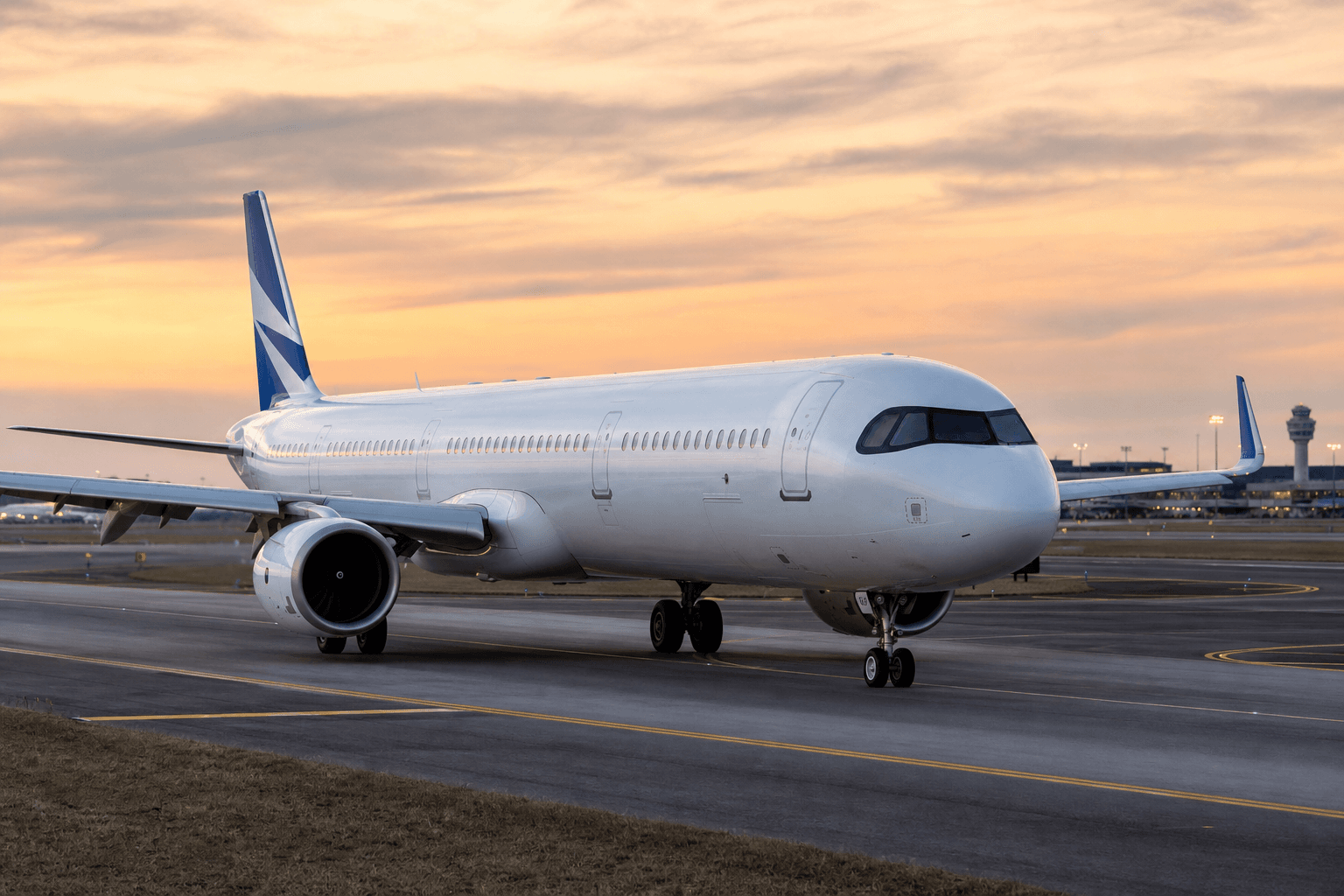
In late 2025, we saw American Airlines start to take delivery of Airbus A321XLRs , the carrier's new long range, narrow body planes (though they're initially being used primarily for premium transcontinental flights). These planes have new business class seats , and one of the features was supposed to be that they feature privacy doors. Initially the airline wasn't actually allowed to use those doors, though that's now changing. However, it's only happening over a few months. American gets A321XLR business class doors certified Aircraft seat certification is a real pain nowadays for airlines, and can greatly delay new aircraft. In the case of American's new A321XLR business class seats, they fortunately got certified pretty quickly… for the most part. The catch is that the seats have privacy doors, but up until now, they've been locked, and couldn't be used by passengers. American's A321XLRs have new business class seats That has now finally changed. As reported by JonNYC , the Federal Aviation Administration (FAA) has finally certified the doors for use, meaning these can now be opened and closed. However, the business class doors on all planes won't be unlocked overnight. Instead, the doors are initially being unlocked on one plane, with the registration code N302NY , which is also the most recent A321XLR that the airline took delivery of. Then over the coming weeks ("through the fall") the remaining planes will also have these suite doors unlocked, but with a phased approach. American notes how tech ops has to activate the doors. slight difference in statement on dates: pic.twitter.com/x7CQsxZI2p — JonNYC (@xJonNYC) July 18, 2026 Ultimately doors at business class seats aren't some sort of a game changer, though if the planes have them installed, then it's of course nice to have the option of using them. It's perhaps interesting to note that FAA requirements require more flight attendants when planes have suites with doors. You need one flight attendant for every 50 passengers (or fraction thereof), and then an additional flight attendant if there are doors. So since these planes are equipped with 155 seats and suites have doors, they require five flight attendants. Then again, that's the minimum number of flight attendants with which American staffs these flights anyway. I'm curious why the door activation takes so long American only has six A321XLRs, so I'm curious, does anyone have any theories as to why it's taking months to unlock these doors? The doors are physically on the planes, so my assumption was just that the "key" to unlock the doors wasn't being given to crews, to ensure that they weren't accidentally used. Is there more to this, and why is tech ops required to get involved? Like, how heavy is the maintenance required to complete this project? Or even with the FAA certifying the seats, is there some additional work required with each plane? American has actually had pretty good luck with seat certification, all things considered. United still doesn't have its new Dreamliner business class seat doors certified, while Delta seemingly can't get its new A321neo seats certified , to the point that the airline is likely ditching its seat manufacturer . American is only progressively unlocking business class suite doors Bottom line The FAA has finally certified American's new A321XLR business class suite doors. Up until now, these doors have been locked due to lack of certification, but that has finally changed. However, don't expect them to be in use across the fleet effective immediately. While one plane now has the doors unlocked (and it should start flying passengers today), the other planes will only be activated in phases, "through the fall."
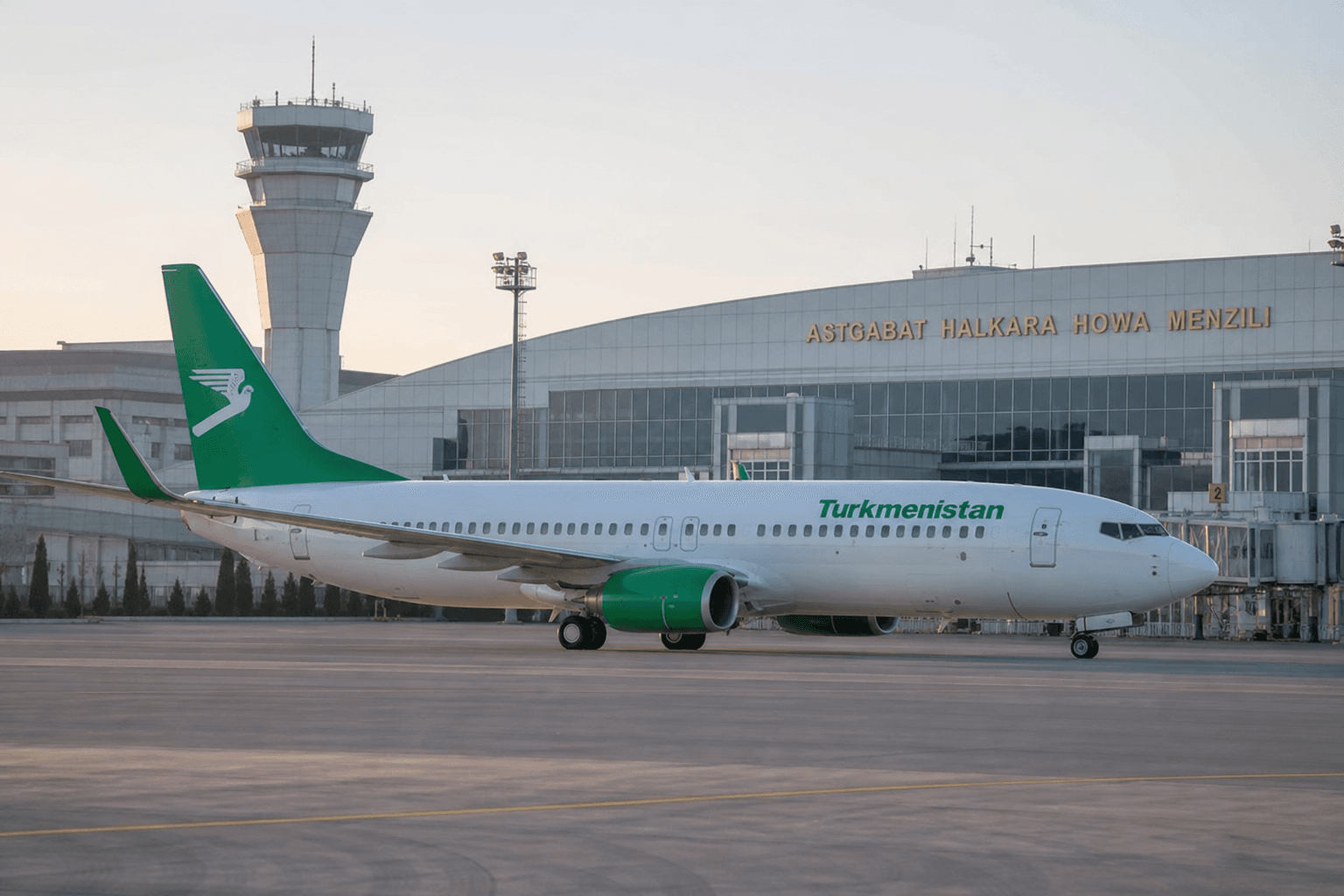
Inside Turkmenistan Airlines 737 Business Class: Unusual Service and Full Cabin on Ashgabat-Delhi Flight
Hello from India , as I just wrapped up my Turkmenistan Airlines adventure. In the previous installment, I've covered my flight in Turkmenistan Airlines' Boeing 777-300ER business class , as well as my odd transit experience at Ashgabat Airport (ASB) . In this post, I'd like to cover my connecting flight in Turkmenistan Airlines' Boeing 737-800 business class, on the 3hr5min flight from Ashgabat to Delhi (DEL). Well, this was definitely the stranger of the two flights. I got called out for taking pictures (fair enough), the cabin was completely full, the plane briefly turned around mid-flight, and the entire meal service was strange. Let me share some initial thoughts, and then soon I'll have a full trip report. Some Turkmenistan Airlines 737 business class observations Turkmenistan Airlines' 737 business class is reasonably comfortable, with recliner seats in a 2-2 configuration, perhaps a bit more spacious than you'd find in the US. Turkmenistan Airlines 737 business class cabin Turkmenistan Airlines 737 business class seats There was a limited selection of streaming entertainment, but no Wi-Fi. Turkmenistan Airlines 737 streaming entertainment I had heard that Turkmenistan Airlines and Ashgabat Airport are very strict about no photos being allowed, but I wasn't told anything on the first flight or at the airport, and I didn't hear any announcements or see any signs. I should also mention that I was being really careful with taking pictures to avoid being seen, and it worked. Well, on this flight, I got "caught" almost immediately upon boarding. I got to my seat, and a moment later the lead flight attendant yelled from the front of the cabin "photos are not allowed." Okayyy… well that complicates things. While my previous flight was very empty, with just two other business class seats taken, this flight was the opposite — every single seat on the plane was taken. What I found so odd is that I got onboard at the start of boarding, when business class was called. However, I must've had the cabin to myself for 30 minutes, before the other 15 seats suddenly all filled up at once. Were these last minute operational upgrades because economy was oversold, do premium passengers in Turkmenistan just like to board last, or what was going on? Very strange. Also, I had a slight bit of confusion when a while after takeoff we suddenly made a 180-degree turn, and headed back toward Ashgabat. Turkmenistan Airlines 737 business class overhead monitor I was worried what was going on — did some airspace close, was there a maintenance issue, or something else? Fortunately just minutes later we turned in the other direction again, as it seems we were put in a pretty wide holding pattern. I'd be fascinated to know the reason — is the airspace around Turkmenistan and Afghanistan that busy, or…? The views in this part of the world are just breathtaking, especially over Afghanistan. Turkmenistan Airlines 737 view over Afghanistan Turkmenistan Airlines' business class meal service is strange I must say, I found the meal service on this flight to be incredibly strange. There was a single flight attendant working business class, and she was quite friendly. On most airlines, you might find that they first serve everyone a round of drinks, or bring out meals to everyone pretty quickly. That wasn't the case here, as I ended up being served my meal 10 minutes before the descent started. How? Well, she served front to back (which is fair), but it seems it took an incredible amount of time to prepare each meal, so there was always like a 10-minute gap between meals being brought out. I've never seen anything like that before. The service was so slow that she'd then end up clearing trays of others before other people served in the first place. There were a couple of menus on the plane, and they'd be handed to the passengers who would be next to order. Below is what the menu looked like. Turkmenistan Airlines business class menu Let me point out this flight departed at 6:40AM, so my assumption was "oh, they're probably serving breakfast." I'm confused about the chicken breast with cheese sauce, mashed potatoes, and vegetables — is this a traditional Turkmen breakfast dish, or is the airline confused about what people in other parts of the world typically eat for breakfast? Anyway, I asked the flight attendant what kind of "meat" was being served with the pancakes, to which she replied… "we serve lunch." Lunch on a 6:40AM flight, when the menu also lists breakfast? Okay… so I ended up going for the beef stroganoff. As I observed the flight attendant serving meals to all the passengers in front of me, I noticed how it looked like she was just bringing out massive trays of paper and packaged things, at least from the angle I was seeing them. I was mighty curious what the meal would be like. I was finally served my meal 50 minutes before landing, which was just 10 minutes before we started our descent. Yes, that's how long it took for the meals to be served to other passengers. Below is how the meal was presented… wow. I'm so confused, because there's simply no space to actually place all of the things that are on the tray. Turkmenistan Airlines business class meal After I took off all the clutter, below is what the tray looked like. Talk about quite the selection of food! I was impressed by the quantity, and I thought the cherries were a cute touch. But in terms of quality, everything else was decidedly mid. Turkmenistan Airlines business class meal What I just couldn't wrap my head around is where everything was actually supposed to be placed. The meal tray took up the entire tray table, and was stacked high with things. Below is just part of the other items that were on the tray (I tried to take these pictures as subtly as possible, given the previous warning from the flight attendant). For example, it's one thing to give someone one package of nuts and dried fruit, but three packages?! To Turkmenistan Airlines' credit, I love the branding on everything… Turkmenistan Airlines business class meal accompaniments Bottom line I'm delighted I had the chance to fly Turkmenistan Airlines, as it has been on my list for a long time. While I'd love to visit the country, flying the airline fits in the "been there, done that" category. I actually think the airline offers great value given its low fares, but expect everything to be very bare bones. As someone who loves a unique passenger experience, I must say that if anything, I was disappointed that Turkmenistan Airlines wasn't a bit stranger. But hey, I realize that's a uniquely "me" observation. What's your take on this Turkmenistan Airlines 737 business class experience?
The Daily Touch & Go
The day's best aviation news in your inbox. Free, no spam.