

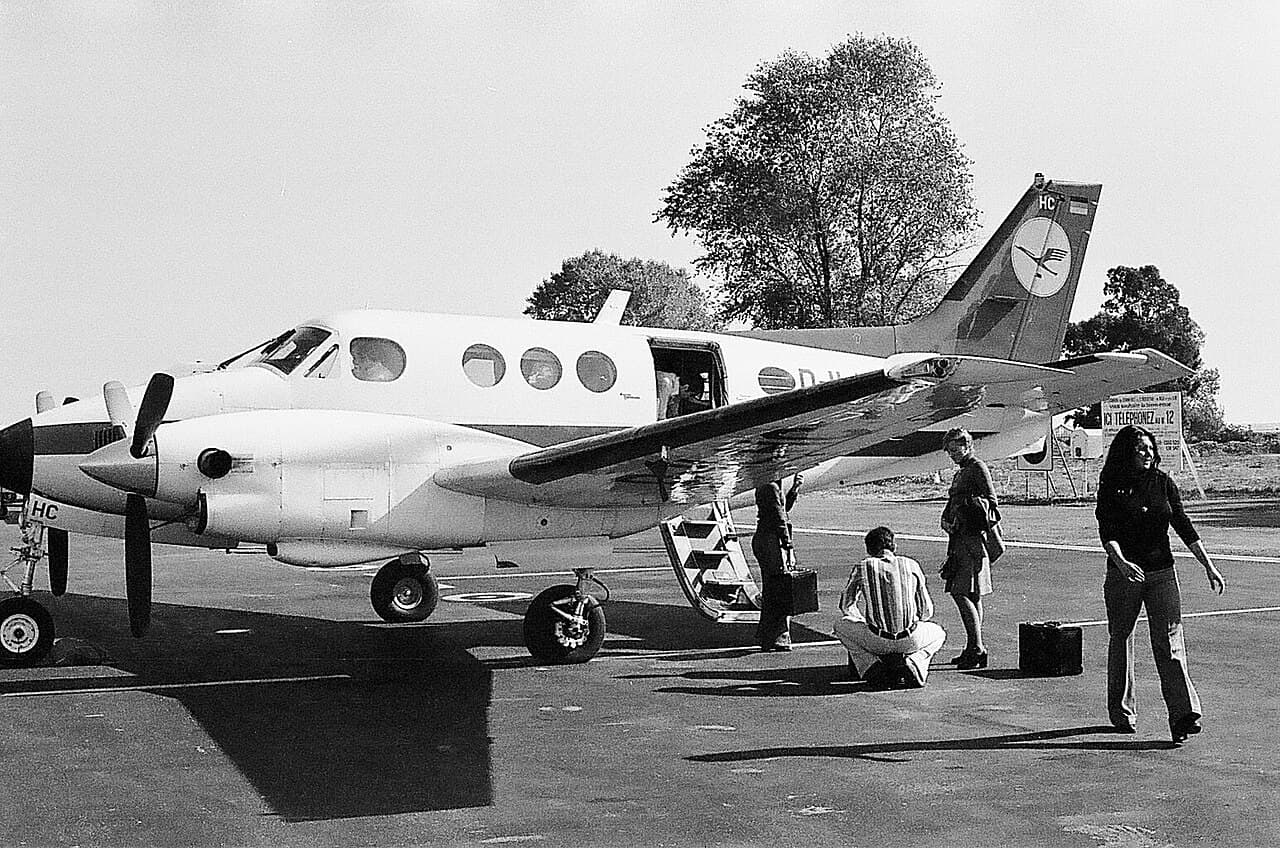
Image: Uli Elch · CC BY-SA 4.0 · via Wikimedia Commons
King Air ambulance crashes in New Mexico amid military GPS jamming during night visual approach
A Beechcraft C90 King Air medical evacuation aircraft collided with terrain during a night visual approach at Sierra Blanca regional airport amid ongoing military GPS jamming operations.
The gist
A King Air ambulance crashed into mountains during a night visual approach in GPS-jammed airspace near Sierra Blanca, killing all on board.
Continuing coverage
All Flight Safety →- ANA 767 and Japan Aviation Bureau CJ4 narrowly avoid collision at Tokyo Haneda
- Beechcraft B200 crash at Southend Airport: AAIB details loss of control moments after takeoff
- UK investigators probe limited clues in fatal Zeusch King Air crash at Southend
- Two Jets Trigger TCAS Alert Over Atlantic After Cruising Altitude Conflict
- Kenya Airways Dreamliner Returns to Nairobi Due to Flight Controls Spoiler Issue
The tragic crash of a Beechcraft C90 King Air air ambulance in New Mexico on 14 May continues under investigation as officials work to determine the role of nearby military GPS jamming in the fatal accident. The aircraft, operated by Generation Jets with medical staff from Trans Aero MedEvac, was conducting a night visual approach to Sierra Blanca regional airport when it struck a mountain ridge, killing both pilots and two nurses aboard. The National Transportation Safety Board (NTSB) has confirmed it has not yet identified probable causes or contributing factors, citing an ongoing, thorough inquiry into all elements of the flight.
Initial reports reveal the King Air descended from 12,000 feet towards Sierra Blanca airport, which sits at an elevation of about 6,800 feet. Despite originally intending to use an area navigation (RNAV) approach dependent on satellite-based GPS positioning for runway 24, the crew switched to an instrument landing system (ILS) approach after reporting a loss of GPS navigation capability. Importantly, notams broadcast at the time stated Sierra Blanca's automated weather system was out of service, rendering approaches without a local altimeter setting unauthorized.
As the aircraft was vectored northwest by air traffic control awaiting approach clearance, the crew soon reported visual contact with the town of Ruidoso and requested to proceed visually. This command shifted their flight path southwest over the Capitan mountains, terrain reaching approximately 10,200 feet in elevation. The timing was just past midnight in conditions described as dark with zero moonlight, which limited visual cues during the descent.
Flight tracking data from Spidertracks, providing GPS-derived altitude and position, indicates the aircraft descended to about 9,400 feet roughly five minutes after starting its visual approach descent. The King Air then initiated a climb but minutes later collided with terrain at around 9,950 feet on a mountain ridge. The evidence suggests the aircraft was flying below the peaks of the Capitan range during the attempted approach and was unable to clear terrain effectively in those conditions.
The investigation is complicated by concurrent military GPS jamming exercises near the White Sands missile range, with the Albuquerque area control centre issuing a notice (NOTAM) warning of possible GPS and ADS-B interference. This detail has provoked speculation about whether erroneous GPS data may have affected the crew’s situational awareness. The NTSB has cautioned that no conclusions have yet been drawn, and it continues to analyze all data, including partial ADS-B records and varying altitude information between flight data sources.
The military jamming temporarily disrupted ADS-B reporting frequency, which returned to normal only after controllers requested the jamming cease to assist air traffic operations. Once the King Air pilots confirmed visual approach intentions and began descent, jamming was allowed to resume. Notably, other aircraft in the vicinity also reported GPS signal loss around the same timeframe, suggesting the jamming affected multiple aircraft during this night operation.
Generation Jets operated the 47-year-old King Air, tail number N249CP, in partnership with Trans Aero MedEvac, which provided the medical personnel onboard. The aircraft’s advanced age, combined with the navigation challenges posed by the military activity and adverse nighttime conditions over mountainous terrain, present a complex scenario for investigators. The NTSB continues detailed analysis of radar, onboard tracking, pilot communications, and weather conditions to build a comprehensive understanding of the factors leading to this fatal accident.
Frequently asked questions
- What caused the King Air ambulance to crash near Sierra Blanca airport?
- The NTSB investigation is ongoing and has not yet determined the probable cause, but the aircraft collided with mountainous terrain during a night visual approach amid GPS navigation issues linked to military jamming.
- Was the loss of GPS signal related to military GPS jamming exercises?
- Military GPS jamming was occurring nearby and affected multiple aircraft including the King Air, but the investigation has not concluded the jamming's role in the crash.
- Why did the King Air switch from an RNAV to an ILS approach?
- The crew switched from the satellite-based RNAV approach to an ILS approach due to loss of GPS navigation capability during the flight.
Read more
All Aviation Safety →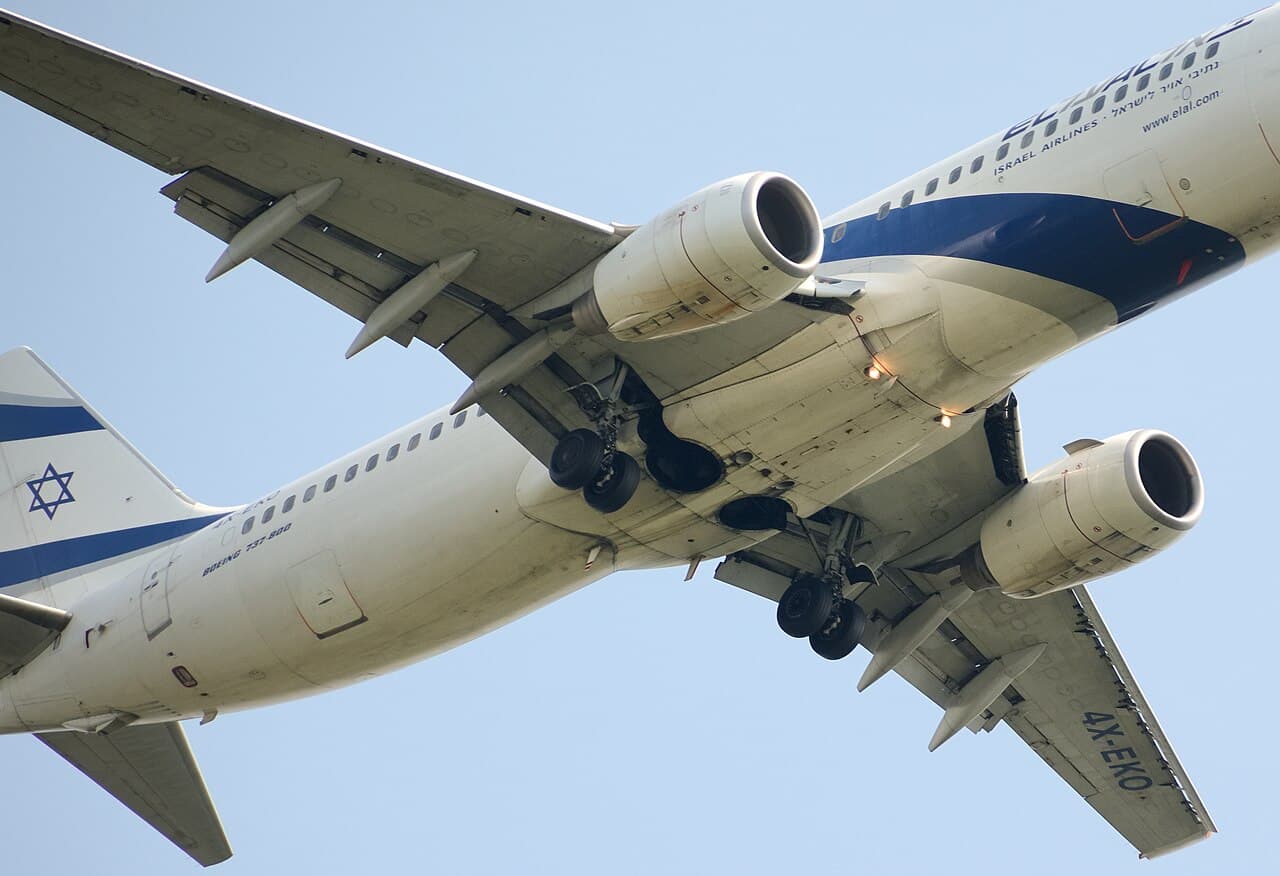
NTSB Rebukes Ryanair CEO for Premature Comments on Engine Failure Accident
The head of the U.S. National Transportation Safety Board (NTSB) has accused Ryanair chief executive Michael O’Leary of violating international law over comments he made about the window blowout incident aboard one of the airline’s Boeing 737 jets over Greece earlier this month that partially sucked a 61-year-old passenger out of the plane. During a scheduled earnings call at the start of this week, the often outspoken O’Leary said that while he couldn’t “definitively” say what the cause of the accident was, "initial indications would suggest it looks like a foreign object damage to the engine.” O’Leary went on to say that the accident was not the result of the aircraft’s age or servicing. The NTSB has taken over responsibility for investigating the July 10 accident at the request of Greek authorities. The incident involved an 18-year-old Boeing 737-800, which was operating Ryanair flight FR-1879, a regularly scheduled service from Thessaloniki (SKG) to the German town of Memmingen (FMM) in Bavaria. Shortly after takeoff and while the aircraft was still in its initial ascent to cruising altitude, the right-hand engine suffered an uncontained failure, sending debris flying towards the fuselage of the plane. Some of that debris hit a cabin window, smashing through the various layers and causing an explosive depressurization. The 61-year-old Serbian passenger who was sitting beside this window was partially sucked outside, but thankfully did not sustain serious injuries. After declaring an emergency, the pilots returned to Thessaloniki, where the plane landed without further incident. In a new letter to Michael O’Leary, often styled as MoL, the NTSB’s chairwoman, Jennifer Homendy, reminded him of Ryanair’s responsibility under Annex 13 of the International Civil Aviation Organization (ICAO), which deals specifically with aircraft accident investigations. Under Annex 13, Ryanair has been designated as an accredited representative and technical adviser in the investigation, which is being led by the NTSB. One of the requirements of being an accredited representative or technical advisor in an official aviation accident is that information cannot be released without the express permission of the investigating authority – in this case, the NTSB. “The NTSB is currently investigating that accident and therefore, accredited representatives and their technical advisers are prohibited from making any comments regarding the potential cause of the event or otherwise conveying potential investigative information,” Homendy said in the July 22 letter, which was sent to MoL and the chief executive of Malta’s Bureau of Air Accident Investigation, Capt. Frank Zammit (the aircraft was registered to Malta Air, which is a wholly owned subsidiary of Ryanair). “The NTSB has not made any such determination, and our investigators have not yet ruled out age or servicing issues as contributing to this event,” the letter added. “Mr. O’Leary’s public statements violate Annex 13 as they provide an opinion and analysis of the accident and suggest potential areas of interest in the ongoing investigation.” “Because failure to comply with Annex 13’s restrictions, depending on the investigative relevance and accuracy of such information, may impact the integrity of the investigation, I urge Mr. O’Leary to refrain from further public statements regarding the investigation while it is ongoing.” The aircraft involved in the July 10 accident remains grounded. Investigators will not only want to establish whether a foreign object was responsible for the engine failure, but also that resulted in debris being sent flying towards the fuselage, causing the window blowout. A preliminary report that will describe the events of July 10 is expected to be released within weeks, but a full accident report could take many months to be completed.
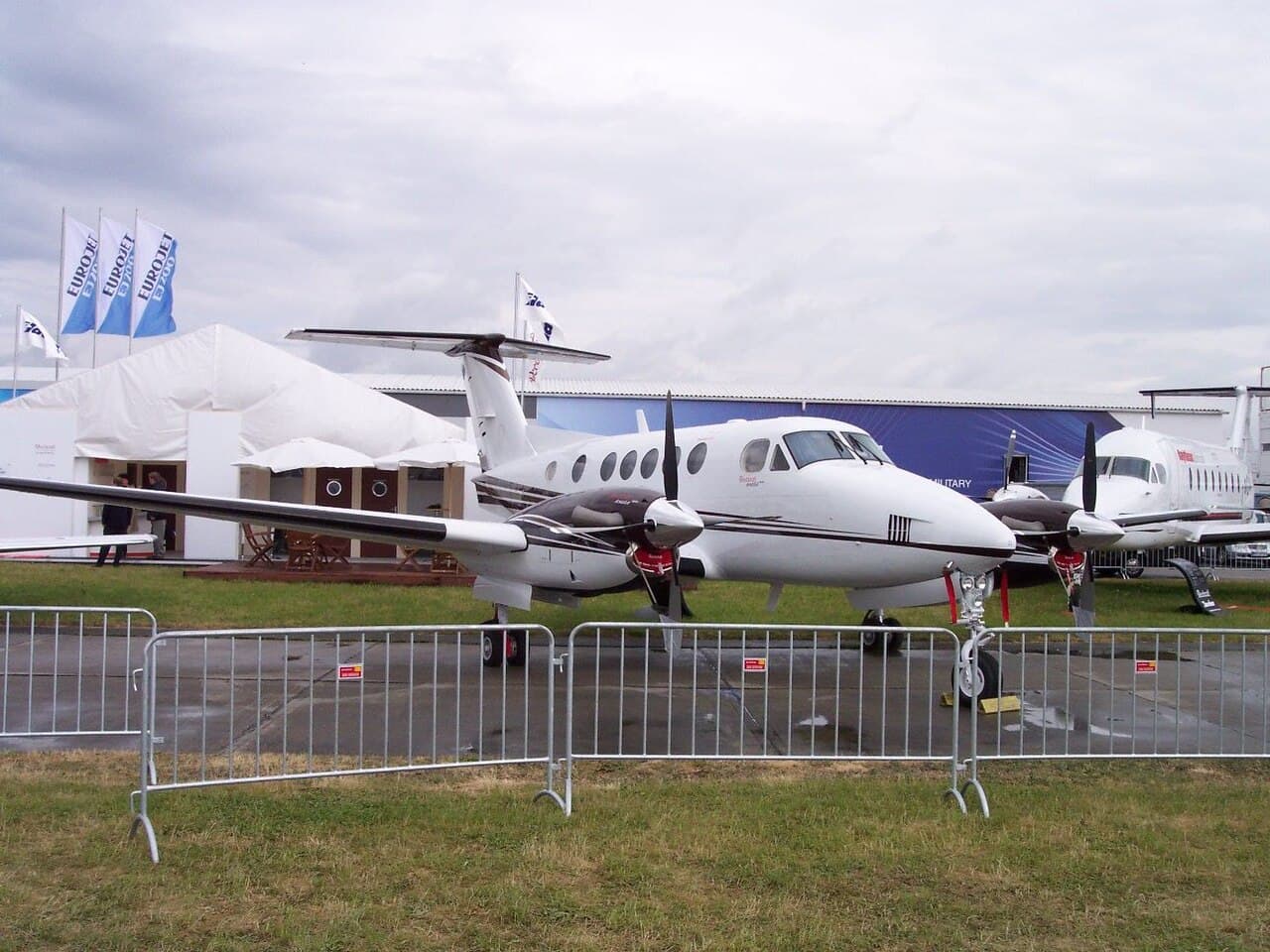
UK investigators probe limited clues in fatal Zeusch King Air crash at Southend
Fire and lack of recorder data left little evidence after loss of control at London Southend. UK investigators are still trying to determine the reasons behind the fatal loss of control involving a Zeusch Aviation Beechcraft B200 Super King Air at London Southend a year ago . The aircraft yawed slightly to the left just before rotating from runway 05, and then deviated "immediately" to the left of the centreline as it became airborne, says the UK Air Accidents Investigation Branch. It reached 70-80ft in height in a climbing left turn, its heading changing by 90°, before it descended and crashed within the airport perimeter. The inquiry says the flightpath has been established through a combination of ADS-B data, surveillance camera footage, and video from witnesses. But the aircraft was not required to carry a cockpit-voice or flight-data recorder, and the airframe was substantially damaged by the impact and post-crash fire. This meant "only limited physical evidence" remained, says the inquiry in an update on the 13 July 2025 accident. "Detailed examination of the aircraft and its components, while limited to some extent by the damage sustained, has been conducted in co-ordination with the relevant manufacturers," it adds. None of the four occupants survived the crash. "The investigation has focused on understanding the factors which contributed to the loss of control," says the inquiry in an update. "It is examining relevant technical, operational, human and organisational factors to determine if these aspects contributed to the accident." Bearing the Dutch registration PH-ZAZ, the aircraft had been bound for Lelystad in the Netherlands.
Beechcraft B200 crash at Southend Airport: AAIB details loss of control moments after takeoff
Investigators at the Air Accidents Investigation Branch (AAIB) have provided an update on the anniversary of the London Southend Airport (SEC) crash tragedy which killed all four people onboard the aircraft. On July 13, 2026, the UK's accident investigation team said due to the impact and ensuing post-crash fire, only limited physical evidence remained on the Beechcraft B200 Super King Air. The AAIB revealed that prior to rotation the aircraft yawed slightly to the left before experiencing a loss of control shortly after takeoff. "Once airborne, it immediately deviated to the left of the runway centerline in a climbing left turn. It reached an altitude of between 70 – 80 ft above the runway level, having turned through 90°, before descending towards the ground," the AAIB confirmed. The investigators said that much of their focus has been on trying to establish the factors which contributed to the loss of control. Technical, operational, human, and organizational factors are all being examined. BREAKING: A plane has crashed at London Southend Airport, sparking a massive fireball. pic.twitter.com/Sv2BQgLFQb — Weather Monitor (@WeatherMonitors) July 13, 2025 "Detailed examination of the aircraft and its components, while limited to some extent by the damage sustained, has been conducted in coordination with the relevant manufacturers," the AAIB added. The AAIB said it was able to establish the Beechcraft B200's flightpath by analyzing witness video, CCTV imagery, and ADS-B data. There was no requirement for either a flight data or cockpit voice recorder to be installed on the aircraft. The investigation is ongoing and a final report will be published once all investigation activities have been completed. "At this time, our thoughts remain with the families and friends of those who lost their lives in this accident and all those affected by it," the AAIB said in its statement. What happened during the Southend Airport crash? The Beechcraft B200 Super King Air, registered PH-ZAZ, crashed and erupted into a fireball at Southend Airport on July 13, 2026. The aircraft was operated by Zeusch Aviation, a company that provides medical evacuation and transplant flights, aerial mapping, relay flights, and aerial surveillance. Witnesses reported that the aircraft rolled to the left, nearly reaching an inverted position, before crashing. Two pilots, a doctor and a nurse were among those killed. The accident was the UK's most serious aviation incident in recent years. RELATED London Southend Airport suspends operations after Beechcraft B200 fireball crash
Lufthansa 787 Nose Gear Retracts Accidentally at Frankfurt Due to Missing Downlock Pin
German investigators found that the nose landing gear downlock pin was not installed before a Lufthansa Boeing 787-9 retracted unexpectedly at Frankfurt Airport on June 4. The German Federal Bureau of Aircraft Accident Investigation said 23 people were injured, including two seriously, and the aircraft was substantially damaged. Technicians Conducted Maintenance Test The Lufthansa 787 had arrived from Austin, Texas, and was being prepared for a flight to Los Angeles. Two technicians were troubleshooting an unresolved issue involving the main landing gear doors when the nose gear retracted immediately after they moved the landing gear lever. Proper maintenance procedures directed technicians to install the landing gear downlock pins before operating the lever. Investigators found the nose gear pin and its red warning flag inside a storage box in the avionics compartment. Four downlock pins had been installed correctly on the main landing gear. Aircraft Struck High Loader The Lufthansa 787’s nose, along with both engine cowlings, struck the concrete below. The forward fuselage also pressed down on a cargo high loader, injuring one person and damaging the loader and cargo-door area. Recovery crews drained about 60,000 kilograms of fuel before they lifted the nose back up with an air cushion. The nose gear extended and locked as the aircraft was raised. The BFU has not issued a probable-cause determination, and the investigation remains open. IR26-0454_1X_Boeing787 Download
The Daily Touch & Go
The day's best aviation news in your inbox. Free, no spam.