

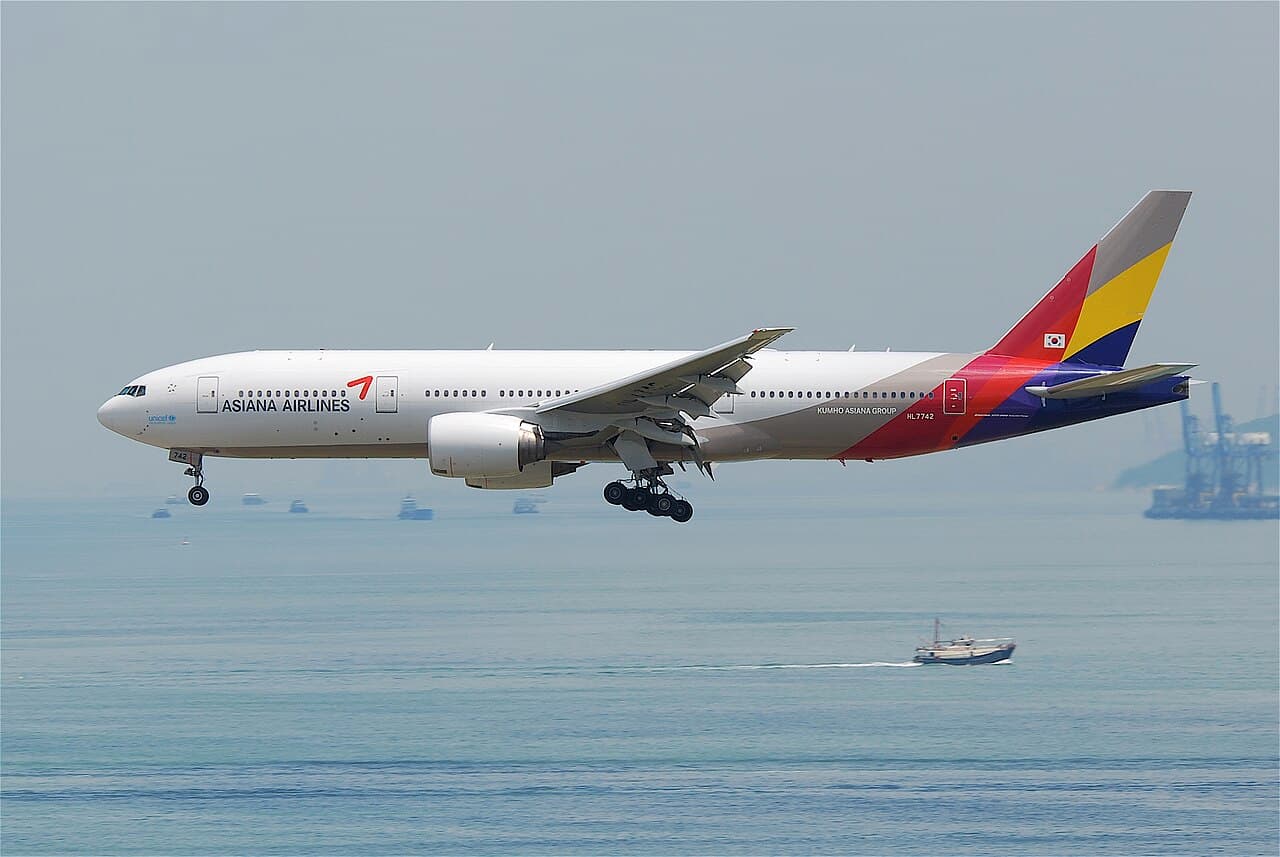
Image: Aero Icarus from Zürich, Switzerland · CC BY-SA 2.0 · via Wikimedia Commons
Emirates completes 100th aircraft retrofit in unprecedented $5 billion overhaul program
After nearly four years, Emirates has refurbished 100 of its A380 and 777 fleet with extensive interior rebuilds including Premium Economy cabins in a landmark in-house initiative.
The gist
Emirates reaches midpoint in $5 billion retrofit of 219 aircraft by completing 100 nose-to-tail overhauls featuring new Premium Economy cabins.
Continuing coverage
All Mro →- Air Europa to Receive First Airbus A350-900 in 2028 amid Strategic Overhaul
- Avia Solutions Group appoints FL Technics chief as new CEO amid reshuffling
- MTU Aero Engines launches expanded Fort Worth hub with debut CFM Leap-1B induction
- Financing Dynamics Shift as Aerospace Faces Supply Bottlenecks and Tech Advances
- Marshall Aerospace faces challenge to rebuild business after RAF C-130 fleet retirement
Emirates has successfully finished retrofitting its 100th aircraft as part of the largest overhaul program ever undertaken by a commercial airline. Initiated in November 2022, the ambitious project involves complete nose-to-tail renovations of Airbus A380 and Boeing 777 aircraft. The milestone comes just under four years into the initiative, which is being executed entirely within the carrier’s Engineering hangars in Dubai. This rapid progress has required innovative planning and operational adjustments to sustain a steady throughput averaging 28 aircraft a year.
The retrofit program currently covers 47 A380s and 53 Boeing 777s, transforming each with thorough interior rebuilds and modernized cabins. One notable addition to all overhauled planes is the introduction of a Premium Economy cabin, signaling Emirates’ strategic expansion of this product across its global network. More than 3,800 new Premium Economy seats have been installed so far, enriching the passenger experience on numerous long-haul routes. This product enhancement aligns with evolving market preferences and competitive positioning in premium travel segments.
Executing the retrofit has involved substantial manpower and coordination, with over 400 engineers and technicians contributing approximately 4.4 million man hours throughout the 44-month period. Sir Tim Clark, President of Emirates Airline, described the project as a tremendous achievement that demanded unprecedented levels of precision and craftsmanship. Managing a complex rebuild of this scale fully in-house was a pioneering effort for Emirates, requiring a complete rewrite of retrofit methodologies and workflows.
The technical work on each aircraft is exhaustive. Interiors are stripped down to their structural elements and rebuilt piece by piece. For the A380, engineers handle more than 4,000 individual parts, while for the 777, the count exceeds 2,500 components. The refurbishment extends beyond cosmetic upgrades to include structural modifications, such as the recent reconfiguration of the A380 upper deck to accommodate a Premium Economy cabin. These upgrades enhance comfort while extending the aircrafts’ operational relevance.
To optimize efficiency in handling large aircraft components between workshops and hangars, Emirates Engineering developed custom solutions including modified catering trucks for parts transport. The team also implemented zonal tracking and specialized storage techniques to streamline the workflow. Specialized tooling and bespoke equipment have been designed to access difficult-to-reach areas during the interior rebuild process, demonstrating remarkable engineering ingenuity.
The supply chain for the retrofit is extensive, with over 100 suppliers providing materials and parts. Emirates has invested around $5 billion to eventually refurbish a total of 219 aircraft, expanding the program twice since its initial announcement in November 2021. The scope grew from 105 aircraft to 191 in May 2024, and then to 219 by year-end, reflecting strong commitment to fleet revitalization. The first retrofitted A380 entered the hangar in November 2022, followed by the first upgraded 777 returning to service in August 2024.
Sustainability is a key aspect of the project. Emirates is upcycling thousands of kilograms of removed leather, fabrics, and other materials into limited-edition products sold under the 'Aircrafted by Emirates' brand. Additionally, over 4,000 backpacks crafted from repurposed Economy Class seat fabric have been donated to children across 11 countries. This reflects an innovative approach to waste reduction and corporate social responsibility tied to the retrofit program.
As the airline progresses beyond the halfway point of its retrofit plan, an additional 20 aircraft are targeted for completion by the end of the year. The ongoing upgrades represent a significant step towards modernizing Emirates’ long-haul fleet while enhancing passenger comfort and environmental sustainability. The scale and complexity of this self-managed refurbishment set a new benchmark within the aviation maintenance and engineering sector.
Frequently asked questions
- How many aircraft has Emirates retrofitted so far in its program?
- Emirates has retrofitted 100 aircraft so far, including 47 Airbus A380s and 53 Boeing 777s.
- What major cabin addition has Emirates introduced in the retrofitted aircraft?
- All retrofitted aircraft feature a new Premium Economy cabin, with over 3,800 seats installed across the fleet.
Read more
All MRO/Maintenance →
Air Europa to Receive First Airbus A350-900 in 2028 amid Strategic Overhaul
Spanish carrier is "optimistic" about this year after increasing 2025 profits by one-third. Air Europa expects to take delivery of its first Airbus A350-900 in 2028 and has embarked on a new strategic plan to achieve a "major structural and operational transformation" over the next two years. The Spanish carrier, which increased its full-year pre-tax profit by one-third to €155 million ($176 million) in 2025, says its new '+Air 28' plan will focus on operational efficiency, profitability and data-driven decision-making. As part of the plan, the carrier will launch a new maintenance division – Air Europa Technics – which will provide MRO services for its own aircraft and to third-party operators. Air Europa says it will adapt its maintenance capabilities to service the A350-900, ahead of incorporating the type into its currently all-Boeing fleet. It operates more than 60 aircraft, comprising 787-8s and -9s as well as 737s, and is in the process of adding 737 Max 8s as well . The carrier firmed an order with Airbus for up to 40 A350-900s at the beginning of this year. Air Europa confirms to FlightGlobal that the airline will take delivery of its first A350 at some point in 2028. Air Europa says it is "optimistic" about the remainder of 2026, despite "global instability surrounding the fuel market". Operating revenue in the first four months of the year was 9.2% higher than in the same period in 2025. The airline aims to increase its full-year pre-tax profit by 28% in 2026, it says. Full-year revenue in 2025 was 7.3% higher than the previous year, at €3.1 billion. Earnings before interest, taxes, depreciation and amortisation (EBITDA) increased by 14%, to €235 million. Passenger numbers were up 2.6% on a 1.5% increase in capacity, leading to a slight increase in load factor to 84.4%. "The continuous expansion and renewal of our fleet, together with structural improvements and operational efficiency, are the pillars on which we will continue to grow and demonstrate the strategic role we play, especially in Europe and Latin America," says Air Europa president Juan Jose Hidalgo. The airline’s chief executive, Richard Clark, adds: “The 2025 results are, once again, the outcome of the joint collaboration of all the professionals at this company. This effort does not stop, and it is the key to continuing our international expansion, as reflected in the opening of new routes, both domestic and international.” Air Europa’s recently-opened routes include Oviedo and Seville in Spain, Geneva in Switzerland and Johannesburg in South Africa. Star Alliance carrier Turkish Airlines is in the process of acquiring a 25-27% stake in Air Europa , which is a SkyTeam member. British Airways parent IAG is also a 20% shareholder in Air Europa, which is majority-owned by Globalia.
Avia Solutions Group appoints FL Technics chief as new CEO amid reshuffling
Former leader steps down and transfers to new position as head of finance. Wet-lease specialist Avia Solutions Group has named the head of its maintenance operation as its new chief executive. Zilvinas Lapinskas has been leading the group's FL Technics division. Avia Solutions says he has been appointed chief executive from 7 July. He succeeds Jonas Janukenas who will step down from the top post and transfer to the position of chief financial officer. Avia Solutions oversees multiple wet-lease providers around the world — with a total fleet of 136 aircraft — but has been undergoing an extensive restructuring , with some of its carriers ceasing operations . "Over the past several years, the group has built a strong foundation for sustainable growth," says Lapinskas. "I look forward to accelerating that momentum." He says his priority is to "strengthen our operational footprint" and reinforce long-term partnerships. Avia Solutions credits him with having "transformed" the FL Technics division, and says he has a "proven record of scaling operations in complex, highly-regulated markets". Janukenas says that, as head of finance, he will concentrate on ensuring the company maintains "financial discipline and strategic agility".

Tail Strikes Ground 787 and A350 Composite Jets for Weeks While 777 Returns to Service Quicker
Here is why the composite materials used in the Boeing 787 and Airbus A350 make repairs more complex following impact incidents.
Chinese Lessor Begins Repossession of Four Boeing 737-8 Jets from SpiceJet
A Chinese aircraft lessor has started the process to repossess four Boeing 737-8 jets from Indian low-cost carrier SpiceJet. The move highlights the budget airline’s ongoing financial and operational challenges in a competitive Indian aviation market. ezstandalone.cmd.push(function () { ezstandalone.showAds(119); }); The Directorate General of Civil Aviation (DGCA) published deregistration notices under the Irrevocable Deregistration and Export Request Authorisation (IDERA) framework. Two Dublin-based entities, Sky High LXXVIII Leasing Co. Ltd and Sky High LXXX Leasing Co. Ltd — both linked to ICBC Financial Leasing — filed the applications. The four grounded Boeing 737-8 aircraft are located in Delhi, Hyderabad, and Amritsar. ezstandalone.cmd.push(function () { ezstandalone.showAds(127); }); SpiceJet’s Response and Operational Impact SpiceJet stated that the repossession would not disrupt its current flight operations. The aircraft have remained out of service for an extended period due to widespread industry issues with CFM LEAP-1B engines. The airline noted that deregistration would remove ongoing lease costs for these inactive planes while talks with the lessor and engine manufacturer continue. ezstandalone.cmd.push(function () { ezstandalone.showAds(128); }); This development serves as an early test of India’s improved aircraft repossession rules. Legislative changes in 2024 strengthened protections for lessors, making the IDERA process more efficient for recovering assets after payment defaults. SpiceJet’s Turbulent Journey SpiceJet, one of India’s pioneering low-cost carriers, was co-founded by Ajay Singh in 2005 with a mission to make air travel affordable for millions of Indians. ezstandalone.cmd.push(function () { ezstandalone.showAds(129); }); Singh exited in 2010 but returned in 2015 when the airline faced near-collapse. Under his leadership, SpiceJet achieved multiple profitable quarters and high load factors, establishing itself as a key player in India’s dynamic aviation sector. Photo Credit: Anna Zvereva, CC BY-SA 2.0, via Wikimedia Commons The airline operates a mixed fleet of Boeing 737 variants and Bombardier Q400 turboprops. As of mid-2026, reports indicate SpiceJet’s active fleet has shrunk significantly, with some sources citing around 11 to 21 operational aircraft amid broader challenges. Many aircraft remain grounded, and the carrier has scaled back schedules while focusing on debt resolution and fleet revival. SpiceJet has reported substantial accumulated losses, estimated in thousands of crores, with current liabilities exceeding assets in recent periods. ezstandalone.cmd.push(function () { ezstandalone.showAds(130); }); Despite this, the airline has outlined ambitious recovery plans, targeting a fleet of 55-100 aircraft by late 2026 through inductions, reactivations, and capital infusions from promoters, including Chairman Ajay Singh. Broader Industry Context India’s aviation sector has grown rapidly, but budget carriers face intense pressure from high fuel costs, rupee fluctuations, intense competition from IndiGo and Akasa Air, and maintenance backlogs. SpiceJet’s situation reflects these headwinds, with many aircraft parked due to engine issues affecting the global 737 MAX family. ezstandalone.cmd.push(function () { ezstandalone.showAds(131); }); The repossession case underscores the importance of timely lease payments and strong lessor protections. Successful implementation of the 2024 reforms could boost confidence among international financiers and lessors in the Indian market, potentially easing future aircraft acquisitions for domestic carriers. Looking Ahead SpiceJet continues negotiations to resolve the lease dispute and address engine-related grounding. The airline aims to restore grounded Boeing aircraft and expand capacity for peak seasons. Success depends on securing fresh capital, improving cash flow, and navigating regulatory and supplier discussions effectively. For passengers, SpiceJet remains a familiar low-fare option on domestic and select regional routes. However, frequent schedule changes and reduced capacity have tested customer loyalty in recent times. ezstandalone.cmd.push(function () { ezstandalone.showAds(132); }); This latest development with ICBC-linked lessors adds to the pressure on SpiceJet’s management. As India’s aviation market expands, the airline’s ability to stabilize operations, reduce debt, and grow sustainably will determine its long-term role in the sector. Industry observers will closely monitor how SpiceJet manages this and other creditor issues in the coming months.
The Daily Touch & Go
The day's best aviation news in your inbox. Free, no spam.