

Image: Asurnipal · CC BY-SA 4.0 · via Wikimedia Commons
Emirates Launches $2 Billion Fleet and Service Overhaul to Counter Riyadh Air's Surge
Emirates invests heavily in fleet modernization and luxury passenger experience to maintain dominance amid Riyadh Air's expansion fueled by Saudi public funds.
The gist
Emirates commits $2 billion to upgrade aircraft and onboard luxury to fend off Saudi rival Riyadh Air's ambitious global ambitions.
Continuing coverage
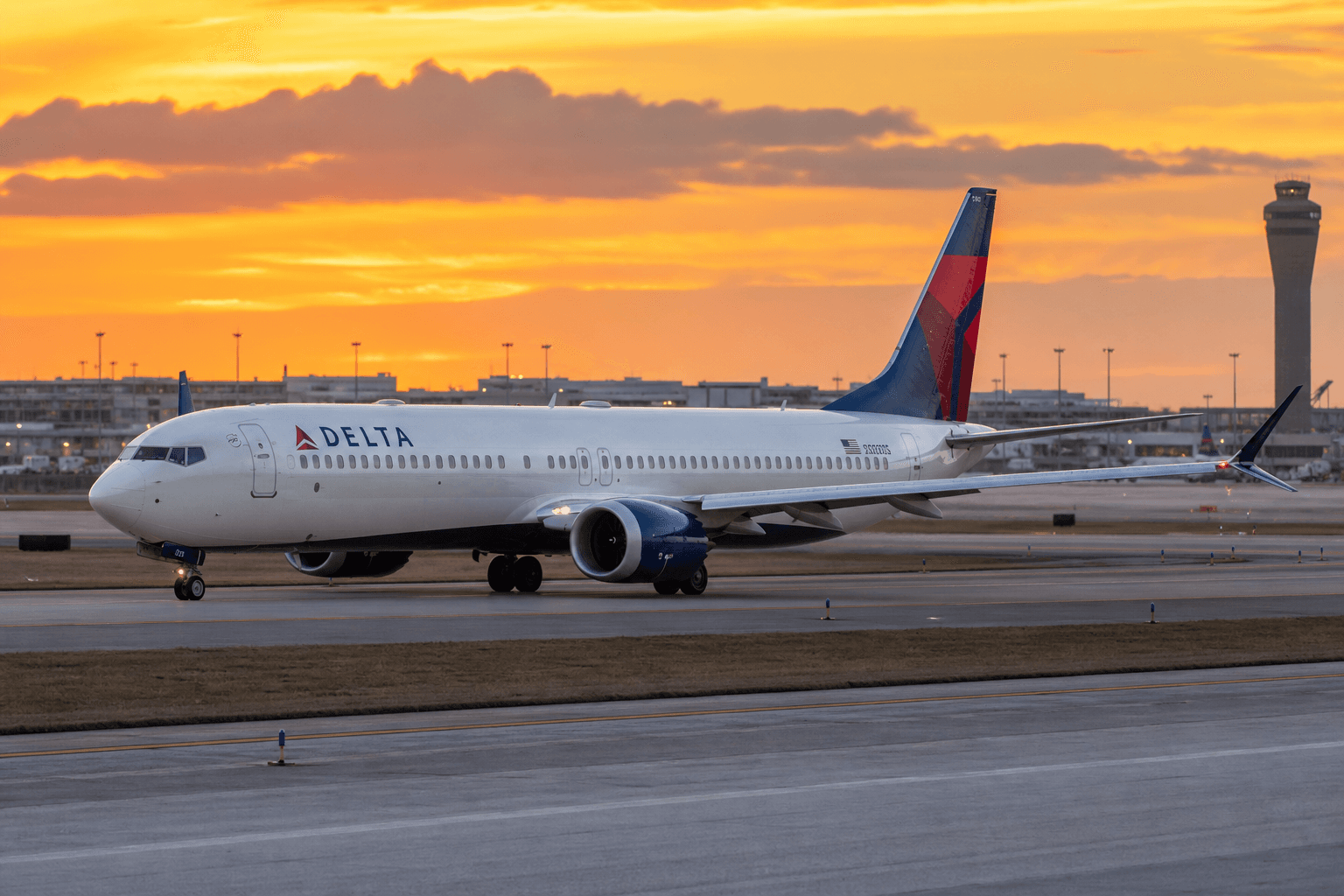
All Fleet Modernization →- Delta plans fleet growth with Boeing 737 Max 10 and 787-10 to boost efficiency
- VC-25A Air Force One Retires After 35 Years as New 747-8 'Bridge' Model Prepares for Service
- United Airlines Introduces Airbus A321XLR with Doubling of Premium Seats over Boeing 757
- Global Shift Away From Russian Fighter Jets Accelerates Amid Sanctions and Maintenance Challenges
- American Airlines-built new hubs and Latin network surged in 1980s transformation
The Middle East's aviation market is experiencing a seismic shift as Emirates responds decisively to Riyadh Air's entry with an aggressive $2 billion overhaul of its widebody fleet and premium services. The Saudi-backed newcomer, aiming to serve over 100 destinations by 2030, represents a state-funded challenge to Emirates' long-standing global transit dominance from Dubai. Rather than engaging in a price war, Emirates plans a comprehensive upgrade focusing on fleet modernization and the experiential aspects of premium travel.
Emirates recently reported a record annual profit of $6.2 billion for the fiscal year ending March 31, 2026, which underpins its investment capacity. In contrast, Riyadh Air operates with the virtually unlimited backing of Saudi Arabia's Public Investment Fund within the framework of the National Aviation Strategy, enabling rapid scaling without traditional financial constraints. This corporate rivalry is intertwined with geopolitical ambitions, as Riyadh Air looks to redirect lucrative global transit flows through King Khalid International Airport, challenging Dubai's historic hub position.
Central to Emirates' defensive strategy is a hyper-accelerated interior refurbishment program impacting all 219 of its Airbus A380 and Boeing 777 aircraft. This extensive project involves removing existing cabin fittings to install consistent, upgraded interiors across the entire long-haul fleet. A major highlight of the refresh is the widespread introduction of a premium economy cabin to capture high-yield leisure travelers seeking upgraded comfort without business class pricing.
Riyadh Air has preempted this move by equipping its Boeing 787-9 fleet with a four-class layout from launch, combining economy, premium economy, business, and first class to appeal to various traveler segments. Emirates’ advantage lies in its ability to distribute capital expenditure over a large active fleet, maintaining operational flexibility amid ongoing industry-wide aircraft delivery delays, whereas Riyadh Air’s growth hinges on new aircraft arrivals amid backend manufacturing risks.
Emirates is also heavily investing in its soft product to maintain its worldwide reputation for luxury. The rollout of the 18th edition of its exclusive Bvlgari amenity kits exemplifies this effort, with elaborately curated items designed by gender and cabin class, such as Le Gemme Sahare Eau de Parfum bottles in first class reflective of Middle Eastern heritage. Alongside luxury, Emirates integrates sustainability, using recycled fabrics and eco-conscious packaging, responding to modern environmental expectations without compromising indulgence.
Beyond the aircraft experience, ground infrastructure plays a crucial role in the premium offering. Emirates continues to leverage its established multi-concourse hub at Dubai International Airport and is preparing a multibillion-dollar expansion at Al Maktoum International Airport to accommodate future growth. Conversely, Riyadh Air supports the construction of King Salman International Airport, a mega-hub designed to handle 120 million passengers annually, directly challenging Dubai's transit monopoly.
A seamless ground experience is vital for securing business traveler loyalty, requiring private terminals, dedicated customs channels, and high-end lounges. Emirates’ three decades of ground-handling expertise grant operational advantages, whereas Riyadh Air must build its premium ground services from the ground up, making terminal construction and passenger flow design key competitive factors in this escalating rivalry.
This multi-billion-dollar contest between Emirates and Riyadh Air reflects the shifting dynamics of Middle Eastern aviation, blending commercial competition with national strategy and geopolitical influence. Emirates’ strategic reinvestment in fleet and service quality aims to maintain its global leadership amid unprecedented challenges from a state-backed newcomer intent on reshaping global transit routes.
Frequently asked questions
- What is the scale of Emirates' fleet modernization project?
- Emirates is refurbishing the interiors of 219 widebody aircraft, including both Airbus A380s and Boeing 777s, to standardize and enhance passenger comfort.
- How is Riyadh Air positioning itself to challenge Emirates' dominance?
- Riyadh Air is backed by Saudi Arabia's Public Investment Fund and aims to serve over 100 global destinations by 2030, building a premium product and a new mega-hub at King Salman International Airport to divert transit flows.
Read more
All Airlines →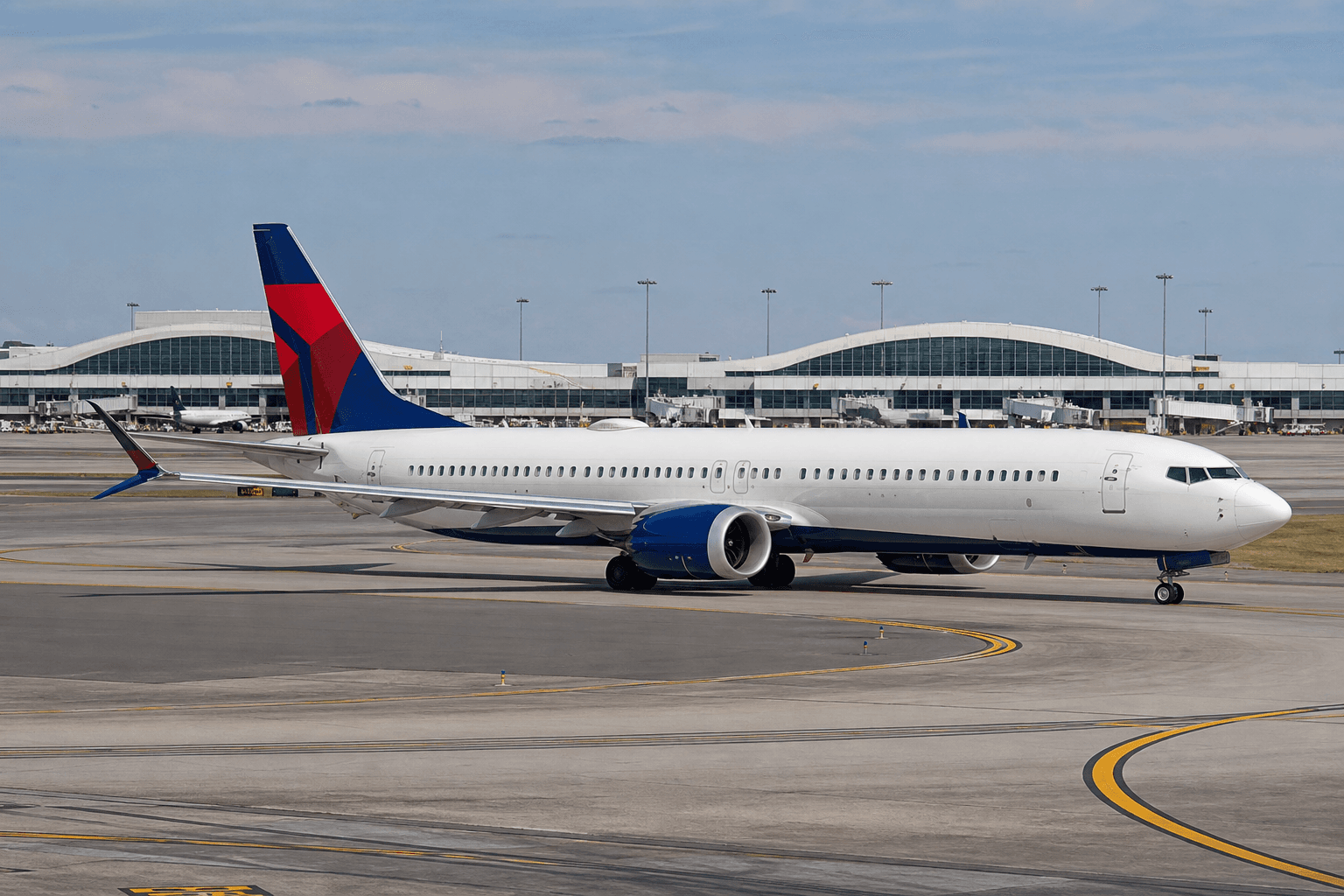
Delta plans fleet growth with Boeing 737 Max 10 and 787-10 to boost efficiency
Executives plan what they call “efficient” growth with the new Boeing models. Delta Air Lines will use both the 737 Max 10 and 787-10 for “efficient” growth by replacing older, smaller aircraft with the larger, more capable models, commercial chief Joe Esposito said during a quarterly earnings call on 10 July. “Larger airplanes make us more efficient and give us that extra capacity,” he says. The plans are the latest in Delta’s decade-plus fleet upgauging programme that began with the replacement of 50-seat regional jets with the Boeing 717 in the mid-2010s. This continued into the 2020s with the replacement of ageing McDonnell Douglas MD-88s and MD-90s with new Airbus A321s and, later, A321neos. The upgauging programme has, by all measures, been a success. Delta is the margin-leading network carrier in the USA and the industry has largely followed in its footsteps. Alaska Airlines, American Airlines, JetBlue Airways and United Airlines have all moved to replace smaller aircraft with larger narrowbodies over the past decade. The first step for Delta begins in 2027 with the arrival of the long-delayed 737 Max 10. The airline ordered up to 130 aircraft at the Farnborough air show in 2022 with deliveries from 2025, however, certification delays pushed back the first delivery to next year. “We expect to see that in Delta colours next year,” Ed Bastian, the chief executive of Delta, says on the Max 10. The airline expects up to 27 aircraft in 2027. Boeing has indicated that Max 10 certification will follow closely after the Max 7, which could receive US Federal Aviation Administration sign-off as soon as this month. Once the Max 10 begins arriving, Delta will use the aircraft that seats roughly 190 passengers in a standard two-class layout to replace older 717s and 757s, says Bastian. Alaska, American and United also have orders for the Max 10, though Canada’s WestJet is expected to take delivery of the first aircraft . Delta’s first of 30 787-10s is not scheduled to arrive until 2031. When deliveries begin, the airline will use it to replace older Boeing 767s, including both -300ERs and -400ERs, particularly on transatlantic flights, Esposito says. “When you think about the 787 that replaces a 767, that's a significant amount of efficiency and margin premium,” he says. “You're going from 30% premium seating in a 767 to over 50% in a 787, and it can handle twice the cargo. The continent of Europe falls into the bucket of domestic efficiency but on the widebody side.” The 787-10 can seat up to 375 passengers in a standard two-class layout, though United configures its -10s with just 318 seats. Delta’s 767-300ERs seat up to 216 passengers and its 767-400ERs seat 238 passengers.
Norwegian Air swaps Instagram logo to British Airways after World Cup bet loss
True to its word, Norwegian Air has changed its Instagram profile picture to British Airways' logo after losing a World Cup bet between the two airlines. On July 12, 2026, following Norway's dramatic 2-1 loss to England in a quarter final match at the FIFA World Cup in the US, as promised the British Airways appeared on Norwegian's Instagram account. In an Instagram post Norwegian displayed the British Airways signature logo and wrote "It's coming home" and "Well played England". Norwegian Air added: "While the tournament is over for us, this friendly bet will forever live in our hearts. We wish England and British Airways all the best in the semi-final, and we sincerely hope you'll get to bring football home!" Instagram British Airways commented on the post writing, "We love this new look on you" and added "Well played, thanks for all the fun and here's to our new friendship". Days before the match between England and Norway, a cheeky Norwegian Air wrote to British Airways on social media waging that if Norway wins the contest BA must change its Instagram logo to Norwegian and vice versa. The social media post gained huge traction with many airlines contributing to the good-natured banter. Finnair, Air Baltic, Riyadh Air, and KLM were just some of the carriers that commented or added pictures to the social feed. View this post on Instagram A post shared by Norwegian (@flynorwegian) The two airlines even posted a video of employees from both British Airways and Norwegian Air shaking hands to make the bet official. More airlines commented on Norwegian Air's post after the airline changed its logo to British Airways including Malayasia Airlines, Qantas, Virgin Australia and Kenya Airways. RELATED UPDATED: FIFA World Cup 2026: A gallery of special airline liveries from around the world
Delta Cancels Tokyo to Minneapolis Flight After 5.5-Hour Delay, Hotels Offered Only to Passengers With Babies
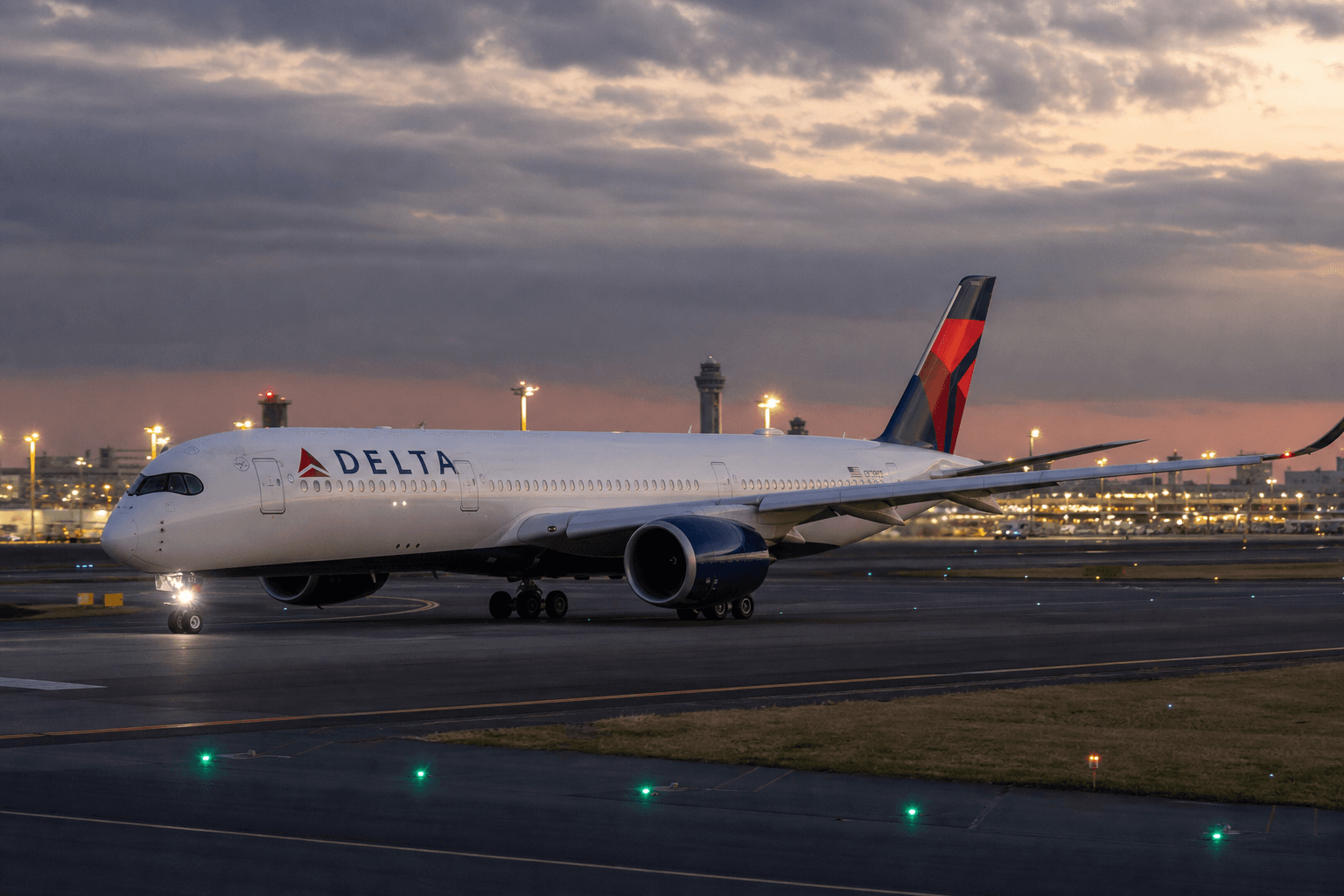
Passengers spent 5½ hours aboard Delta's Tokyo–Minneapolis flight before a mechanical problem forced an 11 p.m. cancellation. With too few hotel rooms, Delta prioritized travelers with medical concerns and families with babies—prompting passengers to joke, "Everyone make babies right now."
Delta Air Lines Projects Stable Airfares and Solid Revenue Amid Fuel Cost Normalization
Chief executive Ed Bastian does not expect airfares to fall anytime soon. Delta Air Lines views the revenue momentum it saw in the second quarter as “sustainable,” the Atlanta-based carrier’s chief executive, Ed Bastian, said during its quarterly earnings call on 10 July. Adjusted total unit revenues (TRASM) increased 12.4% during the period compared to last year. Higher airfares, coupled with continued strong demand and the collapse of Spirit Airlines in May, are driving Delta’s confidence. The airline has reinstated its outlook for the full year at the same levels as previously forecast, after suspending the guidance following the start of hostilities between the USA, Israel and Iran in February. Delta reported an adjusted operating profit of $1.6 billion in the second quarter on a 19% year-over-year increase in revenue to $19.8 billion. Costs, led by fuel and refinery expenses, increased 23% to $17.9 billion. Its adjusted operating margin was 9.4%. The airline’s performance sets the tone for the rest of the US airline sector. After an uncertain start to the June quarter, owing to the Iran war, fuel prices have moderated despite the on-again, off-again nature of the conflict, and travellers have proven undeterred by higher airfares. American Airlines, Southwest Airlines, United Airlines and the rest of the sector are set to report their own quarterly performance in the coming weeks. With the uncertainty seemingly behind it, Delta is focused on its numerous revenue initiatives. Segmentation of the business-class cabin rolled out earlier in July in its latest effort to further boost premium revenues. Joe Esposito, the airline’s commercial chief, says business class segmentation is in the “early stages” with further differentiation planned where, in the future, top spenders will receive a different onboard experience from those who buy the cheapest business fares. Delta will resume growth as well with the improved outlook. The airline plans to increase capacity, measured in available seat miles (ASMs), by roughly 1% in the third quarter and 2-3% in the fourth quarter, says Esposito. International growth, including the recent launch of Los Angeles-Hong Kong flights, will drive capacity growth. Capacity at Delta increased just 1% in the second quarter. In 2027, Delta plans to resume its long-standing fleet upgauging programme with the arrival of new Boeing 737 MAX 10s, which will replace ageing Boeing 717s and 757s, Bastian says.
The Daily Touch & Go
The day's best aviation news in your inbox. Free, no spam.