


Flamingo Air grounded after fatal Cessna 402 crash at San Andros airport
Bahamian authorities have temporarily suspended Flamingo Air's operating certificate following a deadly crash of a Cessna 402 near San Andros airport that killed all on board.
The gist
Flamingo Air's operations are suspended after a fatal Cessna 402 crash near San Andros killed all occupants, pending investigation.
Flamingo Air, a regional carrier operating in the Bahamas, has had its air operator's certificate temporarily suspended following a fatal accident involving one of its aircraft, a Cessna 402 twin-engine plane. The crash occurred near San Andros airport on July 10, coinciding with the Bahamas' independence anniversary. Authorities confirmed that of the 10 people on board, only one initially survived but later died from injuries sustained in the accident.
The Royal Bahamas Police Force reported that upon arrival at the scene, the aircraft was fully engulfed in flames. The fuselage, tail section, and right wing had suffered extensive fire damage, complicating the rescue and investigation efforts. This tragic event has prompted a strong safety response from Bahamian civil aviation officials to ensure public safety.
Following the accident, the Civil Aviation Authority Bahamas announced the suspension of Flamingo Air’s air operator certificate. The suspension is described as temporary and precautionary, pending the outcome of an ongoing investigation. This regulatory action underscores the authority's commitment to maintain strict safety standards in the region's air transport sector.
Preliminary investigative work has commenced, focusing on preserving evidence and gathering technical data about the crash. The Bahamas aircraft accident investigation authority stated the Cessna, registered as C6-FLX, encountered difficulties on approach and crashed into bushes short of runway 12 at San Andros. The aircraft had been en route from Lynden Pindling Airport in Nassau to San Andros at the time of the incident.
Investigators have secured and documented the accident site and remain in the initial stages of the inquiry. They are actively collecting and analyzing factual data related to the accident and have called on the public for any photographs or video footage that may assist with the investigation. No cause or contributing factors have yet been determined.
This suspension follows two safety occurrences involving Flamingo Air on the same day, highlighting concerns over operational safety. The Civil Aviation Authority emphasized that the measure is designed to protect the traveling public while investigations are ongoing, reflecting adherence to international aviation safety protocols.
The implications of this accident and the subsequent regulatory actions impact Flamingo Air’s ability to operate in the immediate future. They also raise broader concerns about safety procedures and oversight for regional air carriers operating in the Bahamas and the Caribbean, a region heavily reliant on air connectivity for economic and social activities.
As investigations advance, the detailed findings could influence future regulatory policies and operational standards for regional airlines in the Bahamas. Meanwhile, the aviation community mourns the loss of life in this accident, highlighting the critical importance of rigorous safety oversight in all phases of flight operations.
Frequently asked questions
- Why was Flamingo Air’s air operator’s certificate suspended?
- Flamingo Air’s certificate was temporarily suspended by Bahamian authorities following a fatal crash involving one of its aircraft and two safety occurrences on July 10, as a precaution pending investigation results.
- What happened in the Cessna 402 accident near San Andros airport?
- The Cessna 402 crashed into bushes short of the runway at San Andros airport after departing Nassau, caught fire, and all 10 occupants died, one initially surviving but later succumbing to injuries.
- What is the status of the investigation into the Flamingo Air crash?
- Investigators have secured the crash site, are collecting and analyzing evidence, and have called for public assistance, but no cause or contributing factors have been determined yet. The investigation remains preliminary.
Read more
All Aviation Safety →NTSB: Loose Counterweight Plug Caused Rob Holland's Fatal MXS-RH Crash
The final NTSB report on the April 24, 2025, landing accident that killed legendary aerobatic competitor and performer Rob Holland draws the same conclusion that was evident in the early stages of the investigation: A loose fitting, part of a custom modification, jammed the elevator in the final seconds of the fatal flight.
Trump Faces Backlash After Reporters Subpoenaed Over Air Force One Safety Concerns
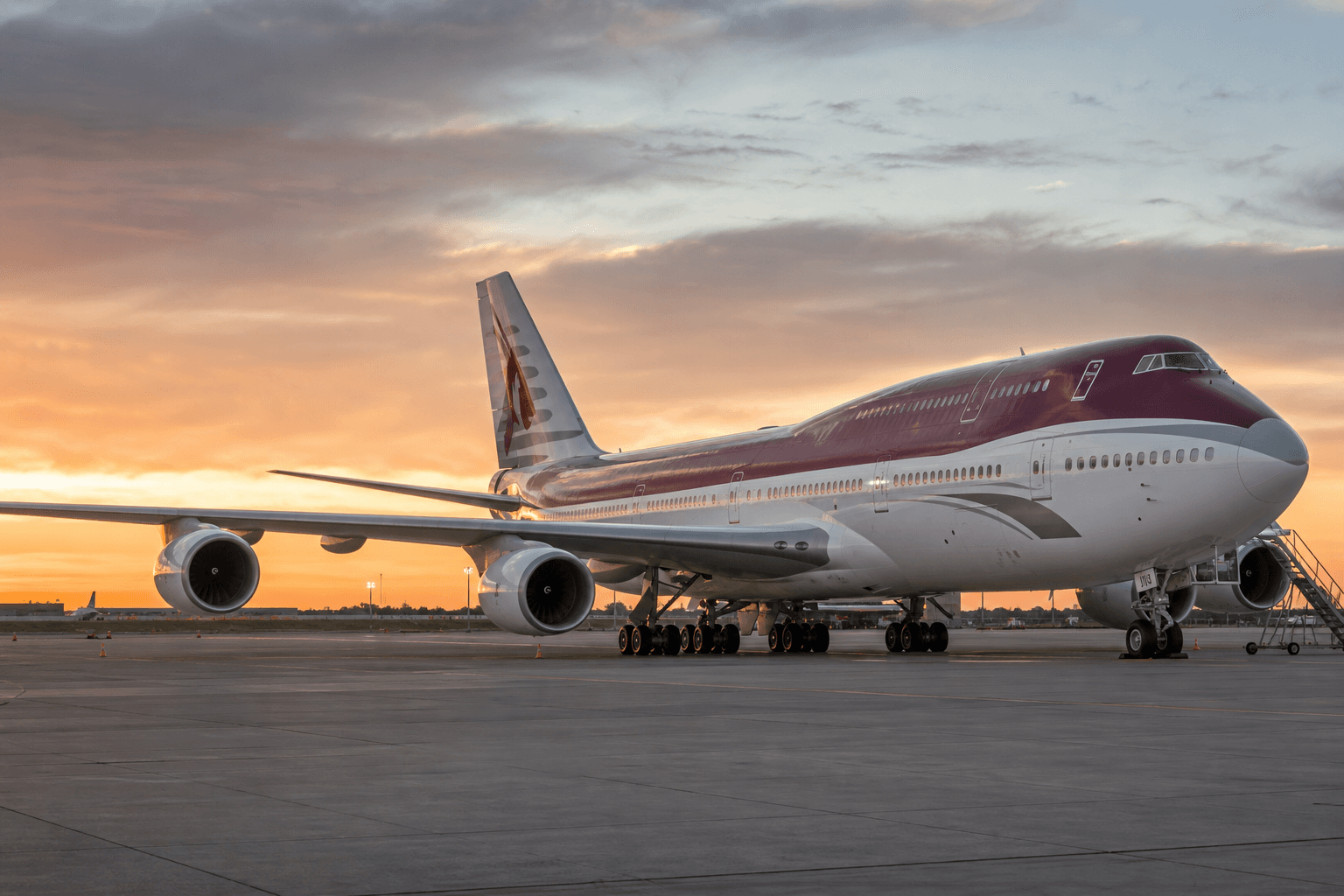
President Trump is reportedly fuming about the fact that the public has caught on to the (obvious) safety issues with his new $400 million "flying palace" Air Force One gifted by Qatar , and it's leading to journalists getting subpoenaed. While I can appreciate the desire to protect government secrets, the reporting seems about as shocking as finding out that water is wet, or that the sun is bright… Air Force One safety issues lead to journalist subpoenas In mid-June 2026, the Air Force took delivery of the new Boeing 747-8 that was gifted by Qatar, which will act as the primary new aircraft for carrying the president, which carries the designator "Air Force One" (though when Trump leaves office he gets to keep it, as it'll go into his presidential library). The converted Boeing 747-200s that acted as the primary Air Force One aircraft up until this point were definitely getting a bit old, and for years, there has been a contract in place for two replacement Boeing 747-8s. However, the delivery of those has been delayed massively, given the amount of special equipment that needs to be installed, to keep the president safe. So when Trump recently flew to Turkey for a NATO summit, he flew the outbound on his new Boeing 747-8. However, for the return flight out of Turkey, shortly after the ceasefire with Iran was called off, he once again flew the old Boeing 747-200. While he claimed that he was doing this to "honor the military," the reason was obvious — there were safety concerns with the plane. The new Air Force One is clearly about vanity and prestige, rather than about flying in the safest way possible. Following this, The New York Times reported that security precautions caused Trump to use the old Air Force One to fly out of Turkey, quoting people familiar with the matter. Well, Trump isn't happy with that reporting, and four reporters have now been subpoenaed by the US Justice Department, to testify before a grand jury in Manhattan next Wednesday. In a statement, the US Justice Department shared the following: "To the extent that we have to investigate breaches of national security, that's something that we will continue to do. To be clear, reporters are not the targets, those leaking classified information are. We recognize there may always be natural tension there. But we are not going to ignore the law and stop investigating the people who work in the administration and think it's okay to leak classified information impacting national security." "Were you aware of any credible threat by Iran against Air Force One?" @POTUS : "I have a threat all the time. I'm number one on their list, before you — but if I go, you go, right? So perhaps some of you want to change professions." 🤣 pic.twitter.com/5VlZBBySwx — Rapid Response 47 (@RapidResponse47) July 9, 2026 I understand wanting to prevent national security breaches, but… On the surface, I understand the need to look out for national security interests, and to prevent leaks. However, the report in question by The New York Times really didn't state anything that I wouldn't consider to be obvious to someone of average intelligence. The report suggested that: Officials were worried that the new aircraft didn't yet have all the defensive systems and countermeasures carried by the previous Air Force One, including some missile defense capabilities The report suggested that those concerns became more serious because of increased tensions with Iran The Trump administration has insisted that's not the case, and that the plane has met the high security standards. But seriously, let's look at this semi-objectively. The two purpose-built Boeing 747-8s that will act as Air Force One in the future have now been delayed by a minimum of four years. The delay isn't with building the 747-8 as such, but instead, with installing all the sophisticated equipment needed to protect the president. Meanwhile Trump's Qatar-gifted 747-8 was in service in less than a year. I mean, isn't it obvious that it doesn't have all the same safety equipment? If all the necessary safety equipment could actually be installed that fast, then why aren't the two existing 747-8s in production just fast tracked? Anyone? Bueller? I can't believe we're pretending this situation is a mystery? Bottom line The US Justice Department has subpoenaed reporters from The New York Times for breaking the news that the new Air Force One clearly doesn't have the same security equipment as the previous Air Force One. That seems exceedingly obvious, given that the jet was prepared for service in a matter of months, while the two replacement Air Force Ones are four years behind schedule (best case scenario) due to the complexity of installing this equipment. I understand the need to protect national security interests and prevent leaks, but if the government really thinks it's a "secret" that this plane doesn't have all the typical Air Force One equipment, then, well… we have bigger issues.
NTSB Final Report Cites Elevator Counterweight Plug Failure in Rob Holland Crash
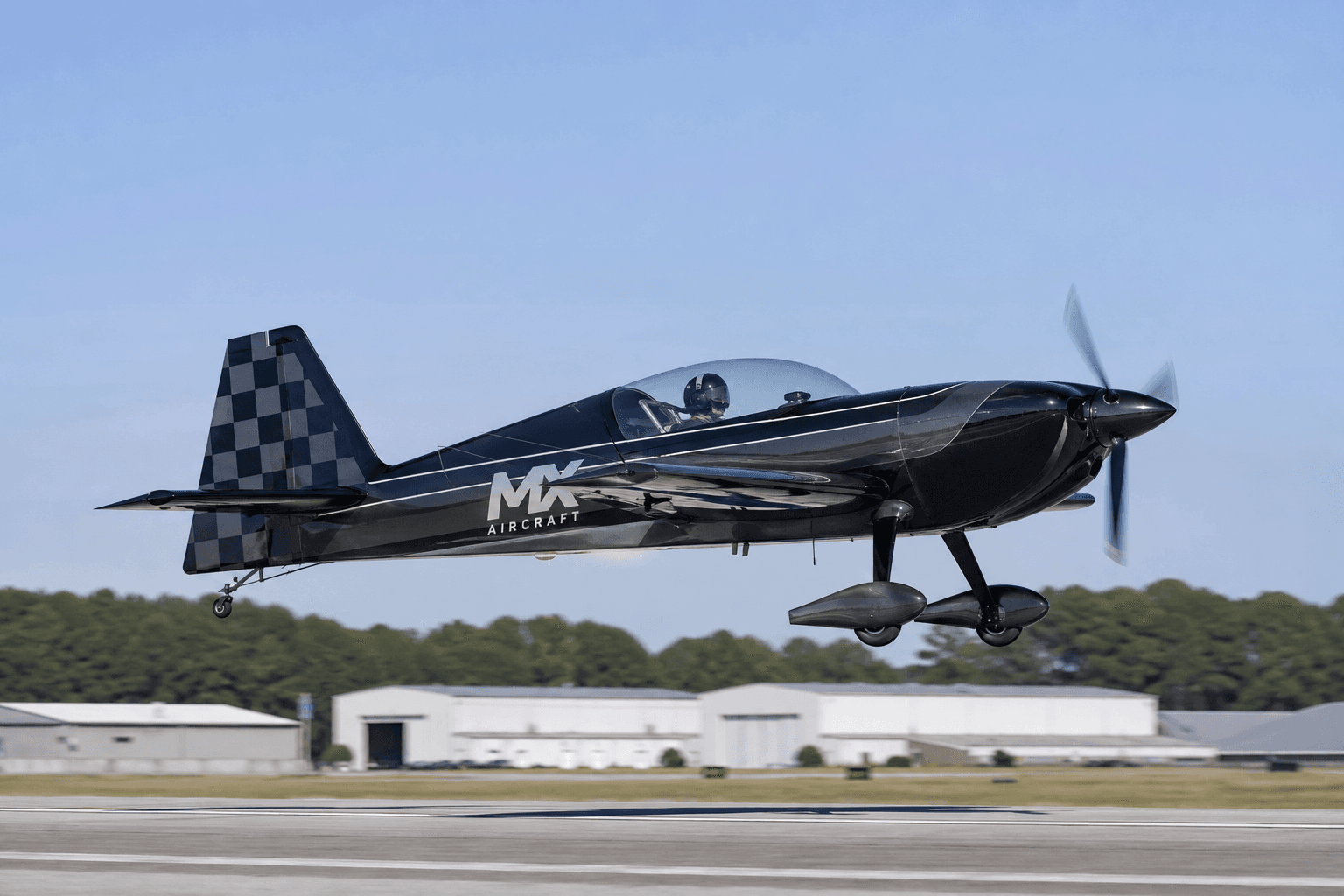
National Transportation Safety Board authorities investigating the 2025 accident that killed aerobatic pilot Rob Holland have determined the failure of a custom counterweight plug resulted in a jammed elevator and subsequent loss of control during landing. Holland, 50, was one of the top aerobatic pilots in the world. He held an ATP certificate and had more than 15,000 hours of flight experience. The accident occurred on April 24 at approximately 11:35 a.m. ET as Holland was attempting to land his aerobatic MX Aircraft Tech MXS airplane at Langley Air Force Base (KLFI) in Hampton, Virginia. READ MORE: Master of the Air: Recalling a Close Encounter With Rob Holland READ MORE: NTSB Releases Preliminary Report on Holland Accident The weather was clear and the winds calm at the time of the accident. According to witnesses, the airplane made a smooth approach to Runway 08, leveling off about 50 feet above the runway and flying straight down the runway for several hundred feet, then it porpoised twice, pitching up 45 to 60 degrees then climbing several hundred feet and rolling 90 degrees to the left. The aircraft rolled and descended straight down to the ground. The aircraft pancaked in a ditch off the side of the runway. The NTSB report notes that “all major components of the airplane were accounted for at the accident site. The left elevator counterweight plug was located about 10 feet behind the wreckage in the grass.” An electronic flight instrument system was recovered from the accident airplane. The data were consistent with the witness descriptions of the accident sequence. According to the medical examiner, the cause of death was listed as blunt force trauma. Holland tested negative for all drugs. Holland had flown to Virginia from Smyrna Airport (KMQY) in Tennessee because he was slated to perform in the Air Power Over Hampton Roads airshow in the MXS. Holland had been performing aerobatics in the customized all-carbon fiber single-seat aerobatic aircraft since 2011. The aircraft was built by a company in Australia. Aerobatic performer Rob Holland dominated the Unlimited Power category in his MX Aircraft Tech MXS. [Credit: Gary Schenaman] According to the NTSB final report, the aircraft was issued a special airworthiness certificate in the experimental category for the purpose of exhibition and air racing on July 26, 2019. A representative of the airframe manufacturer stated that Holland had contacted them requesting the company incorporate an adjustable balance tube into the design of the elevator during its construction. Per the NTSB report: “The design included an access hole in the left and right elevator horns to insert counterweights. The access hole/tube was covered by a plug. The manufacturer described that the plugs were designed as a short-term solution and that no manuals or other information was provided specifying torque valves to be used when installing the plug. The airframe manufacturer also provided a design drawing for the plug that appeared to be dimensionally different from the plug found installed in the accident airplane. The design document also called for an o-ring, which the airframe manufacturer described as a locking device. No o-rings were found on either of the plugs associated with the accident airplane. When asked about the differences observed between the specified plug and the plugs found on the accident airplane, the airframe manufacturer could not explain the discrepancy.” Following the accident the aircraft manufacturer published an undated mandatory safety notice (SN 2025-01), which was applicable to MXS and MX2 airplanes fitted with adjustable balance tubes that provided instructions for filling existing adjustable balance tubes with a lead/resin mixture. In November 2025 Holland was posthumously inducted into the EAA Sport Aviation Hall of Fame. He learned to fly as a teenager and went on to win many aerobatic competitions and became a favorite performer at airshows. Among his accomplishments: Thirteen-time consecutive U.S. National Aerobatic champion Six-time world 4-minute freestyle champion Fourteen-time U.S. 4-minute freestyle champion 2015 World Air Games freestyle gold medalist 2012 Art Scholl Memorial Showmanship Award recipient 2008 World Advanced Aerobatic champion Ten-time U.S. Aerobatic Team member 37 medals in international competition (14 Gold)
Cirrus Unveils TRAC10 Trainer Designed to Revolutionize Professional Flight Schools
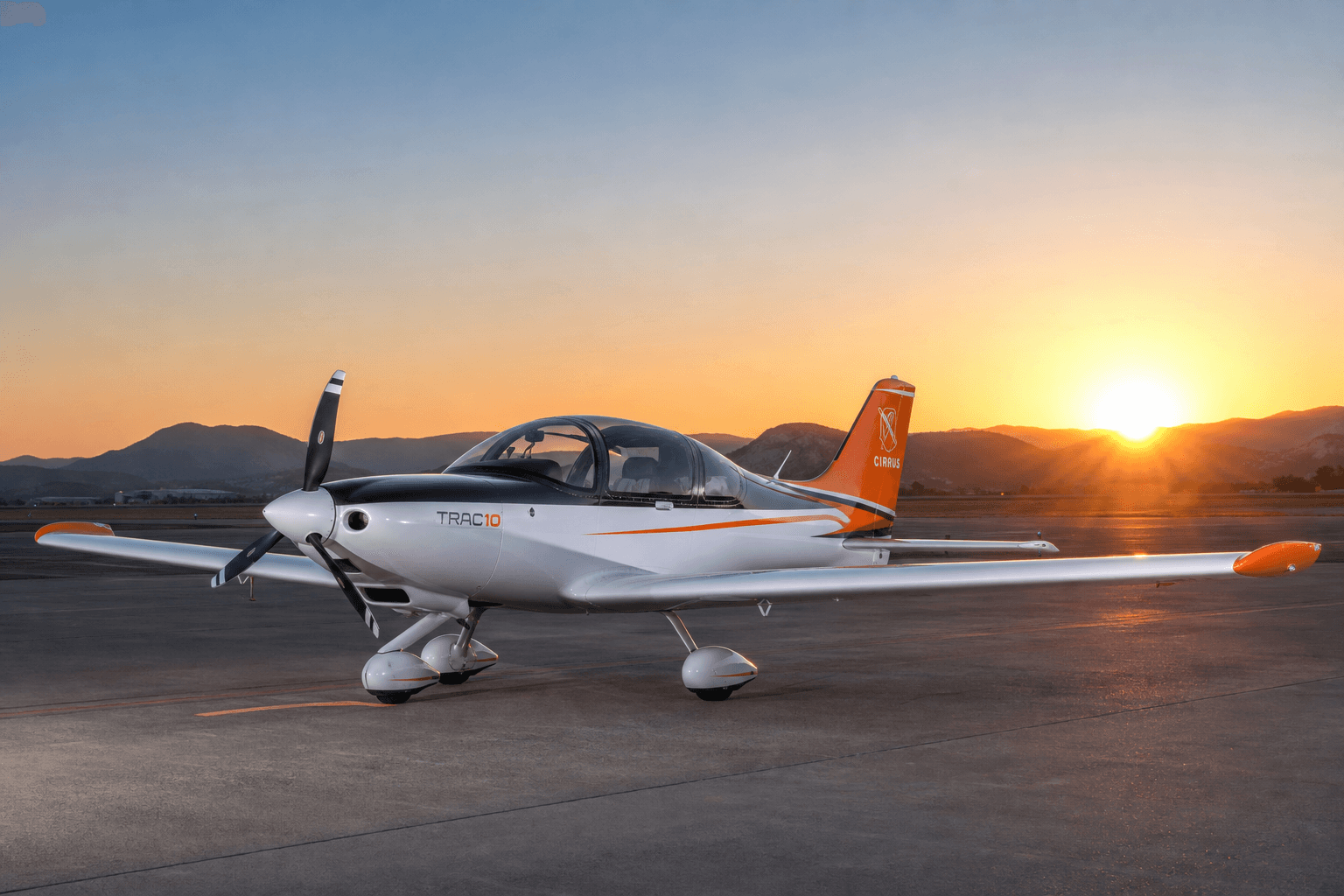
Cirrus, the manufacturer that introduced the aviation world to the concept of an airplane with a built-in parachute, is introducing the TRAC10, a clean-sheet design purposefully built for the instructional market. "The TRAC10 is a complete reimagining of the modern training aircraft," said Pat Waddick, president of innovation and operations at Cirrus, in a news release. "Our team challenged decades-old norms and designed in industry-leading safety, durability, ergonomics, and operational efficiency with advanced technology delivered through simple, intuitive interfaces—creating a smarter platform for the next generation of pilots." The aircraft is powered by a turbocharged Rotax 916 iSc FADEC engine attached to a three-bladed propeller that can be operated on 100LL, UL91/UL94, and selected blends of mogas, burning 5.9 gph. The aircraft is a three-place design with adjustable seats and rudder pedals for the front occupants. The back seat is situated between two large windows with an elevated position for optimal flight deck visibility. According to Cirrus, it can be equipped with a configurable display, so everyone on board can be fully immersed in the flight deck workflow. The cabin features multiple USB-C ports, cup holders at each seat, storage space, and optional air conditioning to help reduce crew fatigue and promote efficient learning. READ MORE: How NFL Quarterback Joshua Dobbs Found Freedom at the Controls of a Cirrus READ MORE: Cirrus Offers Starlink Mini Mount for SR Aircraft "Drawing on more than 30 years of designing, building, and supporting aircraft worldwide, the TRAC10 is our most deliberate answer yet to what professional flight schools need to succeed," said Zean Nielsen, CEO at Cirrus. "Our focus on safety, efficiency, connectivity, and reliability serves every stakeholder in the professional pilot training equation. We are excited for students around the world to start training in the TRAC10." Cirrus said safety remains paramount at Cirrus, so in addition to the Cirrus Airframe Parachute System (CAPS), the TRAC10 has the Garmin Electronic Stability & Protection (ESP) and the Blue Level Button (LVL). The aircraft is also fitted with airline-like stick shakers to warn of an impending stall and a cuffed-wing design to maximize spin resistance while promoting optimal controllability at low speeds. The aircraft features Cirrus IQ , which enhances the TRAC10 flight training operations by wirelessly transmitting data and integrating seamlessly with third-party flight debrief applications and fleet management dashboards. Operators can digitally monitor fuel, fluids such as coolant and oil temperature, and track maintenance intervals to ensure fleet safety and airworthiness. Automatic database updates keep training fleet navigation information up to date and ready to fly, eliminating the need for monthly manual updates. According to the company, the TRAC10 will be manufactured at Cirrus headquarters in Duluth, Minnesota. The company indicated it has already secured more than 100 orders for the airplane from 13 professional flight schools around the world. U.S. deliveries are scheduled to begin in 2027, with international deliveries to follow in '28. The TRAC10 price starts at $499,900. Cirrus TRAC10 by the Numbers Wingspan: 34.2 ft. Length: 23.8 ft. Maximum Gross Weight: 2,150 lbs. Maximum Usable Fuel: 33.5 gal. Useful Load: 750 lbs. Cabin Height: 45 in. Cabin Width: 49.6 in. Cabin Length: 94 inches Maximum Operating Altitude: 14,000 ft. Stall Speed, Flaps Down: 57 kcas Stall Speed, No Flaps: 66 kcas Maximum Cruise Speed: 139 ktas Fuel Burn at 65% Power: 5.9 gph
The Daily Touch & Go
The day's best aviation news in your inbox. Free, no spam.