

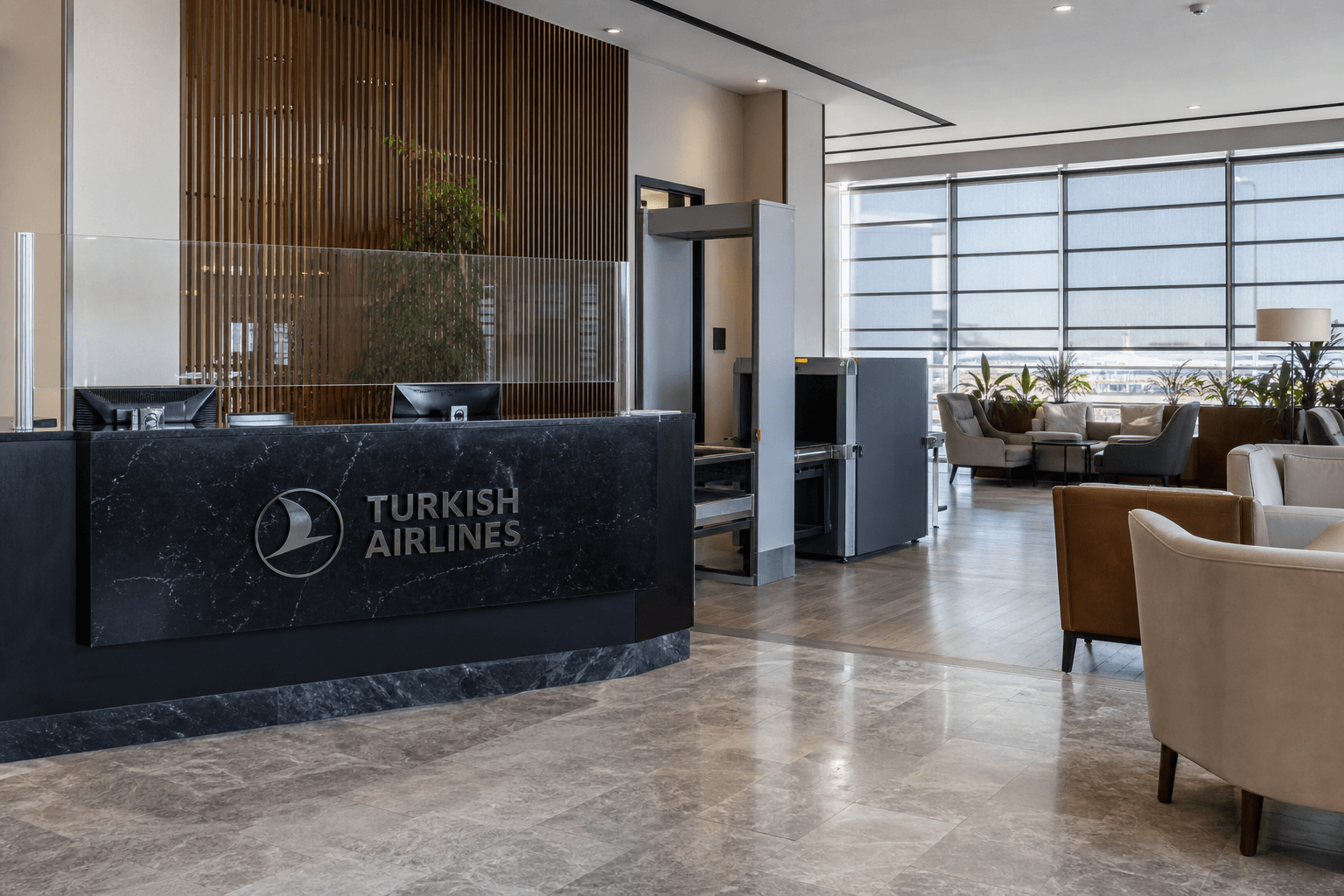
Illustration: The Touch & Go
Passenger Reports Sexual Assault by Security Guard in Turkish Airlines Lounge at Kayseri Airport
A traveler alleges multiple instances of sexual assault by a male security guard in the Turkish Airlines domestic lounge at Kayseri Airport in July 2026.
The gist
A man claims a security guard sexually assaulted him twice inside a Turkish Airlines lounge in Kayseri, raising serious safety concerns.
Continuing coverage
All Turkish Airlines →A disturbing incident unfolded on July 4, 2026, at Kayseri Airport (ASR) involving a male passenger and a Turkish Airlines lounge security guard. The passenger, traveling with his family, reported that he was sexually assaulted twice by the same male security officer inside the domestic business class lounge. This case highlights potential lapses in security personnel conduct and passenger safety within airline lounges at regional airports.
According to the passenger’s account, the first encounter occurred shortly after noticing an issue with a connecting flight while seated in the lounge. Seeking assistance, he attempted to approach a lounge agent but instead interacted with a male security guard. During this interaction, the passenger experienced inappropriate physical contact when the guard’s hand brushed against him near the front of his pants. The passenger initially dismissed this as accidental, given the lounge’s open setting and the presence of another female security officer nearby.
However, the situation escalated when the guard moved closer while examining the passenger’s tickets and placed a finger against his private area, an act the passenger found unsettling yet chose not to confront immediately in order to avoid disruption. This interaction lasted one to two minutes until the Turkish Airlines agent returned and resolved the ticketing issue, concluding the initial encounter. The passenger later reflected that the behavior was clearly deliberate and inappropriate.
The second incident took place approximately 15 minutes before boarding as the passenger left the lounge to use the restroom, which was located outside the lounge but adjacent to the business class security checkpoint. As he entered the small bathroom, the same male security guard followed him inside and closed the door behind him. Within the confined space comprising two urinals and two stalls, the guard exhibited voyeuristic behavior by leaning over the partition and staring at the passenger while he was using the urinal. The passenger froze, unsure how to respond, and remained silent.
Relief arrived when another passenger entered the bathroom, prompting the security guard to cease the behavior, zip up, and leave to wash his hands. The targeted traveler then returned to his family, confessed to his wife what had occurred during both encounters, and expressed regret over not having addressed the incidents immediately. He cited concerns about cultural and legal differences in Turkey, fearing potential negative repercussions had he reacted publicly or reported the abuse while still in the country.
The passenger’s wife inquired about the possibility of having their son accompany him to the restroom for safety, but he declined, worried the security guard’s audacity might endanger their child. Upon researching options to report the assault, the passenger discovered the process was complicated and decided to defer filing a formal complaint until after leaving Turkey. His narrative suggests that the security guard is likely a repeat offender and that the airline’s internal security mechanisms failed to prevent or detect such misconduct.
This case raises serious questions about the screening, training, and oversight of security staff assigned to airline lounges, especially at smaller airports where personnel duties may be less scrutinized. Airline lounges are perceived as safe spaces for premium passengers, which makes allegations of abuse by security personnel particularly alarming. The incident underscores a critical need for airlines and airport authorities to implement robust monitoring, clear reporting channels, and swift remedial action when misconduct is reported.
While it remains unclear if Turkish Airlines or Kayseri Airport authorities have initiated an investigation into this incident, the detailed account serves as a cautionary tale for travelers. It also underscores the challenges faced by victims of abuse abroad, including fears about reporting incidents in foreign jurisdictions. The aviation industry must consider measures to ensure that security personnel uphold the highest standards of conduct, and that passengers have access to accessible, trusted mechanisms to report misconduct without fear of retaliation.
Frequently asked questions
- Where did the alleged sexual assaults by the security guard occur?
- Both alleged incidents took place inside the Turkish Airlines domestic business class lounge at Kayseri Airport, Turkey.
- How did the passenger respond to the security guard's behavior during the incidents?
- The passenger initially did not confront the guard to avoid a scene, later froze during the second incident, and chose to report the matter only after leaving the country due to concerns about legal and cultural factors.
- What were the passenger's concerns about reporting the incidents while in Turkey?
- He feared that reporting the security guard while traveling with family in a foreign country with unfamiliar laws could lead to retaliation or detention, so he postponed making a formal complaint until after departing Turkey.
Read more
All Aviation Safety →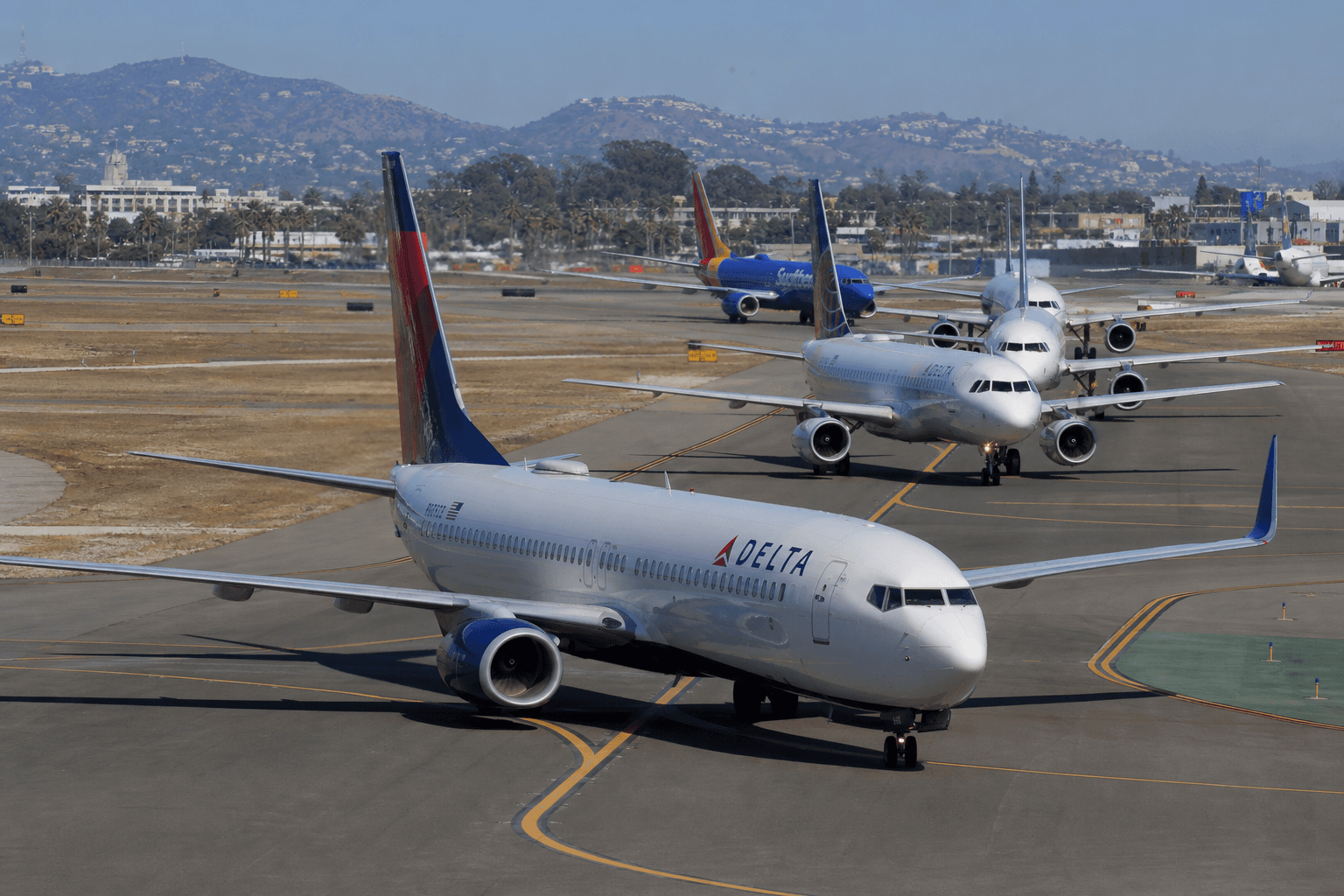
San Diego ATC Clash with Pilots Highlights Stress on Busy Single-Runway Operations
Air traffic controllers have stressful jobs, and they can have a lot of tasks to manage at once. However, sometimes it seems like they only create more work for themselves when they have an attitude. That brings us to a recent incident that happened at San Diego International Airport (SAN), where pilots slung quite the insults at the air traffic controller… while I think that was unprofessional, I don't disagree with the sentiment, I think? San Diego air traffic controller loses patience with pilots VASAviation has the air traffic control audio and a visualization of a recent busy morning at San Diego Airport. Context is important here — San Diego has a single runway, and also has rather limited space for planes to taxi, so when the airport gets busy, getting all planes to and from the runways is a bit of a jigsaw puzzle for air traffic controllers. That's especially tricky when planes land before their gate is ready, and they need somewhere to wait. So this was one of those situations where the ground controller obviously had a lot of planes that wanted to move, but limited ability to actually move them. Airline pilots are also always looking to move as soon as possible, and sometimes they want to remind air traffic controllers of their desire to move, follow up on progress, etc. After the air traffic controller gave some other pilots taxi clearance, a United pilot wanted to follow up on their taxi clearance, and then the following interaction happened: United pilot: "What about United 1069?" Air traffic controller: "NO!" United pilot: "Just curious for 1069, do we have a time to Chicago?" Air traffic controller: "United 1069, I've got one taxiway, planes all over the place cause planes arrived too early with no gates. When there's a slot to get you down there, cause whether you wait there or you're number 14 waiting at the end, it makes no difference." United pilot: "All right, thank you." The situation got worse when a Southwest pilot then also wanted to follow up on taxi clearance: Southwest pilot: "Push, for Southwest 3896, at 103." Air traffic controller: "No, there's traffic inbound in the alley. I've been doing this 18 years. When it's clear, I'll call you back." Southwest pilot: "Yeah, he just came in the alley and he's parking right now, for Southwest 3896." Air traffic controller: "Well, in about two minutes ask your ground crew to look towards the east and you will see the next company coming by." Southwest pilot: "Sounds like you need to be replaced." Air traffic controller: "Sounds like you have the attitude over there too, because I told you there's traffic coming and you want to argue with me about it." Unknown pilot: "Go back to LaGuardia!" You can listen to the entire audio for yourself below. I understand the air traffic controller's impatience, but… I understand where the air traffic controller is coming from. I assume he's on top of things, and he knows exactly what he has planned for each aircraft, to have everything moving as efficiently as possible. On a frequency where there's barely a gap between transmissions, he doesn't need pilots constantly following up on when they're going to get clearance, when he's processing everyone as quickly as he can. At the same time, I'm not sure what he's trying to accomplish with his tone, or with the way he lectures pilots. If you're already stressed and overworked, spending time on frequency trying to angrily justify why you're doing what you're doing doesn't seem very productive either. He could just as easily answer these questions with "unable," or a few words about how there's more traffic coming. Admittedly some of the commentary from pilots is petty as well, about him needing to be replaced, or how he should go back to LaGuardia. That last one is at least sort of hilarious, and does remind me of the below interaction from last year. Bottom line A San Diego ground controller started to get rather angry at impatient airline pilots. The airport was very busy with limited ability to move planes, but he obviously wasn't a fan of pilots following up on when they'd be cleared to depart. However, rather than just telling them what they were requesting wasn't possible, he did quite a bit of lecturing, and that wasn't well received by pilots. What do you make of this San Diego ATC interaction?
Failure of Ryanair 737-800 Engine Fan Blade Preceded Cabin Window Rupture
Air safety reporting is made accessible without a subscription as a public service. Subscribe to The Air Current for full access to our scoops, in-depth reporting and industry analysis. The rupture of a Ryanair Boeing 737-800 window Friday morning was preceded by an apparent failure of a fan blade from its right engine, a CFM International CFM56-7B, people familiar with the accident told The Air Current. A fan blade failure is a rare but serious safety issue that aircraft manufacturers […]
Trump switches from new VC-25B Air Force One mid-trip amid security concerns
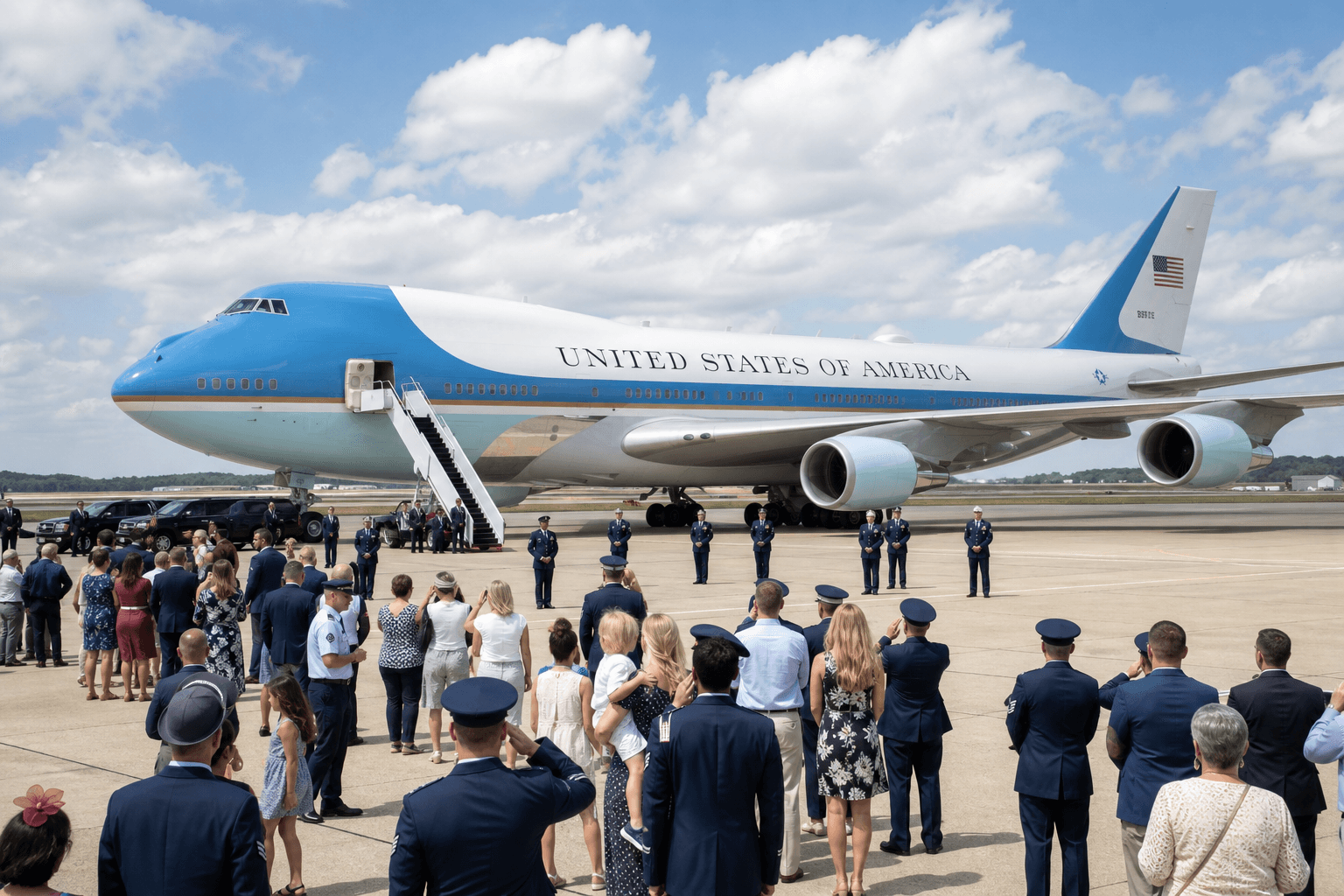
Although the new VC-25B carried US President Donald Trump to Turkey for the NATO summit, he left aboard one of the classic VC-25As. After a high-profile entry into service at the start of July, US President Donald Trump has already had to curtail his use of a new Air Force One executive transport jet. Officially known as the VC-25B Bridge aircraft, the converted 747-8 is the jet famously, or perhaps infamously, gifted to Washington by the government of Qatar. The Boeing Business Jet was then modified into a presidential transport by conversion specialist L3Harris, which delivered it to the US Air Force (USAF) in June. The VC-25B Bridge carried Trump on a domestic trip at the start of July and flew in the Independence Day air show over Washington, DC to celebrate the semiquincentennial anniversary of the USA’s founding on 4 July. Trump then opted for the VC-25B Bridge as his jet of choice to travel to Ankara, Turkey, to attend the annual summit of NATO leaders on 7 and 8 July. However, the freshly painted red-white-and-blue 747 did not carry the US president for the entirety of his journey back to the United States. Instead, one of the older, classically painted blue-and-white VC-25As assumed the Air Force One callsign and bore the presidential retinue from Turkey to RAF Mildenhall in the UK. There, Trump and his entourage swapped jets and crossed the Atlantic on the new VC-25B. The reasons for the switch are not entirely clear. US President Donald Trump boarded one of the air force’s older VC-25A executive transports for the trip from Ankara back to Washington, DC. Source: The White House When asked about the change in Turkey, Trump said the new VC-25B Bridge would stop at a US military base in Europe as an exposition for American troops. The president later posted a photo of the jet on the ramp at RAF Mildenhall, flanked by a number of USAF personnel and their families. Speaking at Joint Base Andrews in Maryland after the return flight aboard the VC-25B, Trump denied that a security concern was behind the 747 shuffle. "No, no,” Trump said on 9 July. “We sent it a little bit early so we could let them see it. The base, the whole base came out and saw the plane." However, media reports suggest there was in fact a serious security worry. During the Ankara summit, Trump reopened hostilities in the Persian Gulf between the USA and Iran, declaring a tenuous ceasefire over. In light of the renewed fighting, the president’s Secret Service security detail urged him to return home on one of the VC-25As, a detail first reported by the New York Times . No specific threat has been officially disclosed. Unverified reports are circulating, including several citing Israeli intelligence sources, that Tehran may have been planning an attack on the president in the near future. Iran has for years been open about its desire to exact revenge on Trump for the killing of former Iranian General Qasem Soleimani in 2020, which Trump ordered during his first term in the White House. Trump and Israeli Prime Minister Benjamin Netanyahu also oversaw the decapitation strikes that killed Iran’s former supreme leader Ali Khamenei and several of his family members on 28 February, which kicked off a devastating bombing campaign against Iran. The L3Harris VC-25B is being described as a “Bridge” aircraft, distinct from the two VC-25Bs the Pentagon originally contracted from Boeing, scheduled for delivery in 2028. Source: US Air Force A week-long, state funeral for Khameni concluded on 10 July, including processions in multiple cities across Iran and neighbouring Iraq. The events were used to rally supporters of the fundamentalist government in Tehran. So why the aircraft change in Ankara? The USAF declared that “no risk was taken in security, safety or mission communications” of the VC-25B Bridge when the aircraft was delivered after a 10-month conversion process. Both the service and L3Harris assured the public that extensive precautions were also taken to clear the former Qatari jet of any espionage risk. "The aircraft is clean and very secure," Jason Lambert, president of L3Harris’ ISR business unit, told FlightGlobal in June, following delivery of the VC-25B. L3Harris also provides the secure SL3CS-A communications suite that will be featured on the two primary VC-25Bs that Boeing expects to deliver in 2028, making that unlikely to be the source of the issue. The USAF admits that the converted Bridge aircraft does not contain all of the systems included on the two purpose-built VC-25Bs being prepared by Boeing. “The collective team made trades on some of the less commonly used mission sets that Boeing must deliver to support the next 40 years,” the USAF says. What exactly those less commonly used systems were, and if they impacted the decision to switch planes, remains unclear.
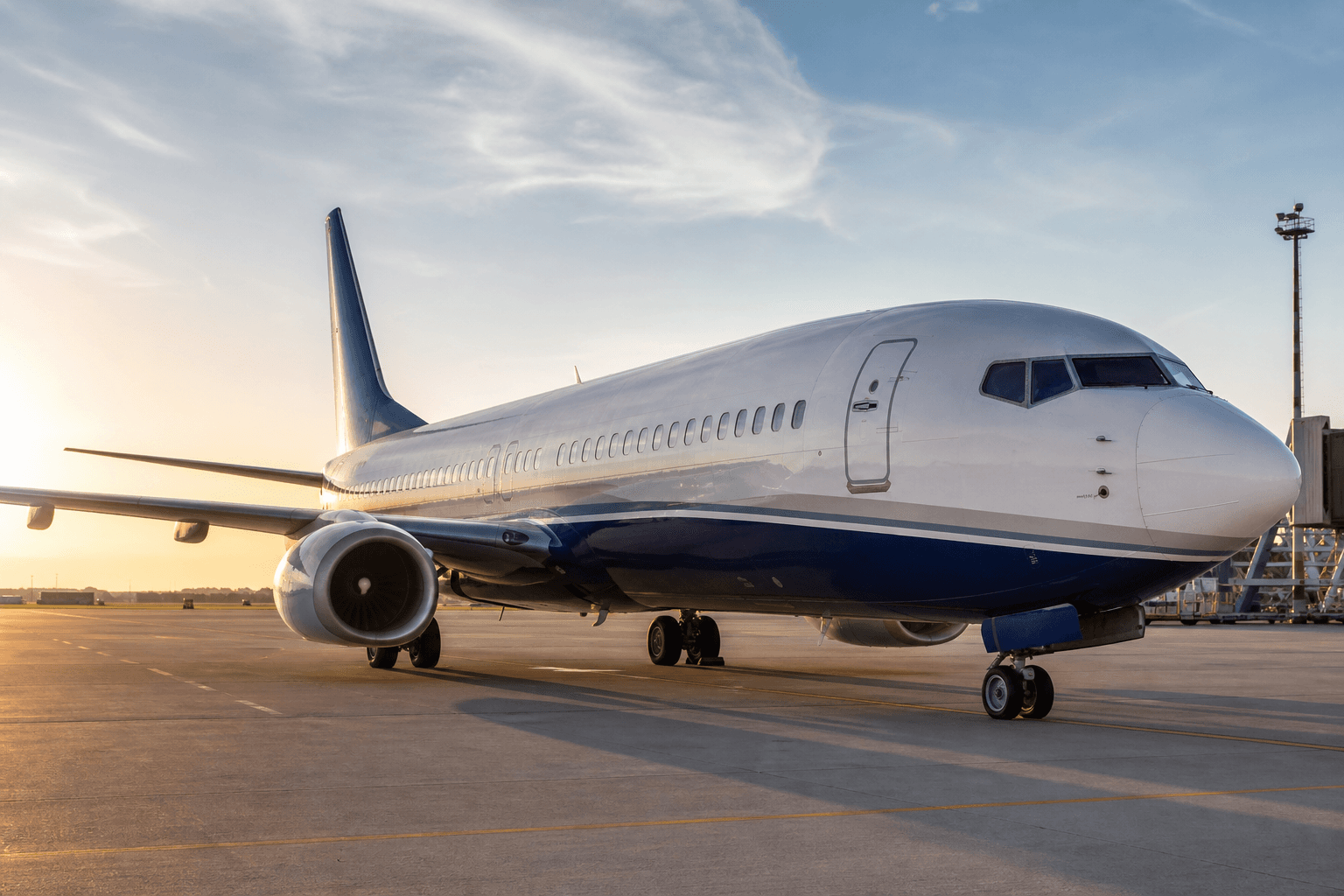
Ryanair 737 Window Failure Nearly Ejects Passenger Mid-Flight
A passenger aboard a Ryanair 737 was nearly ejected from the aircraft when the cabin window failed mid-flight. Multiple sources stated the window may have been struck by a piece of the aircraft's engine, which caused the structure to fail, but the airline has not verified this. The aircraft, operated by Malta Air for Ryanair, took off from the Greek city of Thessaloniki just before 6 a.m. local time on Friday. The flight was heading to Memmingen, Germany. According to a statement from Ryanair, shortly after takeoff the aircraft returned to Thessaloniki when a "passenger window dislodged inflight." The airline noted the aircraft made a normal landing and passengers returned to the terminal. One passenger requested and received medical assistance on the ground in Thessaloniki. A replacement aircraft was brought in to get passengers on their way. READ MORE: Ryanair Inks Deal for 300 Boeing 737 Max Jets READ MORE: 4 Flight Attendants Sue Boeing Over Alaska Door Plug Blowout According to media reports in Greece and Germany, several passengers described hearing a loud bang like a tire exploding, followed by the window breaking and oxygen masks dropping from the ceiling as the cabin lost pressure. At the time the aircraft was passing through an altitude of approximately 20,000 feet. The passenger sitting next to the window that gave way was partially ejected. Passengers said his head and shoulders were outside the aircraft, and they helped pull him back inside. He was still wearing his seat belt. The injured passenger is believed to be a 61-year-old Serbian national. According to Dutch newspaper De Telegraaf , the passenger sustained an injury to the neck caused by the impact as well as scrapes and burns about the head and shoulders. The injured man was conscious but in shock when the airplane landed. The cause of the blow out is under investigation. FLYING reached out to Ryanair, but inquiries were not returned by publication time. About the Aircraft The Boeing 737 in question is 19 years old. The fuselage windows on Boeing 737s are made from three layers of acrylic or polycarbonate, which is designed for strength and durability. The outer pane is the thickest and designed to withstand external pressures and impacts. The windows are bonded to the fuselage using an aviation-grade adhesive for structural integrity. The aircraft windows are designed to experience pressure changes during the flight. The cabin is pressurized to 6,000 feet for passenger comfort and safety. There is less air pressure outside the aircraft during flight. The tiny hole on the bottom of the inner piece of window acrylic allows some of the cabin air to enter the pocket between the inner and outer panes, allowing the pressure to slowly equalize as the aircraft climbs. At altitude, the air pressure is considerably lower than it is inside the cabin. When a window fails at altitude, objects within the cabin are pushed toward the window by the higher cabin pressure, then drawn out of the aircraft by the vacuum created by lower pressure.
The Daily Touch & Go
The day's best aviation news in your inbox. Free, no spam.