

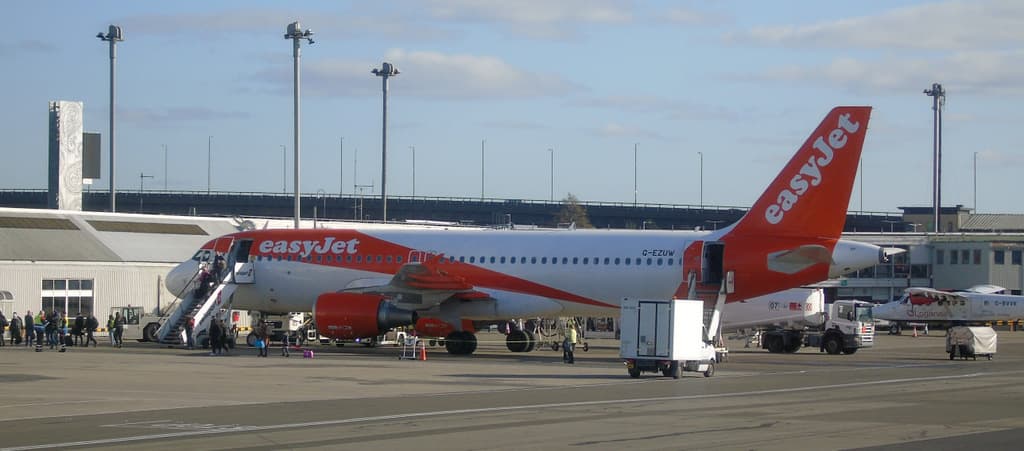
Image: Thomas Nugent · CC BY-SA 2.0 · via Wikimedia Commons
Apollo Global Management Secures Majority Stake in EasyJet While Navigating EU Ownership Rules
Apollo Global Management agrees to acquire easyJet for £5.7 billion, structuring ownership to comply with EU majority control regulations for airlines.
The gist
Apollo’s acquisition of easyJet respects strict EU rules requiring majority European ownership and control in airlines.
New York-based private equity firm Apollo Global Management has reached an agreement to acquire the British low-cost carrier easyJet in a deal valuing the airline at £5.7 billion ($7.7 billion). With an offer of £7.15 per share, which represents an 81% premium over the stock’s closing price before the deal was public, Apollo outbid US rival Castlelake to become the top buyer. The transaction is supported by easyJet’s founder Sir Stelios Haji-Ioannou and its board, signaling strong alignment between management and the acquiring investors.
Despite appearances, the acquisition cannot be a straightforward purchase typical of American private equity buyouts of European firms. Due to European Union airline ownership regulations, Apollo-managed funds will be limited to holding a maximum 49.9% economic stake in easyJet. The remainder will be retained by qualifying investors, including founder Stelios and other continuing shareholders, with up to 5% reserved for an EU-based management trust. This complex ownership structure preserves European control while facilitating Apollo’s investment.
The critical regulatory framework underpinning this arrangement is EU Regulation 1008/2008, which requires European airlines to be majority owned and effectively controlled by EU member states or nationals to maintain their operating licenses. Ownership exceeding 50% by EU interests is necessary but not sufficient; effective control over the airline’s strategic decisions must also reside within the EU. This dual requirement aims to protect the liberalized European aviation market from non-EU dominance and safeguard local operational authority.
Historically, US investors have held significant stakes in European airlines without contravening these rules. Delta Air Lines owns nearly half of Virgin Atlantic and holds a minority stake in Air France-KLM, while Apollo and Castlelake have invested in Scandinavian Airlines (SAS) through private equity and debtor-in-possession financing. Indigo Partners, a Phoenix-based fund, has contributed foundational capital to ultra-low-cost European carrier Wizz Air. However, in all cases, the airlines maintain majority European ownership and control.
EasyJet’s response to the EU ownership mandates intensified following Brexit, when British shareholders ceased qualifying as EU nationals. To maintain its Austrian-based operating license—established in 2017 to secure EU route rights post-Brexit—easyJet put in place mechanisms to limit voting rights of non-qualifying shareholders, keeping non-EU ownership below 49.5%. This safeguard ensures compliance with EU airline licensing rules tied to the principal place of business and effective control criteria.
Apollo’s acquisition plan reflects this regulatory landscape. By capping its economic interest at 49.9%, partnering with qualifying European investors, and instituting an EU management trust, Apollo aims to satisfy both the letter and spirit of EU ownership rules. This approach distinguishes its bid from Castlelake’s and has likely contributed to securing easyJet’s endorsement, as it preserves continuity of control and operational compliance.
While Apollo plans to take easyJet private, it does not intend major strategic shifts. The firm supports continuing easyJet’s existing initiatives such as fleet modernization, upgauging aircraft, enhancing ancillary revenue streams, loyalty programs, and expanding the easyJet Holidays vacation offering. Apollo views a private ownership structure as enabling longer-term planning and capital investment without the demands of public market quarterly reporting.
The success of Apollo’s structured acquisition could represent a notable blueprint for future non-European investments in EU airlines. It demonstrates that substantial American capital can play defining roles in European aviation while respecting regulatory constraints that prioritize local ownership and control. Such arrangements balance the complexities of global investment with the sovereignty concerns central to EU aviation law.
With this acquisition, easyJet secures committed capital and strategic backing aimed at sustaining growth in a fiercely competitive European market. The deal underscores the evolving dynamics between international private equity participation and longstanding EU ownership mandates, reinforcing the unique nature of airline ownership and control compared to other industries.
Frequently asked questions
- Why can Apollo Global Management not own more than 49.9% of easyJet in its acquisition?
- EU regulations require that airlines be majority owned and effectively controlled by EU member states or nationals to maintain their operating license, limiting non-EU investors like Apollo to under 50% ownership.
- What measures has easyJet taken to comply with EU ownership rules post-Brexit?
- EasyJet established an Austrian-based subsidiary in 2017 to maintain EU operating rights and capped non-EU ownership to below 49.5%, even suspending voting rights for certain non-qualifying shares.
- How does Apollo’s acquisition structure address EU airline ownership regulations?
- Apollo plans to hold 49.9% economic interest, with the remainder held by qualifying European investors and an EU management trust, ensuring majority European ownership and effective control required by EU rules.
Read more
All Regulatory →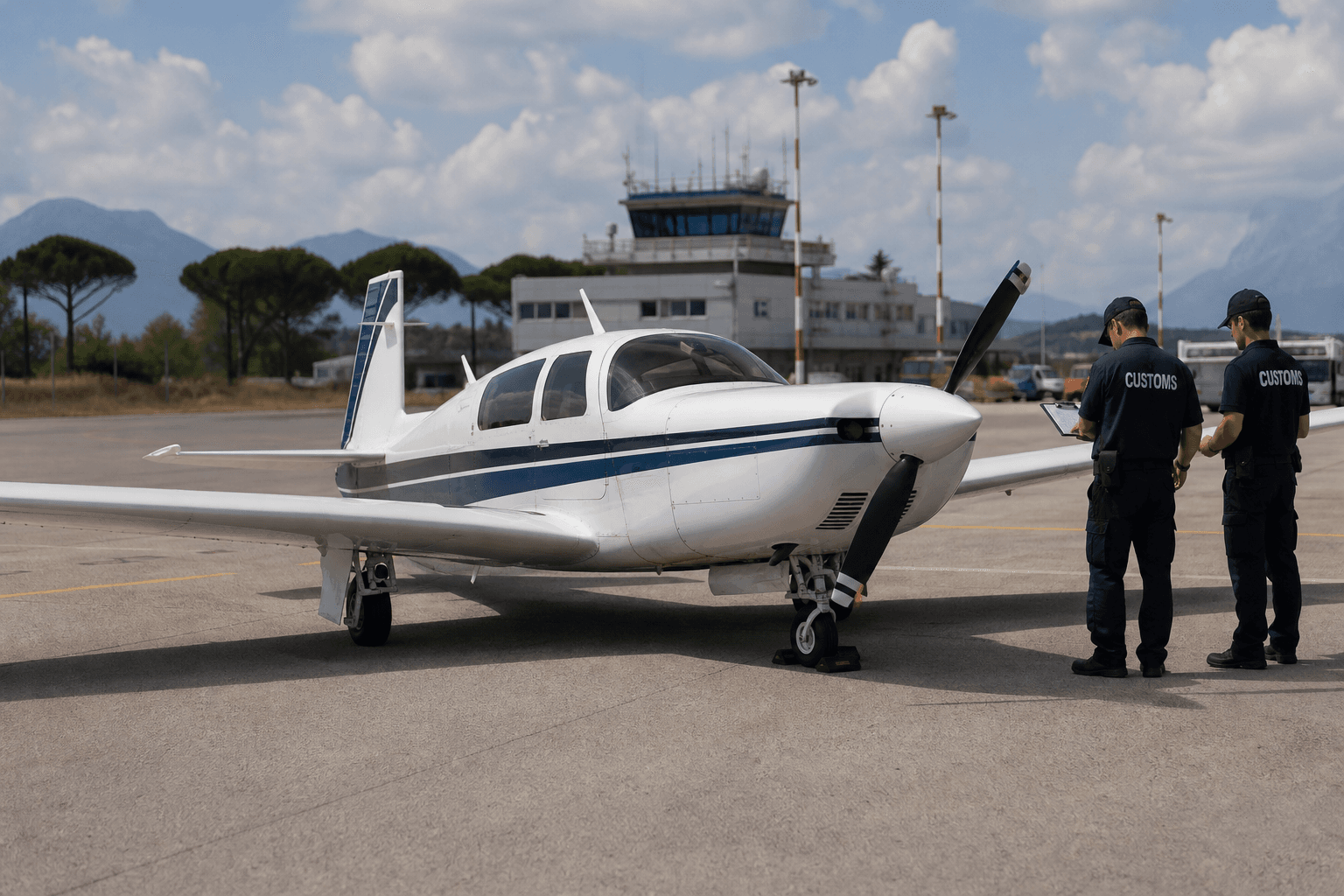
Italy Seizes Multiple Foreign-Registered GA Aircraft Amid Intensified Customs Enforcement
Italian authorities have seized several foreign-registered general aviation aircraft in recent months as the country's financial police increase customs and tax enforcement at airports. One case involves an N-registered Mooney M20K that was seized at Trento Airport April 9 and had not been released when German aviation publication Aerokurier reported on the case in late June. The aircraft's owner said his attorney was handling eight seizure cases and knew of roughly 30 similar cases across Italy. The Mooney was imported into Europe in 1988, initially carried German registration and was transferred to the FAA registry after an ownership change in 2006, according to Aerokurier . The aircraft subsequently remained based in Europe for approximately two decades. “Italian customs demanded documents relating to the aircraft’s import, including customs clearance, that were no more than six months old—which, naturally, cannot be provided, as the aircraft has been based in Europe for decades,” the owner told Aerokurier in a statement translated from German. The publication also reported that an N-registered Cirrus owned by a French pilot was seized after a weather diversion to Pescara. Foreign Registrations Under Scrutiny AOPA Germany issued a warning on July 9, stating that the Guardia di Finanza has increased inspections involving foreign-registered aircraft, particularly those carrying U.S. N-numbers, San Marino T7 registrations and Swiss HB registrations. Authorities are reportedly examining ownership, tax and customs status and aircraft use. Company-owned aircraft can receive additional scrutiny over whether flights are private or constitute commercial transportation. AOPA Germany said increased enforcement has been particularly noticeable in northeastern Italy. The dispute also involves aircraft that have already been imported into the European Union . In the Mooney case, the owner says Italian authorities are questioning whether the aircraft retained its EU customs status after it moved from a German registration to the FAA registry. The owner disputes that interpretation and has filed complaints with the European Commission. AOPA Germany says AOPA Italy and European IAOPA are also challenging the enforcement and that several legal proceedings are pending. Pilots Urged To Prepare The cases do not mean every foreign or U.S.-registered aircraft entering Italy will face seizure. Even so, AOPA Germany advises caution. “Extreme caution is currently advised when flying to Italy,” AOPA Germany said in its July warning. “If the aircraft is not registered to a private individual as owner and operator in an EU member state, you should check the current regulations and, if in doubt, choose a different destination.”

Black Comedians Settle Lawsuit Over Racially Targeted Jet Bridge Stops at Atlanta Airport
What to Know Comedians Eric André and Clayton English have settled their lawsuit against Clayton County over a jet bridge stop program at Atlanta’s airport, which disproportionately targeted Black passengers. In This Article The statistics behind the lawsuit, including odds researchers say are less than one in 100 trillion that the racial disparity happened by chance. What each comedian experienced when police intercepted them on the jet bridge before boarding. What Clayton County has agreed to change, including body cameras and constitutional rights training for officers. How much each comedian will receive, and what the county did and didn’t admit to. Show 4 more points + .pyok-callout { display: flex; border-radius: 0; background: #f7f9fc; margin: 24px 0; font-family: -apple-system, BlinkMacSystemFont, "Helvetica Neue", Arial, sans-serif; } .pyok-callout-inner { padding: 20px 24px; width: 100%; } .pyok-callout-head { margin-bottom: 12px; } .pyok-callout-tag { font-size: 20px; font-weight: 900; letter-spacing: 0.04em; text-transform: uppercase; color: #120E43; } .pyok-callout-list { margin: 0; padding: 0; list-style: none; } .pyok-callout-list li { position: relative; padding-left: 18px; margin-bottom: 12px; font-size: 17px; line-height: 1.55; color: #1a1a1a; } .pyok-callout-list li::before { content: ""; position: absolute; left: 0; top: 9px; width: 6px; height: 6px; border-radius: 50%; background: #120E43; } .pyok-callout-list-more li:last-child { margin-bottom: 0; } .pyok-callout-subhead { text-align: center; font-size: 11px; font-weight: 700; letter-spacing: 0.1em; text-transform: uppercase; color: #8a93a3; margin: 22px 0 14px; padding-top: 14px; border-top: 1px solid #e1e7ef; } .pyok-callout-more { max-height: 0; overflow: hidden; transition: max-height 0.35s ease; } .pyok-callout-toggle { display: inline-flex; align-items: center; gap: 6px; margin-top: 10px; padding: 0; border: none; background: none; color: #120E43; font-size: 14px; font-weight: 700; cursor: pointer; } .pyok-callout-toggle:hover { text-decoration: underline; } .pyok-callout-toggle-icon { display: inline-flex; align-items: center; justify-content: center; width: 16px; height: 16px; border: 1.5px solid #120E43; border-radius: 0; font-size: 12px; line-height: 1; } (function () { document.querySelectorAll('.pyok-callout-toggle').forEach(function (btn) { btn.addEventListener('click', function () { var card = btn.closest('.pyok-callout-inner'); var more = card.querySelector('[data-more]'); var isOpen = btn.getAttribute('aria-expanded') === 'true'; var textEl = btn.querySelector('.pyok-callout-toggle-text'); var iconEl = btn.querySelector('.pyok-callout-toggle-icon'); if (isOpen) { more.style.maxHeight = '0px'; btn.setAttribute('aria-expanded', 'false'); textEl.textContent = btn.dataset.moreText; iconEl.textContent = '+'; } else { more.style.maxHeight = more.scrollHeight + 'px'; btn.setAttribute('aria-expanded', 'true'); textEl.textContent = btn.dataset.lessText; iconEl.textContent = '\u2212'; } }); }); })(); Two Black actors and comedians, Eric André and Clayton English, have reached a settlement with Clayton County, which covers Atlanta-Hartsfield International Airport (ATL), over a "coercive" jet bridge stop program that subjected passengers to “racial profiling” by local law enforcement. The lawsuit dates back to October 2022 when André and English took the Clayton County Police Department to court in a bid to shut down the 'jet bridge stop program' which involved police officers standing on a jet bridge as passengers are boarding a plane and "randomly" stopping people. On April 21, 2021, Eric was flying from Atlanta to Los Angeles when he was intercepted by two police officers who were waiting on the jet bridge. The officers questioned him for five minutes, during which time they asked if he was carrying illegal drugs, all while other passengers "gawked" at him as they squeezed past. Eric was allowed to board the flight, but he says the encounter with the police officers was a "humiliating and degrading experience". Clayton had a very similar experience as he went to board a flight to Los Angeles just six months earlier in October 2020. In an eight-month period, the Clayton County Police Department had 402 "consensual encounters," of which only two resulted in passengers being charged with drug offenses. During that same time period, however, the police department seized more than $1 million in cash and money orders based on the "slightest suspicion" that the money was connected to criminal activity. An Open Records Act request revealed that 56% of the passengers stopped during the same eight-month period were Black. Researchers from the Policing Project, which supported Eric and Clayton, claim that the odds that Black passengers were randomly selected for these stops are less than one in 100 trillion. The actors have, however, now reached an out-of-court settlement with Clayton County. The settlement includes a $15,000 payout for each of the actors. “It´s a major victory that Clayton County has confirmed that it has ended this program and is now taking steps to prevent this type of abuse from happening in the future,” André said after the settlement was announced on Tuesday. In a separate statement, English said: “What happened to me was wrong, and I wasn´t willing to let it happen to other people.” Clayton County did not make any admission of guilt or liability as part of the settlement. The county has, however, committed to putting its police officers through constitutional rights training, and will require officers on duty at Atlanta-Hartsfield to wear body cameras.

SkyBrief app streamlines preflight planning with personalized weather and training tools
Rohith Velmurugan was working toward his commercial pilot certificate when he noticed how much of his training time was being spent on the ground.

Klimov Advances VK-1600S Turboprop to Power Modernised An-2 Aircraft
VK-1600S powerplant to be based on helicopter engine. Russia's United Engine is preparing to build a demonstrator of a new engine for smaller aircraft types including a modernised Antonov An-2. It has completed design documentation for a prototype of the Klimov VK-1600S turboprop. "The next stage is creation of a demonstrator engine and a test rig, which are necessary to validate the design and certify the new product," says the firm. Intended to generate 1,450shp (1.08MW) at take-off, the powerplant is based on the VK-1600V for helicopters. "Existing key components, including the gas generator, are used as the basis, accelerating the development process," says United Engine, adding that the two powerplants will have 60-65% commonality. It says it is aimed at applications including modernised versions of the An-2 – such as the TVS-2DTS. Such modernisation programmes had originally been developed to feature a Honeywell engine. "There are still many of these aircraft in Russia, so there is a need for new engines," says state technology firm Rostec. United Engine says the VK-1600S would be used with the Aerosila AV-17 propeller. "We plan to complete the demonstrator engine soon and prepare a specialised test rig," says Klimov chief designer Anton Kolosov.
The Daily Touch & Go
The day's best aviation news in your inbox. Free, no spam.