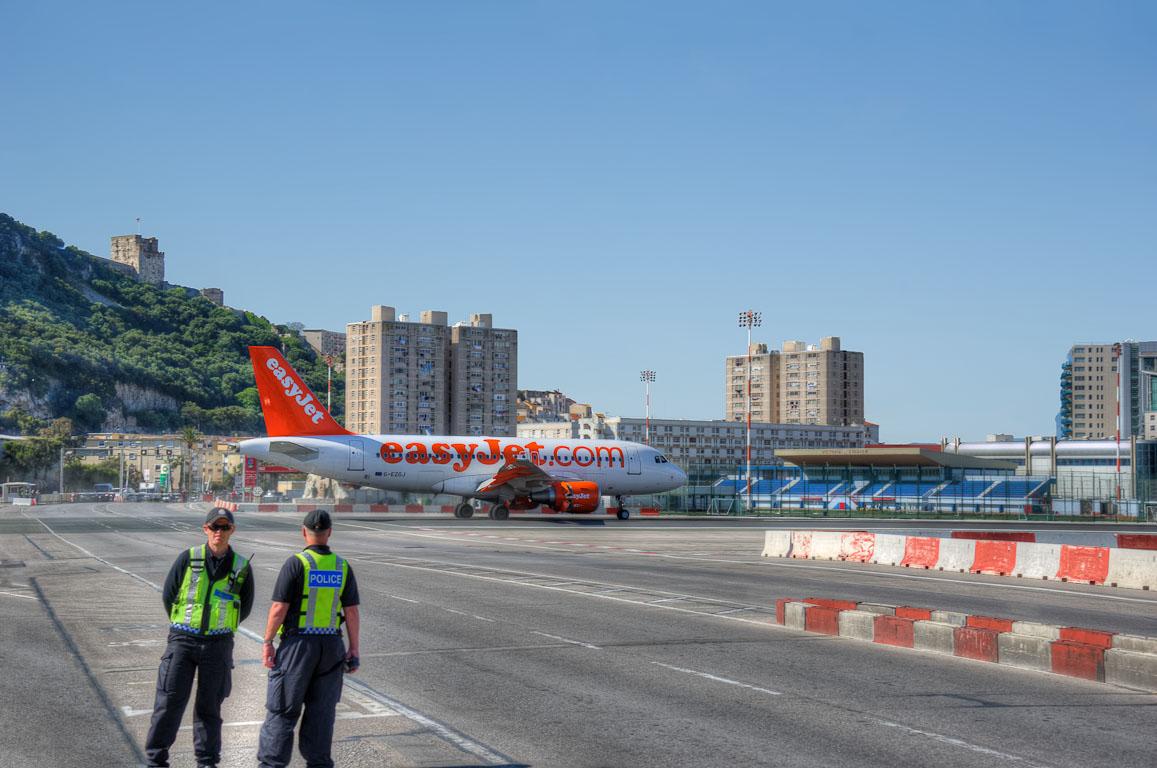
Image: Steve Slater · CC BY 2.0 · via Wikimedia Commons
Apollo's £5.7 Billion easyJet Deal Caps Its Funds at 49.9% to Keep EU Operating Rights
The US asset manager will hold no more than 49.9% of easyJet's new parent, with rollover shareholders and an EU trust holding the rest so the airline stays compliant with European and UK ownership rules.
The gist
Apollo is buying easyJet but will own at most 49.9% of the new parent so the airline keeps its EU, UK and Swiss operating rights.
Apollo Global Management's £5.70 billion ($7.7 billion) takeover of easyJet is built around one number: 49.9%. The New York-based asset manager's funds will hold no more than that share of the airline's new parent company, a ceiling set by European rules that require EU airlines to be majority-owned and effectively controlled by EU nationals. The deal is still provisional and has not yet been cleared by the relevant authorities. Apollo is targeting completion by the end of the first quarter of 2027.
easyJet shareholders backed the offer on November 11, voting 97.07% in favor at a court-convened meeting. The price of £7.15 ($9.42) per share represents an 81% premium to easyJet's pre-offer share price. Rival suitor Castlelake had bid £6.90 ($9.09) per share before walking away, after which Apollo announced its agreement to buy the carrier in August 2026. easyJet is expected to be delisted from the London Stock Exchange in the first quarter of 2027.
The acquiring entity is Eagle Bidco Ltd, which is backed by Apollo. Under the structure easyJet has published, Apollo funds would take up to 49.9% of the holding company. Rollover shareholders, including the Haji-Ioannou family, would hold between 45.1% and 49.9%. An EU Trust would hold up to 5%, linked to a management incentivization plan. easyJet said its headquarters would remain in the UK and that its UK, Austrian and Swiss operating licenses are intended to remain unchanged.
The cap traces back to EU Regulation 1008/2008, the legislation behind Europe's liberalized aviation market. Article 4(f) requires that member states or their nationals own more than 50% of an airline and effectively control it, directly or through intermediate companies, unless an agreement with a third country provides otherwise. The same rule lets carriers such as easyJet, Ryanair and Wizz Air fly across European borders without being treated as foreign airlines. An airline that loses majority European ownership and control risks losing its EU operating license and the traffic rights attached to it.
Brexit makes easyJet's position more involved. Although the airline is headquartered in Britain, British nationals stopped counting toward the EU ownership pool for licensing purposes on January 1, 2021. easyJet prepared for this in 2017 by setting up easyJet Europe in Austria, and the group must keep that operation compliant with EU nationality requirements. The takeover documents spell out separate obligations for easyJet Europe under Regulation 1008/2008, easyJet UK under UK law and the assimilated version of the regulation, and easyJet Switzerland under Swiss law, along with the UK-EU and UK-Swiss air services agreements.
Structuring the deal around EU rules does not exempt it from British oversight. The UK Government is in communication with the parties, and any transaction must also satisfy UK requirements. Whether the partial acquisition completes or collapses still depends on those approvals.
Ownership is only half of the test; the other half is effective control. A 49.9% holding facing a fragmented 50.1% can in practice carry a vote, since some shareholders do not turn up and a few others can usually be persuaded. Apollo's proposal includes governance provisions meant to address that question. Under the plan, Apollo would appoint a non-voting board chair, who in turn would appoint three of the board's nine voting directors.
Apollo, founded in 1990, invests in alternative asset classes on behalf of institutional clients including pension funds, endowments and sovereign wealth funds. Investment firms of this type often buy underperforming businesses, restructure them and later sell. In US aviation, activist investor Elliott Investment Management pushed for changes at Southwest Airlines in 2025 after building a large minority stake.
The same EU rule that limits Apollo has allowed European carriers to buy one another across borders, producing the Lufthansa Group, IAG and Air France-KLM. In November, the Portuguese government and Lufthansa Group signed a deal for Lufthansa to take a 44.9% stake in TAP Air Portugal, with TAP rejecting a rival bid from Air France-KLM. IAG had considered a TAP bid but withdrew in the spring of 2026, and in August 2024 it dropped its attempt to buy the remaining 80% of Air Europa.
Originally reported by Simple Flying
Read more
All Airlines →
Plus Ultra Drops Lima and Buenos Aires, Enters Pre-Insolvency Talks with Creditors
The Spanish long-haul carrier plans to cut scheduled flight hours by more than 61%, shrink its fleet and open a redundancy process covering 679 Madrid staff.
airBaltic Shuts Gran Canaria Base, Cutting Direct Nordic and Baltic Links to Maspalomas
The Latvian carrier is closing every base outside Riga after a €115 million loss in 2025, ending point-to-point service that fed northern European visitors to southern Gran Canaria.
Aer Lingus Reveals Refitted A330 Cabins with Its First Premium Economy, Debuting on Dublin-New York in 2027
The Irish carrier will refurbish 10 Airbus A330s with Business Class suites, a new 28-seat Premium Economy cabin and redesigned Economy, starting with JFK flights on 1 October 2027.
Arajet Sets April 2027 Launch for Santo Domingo Flights to Caracas and Valencia
The Dominican low-cost carrier will start seven weekly 737 MAX 8 flights to two Venezuelan cities, selling onward connections to Miami, Newark and Mexico City through its Santo Domingo hub.
The Daily Touch & Go
The day's best aviation news in your inbox. Free, no spam.