

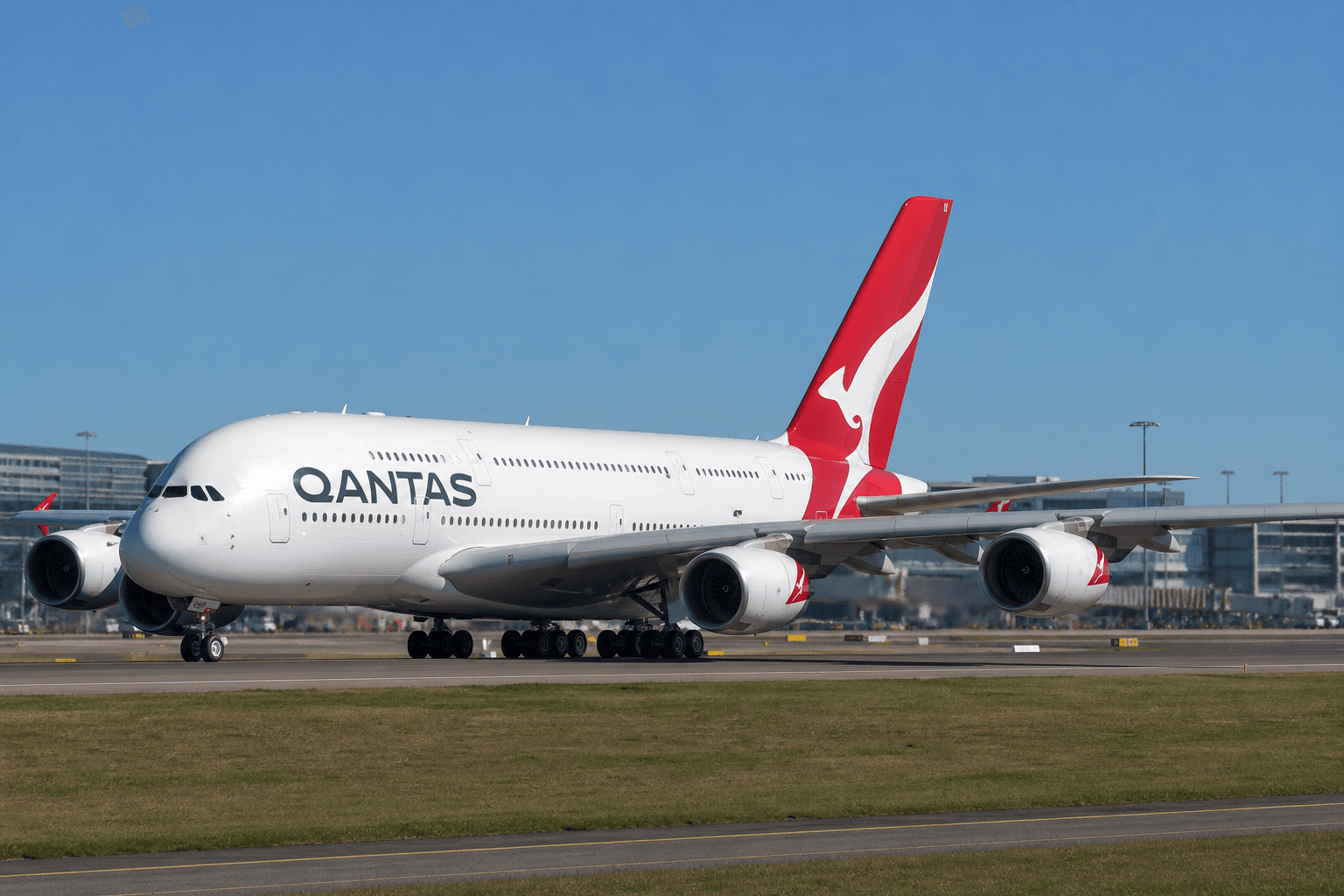
Illustration: The Touch & Go
Qantas Faces Major A380 Flight Disruptions Due to Multiple Aircraft Groundings
Maintenance challenges have sidelined several of Qantas's Airbus A380 fleet, forcing cancellations on key international routes in early July 2026.
The gist
More than planned A380 groundings have forced Qantas to cancel flights on major international routes amid maintenance snags.
Continuing coverage
All Airbus A380 →- Qatar Airways Cuts Airbus A380 Flights by Over Half Amid Iran Conflict
- British Airways Drops Airbus A380 From Seven Key Routes At Heathrow
- Singapore Airlines deploys Airbus A380s on top global routes in 2026
- Emirates to Relaunch Airbus A380 on 11 Key Long-Haul Routes from Late June to August
- Emergency Inspections Ordered for 16 Airbus A380s After Wing Spar Cracks Found
Qantas, Australia’s flag carrier and a founding oneworld member, is currently grappling with unexpected operational challenges involving its fleet of Airbus A380 superjumbos. With ten A380s in active service and an average age of nearly 17 years, the carrier relies heavily on these aircraft for its long-haul network. However, a combination of maintenance setbacks has taken more planes out of action than their scheduling permits, resulting in flight cancellations on some of the world's busiest international routes in early July.
The A380s are a critical component of Qantas’s long-haul operations, typically requiring eight or nine aircraft to be flying on any given day. At present, one aircraft, VH-OQI, has been in extended maintenance in Dresden since March, reducing the operational fleet available to nine. This leaves minimal margin for additional aircraft to be grounded without disrupting schedules, a vulnerability that has come to fruition.
In early July, additional technical troubles emerged when VH-OQH encountered an air conditioning fault on July 2 but returned to service the following day, minimizing disruption. More significant is the status of VH-OQG, which has been grounded in London Heathrow since July 3 awaiting an engine change. These technical challenges have led to multiple cancellations of Qantas flights from Sydney and Melbourne to Los Angeles, affecting travelers relying on the superjumbo for those routes.
Qantas typically deploys its A380s across a variety of key international sectors. In July alone, with normal operations, data suggests the airline had planned 315 A380 flights, primarily servicing routes between Australia and major hubs such as Singapore, London Heathrow, Los Angeles, Dallas/Fort Worth, and Johannesburg. For example, in July, there are 40 planned A380 flights from Sydney to Singapore, with 31 continuing to London, demonstrating the aircraft's centrality to the carrier's network.
The Los Angeles route is particularly impacted by the current fleet shortages. Qantas normally operates daily A380 services from Sydney to LAX, with additional twice-weekly services from Melbourne covered by the A380. Other days on the Melbourne–Los Angeles route are operated by Boeing 787 Dreamliners. The grounding of VH-OQG has directly resulted in disrupted service on these routes, complicating travel plans during a typically busy Northern Hemisphere summer season.
Qantas also uses the Airbus A380 daily on flights from Sydney to Dallas/Fort Worth International Airport, a vital gateway for connecting to American Airlines flights, another oneworld partner. Additionally, there is a four-times-weekly A380 service from Sydney to Johannesburg, underscoring the wide geographic reach and significance of the type within Qantas’s operations.
The carrier configures its A380s in a four-class layout accommodating 485 passengers. First class provides 14 suites arranged in a spacious 1-1-1 layout on the lower deck front, offering premium comfort. The rest of the lower deck houses 341 economy seats, while the upper deck combines 70 business class flatbeds in a 1-2-1 staggered configuration with 60 premium economy recliners in a seven-abreast 2-3-2 layout, illustrating the aircraft’s focus on passenger experience across all cabin classes.
The aging A380 fleet’s maintenance issues are a challenge for Qantas, as the airline depends heavily on this model for its long-haul market presence and premium international services. The extended grounding of multiple aircraft in peak travel months will likely have ongoing repercussions for passenger load and scheduling complexity.
These maintenance disruption events expose the operational fragility inherent in running an aging superjumbo fleet, especially one with limited redundancy. Qantas's future service planning may need to address these vulnerabilities, possibly accelerating fleet renewal or increased maintenance capacity to maintain its global connectivity and service standards.
Frequently asked questions
- How many Airbus A380 aircraft does Qantas currently operate?
- Qantas currently operates ten Airbus A380s with an average age of about 16.8 years, after historically flying two more.
- What maintenance issues have caused Qantas to cancel A380 flights?
- Qantas has experienced a combination of maintenance problems, including an A380 undergoing extended maintenance in Dresden since March and another grounded in London awaiting an engine change, leading to flight cancellations.
- Which routes are most affected by the Qantas A380 cancellations?
- The Sydney and Melbourne to Los Angeles routes have been most impacted, with cancellations occurring due to grounded aircraft that normally serve these long-haul sectors with A380s.
Read more
All Airlines →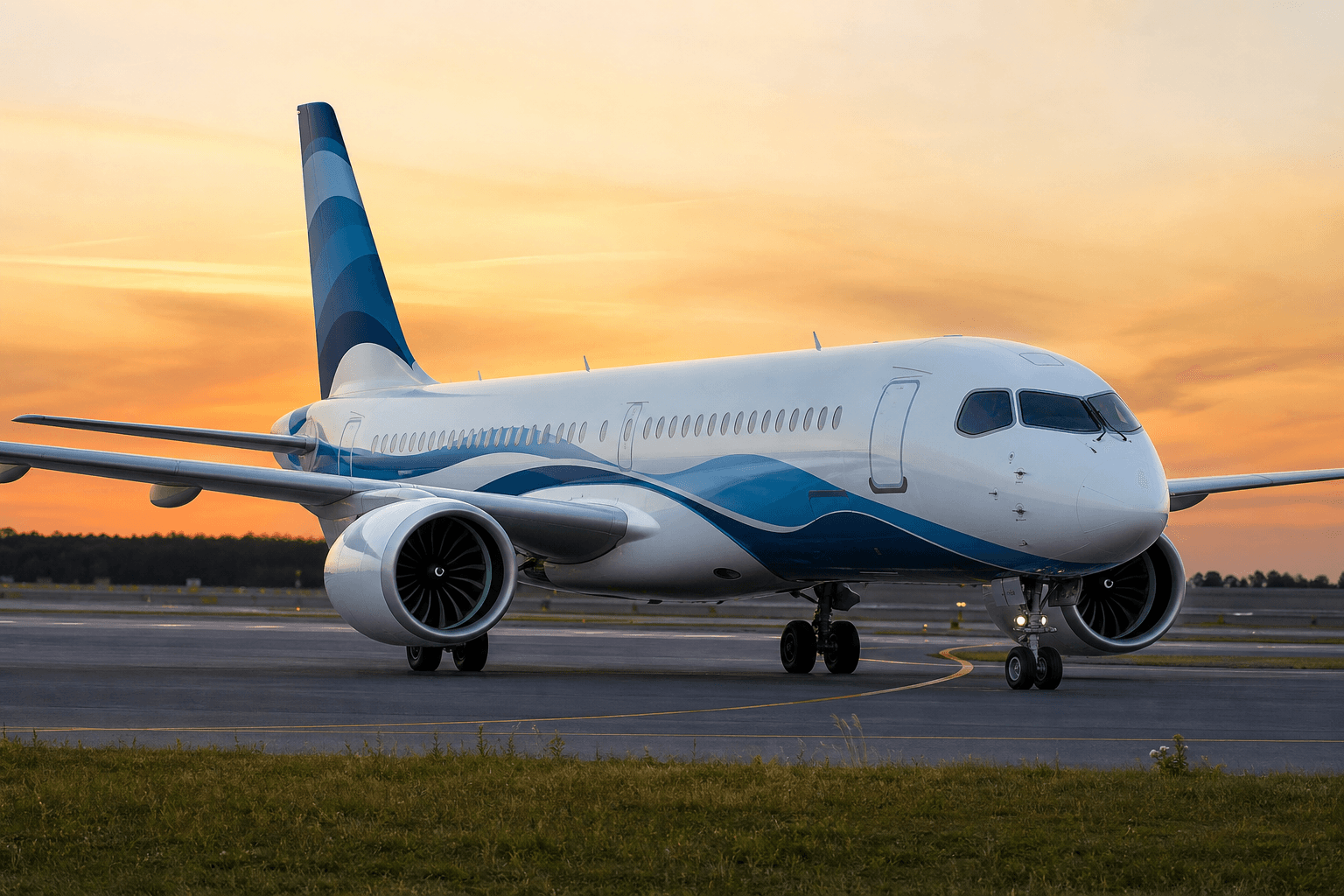
Airbus Enhances A220 Cabin Comfort for Transatlantic Flights with New 3M Insulation Deal
When Airbus and 3M announced a new long-term agreement covering advanced thermal and acoustic insulation for the Airbus A220 on June 23, 2026, the news appeared to be a routine supplier contract. In reality, it reflected a broader strategy that has been developing for years. As the A220 takes on increasingly longer missions, Airbus is investing in technologies that improve the passenger experience in ways that extend well beyond new seats or cabin layouts. The goal is to reinforce one of the aircraft's defining strengths: an exceptionally quiet and comfortable cabin.

Majority of Boeing 777 Pilots Land Despite Unstable Approaches, Data Shows
Boeing 777 pilots, like their counterparts on the vast majority of aircraft at most airlines, have set-in-stone parameters they should work within prior to carrying out landings. These ensure what is known as a stable approach and give pilots a clear set of rules to stick to when committing to a landing. If they are not met, the decision should be easy: go around and try again.

Vertical Aviation International CEO François Lassale previews new Vertical Lift Center at Oshkosh 2026
This time on The Green Dot, EAA CEO and Chairman Jack J. Pelton has a one-on-one conversation with Vertical Aviation International President and CEO François Lassale to discuss his background and aviation experience, the mission of VAI as an organization, and the introduction of the new Vertical Lift Center this summer at EAA AirVenture Oshkosh […]
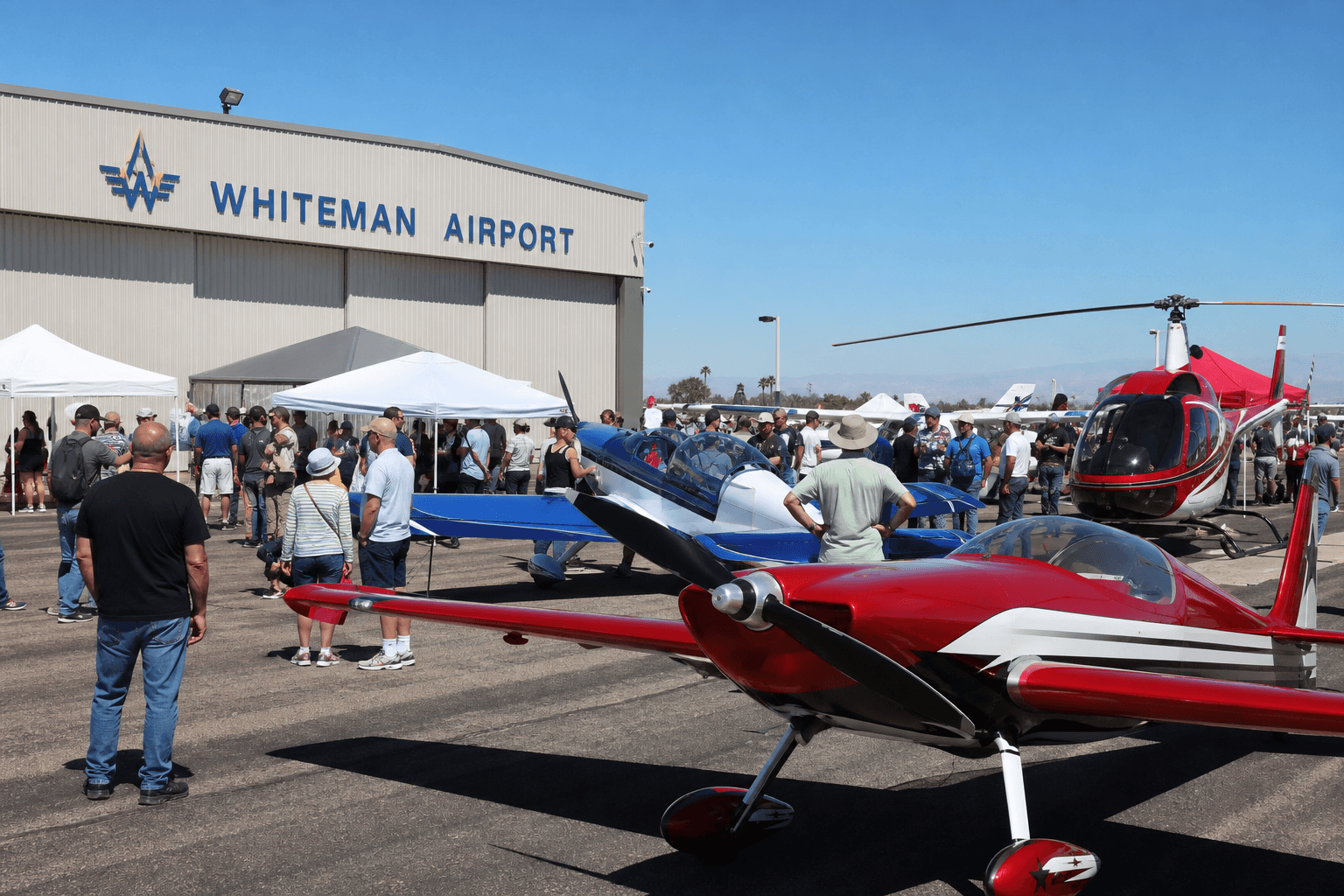
Whiteman and Santa Monica Airports Rally Communities Amid Closure Debates
Just 30 miles apart, two very different Southern California airports welcomed thousands of visitors on the same day, in different ways, but with a shared mission: connecting with their communities.
The Daily Touch & Go
The day's best aviation news in your inbox. Free, no spam.