

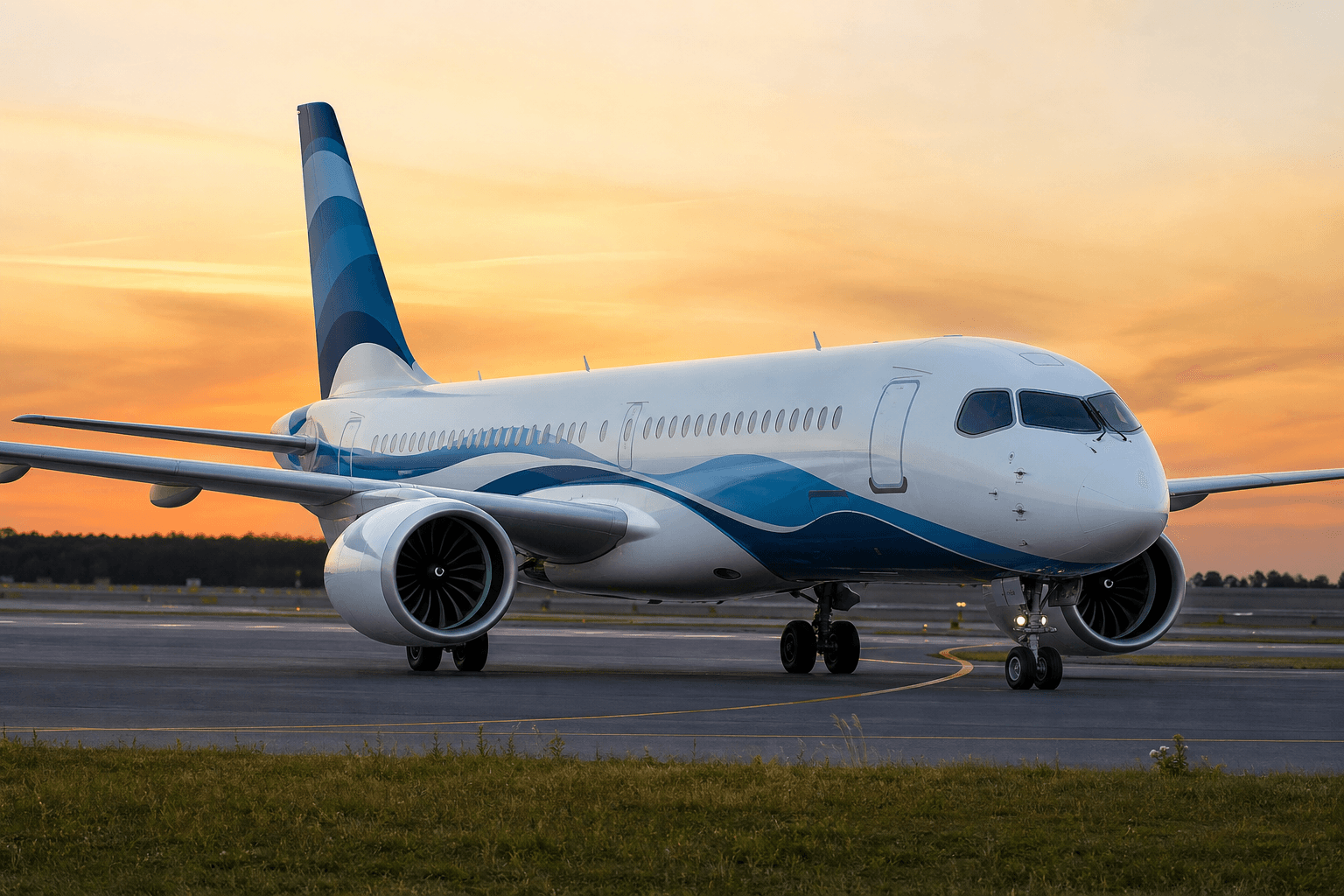
Illustration: The Touch & Go
Airbus Enhances A220 Cabin Comfort for Transatlantic Flights with New 3M Insulation Deal
Airbus has inked a long-term agreement with 3M to supply advanced thermal and acoustic insulation for the A220, elevating passenger comfort on flights up to eight hours, especially across the Atlantic.
The gist
Airbus invests in superior insulation for the A220 to bolster quiet, comfortable transatlantic travel on long, thin routes.
Continuing coverage
All Airbus →- Airbus predicts doubling air travel demand by 2045 fueled by urban growth and aircraft efficiency
- Airbus lowers 20-year passenger aircraft demand forecast to 42,060 units
- Airbus A320 Delivers Higher Fuel Efficiency Per Passenger Than A380 Despite Larger Size of the Superjumbo
- Airbus resolves A350 exterior cracking with material innovation, averting fleet grounding
- Airbus completes assembly of its first A350F freighter, begins test program
Airbus is quietly transforming its A220 single-aisle aircraft into a competitor for long transatlantic routes by focusing on enhanced cabin comfort through advanced insulation technologies. The recent deal with materials specialist 3M to supply thermal and acoustic insulation exemplifies Airbus’ strategy to position the A220 not merely as a fuel-efficient narrowbody but as an aircraft capable of delivering a widebody-level experience on flights approaching eight hours in duration.
Initially developed by Bombardier as the CSeries and intended to serve two- to four-hour sectors replacing regional jets, the A220 program accelerated after Airbus acquired it in 2018. Airlines rapidly recognized the aircraft’s range, fuel efficiency, and superior passenger environment could unlock ‘long-thin’ routes—thinly demanded transatlantic flights and secondary city pairs usually bypassed by larger jets requiring bigger passenger loads.
Airlines such as JetBlue, Delta, Breeze Airways, and airBaltic have integrated the A220 extensively into their networks, deploying it on longer sectors traditionally dominated by widebodies. Delta, for instance, operates 87 A220s across domestic and international flights, while JetBlue employs the aircraft alongside its Airbus A321LR/XLR fleet. This trend reflects a shift towards matching aircraft capacity more precisely with market demand, enabling nonstop service on routes previously underserved or unserved.
With increasing mission lengths, passenger expectations evolve accordingly. On a typical two-hour hop, cabin noise or minor temperature fluctuations may go unnoticed, but on flights lasting six to eight hours, these factors profoundly impact traveler comfort and fatigue levels. Recognizing this, Airbus is investing in less visible cabin enhancements rather than just seats or entertainment, aiming to create a low-noise, stable temperature environment rivaling larger jets.
The 3M supply contract focuses on specialized insulation materials integrated throughout the A220 cabin structure. Acoustic insulation controls noise from both engines and airframe vibration, while thermal insulation stabilizes cabin temperature, improving comfort and potentially easing cabin pressurization management. Eric Forbes, 3M's Aerospace VP, highlighted their collaboration aiming to deliver tangible enhancements passengers can feel and airlines can count on for aircraft lifespan reliability.
This partnership builds on the existing Airbus-3M collaboration and signals how Airbus prioritizes passenger comfort as the A220 stretches beyond its original short-sector remit. Although insulation improvements may seem incremental, they contribute significantly to the aircraft’s competitiveness against widebodies on long routes, where operating economics alone no longer suffice to win discerning travelers.
Cabin noise has emerged as a critical parameter for longer narrowbody flights. Cumulative engine and structure noise over extended periods can increase passenger fatigue and discomfort, detracting from perceived service quality. The A220’s Pratt & Whitney PW1500G geared turbofan engines are already class-leading for quiet operation, and the aircraft’s design elements reduce in-cabin noise and vibration from the outset.
By integrating cutting-edge acoustic and thermal insulation, Airbus enhances these attributes, reinforcing the A220’s reputation as one of the quietest and most comfortable aircraft in its category. Such enhancements aid airlines competing on passenger experience rather than just price or schedule, reflecting evolving priorities in the transatlantic and other long-thin markets.
As the A220’s role broadens, these ongoing refinements give airlines a way to differentiate their product on routes that defy traditional size classifications. The new 3M agreement exemplifies how subtle technical advances can create outsized impacts on comfort, helping the A220 carve out a unique niche between regional jets and large widebodies over demanding long sectors.
Frequently asked questions
- What is the significance of Airbus's agreement with 3M for the A220 aircraft?
- The agreement provides advanced acoustic and thermal insulation for the A220 cabin, enhancing passenger comfort on long flights by reducing noise and stabilizing temperature.
- Why is the A220 increasingly used for transatlantic and long-thin routes?
- Its combination of range, fuel efficiency, and superior comfort suits routes with lower demand where airlines want to open nonstop service without using larger widebody aircraft.
- How does improved cabin insulation affect passenger experience on eight-hour flights?
- Better insulation reduces engine and structural noise and maintains stable cabin temperatures, which together lower passenger fatigue and improve the overall in-flight comfort.
Read more
All Airlines →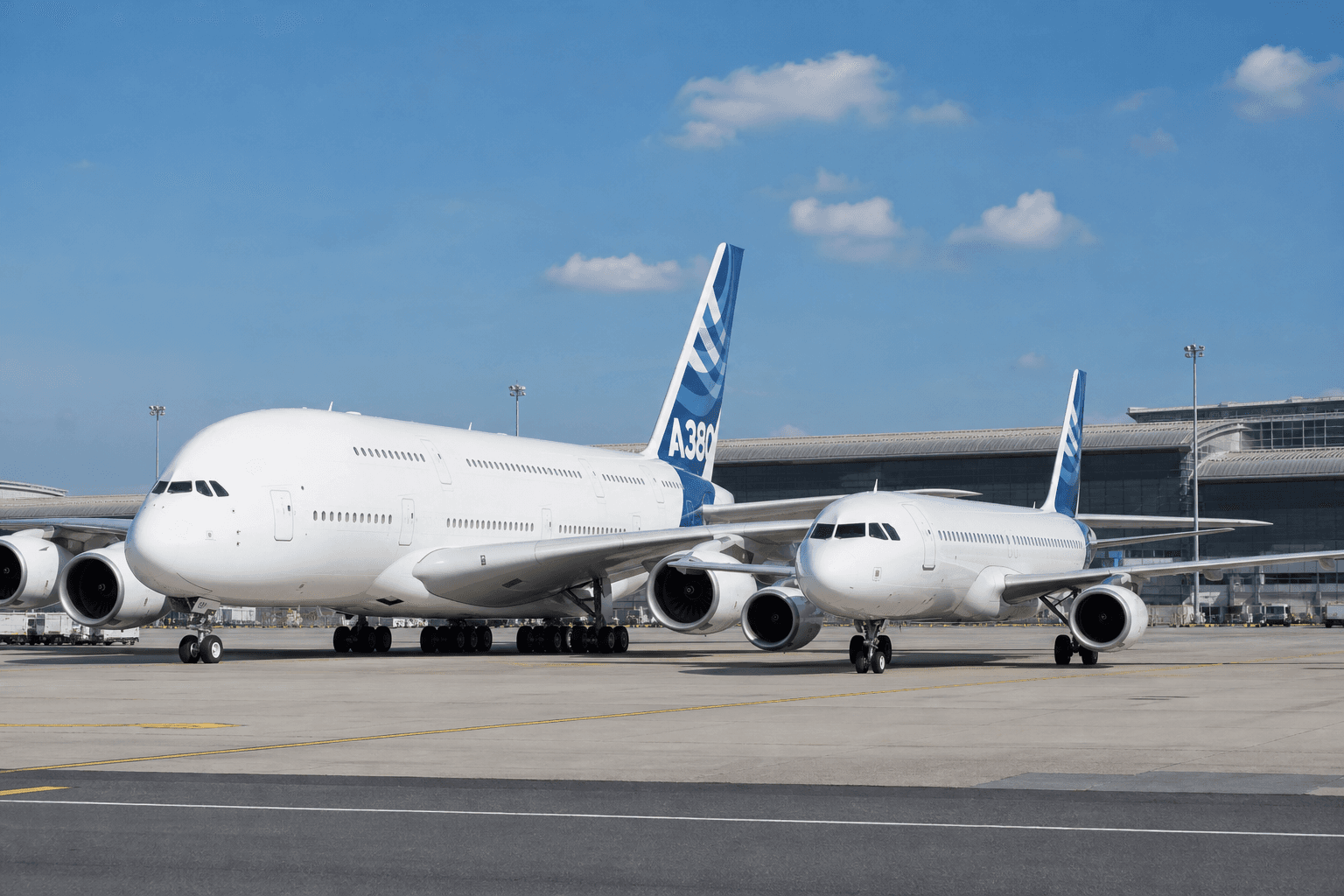
Airbus A320 Delivers Higher Fuel Efficiency Per Passenger Than A380 Despite Larger Size of the Superjumbo
The A380 burns six times more fuel than an A320. Per passenger, the gap looks very different.

Majority of Boeing 777 Pilots Land Despite Unstable Approaches, Data Shows
Boeing 777 pilots, like their counterparts on the vast majority of aircraft at most airlines, have set-in-stone parameters they should work within prior to carrying out landings. These ensure what is known as a stable approach and give pilots a clear set of rules to stick to when committing to a landing. If they are not met, the decision should be easy: go around and try again.

Vertical Aviation International CEO François Lassale previews new Vertical Lift Center at Oshkosh 2026
This time on The Green Dot, EAA CEO and Chairman Jack J. Pelton has a one-on-one conversation with Vertical Aviation International President and CEO François Lassale to discuss his background and aviation experience, the mission of VAI as an organization, and the introduction of the new Vertical Lift Center this summer at EAA AirVenture Oshkosh […]
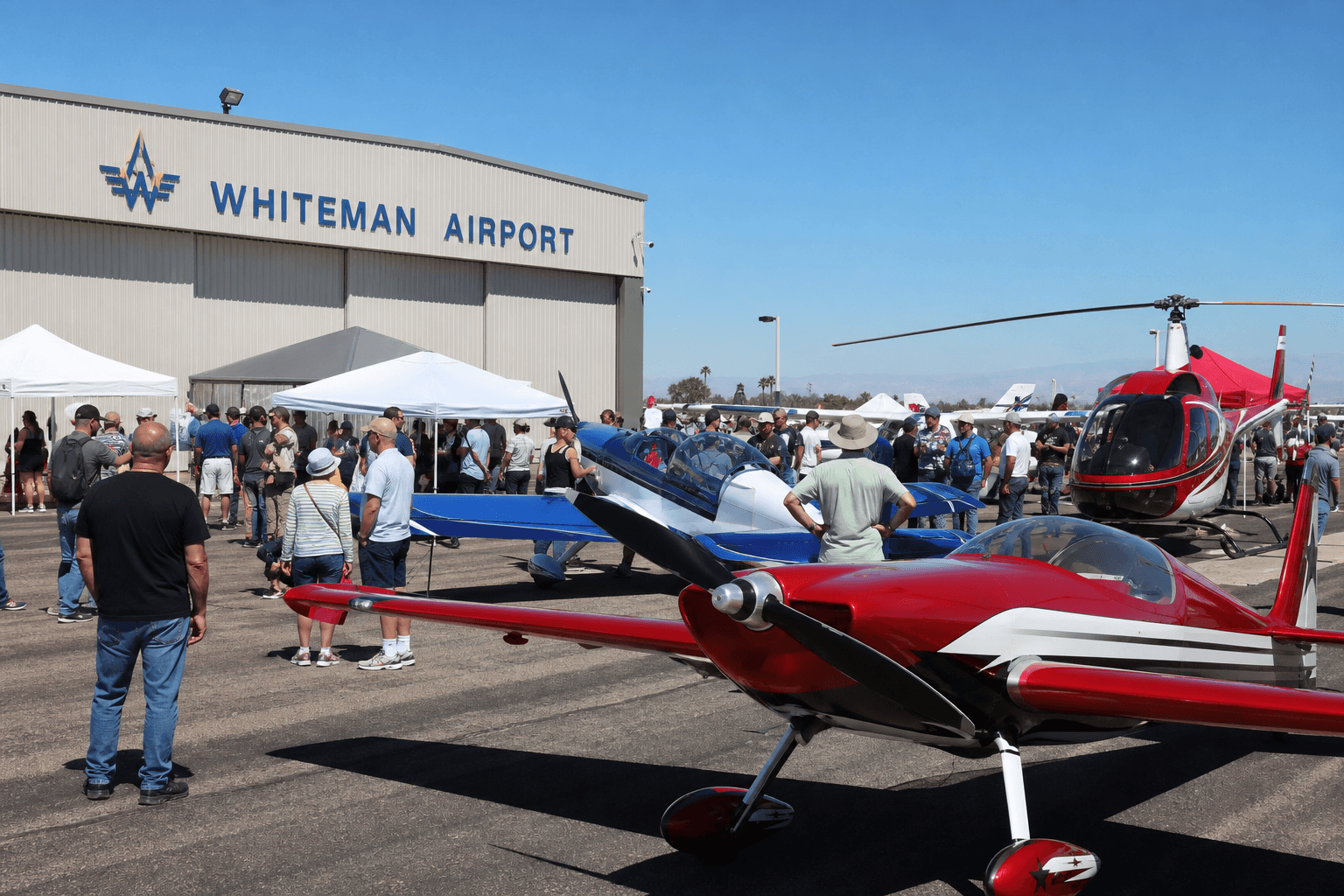
Whiteman and Santa Monica Airports Rally Communities Amid Closure Debates
Just 30 miles apart, two very different Southern California airports welcomed thousands of visitors on the same day, in different ways, but with a shared mission: connecting with their communities.
The Daily Touch & Go
The day's best aviation news in your inbox. Free, no spam.