

Illustration: The Touch & Go
British Airways Launches 11 Ultra-Long Boeing 787 Routes Including Sydney and Melbourne
British Airways expands its Dreamliner operations with 11 ultra-long routes featuring 787-8, 787-9, and 787-10 aircraft, including new Melbourne service after 21 years.
The gist
BA's 42 Boeing 787 Dreamliners now serve 11 ultra-long routes, reviving Melbourne link and operating up to 24-hour flights.
Continuing coverage
All Route Network →- Delta Air Lines Posts $1.6 Billion Q2 Profit on Strong Revenue Growth Despite Rising Fuel Costs
- Singapore Airlines Operates 11 Boeing 737 MAX Routes Up to Nearly 7 Hours
- airBaltic Reports Record Passenger Numbers and Fleet Growth in First Half of 2026
- Air Canada operates 440-seat Boeing 777-300ER on eight key routes from Montréal hub
- Air Canada Plans Expanded Airbus A321XLR Routes for Winter 2026/27
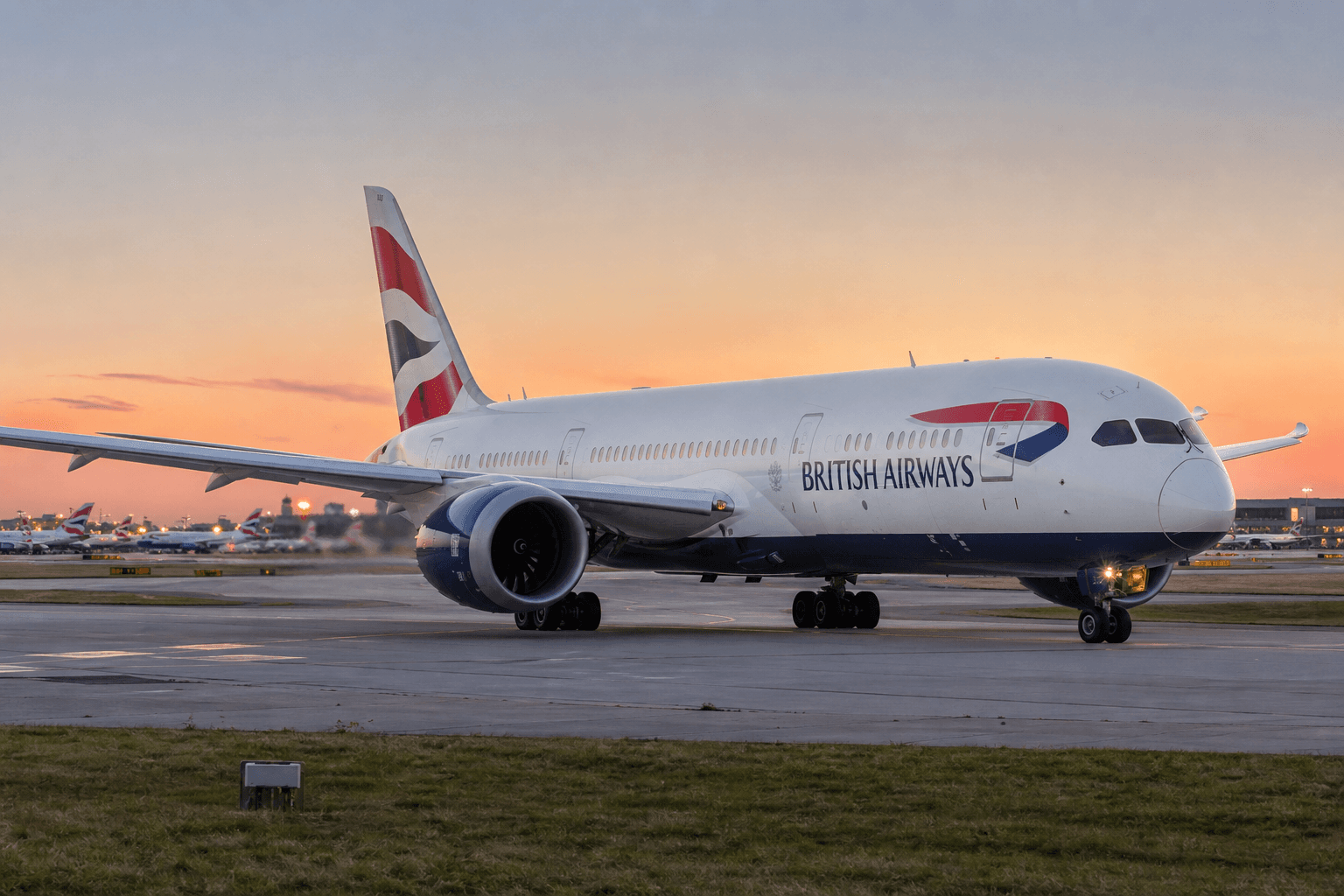
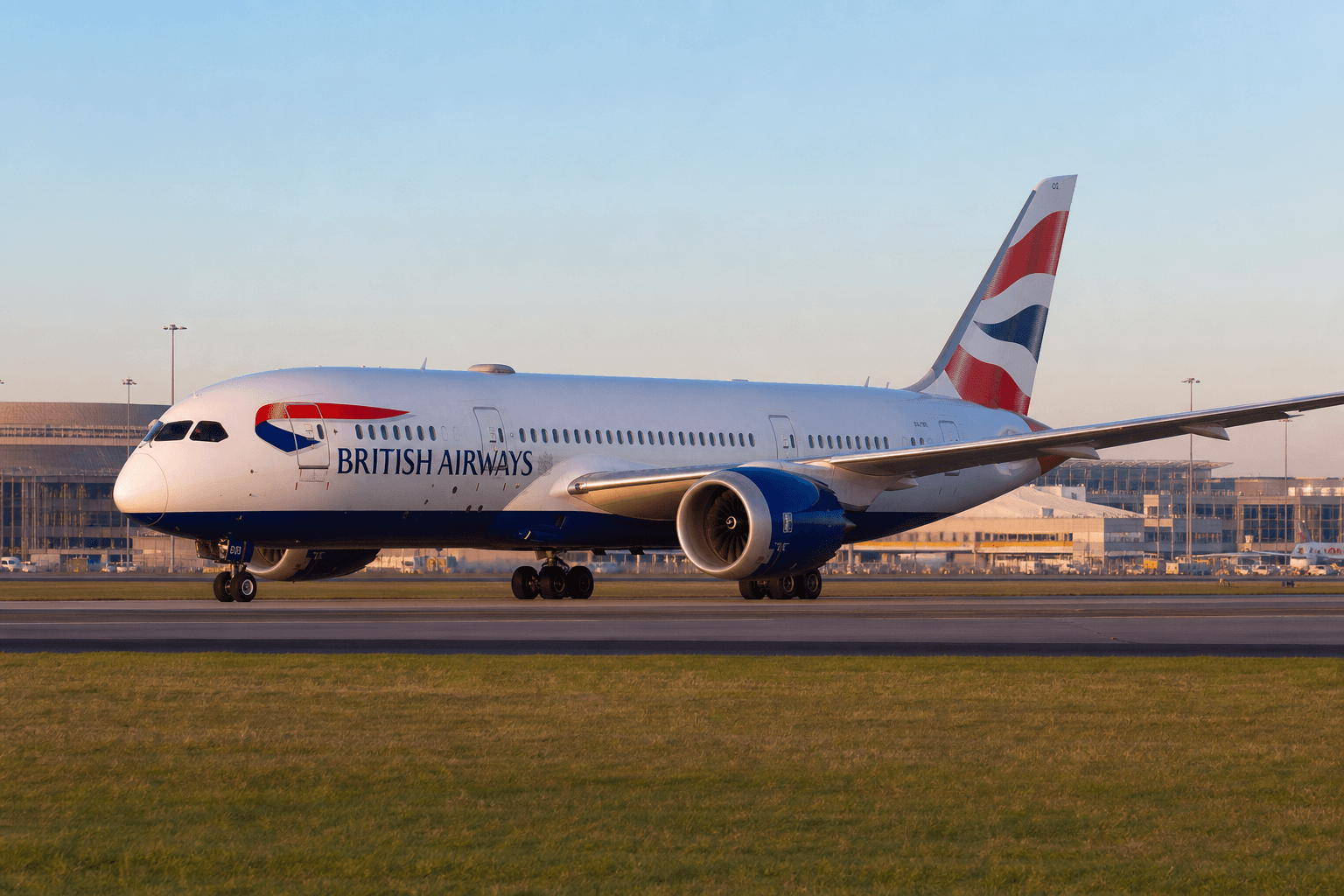
British Airways is intensifying its long-haul operations by deploying its full Boeing 787 Dreamliner fleet across 11 ultra-long routes that include nonstop and one-stop services spanning up to 24 hours of block time. The carrier operates all three Boeing 787 variants—the 787-8, 787-9, and 787-10—making it one of only three global airlines with this diversified Dreamliner lineup. With a total of 42 Dreamliners, BA's fleet represents nearly one third of its widebody aircraft.
The current configuration includes 12 Boeing 787-8s, 18 Boeing 787-9s, and 12 Boeing 787-10s. The 787-8 is BA's lowest-capacity widebody, seating 204 passengers following a recent cabin reconfiguration that increased premium economy seats at the expense of business and economy classes. The 787-9 typically seats around 215 passengers with a first-class section and offers a mix of old and newly retrofitted cabins. The 787-10 variant offers a higher seat count of 256, including first class and the latest cabin enhancements.
The longest route in the 787 network runs from Sydney Kingsford Smith Airport to London Heathrow via Singapore Changi Airport, a near 24-hour journey operated daily by the 787-9 during the northern hemisphere summer season. This service reverts to a Boeing 777-300ER for the winter months, reflecting seasonal demand. Following closely is the newly restored Melbourne to London service via Kuala Lumpur, scheduled to start January 2027 with daily 787-9 flights, marking British Airways' return to Melbourne after a 21-year hiatus.
BA’s extensive 787 network also includes nonstop flights between London Heathrow and Tokyo Haneda, Shanghai Pudong, Santiago, Mexico City, Cape Town, and San José (Costa Rica), along with one-stop routes out of Kuala Lumpur and Singapore. Particularly notable is the Tokyo Haneda to London flight, which lasts over 15 hours. The route's duration has increased significantly due to BA's avoidance of Russian airspace amid the Ukraine conflict, resulting in longer paths over Central Asia and Alaska, which impacts fuel consumption and operational costs.
The reintroduction of the Melbourne service is particularly significant given the high demand between London and Melbourne, with over 310,000 round-trip local passengers traveling in the year leading up to May 2026. Previously, no direct one-stop same-plane service existed on this route, causing passengers to transit through various airports such as Singapore, Dubai, and Hong Kong. British Airways currently captures a small fraction of this market but expects its share to grow with the new direct 787-9 connection.
BA’s deployment of different 787 variants on these routes reflects a strategic alignment of capacity and premium offering with market demand. For example, the 787-8 serves destinations like Chennai and Costa Rica with smaller seat counts, while 787-9s and 787-10s operate on longer or higher-demand sectors, providing upgraded cabins and first-class options where feasible. This flexible approach enhances BA’s ability to compete with other global carriers operating ultra-long-haul flights.
Geopolitical factors continue to influence British Airways’ operations, most notably the airspace restrictions over Russia, which have extended flight durations on key Asia-Europe sectors. Although this affects operational efficiency and emissions, BA aligns with European carriers facing similar detours. Competitors from the Middle East and Turkey, with more direct airspace access, may benefit from shorter routings, while some Chinese carriers maintain quicker, low-cost flights through Russian airspace, albeit with less premium service.
The return of British Airways to routes like Melbourne underscores the airline’s focus on reclaiming and expanding market presence in key long-haul markets. With 42 Boeing 787s operating up to 24-hour flights, BA continues to leverage its Dreamliner fleet to optimize route economics, cater to premium and leisure travelers, and respond to evolving global aviation dynamics.
Frequently asked questions
- What Boeing 787 variants does British Airways operate on its ultra-long routes?
- British Airways operates all three Boeing 787 variants on its ultra-long routes: 12 787-8s, 18 787-9s, and 12 787-10s.
- Which is British Airways' longest Dreamliner route and how long does it take?
- BA's longest Dreamliner route is Sydney to London Heathrow via Singapore, with a block time of 24 hours and 5 minutes operated daily by the 787-9 during summer.
- Why has the flight time between Tokyo Haneda and London Heathrow increased for British Airways?
- Flight times have increased to over 15 hours due to BA avoiding Russian airspace amid the Ukraine conflict, resulting in longer routing over Central Asia and Alaska.
Read more
All Airlines →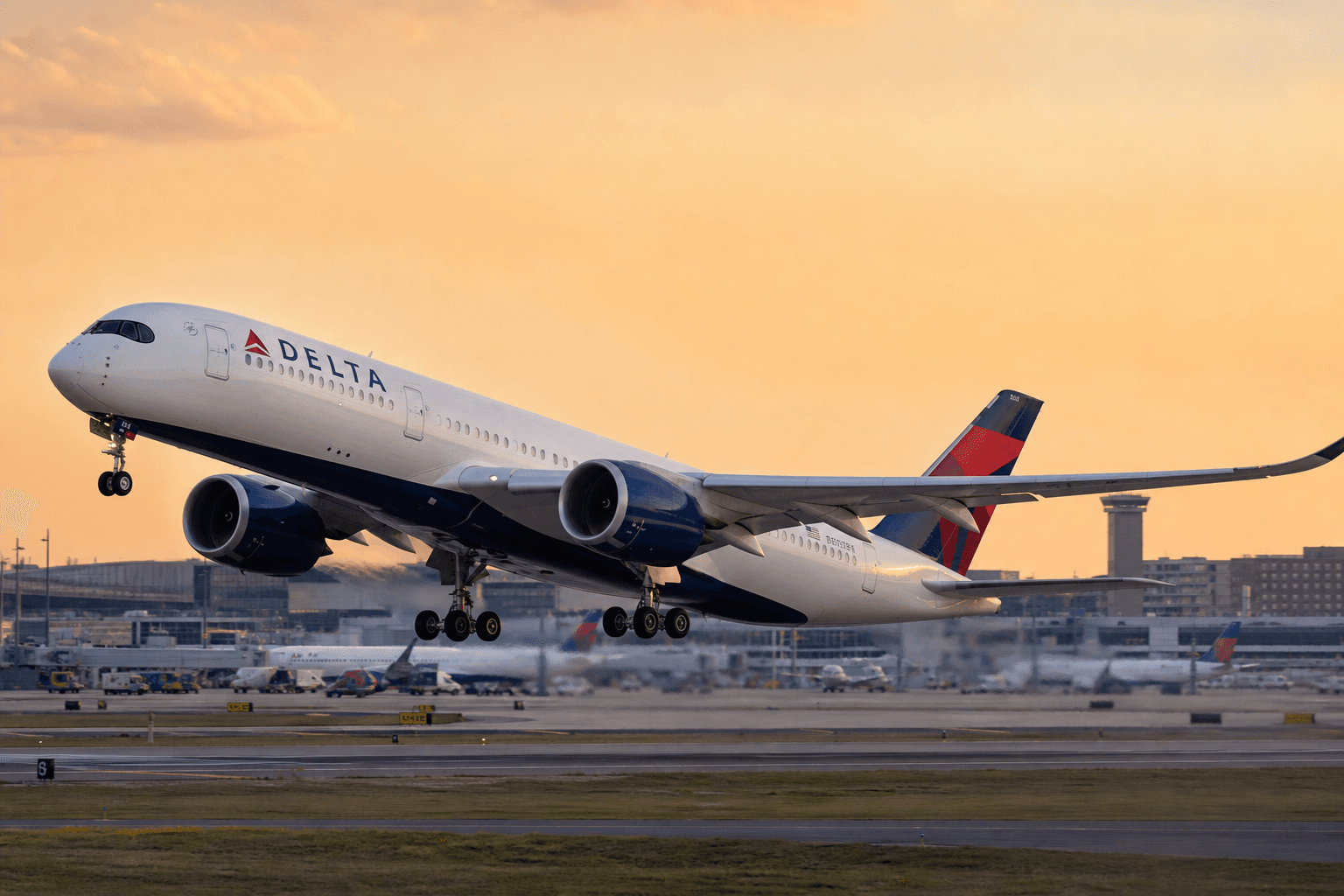
Delta Air Lines Posts $1.6 Billion Q2 Profit on Strong Revenue Growth Despite Rising Fuel Costs
Delta Air Lines posted impressive financial results for the second quarter of 2026. The airline reported a net profit of $1.6 billion, or $2.44 per diluted share. Revenue climbed 19 percent year-over-year to reach $19.8 billion. These figures highlight Delta’s continued strength in a competitive industry. ezstandalone.cmd.push(function () { ezstandalone.showAds(119); }); The results, announced on July 10, 2026, show solid demand and effective cost management. Despite facing the highest quarterly fuel expenses in the company’s history, Delta achieved strong profitability. Total revenue per available seat mile (TRASM) rose 17 percent to 25.11 cents. Cost per available seat mile (CASM) increased 21 percent to 22.74 cents, while costs excluding fuel (CASM-ex) grew a more modest 6.8 percent to 14.09 cents. ezstandalone.cmd.push(function () { ezstandalone.showAds(127); }); At the end of June 2026, Delta maintained healthy liquidity of $7.7 billion. This total includes cash, short-term investments, and $3.1 billion in undrawn revolving credit facilities. Such financial flexibility gives the airline room to invest in growth and weather potential challenges. CEO Highlights Brand Strength and Momentum Delta CEO Ed Bastian expressed confidence in the company’s position. “Today, we reported our June quarter results, and it is clear that Delta’s brand and industry position are stronger than ever,” he said. ezstandalone.cmd.push(function () { ezstandalone.showAds(128); }); Bastian noted that the airline delivered $1.4 billion in pre-tax profit while absorbing record fuel costs. He credited broad demand, growing brand preference, and a diversified revenue base for the success. Bastian emphasized the role of Delta’s employees. “This industry-leading performance is powered by the best people in the business,” he added. Looking ahead, he expects momentum to continue into the second half of 2026 with double-digit margins and a return to earnings growth. ezstandalone.cmd.push(function () { ezstandalone.showAds(129); }); The company affirmed its full-year guidance for 20 percent earnings growth, despite significant fuel headwinds. This outlook positions Delta well for 2027. Photo Credit: Delta Air Lines Fleet Expansion and New Routes Delta continued to modernize its fleet during the quarter. The airline took delivery of 11 new aircraft, including Airbus A350-900s, A321neos, and A220-300s. These efficient planes support both long-haul and short-haul operations while improving fuel efficiency and passenger comfort. On the network side, Delta launched several important new services. It added daily non-stop flights from Los Angeles to Hong Kong and Chicago O’Hare. These routes strengthen connectivity to key business markets. ezstandalone.cmd.push(function () { ezstandalone.showAds(130); }); The carrier also expanded European leisure options with new or added service to Porto, Malta, Sardinia, Madrid, Nice, Rome, and Barcelona. In addition, Delta grew its maintenance, repair, and overhaul (MRO) partnerships. New agreements with IndiGo for CFM56 engines and LATAM for Airbus A320 components enhance its technical capabilities and revenue streams. Industry Leadership and Global Reach Atlanta-based Delta Air Lines operates more than 4,000 daily flights to over 290 destinations on six continents. The airline serves major hubs including Atlanta, New York-JFK and LaGuardia, Los Angeles, and international gateways like Amsterdam, London-Heathrow, and Paris-Charles de Gaulle. ezstandalone.cmd.push(function () { ezstandalone.showAds(131); }); For the past decade, Delta has led the industry in operational reliability while earning praise for customer service. These Q2 results come at a time when airlines face rising costs and economic uncertainty. Delta’s ability to grow revenue, control non-fuel costs, and invest in its network sets it apart. The combination of premium products, reliable operations, and strong partnerships continues to drive customer loyalty and financial performance. Photo Credit: Delta Air Lines Positive Outlook for the Rest of 2026 With summer travel in full swing and strong booking trends, Delta appears well-positioned for the remainder of the year. The airline’s focus on brand preference and diversified revenue—such as loyalty programs, cargo, and maintenance services—provides stability against fuel price swings. ezstandalone.cmd.push(function () { ezstandalone.showAds(132); }); Travelers and investors alike can expect Delta to maintain its leadership. The company’s disciplined approach to capacity, fleet modernization, and route expansion supports sustainable long-term growth. As demand for premium travel experiences remains robust, Delta’s strategy looks set to deliver continued success.
Boeing 787 Surpasses One Billion Passengers, Maintaining Lead Over Airbus A350
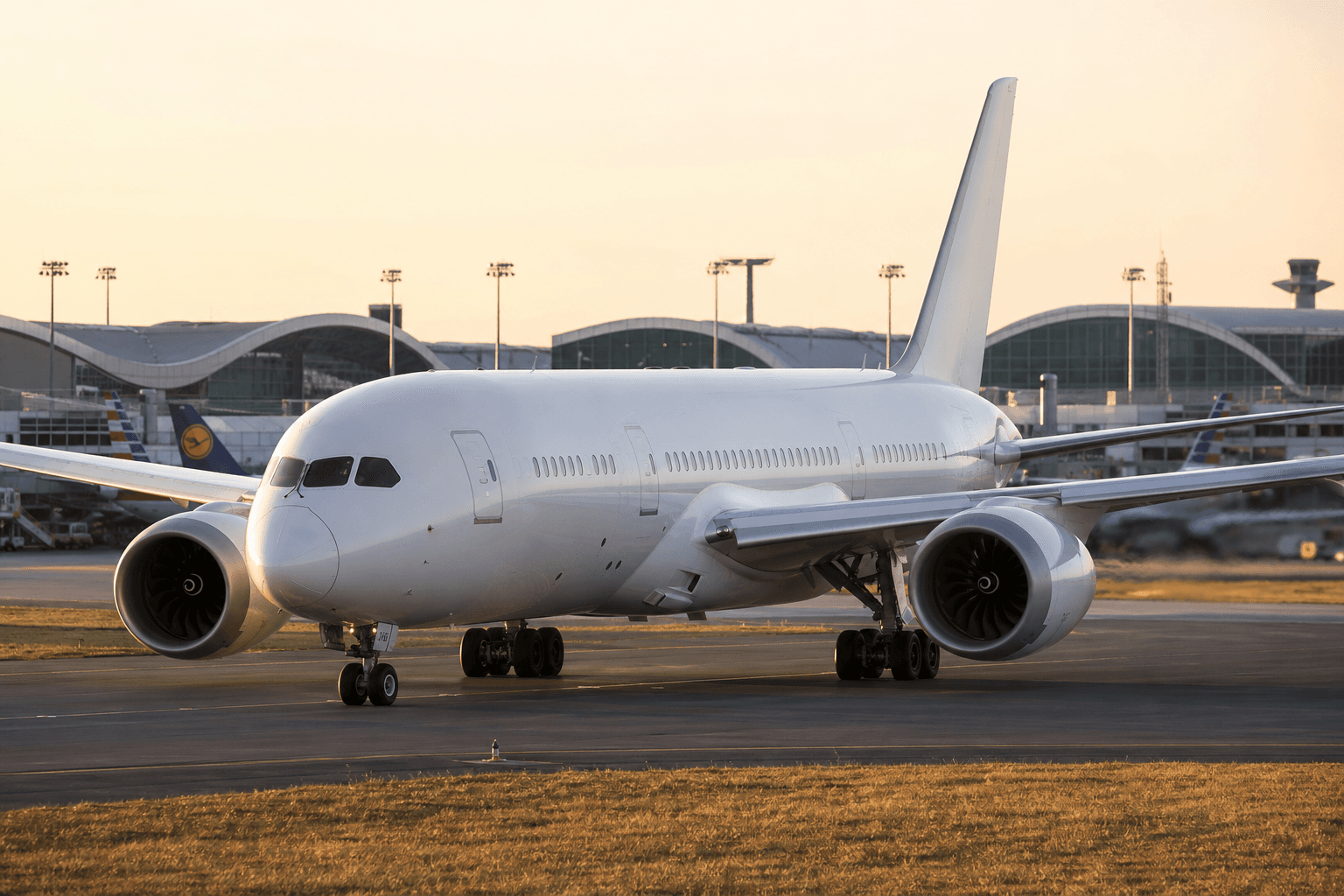
The Boeing 787 has proved to be an immense commercial success for the US manufacturer since it entered commercial service in 2011. Today, some 15 years later, more than one billion people worldwide have flown on a 787, with the aircraft operating over 2,100 flights per day. With such impressive statistics, Airbus may well be asking itself what it needs to do to make its rival aircraft, the A350, as successful.
Singapore Airlines Operates 11 Boeing 737 MAX Routes Up to Nearly 7 Hours
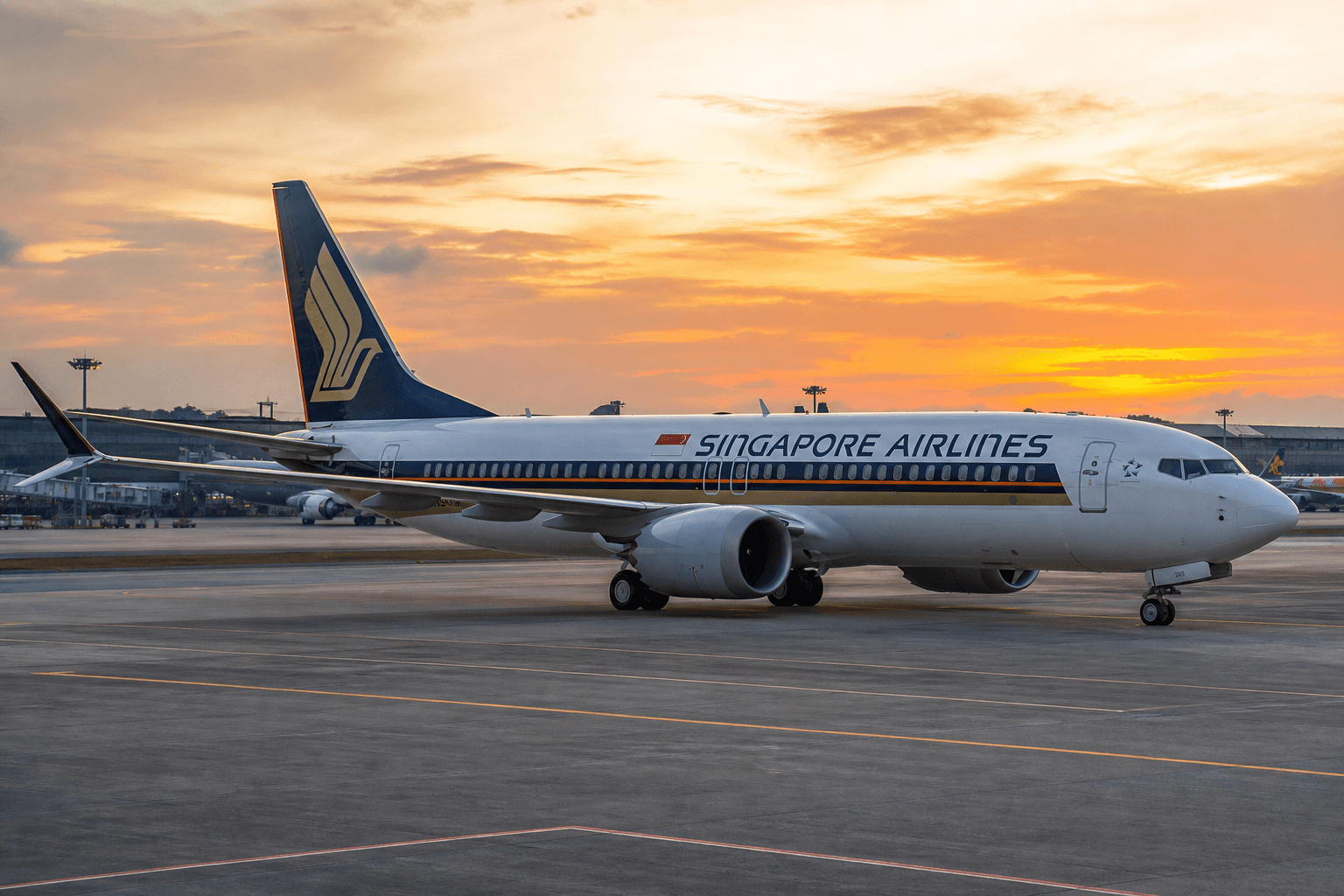
The Boeing 737 MAX is the latest generation derivative of one of the world's most popular short-haul aircraft types. While this still remains the case, modern technology has allowed narrowbody aircraft to fly for longer distances, unlocking an interesting market segment of long-range narrowbody services.
Norwegian Air swaps Instagram logo to British Airways after World Cup bet loss
True to its word, Norwegian Air has changed its Instagram profile picture to British Airways' logo after losing a World Cup bet between the two airlines. On July 12, 2026, following Norway's dramatic 2-1 loss to England in a quarter final match at the FIFA World Cup in the US, as promised the British Airways appeared on Norwegian's Instagram account. In an Instagram post Norwegian displayed the British Airways signature logo and wrote "It's coming home" and "Well played England". Norwegian Air added: "While the tournament is over for us, this friendly bet will forever live in our hearts. We wish England and British Airways all the best in the semi-final, and we sincerely hope you'll get to bring football home!" Instagram British Airways commented on the post writing, "We love this new look on you" and added "Well played, thanks for all the fun and here's to our new friendship". Days before the match between England and Norway, a cheeky Norwegian Air wrote to British Airways on social media waging that if Norway wins the contest BA must change its Instagram logo to Norwegian and vice versa. The social media post gained huge traction with many airlines contributing to the good-natured banter. Finnair, Air Baltic, Riyadh Air, and KLM were just some of the carriers that commented or added pictures to the social feed. View this post on Instagram A post shared by Norwegian (@flynorwegian) The two airlines even posted a video of employees from both British Airways and Norwegian Air shaking hands to make the bet official. More airlines commented on Norwegian Air's post after the airline changed its logo to British Airways including Malayasia Airlines, Qantas, Virgin Australia and Kenya Airways. RELATED UPDATED: FIFA World Cup 2026: A gallery of special airline liveries from around the world
The Daily Touch & Go
The day's best aviation news in your inbox. Free, no spam.