

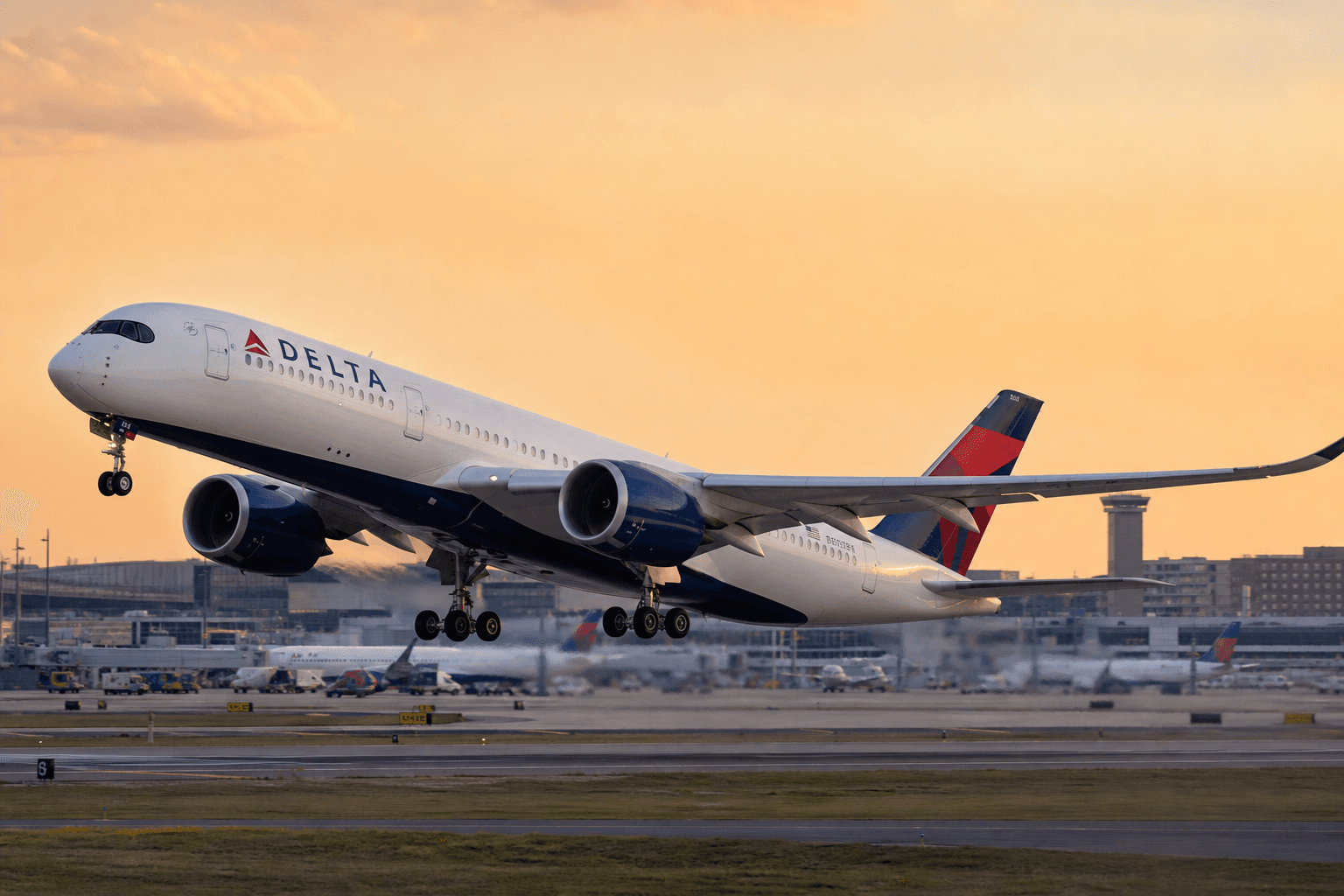
Illustration: The Touch & Go
Delta Air Lines Posts $1.6 Billion Q2 Profit on Strong Revenue Growth Despite Rising Fuel Costs
Delta Air Lines reported a net profit of $1.6 billion for Q2 2026, driven by 19% revenue growth and effective cost management amid record fuel expenses.
The gist
Delta Air Lines earned $1.6 billion in Q2 2026, highlighting strong revenue growth and resilience despite high fuel costs.
Continuing coverage
All Delta Air Lines →- Delta Cancels Tokyo to Minneapolis Flight After 5.5-Hour Delay, Hotels Offered Only to Passengers With Babies
- Delta Air Lines Projects Stable Airfares and Solid Revenue Amid Fuel Cost Normalization
- Delta Air Lines Expands Global Reach With Six New Nonstop International Routes
- Delta's once-stellar operational performance shows visible declines amid pilot staffing woes
- Delta plans fleet growth with Boeing 737 Max 10 and 787-10 to boost efficiency
Delta Air Lines has announced robust financial results for the second quarter of 2026, registering a net profit of $1.6 billion, or $2.44 per diluted share. This milestone was achieved alongside a 19% year-over-year revenue increase to $19.8 billion, underscoring the carrier's strong market position amid a challenging cost environment. The results, released on July 10, 2026, demonstrate Delta's ability to sustain profitability despite facing the highest quarterly fuel expenses in its history.
Revenue per available seat mile (TRASM) increased by 17% to 25.11 cents, reflecting strong passenger demand and fare management. Meanwhile, total cost per available seat mile (CASM) rose by 21% to 22.74 cents, heavily influenced by fuel costs. Notably, excluding fuel expenses, CASM (CASM-ex) increased more modestly by 6.8% to 14.09 cents, signaling effective operational cost control outside of fuel.
As of the end of June 2026, Delta maintained a solid liquidity position of $7.7 billion, which includes cash, short-term investments, and $3.1 billion in undrawn revolving credit facilities. This financial flexibility provides the airline ample capacity to invest strategically in growth initiatives and to manage potential volatility in the operating environment.
Speaking about the quarterly results, Delta CEO Ed Bastian highlighted the airline's strong brand and competitive standing. He noted the $1.4 billion pre-tax profit accomplished in the face of record fuel costs and attributed success to broad passenger demand, an expanding brand preference, and a diversified revenue base that includes loyalty programs, cargo, and maintenance services. He also credited Delta’s workforce as a core driver behind the performance.
On the operational front, Delta expanded and modernized its fleet by taking delivery of 11 new aircraft, comprising Airbus A350-900s, A321neos, and A220-300s. These additions aim to enhance fuel efficiency and passenger experience on both long-haul and short-haul routes. The airline also launched several new routes, including daily nonstop flights from Los Angeles to Hong Kong and Chicago O'Hare, enhancing connectivity to important global business markets.
Additionally, Delta broadened its European leisure offerings with new or expanded service to destinations such as Porto, Malta, Sardinia, Madrid, Nice, Rome, and Barcelona. In the maintenance, repair, and overhaul segment, the airline forged partnerships with IndiGo for CFM56 engine work and with LATAM for Airbus A320 component services, bolstering its technical capabilities and adding revenue streams.
Delta operates more than 4,000 daily flights to over 290 destinations across six continents. Its major hubs include Atlanta, New York-JFK, LaGuardia, Los Angeles, as well as international gateways like Amsterdam, London-Heathrow, and Paris-Charles de Gaulle. The airline has maintained a decade of leadership in operational reliability and customer service, translating into sustained financial success.
Heading into the summer travel season of 2026, Delta is positioned strongly with continued momentum expected for the rest of the year. The company reaffirmed its guidance for 20% full-year earnings growth, confident its diversified revenue portfolio and disciplined cost management will offset the impact of elevated fuel prices. The airline’s ongoing investments in fleet, route expansion, and premium product offerings aim to sustain its market leadership.
Frequently asked questions
- What was Delta Air Lines' net profit for the second quarter of 2026?
- Delta Air Lines posted a net profit of $1.6 billion for the second quarter of 2026.
- How did fuel costs impact Delta's financial results in Q2 2026?
- Delta faced the highest quarterly fuel expenses in its history but still achieved strong profitability and pre-tax profits of $1.4 billion.
- What fleet expansion did Delta undertake during Q2 2026?
- Delta took delivery of 11 new aircraft in Q2 2026, including Airbus A350-900s, A321neos, and A220-300s to modernize and improve efficiency.
Read more
All Airlines →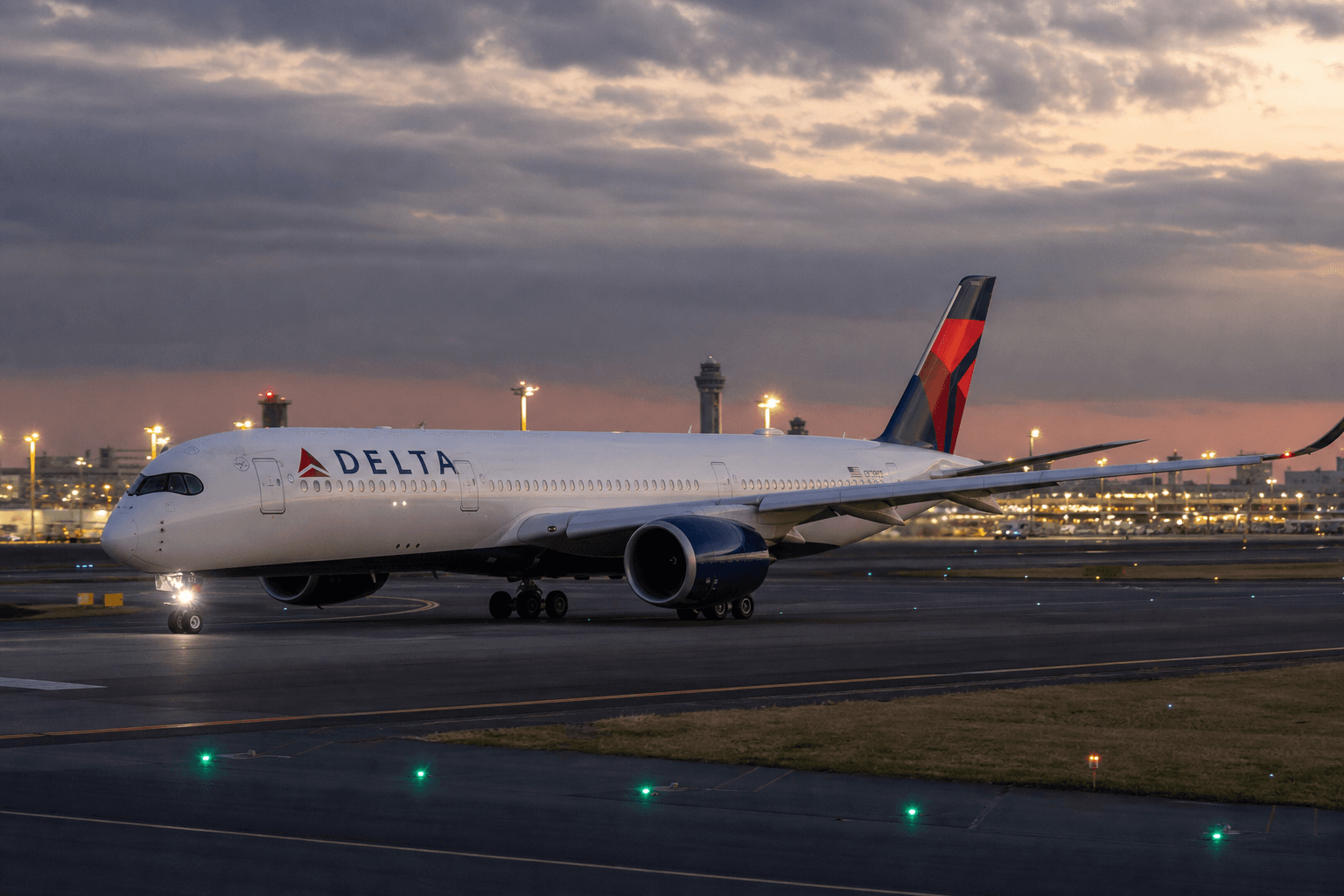
Delta Cancels Tokyo to Minneapolis Flight After 5.5-Hour Delay, Hotels Offered Only to Passengers With Babies
Passengers spent 5½ hours aboard Delta's Tokyo–Minneapolis flight before a mechanical problem forced an 11 p.m. cancellation. With too few hotel rooms, Delta prioritized travelers with medical concerns and families with babies—prompting passengers to joke, "Everyone make babies right now."
Delta Air Lines Projects Stable Airfares and Solid Revenue Amid Fuel Cost Normalization
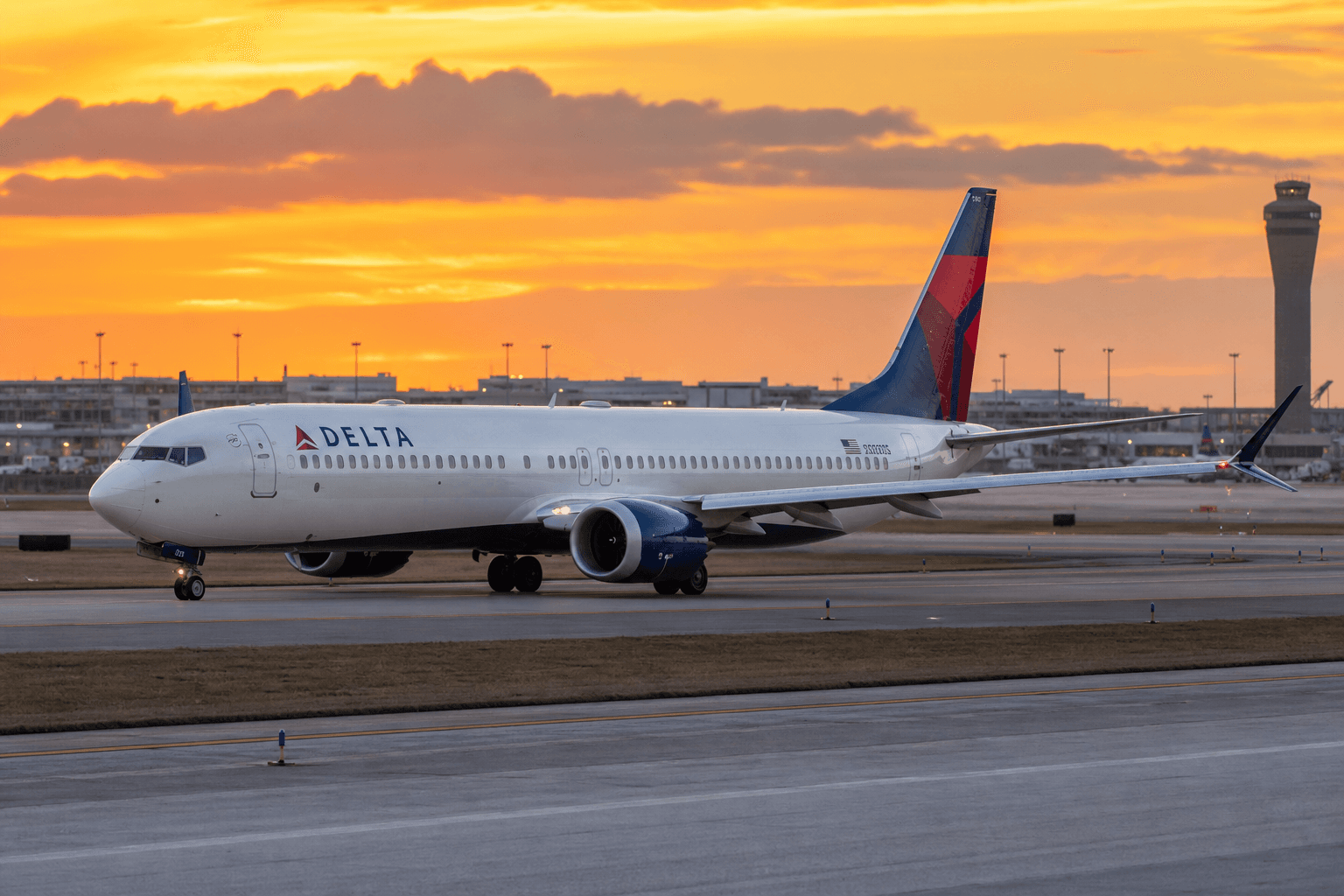
Chief executive Ed Bastian does not expect airfares to fall anytime soon. Delta Air Lines views the revenue momentum it saw in the second quarter as “sustainable,” the Atlanta-based carrier’s chief executive, Ed Bastian, said during its quarterly earnings call on 10 July. Adjusted total unit revenues (TRASM) increased 12.4% during the period compared to last year. Higher airfares, coupled with continued strong demand and the collapse of Spirit Airlines in May, are driving Delta’s confidence. The airline has reinstated its outlook for the full year at the same levels as previously forecast, after suspending the guidance following the start of hostilities between the USA, Israel and Iran in February. Delta reported an adjusted operating profit of $1.6 billion in the second quarter on a 19% year-over-year increase in revenue to $19.8 billion. Costs, led by fuel and refinery expenses, increased 23% to $17.9 billion. Its adjusted operating margin was 9.4%. The airline’s performance sets the tone for the rest of the US airline sector. After an uncertain start to the June quarter, owing to the Iran war, fuel prices have moderated despite the on-again, off-again nature of the conflict, and travellers have proven undeterred by higher airfares. American Airlines, Southwest Airlines, United Airlines and the rest of the sector are set to report their own quarterly performance in the coming weeks. With the uncertainty seemingly behind it, Delta is focused on its numerous revenue initiatives. Segmentation of the business-class cabin rolled out earlier in July in its latest effort to further boost premium revenues. Joe Esposito, the airline’s commercial chief, says business class segmentation is in the “early stages” with further differentiation planned where, in the future, top spenders will receive a different onboard experience from those who buy the cheapest business fares. Delta will resume growth as well with the improved outlook. The airline plans to increase capacity, measured in available seat miles (ASMs), by roughly 1% in the third quarter and 2-3% in the fourth quarter, says Esposito. International growth, including the recent launch of Los Angeles-Hong Kong flights, will drive capacity growth. Capacity at Delta increased just 1% in the second quarter. In 2027, Delta plans to resume its long-standing fleet upgauging programme with the arrival of new Boeing 737 MAX 10s, which will replace ageing Boeing 717s and 757s, Bastian says.
Apollo Global Management Tops Castlelake with $7.26B EasyJet Takeover Bid
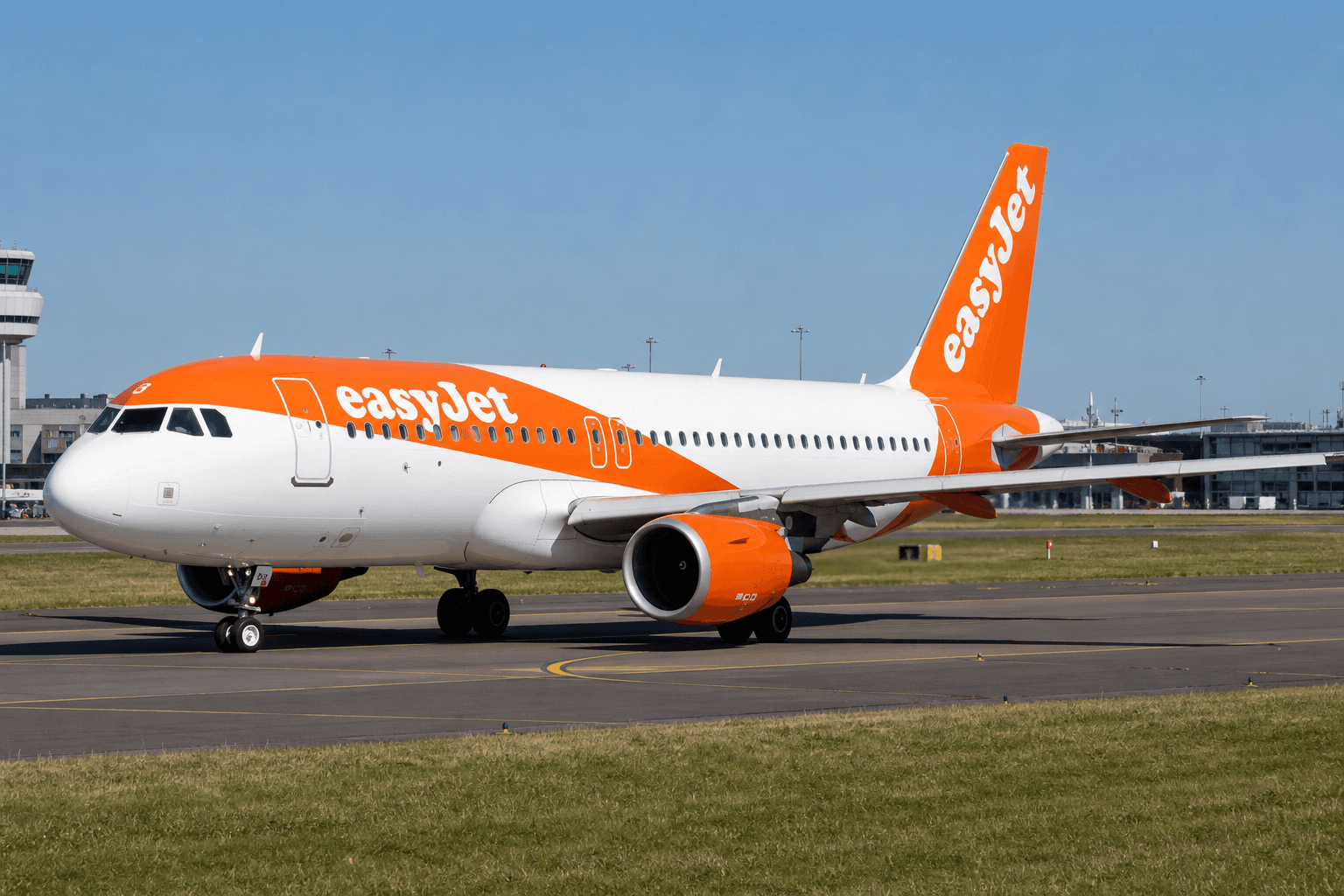
Shares in the British low-cost airline EasyJet surged on Friday morning after the Luton-based carrier’s board of directors announced that it had accepted a surprise rival takeover bid by the U.S. investment firm Apollo Global Management, which values EasyJet at £5.41 billion ($7.26 billion). The offer is worth approximately 5.2% more than the offer in principle that EasyJet’s board accepted from Minneapolis-based Castlelake on Sunday. In a statement filed on the London Stock Exchange, the airline said Apollo had offered to pay £7.15 per easyJet share. In contrast, Castlelake had previously agreed to pay £6.90 per share in order to take the airline private. “Apollo has followed easyJet for many years and continues to regard it as one of the most attractive businesses in the global aviation sector and a highly differentiated franchise with significant long-term growth potential,” the investment firm said on Friday. “Apollo believes in easyJet's existing strategy of evolving and strengthening the low-cost carrier model, most notably through upgauging the fleet, enhancing the ancillary and loyalty offering, and scaling Holidays into a structurally differentiated earnings stream,” the statement added. Like Castlelake, New York-based Apollo has previous experience in funding the aviation industry. Founded in 1990, the company has bought and traded a broad portfolio of companies, including those in the hospitality and leisure industries, as well as media and telecoms. Last November, Apollo completed a $745 million senior secured financing of Virgin Atlantic's portfolio of take-off and landing slots at London Heathrow. The firm has also provided funding to the Air France-KLM Group, including its Flying Blue frequent flyer program, and to the ultra-low-cost airline Sun Country. Apollo says that should it make a formal offer to buy EasyJet and secure rights to the company, it intends to continue operating the carrier in the form it is today. Friday’s announcement does not, however, signal a formal offer. Instead, it merely means that EasyJet’s board of directors would, in principle, recommend this offer to shareholders, who would have the final say in whether EasyJet was sold to Apollo. Founded by Greek-Cypriot entrepreneur Stelio Haji-Ioannou in 1995, EasyJet has grown into one of Europe’s largest low-cost airlines, and the Haji-Ioannou family trust remains the largest single shareholder in the company. In recent years, however, EasyJet’s financial performance has lagged that of its main rival, Ryanair. In effect, its assets, such as airplanes, airport gates, and takeoff and landing slots, are currently worth more than the value of the company’s shares. Both Castlelake and Apollo have signalled that their intent in buying EasyJet isn’t to dismantle the airline and sell these assets, but rather to improve its financial performance. This would likely be in the same way that activist investor Elliott is attempting to transform the financial performance of Southwest Airlines in the United States. Castlelake first publicly announced it was interested in EasyJet in May 2026, although at the time, it hadn’t yet even made an offer to the airline’s board of directors. On June 12, Castlelake initially proposed an offer to buy EasyJet's 758 million shares at a price of £5.60 per share. The proposal was rejected on June 16. Castlelake returned just a day later to propose an offer price of £6.00 per share. EasyJet's board rejected this proposal on June 20. Within hours, Castlelake said it would increase its offer price to £6.25 per share. The board rejected the deal but agreed to open up its books to Castlelake. Finally, on July 5, EasyJet said it had agreed in principle to an offer price of £6.90 per share from Castlelake. What seemed odd at the time was that Castlelake’s interest in EasyJet hadn’t seemingly stoked attention from a rival bidder. Analysts were quick to ask what Castlelake saw in EasyJet that no one else seemed to see. Well, we now have the answer. Behind closed doors, Apollo was preparing a rival bid, which was accepted by the EasyJet board on July 8 and publicly announced on Friday. What happens next? Apollo has yet to make a formal offer to buy EasyJet. If and when it does, it’s not up to the board of directors to clear the deal. Instead, they will recommend the deal to shareholders who will make the final decision. EasyJet shares surged 13.13% on Friday morning, reaching 665.20 pence per share, its highest share price since 2022. What to look out for? A potential bidding frenzy that could pit Apollo against Castlelake, along with the possibility of other suitors joining the race to acquire EasyJet.
![Delta Air Lines Launches 6 New Nonstop International Routes [Full List & Map]](/_next/image?url=https%3A%2F%2Favoibnodqwjxlpbhunuu.supabase.co%2Fstorage%2Fv1%2Fobject%2Fpublic%2Fstory-images%2Fai%2Fdelta-air-lines-launches-6-new-nonstop-international-routes-full-list-and-map-87bbc477.png&w=3840&q=75)
Delta Air Lines Expands Global Reach With Six New Nonstop International Routes
Delta Air Lines is the US's third-largest operator for international flights. Between July 2026 and March 2027, OAG data shows that the SkyTeam member plans an average of 244 daily departures. Compared to the same period in 2025-2026, international activity has jumped by 4%. Many new routes, some of which launched earlier this year , contributed.
The Daily Touch & Go
The day's best aviation news in your inbox. Free, no spam.