

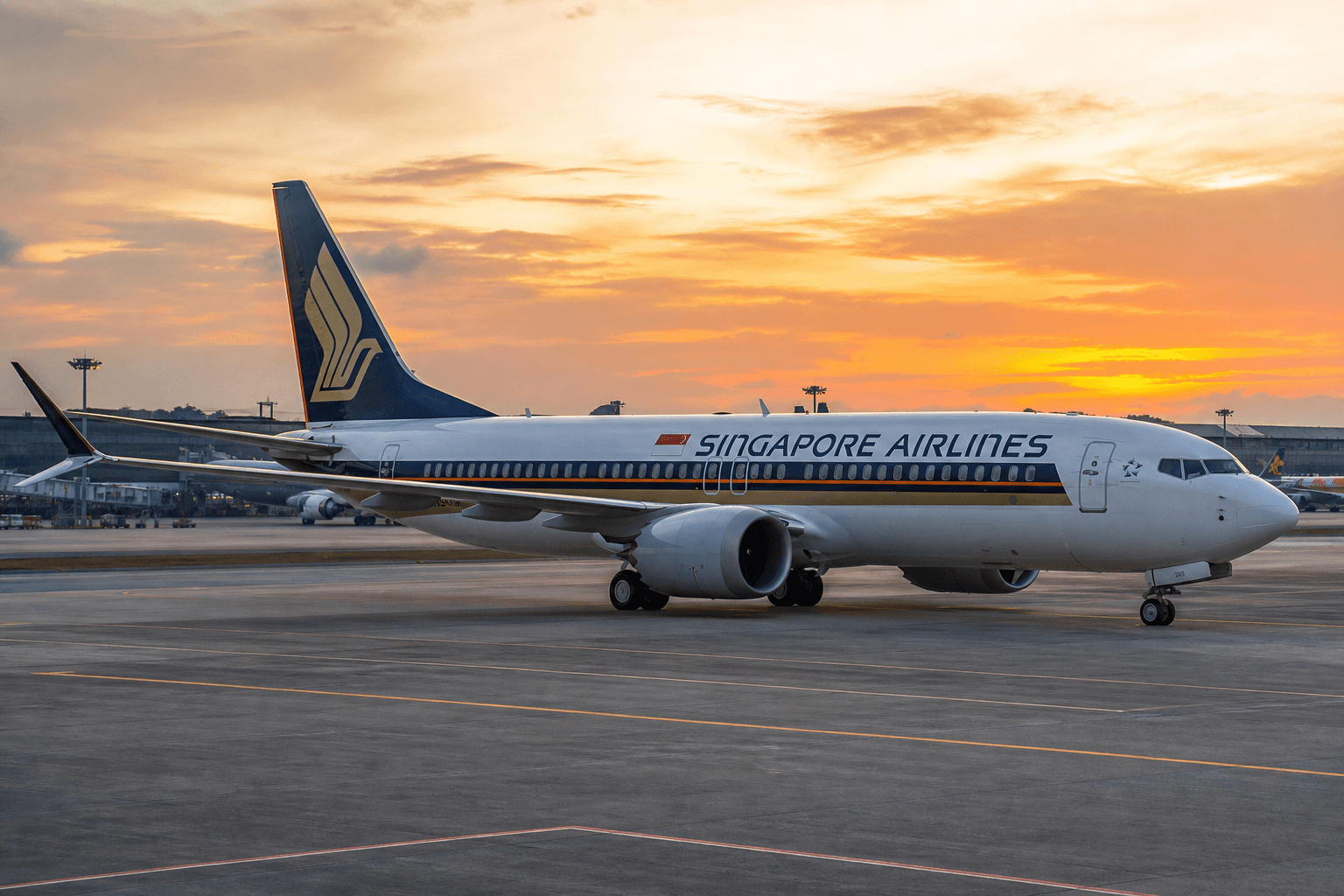
Illustration: The Touch & Go
Singapore Airlines Operates 11 Boeing 737 MAX Routes Up to Nearly 7 Hours
Singapore Airlines uses Boeing 737 MAX aircraft on 11 long-haul routes, with some flights close to seven hours — far beyond typical narrowbody operations.
The gist
Singapore Airlines pushes Boeing 737 MAX limits with 11 long routes, including two near seven hours nonstops.
Continuing coverage
All Boeing 737 Max →- SpiceJet Struggles to Rebuild Amid Fleet Groundings and Financial Strains
- Ryanair and Cebu Pacific Lead World in Economy Seat Density with Ultra-Compact Cabins in 2026
- VietJet Plans New Low-Cost Australian Airline with Boeing 737 MAX Fleet
- Singapore Airlines' Boeing 737 MAX Flights Visible at 10 Key Airports Globally
- United Airlines Launches Long-Haul 737 MAX Routes From Portland to California
Singapore Airlines has expanded its use of Boeing 737 MAX aircraft well beyond traditional short-haul sectors, operating a total of 11 nonstop routes clocking flight times over 4.5 hours, with the longest nearing seven hours. This deployment shows the airline leveraging the latest generation narrowbody's range capabilities to serve destinations previously requiring larger widebody aircraft. The remarkable endurance of these MAX flights underlines a shift in operational strategy, targeting efficient capacity and flexibility on mid-distance routes.
Analysis of current schedules reveals that most of these extended 737 MAX flights last just above five hours, with only two routes — connecting Singapore to Busan and Cairns — approaching seven hours flight duration. These durations far exceed conventional norms for narrowbody jets, signaling the 737 MAX's significant technological improvements enabling longer reach. By enabling nonstop service on these lengthy routes, Singapore Airlines enhances traveler convenience and optimizes aircraft utilization.
Competition on several of these routes includes other narrowbody aircraft operators flying Boeing 737 or Airbus A320 family jets. For example, the Chennai to Singapore corridor hosts two daily Singapore Airlines flights with 737 MAX aircraft, complemented by larger widebody Boeing 787-10 and occasionally Airbus A350-900 jets. The operator’s mixed fleet approach demonstrates the 737 MAX’s role in providing flexible capacity management alongside its widebody counterparts.
The scheduling pattern also reflects Singapore Airlines’ adaptation to seasonal travel demand. Routes such as Cairns–Singapore and Jakarta–Singapore initially served by widebodies like the Airbus A350 and Boeing 777-300ER are slated to transition later in the year to the 737 MAX, effectively rightsizing capacity during lower demand periods. This substitution helps maintain route presence throughout the year while improving economic efficiency by deploying aircraft better matched to passenger loads.
Historically, airlines faced pressure to suspend or shrink long-haul services during off-peak seasons due to the economic inefficiency of operating large widebodies at reduced demand levels. The emergence of long-range narrowbody jets like the Boeing 737 MAX changes this paradigm. Singapore Airlines' ability to retain such routes year-round exemplifies how advances in aircraft range and efficiency broaden operational possibilities for carriers.
Singapore Airlines currently operates the Boeing 737 MAX 8 variant, a mid-sized model in the MAX family capable of flying up to 3,500 nautical miles. The airline's configuration includes 154 seats with 10 lie-flat business class seats arranged in a mix of 2-2 and 1-1 layouts, followed by 144 economy seats in a 3-3 layout. This relatively low-density layout prioritizes premium experience and complements the aircraft’s range to serve longer routes comfortably.
As of May 2026, Singapore Airlines has received 23 Boeing 737 MAX aircraft, most supplied directly to the mainline fleet, with six initially delivered to the former SilkAir before the subsidiary’s integration. The airline expects three additional MAX aircraft deliveries this year, further solidifying the MAX as a core component of their medium-haul strategy.
The 737 MAX’s extended range capability unlocks new market segments within the airline’s network, enabling nonstop narrowbody flights that challenge historical norms of aircraft deployment on mid-length missions. This trend points to an evolving approach from airlines toward optimizing aircraft utilization based on flexible capacity and efficiency rather than merely segmenting routes by traditional distance classifications.
Frequently asked questions
- How many Singapore Airlines Boeing 737 MAX routes exceed 4.5 hours flight time?
- Singapore Airlines operates 11 Boeing 737 MAX routes with scheduled flight durations longer than 4.5 hours.
- What is the longest scheduled flight time for Singapore Airlines Boeing 737 MAX aircraft?
- The longest scheduled Singapore Airlines Boeing 737 MAX flight is nearly seven hours, serving routes to Busan and Cairns from Singapore.
- Why does Singapore Airlines use Boeing 737 MAX aircraft on longer routes instead of only widebody jets?
- The 737 MAX offers improved range and efficiency allowing Singapore Airlines to maintain mid- to long-distance routes year-round and better match aircraft capacity to seasonal demand, supplementing widebody jets for flexibility and economic operation.
Read more
All Airlines →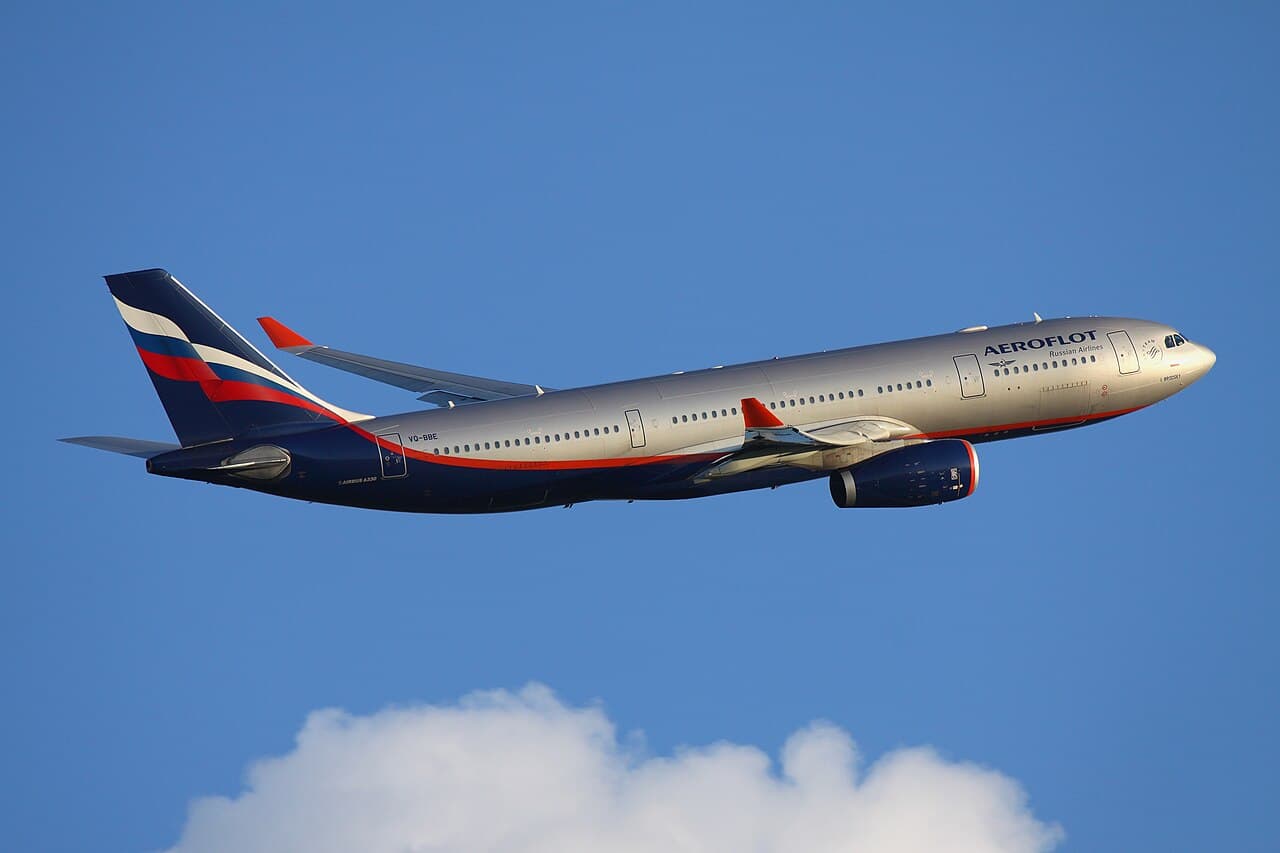
RwandAir Showcases Vibrant Sunburst Livery Reflecting National Identity
The East African carrier's colorful tail draws inspiration from one of Rwanda's national symbols.
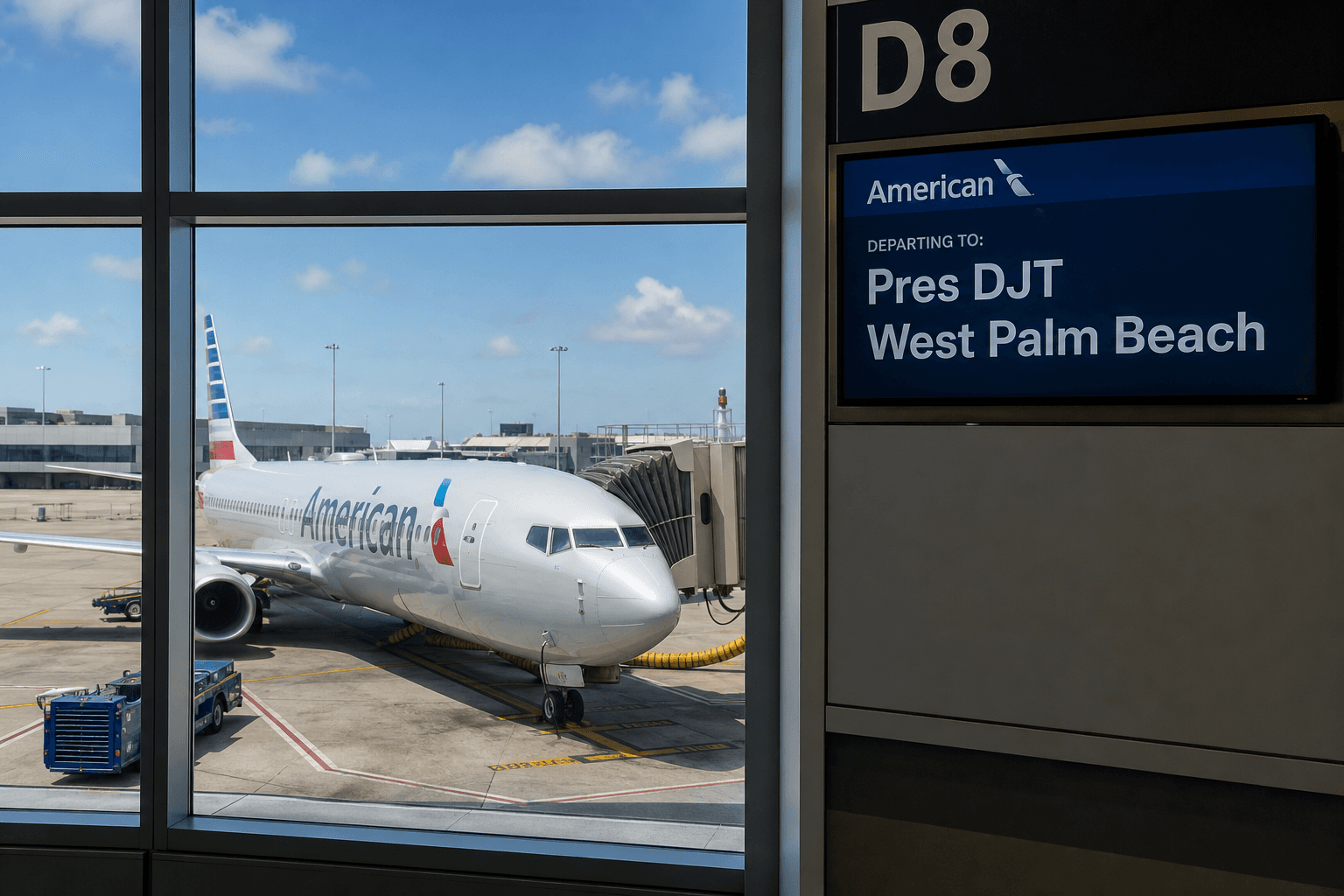
American Airlines Lists West Palm Beach as 'Pres DJT' on Gate Screens, Breaking Usual Naming Pattern
American Airlines now labels West Palm Beach "Pres DJT" on gate screens, departing from its usual practice of naming airports only when distinguishing between multiple airports serving one city. Clinton and Ford airports receive no such treatment.
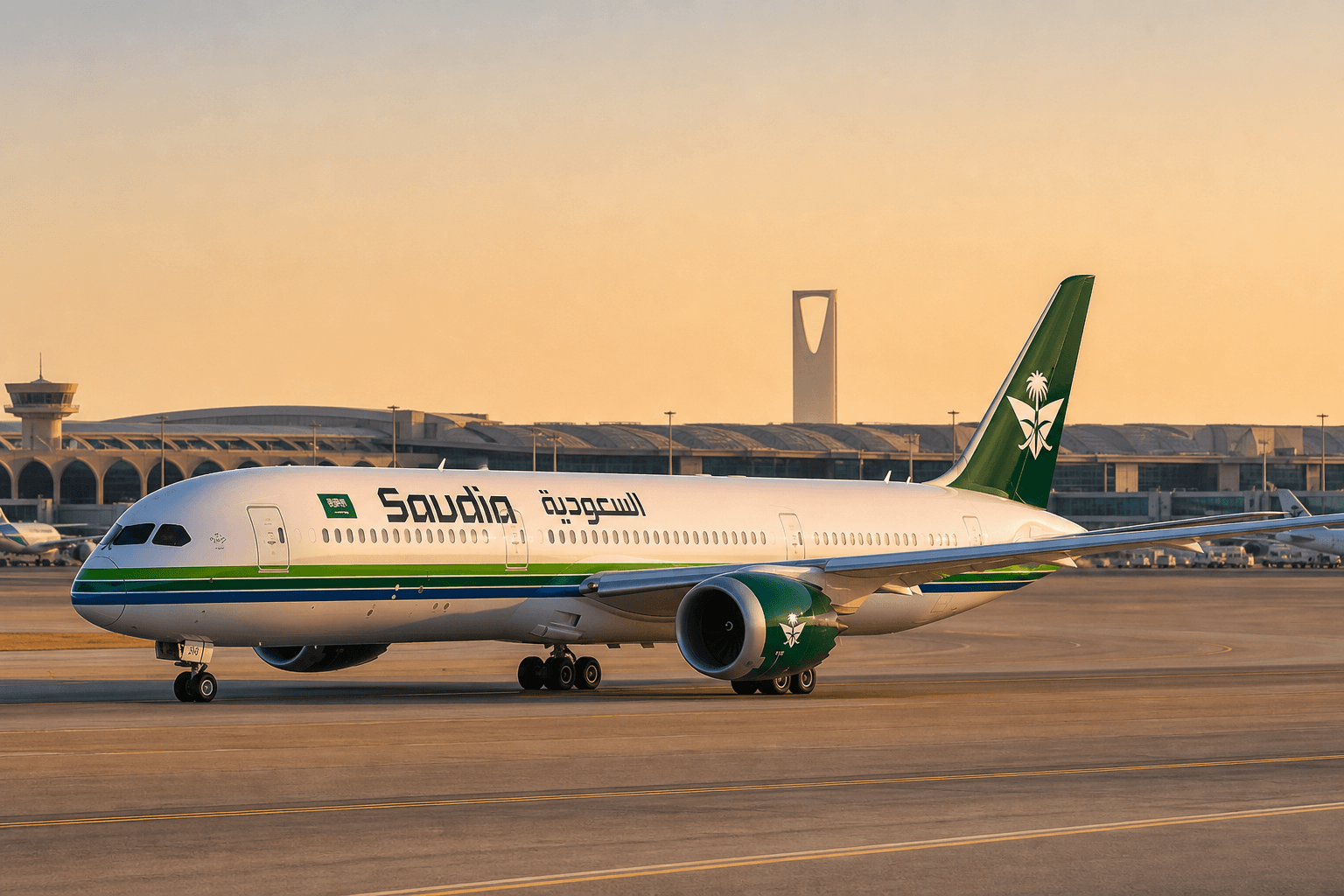
Saudia Leads Global Airline Punctuality in June 2026 with 92.38% On-Time Flights
Saudia maintained its position as the world’s most punctual airline in June 2026, achieving an impressive 92.38% on-time arrival rate. This means nearly 19 out of every 20 flights landed within 15 minutes of schedule. ezstandalone.cmd.push(function () { ezstandalone.showAds(119); }); Korean Air secured second place with 88.56% punctuality, followed by Aeromexico at 86.94%. Air India and Singapore Airlines completed the top five with 86.85% and 86.74% respectively. These results, recorded by Cirium , highlight consistent excellence among leading international carriers operating across multiple regions. ezstandalone.cmd.push(function () { ezstandalone.showAds(127); }); Strong Performance in Europe In Europe, Turkish Airlines led the rankings with 84.26% of flights arriving on time. SAS ranked second at 83.39%, while Pegasus took third with 82.49%. Vueling and Austrian Airlines rounded out the top five at 82.29% and 81.25%. These figures demonstrate solid operational performance during the busy summer travel period. The results reflect effective management of schedules, ground operations, and passenger flows across the region. ezstandalone.cmd.push(function () { ezstandalone.showAds(128); }); Image Credit: Boeing Rising Cancellations Raise Concerns Despite good punctuality, cancellation numbers increased in some areas. Europe recorded 9,165 cancelled flights in June, up from 5,741 in May. Asia Pacific remained the region with the highest number of cancellations at 25,599 flights. This contrast between strong on-time performance and rising cancellations points to ongoing operational challenges. Peak-season demand, weather disruptions, and technical issues can quickly impact flight schedules even for well-performing airlines. ezstandalone.cmd.push(function () { ezstandalone.showAds(129); }); Global Issues Faced by Commercial Aviation in June 2026 June 2026 tested the resilience of the global aviation industry as summer travel demand peaked amid multiple operational and external pressures. While leading airlines delivered strong punctuality, the broader network faced significant challenges that drove higher cancellations and disruptions. Geopolitical tensions, particularly in the Middle East, continued to disrupt key air corridors. Airlines rerouted flights, increasing fuel consumption and operational costs. Sharp rises in jet fuel prices prompted several carriers to cut capacity, reduce frequencies, or cancel flights outright. These measures helped manage costs but reduced seat availability during the busy season. ezstandalone.cmd.push(function () { ezstandalone.showAds(130); }); High summer demand strained infrastructure worldwide. In Europe, air traffic control restrictions, staffing shortages, and occasional strikes compounded weather-related issues. North America experienced a notable drop in on-time performance due to convective weather and limited schedule slack. Asia Pacific faced congestion at major hubs, contributing to its high cancellation volumes. Fuel price volatility squeezed margins industry-wide and forced schedule adjustments. Airlines worked to balance strong passenger demand with higher costs and airspace limitations. The month highlighted the sector’s vulnerability to external shocks even as core operational reliability held up for top performers. ezstandalone.cmd.push(function () { ezstandalone.showAds(131); }); Photo Credit: Nik Oak via Pexels Implications for Passengers and the Industry These findings offer important insights for the aviation industry and travellers alike. Leading airlines continue to set high standards for reliability, which reduces passenger stress, improves connections, and supports smoother journeys overall. However, the rise in cancellations shows that punctuality alone is not enough. Airlines need greater operational resilience to maintain schedules during periods of high demand or unexpected disruptions. For passengers, choosing carriers with strong track records can significantly improve the travel experience, especially during peak summer months. Key Takeaways from June 2026: Saudia leads globally with over 92% on-time arrivals Turkish Airlines dominates European rankings Asia Pacific faces the highest cancellation volumes Geopolitical tensions and fuel costs add pressure on operations ezstandalone.cmd.push(function () { ezstandalone.showAds(132); });

Aer Lingus offers lie-flat business class on short European routes with A321LR/XLR jets
Aer Lingus is one of the most prominent operators of long-range narrowbodies. It previously flew Boeing 757-200s across the Atlantic (one of few European airlines to do so), and it's now built a fleet of eight Airbus A321LRs while also flying six improved A321XLRs. These 14 long-range Airbuses are enabling the carrier to launch new routes to smaller destinations, such as Hartford, Pittsburgh, Indianapolis, and more.
The Daily Touch & Go
The day's best aviation news in your inbox. Free, no spam.