

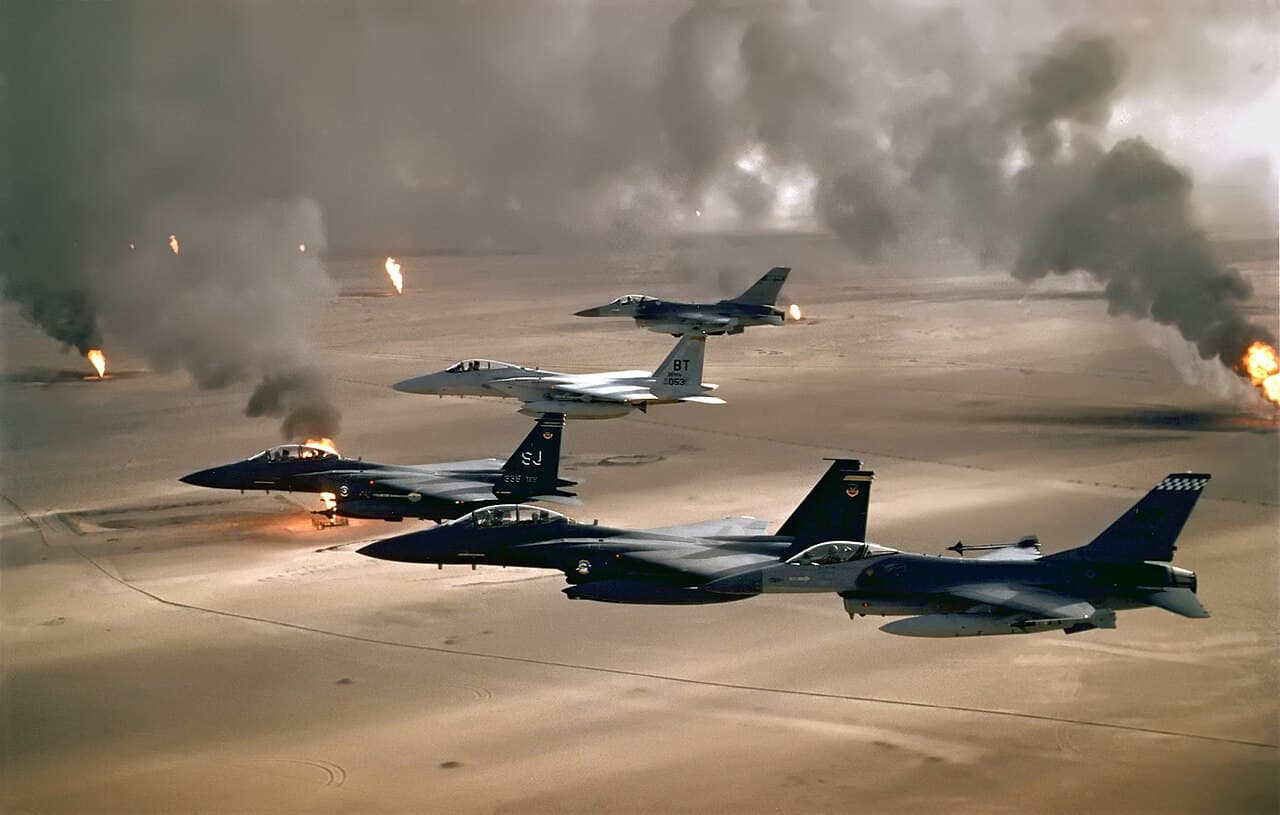
Image: US Air Force · Public domain · via Wikimedia Commons
Six U.S. Combat Aircraft Lost and Crew Rescues Highlight Operation Epic Fury's Tough Toll
Operation Epic Fury since February 2026 has seen six crewed American aircraft lost due to combat, accidents, and friendly fire, with multiple aircrews rescued and six U.S. service members killed in related incidents.
The gist
Operation Epic Fury has claimed six American crewed planes amidst combat, accidents, and friendly fire, with intense rescue efforts underway.
Since its launch on February 28, 2026, Operation Epic Fury has resulted in the loss of 42 American aircraft in combat zones. Of these, 24 unmanned MQ-9 Reaper drones and one rare MQ-4C Triton drone were lost, with the remainder consisting of six crewed aircraft. The six crewed aircraft were lost to a combination of combat engagements, friendly fire, and tragic accidents, marking a costly chapter for the U.S. Air Force amid the ongoing campaign.
Among the six crewed aircraft losses, three Boeing F-15E Strike Eagles were downed over the Kuwaiti border during March 1–2, reportedly by surface-to-air missiles. Initial reports blamed enemy defenses; however, later investigations suggested a potential friendly fire incident involving a Kuwaiti F/A-18 Hornet firing on allied jets—possibly due to incompatible identification friend-or-foe (IFF) systems. Despite the loss of the jets, all six aircrew safely ejected and were recovered without major injuries, though the U.S. Air Force faces up to $300 million in replacement costs.
Complications in electronic warfare environments may have played a role in the friendly fire incident. Iranian electronic jamming operations possibly contributed to the misidentification of aircraft targets. Retired Air Force intelligence officer Robert Riggleman attributed these losses to compounded operational tempo, insufficient training, flawed mission planning, and panic, painting a picture of broader systemic gaps rather than isolated negligence.
The deadliest incident during Epic Fury was a nighttime midair collision between two Boeing KC-135 Stratotankers on March 12 in Western Iraq. One tanker lost its tail but landed safely, while the other crashed with all six airmen onboard perishing. The crash involved experienced Air Force and Air National Guard personnel. Notably, KC-135s have not carried parachutes since 2008, meaning evacuation options during in-flight emergencies are limited to emergency landings.
These aged tanker aircraft serve critical roles as airborne refuelers, enabling extended combat missions for tactical jets operating far from base. Operating low-visibility, blackout refueling missions at night demands intense coordination using night vision and data links. The KC-135's decades-old design contributes to high workloads for crews, raising challenges during fast-paced combat operations.
Another major loss occurred on the ground at Prince Sultan Air Base in Saudi Arabia during a heavy Iranian missile and drone strike from March 27–28. The attacks destroyed a KC-135 tanker and a valuable Boeing E-3 Sentry Airborne Early Warning and Control aircraft. The E-3, a key command-and-control platform with sophisticated radar and sensor systems, is irreplaceable due to discontinued industrial support, greatly impacting coalition situational awareness.
Combat losses continued on April 3 when an F-15E Strike Eagle with call sign 'Dude 44' was shot down by Iranian ground fire over southern Iran. The pilot and weapons systems officer ejected safely, but only one was immediately rescued. This triggered a large-scale search and rescue operation involving up to 150 aircraft and elite special operations forces, including SEAL Team Six and Delta Force, deploying deep into hostile territory using MC-130J Commando II transports and helicopters.
During the rescue, additional aircraft losses occurred due to challenging terrain and operational requirements. Two MC-130 transports became stuck in unstable sand at a forward landing zone and were destroyed along with two MH-6 Little Bird helicopters to prevent enemy capture. Despite these setbacks, the stranded airman was successfully extracted, underscoring the dangerous conditions and complexities of modern battlefield air operations.
Operation Epic Fury’s air campaign underscores the persistent risks faced by U.S. aviators beyond enemy fire alone — including friendly fire, midair collisions, and ground attacks — with costly losses in aircraft and personnel. The combination of aging airframes, intense operational tempo, contested electronic environments, and challenging extraction missions highlight the multifaceted hazards confronting combat aircrews today.
Frequently asked questions
- How many crewed U.S. aircraft were lost during Operation Epic Fury?
- Six crewed U.S. military aircraft were lost during Operation Epic Fury due to combat, friendly fire, and accidents.
- What caused the three F-15E Strike Eagles to be shot down near Kuwait?
- The three F-15E Strike Eagles were downed likely by friendly fire, possibly from a Kuwaiti F/A-18 Hornet, due to incompatible identification friend-or-foe systems and possible Iranian electronic jamming.
- What happened during the KC-135 Stratotanker collision in March 2026?
- Two KC-135 Stratotanker aircraft collided at night over Western Iraq; one landed with damage, the other crashed killing all six crew onboard, the deadliest U.S. aircrew loss during Operation Epic Fury.
Read more
All Military/Defense →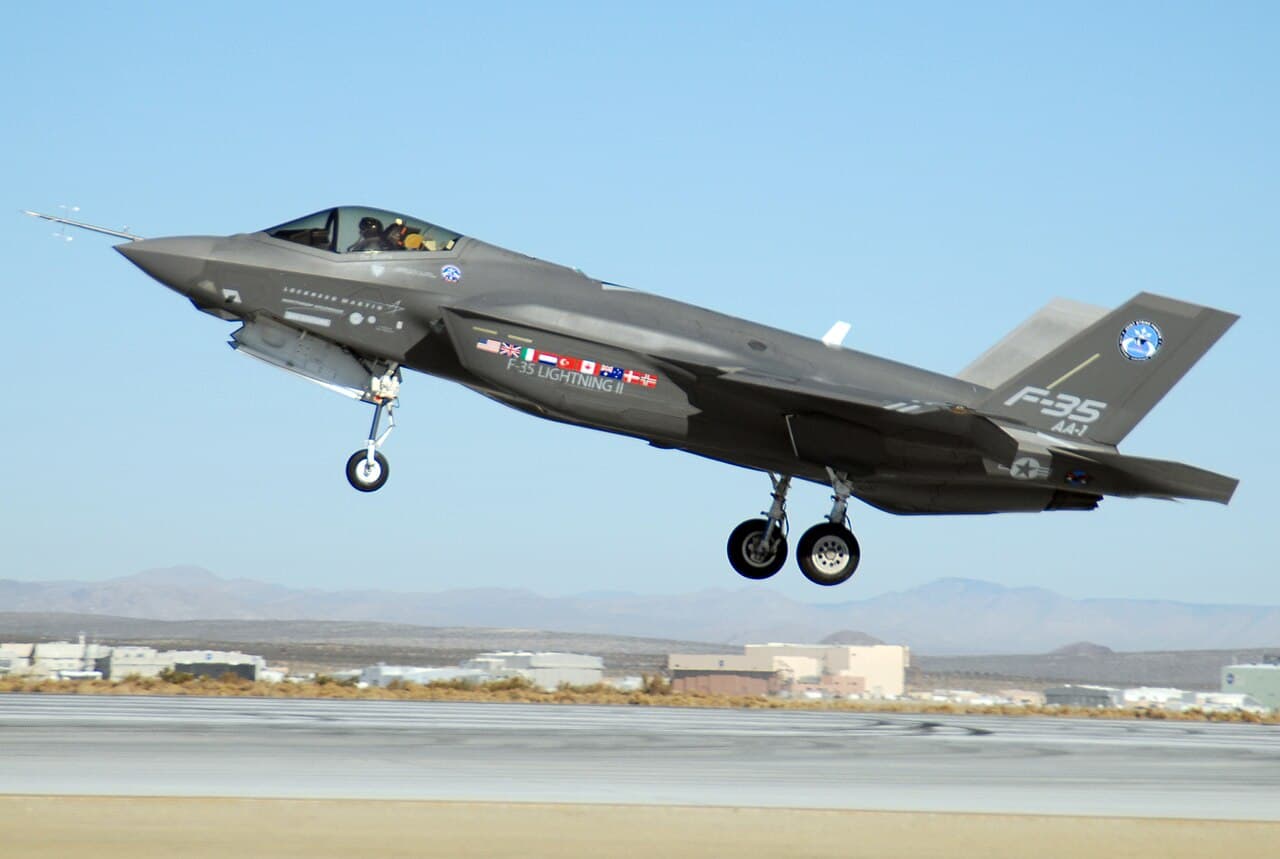
Davis-Monthan Air Force Base Ends Five Decades of A-10 Pilot Training as Focus Shifts to F-35
In April 2026, the US Air Force closed the training pipeline that had produced every Fairchild Republic A-10 pilot it ever fielded. The 357th Fighter Squadron graduated its last class of Thunderbolt II students at Davis-Monthan Air Force Base in April. That same week, and at that same base, an A-10 flying combat search and rescue escort over Iran took enemy fire, kept flying, and helped bring a downed fighter pilot home before its own pilot was forced to eject over Kuwait.
US Controls All F-35 Mission Data Updates, Grounding Allied Squadron Autonomy
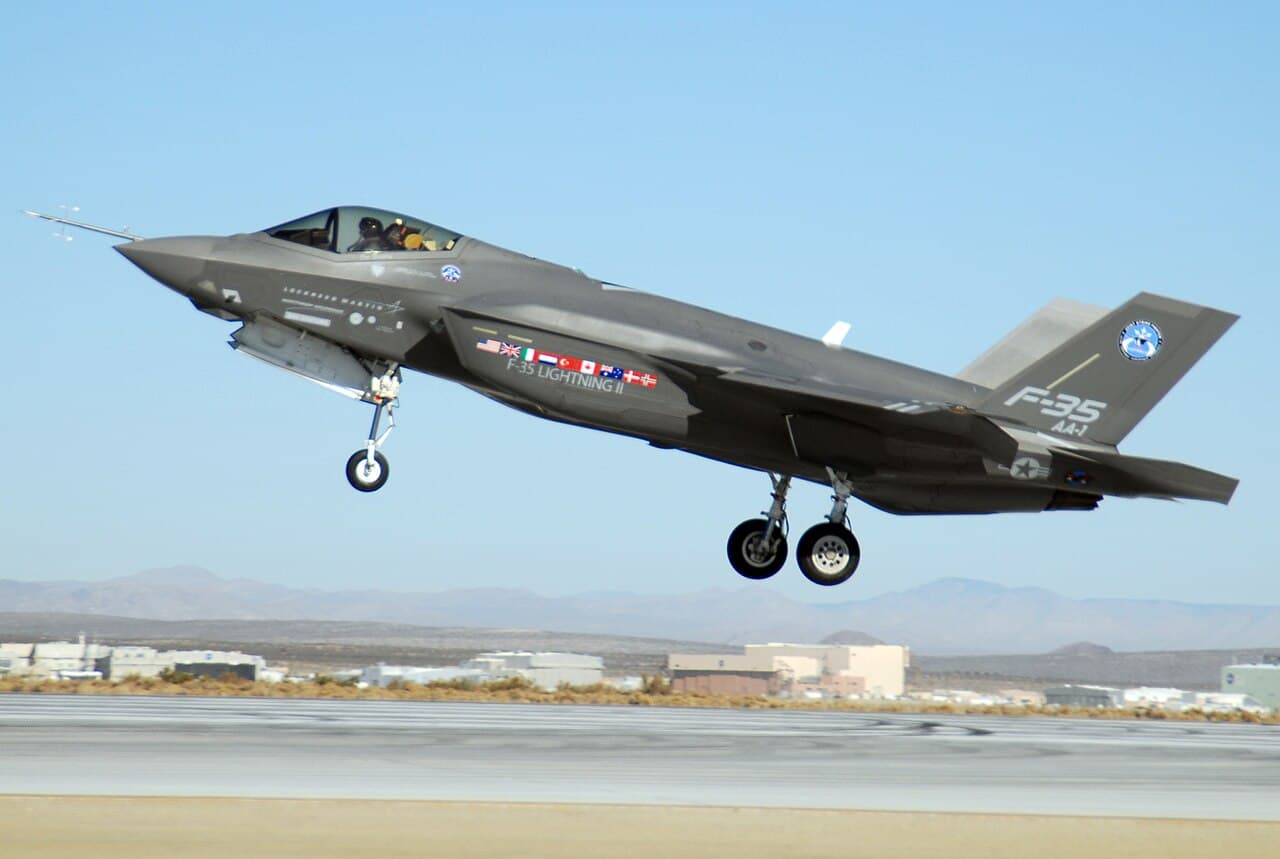
The Lockheed Martin F-35 Lightning II is one of the most important weapon systems developed in the 21st century. It represents a major paradigm shift for air power not only in the US Air Force, but the Navy and Marines as well as 19 other US Allied partner nations around the world that are part of the global fleet. In addition to being the most expensive defense industrial project in history, it is also one of the most closely guarded classified projects to ever become a multinational defense program.
US Air Force invests over $19 billion to modernize five key bases, led by Guam and Ellsworth
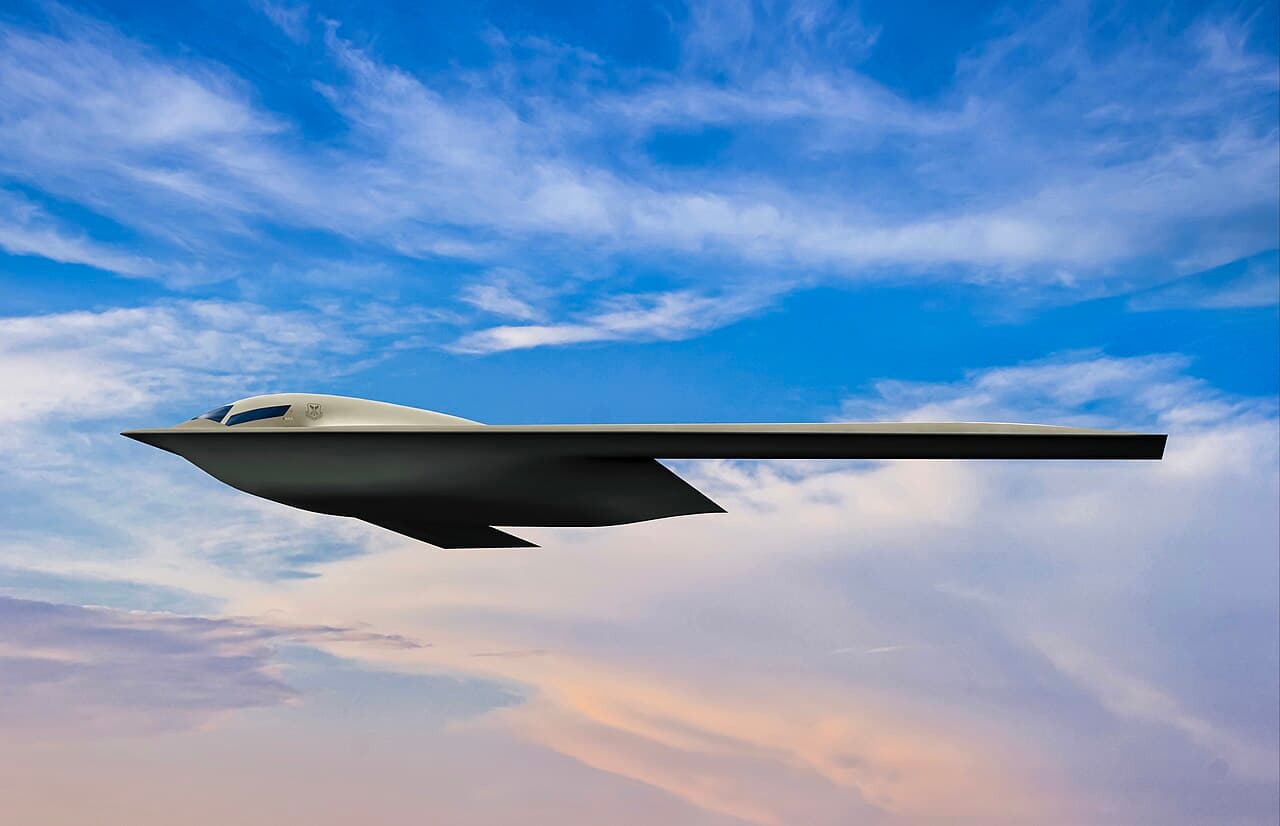
The United States Air Force is pouring more concrete, steel, and taxpayer money into its bases right now than at any point since the Cold War, and the bill across just five installations already tops $19 billion. This list ranks those five reconstruction efforts by the size of the investment attached to each one, running from a $409 million jungle-clearing job in the Mariana Islands up to an $8 billion air defense shield on Guam .
Uber, Zipline Aim for 1 Million Daily Drone Deliveries by 2029
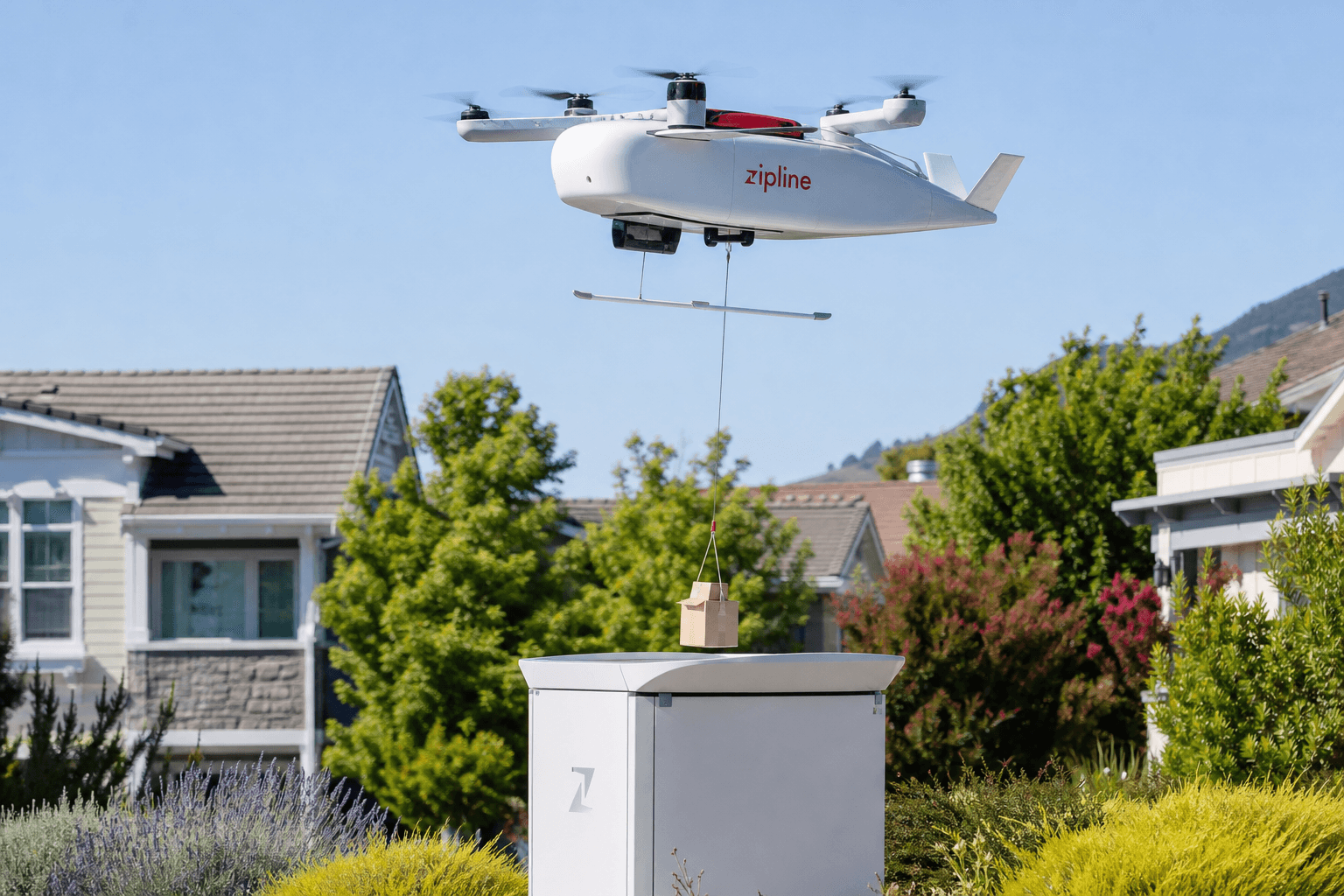
App- and web-based delivery platforms from Walmart, Amazon, DoorDash, and now Uber are embracing small drones to slash trip times in a trend that could reshape low-altitude U.S. airspace. Uber on Monday announced it is partnering with drone manufacturer and operator Zipline, which is also a partner of Walmart and competitor Wonder , the parent company of Grubhub. By the end of 2029, Uber and Zipline hope to achieve a cadence of 1 million daily drone deliveries, with "goals to expand far beyond that." The partners said the first deployments will begin this year in Dallas, Houston, and other cities where Zipline already operates, expanding as the company scales to dozens of other areas. Zipline in a news release called the move "one of the biggest steps toward expanding Zipline's service to every home in the U.S." "Our goal is for millions of people to be able to order lunch, dinner, snacks, and more through the Uber Eats app and have them delivered by Zipline" in five to 10 minutes, the company said. In a show of confidence, Uber is also making a strategic investment of an undisclosed amount in Zipline. "We look forward to bringing this technology to more communities and making autonomous delivery part of everyday life," said Dara Khosrowshahi, CEO of Uber, in a statement. Zipline's Platform 2 (P2) drones, or Zips, cruise at about 70 mph with up to 8 pounds of cargo, capable of 24-mile, one-way trips or flying within a 10-mile service radius. At the delivery location, the drones unfurl a tether to lower orders—stored within a smaller "droid"—to the ground from as high as 300 feet. Zips are designed for hub-and-spoke or dock-to-dock operations, delivering to the customer's front yard or public locations such as a park. Store employees load orders into a container called a Dropbox , entering a code on a keypad to unlock a secure drawer. The Zip then lowers the smaller droid into the Dropbox and secures the order autonomously. Zipline began conducting medical drone delivery operations in Rwanda in 2016 and now serves more than 5,000 hospitals. It operates commercial on-demand and medical delivery services in Ohio, Arkansas, and Texas. The company said U.S. deliveries now make up about 70 percent of its volume. Beyond Zipline, Uber seeks to add an aerial element to its services in partnership with Joby Aviation, with which it is exploring commercial air taxi services beginning in the Middle East. Drone Delivery Set to Explode For years, ambitions of drone delivery were kept afloat by venture capital flowing to small startups or side projects of companies such as Amazon and Alphabet. The industry has since evolved from pilot programs to routine commercial services. The backing of platforms such as Uber could take it to new heights—with significant implications for low-altitude airspace. Uber's collaboration with Zipline pits it directly against rival DoorDash in the drone delivery business. In July, the latter revealed it is building its own delivery drone to complement the models it operates from Alphabet's Wing, Israel's Flytrex, and Ireland's Manna. DoorDash has explored U.S. drone delivery since 2024 but is now looking to bring more of those operations in-house, akin to Amazon's Prime Air unit that builds and operates its own drones. The company is putting the full weight of its DoorDash Labs automation division into developing an end-to-end network, including a software that determines which deliveries best lend themselves to drones. Wonder aims to add Zipline's drone delivery service to the majority of its Texas locations by the end of next year, and it recently trialled a service in New Jersey with partner Dexa. Walmart offers drone delivery from Zipline, Wing, and Flytrex through its app and website. Uber also works with Flytrex and is exploring the U.S. market in partnership with Manna. According to Uber, Zipline drones make a delivery every 20 seconds on average. The company says it has delivered over 20 million items across more than 2.5 million deliveries and 140 million miles flown. Achieving one million daily deliveries by 2029, though, will require even greater scale. Drone delivery operators represented by the Commercial Drone Alliance (CDA) and other lobbying groups are clamoring for the FAA's finalization of Part 108 , which would unlock routine operations beyond the visual line of sight (BVLOS) of humans. Instead, drones would rely on detect and avoid systems and uncrewed aircraft system (UAS) traffic management (UTM) platforms to keep operations safe. Part 108 would enable the scale the drone industry desires. But pilots have pushed back on some of the proposal's more permissive elements, such as the granting of right-of-way to drones over crewed aircraft in certain scenarios. The Air Line Pilots Association (ALPA) and others have expressed skepticism about the maturity of detect and avoid systems and their ability to prevent collisions. Proposed Part 108 reportedly moved to the federal Office of Information and Regulatory Affairs (OIRA) for review last month. That means the rule could be months or even weeks away from being finalized, and companies such as Uber and Zipline could soon face fewer restrictions on fully autonomous drone delivery.
The Daily Touch & Go
The day's best aviation news in your inbox. Free, no spam.