

Illustration: The Touch & Go
Reliance and Rolls-Royce Collaborate to Develop Indigenous Engine for India's AMCA
Reliance Industries and Rolls-Royce commit to a strategic partnership to design and produce a local engine for India's Advanced Medium Combat Aircraft.
The gist
Reliance and Rolls-Royce partner to advance a sovereign engine program for India's stealth AMCA fighter jet.
Continuing coverage
All India →- IndiGo Passenger's Violent Outburst at Bhubaneswar Airport Raises Concerns Over Passenger Conduct
- Indian Lawmaker Urges Women-Only Lavatories on Planes to Improve Hygiene and Comfort
- IndiGo suspends London Heathrow and shifts Amsterdam to A321XLR as it awaits Airbus A350 widebodies
- Chinese Lessor Begins Repossession of Four Boeing 737-8 Jets from SpiceJet
- China's ICBC seeks DGCA deregistration of four SpiceJet Boeing 737 MAX 8s over engine issues
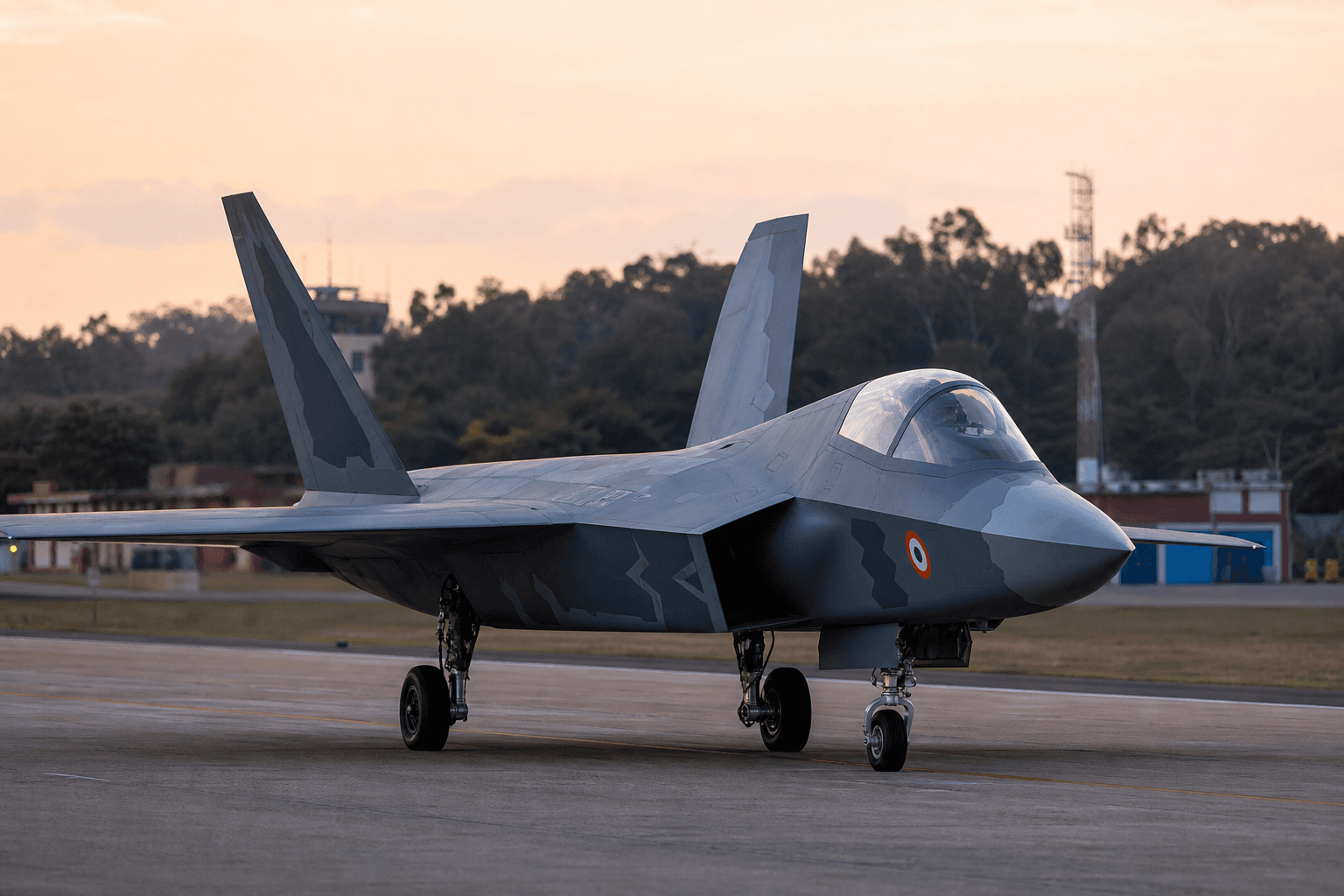
The Indian aerospace sector is witnessing a significant collaborative effort as Reliance Industries and Rolls-Royce announced plans to jointly explore the development of an indigenous engine for the nation’s Advanced Medium Combat Aircraft (AMCA). This partnership signals a strategic move to bolster India’s self-reliance in critical aerospace technologies, particularly in advanced propulsion systems. It aims to marry Rolls-Royce’s expertise in aero-engine design with Reliance’s robust technology and manufacturing infrastructure to create a homegrown aero-engine ecosystem.
Reliance Industries executive director Anant Ambani emphasized the broader national ambition behind this venture, pointing out that India’s strategic autonomy depends on sovereign capabilities in vital technologies. The alliance, therefore, extends beyond mere engine development; it aspires to build a sustained, globally competitive propulsion technology capability within India. The collaboration also focuses on establishing local production capabilities for the engine, a crucial step in reducing dependence on international suppliers.
The AMCA project itself has been under development for nearly twenty years, spearheaded by the Aeronautical Development Agency (ADA) of India. In a recent policy shift reducing the state-owned Hindustan Aeronautics Limited (HAL)’s exclusive hold, private sector involvement is encouraged. New Delhi approved plans in May 2025 enabling private companies like Reliance to vie for roles in developing the jet, reflecting a strategic evolution to broaden and strengthen the domestic aerospace industrial base.
Initially, the AMCA is set to operate with two General Electric Aerospace F414 INS-6 engines. These are mature, reliable powerplants serving as a bridge until a fully indigenous engine becomes available for subsequent production batches. To support this, GE Aerospace signed an MoU with HAL in June 2023 to explore local production of the F414 engines in India, reinforcing the country’s push toward manufacturing key aerospace components domestically.
Other major engine manufacturers have shown interest in the AMCA program. Reports from the Indian media suggest that Safran, a prominent French aero-engine maker, is also considering participation in designing or supplying engines for the fighter. However, the Reliance-Rolls-Royce partnership demonstrates a concrete commitment to ultimately achieving a self-developed propulsion system specifically tailored for the AMCA’s unique requirements.
The design phase of the AMCA spanned from 2019 to 2024. With formal development slated to last ten years, the program plans to build five prototypes, underlining the complexity and long-term commitment needed for this indigenous warfighter. The Indian Air Force anticipates acquiring around 120 of these low observable fighters, marking the nation’s first foray into stealth combat aircraft development.
This indigenous engine initiative is critical for India’s ambitions of technological sovereignty in military aviation. By developing advanced propulsion capabilities domestically, India aims to reduce vulnerabilities associated with foreign supply chain dependencies, particularly in a geostrategic context that demands rapid and secure defense readiness. This project aligns with broader governmental policy encouraging local private sector participation in defense and aerospace manufacturing.
As the AMCA program advances toward its targeted first production aircraft delivery in 2036, the partnership between Reliance and Rolls-Royce will be under close scrutiny as a benchmark for successful technology transfer and capability building. Its outcome will influence India’s position in the global defense aviation arena and could serve as a model for future indigenous aerospace ventures.
In essence, this collaboration represents a milestone in India’s defense modernization trajectory. It combines global expertise and local capacity to produce cutting-edge technology that supports both national defense requirements and the growth of a competitive aerospace industry within the country.
Frequently asked questions
- What is the goal of the Reliance and Rolls-Royce partnership regarding AMCA?
- The partnership aims to design, develop, manufacture, and deliver an indigenous engine to power India's Advanced Medium Combat Aircraft, establishing local production capabilities.
- What engines will initially power the AMCA before the indigenous engine is ready?
- The first AMCA jets will use twin GE Aerospace F414 INS-6 engines, with later production batches expected to feature the locally developed engine.
- How is the AMCA program structured in terms of development timeline and production?
- The AMCA's design phase ran from 2019 to 2024, followed by a planned 10-year development phase including 5 prototypes, targeting first production deliveries in 2036. Approximately 120 aircraft are planned for acquisition.
Read more
All Military/Defense →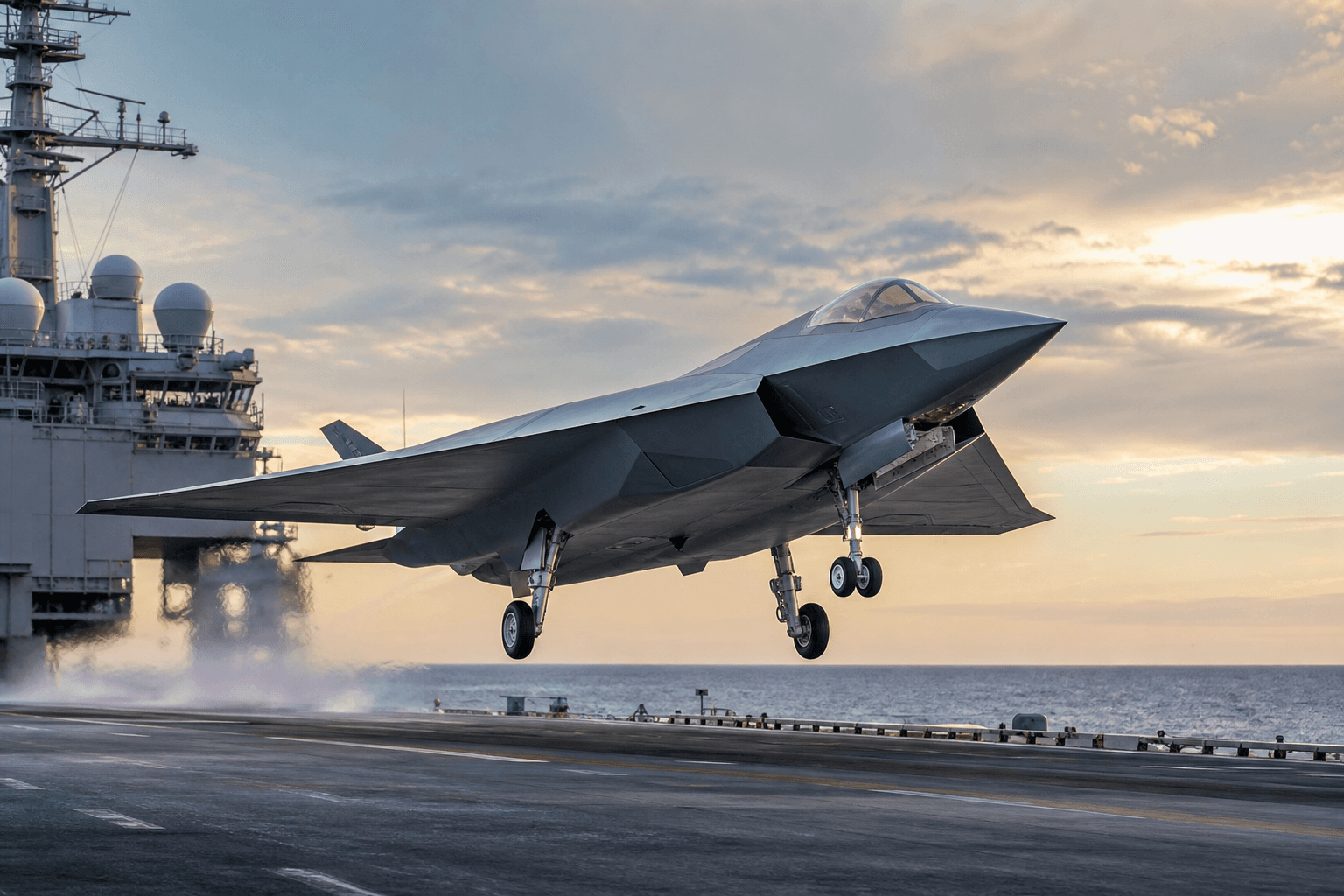
Congress Boosts US Navy Sixth-Gen Fighter Budget From $74M to $971M to Accelerate F/A-XX Development
As the United States races towards its first sixth-generation fighter jet, the Next Generation Air Dominance Program of the US Air Force has taken the spotlight, but it is not the only endeavor underway. The US Navy F/A-XX stealth carrier fighter was expected to be shelved, but lawmakers decided to resuscitate the program with an enormous funding injection.
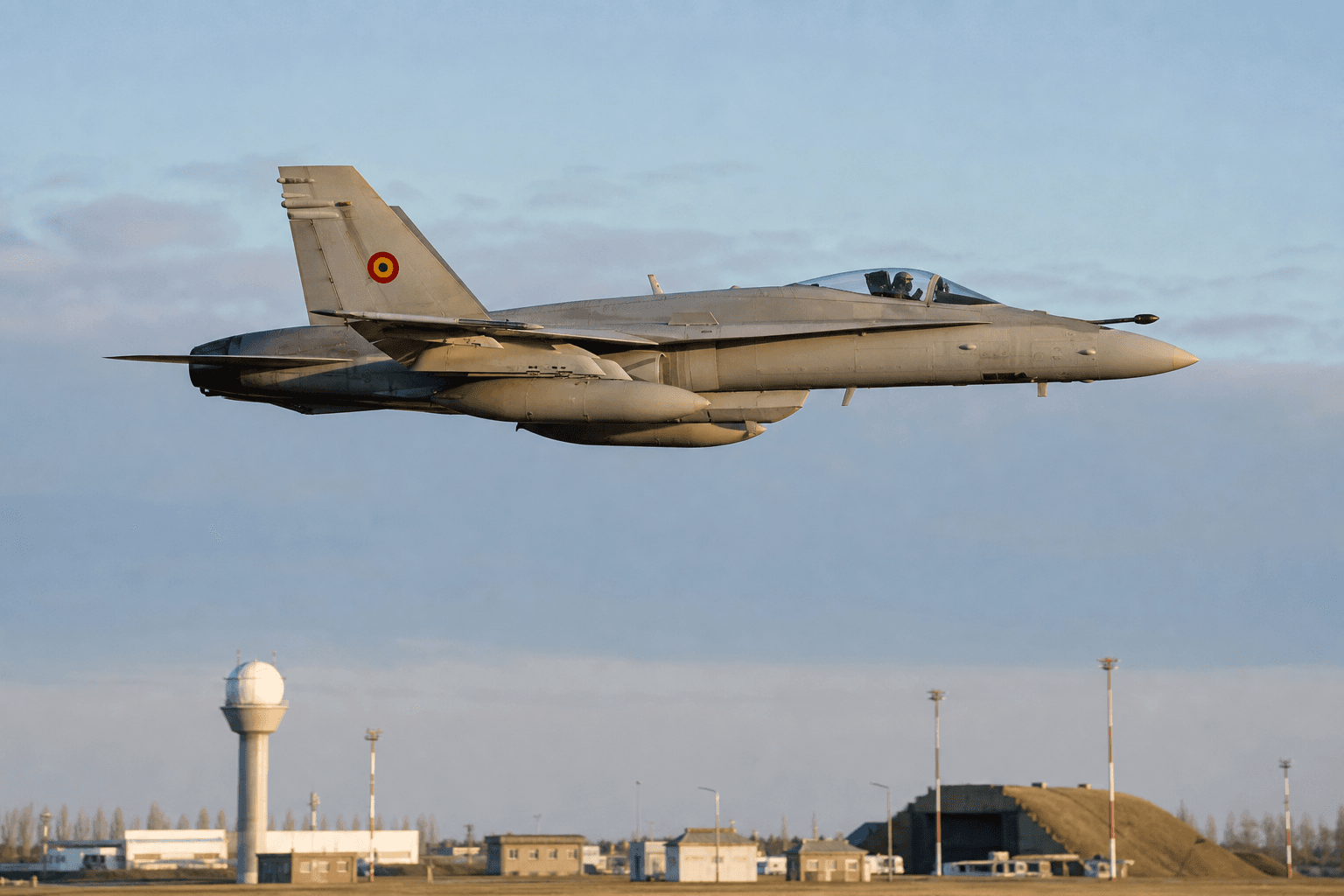
Spanish F-18 downs drone over Romania after Moldovan airspace breach
A Spanish Air and Space Force F/A-18 Hornet shot down a drone over southeastern Romania in the early hours of August 16, 2026, the fourth unmanned aircraft destroyed over Romanian territory this year. The Romanian Ministry of National Defense said its surveillance systems detected an aerial target entering national airspace at 04:44 local time from the direction of the Republic of Moldova, around 24 kilometers (15 miles) north of Galati. An F/A-18 Hornet assigned to air policing duty at the 57th Air Base at Mihail Kogalniceanu was already airborne on a monitoring mission, established radar contact and received approval to engage. The drone was destroyed at 05:01, 17 minutes after detection. A probable debris impact point was identified between the villages of Baleni and Cudalbi in Galati County, in an unpopulated area. The air alert for the county was lifted at 05:20. No injuries or damage were reported. The ministry did not identify the drone's type or operator. Drone entered Romania after crossing Moldova The target did not cross directly from Ukraine, despite Romania's 614-kilometer (382-mile) land border with the country. It arrived over Moldova, which is not a NATO member, fields no fighter aircraft and takes part in no allied air policing arrangement. Moldovan airspace has been penetrated repeatedly in August 2026. A drone exploded near Crocmaz in the Stefan Voda district on August 9, prompting Chisinau to recall its ambassador from Moscow. The following night, Moldova's Air Operations Service tracked an aircraft crossing over Priozerne for about a minute and assessed its characteristics as consistent with a Geran-3, the jet-powered Shahed variant now common in Russian strike packages against Odesa. Spanish Hornets two weeks into Romanian deployment Spain took over the mission from Italian and British detachments at a ceremony at the 86th Air Base in Borcea on July 31, 2026. The contingent operates seven F/A-18M Hornets and around 200 personnel from Mihail Kogalniceanu, supported by an A400M tanker, with three NH-90 helicopters assigned to counter-drone tasks due in the final phase. The rotation runs to the end of November 2026. It is Spain's fourth deployment to Romania, after 2021, 2024 and February 2026, and the detachment flew its first live Alpha scramble on August 12, 2026. Romanian F-16 pilots shot down three drones on three consecutive days between July 24 and July 26, 2026, the first such engagements inside national airspace. Prosecutors identified the July 24 aircraft as a Shahed type, and Bucharest expelled a Russian diplomat and recalled its ambassador from Moscow. A Russian drone had earlier struck a residential building in Galati on May 29, 2026, injuring two people. The interception is the second by allied fighters on NATO's eastern flank in three days, after NATO jets downed a drone over Latvia on August 14, 2026.
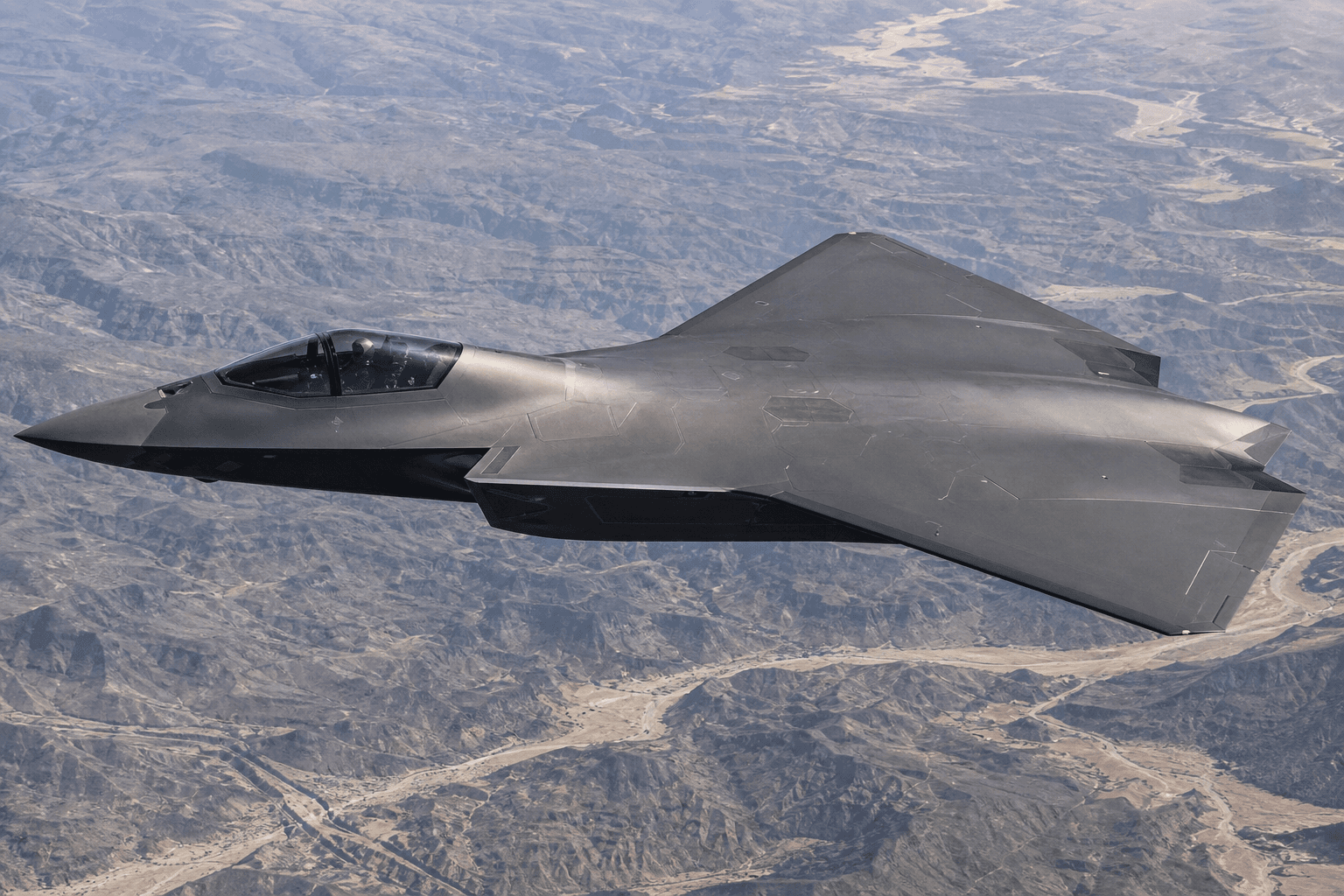
China's J-50 6th-Gen Fighter Ditches Vertical Stabilizers, Relies on Advanced Software
It seems that fifth-generation aircraft are beginning to give way to the next era of air combat, as the competition to develop a sixth-generation fighter has been underway for several years. The difference now is that these aircraft are quickly becoming a reality, with China publicly displaying its J-50 during test flights, the Boeing F-47 expected to conduct its first flight in the coming years, and the Global Combat Air Program (GCAP) continuing its development.
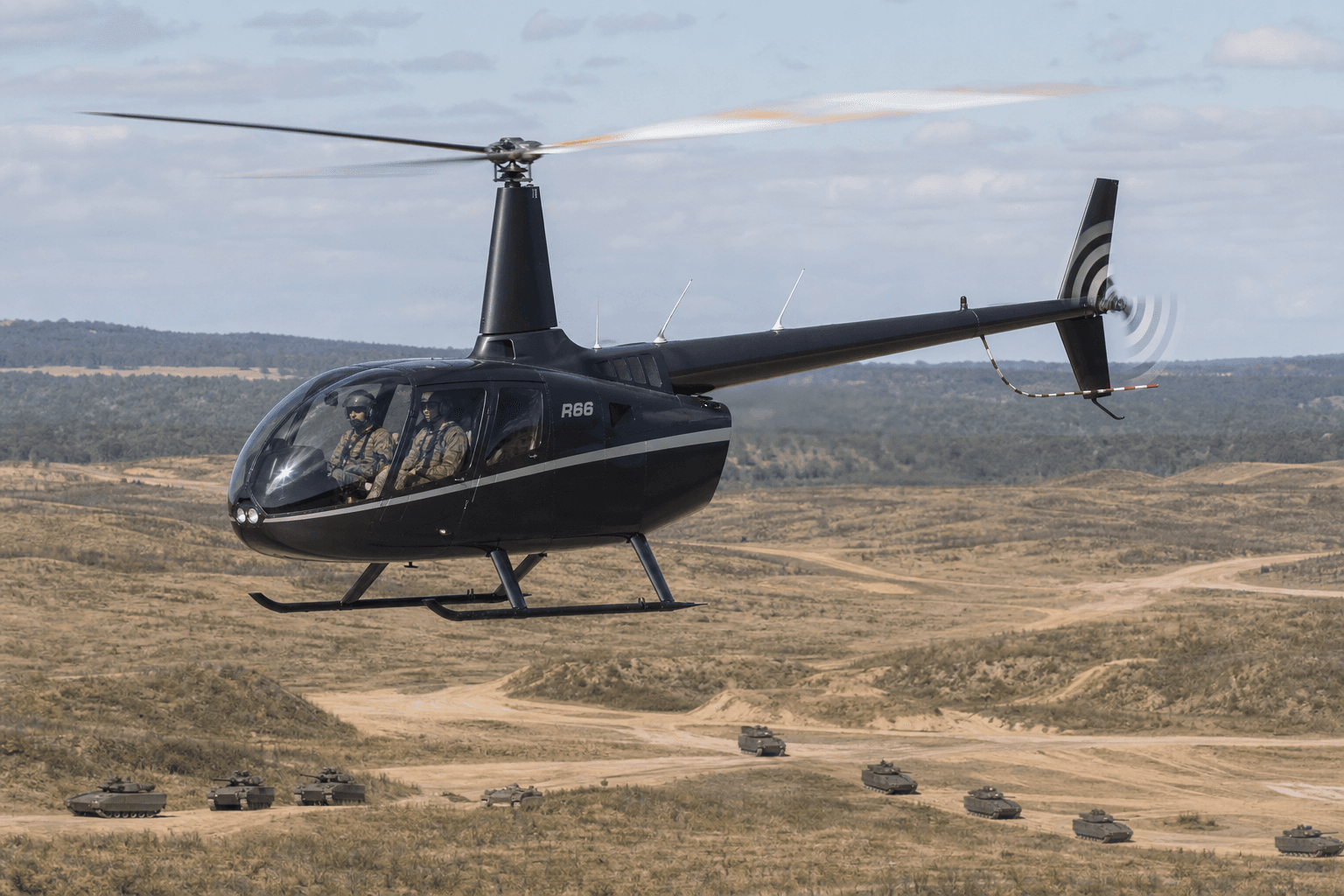
US Army selects Robinson R66 for $10bn Flight School Next rotary-wing training overhaul
Military training services provider M1 won the hotly contested Flight School Next contract with a bid centred on the R66 light-single. The US Army has selected a winner in the hotly contested competition for a multi-billion-dollar overhaul of the service’s rotary-wing flight instruction programme. Military training provider M1 Support Services was announced as the army’s vendor of choice on 13 August. The associated contract is valued at $10 billion over a potential 26-year period. Known as Flight School Next, the deal will entirely replace the service’s current helicopter instructional programme, which is split among multiple different vendors using a fleet of government-owned Airbus Helicopters UH-72 Lakotas as the primary training aircraft. Unlike the current model, Flight School Next will use a contractor-owned/contractor-operated approach to the physical rotorcraft as well as instructional and sustainment services. The service says consolidating the various functions into a single fixed-price contract will ultimately reduce costs. “Flight School Next delivers a critical improvement in our Initial Entry Rotary Wing Training model,” says Major General Clair Gill, commander of the US Army Aviation Center of Excellence. “Simply put, it delivers new military helicopter pilots with far better foundational skills," he adds. "The fact that it delivers this increased capability at a significant long-term savings to our army is a great added benefit." The new training structure will provide basic flight instruction for 800-1,500 new pilots annually, compared to 1,250 annually under the current system. M1 was chosen from a crowded field that had at various points included vertical lift heavyweights Lockheed Martin, Bell and Boeing. "M1 will deliver a fully integrated, innovation‑rich training solution designed to develop more proficient army aviators on time and on budget,” says M1 chief executive George Krivo. The company calls its comprehensive rotary-wing training package “Flight School First”. US Army leaders have long been critical of the UH-72A as a trainer helicopter, saying they would prefer a simpler single-engined alternative. Credit: US Army Three of the four finalists for the Flight School Next contract, including both M1 and Lockheed, had submitted bids based around the Robinson R66. Bell, meanwhile, had crafted a proposal using its 505 light single, while Boeing had partnered with Leonardo Helicopters to offer the TH-73. The army says the first phase of the Flight School Next plan will cover a three-to-four-year transition that will see the UH-72 phased out. The service has long been critical of the Lakota, describing the light twin as too sophisticated an aircraft on which to teach rudimentary flying skills. In particular, army leaders allege automation features included in the UH-72 led to new pilots graduating without sufficient “stick and rudder” flying skills. The army has linked an increase in serious rotary-wing accidents to adoption of the UH-72A as the service’s primary trainer in 2020. Airbus has countered that the automated flight assistance can easily be dialled down or turned off entirely using existing aircraft controls but that the US Army has not endeavoured to modify its flight procedures. In the run-up to the Flight School Next decision, army leaders made it clear they wanted a lightweight, single-engined rotorcraft with minimal computer assistance as the next trainer. The Army National Guard will continue to operate the UH-72, which is based on the Airbus H145 civil rotorcraft, in a light utility role for natural disaster response and other domestic operations. Robinson assembles the R66 at a factory in Torrance, California, that uses a highly vertically integrated supply chain, extending as far as sheet metal fabrication.
The Daily Touch & Go
The day's best aviation news in your inbox. Free, no spam.