

Image: U.S. Air Force photo/Senior Airman Julius Delos Reyes · Public domain · via Wikimedia Commons
US Controls All F-35 Mission Data Updates, Grounding Allied Squadron Autonomy
F-35 operators worldwide cannot modify mission data files locally; all software reprogramming is centralized at Eglin AFB under US Air Force units, limiting allied autonomy.
The gist
F-35 mission data files are exclusively controlled and updated by US centralized teams, restricting allied nations from on-site software reprogramming.
Continuing coverage
All F-35 →- Japan's GCAP Fighter Offers Sovereign Control Beyond F-35's Limits
- Lockheed Martin Q2 2026 earnings surge on eased prior contract losses and strong missile sales
- At Least 15 F-35s Delivered Without Required Equipment Since May 2025
- USAF Plans 267 F-15EX Fighters to Complement Growing F-35 Fleet as 'Missile Trucks'
- Canada Quietly Advances F-35 Fighter Jet Payments Amid Public Debate on Purchase
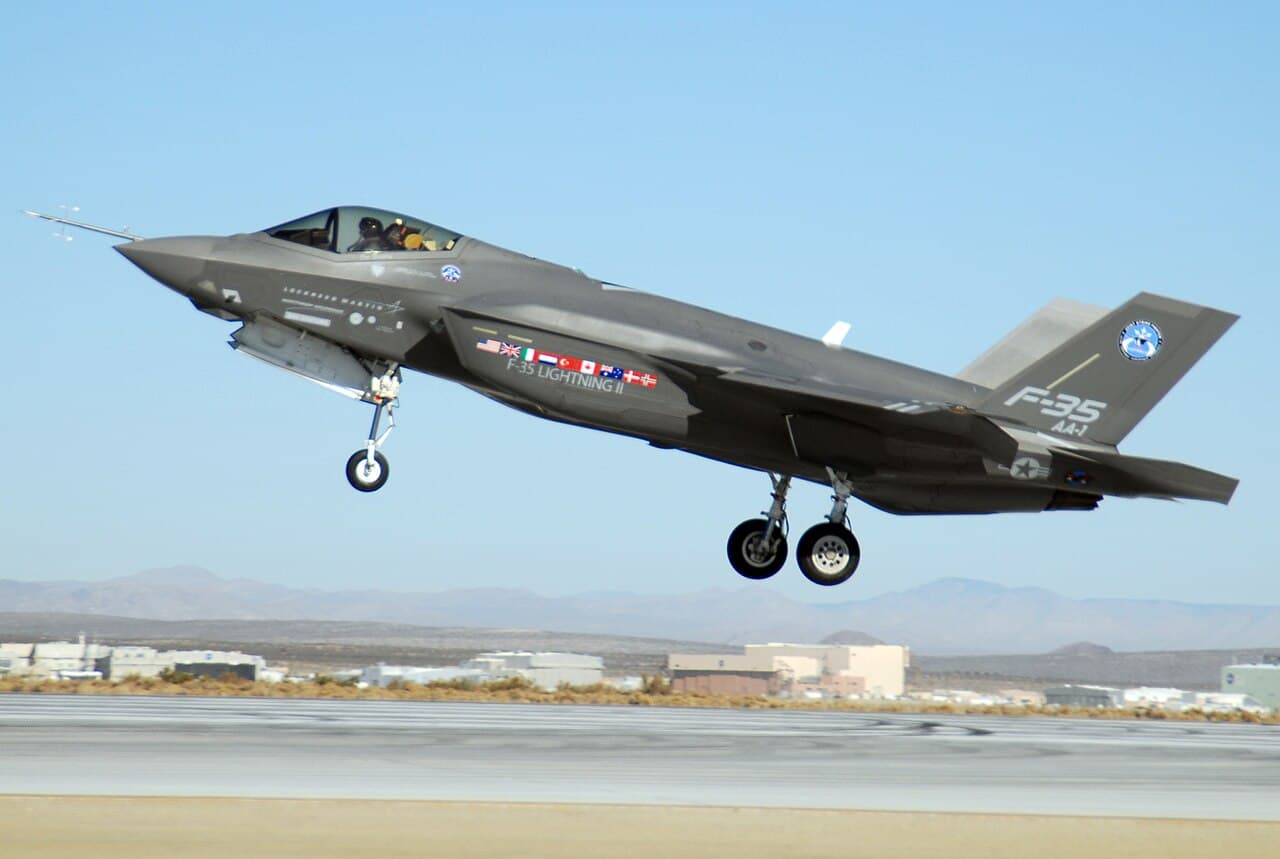
The Lockheed Martin F-35 Lightning II, a revolutionary 5th generation multirole stealth fighter, operates with mission data files (MDF) that are crucial to its avionics and combat performance. However, these mission data files cannot be accessed or updated by local squadron technicians, including those of allied nations operating the jet. Instead, all mission data file management and reprogramming are tightly controlled by highly specialized US Air Force units based at Eglin Air Force Base, Florida. This arrangement effectively restricts the ability of partner countries to independently modify or upgrade their F-35s' software systems, raising concerns regarding operational sovereignty.
The US Air Force's 513th Electronic Warfare Squadron, located at the US Reprogramming Laboratory (USRL), leads the centralized reprogramming effort. This $300 million joint-service hub, staffed by Air Force, Navy, and Marine personnel, develops and distributes mission data updates to all US and allied F-35 operators. Overseen by the 350th Spectrum Warfare Wing, the USRL ensures firmware and avionics software receive the rigorous engineering, testing, and security protocols needed to protect the complex and sensitive systems of the F-35. Such centralization guarantees operational consistency and security across the multinational fleet but at the cost of local modification capabilities.
Access to the F-35's core software source code is strictly prohibited for all foreign operators and even unit maintenance crews. Instead, squadrons receive finalized, compiled packages for deployment, unable to tweak or patch mission data files on-site. If adjustments are needed due to malfunctions or upgrades, the entire data set must be rebuilt and repackaged at the USRL before being redistributed. This process underscores the high-security model protecting the F-35's advanced software architecture, which integrates every subsystem tightly within a monolithic design, significantly complicating any attempt to isolate or independently modify components.
Analogies comparing the F-35's software ecosystem to a sophisticated smartphone operating system illustrate the complexity and security of its software management. Unlike consumer devices where applications can be updated or added independently, the F-35 requires recompiling and rebuilding the entire software load whenever a new mission data update or capability is introduced. This monolithic architecture ties all functions, including electronic warfare, avionics, and flight controls, directly to the Integrated Core Processor, meaning any error introduced during reprogramming could have fatal consequences due to the aircraft's reliance on advanced fly-by-wire systems.
The latest software enhancement, Technology Refresh 3 (TR-3), aimed to modernize the F-35’s onboard systems with increased computational power and memory, enabling Block 4 upgrades essential to counter evolving threats. Nevertheless, TR-3 has faced serious implementation issues, including persistent false alarm codes and malfunctions in critical systems like the helmet-mounted display and electro-optical infrared cameras. These problems have delayed combat-ready delivery of TR-3 configured aircraft by several years, with none cleared for operational use as of late 2025 despite hundreds produced.
These difficulties reinforce the risks inherent in the current centralized update model and the inability of individual squadrons to intervene at the software level. Moreover, allied nations operating F-35s are not granted access to independently manage mission data updates, often relying solely on Lockheed Martin and US Air Force approval and distribution. This dependency implies that newly delivered aircraft in countries such as Belgium, Denmark, and Poland might remain grounded locally for extended periods, awaiting certified software updates from US command centers.
Lockheed Martin has addressed concerns alleging that the software control models act as potential 'kill switches' limiting allied sovereignty, emphasizing their commitment to providing secure, reliable capabilities to all F-35 customers. Still, the firm’s stance highlights the priority placed on security and interoperability of the global fleet over localized software autonomy. The US government similarly treats F-35 mission data management as critical infrastructure that requires centralized oversight to mitigate security risks associated with classified avionics.
The complex balance between advanced defense technology protection and allied operational independence presents ongoing challenges for the multinational F-35 program. Until the software architecture is redesigned for modularity or new processes established to decentralize reprogramming within secure parameters, partner nations will remain reliant on US command units for mission data updates. These constraints affect deployment flexibility, mission readiness, and the modernization pace of partner fleet variants worldwide.
Frequently asked questions
- Why can't allied F-35 squadrons reprogram their mission data files locally?
- Because all mission data file management is centralized and handled exclusively by specialized US Air Force units at Eglin AFB to protect the integrity and security of the F-35's complex software systems.
- What is the role of the 513th Electronic Warfare Squadron in F-35 software updates?
- The 513th EWS manages the US Reprogramming Laboratory, where mission data files are rebuilt, recompiled, and distributed to all F-35 operators, ensuring secure and standardized software updates.
- What challenges have affected the rollout of the F-35 Technology Refresh 3 update?
- TR-3 has encountered issues such as false alarm failure codes and malfunctions in key avionics systems, delaying the delivery of combat-capable aircraft and underscoring difficulties in the centralized software update process.
Read more
All Military/Defense →
Lockheed Martin Q2 2026 earnings surge on eased prior contract losses and strong missile sales
Lockheed Martin's second-quarter earnings look much stronger than last year, largely because a set of one-time losses from 2025 didn't repeat this time around. The defense contractor reported second quarter 2026 sales of $20.1 billion, up 11% from $18.2 billion a year earlier, while net earnings jumped to $1.8 billion, or $7.94 per share, compared to just $342 million, or $1.46 per share, in the same quarter last year. Much of that swing traces back to a rough second quarter in 2025, when Lockheed absorbed $1.6 billion in program losses tied to a classified Aeronautics contract and two helicopter programs, Canada's Maritime Helicopter Program and Turkey's Utility Helicopter Program. With those losses behind it, this year's results look considerably stronger by comparison, though the company also saw genuine growth from higher production volumes, particularly on the F-35 program and various missile programs. Cash generation told a similar story. The company brought in $3.2 billion from operations this quarter, compared to just $201 million a year ago, while free cash flow came in at $2.9 billion versus a negative $150 million in the same period last year. A record backlog, and a defining new contract Lockheed's order backlog climbed to a record $230 billion, up from $193.6 billion at the end of 2025. A major driver behind that jump was a $35 billion multi-year contract with the Missile Defense Agency to produce THAAD interceptors, part of what Chairman, President and CEO Jim Taiclet described as a broader effort to modernize how the company builds munitions. "We took a major step forward in transforming munitions production, putting the framework agreements we announced earlier this year into action by signing a $35 billion multi-year contract with the Missile Defense Agency for THAAD," Taiclet said. He also pointed to the company's Sanctum counter-drone system, which went from concept to live-fire testing in just 45 days, combining a battle manager, radar, launcher, and missile into a single system. Taiclet added that Lockheed is also investing in expanding its manufacturing base, citing a collaboration with General Motors Defense in the US and an agreement with Rheinmetall to co-produce ATACMS missiles in Europe. How the different divisions performed Lockheed's four business segments, Aeronautics, Missiles and Fire Control, Rotary and Mission Systems, and Space, all posted sales growth this quarter, though the size of that growth varied. Missiles and Fire Control saw the steepest increase, with sales up 19% to $4.1 billion, driven largely by production increases on the PAC-3 and THAAD missile defense programs, along with the Precision Strike Missile program. Aeronautics grew 9% to $8.1 billion, helped by higher volume on F-35 production contracts, while Rotary and Mission Systems also grew 9%, to $4.4 billion, and Space grew 6% to $3.5 billion. Aircraft deliveries told a more mixed story. Lockheed delivered 19 F-35 jets during the quarter, down sharply from 50 a year earlier, while C-130J deliveries rose to seven from just one. Government helicopter program deliveries slipped slightly to 16, from 24 a year ago. Raising the outlook for the rest of the year Lockheed said the strength of its second quarter gave it enough confidence to raise its full-year financial guidance. The company now expects sales growth of approximately 8% for 2026, along with a 28% increase in segment operating profit and free cash flow projected to exceed $7 billion, up from earlier guidance. Taiclet tied the improved outlook directly to the company's broader strategy. "This continued performance reflects more than just increased customer demand – it is evidence that our 21st Century Security strategy, and its focus on integration, partnerships and operational excellence is working," he said, adding that the results give the company "confidence to raise our full year financial guidance."
USAF Invests $143M in Software Upgrades to Keep C-5 Galaxy Airlifters Flying Until 2050
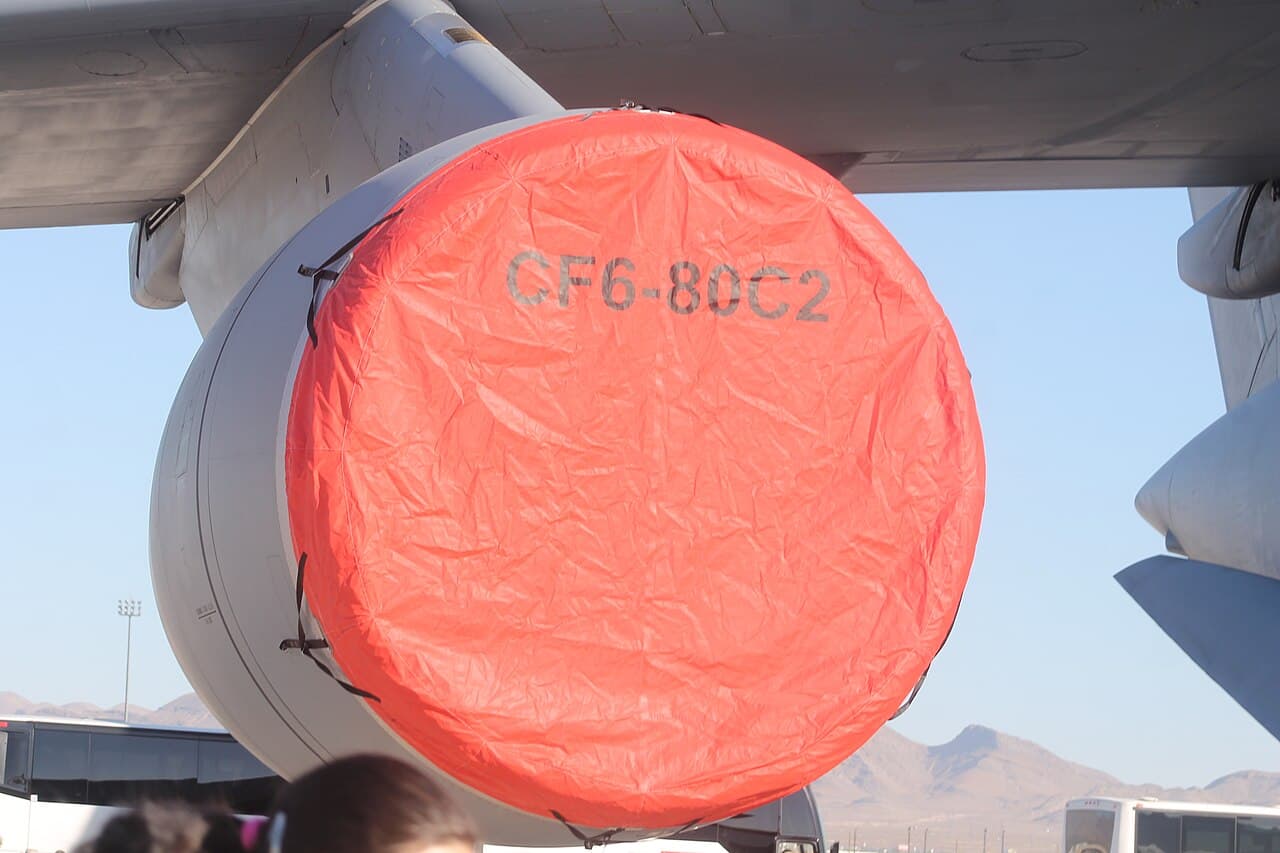
The largest aircraft in the United States Air Force's arsenal isn't the Boeing VC-25 (based on the 747) used for presidential transport, but rather the less glamorous Lockheed C-5 Galaxy . The C-5 is of a similar vintage as the 747 and was designed specifically as a military freighter, having only ever served for the USAF across the 56 years since its introduction. Despite its age, the USAF is firmly committed to the C-5 in its long-term fleet plan and will upgrade these aircraft.
US Air Force Retires 119 F-15Es as Saudi Arabia Invests $5 Billion to Upgrade F-15SA Fleet
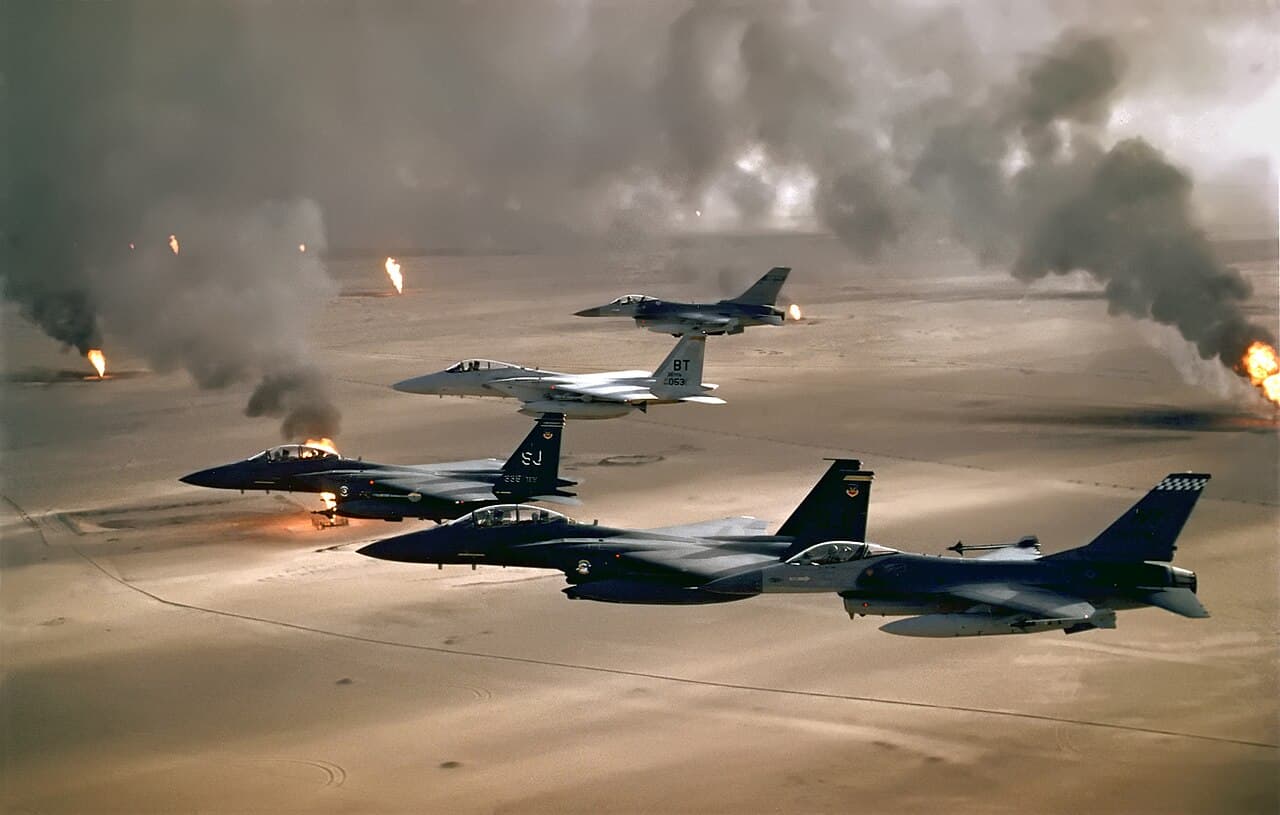
In February of this year, the State Department approved a foreign military sale for the Kingdom of Saudi Arabia that opens up the potential for a $3 billion fighter jet deal . Despite speculation that the Kingdom may be procuring the Lockheed Martin F-35 Lightning II, they are in fact seeking to upgrade the fleet of Boeing F-15SA Eagle air superiority fighter jets. Boeing's multi-billion dollar upgrade program is explicitly designed to close the technology gap and bring the Royal Saudi Air Force F-15SA fleet up to parity with the US Air Force's F-15EX Eagle II.
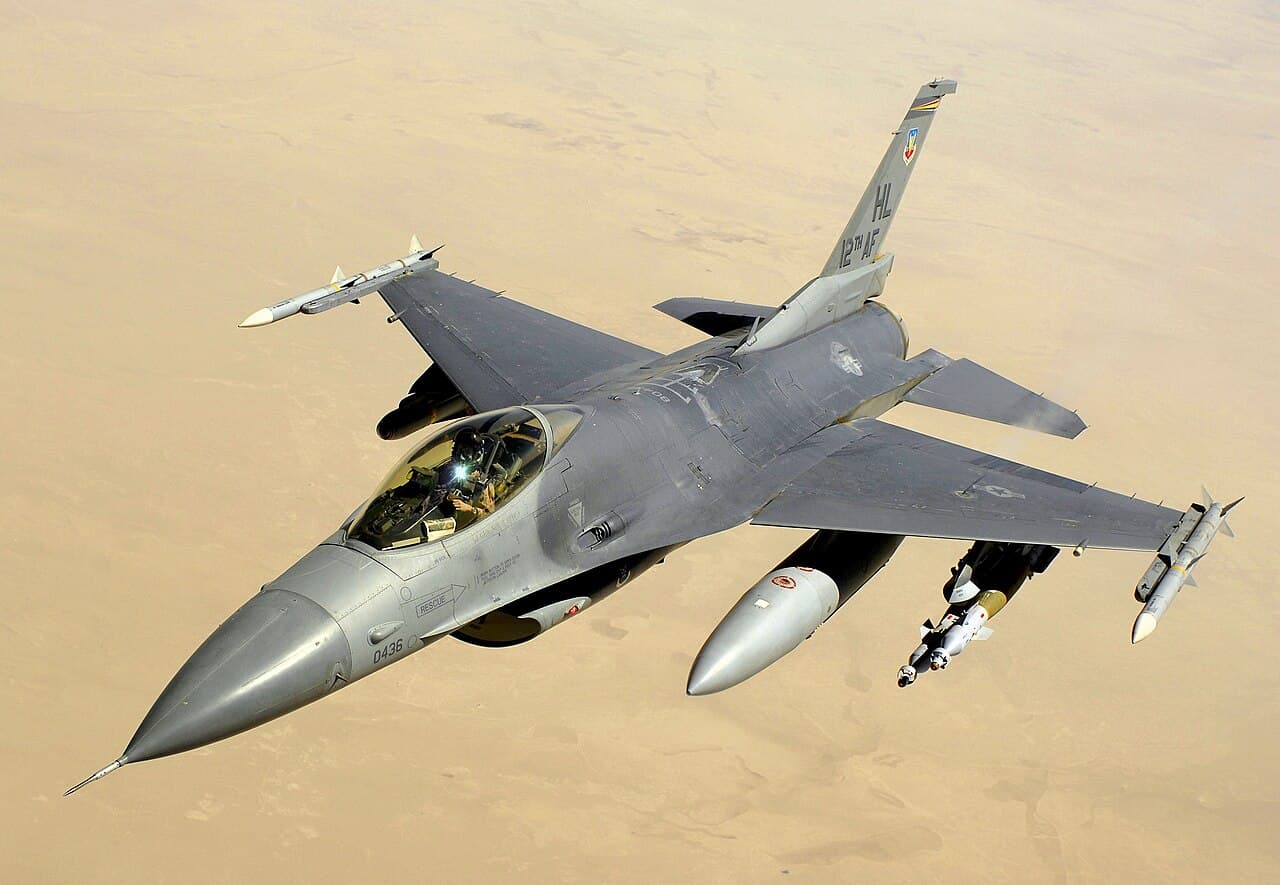
DARPA and US Air Force achieve AI-controlled flight in modified F-16s under VENOM program
DARPA and the US Air Force have flown a modified F-16 under the control of an artificial intelligence agent, moving autonomous combat testing from a one-off research project to actual modified frontline fighters. The service began flying VENOM-modified aircraft in June 2026 to confirm that the jets and their new systems operated safely. Test teams then allowed an AI agent to control an F-16 in flight in July, while a pilot remained in the cockpit to monitor the aircraft and take control if necessary. The program uses the name Viper Experimentation and Next-generation Operations Model–Autonomy Flying Testbed, or VENOM-AFT. Engineers equipped the F-16s with additional hardware, software and instrumentation that allow AI agents to fly the aircraft. DARPA said the modification automates the aircraft's flight controls and sensors without changing the F-16's core software. A human pilot can switch between conventional controls and autonomous operation during a flight. The pilot stays in the cockpit throughout the test and monitors the AI agent, aircraft systems and mission objectives. "These groundbreaking flight tests of VENOM-modified F-16s advance the infrastructure needed to develop trusted, autonomous air combat capabilities," DARPA Program Manager Brig. Gen. James Valpiani said. Valpiani said the system gives the Air Force and DARPA a faster way to develop and test AI tech for aerial combat. The Air Force did not discuss the specific maneuvers or mission tasks the AI performed during the recent test flights. It also did not identify the autonomy software or company behind the AI agent. DARPA says early sorties focused on confirming that the modified aircraft could fly safely with the VENOM equipment installed. Engineers completed months of engine runs, aircraft-system checks and simulation work before flight testing began. The program's ground-test work dated back to 2024. "Getting the aircraft into the air is always a monumental milestone for a complex test program," VENOM Test Pilot Tim Stevens said. "It represents years of design, modification and test planning poured into this project by a dedicated team of hundreds." The 40th Flight Test Squadron has led much of the early developmental testing at Eglin Air Force Base in Florida. The 53rd Wing and 96th Test Wing are also working together on the program with support from DARPA. VENOM expands on X-62 VISTA testing VENOM builds on earlier work with the X-62A Variable Stability In-flight Simulator Test Aircraft, or VISTA. DARPA used the heavily modified F-16 test aircraft to demonstrate AI-controlled air combat under its Air Combat Evolution program. The agency said an AI agent flew the X-62A during close-range dogfighting tests against human pilots. The X-62A remains a specialized, one-of-a-kind research aircraft. VENOM gives the Air Force a way to install and test autonomy systems aboard more conventional F-16s without redesigning the entire aircraft. The Air Force received the first three F-16s for VENOM conversion at Eglin in 2024. At the time, the service said developmental and operational test pilots would work from the same location, allowing them to share data and feedback directly with autonomy developers. The VENOM aircraft will now support DARPA's Artificial Intelligence Reinforcements program, which focuses on AI-controlled, multi-aircraft combat beyond visual range. DARPA plans to test autonomy software first aboard crewed F-16s and later transfer it to uncrewed combat aircraft. The program will also help the Air Force develop ways for pilots to direct groups of autonomous aircraft rather than control every movement individually. The work builds on the service's wider effort to field uncrewed combat aircraft alongside crewed fighters. The Air Force is currently testing the General Atomics YFQ-42A and Anduril YFQ-44A under its Collaborative Combat Aircraft program. The Air Force said the team will refine the aircraft and autonomy systems after each flight and gradually expand the complexity of the tests. It did not provide a schedule for the next phase of the program.
The Daily Touch & Go
The day's best aviation news in your inbox. Free, no spam.